Loreful
HomeDiscover
Search series, authors…⌘K
Loreful

Reading orders for SF/F series and shared universes — with your place kept in every one.

Explore

UniversesSeriesWorksAuthorsAtlas

Help

FAQAboutSite map

Account & legal

Sign inCreate accountPrivacyTerms

Data

Built on ISFDB, Wikipedia, Wikidata and Open Library. Curated reading orders carry their reasoning on the page; the rest follow publication order. Data sources & licenses

© Loreful · data: ISFDB · CC BY

More like Niagara Falling

but

Mood

The mood the book leaves you in.

  • The reading experience is propelled by journeys, exploration, and physical risk; excitement and forward momentum dominate over dread or introspection.
  • Joy and loss are deliberately mixed; the resolution grants characters something real while taking something else away, leaving warmth and sorrow together.
  • The book demands work from the reader — dense prose, difficult structure, unfamiliar ideas, or morally uncomfortable material — as part of its intended effect.
  • Grim events, cruelty, or despair dominate the atmosphere, and the book does not soften them with comfort or comic relief.
  • The atmosphere is quietly unsettling — wrongness, unease, and the uncanny pervade the book without necessarily escalating into overt horror.
  • The book is built to move the reader; character feeling is foregrounded and major scenes aim at a strong emotional response.
  • Humor is a primary aim and the prose plays for laughs — comic situations, wit, or dialogue produce sustained comedy, not occasional levity.
  • The book insists that things can improve; effort and decency are shown to matter, and the arc bends toward better outcomes even through hardship.
  • The book teaches as it goes — real facts, history, science, or craft are conveyed in enough depth that learning is part of the reading experience.
  • The overall register is cheerful and easygoing; stakes are kept gentle and the book avoids dwelling on pain or dread.
  • Withheld information drives the experience; the book sustains enigmas and secrets the reader wants resolved, whatever its genre.
  • The book is contemplative and inward-looking, giving more weight to thought, memory, and meaning than to external events.
  • Grief, loss, or melancholy set the dominant register, and the book lets sorrow stand rather than resolving it into comfort.
  • Sustained suspense is the point; the book keeps the reader braced for what happens next through danger, pressure, or impending revelation.
  • Playful invention and charm define the register — fanciful conceits, light absurdity, and a narration that delights in its own oddity.

About

What the story runs on.

  • Stories in which a machine intelligence — an AI, computer mind, or sentient program — is a central character or the story's driving problem.
  • Stories structured as a quest — a journey undertaken to find, deliver, or destroy something of great import.
  • Stories that turn on objects of power — enchanted weapons, rings, and relics sought, wielded, or destroyed.
  • Stories in which staying alive against nature, catastrophe, or scarcity is the central problem.
  • Stories of lovers kept apart by law, family, faith, or station, where the obstacle to love is the plot.
  • Stories in which a friendship — its making, testing, or loss — is the emotional center.
  • Stories of growing up — a young protagonist crossing from childhood into adult knowledge and responsibility.
  • Stories about who a character truly is — self-discovery, doubled lives, and the search for a self.
  • Stories driven by maneuvering for power — factions, conspiracies, and statecraft conducted in shadow.
  • Stories in which war itself is the subject — combat, occupation, and what warfare does to soldiers and civilians.
  • Stories organized around investigating a killing — the case, the clues, and the pursuit of the killer, in any genre's clothing.
  • Stories following an expedition into the unknown — uncharted lands, lost cities, and the discovery or ruin waiting at the end.

Shelf

Where it sits in the library.

    • Fiction built on magic or other supernatural elements that have no scientific explanation.
    • Secondary-world fantasy at large scale, where the fate of nations or the world turns on the protagonists' struggle.
    • Fantasy set in a recognizably modern city or contemporary world where the supernatural intrudes on everyday life.
    • Fantasy that blends in horror's atmosphere and imagery, keeping a fantastical frame around grim or frightening material.
    • Action-driven fantasy following warriors or rogues with personal stakes against sorcerous threats, rather than world-spanning conflicts.
    • Fantasy set in a real historical period or a close analogue of one, with magic woven into the era.
    • Fantasy in which protagonists cross from the ordinary world into another world through a portal or similar passage.
    • Fiction that retells or reworks a traditional fairy tale in a new form or setting.
    • Fantasy drawing directly on myths, legends, and folklore, retelling them or building on their figures and logic.
    • Fantasy of ghosts, vampires, shapeshifters, psychics, and similar phenomena, usually set in an otherwise ordinary world.
    • Fiction mixing science-fictional trappings with overtly magical or impossible elements in one setting.
    • Speculative fiction of pervasive moral ambiguity, violence, and cynicism that rejects heroic conventions — fantasy and SF alike.
      • Fiction that extrapolates from science and technology — future societies, space travel, or speculative inventions — within at least nominally natural laws.
      • Science fiction of interstellar scope — starships, galactic polities, and adventure across star systems.
      • Science fiction committed to scientific rigor, where technical plausibility constrains the story.
      • Science fiction centered on armed forces and warfare, told largely from a military point of view.
      • Science fiction of networked, corporate-dominated near futures, pairing high technology with social decay.
      • Science fiction styled on nineteenth-century steam-powered technology, often in a Victorian or pseudo-Victorian setting.
      • Fiction depicting an oppressive or catastrophic society, presented as a warning.
      • Fiction set after civilization's collapse, following survivors in the ruins of the old world.
      • Fiction in which characters move between past and future, and the mechanics or consequences of that travel drive the plot.
      • Fiction exploring a world where a historical event went differently and history diverged from ours.
      • Science fiction about humanity's first encounter and communication with an alien intelligence.
      • Science fiction in which extraterrestrial forces attack or occupy Earth and humanity resists.
      • Fiction whose primary aim is to frighten or unsettle the reader through dread, menace, or the monstrous.
      • Horror of vast, indifferent, incomprehensible entities before which humanity is insignificant, in the Lovecraft tradition.
      • Horror centered on hauntings and the returning dead.
      • Speculative fiction of the strange and uncanny that resists both natural explanation and standard genre categories.
      • Fiction organized around solving a crime or puzzle, typically following an investigator toward the identification of a culprit.
      • Crime fiction of moral ambiguity, fatalism, and hard-edged style, set among the corrupt and the doomed.
      • A mystery set in a past era, where the investigation works within that period's methods and society.
      • Fast-paced fiction driven by imminent danger, pursuit, or high-stakes conspiracy, built to sustain tension.
      • A thriller of espionage — agents, tradecraft, and intelligence services in conflict.
      • A thriller driven by detailed contemporary or near-future technology, often military or scientific.
      • Fiction whose central plot is a romantic relationship and its development toward an emotionally satisfying resolution.
      • Romance in which one or both partners are supernatural beings, blending fantasy elements into the love story.
      • A fantasy-romance hybrid in which the romantic arc and the fantasy plot carry equal weight.
      • Romance set in a past era, with courtship shaped by the period's society and manners.
      • Fiction set in a real past period, where the historical setting materially shapes characters and events.
        • General and literary fiction emphasizing prose style, character interiority, or formal ambition over genre plot conventions.
        • Fiction in a realistic world where magical events occur and are treated as ordinary, in the tradition of Latin American literature.
        • Fiction that ridicules people, institutions, or society in order to criticize them.
        • Fiction of dreamlike, irrational imagery and logic that breaks from realistic representation.
        • Fiction that plays with narrative convention through metafiction, fragmentation, and self-reference.
        • Fiction propelled by journeys, exploration, and physical peril, where action and survival carry the plot.
        • Adventure fiction of ships and seafaring — naval engagements, voyages, and life at sea.
        • Fiction of the American frontier West — gunmen, ranchers, and lawmen, typically in the late nineteenth century.
        • Fiction centered on soldiers, campaigns, and the experience of warfare, historical or imagined.
          • Fiction written primarily to amuse, using comedic situations, wit, or parody as its organizing principle.
            • Multi-generational fiction following a family or dynasty across decades, with inheritance and kinship as the through-line.
              • Fiction about costumed or superpowered heroes and their conflicts with comparable villains.

              Practical

              How long a commitment, whether it stands alone, and whether it has finished.

              Tap a chip to ask for it · tap again to rule it out · once more to clear. Numbers show what would be left.

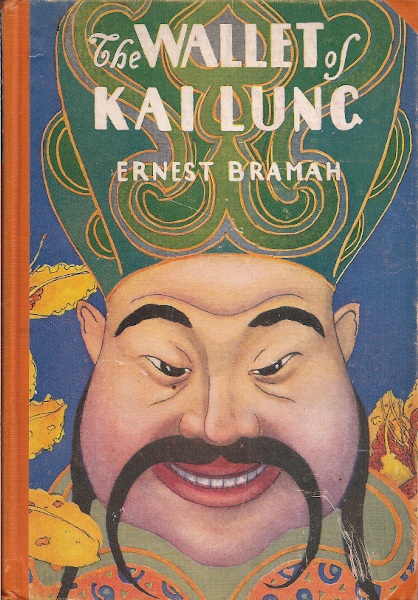
              • Cover of Kai Lung
                Kai Lung

                series · 62 books · 1900

                completed

                similar byeast asia

                Kai Lung is a fictional character in a series of books by Ernest Bramah, consisting of The Wallet of Kai Lung (1900), Kai Lung's Golden Hours (1922), Kai Lung Unrolls His Mat (1928), The Moon of Much Gladness, Kai Lung Beneath the Mulberry Tree (1940), Kai Lung: Six (1974) and Kai Lung Raises His Voice (2010).

              • Cover of Lost Horizon
                Lost Horizon

                James Hilton · standalone novel · 1933

                similar by+1 more

                Lost Horizon is a 1933 novel by the English writer James Hilton. The book was adapted into a film, also called Lost Horizon, in 1937 by director Frank Capra; and a musical film remake in 1973 by producer Ross Hunter with music by Burt Bacharach. It is the origin of Shangri-La, a fictional utopian lamasery located high in the mountains of Tibet.

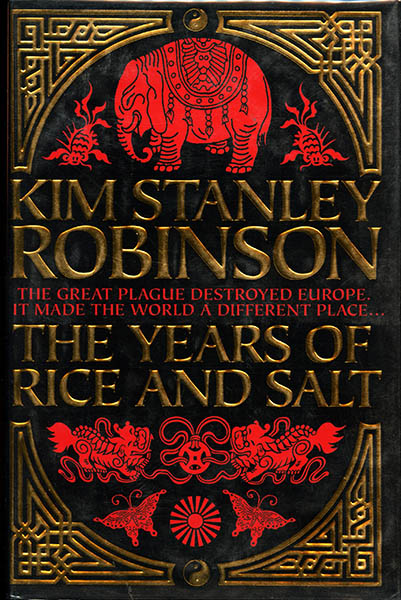
              • Cover of The Years of Rice and Salt
                The Years of Rice and Salt

                Kim Stanley Robinson · standalone novel · 2002

                similar byeast asia

                What if the Black Death had killed nearly everyone in Europe instead of a third of it? Kim Stanley Robinson opens on that premise with a Mongol scout named Bold, who finds a Hungarian city emptied by plague and only narrowly escapes execution meant to contain the contagion; sold into slavery, he ends up serving aboard a Chinese treasure fleet alongside a young African companion. From there the novel follows a recurring cast of souls, reincarnated across centuries and identifiable book to book by the first letter of their names, through an alternate history in which Islamic and Chinese civilizations, not a devastated Europe, shape the world's future.

              • Cover of Empire of the Sun
                Empire of the Sun

                series · 2 books · 1984

                completed

                similar byeast asia

                J. G. Ballard's Empire of the Sun draws on his own childhood to follow Jim, a British boy separated from his parents in Japanese-occupied Shanghai during World War II and interned in a civilian camp for the rest of the war. Ballard revisited the same period and a version of the same character years later in The Kindness of Women, a more explicitly fictionalized continuation into Jim's adult life. Empire of the Sun is the more directly autobiographical and better-known of the two.

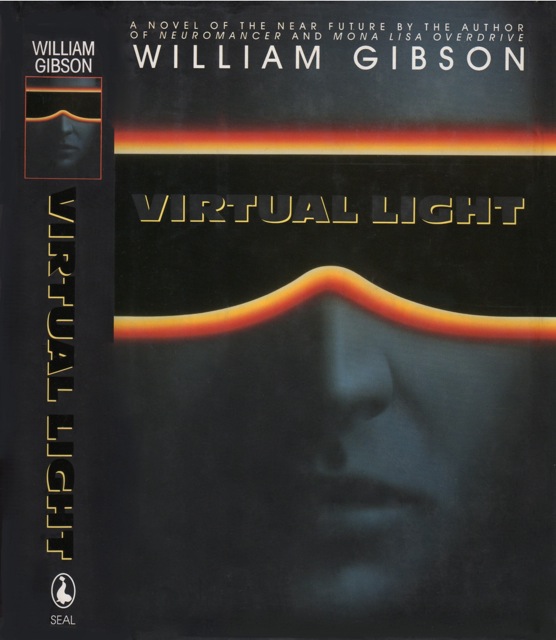
              • Cover of Bridge Trilogy
                Bridge Trilogy

                series · 4 books · 1990

                similar by+1 more

                The Bridge trilogy is a series of novels by William Gibson, his second after the successful Sprawl trilogy. The trilogy comprises the novels Virtual Light (1993), Idoru (1996) and All Tomorrow's Parties (1999). A short story, "Skinner's Room", was originally composed for Visionary San Francisco, a 1990 museum exhibition exploring the future of San Francisco.

              • Cover of Cloud Atlas
                Cloud Atlas

                David Mitchell · standalone novel · 2004

                similar by+1 more

                Cloud Atlas, published in 2004, is the third novel by British author David Mitchell. The book combines metafiction, historical fiction, contemporary fiction and science fiction, with interconnected nested stories in different writing styles that take the reader from the remote South Pacific in the 19th century to the island of Hawaii in a distant post-apocalyptic future. Its title references a piece of music by Toshi Ichiyanagi.

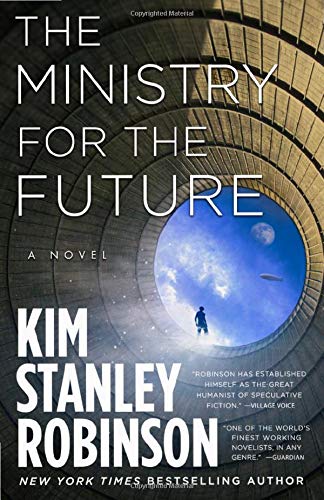
              • Cover of The Ministry for the Future
                The Ministry for the Future

                Kim Stanley Robinson · standalone novel · 2020

                similar by+1 more

                The Ministry for the Future is a climate fiction novel by American science fiction writer Kim Stanley Robinson, published in 2020. Set in the near future, the novel follows a subsidiary body, established under the Paris Agreement, whose mission is to act as an advocate for the world's future generations of citizens as if their rights were as valid as the present generation's. While the ministry pursues various ambitious projects, the effects of climate change are determined to be the most consequential. The plot primarily follows Mary Murphy, the head of the titular Ministry for the Future, and Frank May, an American aid worker traumatized by experiencing a deadly heat wave in India. Many chapters are devoted to other characters' accounts of future events, as well as their ideas about ecology, economics, and other subjects.

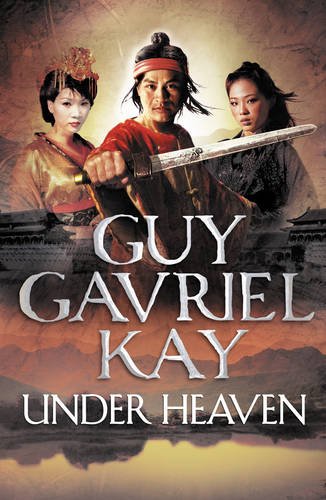
              • Cover of Under Heaven
                Under Heaven

                series · 2 books · 2010

                similar byeast asia

                Guy Gavriel Kay's Under Heaven follows Shen Tai, a general's son who provokes a political crisis simply by accepting an extraordinary gift of 250 rare horses in gratitude for burying the dead of an old battlefield, while his sister Li-Mei's forced marriage into a northern people opens a second thread on the empire's edges. Set in Kitai, a fantasy analogue of Tang-dynasty China centered on the capital Xinan, it is a story of court intrigue and personal survival rather than epic-fantasy world-war. Its companion novel, River of Stars, returns to the same world some four centuries later with an independent story rather than a direct sequel.

              • Cover of Termination Shock
                Termination Shock

                Neal Stephenson · standalone novel · 2021

                similar by+1 more

                Termination Shock is a science fiction novel by American writer Neal Stephenson, published in 2021. The book is set in a near-future when climate change has significantly altered human society and follows the attempts of a solar geoengineering scheme. The novel focuses on the geopolitical and social consequences of the rogue fix for climate change, themes common in the growing climate fiction genre.

              • TV
                These Violet Delights Universe

                series · 7 books · 2020

                similar byeast asia

              • Cover of Red Moon
                Red Moon

                Kim Stanley Robinson · standalone novel · 2018

                similar byeast asia

                Red Moon is a 2018 science fiction novel by American novelist Kim Stanley Robinson. The novel is set in China and on the Moon. It was reviewed in several US media outlets with mixed reception.

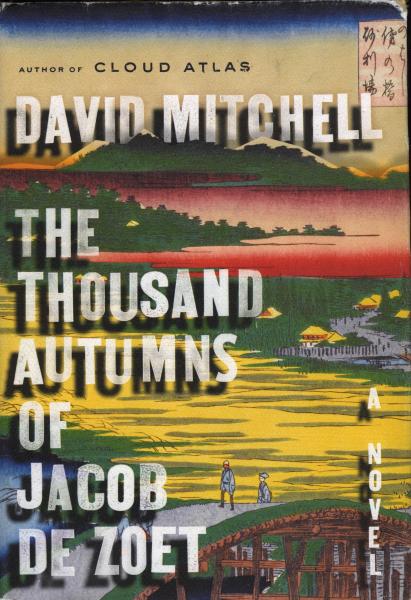
              • Cover of The Thousand Autumns of Jacob De Zoet
                The Thousand Autumns of Jacob De Zoet

                David Mitchell · standalone novel · 2010

                similar byeast asia

                The Thousand Autumns of Jacob de Zoet is an historical fiction novel by English author David Mitchell published by Sceptre in 2010. It is set during the Dutch trading concession with Japan in the late 18th century, during the period of Japanese history known as Sakoku.

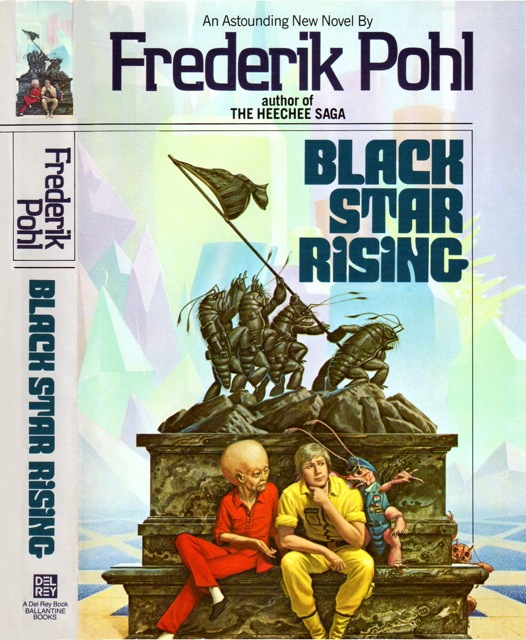
              • Cover of Black Star Rising
                Black Star Rising

                Frederik Pohl · standalone novel · 1985

                similar by+1 more

                Black Star Rising, published in 1986, is a dystopian science fiction novel by American author Frederik Pohl. It is about a post-nuclear war future in which a conquered United States becomes a Chinese farming colony. The main character is an American who the Chinese send to meet a race of warlike aliens who come to Earth.

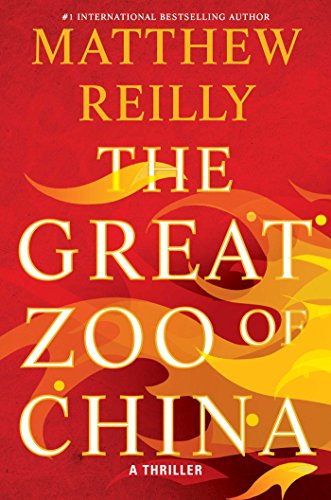
              • Cover of The Great Zoo of China
                The Great Zoo of China

                Matthew Reilly · standalone novel · 2014

                similar byeast asia

                The Great Zoo of China is a 2014 novel by Australian author Matthew Reilly. It was published in November 2014.

              • Cover of The Fox Wife
                The Fox Wife

                Yangsze Choo · standalone novel · 2024

                similar byeast asia

              • Cover of The Man Who Japed
                The Man Who Japed

                Philip K. Dick · standalone novel · 1956

                similar by+1 more

                The Man Who Japed is a science fiction novel by American writer Philip K. Dick, first published in 1956. Although one of Dick's lesser-known novels, it features several of the ideas and themes that recur throughout his later works. The "jape[s]" or practical jokes of the novel begin with a statue's unconventional decapitation.

              • DU
                Dragonkeeper Universe

                series · 7 books · 2003

                similar byeast asia

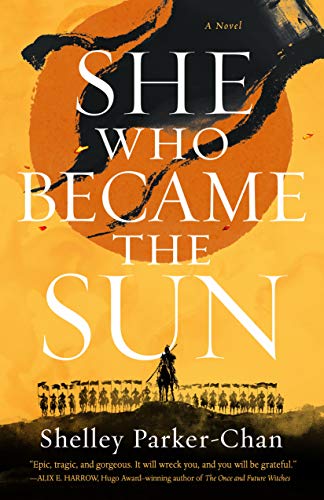
              • Cover of The Radiant Emperor
                The Radiant Emperor

                series · 2 books · 2021

                similar byeast asia

                The Radiant Emperor reimagines the rise of the founder of a Chinese dynasty as a peasant girl who takes on her dead brother's identity and destiny to survive famine and war, rising through ambition and deception toward the throne. Shelley Parker-Chan's duology, beginning with She Who Became the Sun, follows her against a rival commander on the opposing side of a civil war, concluding in He Who Drowned the World.

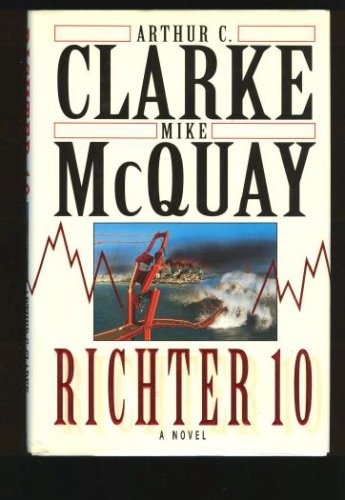
              • Cover of Richter 10
                Richter 10

                Arthur C. Clarke & Mike McQuay · standalone novel · 1996

                similar by+1 more

                Richter 10 is a 1996 science fiction novel by Arthur C. Clarke and Mike McQuay. The protagonist, Lewis Crane, develops a hatred of earthquakes after his parents are killed and his home destroyed by one when he is seven years old. He devises a way of predicting earthquakes months or years in advance, and eventually banishing them forever by stopping all tectonic activity. The book's title is a reference to the Richter scale, on which 10 was considered to be the most power an earthquake was likely to ever have.

              • Cover of The Jonah Kit
                The Jonah Kit

                Ian Watson · standalone novel · 1975

                similar by+1 more

                The Jonah Kit is a 1975 science fiction novel by English writer Ian Watson. In 1977, The Jonah Kit won the BSFA Award for Best Novel.

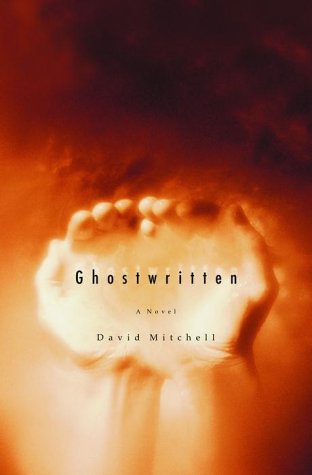
              • Cover of Ghostwritten
                Ghostwritten

                David Mitchell · standalone novel · 1999

                similar byeast asia

                Various individuals around the globe cross paths, while the complexities of modern societies lead to human civilization's inevitable end.

              • Cover of Dark Heavens milieu
                Dark Heavens milieu

                series · 13 books · 2006

                similar by+1 more

              • CK
                Chung Kuo Universe

                series · 20 books · 1989

                similar by+1 more

              • Cover of The Grimnoir Chronicles
                The Grimnoir Chronicles

                series · 7 books · 2011

                similar by+1 more