Loreful
HomeDiscover
Search series, authors…⌘K
Loreful

Reading orders for SF/F series and shared universes — with your place kept in every one.

Explore

UniversesSeriesWorksAuthorsAtlas

Help

FAQAboutSite map

Account & legal

Sign inCreate accountPrivacyTerms

Data

Built on ISFDB, Wikipedia, Wikidata and Open Library. Curated reading orders carry their reasoning on the page; the rest follow publication order. Data sources & licenses

© Loreful · data: ISFDB · CC BY

More like Nightmare Mode

anchored on:litrpg

but

Mood

The mood the book leaves you in.

  • The reading experience is propelled by journeys, exploration, and physical risk; excitement and forward momentum dominate over dread or introspection.
  • Joy and loss are deliberately mixed; the resolution grants characters something real while taking something else away, leaving warmth and sorrow together.
  • The book demands work from the reader — dense prose, difficult structure, unfamiliar ideas, or morally uncomfortable material — as part of its intended effect.
  • Grim events, cruelty, or despair dominate the atmosphere, and the book does not soften them with comfort or comic relief.
  • The atmosphere is quietly unsettling — wrongness, unease, and the uncanny pervade the book without necessarily escalating into overt horror.
  • The book is built to move the reader; character feeling is foregrounded and major scenes aim at a strong emotional response.
  • Humor is a primary aim and the prose plays for laughs — comic situations, wit, or dialogue produce sustained comedy, not occasional levity.
  • The book insists that things can improve; effort and decency are shown to matter, and the arc bends toward better outcomes even through hardship.
  • The book teaches as it goes — real facts, history, science, or craft are conveyed in enough depth that learning is part of the reading experience.
  • The book is designed to uplift and motivate, presenting perseverance or achievement in a way that invites the reader to aspire or act.
  • The overall register is cheerful and easygoing; stakes are kept gentle and the book avoids dwelling on pain or dread.
  • Withheld information drives the experience; the book sustains enigmas and secrets the reader wants resolved, whatever its genre.
  • The book is contemplative and inward-looking, giving more weight to thought, memory, and meaning than to external events.
  • The book works as comfort reading — low tension, a soothing pace, and an atmosphere the reader can unwind in.
  • Grief, loss, or melancholy set the dominant register, and the book lets sorrow stand rather than resolving it into comfort.
  • Sustained suspense is the point; the book keeps the reader braced for what happens next through danger, pressure, or impending revelation.
  • Playful invention and charm define the register — fanciful conceits, light absurdity, and a narration that delights in its own oddity.

About

What the story runs on.

  • Stories in which extraterrestrial beings are central — as characters, cultures, or the object of the plot.
  • Stories about venturing into space to explore — survey missions, astronauts, and the frontier of the unknown beyond Earth.
  • Stories structured as a quest — a journey undertaken to find, deliver, or destroy something of great import.
  • Stories in which staying alive against nature, catastrophe, or scarcity is the central problem.
  • Stories of lovers kept apart by law, family, faith, or station, where the obstacle to love is the plot.
  • Stories in which a friendship — its making, testing, or loss — is the emotional center.
  • Stories of growing up — a young protagonist crossing from childhood into adult knowledge and responsibility.
  • Stories about who a character truly is — self-discovery, doubled lives, and the search for a self.
  • Stories in which a buried family truth — hidden parentage, crimes, or shames — surfaces and reorders the present.
  • Stories driven by maneuvering for power — factions, conspiracies, and statecraft conducted in shadow.
  • Stories in which war itself is the subject — combat, occupation, and what warfare does to soldiers and civilians.
  • Stories organized around investigating a killing — the case, the clues, and the pursuit of the killer, in any genre's clothing.

Shelf

Where it sits in the library.

    • Fiction built on magic or other supernatural elements that have no scientific explanation.
    • Secondary-world fantasy at large scale, where the fate of nations or the world turns on the protagonists' struggle.
    • Fantasy set in a recognizably modern city or contemporary world where the supernatural intrudes on everyday life.
    • Fantasy that blends in horror's atmosphere and imagery, keeping a fantastical frame around grim or frightening material.
    • Action-driven fantasy following warriors or rogues with personal stakes against sorcerous threats, rather than world-spanning conflicts.
    • Fantasy set in a real historical period or a close analogue of one, with magic woven into the era.
    • Fantasy in which protagonists cross from the ordinary world into another world through a portal or similar passage.
    • Fiction that retells or reworks a traditional fairy tale in a new form or setting.
    • Fantasy drawing directly on myths, legends, and folklore, retelling them or building on their figures and logic.
    • Fantasy of ghosts, vampires, shapeshifters, psychics, and similar phenomena, usually set in an otherwise ordinary world.
    • Fiction mixing science-fictional trappings with overtly magical or impossible elements in one setting.
    • Low-stakes fantasy emphasizing comfort, community, and everyday pleasures over conflict and peril.
    • Speculative fiction of pervasive moral ambiguity, violence, and cynicism that rejects heroic conventions — fantasy and SF alike.
      • Fiction that extrapolates from science and technology — future societies, space travel, or speculative inventions — within at least nominally natural laws.
      • Science fiction of interstellar scope — starships, galactic polities, and adventure across star systems.
      • Science fiction committed to scientific rigor, where technical plausibility constrains the story.
      • Science fiction centered on armed forces and warfare, told largely from a military point of view.
      • Science fiction of networked, corporate-dominated near futures, pairing high technology with social decay.
      • Science fiction styled on nineteenth-century steam-powered technology, often in a Victorian or pseudo-Victorian setting.
      • Fiction depicting an oppressive or catastrophic society, presented as a warning.
      • Fiction set after civilization's collapse, following survivors in the ruins of the old world.
      • Fiction in which characters move between past and future, and the mechanics or consequences of that travel drive the plot.
      • Fiction exploring a world where a historical event went differently and history diverged from ours.
      • Science fiction about humanity's first encounter and communication with an alien intelligence.
      • Science fiction in which extraterrestrial forces attack or occupy Earth and humanity resists.
      • Fiction whose primary aim is to frighten or unsettle the reader through dread, menace, or the monstrous.
      • Horror of vast, indifferent, incomprehensible entities before which humanity is insignificant, in the Lovecraft tradition.
      • Horror of decaying houses, buried family secrets, and oppressive atmosphere in the Gothic literary tradition.
      • Horror centered on hauntings and the returning dead.
      • Horror located in the mind — paranoia, obsession, and unreliable perception rather than external monsters.
      • Horror built around the reanimated dead and survival amid their outbreaks.
      • Horror defined by explicit, transgressive gore that refuses to cut away from violence.
      • Speculative fiction of the strange and uncanny that resists both natural explanation and standard genre categories.
      • Fiction organized around solving a crime or puzzle, typically following an investigator toward the identification of a culprit.
      • A puzzle-first mystery that lays out clues so the culprit's identity can be deduced before the reveal.
      • Crime fiction of moral ambiguity, fatalism, and hard-edged style, set among the corrupt and the doomed.
      • A mystery following the realistic routines of police work — forensics, interviews, and case-building.
      • A gentle mystery with an amateur sleuth, a small community, and violence kept off the page.
      • A mystery set in a past era, where the investigation works within that period's methods and society.
      • Fast-paced fiction driven by imminent danger, pursuit, or high-stakes conspiracy, built to sustain tension.
      • A thriller of espionage — agents, tradecraft, and intelligence services in conflict.
      • A thriller centered on lawyers and the courtroom, where litigation carries the suspense.
      • A thriller driven by detailed contemporary or near-future technology, often military or scientific.
      • A thriller whose tension comes from mental states and manipulation between characters rather than external action.
      • Fiction whose central plot is a romantic relationship and its development toward an emotionally satisfying resolution.
      • Romance in which one or both partners are supernatural beings, blending fantasy elements into the love story.
      • A fantasy-romance hybrid in which the romantic arc and the fantasy plot carry equal weight.
      • Romance set in a past era, with courtship shaped by the period's society and manners.
      • Romance set in the present day, without supernatural or historical elements.
      • Fiction set in a real past period, where the historical setting materially shapes characters and events.
        • General and literary fiction emphasizing prose style, character interiority, or formal ambition over genre plot conventions.
        • Fiction in a realistic world where magical events occur and are treated as ordinary, in the tradition of Latin American literature.
        • Fiction that ridicules people, institutions, or society in order to criticize them.
        • Fiction of dreamlike, irrational imagery and logic that breaks from realistic representation.
        • Fiction that plays with narrative convention through metafiction, fragmentation, and self-reference.
        • Fiction propelled by journeys, exploration, and physical peril, where action and survival carry the plot.
        • Adventure fiction of ships and seafaring — naval engagements, voyages, and life at sea.
        • Fiction of the American frontier West — gunmen, ranchers, and lawmen, typically in the late nineteenth century.
        • Fiction centered on soldiers, campaigns, and the experience of warfare, historical or imagined.
          • Fiction written primarily to amuse, using comedic situations, wit, or parody as its organizing principle.
            • Multi-generational fiction following a family or dynasty across decades, with inheritance and kinship as the through-line.
              • Fiction whose world runs on explicit game mechanics — levels, stats, and skills that characters can see and exploit.
                • Fiction about costumed or superpowered heroes and their conflicts with comparable villains.

                Practical

                How long a commitment, whether it stands alone, and whether it has finished.

                Tap a chip to ask for it · tap again to rule it out · once more to clear. Numbers show what would be left.

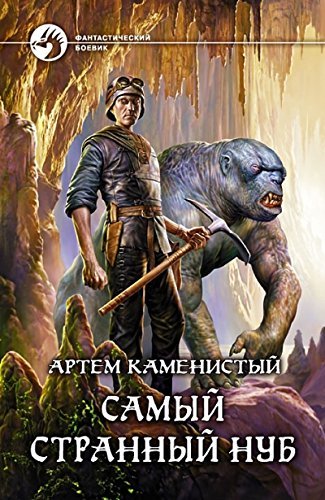
                • Cover of Самый странный нуб / The Weirdest Noob
                  Самый странный нуб / The Weirdest Noob

                  series · 3 books · 2014

                  similar bylitrpgvirtual realityadventuroustense+3 more

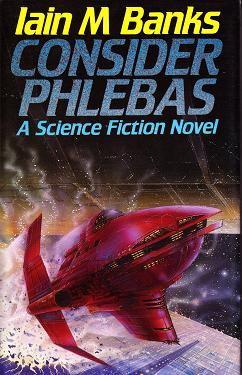
                • Cover of Culture
                  Culture

                  series · 15 books · 1987

                  completed

                  part of The Culture

                  similar byscience fiction+1 more

                  The Culture series is a science fiction series written by Scottish author Iain M. Banks and released from 1987 until 2012. The stories centre on The Culture, a utopian, post-scarcity space society of humanoid aliens and advanced superintelligent artificial intelligences living in artificial habitats spread across the Milky Way galaxy. The main themes of the series are the dilemmas that an idealistic, more-advanced civilization faces in dealing with smaller, less-advanced civilizations that do not share its ideals, and whose behaviour it sometimes finds barbaric. In some of the stories, action takes place mainly in non-Culture environments, and the leading characters are often on the fringes of the Culture, sometimes acting as agents of the Culture in its plans to civilize the galaxy. Each novel is a self-contained story with new characters, although reference is occasionally made to the events of previous novels.

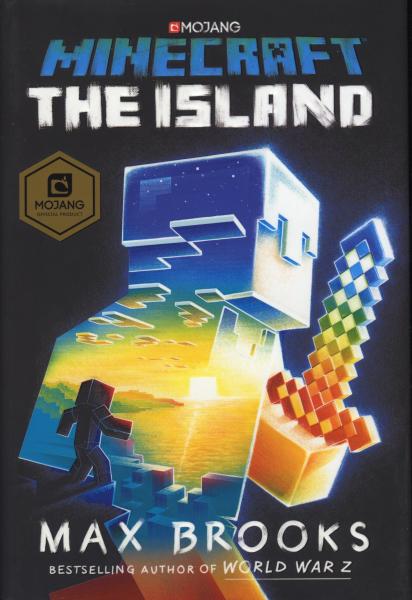
                • Cover of Minecraft
                  Minecraft

                  universe · 207 books · 2014

                  Start hereThe Island · Start here

                  similar by+1 more

                  The sun is going down, and you have no walls. Somewhere in the dark a green thing is walking toward you on four stubby legs, and it does not stop and it does not speak, and when it reaches you it will hiss. So you dig. You punch wood from a tree, shape it into planks, stack the planks into a box just big enough to outlast the night — and in the morning the world is yours again, cubic and endless and waiting to be reshaped one block at a time. This is the Overworld: squared-off oceans, blocky hills, deep glittering mines, and beyond them the burning Nether and the floating void of the End, where everything can be broken down and built back into something else. The books that grow from it come in two very different sizes. On one shelf sits Mojang's own line — standalone novels like Max Brooks' tale of a castaway learning the island's rules the hard way, the monster-hunting Mob Squad, the illustrated Woodsword Chronicles, and rack on rack of official handbooks. Against it surges a whole cottage industry of unofficial "Minecrafter" fiction for young readers: the diary-comic misadventures of Diary of a Minecraft Zombie and The Creeper Diaries, Winter Morgan's brisk quest tales, and Mark Cheverton's Gameknight999 saga of a boy trapped inside the game. No single timeline binds them; each series keeps its own. What holds it together is not a plot but a place, and a feeling — the small triumph of surviving one more night, the itch to see past the next ridge, the freedom to build the thing you pictured. Newcomers wanting a story with a spine should start with Max Brooks' The Island, self-contained and quietly clever; younger readers chasing laughs can drop into Diary of a Minecraft Zombie or Woodsword Chronicles at book one. Beyond that, pick a mine and start digging.

                • Cover of Stonehaven League
                  Stonehaven League

                  series · 7 books · 2018

                  similar bylitrpgvirtual realityadventurousscience fiction+2 more

                • K
                  Kairos

                  series · 11 books · 1962

                  completed

                  similar byyoung adultscience fiction+1 more

                  The Time Quintet is a science fantasy series of five young adult novels written by American author Madeleine L'Engle and made up of A Wrinkle in Time (1962), A Wind in the Door (1973), A Swiftly Tilting Planet (1978), Many Waters (1986), and An Acceptable Time (1989).

                • Cover of His Dark Materials Universe
                  His Dark Materials Universe

                  universe · 13 books · 1995

                  Start hereHis Dark Materials · Start here

                  similar byadventurousyoung adult

                  In a world like ours and unlike it, every human soul walks outside the body in the shape of an animal — a daemon, who speaks, who cannot be lied to, and who settles into one fixed form only when childhood ends. This is the country of His Dark Materials: a company of parallel worlds across which an invisible dust of consciousness drifts down upon the waking mind; where a Church that calls itself the Magisterium would sooner sever a child's soul than let that Dust be understood; and where a golden instrument, the alethiometer, answers true questions for anyone with the patience to read it. Philip Pullman's design stands in two trilogies and a scatter of shorter tales. His Dark Materials — Northern Lights (published in America as The Golden Compass), The Subtle Knife, and The Amber Spyglass — carries Lyra Belacqua from the rooftops of a shadow Oxford across the borders between worlds. The Book of Dust returns to that same territory: La Belle Sauvage looks back to Lyra as an infant carried through a great flood, while The Secret Commonwealth follows her grown and less certain into adulthood, with a concluding volume closing the arc. Around them sit slim companion books — Lyra's Oxford, Once Upon a Time in the North, Serpentine — and Nicholas Wright's stage adaptation, made with Pullman's blessing. The register is grave and luminous at once, its title lifted from Milton and its quarrel drawn from Blake: a story that takes the side of curiosity, love, and the physical world against any authority that would forbid them. It reads as adventure — armoured bears, aeronauts, knife-cut windows between skies — yet reasons like philosophy. Begin with Northern Lights / The Golden Compass and read the first trilogy through before turning to The Book of Dust, which deepens everything the first has already made you feel.

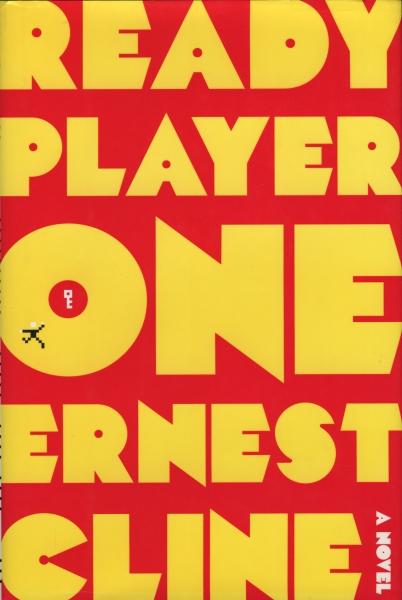
                • Cover of Ready Player One
                  Ready Player One

                  series · 3 books · 2011

                  similar byvirtual realityadventurousscience fiction+3 more

                  Ernest Cline's Ready Player One (2011) is set in a near-future dystopia where much of humanity escapes into the OASIS, a vast virtual-reality universe, and follows teenager Wade Watts as he chases an Easter egg hidden by the OASIS's late creator in a puzzle-based hunt worth a fortune. The 2020 sequel, Ready Player Two, picks up after Wade has gained control of the OASIS and follows him and his friends into a new quest built around a brain-computer interface the creator left behind.

                • Cover of Stephen King multiverse
                  Stephen King multiverse

                  universe · 46 books · 1967

                  Start hereThe Gunslinger · Start here

                  similar by+1 more

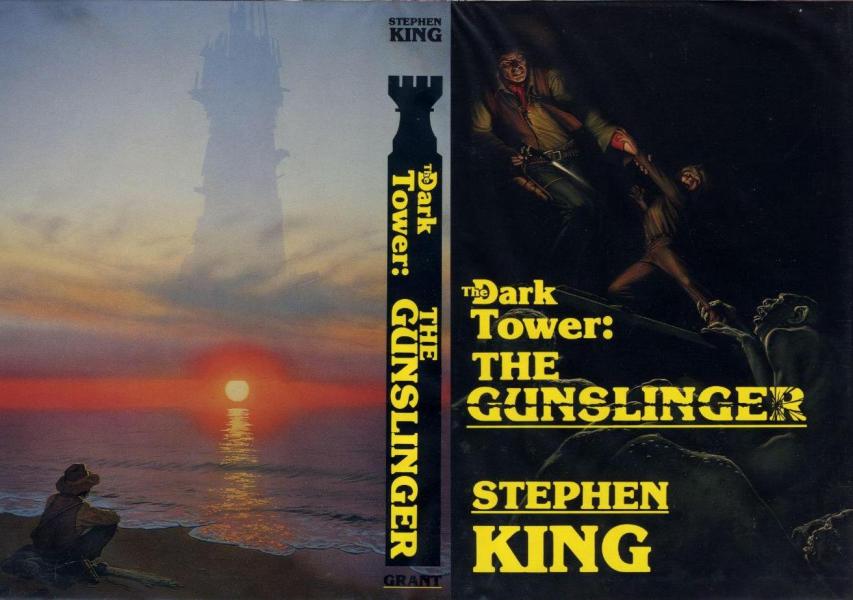
                  The man in black fled across the desert, and the gunslinger followed. So begins the long walk of Roland Deschain, last of an order of knight-errant pistoleers, across a land that has "moved on" — where the compass points drift, dead machines rot toward sentience, and the weave of what's real wears thin. His quest is the Dark Tower itself: a spire standing at the hub of every world that exists, the linchpin that holds all of them back from ruin. Roland's road runs eight volumes, from The Gunslinger through the closing Dark Tower, with the later, interleaved tale The Wind Through the Keyhole folding a story-within-a-story back into his youth. Along the way he draws a ka-tet — a fellowship bound by fate, not choosing — through doorways between worlds: a heroin-shackled New Yorker, a woman of two minds, a boy who dies twice. The Tower is also the secret axle around which the wider shelf of King's work turns; threads from The Stand, 'Salem's Lot and beyond wind quietly toward it. Expect a mongrel of Western, high fantasy, horror and decayed science fiction, told in a dusty, incantatory dialect all its own — ka, thankee-sai, the world that has moved on. This is King at his most mythic and most personal, a decades-spanning circle that rewards a patient reader. Begin at the beginning: The Gunslinger, then walk forward in publication order. There are other worlds than these — but this door opens first.

                • Cover of Apocalypse Gates
                  Apocalypse Gates

                  series · 8 books · 2017

                  similar bylitrpg+1 more

                • Cover of Dungeon Robotics
                  Dungeon Robotics

                  series · 17 books · 2019

                  similar bylitrpg

                • Cover of The Primal Hunter
                  The Primal Hunter

                  series · 21 books · 2022

                  similar bylitrpg+1 more

                • Cover of Dominion of Blades
                  Dominion of Blades

                  series · 3 books · 2017

                  similar bylitrpg+1 more

                • Cover of Читер / Respawn
                  Читер / Respawn

                  series · 6 books · 2017

                  similar bylitrpg+1 more

                • Cover of System Universe
                  System Universe

                  series · 8 books · 2022

                  similar bylitrpg+1 more

                • LW
                  Labyrinth World

                  series · 10 books · 2015

                  similar bylitrpg

                • Cover of Alliance-Union Universe
                  Alliance-Union Universe

                  universe · 173 books · 1976

                  Start hereCompany Wars · The central sequence

                  similar byscience fiction+2 more

                  The dark between the stars belongs to no one, and everyone who lives out here knows it: the merchanter Families hauling cargo between stations that cannot feed themselves, the Earth Company clutching at colonies it can no longer supply, the Union breeding its cloned azi to settle worlds faster than birth allows. C. J. Cherryh's Alliance-Union is a future history of humankind's spread across the third and fourth millennia, told from inside the pressure — no clean empires, only stations, ships, treaties, and the people caught in the machinery of who holds the jump-points. The sequence runs from the first laborious pre-FTL stations through the Company Wars, the independence struggle that breaks over Pell in Downbelow Station (Hugo, 1981), to the genetics and cold politics of Union's homeworld in Cyteen (Hugo, 1988) and its sequel Regenesis. Around that spine cluster the merchanter novels of trader Families, the Faded Sun trilogy of human envoys among the martial alien Mri, and the Chanur books, narrated from the hierarchical, whiskered viewpoint of the hani. On the isolated world of Merovin, the Merovingen Nights anthologies open the setting to other hands — Mercedes Lackey, Janet and Chris Morris, Nancy Asire — a shared world braided into the whole. What sets it apart is intimacy at scale. Cherryh drops you without a map into a single skull and lets you assemble the politics from what that person fears and bargains for; the aliens are genuinely alien, loyalty is always provisional, and the real antagonist is usually logistics. Most books stand alone, in her words, "like real history." The surest way in is Downbelow Station — the war seen from one besieged station — then Cyteen, for the mind that shaped the other side.

                • Cover of Restoree
                  Restoree

                  Anne McCaffrey · standalone novel · 1967

                  similar bysurvivaladventuroustensescience fiction

                  Torn from Earth by a bizarre and nameless black force, Sara has no idea where she is or why she inhabits a beautiful new body. Controlled by brutal guards and tamed by terror, she can not comprehend her role as a nurse for a man who appears to be an idiot. She discovers that the planet she had been brought to was Lothar and that the man she was caring for was its Regent, Sara knows the restorees had to escape. When they do, they become fugitives on a world of multiple evils. (adapted from the back cover of the Baen edition)

                • Cover of Serious Probabilities
                  Serious Probabilities

                  series · 3 books · 2020

                  similar bylitrpg

                • Cover of Underland Chronicles
                  Underland Chronicles

                  series · 5 books · 2003

                  similar byadventurous+3 more

                  The Underland Chronicles is a series of five epic fantasy novels by Suzanne Collins, first published between 2003 and 2007. It tells the story of a boy named Gregor and his adventures in the "Underland", a subterranean world located under New York City. The Underland is inhabited by humans who traveled below hundreds of years ago, along with various giant versions of creatures like bats, cockroaches, and rats. According to the author, the series involves many topics relating to war, including biological warfare, genocide, and military intelligence.

                • Cover of Pit Dragon
                  Pit Dragon

                  series · 5 books · 1980

                  completed

                  similar byadventurousscience fiction+1 more

                  Jane Yolen's Pit Dragon Chronicles follows Jakkin, born into indentured servitude in the dragon barns of Master Sarkkhan on the planet Austar IV, who steals a hatchling in hopes of raising and fighting it to win his freedom in the dragon pits. Dragon's Blood traces that bond between boy and dragon from theft to the pits; the sequels, Heart's Blood and A Sending of Dragons, follow Jakkin further as the stakes around the dragons and his own status widen. It's science-fantasy that treats its dragons as bred, owned animals rather than magical companions.

                • Cover of Deepest Dungeon
                  Deepest Dungeon

                  series · 2 books · 2020

                  similar bylitrpg

                • Cover of Obelisk - System Integration
                  Obelisk - System Integration

                  series · 6 books · 2024

                  similar bylitrpgscience fiction

                • Cover of Capture, Evolve, Survive
                  Capture, Evolve, Survive

                  series · 3 books · 2024

                  similar bylitrpg+1 more

                • Cover of Shannara
                  Shannara

                  universe · 50 books · 1977

                  Start hereWord and the Void · The very beginning of the timeline

                  similar by+2 more

                  Long after the world we know has burned itself to slag in the Great Wars, the Four Lands rise green over the bones of the old age. Science is a forbidden memory; magic has come back into the world, and with it the old divisions — Men, Elves, Dwarves, Trolls, and Gnomes, each Race a splinter of what humanity became. This is the far-future Earth of Shannara, where the ruins buried beneath the soil are ours, and the only keepers of the vanished knowledge are the Druids of Paranor, who wake once a generation to meet the darkness rising again. Terry Brooks opened the Four Lands in 1977 with The Sword of Shannara and has charted its history for four decades since — a legendarium ordered not by throne but by a single bloodline, the Ohmsfords, each generation inheriting an Elfstone, a blade, or a wishsong when the age demands a hero. The original trilogy gives way to the Heritage of Shannara, the Voyage of the Jerle Shannara, the High Druid, Dark Legacy, Defenders, and the concluding Fall of Shannara; the Genesis of Shannara books reach back to the apocalypse itself, and the Word and the Void trilogy back further still, into a demon-haunted version of our own present that is the root of everything after. In 2025 Brooks passed the histories to Delilah S. Dawson to carry forward. What sets these books apart is their long memory: a world where every triumph is provisional, where the same evil returns wearing a fresh shape each age, and magic always exacts its price. The reading is warm and headlong — questing companies, old talismans, journeys across a mapped and named wilderness — shadowed by the knowledge that all of it stands on the wreckage of a former world. Enter as readers first did: with The Sword of Shannara, then onward in publication order. The chronological path, beginning with Word and the Void, rewards a second journey, once the Four Lands already feel like home.