More like Nitara
but
- A Song of Ice and Fire
series14 books1996
part of World of Ice and Fire
similar bypolitical intriguefantasy
A Song of Ice and Fire is a series of high fantasy novels by the American author George R. R. Martin. Martin began writing the first volume, A Game of Thrones, in 1991, and published it in 1996. Martin, who originally envisioned the series as a trilogy, has released five out of seven planned volumes. The most recent entry in the series, A Dance with Dragons, was published in 2011. Since then, Martin has been working on the sixth novel, titled The Winds of Winter. A seventh novel, A Dream of Spring, is planned to follow.
- Cosmere
universe54 books2005
Start hereThe Final Empire · Start here
similar byfantasy+2 more
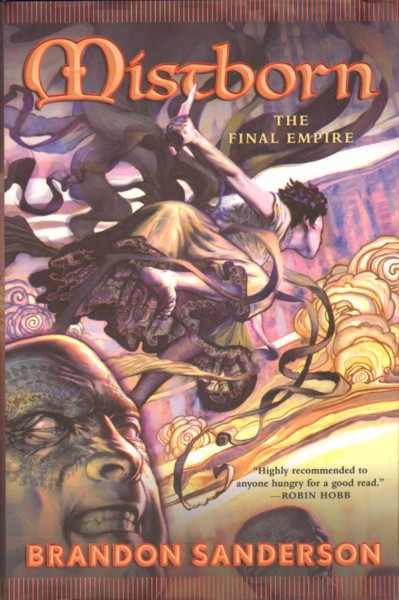
Before the worlds, there was Adonalsium, and then there was not. A god shattered into sixteen Shards of raw creative power, and those who seized them carried their fragments across the void to seed new planets, new peoples, new ways of working the impossible. The Cosmere is the one universe those Shards made: a scattering of worlds that seem, at first, to share nothing but a sky, until you notice the same law running quietly beneath each of them, and the same silent traveler passing through their margins. Every world keeps its own book and its own magic. On Scadrial, the Mistborn cycle burns metals into power: a self-contained trilogy of thieves and tyranny, followed by a second era that drags the same world into gunslinging early industry. On storm-battered Roshar, The Stormlight Archive raises its vast, ongoing epic around knights, spren, and oaths spoken aloud. Elsewhere stand the shorter keystones: Elantris, a city of fallen gods; Warbreaker, a tale of returned dead and living color; White Sand, told in graphic-novel form under the twin suns of Taldain. Threaded between them run the novellas, from Tress of the Emerald Sea and Yumi and the Nightmare Painter to The Sunlit Man and the pieces gathered in Arcanum Unbounded, where the hidden connections surface most plainly. All of it is the design of one hand, Brandon Sanderson, working a single pattern across two decades. What sets this universe apart is its faith in rules: magic here is a system, lawful and learnable, so discovery feels less like wonder handed down than like physics worked out. The cross-connections reward the patient reader, a symbol here, a name there, one immortal wanderer everywhere, but no book demands you have read another first. Newcomers do best entering through Mistborn: The Final Empire, the most self-contained doorway, or the standalone Elantris or Warbreaker; readers who prefer their epics vast can begin with The Way of Kings. The deeper links, and the novellas that expose them, wait for whenever you are ready to look.
- Throne of Glass
series15 books2012
similar by+4 more
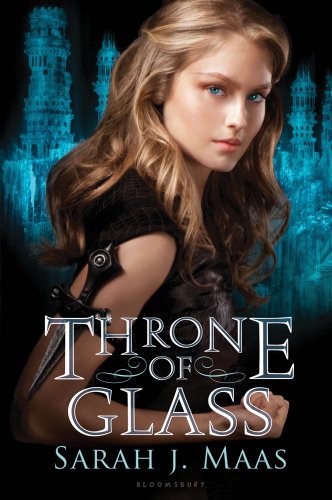
Throne of Glass is a epic fantasy novel series by American author Sarah J. Maas, beginning with the entry of the same name, released on August 2, 2012. The story follows the journey of Celaena Sardothien, a teenage assassin in a corrupt kingdom with a tyrannical ruler, the King of Adarlan. As the story progresses, Celaena forms unexpected bonds and uncovers a conspiracy amidst her adventures. The series concluded with the eighth book in October 2018.
- The Stormlight Archive
series15 books2010
part of Cosmere
similar byadventurousfantasy+2 more
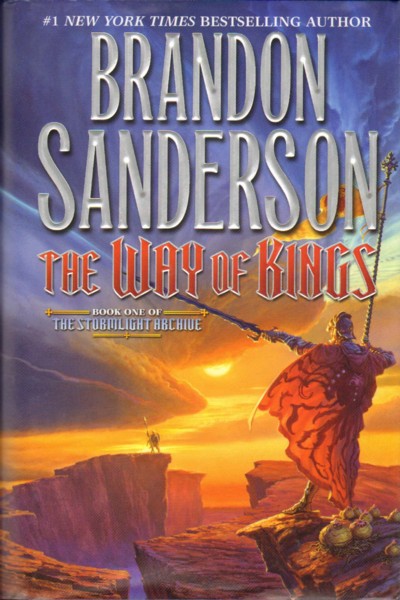
The Stormlight Archive is a high fantasy novel series written by American author Brandon Sanderson, planned to consist of ten novels. As of 2024, the series comprises five published novels and two novellas, set within Sanderson's broader Cosmere universe. The first novel, The Way of Kings, was published on August 31, 2010. The second novel, Words of Radiance, was published on March 4, 2014 and debuted at number one on The New York Times Best Seller List. This was repeated by Oathbringer and Rhythm of War. The fifth novel, Wind and Truth, was released December 6, 2024. Sanderson has indicated that he will start drafting the latter half of the series after he finishes writing the upcoming Era Three Mistborn trilogy and the two Elantris sequels. The series has been adapted as a VR Experience and a tabletop roleplaying game.
- The World of Riverside
series72 books1982
similar bypolitical intriguefantasy
Ellen Kushner's Riverside sequence begins with Swordspoint (1987), a genre-defining 'fantasy of manners' novel about hired swordsmen and aristocratic intrigue in a nameless city, and continues through The Privilege of the Sword and The Fall of the Kings (co-written with Delia Sherman). The wider World of Riverside has since expanded into shared-world short fiction and anthologies, such as Swords of Riverside, contributed to by numerous other writers.
- Raybearer
series3 books2020
similar byfantasy+4 more
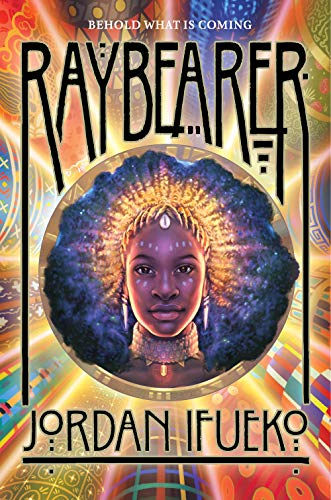
Jordan Ifueko's Raybearer follows Tarisai, raised in isolation and sent to compete for a spot among the emperor's council of magically bonded companions, only to discover she's been trained since childhood to kill the prince she's meant to protect. Redemptor continues her reign as empress, dealing with the political and spiritual fallout of the choices she made, while The Maid and the Crocodile follows a different protagonist in the same world. The trilogy draws on West African-inspired myth and court politics rather than the medieval-European default of much YA fantasy.
- Celestial Kingdom
series4 books2022
similar byemotionalfantasy+2 more
Sue Lynn Tan's Celestial Kingdom duology reimagines the Chinese legend of the moon goddess Chang'e, following her daughter Xingyin as she seeks to free her mother from an enchantment binding her to the moon. It opens with Daughter of the Moon Goddess (2022) and concludes with Heart of the Sun Warrior, with the companion collection Tales of the Celestial Kingdom and the further novel Immortal extending the same mythic world.
- The Roots of Chaos
series3 books2019
similar bypolitical intrigue+2 more
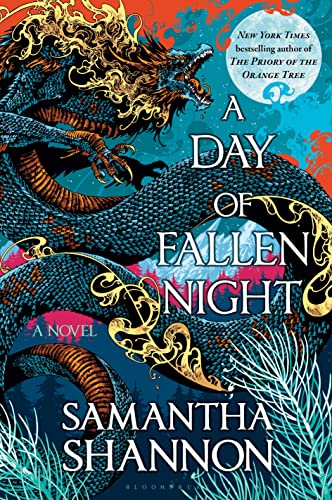
Samantha Shannon's The Priory of the Orange Tree opens a feminist retelling of the Saint George and the Dragon myth: Queen Sabran the Ninth of Inys faces pressure to secure an heir and hold her divided realm together as an ancient draconic enemy stirs. Multiple viewpoints carry the story, including Ead Duryan, a lady-in-waiting secretly protecting the queen through forbidden magic, and Tané, a dragonrider facing a life-changing choice, as Eastern and Western powers edge toward war instead of alliance. A Day of Fallen Night, set generations earlier in the same world, continues the Roots of Chaos cycle.
- His Dark Materials Universe
universe13 books1995
Start hereHis Dark Materials · Start here
similar byadventurousfantasy+1 more
In a world like ours and unlike it, every human soul walks outside the body in the shape of an animal — a daemon, who speaks, who cannot be lied to, and who settles into one fixed form only when childhood ends. This is the country of His Dark Materials: a company of parallel worlds across which an invisible dust of consciousness drifts down upon the waking mind; where a Church that calls itself the Magisterium would sooner sever a child's soul than let that Dust be understood; and where a golden instrument, the alethiometer, answers true questions for anyone with the patience to read it. Philip Pullman's design stands in two trilogies and a scatter of shorter tales. His Dark Materials — Northern Lights (published in America as The Golden Compass), The Subtle Knife, and The Amber Spyglass — carries Lyra Belacqua from the rooftops of a shadow Oxford across the borders between worlds. The Book of Dust returns to that same territory: La Belle Sauvage looks back to Lyra as an infant carried through a great flood, while The Secret Commonwealth follows her grown and less certain into adulthood, with a concluding volume closing the arc. Around them sit slim companion books — Lyra's Oxford, Once Upon a Time in the North, Serpentine — and Nicholas Wright's stage adaptation, made with Pullman's blessing. The register is grave and luminous at once, its title lifted from Milton and its quarrel drawn from Blake: a story that takes the side of curiosity, love, and the physical world against any authority that would forbid them. It reads as adventure — armoured bears, aeronauts, knife-cut windows between skies — yet reasons like philosophy. Begin with Northern Lights / The Golden Compass and read the first trilogy through before turning to The Book of Dust, which deepens everything the first has already made you feel.
- The Daevabad Trilogy
series5 books2017
similar bypolitical intriguefantasy
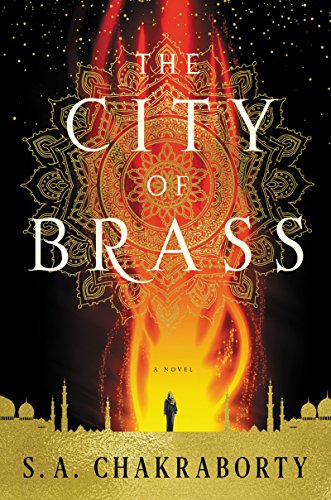
Nahri is a con artist and unlicensed healer working the streets of 18th-century Cairo who accidentally summons Dara, a formidable djinn warrior, during a fake exorcism gone wrong. He recognizes her as a lost heir of the Nahids, once-rulers of the djinn, and brings her to Daevabad, the hidden city her ancestors built, where old tribal and political conflicts are waiting to reignite. S. A. Chakraborty's Daevabad Trilogy follows Nahri through The City of Brass, The Kingdom of Copper, and The Empire of Gold as she's pulled into a fight over the city's throne and its buried history.
- Malazan
universe36 books1999
Start hereMalazan Book of the Fallen · Start here
similar by+2 more
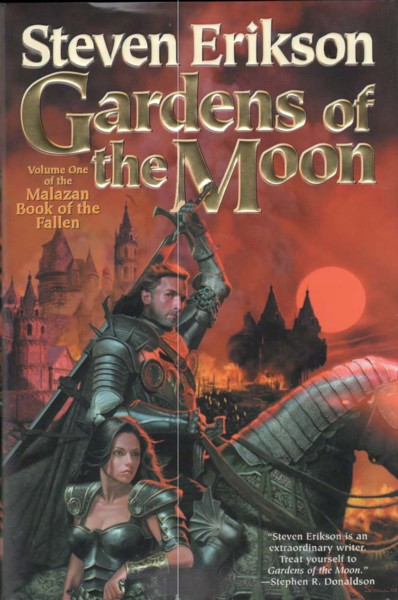
Pity the historian who tries to map this world; pity more the god who thinks he rules it. The Malazan Empire marches across continents on the boots of its common soldiers, and above them move Ascendants — mortals grown into something like gods, and gods worn thin as old coin. Magic is drawn from Warrens, roads of power threaded through reality; the dead keep their grudges; and every empire, however vast, is a wager against time. This is epic fantasy told from the mud, where a sapper cracking a joke weighs as much as an immortal settling a feud older than the human race. The world began as a tabletop campaign two friends built in the 1980s, and it still moves by two hands. Steven Erikson's ten-volume Malazan Book of the Fallen is the spine — Gardens of the Moon, Deadhouse Gates, Memories of Ice, on through The Crippled God — each book a near-standalone campaign that only later reveals how it locks together. Ian C. Esslemont walks the same years from a different vantage in his Novels of the Malazan Empire (Night of Knives, Return of the Crimson Guard onward). Around them stand the prequels: Erikson's Kharkanas Trilogy, archaic and elegiac, chronicling a doomed elder people, and Esslemont's brisker Path to Ascendancy, following two adventurers before they became legends. Erikson's Witness sequence carries the tale forward, and novellas of the genial necromancers Bauchelain and Korbal Broach supply the gallows comedy. Nothing is explained to you; comprehension is earned, and that is the pleasure. The themes run deep — compassion set against cruelty, the toll empires charge, civilizations that fall and are mourned. Begin where the saga does, with Erikson's Gardens of the Moon, and read the ten in publication order; the prequels are for the already-initiated. Trust that confusion is the price of entry.
- Queen's Thief
series41 books1996
similar bypolitical intriguefantasy+1 more
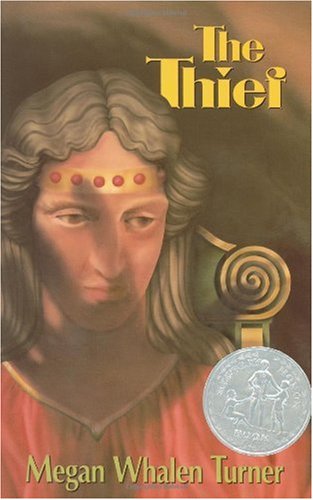
Queen's Thief begins with The Thief, in which a boastful, underestimated young thief is pulled from prison to steal a legendary stone for the king's scholar, only for the story to reveal by its end that its narrator has been playing a much longer game than the reader realized. Megan Whalen Turner's series expands from that single heist into court intrigue and small-scale warfare among a set of Mediterranean-flavored kingdoms, with later books often shifting whose perspective the reader trusts. It's known for close, deliberately withheld narration as much as its plotting.
- The Immortals
series6 books1992
part of Tortall
similar byadventurousfantasy+1 more
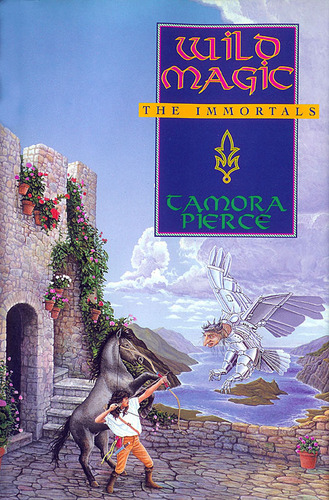
Tamora Pierce's Immortals quartet follows Daine, a young woman whose 'wild magic' lets her communicate with and shapeshift among animals, as she's drawn into the kingdom of Tortall's defense against immortal creatures -- griffins, dragons and darker things -- released back into the world after centuries sealed away. Beginning with Wild Magic, the four books pair Daine's personal coming-of-age with an escalating magical threat, and connect to Pierce's earlier Song of the Lioness quartet through several shared characters.
- Seven Kingdoms / Graceling Realm
series6 books2008
similar bypolitical intriguefantasy+2 more
Graceling introduces the Seven Kingdoms, where some people are born with a Grace, an extreme and often dangerous specialized talent, and follows Katsa, whose Grace for killing has made her a weapon for a manipulative king, as she learns to use it on her own terms instead. Kristin Cashore continued the world with the prequel-adjacent Fire, set in a neighboring land, and the sequel Bitterblue, then extended it further north with Winterkeep and Seasparrow. Each later book largely follows a new protagonist rather than continuing straight through Katsa's story.
- The Grisha
series9 books2012
part of Grishaverse
similar byadventurousfantasy+1 more
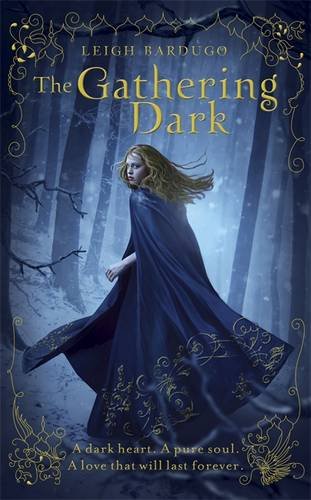
Leigh Bardugo is an American fantasy author. She is best known for her young adult Grishaverse novels, which include the Shadow and Bone trilogy and the Six of Crows and King of Scars duologies. She also received acclaim for her paranormal fantasy adult debut, Ninth House. The Shadow and Bone and Six of Crows series have been adapted into Shadow and Bone by Netflix, and Ninth House will be adapted by Amazon Studios; Bardugo is an executive producer on both works.
- Malazan Book of the Fallen
series20 books1999
part of Malazan
similar byfantasy+2 more
The Malazan Book of the Fallen is a series of epic fantasy novels written by the Canadian author Steven Erikson. The series, published by Bantam Books in the U.K. and Tor Books in the U.S., consists of ten volumes, beginning with Gardens of the Moon (1999) and concluding with The Crippled God (2011). Erikson's series presents the narratives of a large cast of characters spanning thousands of years across multiple continents.
- Tigana
Guy Gavriel Kaystandalone novel1990
similar bypolitical intrigueemotionalrebellion and revolutionfantasy
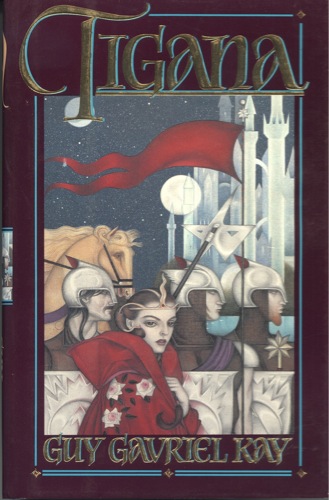
Tigana is a 1990 fantasy novel by Canadian writer Guy Gavriel Kay. The novel is set in a region called the Peninsula of the Palm, which somewhat resembles Renaissance Italy as well as the Peloponnese in shape.
- Meredith Gentry
series10 books2000
similar bypolitical intrigueparanormal romanceurban fantasy+2 more
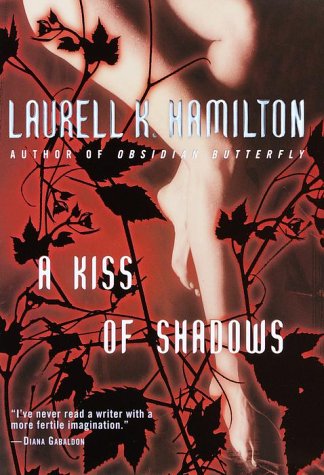
The Merry Gentry series is a series of urban fantasy novels by New York Times bestselling author Laurell K. Hamilton. The series is told through the lens of the titular character Meredith "Merry" Gentry, a faerie princess turned private investigator in a world where faeries exist and are known to the general public. The first book in the series, A Kiss of Shadows, was released by Del Rey on October 3, 2000. There are currently nine books in the series.
- Chronicles of the Cheysuli
series10 books1984
similar byadventurousfantasy+1 more
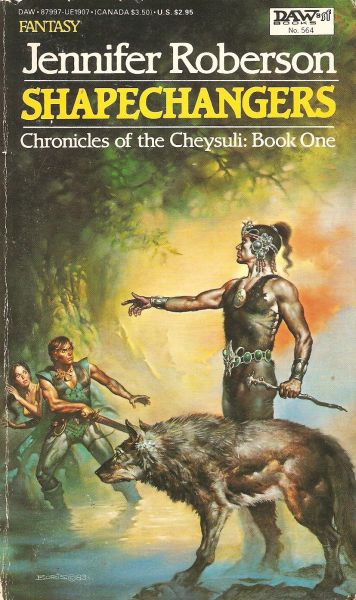
The Cheysuli are a clan of warriors who can shift into animal form at will, once trusted allies of the kings of Homana until a princess's elopement with a Cheysuli liege man triggers a war that leaves her people hunted exiles in their own land. Jennifer Roberson's Chronicles of the Cheysuli opens a generation later with Alix, daughter of that forbidden union, as she comes to terms with the shapechanging magic in her own blood and an ancient prophecy she can't escape. The series spans multiple generations of the same bloodline across its eight books.