More like Non-Zero Probabilities
anchored on:science fictionnear futurepost-apocalypticidentityfaith and religionnorth america+2 more
but
- Stranger in a Strange Land
Robert A. Heinleinstandalone novel1961
similar byreflectivenear futureidentityfaith and religionscience fictionnorth america
Stranger in a Strange Land is a 1961 science fiction novel by the American author Robert A. Heinlein. It tells the story of Valentine Michael Smith, a human who comes to Earth in early adulthood after being born on the planet Mars and raised by Martians, and explores his interaction with and eventual transformation of Terran culture.
- The Drowned World
J. G. Ballardstandalone novel1962
similar byreflectivenear futurescience fictionpost-apocalypticsurvivalbig city+1 more
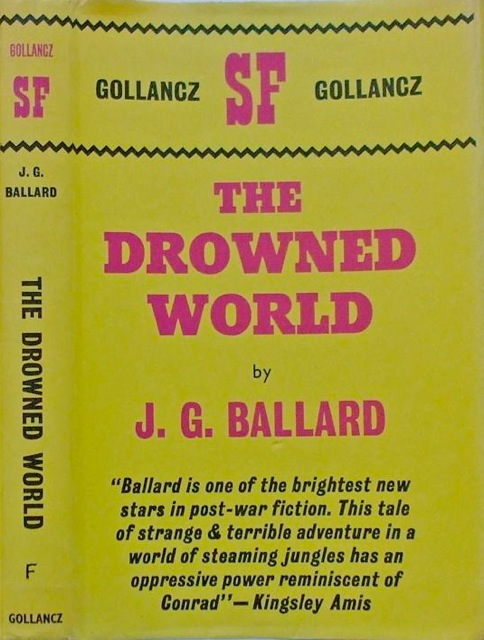
The Drowned World is a 1962 science fiction novel by J. G. Ballard. It first appeared in shortened form in the January 1962 issue of the UK edition of Science Fiction Adventures and was published in book form later that year by Victor Gollancz Ltd in London; an American edition followed from Berkley Medallion. Critics have grouped The Drowned World with Ballard's early science-fiction novels as part of an "ambiguous apocalypse" sequence that also includes The Drought and The Crystal World, from the period in which he was developing the ideas he described as "inner space". Set in a future in which solar radiation has melted the polar ice caps and transformed London into a flooded tropical lagoon, the novel follows biologist Robert Kerans as he becomes increasingly drawn toward the altered environment rather than toward restoring the old social order.
- Station Eleven
Emily St. John Mandelstandalone novel2014
similar byreflectivenear futurescience fictionpost-apocalypticsurvivalnorth america+1 more
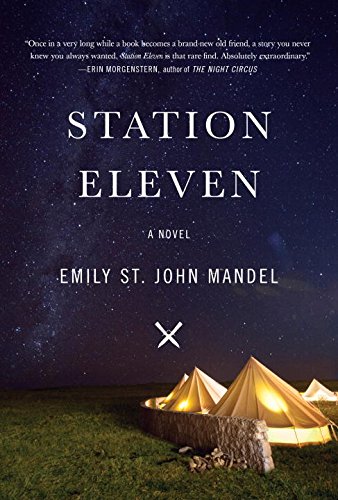
"Set in the days of civilization's collapse, Station Eleven tells the story of a Hollywood star, his would-be savior, and a nomadic group of actors roaming the scattered outposts of the Great Lakes region, risking everything for art and humanity. One snowy night a famous Hollywood actor slumps over and dies onstage during a production of King Lear. Hours later, the world as we know it begins to dissolve. Moving back and forth in time — from the actor's early days as a film star to fifteen years in the future, when a theater troupe known as the Traveling Symphony roams the wasteland of what remains — this suspenseful, elegiac, spellbinding novel charts the strange twists of fate that connect five people: the actor, the man who tried to save him, the actor's first wife, his oldest friend, and a young actress with the Traveling Symphony, caught in the crosshairs of a dangerous self-proclaimed prophet." (source: Goodreads.com)
- Childhood's End
Arthur C. Clarkestandalone novel1953
similar byreflectivenear futureidentityscience fiction
Childhood's End is a 1953 science fiction novel by the British author Arthur C. Clarke. The story follows a peaceful alien invasion of Earth by mysterious Overlords, whose arrival begins decades of apparent utopia under indirect alien rule, at the cost of human identity and culture.
- I Will Fear No Evil
Robert A. Heinleinstandalone novel1970
similar byreflectivenear futureidentityscience fiction
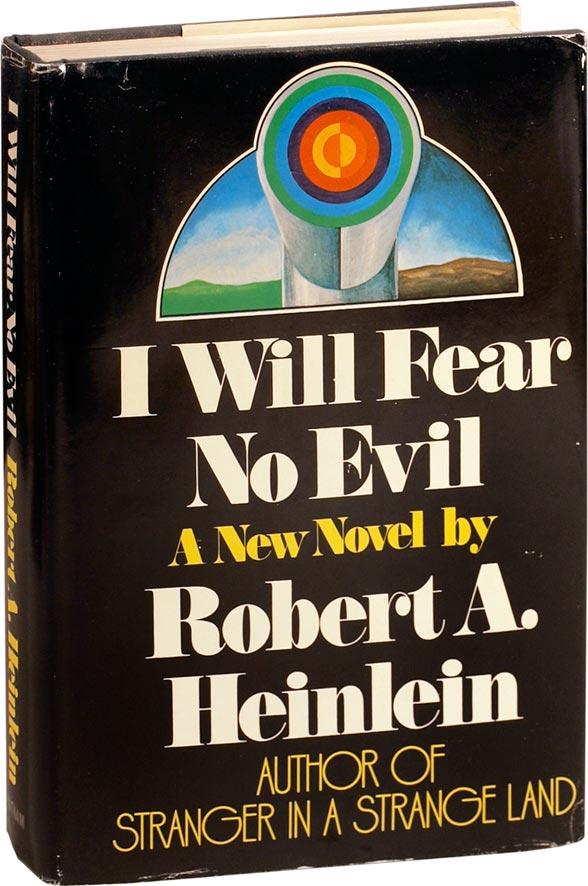
I Will Fear No Evil is a science fiction novel by American writer Robert A. Heinlein, originally serialised in Galaxy and published in hardcover in 1970. The title is taken from Psalm 23:4.
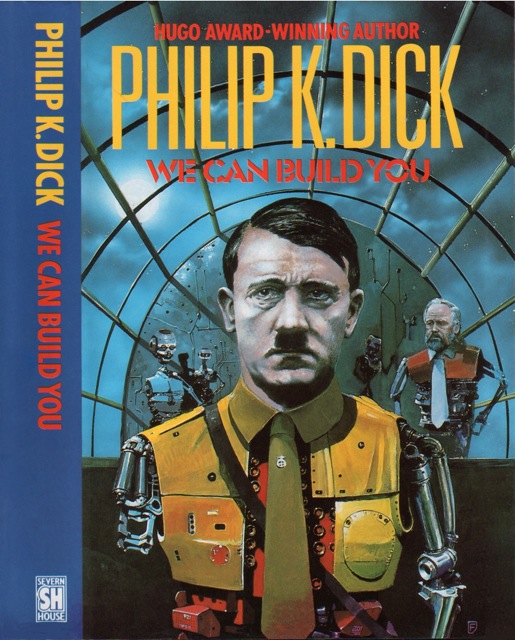
- We Can Build You
Philip K. Dickstandalone novel1972
similar byreflectivenear futureidentityscience fictionnorth america
We Can Build You is a 1972 science fiction novel by American writer Philip K. Dick. Written in 1962 as The First in Our Family, it remained unpublished until appearing in serial form as A. Lincoln, Simulacrum in the November 1969 and January 1970 issues of Amazing Stories magazine, re-titled by editor Ted White. The novel was issued as a mass market paperback original by DAW Books in 1972, its final title provided by publisher Donald A. Wollheim. Its first hardcover edition was published in Italy in 1976, and Vintage issued a trade paperback in 1994.
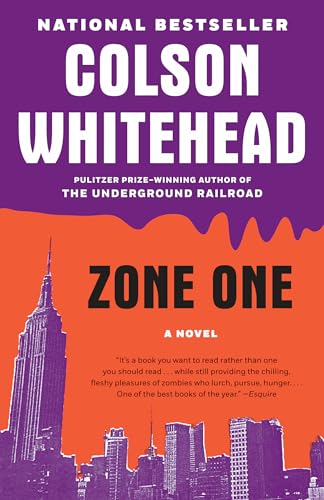
- Zone One
Colson Whiteheadstandalone novel2011
similar byreflectivenear futurescience fictionpost-apocalypticsurvivalnorth americabig city
Zone One is a 2011 novel by American author Colson Whitehead. Blending elements of genre fiction and literary fiction, the novel takes place in a post-apocalyptic United States ravaged by zombies. Whitehead has stated that the novel was partly an attempt to return to his adolescent fascination with horror writer Stephen King and science fiction icon Isaac Asimov.
- Wolf and Iron
Gordon R. Dicksonstandalone novel1990
similar byreflectivenear futurescience fictionpost-apocalypticsurvivalnorth america
One of the many end of the world as we know it books with the focus on survival and getting back to nature. Man relearning how to use what the earth provides. Very good book even though it is rather black and white. You're either good or bad. Very simplistic.
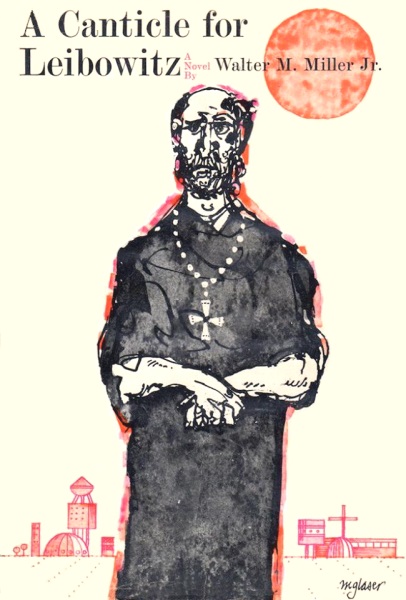
- Saint Leibowitz
series6 books1955
completed
similar byscience fictionfaith and religionpost-apocalypticnorth america+2 more
Walter M. Miller Jr.'s A Canticle for Leibowitz (1959), assembled from three novellas he had published earlier in the decade, follows the monks of a Catholic monastery in the post-nuclear American Southwest as they preserve fragments of scientific knowledge across centuries, watching civilization slowly rebuild itself and edge back toward the mistakes that destroyed it. Miller's posthumous sequel, Saint Leibowitz and the Wild Horse Woman, completed by Terry Bisson from his notes after his death and published in 1997, returns to the same abbey and its world decades later. Together the two novels form a sparse, decades-spanning series about memory, faith, and the cycles of civilization.
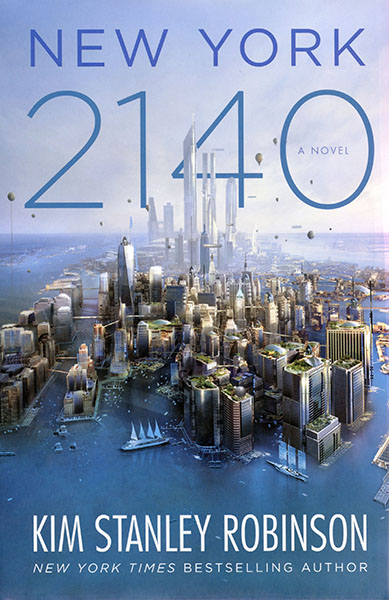
- New York 2140
Kim Stanley Robinsonstandalone novel2017
similar byreflectivenear futurescience fictionnorth americabig city+1 more
New York 2140 is a 2017 climate fiction novel by American science fiction author Kim Stanley Robinson. The novel is set in a New York City that has been flooded and altered by rising water.
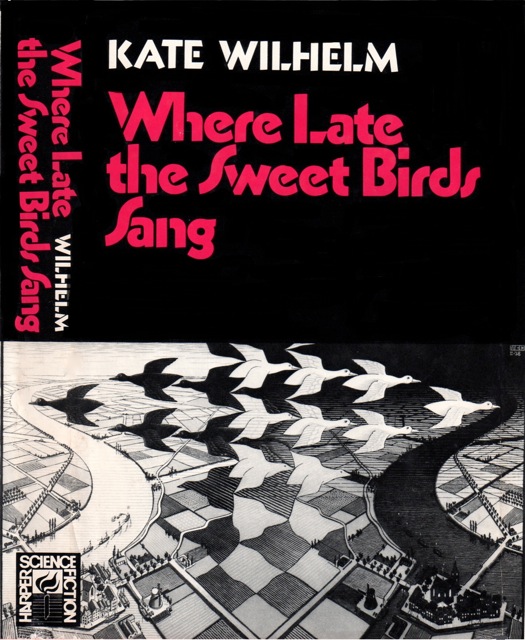
- Where Late the Sweet Birds Sang
Kate Wilhelmstandalone novel1976
similar bynear futurescience fictionpost-apocalypticsurvivalnorth america+2 more
Where Late the Sweet Birds Sang is a science fiction novel by American writer Kate Wilhelm, published in 1976. The novel is composed of three parts, "Where Late the Sweet Birds Sang," "Shenandoah," and "At the Still Point," and is set in a post-apocalyptic era, a concept popular among authors who took part in the New Wave Science Fiction movement in the 1960s.
- The Arrest
Jonathan Lethemstandalone novel2020
similar byreflectivenear futurescience fictionpost-apocalypticsurvivalnorth america
The Arrest is the 12th novel by Jonathan Lethem, published in November 2020. It is a post-apocalyptic and pastoral science fiction story set in a small Maine town following the global collapse of technology. The pastoral life of the town is challenged when a nuclear-powered vehicle arrives, carrying the novel's antagonist. Reception of the novel was largely positive.
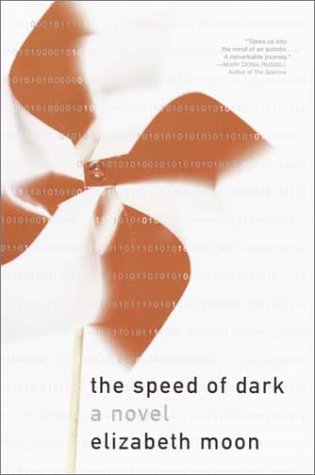
- The Speed of Dark
Elizabeth Moonstandalone novel2002
similar byreflectivenear futureidentityscience fictionnorth america
From the Penguin Random House website In the near future, disease will be a condition of the past. Most genetic defects will be removed at birth; the remaining during infancy. Lou Arrendale, a high-functioning autistic adult, is a member of the lost generation, born at the wrong time to reap the rewards of medical science. He lives a low-key, independent life. But then he is offered a chance to try a brand-new experimental "cure" for his condition. With this treatment Lou would think and act and be just like everyone else. But if he was suddenly free of autism, would he still be himself? Would he still love the same classical music — with its complications and resolutions? Would he still see the same colors and patterns in the world—shades and hues that others cannot see? Most important, would he still love Marjory, a woman who may never be able to reciprocate his feelings? Now Lou must decide if he should submit to a surgery that might completely change the way he views the world ... and the very essence of who he is.
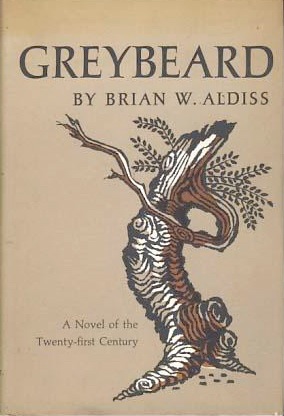
- Greybeard
Brian W. Aldissstandalone novel1964
similar byreflectivenear futurescience fictionpost-apocalypticsurvival
Long after a catastrophe that has sterilized humans and most other mammals, the 54-year-old protagonists—Greybeard and Martha—take a tour of entropic England. In scattered self contained communities only the old survive, while outside these enclaves nature comes back into its own, peopling the land with new animal life.
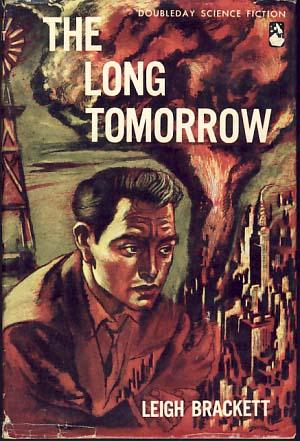
- The Long Tomorrow
Leigh Brackettstandalone novel1955
similar byreflectivefaith and religionscience fictionpost-apocalypticsurvivalnorth america
The Long Tomorrow is a post-apocalyptic science fiction novel by American writer Leigh Brackett, originally published by Doubleday & Company, Inc in 1955. Set in the aftermath of a nuclear war, it portrays a world where scientific knowledge is feared and restricted. It was nominated for a Hugo Award in 1956.
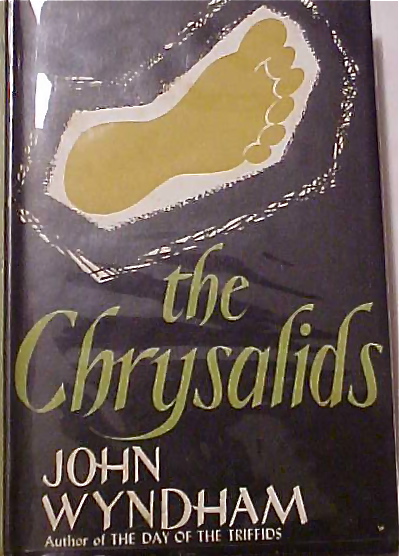
- The Chrysalids
John Wyndhamstandalone novel1955
similar byreflectivescience fictionpost-apocalypticsurvival+2 more
The Chrysalids is a science fiction novel by British writer John Wyndham, first published in 1955 by Michael Joseph. It is the least typical of Wyndham's major novels, but regarded by some as his best. An early manuscript version was entitled Time for a Change.
- The Dog Stars
Peter Hellerstandalone novel2012
similar byreflectivenear futurescience fictionpost-apocalypticsurvivalnorth america
The Dog Stars is a 2012 post-apocalyptic fiction novel by Peter Heller. It follows a pilot and mechanic, Hig, who is surviving at an abandoned airport after a pandemic. He meets other survivors, including a woman, while dealing with grief for his old life. The book was adapted into a movie, also called The Dog Stars, released in 2026.
- Earthseed
series7 books1993
similar bynear futurefaith and religionscience fictionpost-apocalypticsurvivalnorth america
Octavia E. Butler's Earthseed novels, Parable of the Sower and Parable of the Talents, follow Lauren Olamina as she survives the collapse of a climate-ravaged, near-future United States and founds a belief system built on the idea that "God is Change." The two-book series was left unfinished at Butler's death; a planned third novel, Parable of the Trickster, was never completed. Later graphic-novel adaptations retell the same two stories rather than continuing the narrative.
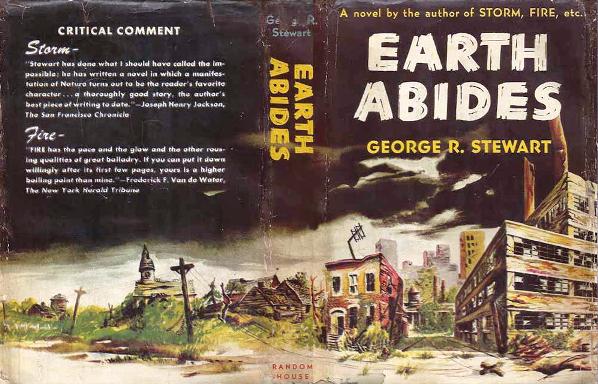
- Earth Abides
George R. Stewartstandalone novel1949
similar byreflectivescience fictionpost-apocalypticsurvivalnorth america
The novel tells the story of the fall of civilization from deadly disease and the emergence of a new culture with simpler tools. Set in the 1940s in Berkeley, California, the story is told by Isherwood Williams, who emerges from isolation in the mountains to find almost everyone dead. en.wikipedia.org
- Time Is the Simplest Thing
Clifford D. Simakstandalone novel1961
similar byreflectivenear futurescience fictionnorth america+1 more
Time Is the Simplest Thing is a science fiction novel by American writer Clifford D. Simak, first published in 1961. The story combines paranormal abilities with themes of space and time travel. The underlying theme is intolerance of ordinary people towards those with unusual abilities.
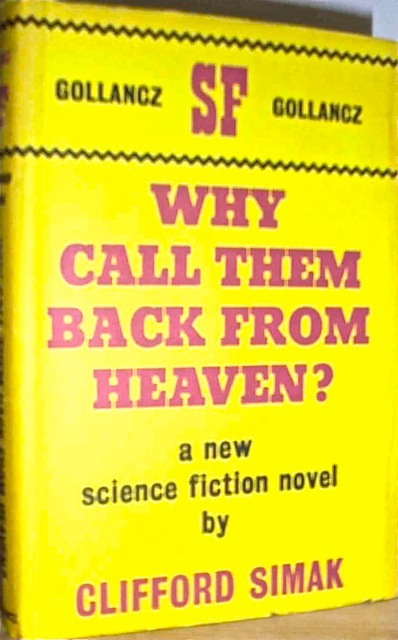
- Why Call Them Back from Heaven?
Clifford D. Simakstandalone novel1967
similar byreflectivenear futurefaith and religionscience fiction
Why Call them Back From Heaven? is a 1967 science fiction novel by American writer Clifford D. Simak. It was the initial volume in the Ace Science Fiction Specials line.
- Dying Inside
Robert Silverbergstandalone novel1972
similar byreflectiveidentityscience fictionnorth americabig city
Dying Inside is a 1972 science fiction novel by American writer Robert Silverberg. It was first serialized in Galaxy in 1972 and published in book form by Charles Scribner's Sons later that year. The novel follows David Selig, a middle-aged telepath in contemporary New York City, as the mind-reading ability that has shaped his life begins to disappear.
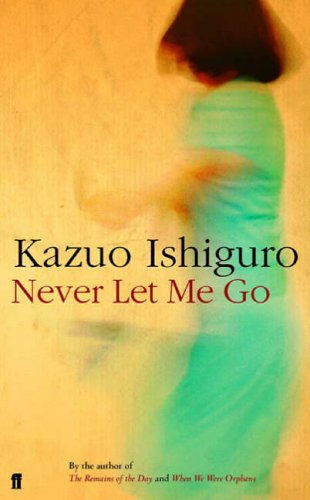
- Never Let Me Go
Kazuo Ishigurostandalone novel2005
similar byreflectivenear futureidentityscience fiction
Never Let Me Go is a 2005 science fiction novel by the British author Kazuo Ishiguro. It was shortlisted for the 2005 Man Booker Prize, for the 2006 Arthur C. Clarke Award and the 2005 National Book Critics Circle Award. Time magazine named it the best novel of 2005. It included the novel in its '100 Best English-language novels published since 1923—the beginning of TIME'. It also received an ALA Alex Award in 2006. A film adaptation directed by Mark Romanek was released in 2010.
- A Gift Upon the Shore
M. K. Wrenstandalone novel1990
similar byreflectivenear futurescience fictionpost-apocalypticsurvival+1 more
A post-apocalypse novel, saving books for posterity.