More like Obsessions
anchored on:science fictiontime travelbody swapour worldcontemporaryidentity
but
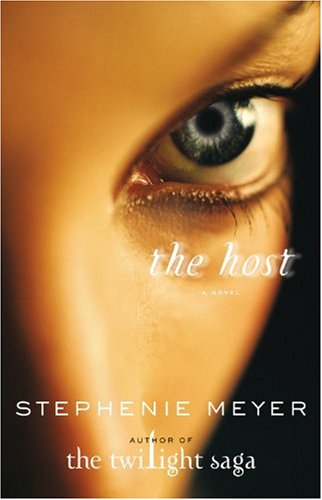
- The Host
Stephenie Meyerstandalone novel2008
similar bytensebody swapour worldidentityscience fiction
The earth has been invaded by a species that take over the minds of their human hosts while leaving their bodies intact, and most of humanity has succumbed. But Melanie Stryder refuses to fade away. Wanderer, the invading "soul" who has been given Melanie's body, knew about the challenges of living inside a human: the overwhelming emotions, the too vivid memories. But there was one difficulty Wanderer didn't expect: the former tenant of her body refusing to relinquish possession of her mind. Melanie fills Wanderer's thoughts with visions of the man Melanie loves--Jared, a human who still lives in hiding. Unable to separate herself from her body's desires, Wanderer yearns for a man she's never met. As outside forces make Wanderer and Melanie unwilling allies, they set off to search for the man they both love.--From publisher description.
- Dark Matter
Blake Crouchstandalone novel2016
similar bytenseour worldcontemporaryidentityscience fiction
Jason Dessen, college physics professor, husband and father, is kidnapped and taken to a parallel universe where his counterpart had dedicated his life to inventing a method of traveling between an infinity of parallel universes.
- The Second Trip
Robert Silverbergstandalone novel1972
similar bybody swapour worldidentityscience fiction+1 more
The Second Trip is a 1972 science fiction novel by American writer Robert Silverberg. Prior to its publication by Doubleday, it was published in serialized form in Amazing Stories from July to September 1971.
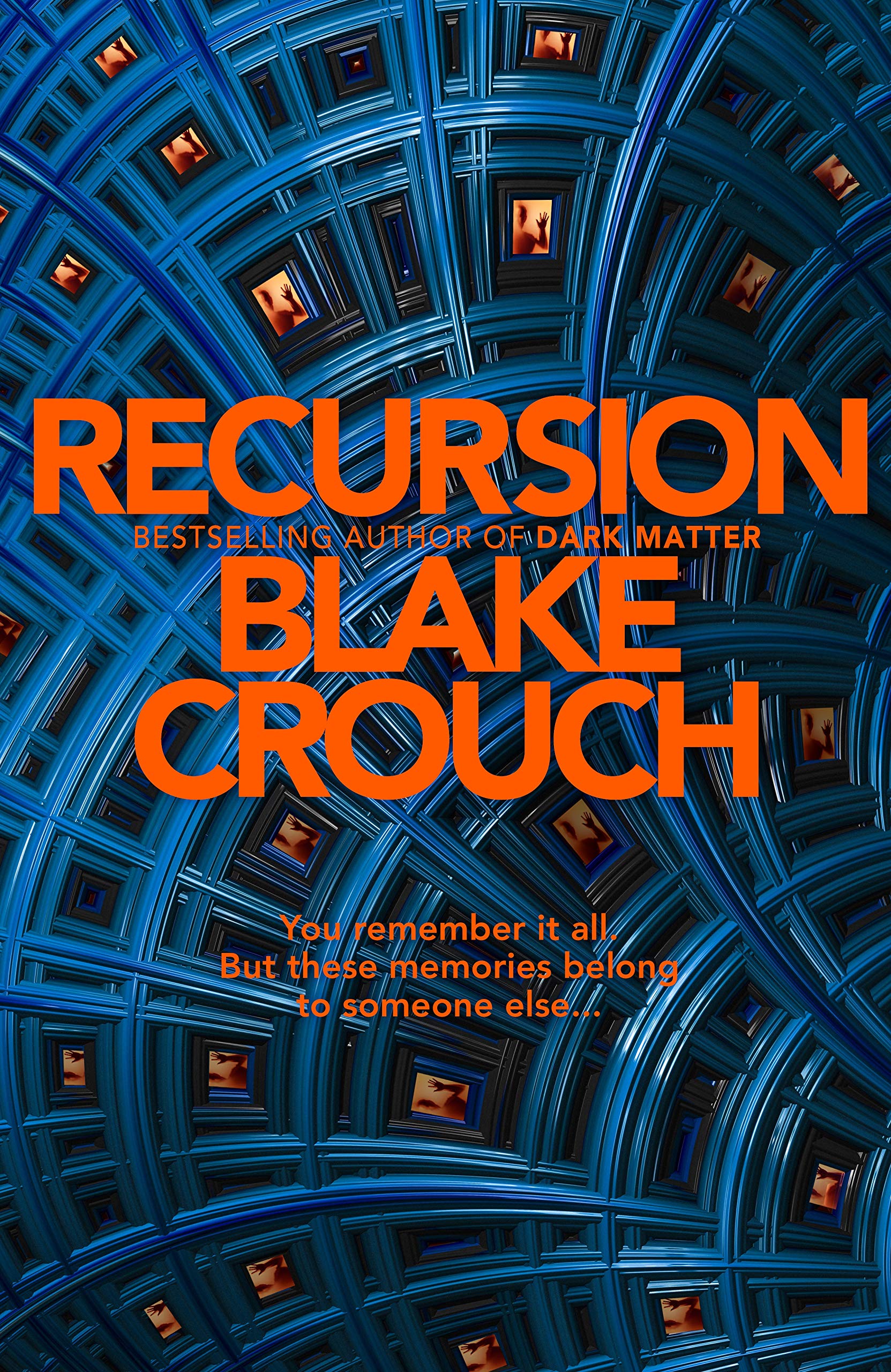
- Recursion
Blake Crouchstandalone novel2019
similar bytenseour worldcontemporaryidentityscience fictiontime travel
Recursion is a thriller science fiction novel by American writer Blake Crouch, first published in the United States in June 2019 by the Crown Publishing Group, a subsidiary of Penguin Random House. The novel explores themes of memory, identity, and time.
- All This and More
Peng Shepherdstandalone novel2024
similar bytenseour worldcontemporaryidentityscience fictiontime travel
A game show uses a technology that allows contestants to revise their past lives to change their present ones.
- WWW Trilogy
series3 books2009
similar byour worldcontemporaryscience fiction+2 more
The WWW Trilogy is a trilogy of science-fiction novels by Canadian science fiction author Robert J. Sawyer. The first book, Wake, was originally serialized in four parts in Analog Science Fiction and Fact from November 2008 to March 2009, published in book form through Ace on April 7, 2009, and was followed by the second book, Watch, on April 6, 2010. Wonder was published in 2011.
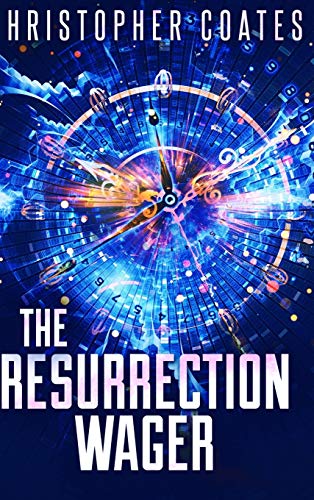
- The Resurrection Wager
Christopher Coatesstandalone novel2018
similar bytenseour worldcontemporaryscience fictiontime travel
• "When a man of science and a man of faith develop the ability to go back in time, there is only one place for them to go to demonstrate their new technology. After they make a wager about whether or not the resurrection of Jesus really happened, the two set out to prove it one way or the other. Along the way, they face obstacles and challenges from those who want to use their technology for personal gain." ― quoted from this book's product page on Goodreads.com as of 2020-05-28.
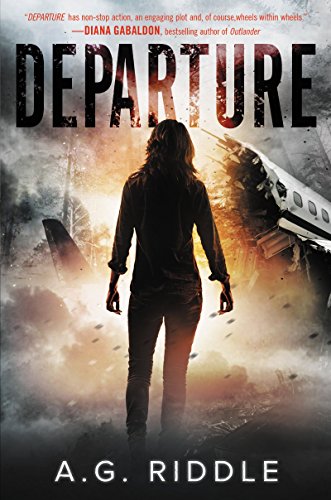
- Departure
A. G. Riddlestandalone novel2014
similar bytenseour worldcontemporarytime travelscience fiction+1 more
"The world's past and future rests in the hands of five unwitting strangers in this definitive edition of A. G. Riddle's time-traveling, mind-bending speculative thriller. En route to London from New York, Flight 305 suddenly loses power and crash-lands in the English countryside, plunging a group of strangers into a mysterious adventure that will have repercussions for all of humankind.Struggling to stay alive, the survivors soon realize that the world they've crashed in is very different from the one they left. But where are they? Why are they here? And how will they get back home? Five passengers seem to hold clues about what's really going on: writer Harper Lane, venture capitalist Nick Stone, German genetic researcher Sabrina Schroeder, computer scientist Yul Tan, and Grayson Shaw, the son of a billionaire philanthropist.As more facts about the crash emerge, it becomes clear that some in this group know more than they're letting on--answers that will lead Harper and Nick to uncover a far-reaching conspiracy involving their own lives. As they begin to piece together the truth, they discover they have the power to change the future and the past--to save our world. or end it. A wildly inventive and propulsive adventure full of hairpin twists, Departure is a thrilling tale that weaves together power, ambition, fate, memory, and love, from a bold and visionary talent"--
- Our Children's Children
Clifford D. Simakstandalone novel1974
similar bytenseour worldcontemporaryscience fictiontime travel
From the back cover of the first DAW printing: "They were our children's children, and they came one day from nowhere - walking through holes in the air into our world. By means of one-way time tunnels, they fled the ravening beasts with teeth, claws and tentacles, that reproduced like bacteria and were intelligent. They fled to escape the uncontrolled horror of their own far future, and we, their distant ancestors, housed and fed and comforted them, content in their assurance that the tunnel was securely guarded from the beasts, whatever or whoever they were. But then somebody up there slipped and the beasts were abroad..."
- Legion / Stephen Leeds
series5 books2012
similar byour worldcontemporaryidentityscience fiction+1 more
Legion, or the Stephen Leeds series, is a series of science fiction novellas created by American author Brandon Sanderson. Sanderson authored the first three stories : Legion, first published on August 31, 2012, Legion: Skin Deep in November 2014, and Legion: Lies of the Beholder in September 2018. Death and Faxes, co-authored by Max Epstein, David Pace, and Michael Harkins, was released in June 2022. The books have received favorable reviews.
- Hopscotch
Kevin J. Andersonstandalone novel2002
similar bytensebody swapour worldidentityscience fiction
From the flaps of the Bantam first edition: "Suppose you could switch bodies with another person? What exciting new experiences would you choose to explore? What forbidden desires would you indulge? Suppose someone stole your life–how far would you go to get it back? From ... author Kevin J. Anderson comes a pure adrenaline thriller of hijacked identities, elusive motives, and deeply buried secrets–a disturbing, thought-provoking excursion into a sleek, hedonistic society where nothing is your own...not even your soul. Hopscotch - For a fee, Eduard Swan will swap bodies with people in distress–those facing surgeries, emotional crises, moments of unpleasantness or discomfort they can't or would rather not deal with. Eduard will experience the suffering for them. It's a lucrative business, and in a world in which no one is required to feel any pain, there is no end of clients. But someone doesn't want to play by the rules. Someone doesn't want to return his body. And, unfortunately for Eduard, that someone is one of the world's most powerful men. Now Eduard has no choice but to steal back his life. He has the perfect alibi–or so he thinks. For even in a world where you can hopscotch from body to body, you always leave a trail. And following that trail is a relentless dispenser of "justice" named Daragon, a childhood friend, now a zealous and ambitious agent of state security, who won't let old friendships stand in the way of doing his duty. When Eduard goes on the run, hounded at every turn by Daragon, his only hope is two other childhood friends: Garth, a tormented artist who gains success beyond his wildest dreams, only to discover the terrible price of fame; and Teresa, a spiritual seeker who risks losing her own body to a fanatical religious cult as she embarks on a harrowing quest to find her true identity. Moving from underground hopscotch pleasure bars to the highest enclaves of power to a seamy underworld of illegal Phantoms, ancient minds who steal younger bodies in a quest for eternal life, Eduard and his friends seek the meaning of identity in a society in which appearances mean everything–and nothing–and where everything is relative...even murder."
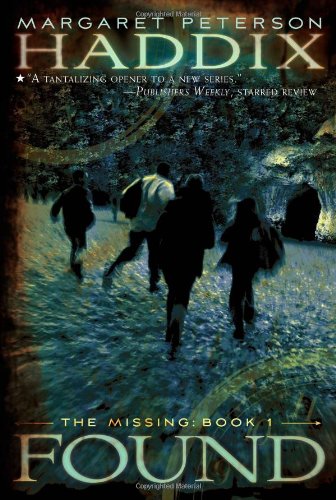
- The Missing
series10 books2008
similar byscience fictiontime travelcontemporaryidentity+2 more
The Missing is a series of fictional young-adult novels written by Margaret Peterson Haddix. It tells the story of famous children from history stolen by futuristic time travelers from their place in time and accidentally sent to the 21st century as babies. They are then adopted by families in the 21st century. Because Jonah is one of the stolen children, he, along with his non-adopted sister Katherine, must help return the missing kids to their rightful places in history and fix time before it is destroyed. The first book in the series, Found, was published on April 22, 2008. The series continued with book titles Sent, Sabotaged, Torn, Caught, Risked, and Revealed. The eighth and final book, Redeemed, was released on September 8, 2015. There are also two ebook short stories, Sought and Rescued . Haddix originally intended the series to consist of only seven books. However, she stated that she had trouble closing out the series in seven books; leading to her decision to write Redeemed.
- Flashforward
Robert J. Sawyerstandalone novel1999
similar bytenseour worldidentityscience fictiontime travel
Flashforward is a science fiction novel by Canadian author Robert J. Sawyer first published in 1999. The novel is set in 2009. At CERN, the Large Hadron Collider accelerator is performing a run to search for the Higgs boson. The experiment has a unique side effect; the entire human race loses their consciousness for about two minutes. During that time, nearly everyone sees themselves roughly twenty-one years and six months in the future. Each individual experiences the future through the senses of their future self. This "flashforward" results in countless deaths and accidents involving vehicles, aircraft, and any other device needing human control at the time of the experiment. The novel was adapted into the 2009 television series FlashForward.
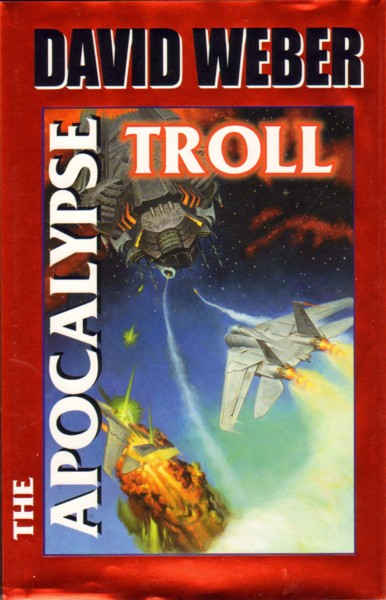
- The Apocalypse Troll
David Weberstandalone novel1999
similar bytenseour worldcontemporaryscience fictiontime travel
The Apocalypse Troll is a novel by American writer David Weber, first published by Baen Books in January 1999. It is a story about time travel and alien invasion.
- Southern Reach Trilogy
series4 books2014
similar byour worldcontemporaryscience fiction+2 more
The Southern Reach Series is a series of novels by the American author Jeff VanderMeer first published in 2014—Annihilation, Authority, Acceptance, and Absolution. The series takes its name from the secret agency that is central to the plot. In 2013, Paramount Pictures bought the movie rights for the series, and a film adaptation of Annihilation was made with Alex Garland as writer-director. The film was released in 2018. The most recent book in the series, Absolution, was released on 22 October 2024.
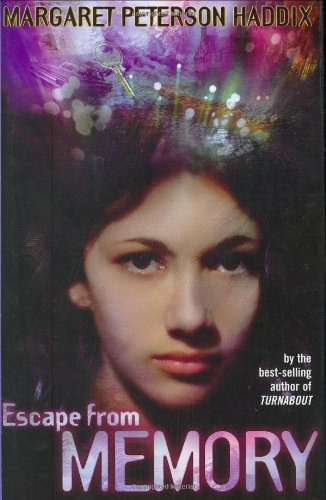
- Escape from Memory
Margaret Peterson Haddixstandalone novel2003
similar byour worldcontemporaryidentityscience fiction+1 more
Escape from Memory is a young adult novel by Margaret Peterson Haddix. It was published in 2003 by Simon & Schuster.
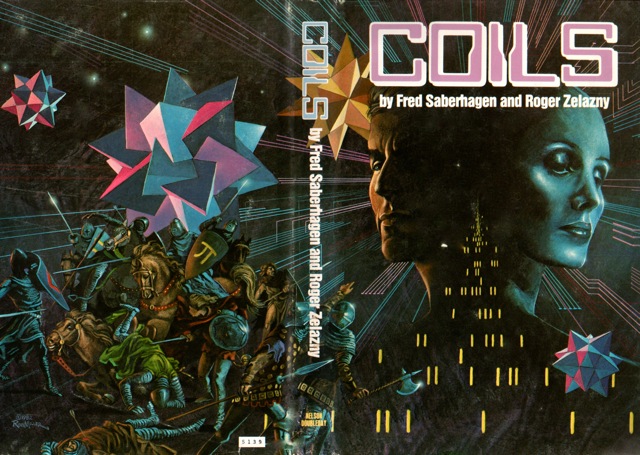
- Coils
Roger Zelazny & Fred Saberhagenstandalone novel1982
similar bytenseour worldcontemporaryidentityscience fiction
A man discovers that his memories of childhood are false, and when he begins to investigate his psychiatrist is murdered and his girlfriend is kidnapped. As his actual past begins to return to his memory, he realizes that he has the ability to mentally connect to computer circuitry, an ability he used to use for illegal advantage for the corporation which employed him, along with a small group of others with paranormal powers. He concludes that the corporation is behind all this and sets out to find and rescue his girlfriend while the corporation pursues him.
- End of the World Blues
Jon Courtenay Grimwoodstandalone novel2006
similar bytenseour worldcontemporaryidentityscience fiction
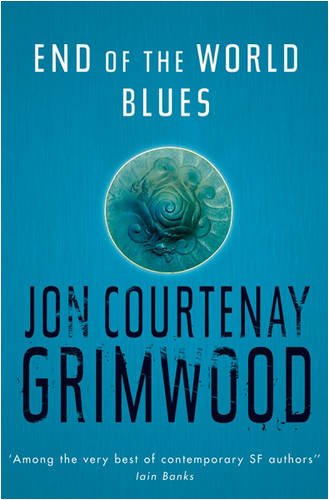
"Kit Nouveau didn't escape himself when he fled to Japan. Now running a biker bar in the Roppongi district of Tokyo, he's also sleeping with the wife of a High Yakusa ganglord. All things considered, being held up at gunpoint isn't a complete shock. The pale girl in the red cloak appearing from nowhere and punching an ivory spike into his attacker's head on the other hand." "Nijie has stolen fifteen million dollars, she's on the run, she's just killed a man and she has a cat who knows more than it should. It's a lot to deal with when you haven't even left school." "But Nijie is also Lady Neku, and in a sentient castle at the end of the world Lady Neku otherwise known as Baroness Nawa-no-ukiyo. Countess High Strange and chatelaine of Schlass Omga realizes that Kit has stolen some of her memories. What happens to a man who finally realises he can't outrun himself? Kit Nouveau is about to find out."--BOOK JACKET. "Kit Nouveau figured he'd already come to the end of the world. An Iraqi war veteran, expatriate, and part owner of Pirate Mary's, the best Irish bar in Tokyo, Kit had settled down to await the inevitable with barely a whimper. It wasn't exactly how Kit thought he'd end up, and he was right." "It's going to end up a lot worse." "A teenage runaway with fifteen million dollars in stolen cash and a taste for cosplay is about to save Kit's life in a lethal swirl of scarlet and bridal lace. Lady Neku, a.k.a. Countess of High Strange, has her own dangerous destiny to fulfill and it's mysteriously connected to Kit's ravaged past. Now Kit's only hope for redemption is to save an ex-girlfriend he tragically failed once before. But everyone says it's already too late. And she's left behind only one ominous clue: her suicide note."--BOOK JACKET.
- Footfall
Larry Niven & Jerry Pournellestandalone novel1985
similar bytenseour worldcontemporaryscience fiction
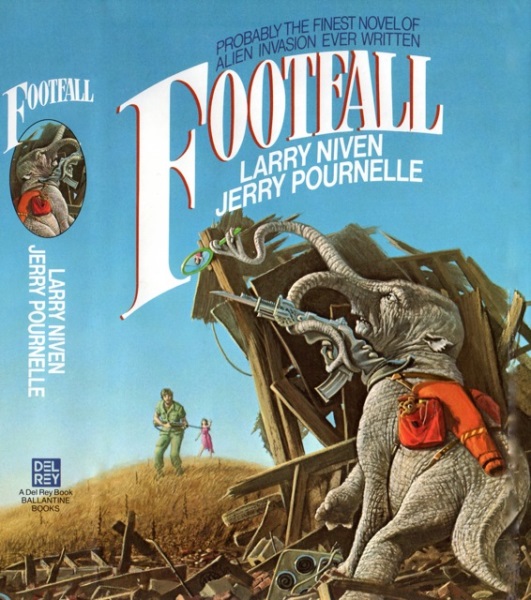
When aliens travel to Earth from Alpha Centauri, differences between alien and human psychology result in an unprovoked invasion, and the resulting resistance results in the aliens' use of a devastating weapon.
- The Duplicate
William Sleatorstandalone novel1988
similar bytenseour worldcontemporaryidentityscience fiction
"Sixteen-year-old David, finding a strange machine that creates replicas of living organisms, duplicates himself and suffers the horrible consequences when the duplicate turns against him." --summary, WorldCat library record {{OCLC|855408448}}
- The Green Futures of Tycho
William Sleatorstandalone novel1981
similar bytenseour worldcontemporaryscience fictiontime travel
Publisher's description: "When he finds an ancient, egg-shaped object with which he travels back and forth in time, eleven-year-old Tycho grapples with several terrible futures he sees for himself and his family."
- Erased
Christopher Coatesstandalone novel2025
similar bytenseour worldcontemporaryidentityscience fictiontime travel
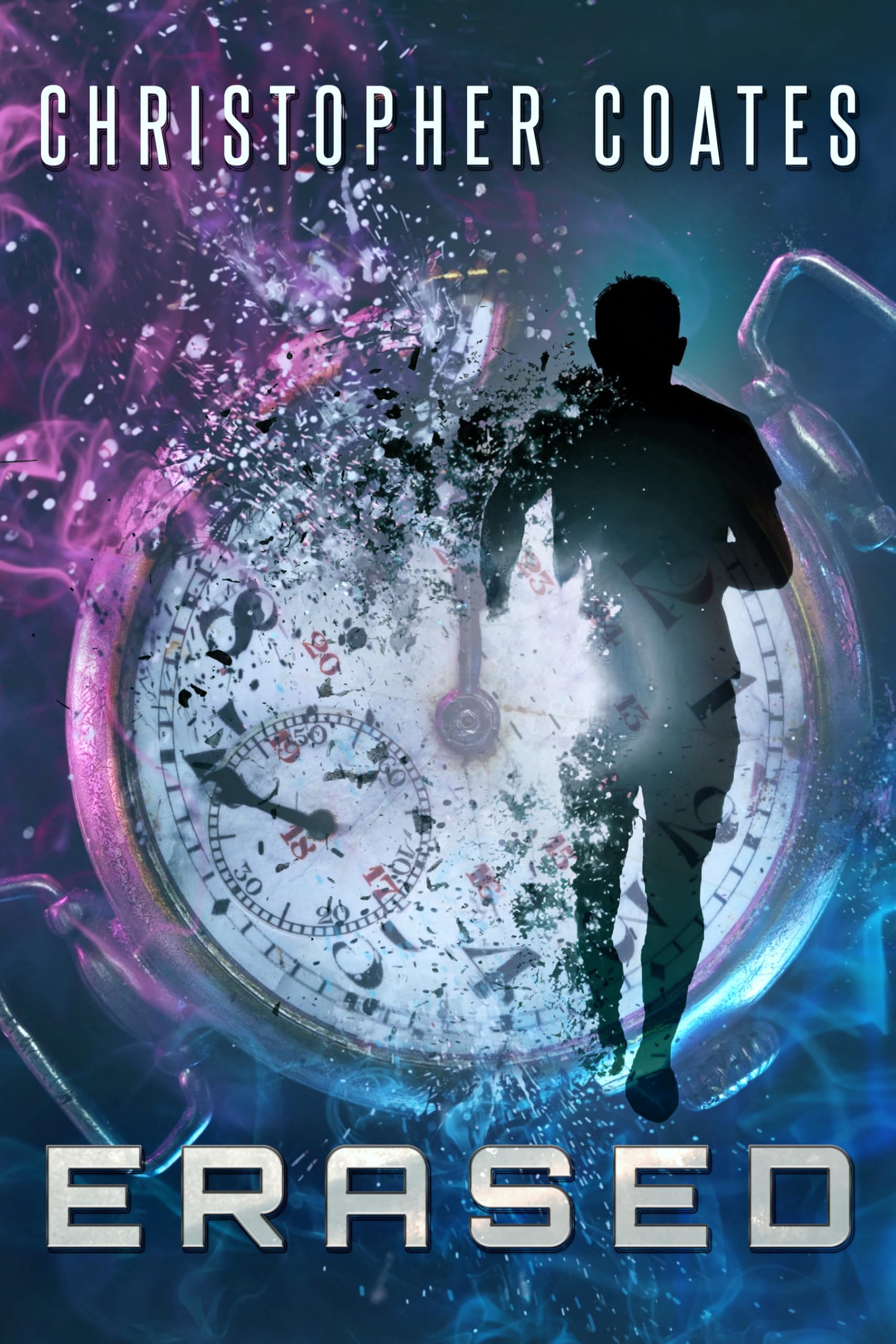
● "They built a time machine to fix the past, but never imagined it would break their future. Marcy and Connor's first journey through time was a triumph: they saved a life and righted a terrible wrong. Soon, they turned their sights to rewriting entire chapters of human history. What began as a crusade to eliminate evil becomes a spiral of unintended consequences, as each return to the present reveals a world further away from the one they once knew. As time fractures, they race against time to repair what they've done. With every jump, the present and future change in unpredictable ways. Can they ever return things to the way they were before―or find a reality they can call home?" ― quoted from this book's Amazon product page as 2026-05-02.
- The Light of Other Days
Arthur C. Clarke & Stephen Baxterstandalone novel2000
similar bytenseour worldscience fictiontime travel+1 more
An industrialist devises a technique to use tiny wormholes as light pipes to enable viewing of any event anywhere; and subsequently it becomes possible to use them to view any event in the past as well. The effects on society are enormous.
- The Andromeda Strain
series2 books1969
similar bytensecontemporaryscience fiction+1 more
Michael Crichton's 1969 novel The Andromeda Strain follows a team of scientists racing to contain a lethal extraterrestrial microorganism that crash-lands in Arizona, told in the clinical, document-driven style that helped establish the techno-thriller genre. Daniel H. Wilson's authorized 2019 sequel The Andromeda Evolution revisits the same threat five decades later. Together the two books form a two-part outbreak story separated by a fifty-year gap in publication.