Loreful
HomeDiscover
Search series, authors…⌘K
Loreful

Reading orders for SF/F series and shared universes — with your place kept in every one.

Explore

UniversesSeriesWorksAuthorsAtlas

Help

FAQAboutSite map

Account & legal

Sign inCreate accountPrivacyTerms

Data

Built on ISFDB, Wikipedia, Wikidata and Open Library. Curated reading orders carry their reasoning on the page; the rest follow publication order. Data sources & licenses

© Loreful · data: ISFDB · CC BY

More like Odds On

anchored on:thriller & suspenseheisteuropemid 20th centurytense

but

Mood

The mood the book leaves you in.

  • The reading experience is propelled by journeys, exploration, and physical risk; excitement and forward momentum dominate over dread or introspection.
  • Joy and loss are deliberately mixed; the resolution grants characters something real while taking something else away, leaving warmth and sorrow together.
  • The book demands work from the reader — dense prose, difficult structure, unfamiliar ideas, or morally uncomfortable material — as part of its intended effect.
  • Grim events, cruelty, or despair dominate the atmosphere, and the book does not soften them with comfort or comic relief.
  • The atmosphere is quietly unsettling — wrongness, unease, and the uncanny pervade the book without necessarily escalating into overt horror.
  • The book is built to move the reader; character feeling is foregrounded and major scenes aim at a strong emotional response.
  • Humor is a primary aim and the prose plays for laughs — comic situations, wit, or dialogue produce sustained comedy, not occasional levity.
  • The book insists that things can improve; effort and decency are shown to matter, and the arc bends toward better outcomes even through hardship.
  • The book teaches as it goes — real facts, history, science, or craft are conveyed in enough depth that learning is part of the reading experience.
  • The book is designed to uplift and motivate, presenting perseverance or achievement in a way that invites the reader to aspire or act.
  • The overall register is cheerful and easygoing; stakes are kept gentle and the book avoids dwelling on pain or dread.
  • Withheld information drives the experience; the book sustains enigmas and secrets the reader wants resolved, whatever its genre.
  • The book is contemplative and inward-looking, giving more weight to thought, memory, and meaning than to external events.
  • Grief, loss, or melancholy set the dominant register, and the book lets sorrow stand rather than resolving it into comfort.
  • Sustained suspense is the point; the book keeps the reader braced for what happens next through danger, pressure, or impending revelation.
  • Playful invention and charm define the register — fanciful conceits, light absurdity, and a narration that delights in its own oddity.

About

What the story runs on.

  • Stories in which extraterrestrial beings are central — as characters, cultures, or the object of the plot.
  • Stories about minds with paranormal abilities — telepathy, telekinesis, precognition, empathy — and how societies handle those who have them.
  • Stories structured as a quest — a journey undertaken to find, deliver, or destroy something of great import.
  • Stories in which staying alive against nature, catastrophe, or scarcity is the central problem.
  • Stories of lovers kept apart by law, family, faith, or station, where the obstacle to love is the plot.
  • Stories of growing up — a young protagonist crossing from childhood into adult knowledge and responsibility.
  • Stories about who a character truly is — self-discovery, doubled lives, and the search for a self.
  • Stories in which a buried family truth — hidden parentage, crimes, or shames — surfaces and reorders the present.
  • Stories driven by maneuvering for power — factions, conspiracies, and statecraft conducted in shadow.
  • Stories about rising against rulers — uprisings, resistance movements, and revolutions and their aftermaths.
  • Stories in which war itself is the subject — combat, occupation, and what warfare does to soldiers and civilians.
  • Stories organized around investigating a killing — the case, the clues, and the pursuit of the killer, in any genre's clothing.

Shelf

Where it sits in the library.

    • Fiction built on magic or other supernatural elements that have no scientific explanation.
    • Secondary-world fantasy at large scale, where the fate of nations or the world turns on the protagonists' struggle.
    • Fantasy set in a recognizably modern city or contemporary world where the supernatural intrudes on everyday life.
    • Fantasy that blends in horror's atmosphere and imagery, keeping a fantastical frame around grim or frightening material.
    • Action-driven fantasy following warriors or rogues with personal stakes against sorcerous threats, rather than world-spanning conflicts.
    • Fantasy set in a real historical period or a close analogue of one, with magic woven into the era.
    • Fantasy in which protagonists cross from the ordinary world into another world through a portal or similar passage.
    • Fiction that retells or reworks a traditional fairy tale in a new form or setting.
    • Fantasy drawing directly on myths, legends, and folklore, retelling them or building on their figures and logic.
    • Fantasy of ghosts, vampires, shapeshifters, psychics, and similar phenomena, usually set in an otherwise ordinary world.
    • Fiction mixing science-fictional trappings with overtly magical or impossible elements in one setting.
    • Low-stakes fantasy emphasizing comfort, community, and everyday pleasures over conflict and peril.
    • Speculative fiction of pervasive moral ambiguity, violence, and cynicism that rejects heroic conventions — fantasy and SF alike.
      • Fiction that extrapolates from science and technology — future societies, space travel, or speculative inventions — within at least nominally natural laws.
      • Science fiction of interstellar scope — starships, galactic polities, and adventure across star systems.
      • Science fiction committed to scientific rigor, where technical plausibility constrains the story.
      • Science fiction centered on armed forces and warfare, told largely from a military point of view.
      • Science fiction of networked, corporate-dominated near futures, pairing high technology with social decay.
      • Science fiction styled on nineteenth-century steam-powered technology, often in a Victorian or pseudo-Victorian setting.
      • Fiction depicting an oppressive or catastrophic society, presented as a warning.
      • Fiction set after civilization's collapse, following survivors in the ruins of the old world.
      • Fiction in which characters move between past and future, and the mechanics or consequences of that travel drive the plot.
      • Fiction exploring a world where a historical event went differently and history diverged from ours.
      • Science fiction about humanity's first encounter and communication with an alien intelligence.
      • Science fiction in which extraterrestrial forces attack or occupy Earth and humanity resists.
      • Fiction whose primary aim is to frighten or unsettle the reader through dread, menace, or the monstrous.
      • Horror of vast, indifferent, incomprehensible entities before which humanity is insignificant, in the Lovecraft tradition.
      • Horror of decaying houses, buried family secrets, and oppressive atmosphere in the Gothic literary tradition.
      • Horror centered on hauntings and the returning dead.
      • Horror located in the mind — paranoia, obsession, and unreliable perception rather than external monsters.
      • Horror built around the reanimated dead and survival amid their outbreaks.
      • Horror defined by explicit, transgressive gore that refuses to cut away from violence.
      • Speculative fiction of the strange and uncanny that resists both natural explanation and standard genre categories.
      • Fiction organized around solving a crime or puzzle, typically following an investigator toward the identification of a culprit.
      • A puzzle-first mystery that lays out clues so the culprit's identity can be deduced before the reveal.
      • Crime fiction of moral ambiguity, fatalism, and hard-edged style, set among the corrupt and the doomed.
      • A mystery following the realistic routines of police work — forensics, interviews, and case-building.
      • A gentle mystery with an amateur sleuth, a small community, and violence kept off the page.
      • A mystery set in a past era, where the investigation works within that period's methods and society.
      • Fast-paced fiction driven by imminent danger, pursuit, or high-stakes conspiracy, built to sustain tension.
      • A thriller of espionage — agents, tradecraft, and intelligence services in conflict.
      • A thriller centered on lawyers and the courtroom, where litigation carries the suspense.
      • A thriller driven by detailed contemporary or near-future technology, often military or scientific.
      • A thriller whose tension comes from mental states and manipulation between characters rather than external action.
      • Fiction whose central plot is a romantic relationship and its development toward an emotionally satisfying resolution.
      • Romance in which one or both partners are supernatural beings, blending fantasy elements into the love story.
      • A fantasy-romance hybrid in which the romantic arc and the fantasy plot carry equal weight.
      • Romance set in a past era, with courtship shaped by the period's society and manners.
      • Romance set in the present day, without supernatural or historical elements.
      • Fiction set in a real past period, where the historical setting materially shapes characters and events.
        • General and literary fiction emphasizing prose style, character interiority, or formal ambition over genre plot conventions.
        • Fiction in a realistic world where magical events occur and are treated as ordinary, in the tradition of Latin American literature.
        • Fiction that ridicules people, institutions, or society in order to criticize them.
        • Fiction of dreamlike, irrational imagery and logic that breaks from realistic representation.
        • Fiction that plays with narrative convention through metafiction, fragmentation, and self-reference.
        • Fiction propelled by journeys, exploration, and physical peril, where action and survival carry the plot.
        • Adventure fiction of ships and seafaring — naval engagements, voyages, and life at sea.
        • Fiction of the American frontier West — gunmen, ranchers, and lawmen, typically in the late nineteenth century.
        • Fiction centered on soldiers, campaigns, and the experience of warfare, historical or imagined.
          • Fiction written primarily to amuse, using comedic situations, wit, or parody as its organizing principle.
            • Multi-generational fiction following a family or dynasty across decades, with inheritance and kinship as the through-line.
              • Fiction whose world runs on explicit game mechanics — levels, stats, and skills that characters can see and exploit.
                • Fiction about costumed or superpowered heroes and their conflicts with comparable villains.

                Practical

                How long a commitment, whether it stands alone, and whether it has finished.

                Tap a chip to ask for it · tap again to rule it out · once more to clear. Numbers show what would be left.

                • Cover of Fatherland
                  Fatherland

                  Robert Harris · standalone novel · 1992

                  similar bytensethriller & suspenseeuropemid 20th century

                  Twenty years after Nazi Germany won the Second World War, Berlin is preparing to celebrate Adolf Hitler's seventy-fifth birthday when detective Xavier March is called to investigate a body pulled from a lake, ostensibly an accident, but one that leads him to a string of suspiciously staged deaths among senior Nazi officials. Ordered off the case by the Gestapo but quietly told to keep going by his own superior, March teams up with an American journalist, Charlie Maguire, and starts following a trail toward Swiss bank accounts and a secret the regime has spent two decades burying. Robert Harris's alternate-history debut novel.

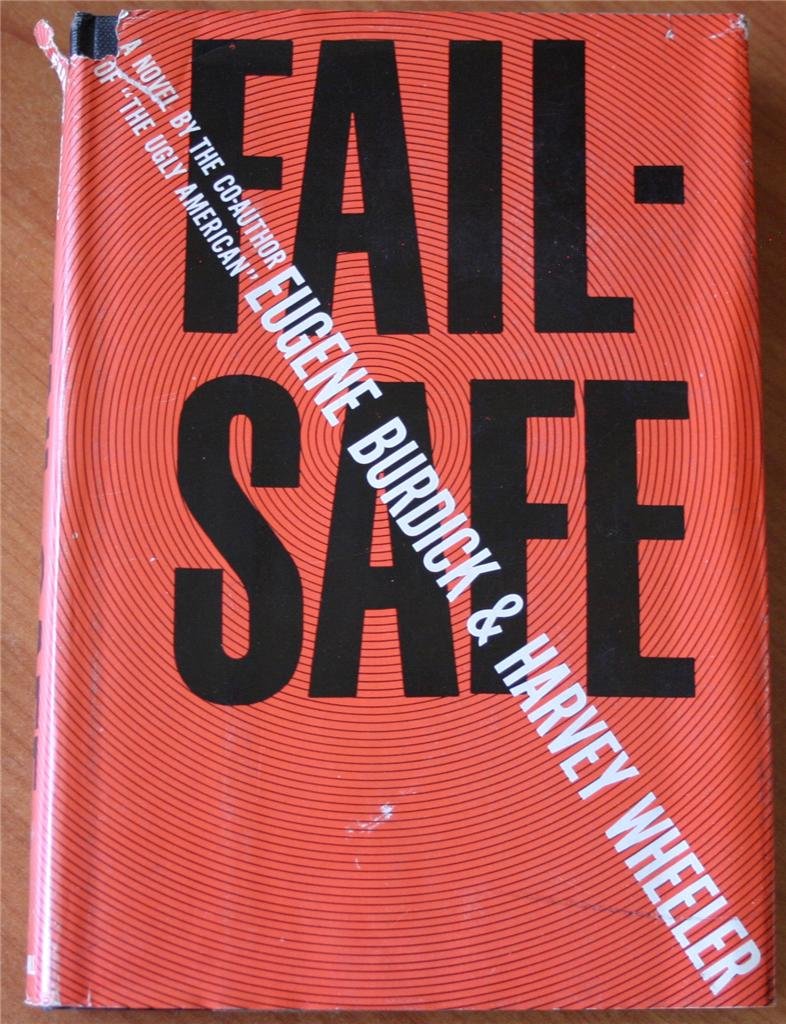
                • Cover of Fail-Safe
                  Fail-Safe

                  Harvey Wheeler & Eugene Burdick · standalone novel · 1962

                  similar bythriller & suspensetensemid 20th century

                  Fail-Safe is a bestselling American novel by Eugene Burdick and Harvey Wheeler. Expanded from Wheeler's short story "Abraham '59", it was initially serialized in three installments in the Saturday Evening Post on October 13, 20, and 27, 1962, during the Cuban Missile Crisis.

                • Cover of Felicia
                  Felicia

                  George Alec Effinger · standalone novel · 1976

                  similar byheistthriller & suspensetense

                  Someone's about to rip off a sleepy little Louisiana town! Chuck's gang of truckers are geared for looting. When Tom masterminds a false hurricane alert...When sheriff Boshardt orders an evacuation of the town...When Chuck moves in to strip the town clean...Their cool caper escalates into a devastating triple-cross that rips the rooftops off everything from Miami to New Orleans-and nothing-no one will ever be the same!

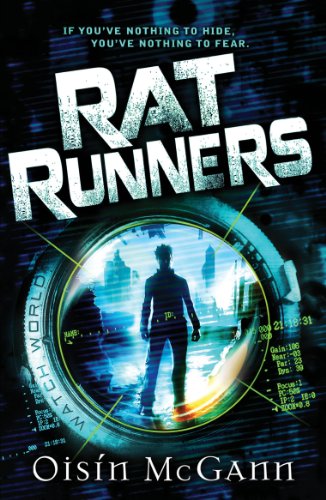
                • Cover of Rat Runners
                  Rat Runners

                  Oisin McGann · standalone novel · 2013

                  similar bytenseheistthriller & suspenseeurope

                  "Four young thieves, one simple mission: Steal a black-leather box from the daughter of a murdered scientist without anyone noticing. But WatchWorld controls London now, and the organization knows everything. Every major street is monitored with heat-sensitive and X-ray cameras. Microphones record voices from hundreds of feet away, and drones watch from the sky. Patrolling the streets are Safe-Guards--part human and part robot, they can see through walls, hear your heartbeat, and analyze your sweat. But staying hidden is what Nimmo, Scope, Manikin, and FX do best. Using the city's blind spots, they navigate the criminal underworld until they're caught in a rat run of murder and deceit that might not let them out alive."--Back cover.

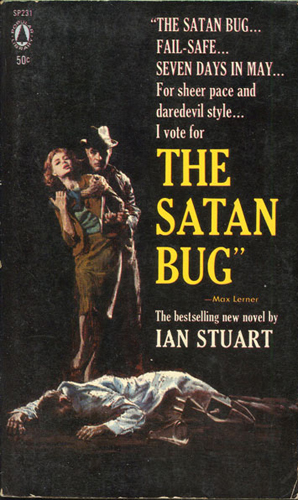
                • Cover of The Satan Bug
                  The Satan Bug

                  Alistair MacLean · standalone novel · 1962

                  similar bythriller & suspensetensemid 20th centuryeurope

                  A thriller about the pursuit of an indestructable biological weapon after its theft. Pierre Cavell was fired from the security department of the laboratory where the virus (the Satan Bug) was developed and is now engaged by a council for world peace to save the world from the extinction of all life.

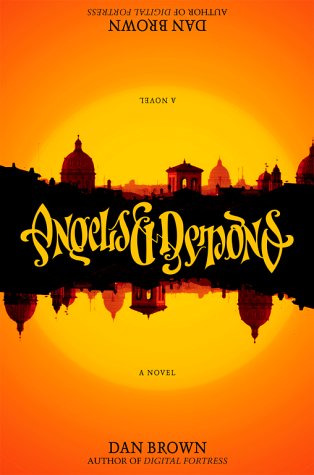
                • Cover of Robert Langdon
                  Robert Langdon

                  series · 6 books · 2000

                  similar bythriller & suspensetenseeurope

                  The Robert Langdon novel series is named after Robert Langdon, the protagonist of the novels by American author Dan Brown. Langdon is portrayed as a Harvard University professor of religious iconology and symbology, a fictional field related to the study of historic symbols, which is not methodologically connected to the actual discipline of semiotics. Brown's novels that feature the lead character also include historical themes and Christianity as motifs, and as a result have generated controversy. Brown states on his website that his novels are not anti-Christian, and that he is on a "constant spiritual journey" himself.

                • Cover of The Spear
                  The Spear

                  James Herbert · standalone novel · 1978

                  similar bythriller & suspensetensemid 20th centuryeurope

                  The Spear is a 1978 novel by British author James Herbert dealing with Nazi occultism and the Holy Lance. It was first published in by New English Library.

                • Cover of The Dancing Floor
                  The Dancing Floor

                  John Buchan · standalone novel · 1926

                  similar bythriller & suspensetenseeurope

                  The Dancing Floor is a 1926 novel by the Scottish author John Buchan featuring Edward Leithen. It is the third of Buchan's five Leithen novels.

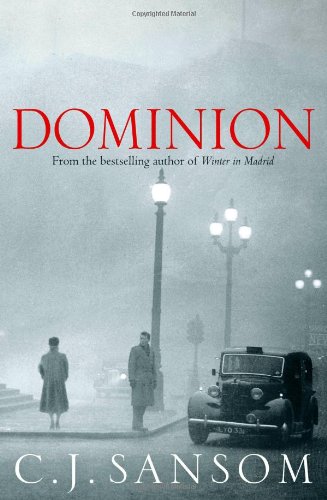
                • Cover of Dominion
                  Dominion

                  C. J. Sansom · standalone novel · 2012

                  similar bythriller & suspensetensemid 20th century

                  Dominion is a 2012 alternative history novel by British author C. J. Sansom. It is a political thriller set in the early 1950s against the backdrop of a Britain that has become a satellite state of Nazi Germany. The point of divergence from actual history is that Lord Halifax, rather than Winston Churchill, succeeded Neville Chamberlain as Prime Minister in May 1940 leading to an armistice with Germany.

                • Cover of The Fear Index
                  The Fear Index

                  Robert Harris · standalone novel · 2011

                  similar bythriller & suspensetenseeurope

                  A computer designed for stock trading becomes sentient.

                • Cover of A Report from Group 17
                  A Report from Group 17

                  Robert C. O'Brien · standalone novel · 1972

                  similar bythriller & suspensetensemid 20th century+1 more

                  A Report from Group 17, published in 1972, is a science-fiction thriller written by Robert Leslie Conly under his pen name Robert C. O'Brien. Set in Washington, D.C., during the Cold War, the story deals particularly with the danger of developing bioweapons. The potential cause of conflict is a resurgence of Nazism in Europe. A 12-year-old girl who lives near a Soviet estate in Maryland becomes a victim of intrigue when she is kidnapped for use as an experimental subject. Themes include the threat of modern war to human survival, the moral responsibility of scientists, and the importance of both individual freedom and sympathetic instincts. Following two novels for children, A Report from Group 17 was the first of two dystopian novels that O'Brien wrote for adults. His last novel, Z for Zachariah (1974), depicts a conflict between two survivors of a nuclear war and deals with similar themes.

                • Cover of Westwind
                  Westwind

                  Ian Rankin · standalone novel · 1990

                  similar bythriller & suspensetenseeurope

                  Westwind is a 1990 thriller novel written by Ian Rankin. It is one of the author's earliest works.

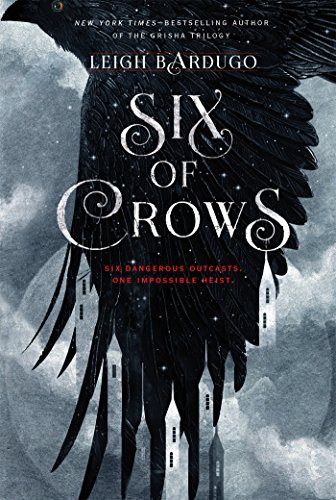
                • Cover of Six of Crows
                  Six of Crows

                  series · 3 books · 2015

                  part of Grishaverse

                  similar byheisttense

                  Leigh Bardugo's Six of Crows duology (2015-2016) follows a crew of six criminal teenagers in Ketterdam, a city modeled on the Dutch Republic, as they pull off a near-impossible heist and then deal with its fallout. Told from multiple points of view, the books lean on the found-family bond between the crew members as much as the caper plotting, and sit within Bardugo's wider Grishaverse alongside her Shadow and Bone books.

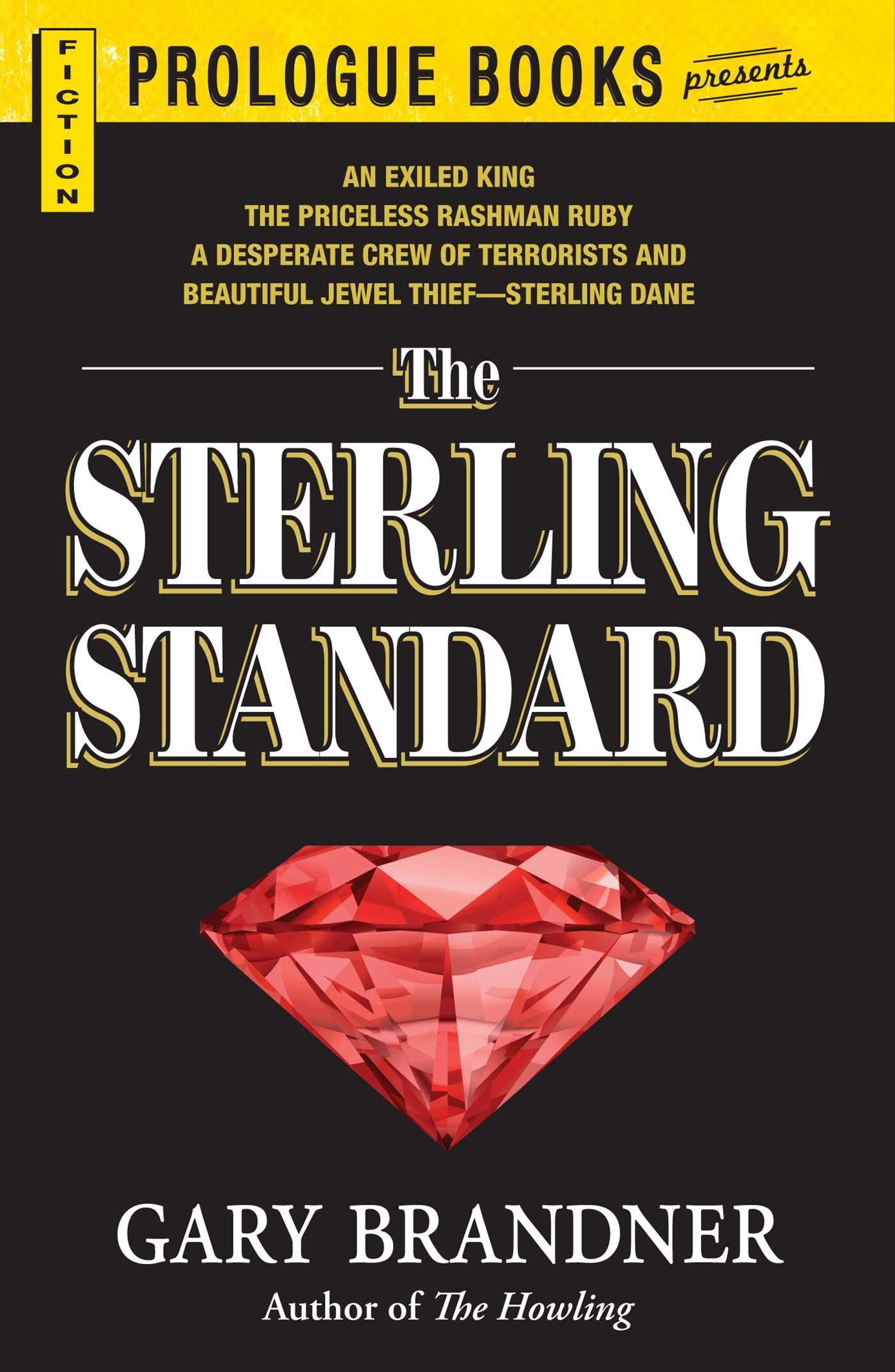
                • Cover of The Sterling Standard
                  The Sterling Standard

                  Gary Brandner · standalone novel · 1980

                  similar byheistthriller & suspensetense

                  ● "Sterling Dane was three women. A beautiful jet-setter with her elegant, rich friends; an international jewel thief, a modern day Robin Hood; and a lover, for Raoul Costa, the greatest jewel thief of all," ― paraphrased from this book's product page on Amazon.com as of 2024-04-18.

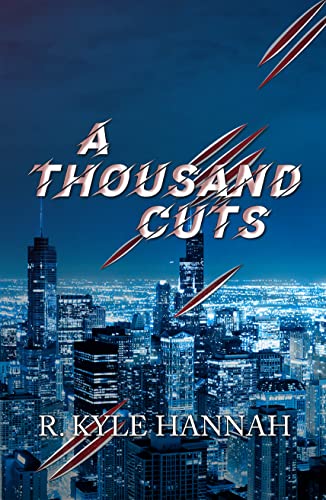
                • Cover of A Thousand Cuts
                  A Thousand Cuts

                  R. Kyle Hannah · standalone novel · 2022

                  similar byheistthriller & suspensetense

                  ● "Nikki Sanderson, a security expert, specializes in the impossible. From flood ravaged Tampa to mile high antics in Denver, she finds a way to get past any obstacle. But when a mysterious man approaches her with the ultimate challenge, she takes the chance. Joined by a hacker, a driver, and a fighter, she plans and pulls off the heist—they get away clean. Or so they thought. The caper leads her down a dark path, with dangerous enemies, and her world spirals out of control." ― quoted from this book's Amazon product page as of 2022-12-20.

                • Cover of Mitchell Gant
                  Mitchell Gant

                  series · 3 books · 1977

                  similar bythriller & suspensetensemid 20th century

                • Cover of Tremor of Intent
                  Tremor of Intent

                  Anthony Burgess · standalone novel · 1966

                  similar bythriller & suspensetensemid 20th centuryeurope

                  Tremor of Intent: An Eschatological Spy Novel (1966), by Anthony Burgess, is an English espionage novel.

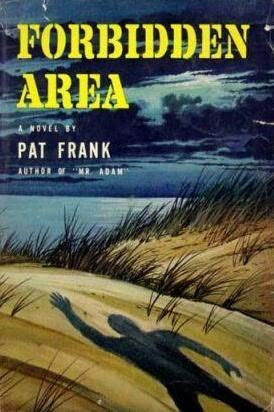
                • Cover of Forbidden Area
                  Forbidden Area

                  Pat Frank · standalone novel · 1956

                  similar bythriller & suspensetensemid 20th century

                  Forbidden Area is a 1956 Cold War thriller novel by Pat Frank. Its plot involves Soviet sleeper agents intended to sabotage the U.S. war effort, who have been trained by classical conditioning to have an American "cover identity" that they can remember as well as their own.

                • Cover of The Apollo Murders
                  The Apollo Murders

                  Chris Hadfield · standalone novel · 2021

                  similar bythriller & suspensetensemid 20th century

                  The Apollo Murders is a 2021 alternate history, thriller novel by Canadian retired astronaut and writer Chris Hadfield. It was first published in October 2021 in the United States by Little, Brown and Company, and in the United Kingdom by Quercus. The book is Hadfield's debut novel, and is the first in his Apollo Murders series, followed later by The Defector in 2023 and Final Orbit in 2025. Hadfield had previously published three non-fiction books, his first being his autobiography, An Astronaut's Guide to Life on Earth (2013).

                • Cover of The Second Angel
                  The Second Angel

                  Philip Kerr · standalone novel · 1998

                  similar bytenseheistthriller & suspense

                  Publisher's description: "A virus is decimating the population of Earth and the only defense is a blood transfusion. A plot is hatched to rob a blood bank on the moon and sell its untainted blood on the black market. An expensive operation, requiring lots of high tech, but it promises to earn a fortune."

                • Cover of Tad Anders
                  Tad Anders

                  series · 1 book · 1975

                  similar bythriller & suspensetensemid 20th century

                • Cover of The Manchurian Candidate
                  The Manchurian Candidate

                  Richard Condon · standalone novel · 1959

                  similar bythriller & suspensetensemid 20th century

                  The Manchurian Candidate (1959), by Richard Condon, is a political thriller about the son of a prominent U.S. political family who is brainwashed into being an unwitting assassin for a Communist conspiracy. The novel has been adapted into a feature film twice; the first is The Manchurian Candidate (1962), which deals with anti-communist hysteria in U.S. politics, and the second is The Manchurian Candidate (2004), which deals with corporate interference in the U.S. government.

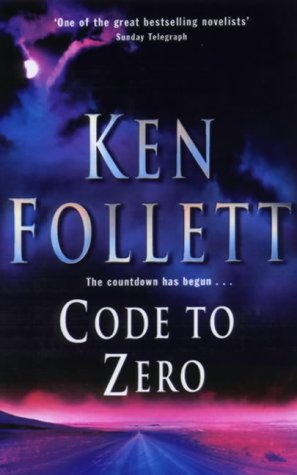
                • Cover of Code to Zero
                  Code to Zero

                  Ken Follett · standalone novel · 2000

                  similar bythriller & suspensetensemid 20th century

                  Code to Zero is a novel by the British author Ken Follett, published by Pan Macmillan. The story follows Luke, an amnesic who spends the duration of the book learning of his life, and slowly uncovering secrets of a conspiracy to hold the United States back in the space race.

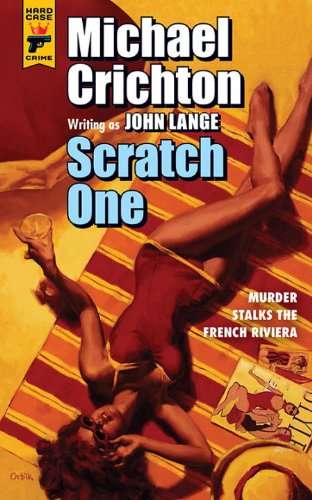
                • Cover of Scratch One
                  Scratch One

                  Michael Crichton · standalone novel · 1967

                  similar bythriller & suspensetenseeuropemid 20th century

                  Scratch One is Michael Crichton's second novel to be published, as well as the second novel to be under his pseudonym John Lange. It was released in 1967 under the pseudonym of John Lange. It is a short 192-page paperback novel. Hard Case Crime republished the novel under Crichton's name on October 29, 2013.