More like Old Bones
but
- Walter Goodwin
series3 books1918
completed
similar bylost world+1 more
The Moon Pool (1919) and The Metal Monster (1920) are connected fantasy-adventure novels by A. Merritt, both narrated by the same character, Dr. Walter Goodwin, as he encounters hidden ancient civilizations and forces beyond ordinary science. The Moon Pool began as two related stories serialized in All-Story Weekly before being combined into a novel, and its success led Merritt to send Goodwin into a second, similarly strange discovery in The Metal Monster the following year. The two books follow Goodwin from one uncanny expedition to the next rather than forming a tightly plotted continuing saga.
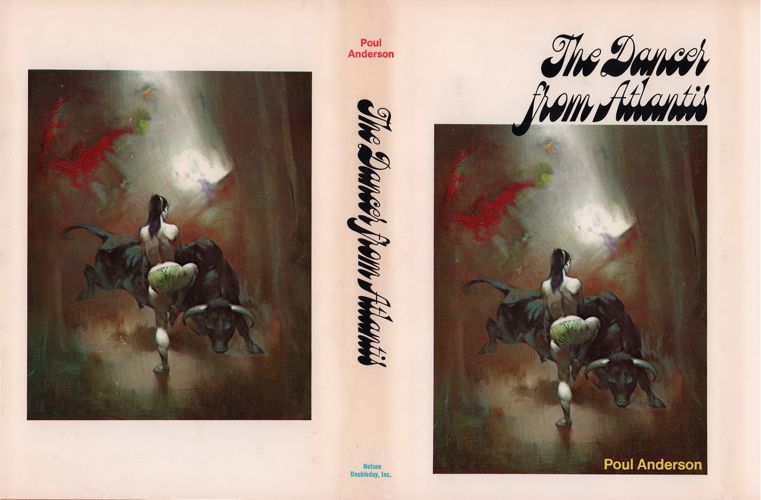
- The Dancer from Atlantis
Poul Andersonstandalone novel1971
similar byscience fiction+1 more
The Dancer from Atlantis is a science fiction novel by American writer Poul Anderson, first published in 1971 by Doubleday.
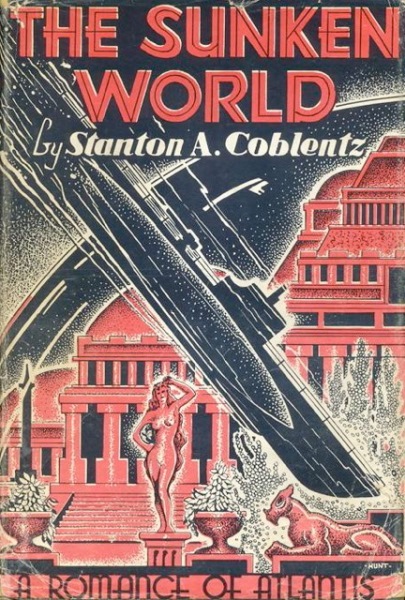
- The Sunken World
Stanton A. Coblentzstandalone novel1948
similar byscience fictionlost world
The Sunken World is a science fiction novel by American writer Stanton A. Coblentz. It was first published in book form in 1948 by Fantasy Publishing Company, Inc. in an edition of 1,000 copies. The novel originally appeared in the Summer 1928 issue of the magazine Amazing Stories Quarterly. It was Coblentz's first published science fiction novel.
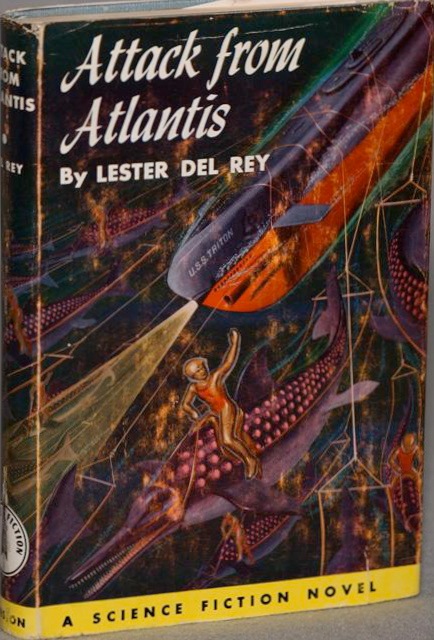
- Attack from Atlantis
Lester del Reystandalone novel1953
similar byscience fiction+1 more
Attack from Atlantis (1953) is a science fiction novel written by Lester del Rey. The story follows the new U.S.S. Triton submarine on her maiden voyage, but trouble happens when the crew comes face to face with the inhabitants of the underwater city Atlantis.
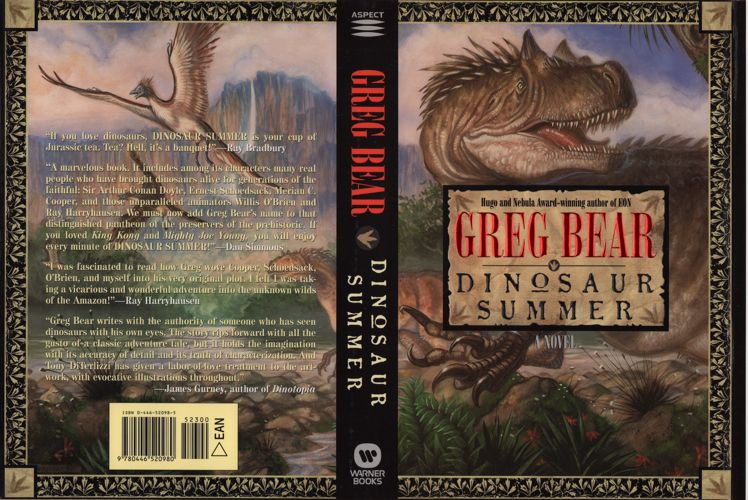
- Dinosaur Summer
Greg Bearstandalone novel1998
similar byscience fictionlost world
From the flaps of the Warner first edition: "It's the year 1947, and nobody's interested in dinosaurs anymore. Less than fifty years after Professor Challenger's famed journey to the Lost World, America's last dinosaur circus is closing down... but the adventure of a lifetime is about to begin. In a dramatic change of pace, multiple Hugo and Nebula award-winning science fiction master Greg Bear, ... presents a lavishly illustrated thriller that is certain to become a new classic adventure beyond time... Peter Belzoni is dreading summer in Manhattan. Then his father, photojournalist Anthony Belzoni, offers the youth a job, a byline in National Geographic... and a trip to South America. For the Lothar Gluck Circus, once the world's foremost dinosaur attraction, had gone bankrupt. Left behind is a menagerie of avisaurs, centrosaurs, and ankylosaurs, as well as one large predatory raptor named Dagger. And now two filmmakers and the circus trainer plan to return the giants to the wild - with Peter and his dad chronicling the odyssey for Geographic. The task seems impossible. Many have died trying to bring beasts our of the Lost World, the plateau of El Grande in Venezuela, but nobody has ever attempted to transport nearly a dozen full-grown, multiton prehistoric creatures across continents, down rivers, through jungles, and up mountains that has been isolated for 70,000,000 years... The trek will strain the technologies of trains, cargo ships, barges, trucks... en route lurk robbers and hostile, trigger-happy soldiers... and each mile toward freedom excites Dagger toward an unstoppable primal killing frenzy. When the unthinkable threatens to strand Peter and the rest of the crew in an uncharted realm, four modern Americans will face all the unknown dangers, mysteries, and terrors of El Grande..."
- Caspak Universe
series4 books1918
similar bylost world+1 more
The Caspak trilogy — The Land That Time Forgot, The People That Time Forgot, and Out of Time's Abyss — is Edgar Rice Burroughs's 1918 adventure sequence set on a hidden Pacific island called Caprona, where a World War I-era U-boat crew discovers an isolated world of dinosaurs and successive stages of human evolution living side by side. The story was later adapted into comics by Mike Wolfer, credited alongside Burroughs.
- Eversion
Alastair Reynoldsstandalone novel2022
similar byscience fiction+1 more
A small group of intrepid explorers are in search of a remote and mysterious artefact. It's a well-funded expedition, well organised, which is lucky as they're sailing north of Bergen on the schooner Demeter, searching for a narrow inlet which will lead them to a vast uncharted lake - and their goal — Until disaster strikes. Doctor Silas Coade wakes from disturbing dreams, on the steamship Demeter, in pursuit of an extraordinary find almost too incredible and too strange to believe, secreted within a lagoon in the icy inlets of Patagonia. But as they come in sight of their prize he and the crew see they are not the first to come so far: there is a wreck ahead, and whatever ruined it may threaten them as well— Shaking off his nightmares, Doctor Silas Coade joins his fellow exploders on the deck of the zeppelin Demeter and realises something has already gone dangerously wrong with their mission. If any of them are to survive, then he will have to take the exploration - and their lives - into his own hands …
- Operation Time Search
Andre Nortonstandalone novel1967
similar byscience fiction+1 more
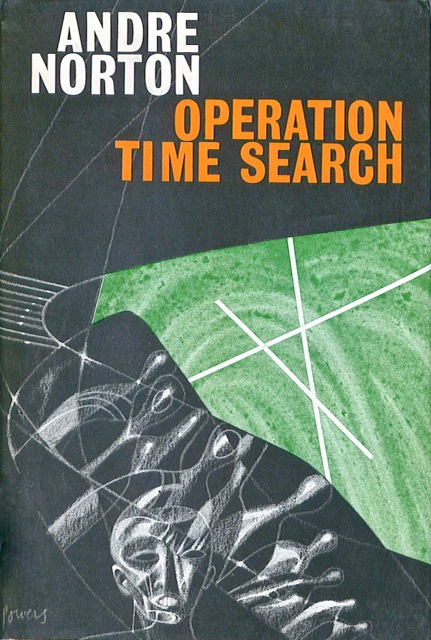
Snooping around a top-secret government installation, photographer Ray Osborne stumbled across an experimental time field. Suddenly the familiar Ohio landscape disappeared and Ray found himself transported to a prehistoric world where the dread priest of Atlantis waged a war against the Sun-born of Mu. So while the scientist of the Twentieth Century worked desperately to draw him back to the present, Ray Osborne was recruited by the people of Mu to win a war that could change the course of history, and trap him in the past forever!
- Three Go Back
J. Leslie Mitchellstandalone novel1932
similar byscience fiction+1 more
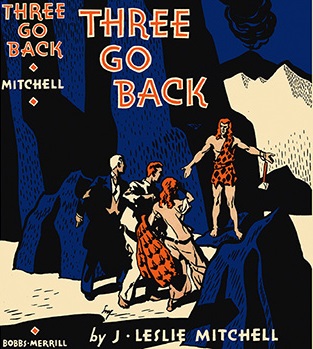
Three Go Back is a novel by J. Leslie Mitchell published in 1932.
- Dian of the Lost Land
Edison Marshallstandalone novel1935
similar byscience fictionlost world
Adam knew that the creatures who surrounded him had vanished from the earth five million years ago. Their beautiful art, their terrible weaponry, their religion, customs and language, even the animals they hunted and the alien dark tribe against whom they waged eternal war, all belonged to a time before the great glaciers had retreated and man had assumed control of the globe. But Adam was in no position to deny their reality. For now he and his companion, the renowned Professor Karl Belgrade, were being led to their ruler-the young and beautiful Queen who would decide whether the intruders would live or die. The last ravings of a man dying from a mysterious fever and the haunting hypothesis of a brilliant and obsessed scientist were all that the two explorers had to go on as their tiny plane winged high over the menacing Antarctic ice. They find a secret valley that only one human being had ever visited and lived to tell about it, a lost world ruled by creatures from the darkest depths of time, who even now might be playing out a gigantic contest between good and evil to its strange and terrible conclusion. (adapted from the texts published with the 1972 edition)
- The Maracot Deep
Arthur Conan Doylestandalone novel1929
similar byscience fictionlost world
"Atlantis rediscovered on bed of Atlantic." – The British Science-Fiction Bibliography, 1937.
- Etidorhpa
John Uri Lloydstandalone novel1895
similar byscience fiction+1 more
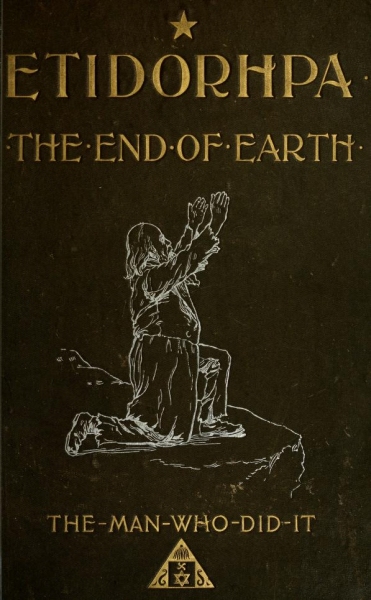
Etidorhpa, or, the end of the earth: the strange history of a mysterious being and the account of a remarkable journey is the title of a scientific allegory or science fiction novel by John Uri Lloyd, a pharmacognocist and pharmaceutical manufacturer of Cincinnati, Ohio. Etidorhpa was published in 1895.
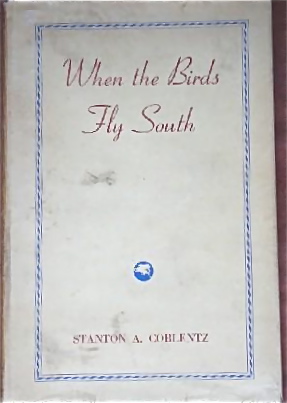
- When the Birds Fly South
Stanton A. Coblentzstandalone novel1945
similar bylost world+1 more
When the Birds Fly South is a lost race fantasy novel by American writer Stanton A. Coblentz, defined as a "significant tale ... involving avian theriomorphy." It was first published in hardcover by The Wings Press, Mill Valley, California in 1945 and reprinted in 1951. Its importance in the history of fantasy literature was recognized by its republication by the Newcastle Publishing Company as the twenty-third volume of the Newcastle Forgotten Fantasy Library in April, 1980. The Newcastle edition was the first paperback edition, and had a new introduction by the author. Later editions were issued by Arno Press (1978) and Borgo Press (1980).
- H. G. Wells' War of the Worlds
universe65 books1898
Start hereThe War of the Worlds · Start here
similar byscience fiction
No one would have believed, in the closing years of the nineteenth century, that human affairs were being watched keenly and closely from the timeless worlds of space. And then the cylinders fell. H. G. Wells' War of the Worlds opens in the quiet of the Surrey commons, where a falling star proves to be the first Martian craft — and from the pit rise the towering tripods, the Heat-Ray, the choking Black Smoke and the creeping red weed, wielded by minds that regard mankind much as we regard the creatures we boil for supper. This is invasion rendered as natural disaster: cold, methodical, and vast beyond argument. Wells' 1898 novel is the seed; everything else grows from that Martian soil. The catalogue gathers direct sequels and continuations alongside a wide field of other hands. In War of the Worlds: Global Dispatches the invasion is retold across the whole planet through the eyes of Twain, Verne, Tolstoy, Lowell and Kipling; in the Manly Wade and Wade Wellman crossover, Sherlock Holmes, Watson and Professor Challenger take the field against the machines; and Scott Washburn's Great Martian War stretches the fighting into a decades-long alternate history of steam, artillery and grinding attrition. It is a loose shared world — no single decreed sequence, many voices answering one calamity. What sets this world apart is its refusal of heroics: the invaders fall not to generals but to the smallest things of Earth, humbling and indifferent. Begin, always, with Wells' original novel — it is short, and it is the ground every later book stands upon. From there follow your appetite: Global Dispatches for the panorama, the Holmes campaign for adventure, Washburn for the long war.
- Zero Stone / Murdoc Jern
series2 books1968
completed
similar byscience fiction
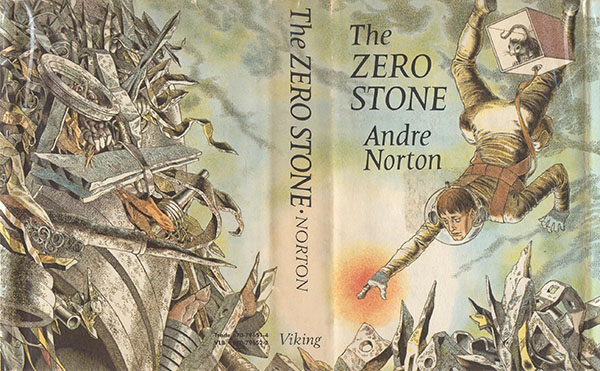
Andre Norton's Zero Stone duology follows young gem trader Murdoc Jern after he inherits a mysterious, powerful alien artifact from his murdered guardian, forcing him into a dangerous search across the stars for its origin in The Zero Stone and its sequel Uncharted Stars. It is a self-contained space-adventure story rather than part of Norton's larger continuities.
- Barsoom
series53 books1917
similar byscience fiction
Barsoom is a fictional representation of the planet Mars created by American pulp fiction author Edgar Rice Burroughs. The first Barsoom tale was serialized as Under the Moons of Mars in pulp magazine The All-Story from February to July 1912 and published compiled as a novel as A Princess of Mars in 1917. It features John Carter, a late-19th-century American Confederate veteran who is mysteriously transported from Earth to the dying world of Mars where he meets and romances the beautiful Martian princess Dejah Thoris. Ten sequels followed over the next three decades, further extending his vision of Barsoom and adding other characters.
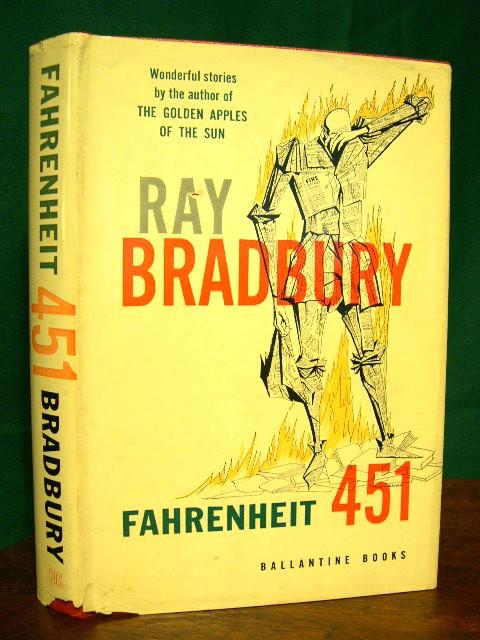
- Fahrenheit 451
series2 books1951
completed
similar byscience fiction
Fahrenheit 451 began life as "The Fireman," a novella Ray Bradbury published in 1951, which he then expanded into the full novel released in 1953 under its now-famous title. Set in a future where books are outlawed and firemen exist to burn them, it follows fireman Guy Montag as doubts about his job push him toward the very literature he's supposed to destroy. The novella and novel are one story's evolution rather than two separate books.
- Dune Universe
universe78 books1963
Start hereDune · Start here
similar byscience fiction
Arrakis. Dune. The desert planet, where empire runs on a single substance: the spice melange, which folds space, prolongs life, and unlocks prescience, and which exists nowhere else in the known universe. Frank Herbert's saga is a meditation dressed as an adventure — feudal houses and a secret sisterhood, engineered messiahs and the patient ecology of a world without water, all turning on the terrible gravity of who commands the spice. It reads like scripture and schemes like a war room, ten thousand years hence, among people who have outlawed the thinking machine and made instruments of themselves instead. At its heart stand Herbert's original six — Dune, Dune Messiah, Children of Dune, God Emperor of Dune, Heretics of Dune, Chapterhouse: Dune — a single deepening arc across millennia, arguing the whole way between prophecy and free will. Around that spine his son Brian Herbert and Kevin J. Anderson have raised a vast prequel architecture: Prelude to Dune, tracing the great houses a generation before Paul; Legends of Dune, reaching back to the crusade that broke the machines; the Schools of Dune cycle on the founding of Bene Gesserit, Mentat, and Navigator; the Caladan Trilogy and Heroes of Dune filling years the originals left in shadow. Many hands, dozens of volumes, one desert. What sets Dune apart is its refusal of the simple: religion is manufactured, heroes are hazards, and the sand itself — worm, water, ecology — acts as a political power. Begin where the universe did, with Frank Herbert's Dune (1965), and read the original six in order; you need nothing else to feel the full weight. The prequels are a country to explore afterward, taken by era. Beginnings are delicate times.