More like Old Glory
but
- The Handmaid's Tale
series3 books1985
similar bynorth americanear futurescience fictiondystopia+1 more
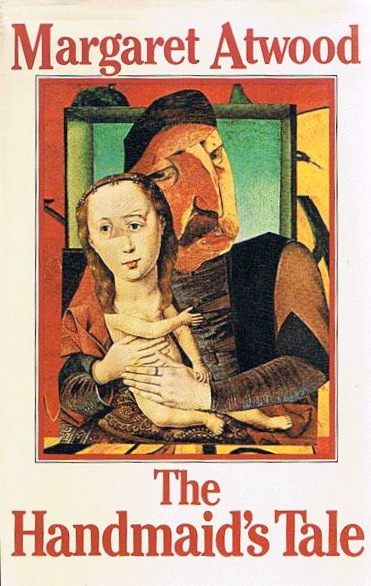
The Handmaid's Tale is Margaret Atwood's 1985 novel set in Gilead, a totalitarian theocracy that has overthrown the United States and forces fertile women into reproductive servitude as Handmaids; it is narrated by one such woman, Offred. Atwood returned to the world in her 2019 sequel The Testaments, set fifteen years later and narrated by three women, including the regime's Aunt Lydia. Together the two novels move from Gilead's grip on power toward the first cracks in it.
- Space Merchants
series2 books1953
completed
similar bynear futurescience fictiondystopia+2 more
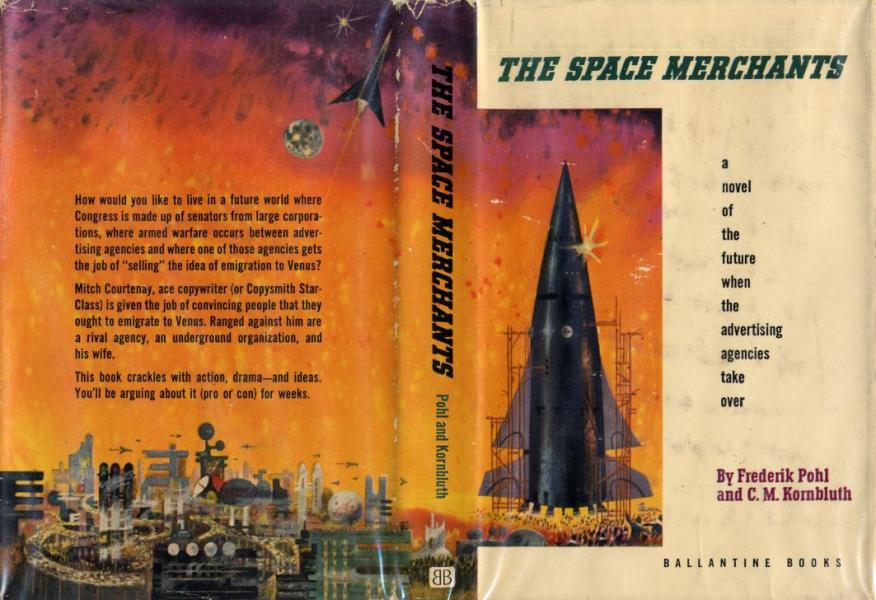
The Space Merchants (1953) is a satirical science fiction novel by Frederik Pohl and C. M. Kornbluth that follows an advertising executive navigating a future where aggressive consumer capitalism has swallowed politics and daily life. The authors reunited three decades later for a direct sequel, The Merchants' War (1984), returning to the same satirical world. Together the two books form a compact bookend pair rather than an ongoing series.
- Julian West
series7 books1888
similar bynorth americascience fiction+2 more
Julian West is the time-displaced narrator of Edward Bellamy's Looking Backward, 2000-1887 (1888), a utopian novel in which a nineteenth-century Bostonian wakes from a mesmeric sleep to find his city transformed into a cooperative society more than a century later. Bellamy followed it with Equality (1897), a direct sequel that returns to Julian West's perspective to further elaborate the ideas only sketched in the first book, functioning more as an extended argument than a plotted story. Together the two novels were highly influential on turn-of-the-century utopian and socialist thought.
- Legend (Marie Lu)
series5 books2011
similar bynorth americanear futurescience fictiondystopiayoung adult+1 more
Marie Lu's Legend follows two teenagers from opposite ends of a divided, war-torn future society — one a celebrated young military prodigy, the other a hunted fugitive — whose paths collide and gradually complicate what each believed about the system that shaped them. The story continues through Prodigy and Champion, with a fourth book, Rebel, added years after the original trilogy closed; Lu has cited the film Les Misérables among her inspirations for its shape.
- Divergent
series10 books2011
similar bynorth americanear futurescience fictiondystopiayoung adult
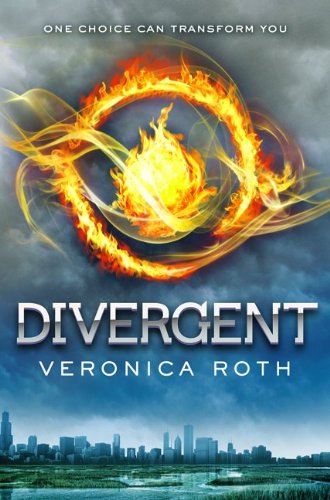
Divergent, also known as The Divergent Series, is a series of young adult dystopian novels by American novelist Veronica Roth set in a post-apocalyptic dystopian Chicago. The trilogy consists of Divergent (2011), Insurgent (2012), and Allegiant (2013). A related book, Four (2014), presents a series of short stories told from the perspective of one of the trilogy's characters, the male love interest Tobias. A later short story, We Can Be Mended (2018), serves as an epilogue five years after the events of the trilogy, again from Tobias/Four's perspective.
- Blade Runner Universe
series6 books1968
similar bynear futurescience fiction+1 more
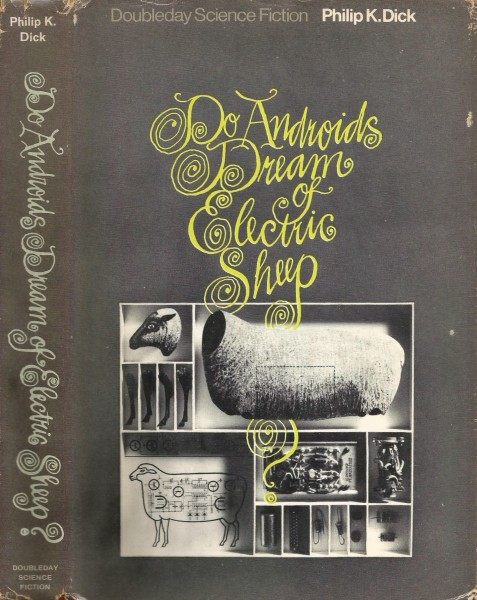
Philip K. Dick's 1968 novel Do Androids Dream of Electric Sheep? follows bounty hunter Rick Deckard as he tracks escaped androids through an irradiated, near-abandoned San Francisco, using the hunt to probe questions of empathy and what separates human from machine. The novel became the basis for Ridley Scott's 1982 film Blade Runner, and Marvel Comics later published an illustrated adaptation of that film. Together the two trace the story's path from prose original to screen and comic-page adaptation.
- Library of America P. K. Dick Collection
series9 books1962
completed
similar bynear futurescience fiction+2 more
- The Hunger Games Universe
universe5 books2008
Start hereThe Hunger Games · Start here
similar bynorth americascience fictiondystopiayoung adult+1 more
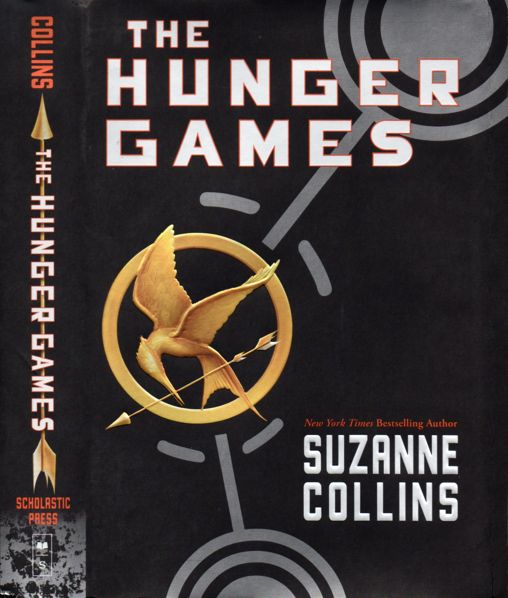
Panem, they call it now — a nation raised on the drowned bones of North America, a glittering Capitol ringed by twelve districts it once starved into obedience. Every year the Capitol collects its debt in children: two tributes from each district, drawn by lottery, dropped into an engineered arena, and made to kill one another on live television while the whole country is required to watch. This is the Hunger Games — entertainment, punishment, and government at once. Suzanne Collins tells it in a compact, unified body of work. The founding trilogy — The Hunger Games, Catching Fire, and Mockingjay — follows Katniss Everdeen, a girl from the coal-mining District 12 who volunteers in her sister's place and becomes something the Capitol never scripted. Two prequels reach back into the same machinery: The Ballad of Songbirds and Snakes traces a young Coriolanus Snow long before he is President, and Sunrise on the Reaping returns to District 12 a generation ahead of Katniss. Begin with the trilogy, in order — it is Katniss's voice, close and present-tense, that makes Panem breathe, and the prequels land hardest once you know how her story ends. Beneath the spectacle sits one steady, uncomfortable question: who profits when we agree to look away.
- The World Jones Made
Philip K. Dickstandalone novel1956
similar bypolitical intriguenorth americanear futurescience fictiondystopia
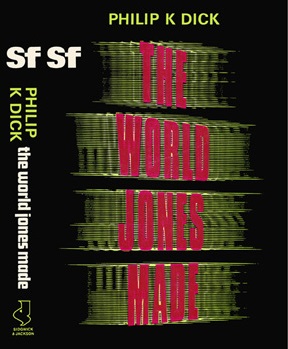
The World Jones Made is a 1956 science fiction novel by American writer Philip K. Dick, examining notions of precognition, humanity, and politics. It was first published by Ace Books as one half of Ace Double D-150, bound dos-à-dos with Agent of the Unknown by Margaret St. Clair.The story takes place after a nuclear war in which society is dominated by relativism, which rejects absolute truths and preaches tolerance as the highest principle. The mutant Floyd Jones, who can see into the future, plans to overthrow the system and colonise space. The story ends with the defeat of Jones, whose plans fail despite his ability to see the future due to the immutability of fate.
- The Thousandth Floor
series3 books2016
similar bynorth americanear futurescience fictiondystopiayoung adult+1 more
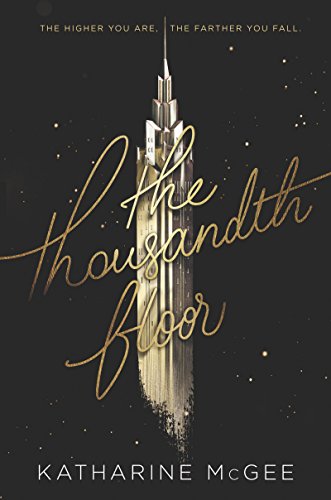
Katharine McGee's trilogy imagines Manhattan in 2118 as a single thousand-story tower housing every stratum of society, following five teenagers whose ambitions collide as they climb toward, or fall from, its highest floors. Across The Thousandth Floor, The Dazzling Heights, and The Towering Sky, addiction, surveillance, genetic privilege, and family betrayal play out as soap-opera drama in a meticulously built near-future setting.
- The Simulacra
Philip K. Dickstandalone novel1964
similar bypolitical intriguenorth americanear futurescience fictiondystopia
The Simulacra is a 1964 science fiction novel by American writer Philip K. Dick. The novel portrays a future totalitarian society apparently dominated by a matriarch, Nicole Thibodeaux. It revolves around the themes of reality and illusionary beliefs, as do many of Dick's works. Additionally, it touches on Nazi ideology.
- New York 2140
Kim Stanley Robinsonstandalone novel2017
similar bypolitical intriguenorth americanear futurescience fictiondystopia
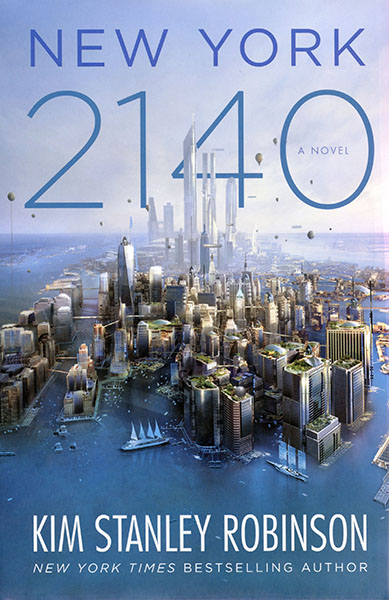
New York 2140 is a 2017 climate fiction novel by American science fiction author Kim Stanley Robinson. The novel is set in a New York City that has been flooded and altered by rising water.
- The Game-Players of Titan
Philip K. Dickstandalone novel1963
similar bynorth americanear futurescience fiction+2 more
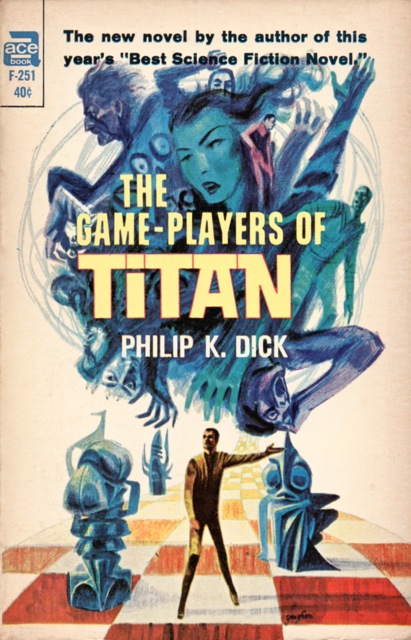
In a depopulated, mostly sterile America, land, marriages and social standing are all wagered on Bluff, a high-stakes game administered by the vugs, gelatinous, gambling-obsessed aliens from Titan who rule Earth without ever quite occupying it. Pete Garden's bipolar disorder threatens his standing among the game's players even as his new wife becomes pregnant, a near-miraculous event in this exhausted world, and his attraction to a telepath complicates things further. When a fellow player turns up dead, Pete finds himself a suspect in a mystery tangled up with induced amnesia and vug politics he barely understands. Philip K. Dick's 1963 novel.
- The Water Knife
Paolo Bacigalupistandalone novel2015
similar bynorth americanear futurescience fictiondystopia+1 more
The Water Knife is a 2015 science fiction novel by Paolo Bacigalupi. It is Bacigalupi's sixth novel, and is based on his short story, The Tamarisk Hunter, first published in the news magazine High Country News. It takes place in the near future, where drought brought on by climate change has devastated the Southwestern United States.
- The House of the Scorpion
series2 books2002
similar byscience fictiondystopiayoung adult+2 more
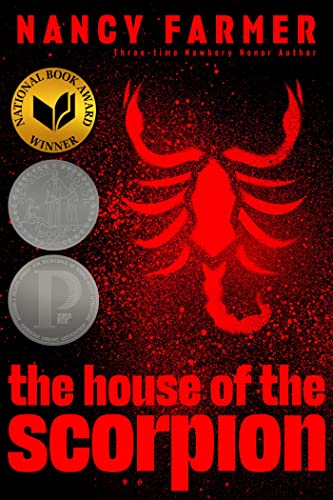
Matt is a clone of El Patron, the ancient drug lord who rules Opium, a narco-state carved out of the border between the U.S. and a future Mexico, created and raised solely to supply spare organs for the man he was copied from. Nancy Farmer's The House of the Scorpion follows Matt's growing awareness of what he is and what's expected of him, and his fight to be treated as human once El Patron dies. The sequel, The Lord of Opium, picks up with Matt unexpectedly left in charge of the whole corrupt nation.
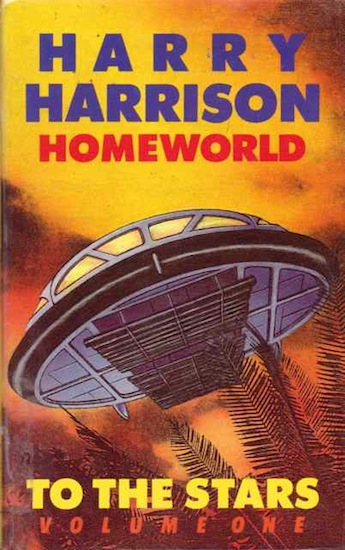
- To the Stars (Harrison)
series3 books1980
completed
similar byscience fictiondystopia+3 more
The To the Stars trilogy is a series of science fiction novels by Harry Harrison, first published in 1980 (Homeworld) and 1981. The three books were re-published in an omnibus edition in 1981.
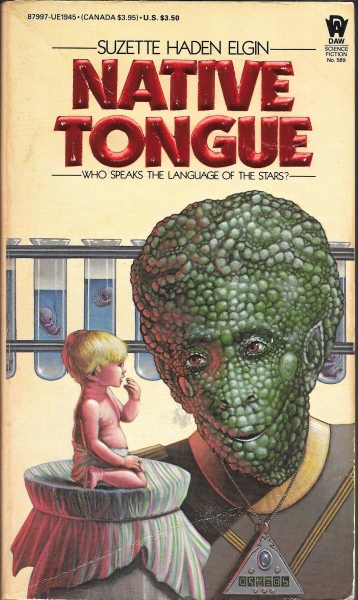
- Native Tongue
series3 books1984
completed
similar bynear futurescience fiction+3 more
Suzette Haden Elgin's Native Tongue trilogy (1984-1994) is set in a dystopian future America where women have been stripped of legal rights, and follows a family of professional interpreter-linguists whose women secretly develop Láadan, a constructed language built to express female experience that the existing languages of men can't capture. The trilogy follows the spread of Láadan among the oppressed women of the linguist households as an act of quiet resistance against the patriarchal order around them.
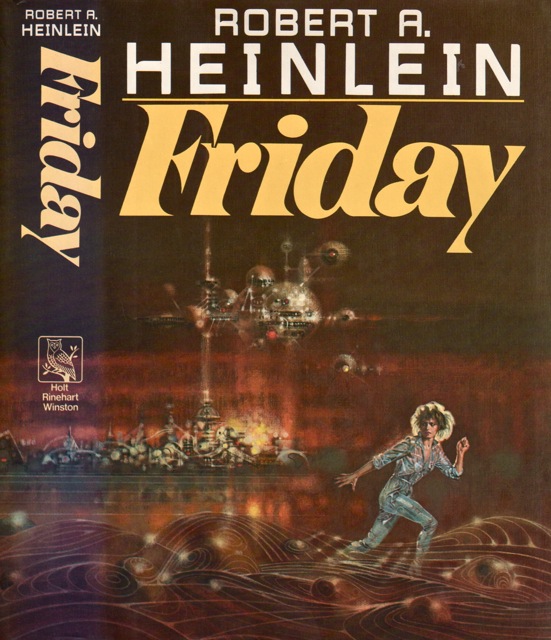
- Friday
Robert A. Heinleinstandalone novel1982
similar bynorth americanear futurescience fiction+1 more
Friday is a 1982 science fiction novel by American writer Robert A. Heinlein. It is the story of a female "artificial person", the eponymous Friday, genetically engineered to be stronger, faster, smarter, and generally better than normal humans. Artificial humans are widely resented, and much of the story deals with Friday's struggle both against prejudice and to conceal her enhanced attributes from other humans. The story is set in a Balkanized 21st century, in which the nations of the North American continent have been split up into a number of smaller states.
- Renegades (Marissa Meyer)
series3 books2017
similar bynear futurescience fictionyoung adult+2 more
Renegades is set in Gatlon City after a civil war between the superheroic Renegades and the villainous Anarchists, and follows Nova, a young woman with the power to put people to sleep by touch, as she infiltrates the Renegades as a spy for her uncle's Anarchists and falls for Adrian, the adopted son of the Renegades' leaders. Marissa Meyer's trilogy, continuing through Archenemies and Supernova, plays the two factions' history against the leads' divided loyalties; Meyer has said she doesn't plan to extend the series further.
- Directive 51 / Daybreak
series3 books2010
similar bypolitical intriguenorth americanear futurescience fiction+1 more
Directive 51 opens John Barnes's near-future thriller trilogy with government analyst Heather O'Grainn as anti-technology extremists unleash a nanotech plague called Daybreak that destroys petroleum-based materials, rubber, and electrical systems worldwide. The resulting collapse triggers mass death, a crisis over presidential succession, and mysterious Moon-launched fusion strikes on Washington and Chicago, while a shadowy neofeudalist movement moves into the vacuum. Daybreak Zero and The Last President carry the same unraveling-civilization story through the rest of the trilogy.
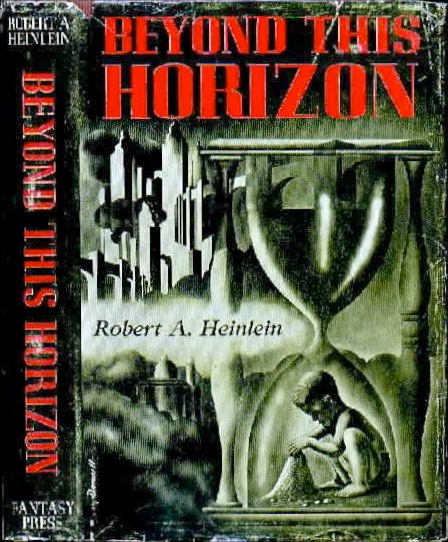
- Beyond This Horizon
Robert A. Heinleinstandalone novel1948
similar bynorth americascience fictiondystopia+1 more
From the front flap of a 2001 Baen reprint: "Utopia has been achieved. For centuries, disease, hunger, poverty, and war have been things found only in the history tapes. And applied genetics has given men and women the bodies of athletes and a lifespan of over a century. They should all have been very happy... But Hamilton Felix is bored. And he is the culmination of a star line, each of his last thirty ancestors chosen for superior genes. Hamilton is, as far as genetics can produce one, the ultimate man. And this ultimate man can see no reason why the human race should survive, and has no intention of continuing the pointless comedy. However, Hamilton's life is about to become less boring. A secret cabal of revolutionaries who find utopia not just boring, but desperately in need of leaders who know just What Needs to be Done, are planning to revolt and put themselves in charge. Knowing of Hamilton's disenchantment with the modern world, they have recruited him to join their Glorious Revolution. Big mistake! The revolutionaries are about to find out that recruiting a superman was definitely not a good idea..."
- Snow Crash
Neal Stephensonstandalone novel1992
similar bypolitical intriguenear futurescience fiction+1 more
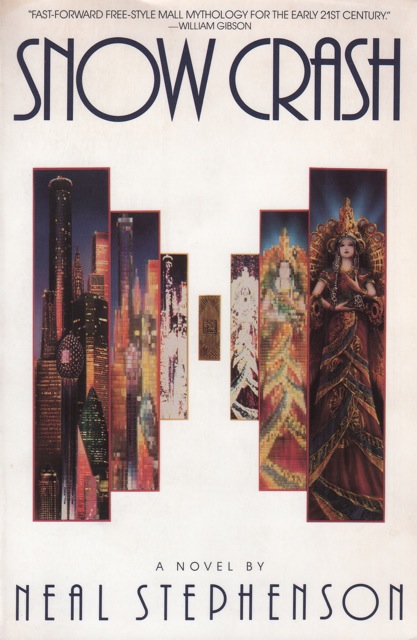
Snow Crash is a 1992 science fiction novel by Neal Stephenson. Like many of Stephenson's novels, its themes include history, linguistics, anthropology, archaeology, religion, computer science, politics, cryptography, memetics, and philosophy.
- Podkayne of Mars
Robert A. Heinleinstandalone novel1963
similar bypolitical intriguenear futurescience fictionyoung adult
From the back cover of the Baen 1995 edition: "Meet Podkayne Fries, a thoroughly modern Martian Ms. who thinks that Earth is not really fit for habitation and that humanity evolved in the now-exploded Fifth Planet. Poddy has one goal in life, to be the first female starship captain. She has her strategy all scoped out, and with her determination, looks and I.Q. she'll get there, never you doubt! But all work and no play would make Poddy a Dull Girl, so when a chance comes her way to travel to distant Earth via Venus with her elderly uncle, Poddy jumps at it, even if it does mean having her loathsome little brother along for the trip: Travel, Adventure, the chance to cuddle up (in a nice way) with real spaceship officers and ruthlessly pump their brains - she'll have it all. What Poddy doesn't know is that "Unca Tom" is more than her warmly supportive relative: he is also the Ambassador Plenipotentiary from Mars to the Three Planets Conference (travelling not quite incognito enough) and that certain people will stop at nothing to gain control of his vote - including kidnapping and doing terrible things to sweetly innocent Poddy Fries..."