More like One
anchored on:science fictionparallel universecontemporaryalternate historyidentityreflective
but
- Dying Inside
Robert Silverbergstandalone novel1972
similar byidentityreflectivecontemporaryscience fiction
Dying Inside is a 1972 science fiction novel by American writer Robert Silverberg. It was first serialized in Galaxy in 1972 and published in book form by Charles Scribner's Sons later that year. The novel follows David Selig, a middle-aged telepath in contemporary New York City, as the mind-reading ability that has shaped his life begins to disappear.
- Stranger in a Strange Land
Robert A. Heinleinstandalone novel1961
similar byidentityreflectivescience fiction
Stranger in a Strange Land is a 1961 science fiction novel by the American author Robert A. Heinlein. It tells the story of Valentine Michael Smith, a human who comes to Earth in early adulthood after being born on the planet Mars and raised by Martians, and explores his interaction with and eventual transformation of Terran culture.
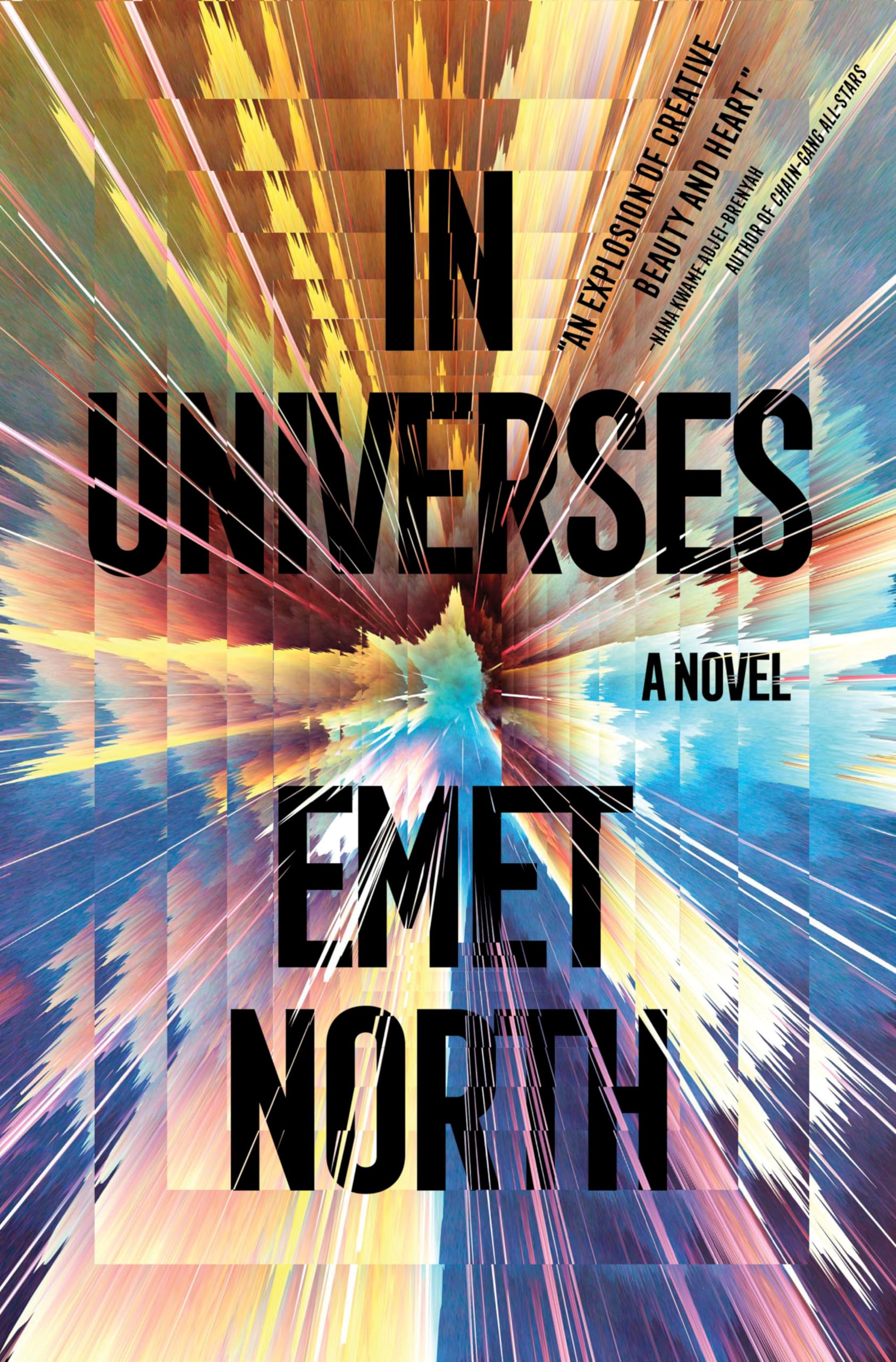
- In Universes
Emet Northstandalone novel2024
similar byidentityreflectiveparallel universecontemporaryscience fiction
In Universes is a 2024 science fiction novel by Emet North.
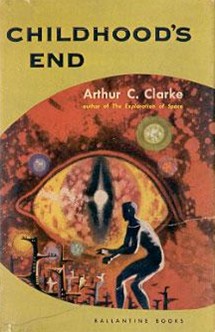
- Childhood's End
Arthur C. Clarkestandalone novel1953
similar byidentityreflectivescience fiction
Childhood's End is a 1953 science fiction novel by the British author Arthur C. Clarke. The story follows a peaceful alien invasion of Earth by mysterious Overlords, whose arrival begins decades of apparent utopia under indirect alien rule, at the cost of human identity and culture.
- Famous Men Who Never Lived
K. Chessstandalone novel2019
similar byidentityreflectivecontemporaryscience fictionalternate history+1 more
Famous Men Who Never Lived is a 2019 science fiction novel by American author K. Chess, about refugees. It was first published by Tin House.
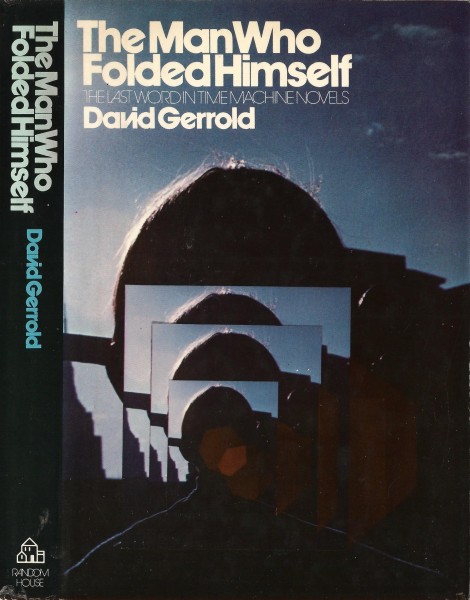
- The Man Who Folded Himself
David Gerroldstandalone novel1973
similar byidentityreflectivecontemporaryscience fiction
The Man Who Folded Himself is a 1973 science fiction novel by American writer David Gerrold. It was nominated for the Nebula Award for Best Novel in 1974 and the Hugo Award for Best Novel in 1974. The book explores the psychological, physical, and personal challenges that manifest when time travel is possible for a single individual at the touch of a button.
- Whileaway
series4 books1972
completed
similar byreflectivescience fictioncontemporary+2 more
Joanna Russ's The Female Man (1975) is a single feminist science fiction novel, not a multi-book series, built around four women from parallel timelines with very different gender arrangements. One of them, Janet, comes from Whileaway, an all-female utopian Earth ten centuries in the future where men died out in a plague; the other three come from realities closer to Russ's own, and their collisions are used to interrogate what womanhood and equality could mean under different social rules.
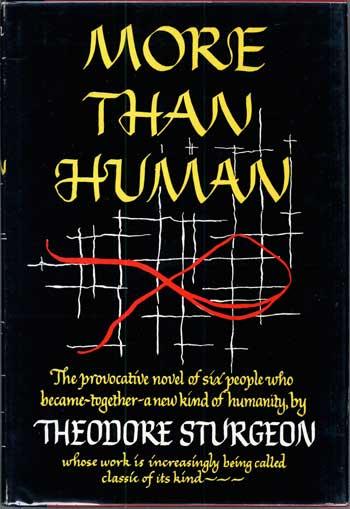
- More Than Human
Theodore Sturgeonstandalone novel1953
similar byidentityreflectivescience fiction
More Than Human is a 1953 science fiction fix-up novel by American writer Theodore Sturgeon. It is a revision and expansion of his 1952 novella Baby Is Three, which is bracketed by two additional parts written for the novel, "The Fabulous Idiot" and "Morality". It won the 1954 International Fantasy Award, which was also given to works in science fiction. It was additionally nominated in 2004 for a "Retro Hugo" award for the year 1954. Science fiction critic and editor David Pringle included it in his book Science Fiction: The 100 Best Novels.
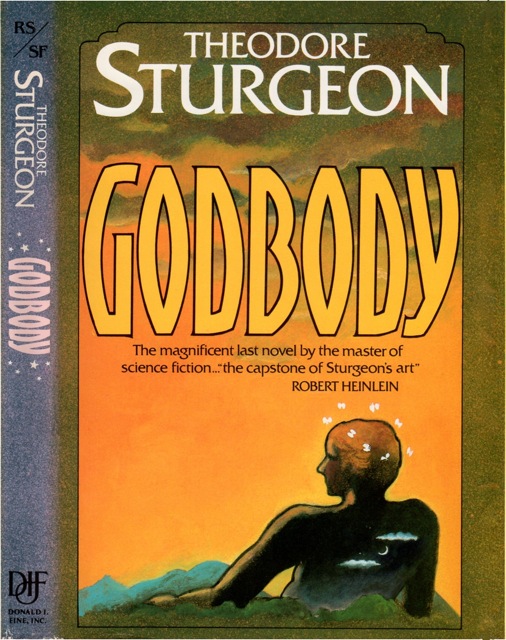
- Godbody
Theodore Sturgeonstandalone novel1986
similar byidentityreflectivecontemporaryscience fiction
Godbody is a science fiction novel by American writer Theodore Sturgeon, published posthumously in 1986. A foreword, "Agape and Eros: The Art of Theodore Sturgeon", was contributed by Robert A. Heinlein and an afterword was contributed by Stephen R. Donaldson.
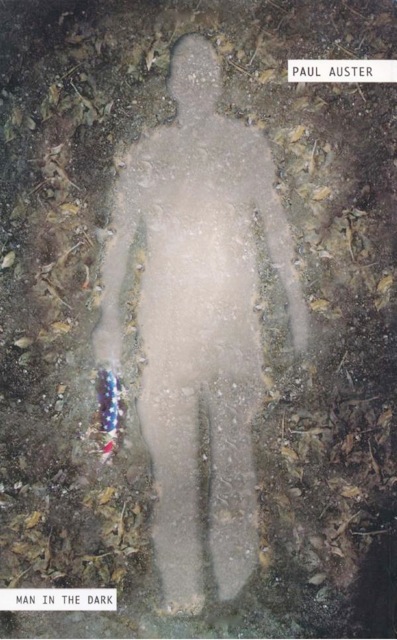
- Man in the Dark
Paul Austerstandalone novel2008
similar byidentityreflectivecontemporaryalternate history+1 more
An insomniac makes up a story about a man transported to an alternate reality in which a US civil war erupted after the 2000 election.
- Camouflage
Joe Haldemanstandalone novel2004
similar byidentityreflectivecontemporaryscience fiction
Camouflage is a 2004 science fiction novel by American writer Joe Haldeman. It won the James Tiptree, Jr. Award in 2004 and the Nebula Award for Best Novel in 2005.
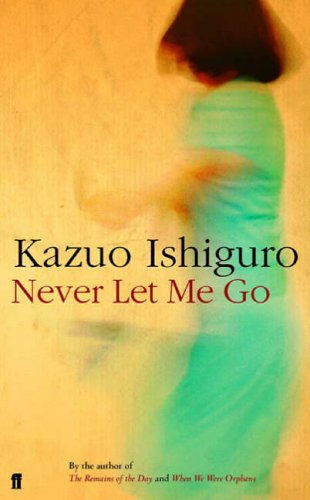
- Never Let Me Go
Kazuo Ishigurostandalone novel2005
similar byidentityreflectivescience fictionalternate history
Never Let Me Go is a 2005 science fiction novel by the British author Kazuo Ishiguro. It was shortlisted for the 2005 Man Booker Prize, for the 2006 Arthur C. Clarke Award and the 2005 National Book Critics Circle Award. Time magazine named it the best novel of 2005. It included the novel in its '100 Best English-language novels published since 1923—the beginning of TIME'. It also received an ALA Alex Award in 2006. A film adaptation directed by Mark Romanek was released in 2010.
- Landline
Rainbow Rowellstandalone novel2014
similar byidentityreflectivecontemporaryscience fiction
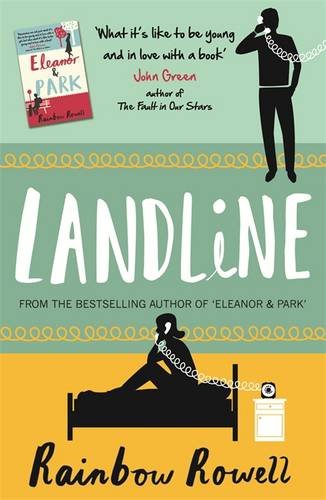
Landline is a 2014 American sci-fi novel by Rainbow Rowell. It tells the story of 37-year-old Georgie McCool who discovers that she is able to call her husband's 22-year-old self through his landline. Rowell stated that aspects from the novel are loosely based on her own life such as the fact that Georgie is incredibly career-driven while her husband is a stay-at-home dad. The character of Georgie McCool was named after the song Georgy Girl and the village of McCool Junction.
- The Boat of a Million Years
Poul Andersonstandalone novel1989
similar byidentityreflectivescience fiction+1 more
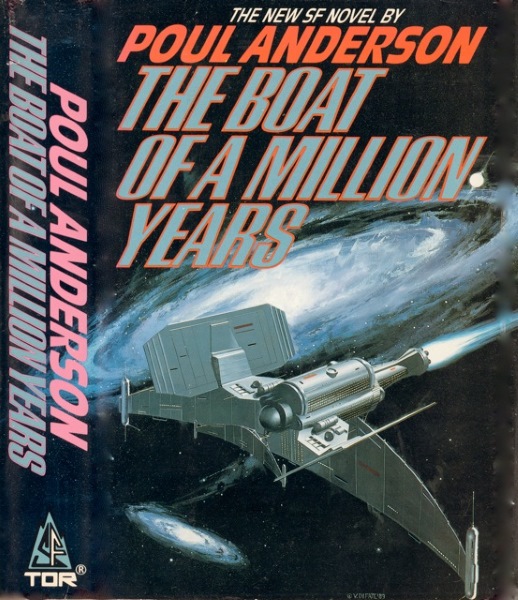
The Boat of a Million Years is a science fiction novel by American writer Poul Anderson, first published in 1989 and nominated for the Nebula Award for Best Novel that same year. It was also nominated for the Hugo Award for Best Novel and the Prometheus Award in 1990.
- I Will Fear No Evil
Robert A. Heinleinstandalone novel1970
similar byidentityreflectivescience fiction
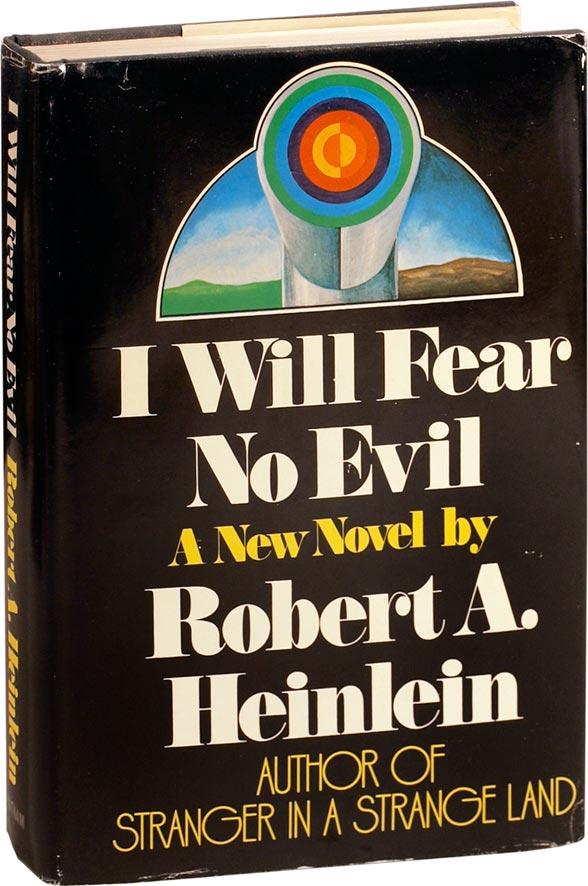
I Will Fear No Evil is a science fiction novel by American writer Robert A. Heinlein, originally serialised in Galaxy and published in hardcover in 1970. The title is taken from Psalm 23:4.
- The Dreaming Jewels
Theodore Sturgeonstandalone novel1950
similar byidentitycontemporaryscience fiction+1 more
The Dreaming Jewels (1950), also known as The Synthetic Man, is a science fiction novel by American writer Theodore Sturgeon. It was his first published novel.
- Hard Landing
Algis Budrysstandalone novel1993
similar byidentityreflectivecontemporaryscience fiction
When an alien spacecraft crashes into a swamp on the US Atlantic coast, the fates of the humanoid surviving crew members are described as they separate and attempt to avoid discovery by blending into the American public.
- Beyond the Labyrinth
Gillian Rubinsteinstandalone novel1988
similar byidentityreflectivecontemporaryscience fiction
Fourteen-year-old Brenton questions the choices in his life when an alien anthropologist arrives to study an ancient Aboriginal tribe that once lived in the area around his home.
- Dark Matter
Blake Crouchstandalone novel2016
similar byidentityparallel universecontemporaryscience fiction
Jason Dessen, college physics professor, husband and father, is kidnapped and taken to a parallel universe where his counterpart had dedicated his life to inventing a method of traveling between an infinity of parallel universes.
- The Cloning of Joanna May
Fay Weldonstandalone novel1989
similar byidentityreflectivecontemporaryscience fiction
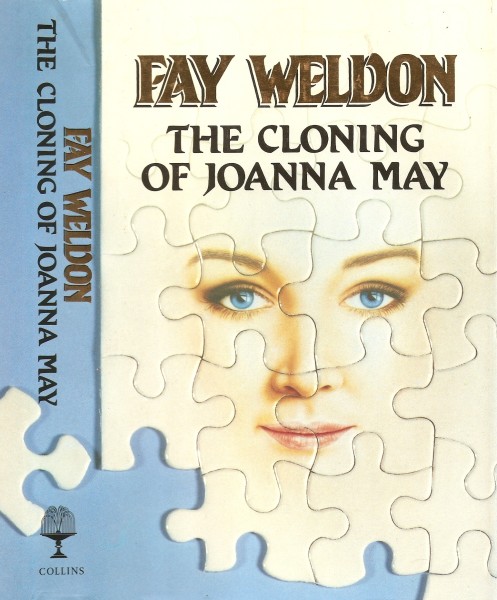
The Cloning of Joanna May is a 1989 science fiction novel by British writer Fay Weldon.
- Venus Plus X
Theodore Sturgeonstandalone novel1960
similar byidentityreflectivescience fiction
Charlie Johns wakes in a featureless silver room with no memory of how he got there and a watch that's inexplicably running backward. He's been brought, how and by whom is never explained to him, to Ledom, an isolated, technologically advanced society whose members are all both male and female and have done away with fixed sex roles entirely. Guides walk him through Ledom's customs and machinery while making clear he's there to judge them before he can go home. Interwoven with Charlie's tour are chapters following an ordinary mid-century American family, setting the utopia against the world it's implicitly critiquing. Theodore Sturgeon's provocative novel about gender and social design.
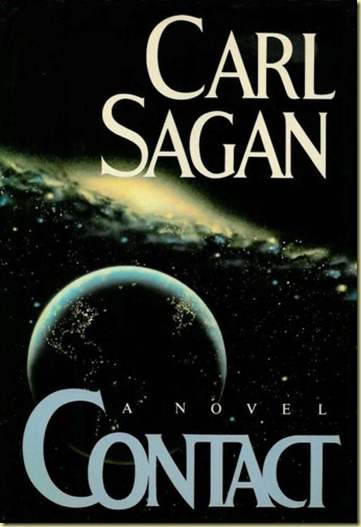
- Contact
Carl Saganstandalone novel1985
similar byreflectivecontemporaryscience fiction+1 more
From the front flap of the Simon and Schuster first edition: For centuries humanity has dreamed of life and intelligence beyond the Earth; for decades scientists have searched for it in every corner of the sky; for years Project Argus, a vast, sophisticated complex of radio telescopes, has listened for a signal indicating the existence, somewhere in the universe, of extraterrestrial intelligence. Then, one afternoon, the course of human history is changed, abruptly and forever. The Message, awaited for so long, its very possibility doubted by so many, arrives. Contact has been made. Life, intelligence, someone, something beyond Earth, 26 light-years away, in the vicinity of the star Vega, is calling, beaming across space a wholly unexpected message to say that we are not - have never been - alone. In Contact, Carl Sagan, whose Cosmos enthralled millions of readers and television viewers, has brilliantly employed the freedom of fiction to imagine the greatest adventure of all - humanity's first encounter with other intelligent beings. But the novel is not only about contact between humans and extraterrestrials; it is also about contact, down here on Earth, with each other and ourselves. At its center is a brilliant scientist, Eleanor Arroway, director of Project Argos, who is the first to realize that chapter one of human history is over. It is she who is instrumental in decoding the Message - and in persuading world leaders not to treat it as a threat - she who finds her own life changed by the immense challenge of responding to the Message; she who finally journeys out to experience, in circumstances at once profoundly religious and scientific, the most fateful encounter in human history.
- The Violent Century
Lavie Tidharstandalone novel2013
similar byidentityreflectivescience fictionalternate history
"They never meant to be heroes. For seventy years they guarded the British Empire. Oblivion and Fogg, inseparable friends, bound together by a shared fate. Until one night in Berlin, in the aftermath of the Second World War, and a secret that tore them apart. But there must always be an account...and the past has a habit of catching up to the present. Now, recalled to the Retirement Bureau from which no one can retire, Fogg and Oblivion must face up to a past of terrible war and unacknowledged heroism, - a life of dusty corridors and secret rooms, of furtive meetings and blood-stained fields - to answer one last, impossible question: What makes a hero?"--
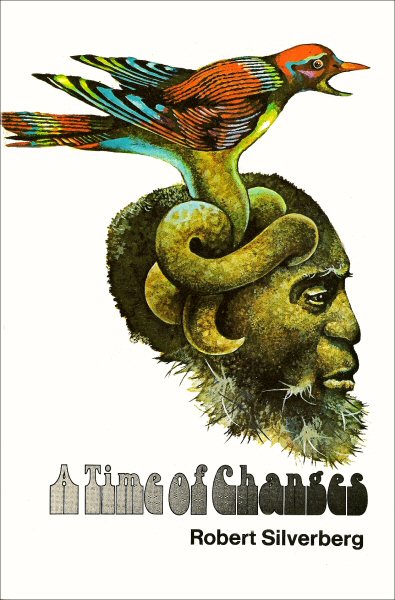
- A Time of Changes
Robert Silverbergstandalone novel1971
similar byidentityreflectivescience fiction
A Time of Changes is a 1971 science fiction novel by American writer Robert Silverberg. It won the Nebula Award for that year, and was also nominated for the 1972 Hugo and Locus Awards.