Loreful
HomeDiscover
Search series, authors…⌘K
Loreful

Reading orders for SF/F series and shared universes — with your place kept in every one.

Explore

UniversesSeriesWorksAuthorsAtlas

Help

FAQAboutSite map

Account & legal

Sign inCreate accountPrivacyTerms

Data

Built on ISFDB, Wikipedia, Wikidata and Open Library. Curated reading orders carry their reasoning on the page; the rest follow publication order. Data sources & licenses

© Loreful · data: ISFDB · CC BY

More like Opus 300

anchored on:literary & general

but

Mood

The mood the book leaves you in.

  • The reading experience is propelled by journeys, exploration, and physical risk; excitement and forward momentum dominate over dread or introspection.
  • Joy and loss are deliberately mixed; the resolution grants characters something real while taking something else away, leaving warmth and sorrow together.
  • The book demands work from the reader — dense prose, difficult structure, unfamiliar ideas, or morally uncomfortable material — as part of its intended effect.
  • Grim events, cruelty, or despair dominate the atmosphere, and the book does not soften them with comfort or comic relief.
  • The atmosphere is quietly unsettling — wrongness, unease, and the uncanny pervade the book without necessarily escalating into overt horror.
  • The book is built to move the reader; character feeling is foregrounded and major scenes aim at a strong emotional response.
  • Humor is a primary aim and the prose plays for laughs — comic situations, wit, or dialogue produce sustained comedy, not occasional levity.
  • The book insists that things can improve; effort and decency are shown to matter, and the arc bends toward better outcomes even through hardship.
  • The book teaches as it goes — real facts, history, science, or craft are conveyed in enough depth that learning is part of the reading experience.
  • The book is designed to uplift and motivate, presenting perseverance or achievement in a way that invites the reader to aspire or act.
  • The overall register is cheerful and easygoing; stakes are kept gentle and the book avoids dwelling on pain or dread.
  • Withheld information drives the experience; the book sustains enigmas and secrets the reader wants resolved, whatever its genre.
  • The book is contemplative and inward-looking, giving more weight to thought, memory, and meaning than to external events.
  • The book works as comfort reading — low tension, a soothing pace, and an atmosphere the reader can unwind in.
  • Grief, loss, or melancholy set the dominant register, and the book lets sorrow stand rather than resolving it into comfort.
  • Sustained suspense is the point; the book keeps the reader braced for what happens next through danger, pressure, or impending revelation.
  • Playful invention and charm define the register — fanciful conceits, light absurdity, and a narration that delights in its own oddity.

About

What the story runs on.

  • Stories in which extraterrestrial beings are central — as characters, cultures, or the object of the plot.
  • Stories about venturing into space to explore — survey missions, astronauts, and the frontier of the unknown beyond Earth.
  • Stories in which staying alive against nature, catastrophe, or scarcity is the central problem.
  • Stories of lovers kept apart by law, family, faith, or station, where the obstacle to love is the plot.
  • Stories in which a friendship — its making, testing, or loss — is the emotional center.
  • Stories of growing up — a young protagonist crossing from childhood into adult knowledge and responsibility.
  • Stories about who a character truly is — self-discovery, doubled lives, and the search for a self.
  • Stories about mourning — living through the death of a loved one and what loss does to the survivors.
  • Stories in which a buried family truth — hidden parentage, crimes, or shames — surfaces and reorders the present.
  • Stories driven by maneuvering for power — factions, conspiracies, and statecraft conducted in shadow.
  • Stories in which war itself is the subject — combat, occupation, and what warfare does to soldiers and civilians.
  • Stories organized around investigating a killing — the case, the clues, and the pursuit of the killer, in any genre's clothing.

Shelf

Where it sits in the library.

    • Fiction built on magic or other supernatural elements that have no scientific explanation.
    • Secondary-world fantasy at large scale, where the fate of nations or the world turns on the protagonists' struggle.
    • Fantasy set in a recognizably modern city or contemporary world where the supernatural intrudes on everyday life.
    • Fantasy that blends in horror's atmosphere and imagery, keeping a fantastical frame around grim or frightening material.
    • Action-driven fantasy following warriors or rogues with personal stakes against sorcerous threats, rather than world-spanning conflicts.
    • Fantasy set in a real historical period or a close analogue of one, with magic woven into the era.
    • Fantasy in which protagonists cross from the ordinary world into another world through a portal or similar passage.
    • Fiction that retells or reworks a traditional fairy tale in a new form or setting.
    • Fantasy drawing directly on myths, legends, and folklore, retelling them or building on their figures and logic.
    • Fantasy of ghosts, vampires, shapeshifters, psychics, and similar phenomena, usually set in an otherwise ordinary world.
    • Fiction mixing science-fictional trappings with overtly magical or impossible elements in one setting.
    • Low-stakes fantasy emphasizing comfort, community, and everyday pleasures over conflict and peril.
    • Speculative fiction of pervasive moral ambiguity, violence, and cynicism that rejects heroic conventions — fantasy and SF alike.
      • Fiction that extrapolates from science and technology — future societies, space travel, or speculative inventions — within at least nominally natural laws.
      • Science fiction of interstellar scope — starships, galactic polities, and adventure across star systems.
      • Science fiction committed to scientific rigor, where technical plausibility constrains the story.
      • Science fiction centered on armed forces and warfare, told largely from a military point of view.
      • Science fiction of networked, corporate-dominated near futures, pairing high technology with social decay.
      • Science fiction styled on nineteenth-century steam-powered technology, often in a Victorian or pseudo-Victorian setting.
      • Fiction depicting an oppressive or catastrophic society, presented as a warning.
      • Fiction set after civilization's collapse, following survivors in the ruins of the old world.
      • Fiction in which characters move between past and future, and the mechanics or consequences of that travel drive the plot.
      • Fiction exploring a world where a historical event went differently and history diverged from ours.
      • Science fiction about humanity's first encounter and communication with an alien intelligence.
      • Science fiction in which extraterrestrial forces attack or occupy Earth and humanity resists.
      • Fiction whose primary aim is to frighten or unsettle the reader through dread, menace, or the monstrous.
      • Horror of vast, indifferent, incomprehensible entities before which humanity is insignificant, in the Lovecraft tradition.
      • Horror of decaying houses, buried family secrets, and oppressive atmosphere in the Gothic literary tradition.
      • Horror centered on hauntings and the returning dead.
      • Horror located in the mind — paranoia, obsession, and unreliable perception rather than external monsters.
      • Horror built around the reanimated dead and survival amid their outbreaks.
      • Horror defined by explicit, transgressive gore that refuses to cut away from violence.
      • Speculative fiction of the strange and uncanny that resists both natural explanation and standard genre categories.
      • Fiction organized around solving a crime or puzzle, typically following an investigator toward the identification of a culprit.
      • A puzzle-first mystery that lays out clues so the culprit's identity can be deduced before the reveal.
      • Crime fiction of moral ambiguity, fatalism, and hard-edged style, set among the corrupt and the doomed.
      • A mystery following the realistic routines of police work — forensics, interviews, and case-building.
      • A gentle mystery with an amateur sleuth, a small community, and violence kept off the page.
      • A mystery set in a past era, where the investigation works within that period's methods and society.
      • Fast-paced fiction driven by imminent danger, pursuit, or high-stakes conspiracy, built to sustain tension.
      • A thriller of espionage — agents, tradecraft, and intelligence services in conflict.
      • A thriller centered on lawyers and the courtroom, where litigation carries the suspense.
      • A thriller driven by detailed contemporary or near-future technology, often military or scientific.
      • A thriller whose tension comes from mental states and manipulation between characters rather than external action.
      • Fiction whose central plot is a romantic relationship and its development toward an emotionally satisfying resolution.
      • Romance in which one or both partners are supernatural beings, blending fantasy elements into the love story.
      • A fantasy-romance hybrid in which the romantic arc and the fantasy plot carry equal weight.
      • Romance set in a past era, with courtship shaped by the period's society and manners.
      • Romance set in the present day, without supernatural or historical elements.
      • Fiction set in a real past period, where the historical setting materially shapes characters and events.
        • General and literary fiction emphasizing prose style, character interiority, or formal ambition over genre plot conventions.
        • Fiction in a realistic world where magical events occur and are treated as ordinary, in the tradition of Latin American literature.
        • Fiction that ridicules people, institutions, or society in order to criticize them.
        • Fiction of dreamlike, irrational imagery and logic that breaks from realistic representation.
        • Fiction that plays with narrative convention through metafiction, fragmentation, and self-reference.
        • Fiction propelled by journeys, exploration, and physical peril, where action and survival carry the plot.
        • Adventure fiction of ships and seafaring — naval engagements, voyages, and life at sea.
        • Fiction of the American frontier West — gunmen, ranchers, and lawmen, typically in the late nineteenth century.
        • Fiction centered on soldiers, campaigns, and the experience of warfare, historical or imagined.
          • Fiction written primarily to amuse, using comedic situations, wit, or parody as its organizing principle.
            • Multi-generational fiction following a family or dynasty across decades, with inheritance and kinship as the through-line.
              • Fiction whose world runs on explicit game mechanics — levels, stats, and skills that characters can see and exploit.
                • Fiction about costumed or superpowered heroes and their conflicts with comparable villains.

                Practical

                How long a commitment, whether it stands alone, and whether it has finished.

                Tap a chip to ask for it · tap again to rule it out · once more to clear. Numbers show what would be left.

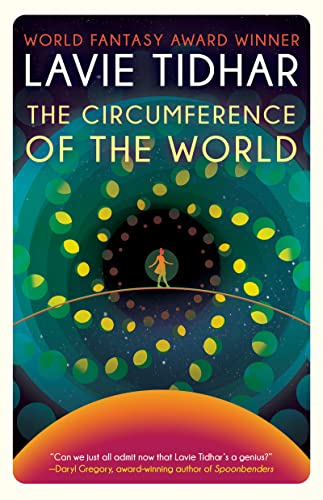
                • Cover of The Circumference of the World
                  The Circumference of the World

                  Lavie Tidhar · standalone novel · 2023

                  similar byliterary & generalcontemporaryscience fiction

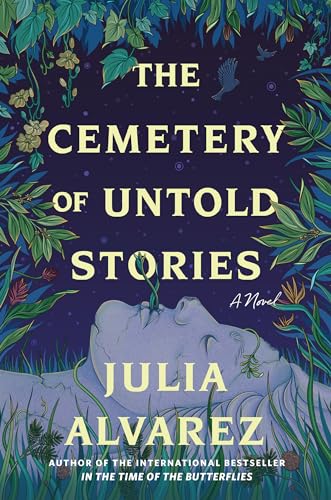
                • Cover of The Cemetery of Untold Stories
                  The Cemetery of Untold Stories

                  Julia Alvarez · standalone novel · 2024

                  similar bybooks and readingliterary & generalcontemporaryreflective

                  The Cemetery of Untold Stories: A Novel (2024) is a work of magical realism and the seventh novel by Dominican-American writer Julia Alvarez. The book follows Alma, a prolific author who, after retiring from her teaching job and writing career, inherits a plot of land in the Dominican Republic where she decides to create a cemetery for her unfinished manuscripts and notes.

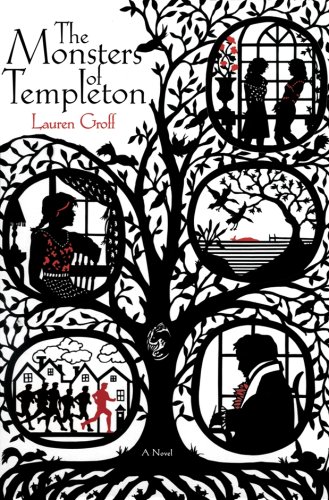
                • Cover of The Monsters of Templeton
                  The Monsters of Templeton

                  Lauren Groff · standalone novel · 2008

                  similar byliterary & generalcontemporaryreflective+1 more

                  The Monsters of Templeton is a dramatic novel written by Lauren Groff. Groff was born and raised in Cooperstown, New York. The name Templeton draws from the name devised for the town by James Fenimore Cooper, Cooperstown's most renowned author, known for The Leatherstocking Tales. Groff draws in many of the legends of Cooperstown, especially those crafted by Cooper himself, and ties them together over the expanses of time, then weaves them in with fictional modern-day events. The book was released to great critical acclaim.

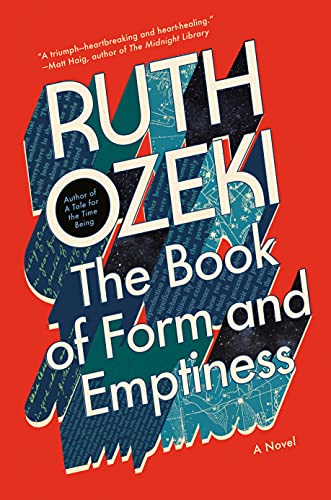
                • Cover of The Book of Form and Emptiness
                  The Book of Form and Emptiness

                  Ruth Ozeki · standalone novel · 2021

                  similar bybooks and readingliterary & generalcontemporaryreflective

                  The Book of Form and Emptiness is a novel by American author Ruth Ozeki, published in 2021 by Viking. Ozeki's fourth novel, the book won the 2022 Women's Prize for Fiction. The story follows a boy who hears voices from inanimate objects while the narrative explores themes of mental illness and bereavement.

                • Cover of The Fire Gospel
                  The Fire Gospel

                  Michel Faber · standalone novel · 2008

                  similar bybooks and readingliterary & generalcontemporaryreflective

                  Literary fantasy novel

                • Cover of Fahrenheit 451
                  Fahrenheit 451

                  series · 2 books · 1951

                  completed

                  similar bybooks and readingscience fiction+1 more

                  Fahrenheit 451 began life as "The Fireman," a novella Ray Bradbury published in 1951, which he then expanded into the full novel released in 1953 under its now-famous title. Set in a future where books are outlawed and firemen exist to burn them, it follows fireman Guy Montag as doubts about his job push him toward the very literature he's supposed to destroy. The novella and novel are one story's evolution rather than two separate books.

                • Cover of Our Tragic Universe
                  Our Tragic Universe

                  Scarlett Thomas · standalone novel · 2010

                  similar bybooks and readingliterary & generalcontemporaryreflective

                  'I was reading about the end of the universe when I got a text message from my friend Libby . . .' If Kelsey Newman's theory about the end of time is true, we are all going to live forever. But for Meg – locked in a dead-end relationship and with a deadline long-gone for a book that she can't write – this thought fills her with dread. Meg is lost in a labyrinth of her own devising. But could there be an important connection between a wild beast living on Dartmoor, a ship in a bottle, the science of time, a knitting pattern for the shape of the universe and the Cottingley Fairies? Or is her life just one long chain of coincidences? Smart, entrancing and buzzing with big ideas, Our Tragic Universe is a book about how relationships are created and destroyed, and how a story might just save your life.

                • Cover of Quichotte
                  Quichotte

                  Salman Rushdie · standalone novel · 2019

                  similar byliterary & generalcontemporary+2 more

                  Quichotte is a 2019 novel by Salman Rushdie. It is his fourteenth novel, published on 29 August 2019 by Jonathan Cape in the United Kingdom and Penguin Books India in India. It was published in the United States on 3 September 2019 by Random House. Inspired by Miguel de Cervantes's classic novel Don Quixote, Quichotte is a metafiction that tells the story of an addled Indian-American man who travels across America in pursuit of a celebrity television host with whom he has become obsessed.

                • Cover of The Sentence
                  The Sentence

                  Louise Erdrich · standalone novel · 2021

                  similar bybooks and readingliterary & generalcontemporaryreflective

                  The Sentence is a 2021 novel by American author Louise Erdrich. The novel was shortlisted for the Women's Prize for Fiction and longlisted for the Andrew Carnegie Medal for Excellence in Fiction.

                • Cover of Cornish Trilogy
                  Cornish Trilogy

                  series · 3 books · 1981

                  completed

                  similar byliterary & generalreflective+2 more

                • Cover of Time Travelers Never Die
                  Time Travelers Never Die

                  series · 2 books · 1996

                  similar bycontemporaryscience fiction+1 more

                  Time Travelers Never Die started life as a Jack McDevitt novella in the mid-1990s (Hugo- and Nebula-nominated) before he expanded it into a full novel over a decade later; the novella and novel are two forms of the same story rather than a sequel. It follows a small circle of people who gain access to working time travel and use it to step into the past, in McDevitt's characteristic register of curious, history-minded science fiction.

                • Cover of The Irish Stories
                  The Irish Stories

                  series · 12 books · 1956

                  completed

                  similar byliterary & general+1 more

                  Green Shadows, White Whale is Ray Bradbury's fictionalized account of the months he spent in Ireland in 1953-54 writing the Moby-Dick screenplay for director John Huston, blending memoir with short stories and vignettes he wrote about the country over the following decades. It stands as a single novel rather than a multi-book series, gathering material Bradbury considered the culmination of thirty-five years of Ireland-inspired writing. The title plays on Peter Viertel's Huston-focused White Hunter, Black Heart.

                • Cover of Parasol Against the Axe
                  Parasol Against the Axe

                  Helen Oyeyemi · standalone novel · 2024

                  similar byliterary & generalcontemporary+1 more

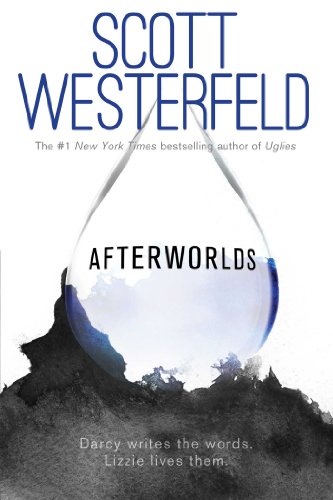
                • Cover of Afterworlds
                  Afterworlds

                  Scott Westerfeld · standalone novel · 2014

                  similar bybooks and readingliterary & generalcontemporaryreflective

                  Alternates between a realistic story of a young author writing a "young adult Hindu paranormal romance" novel in New York City and chapters from that novel.

                • Cover of The Jane Austen Book Club
                  The Jane Austen Book Club

                  Karen Joy Fowler · standalone novel · 2004

                  similar bybooks and readingliterary & generalcontemporaryreflective

                  The Jane Austen Book Club is a 2004 novel by American author Karen Joy Fowler. The story, which takes place near Sacramento, California, centers around a book club consisting of five women and one man who meet once a month to discuss Jane Austen's six novels. The novel was a critical success and became a national bestseller.

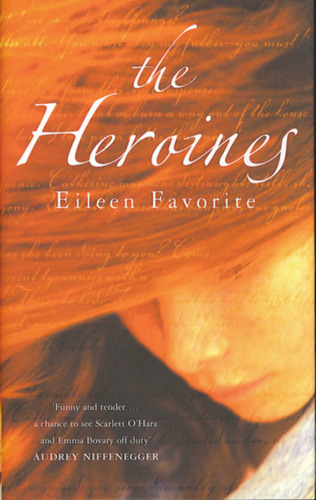
                • Cover of The Heroines
                  The Heroines

                  Eileen Favorite · standalone novel · 2007

                  similar bybooks and readingliterary & generalcontemporaryreflective

                  Adolescent Penny resents the way her mother cares for the literary Heroines who stay at their prairie bed-and-breakfast.

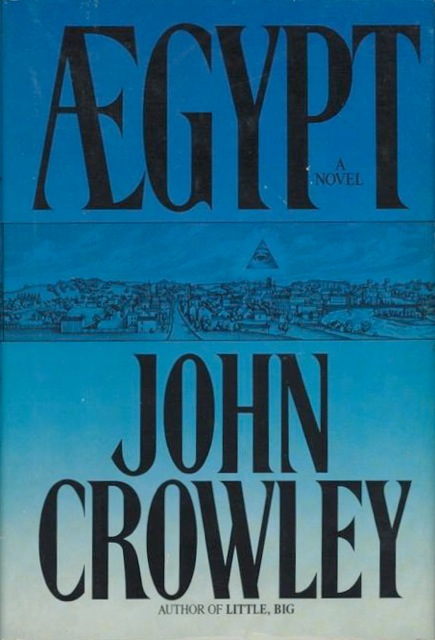
                • Cover of Ægypt
                  Ægypt

                  series · 5 books · 1987

                  completed

                  similar bybooks and readingcontemporaryliterary & generalreflective

                  Ægypt is a fantasy tetralogy written by American author John Crowley. The series describes the life and work of Pierce Moffett, a history professor who prepares a manuscript for publication even as it prepares him for some as-yet unknown destiny, all set amidst strange and subtle Hermetic manipulations among the Faraway Hills at the border of New York, New Jersey and Pennsylvania.

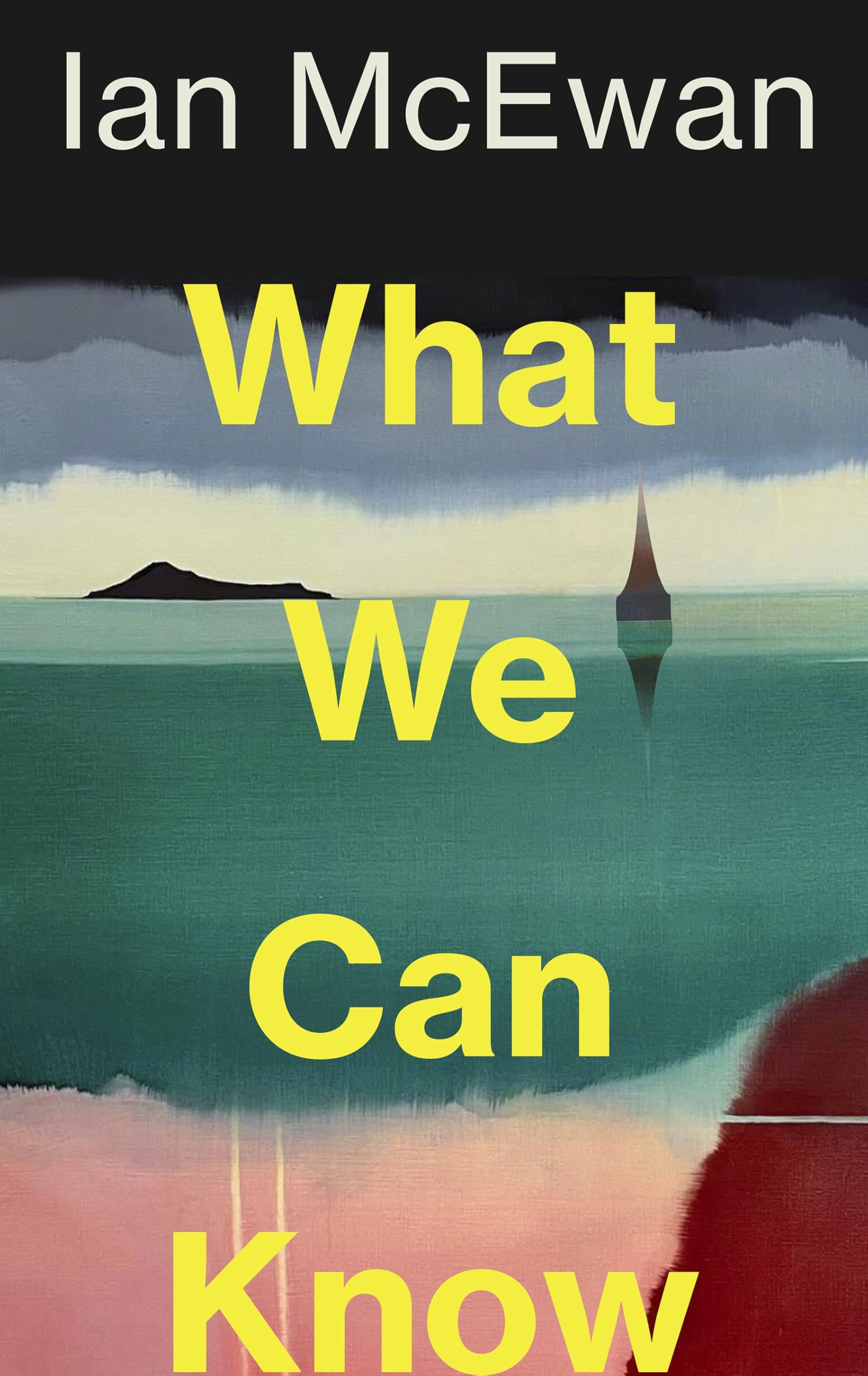
                • Cover of What We Can Know
                  What We Can Know

                  Ian McEwan · standalone novel · 2025

                  similar bybooks and readingliterary & generalreflective+1 more

                  What We Can Know is the 18th novel by author Ian McEwan, published on 18 September 2025 by Jonathan Cape. The novel is set almost a century in the future, in 2119, in a UK partially submerged by rising seas, and is centred on Tom Metcalfe, an academic at the fictional University of the South Downs, who is investigating a lost poem, read aloud at a party in 2014.

                • Cover of Saint Leibowitz
                  Saint Leibowitz

                  series · 6 books · 1955

                  completed

                  similar byscience fiction+2 more

                  Walter M. Miller Jr.'s A Canticle for Leibowitz (1959), assembled from three novellas he had published earlier in the decade, follows the monks of a Catholic monastery in the post-nuclear American Southwest as they preserve fragments of scientific knowledge across centuries, watching civilization slowly rebuild itself and edge back toward the mistakes that destroyed it. Miller's posthumous sequel, Saint Leibowitz and the Wild Horse Woman, completed by Terry Bisson from his notes after his death and published in 1997, returns to the same abbey and its world decades later. Together the two novels form a sparse, decades-spanning series about memory, faith, and the cycles of civilization.

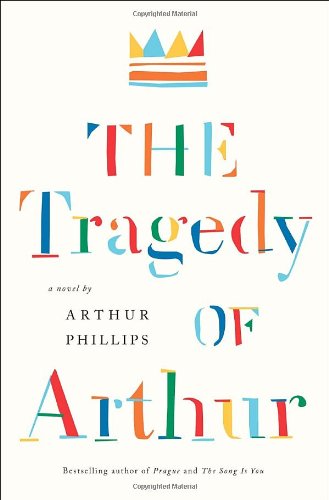
                • Cover of The Tragedy of Arthur
                  The Tragedy of Arthur

                  Arthur Phillips · standalone novel · 2011

                  similar bybooks and readingliterary & generalcontemporaryreflective

                  The Tragedy of Arthur is a 2011 novel by the American author Arthur Phillips. The narrative concerns the publication of a recently discovered Arthurian play attributed to William Shakespeare, which the main narrator, "Arthur Phillips", believes to be a forgery produced by his father. It was published by Random House.

                • Cover of The Quiet Woman
                  The Quiet Woman

                  Christopher Priest · standalone novel · 1990

                  similar byliterary & generalcontemporary+2 more

                  286p

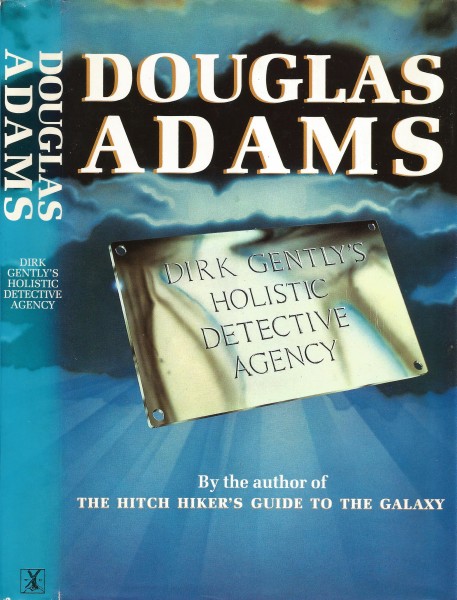
                • Cover of Dirk Gently
                  Dirk Gently

                  series · 3 books · 1987

                  completed

                  part of The Hitchhiker's Guide to the Galaxy Universe

                  similar bycontemporaryscience fiction

                  Dirk Gently's Holistic Detective Agency (1987) introduces Douglas Adams's eccentric investigator, whose approach treats all events and objects as ultimately connected however implausibly, as a case involving time travel, a ghost, and a Cambridge murder tangles into one plot. Adams completed one further full novel, The Long Dark Tea-Time of the Soul (1988), before his death; The Salmon of Doubt (2002) later collected his unfinished notes toward a third book alongside essays and other writing, rather than completing the story.

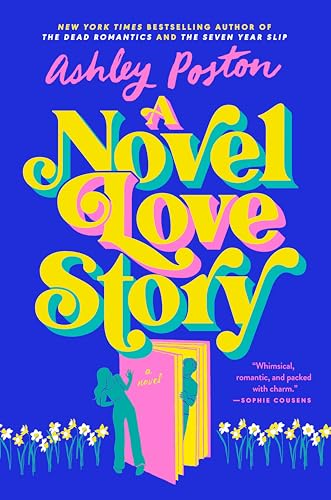
                • Cover of A Novel Love Story
                  A Novel Love Story

                  Ashley Poston · standalone novel · 2024

                  similar bycontemporary+2 more

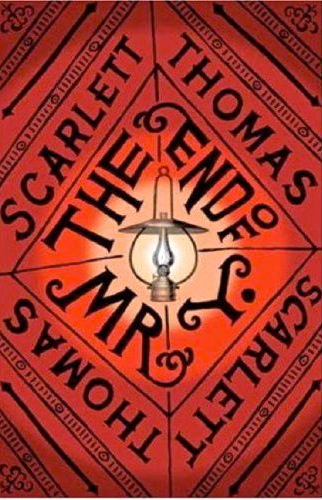
                • Cover of The End of Mr. Y
                  The End of Mr. Y

                  Scarlett Thomas · standalone novel · 2006

                  similar bybooks and readingliterary & generalcontemporaryscience fiction

                  The End of Mr. Y is a novel by British author Scarlett Thomas. The book tells the story of Ariel Manto, a PhD student who has been researching the 19th century writer Thomas Lumas. She finds an extremely rare copy of Lumas' novel The End of Mr. Y in a second-hand bookshop. The book is rumoured to be cursed - everyone who has read it has died not long afterwards.