More like Orbit 10
anchored on:science fictionmid 20th centuryshort story cycleidentityour worldchallenging
but
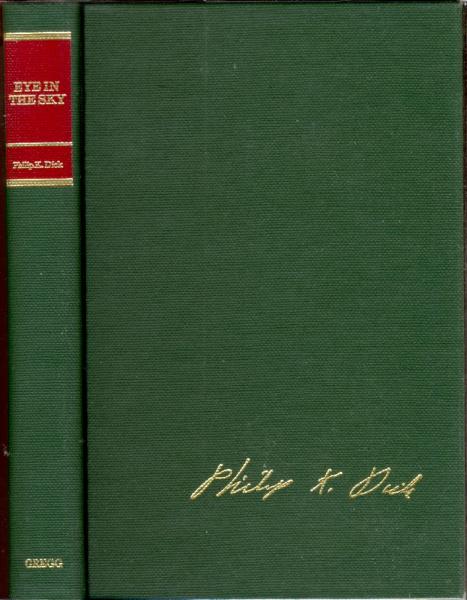
- Eye in the Sky
Philip K. Dickstandalone novel1957
similar byidentityscience fictionchallengingour worldmid 20th century
Eight visitors touring a particle-accelerator facility are caught in a catastrophic malfunction, a collapsing platform, a burst of radiation, that leaves them all unconscious. When protagonist Jack Hamilton, an engineer recently fired over Red Scare-era suspicions about his wife's politics, comes to, the world around him is subtly, then not so subtly, wrong: physics bends to fit one fellow victim's religious convictions, then to another's paranoid fears, as the group cycles through what turn out to be shared hallucinations built from each other's private belief systems. Philip K. Dick's early novel about how differently people actually see the same world.
- Venus Plus X
Theodore Sturgeonstandalone novel1960
similar byidentityscience fictionchallengingmid 20th century+1 more
Charlie Johns wakes in a featureless silver room with no memory of how he got there and a watch that's inexplicably running backward. He's been brought, how and by whom is never explained to him, to Ledom, an isolated, technologically advanced society whose members are all both male and female and have done away with fixed sex roles entirely. Guides walk him through Ledom's customs and machinery while making clear he's there to judge them before he can go home. Interwoven with Charlie's tour are chapters following an ordinary mid-century American family, setting the utopia against the world it's implicitly critiquing. Theodore Sturgeon's provocative novel about gender and social design.
- Stranger in a Strange Land
Robert A. Heinleinstandalone novel1961
similar byidentityscience fictionchallengingour world
Stranger in a Strange Land is a 1961 science fiction novel by the American author Robert A. Heinlein. It tells the story of Valentine Michael Smith, a human who comes to Earth in early adulthood after being born on the planet Mars and raised by Martians, and explores his interaction with and eventual transformation of Terran culture.
- The Disappearance
Philip Wyliestandalone novel1951
similar byscience fictionchallengingour worldmid 20th century+1 more
One ordinary moment, the world splits in two: every man on Earth finds every woman gone without a trace, and at the same instant every woman finds herself in a world emptied of men -- two parallel realities on the same planet, each population convinced the other has vanished. Philip Wylie follows both worlds afterward, one sliding into authoritarian collapse without women to share or restrain power, the other building something more equal and freer, using the split to interrogate mid-century assumptions about sex, marriage and the double standards separating what men and women were each allowed to be. A speculative novel years ahead of the feminist movement it anticipates.
- VALIS
series4 books1981
completed
similar byidentitychallengingscience fiction+1 more
The VALIS trilogy is a set of science fiction/philosophical novels by author Philip K. Dick which include VALIS (1981), The Divine Invasion (1981), and The Transmigration of Timothy Archer (1982). Dick's first novel about the VALIS concept originally titled "VALISystem A", was published as Radio Free Albemuth after Dick's death in 1985.
- Cloud Atlas
David Mitchellstandalone novel2004
similar byidentitychallengingscience fictionour world
Cloud Atlas, published in 2004, is the third novel by British author David Mitchell. The book combines metafiction, historical fiction, contemporary fiction and science fiction, with interconnected nested stories in different writing styles that take the reader from the remote South Pacific in the 19th century to the island of Hawaii in a distant post-apocalyptic future. Its title references a piece of music by Toshi Ichiyanagi.
- The Einstein Intersection
Samuel R. Delanystandalone novel1967
similar byidentityscience fictionchallenging+1 more
The Einstein Intersection is a 1967 science fiction novel by Samuel R. Delany. The title is a reference to Einstein's Theory of Relativity connecting to Kurt Gödel's Constructible universe, which is an analogy to science meeting philosophy. The original publisher, Ace Books, changed Delany's originally intended title from A Fabulous, Formless Darkness for commercial reasons.
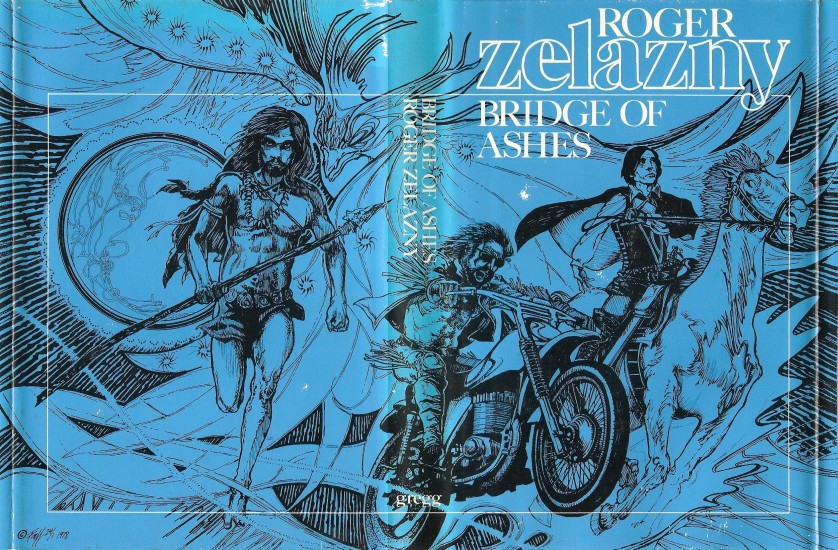
- Bridge of Ashes
Roger Zelaznystandalone novel1976
similar byidentityscience fictionchallengingour world
Bridge of Ashes is an experimental science fiction novel by American writer Roger Zelazny. The paperback edition was published in 1976 and the hardcover in 1979. Zelazny describes the book as one of five books from which he learned things "that have borne me through thirty or so others". He states that he "felt that if I could pull it off I could achieve some powerful effects. What I learned from this book is something of the limits of puzzlement in that no man’s land between suspense and the weakening of communication".
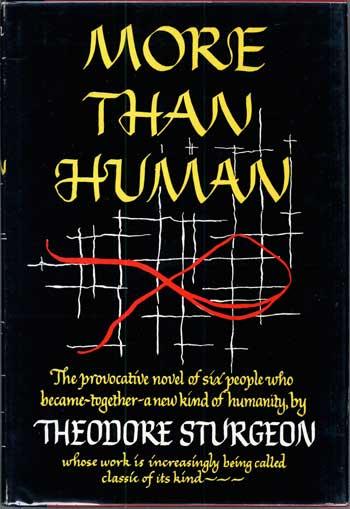
- More Than Human
Theodore Sturgeonstandalone novel1953
similar byidentityscience fictionour worldshort story cycle
More Than Human is a 1953 science fiction fix-up novel by American writer Theodore Sturgeon. It is a revision and expansion of his 1952 novella Baby Is Three, which is bracketed by two additional parts written for the novel, "The Fabulous Idiot" and "Morality". It won the 1954 International Fantasy Award, which was also given to works in science fiction. It was additionally nominated in 2004 for a "Retro Hugo" award for the year 1954. Science fiction critic and editor David Pringle included it in his book Science Fiction: The 100 Best Novels.
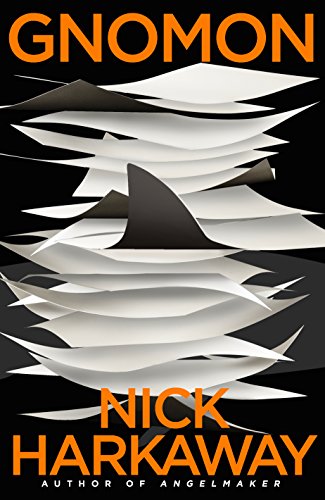
- Gnomon
Nick Harkawaystandalone novel2017
similar byidentityscience fictionchallengingour world
Gnomon is a 2017 science fiction novel by British author Nick Harkaway. The book deals with a state that exerts ubiquitous surveillance on its population. A detective investigates a murder through unconventional methods that leads to questions about her society's very nature.
- Sirius: A Fantasy of Love and Discord
Olaf Stapledonstandalone novel1944
similar byidentityscience fictionour worldmid 20th century
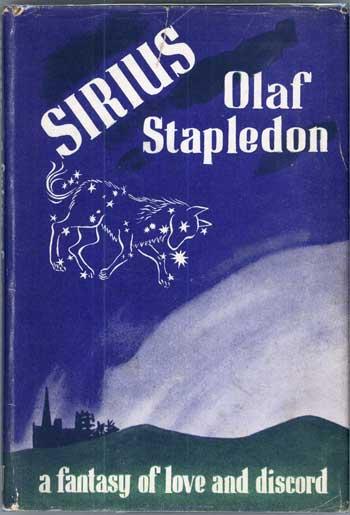
Sirius is a 1944 science fiction novel by the British philosopher and author Olaf Stapledon, whose title character is a dog named Sirius with humanlike intelligence. A sense of existential questioning suffuses the book, as the author delves into aspects of Sirius's psyche. The novel deals with many human issues through Sirius and his experiences, his unusual nature, his ideas and his relationships with humans. The characters go to great lengths to prevent Sirius from becoming a circus-type wonderdog, and instead, they seek to develop Sirius's character much like a family would create and foster that of a human child.
- Childhood's End
Arthur C. Clarkestandalone novel1953
similar byidentityscience fictionour world
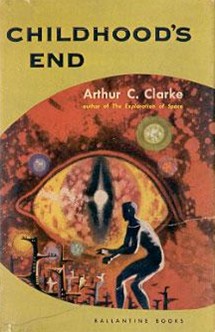
Childhood's End is a 1953 science fiction novel by the British author Arthur C. Clarke. The story follows a peaceful alien invasion of Earth by mysterious Overlords, whose arrival begins decades of apparent utopia under indirect alien rule, at the cost of human identity and culture.
- A Clockwork Orange
series4 books1962
completed
similar byscience fictionchallengingour world+1 more
Anthony Burgess's 1962 novel is narrated by Alex, a teenage gang leader in a near-future Britain gripped by a youth subculture of extreme violence, recounting his crimes in Nadsat, an invented slang blending English with Russian-derived words. After his crimes catch up with him, Alex is made the subject of a controversial state program meant to forcibly reform his behavior, and the novel uses his ordeal to question whether imposed goodness is worth the loss of free will. It is a standalone novel.
- The Collected Stories of Philip K. Dick
series11 books1987
completed
similar byidentityscience fictionour worldshort story cycle+2 more
The Collected Stories of Philip K. Dick is a collection of 118 science fiction stories by American writer Philip K. Dick. It was first published by Underwood-Miller in 1987 as a five volume set. See Philip K. Dick bibliography for information about the mass market reprints.
- Triton
Samuel R. Delanystandalone novel1976
similar byidentityscience fictionchallenging+1 more
Trouble on Triton: An Ambiguous Heterotopia (1976) is a science fiction novel by American writer Samuel R. Delany. It was nominated for the 1976 Nebula Award for Best Novel, and was shortlisted for a retrospective James Tiptree, Jr. Award in 1995. It was originally published under the shorter title Triton.
- Spacetime Donuts
Rudy Ruckerstandalone novel1981
similar byidentityscience fictionchallengingour world
Spacetime Donuts is a novel by Rudy Rucker published in 1981.
- Dhalgren
Samuel R. Delanystandalone novel1975
similar byidentityscience fictionchallenging
Dhalgren is a 1975 science fiction novel by American writer Samuel R. Delany. It features an extended trip to and through Bellona, a fictional city in the American Midwest cut off from the rest of the world by an unknown catastrophe. It is number 33 on the 20th Century's Greatest Hits: 100 English-Language Books of Fiction list.
- HARM
Brian W. Aldissstandalone novel2007
similar byidentityscience fictionchallengingour world
"... a young writer of light fiction with a Muslim heritage has been arrested for no compelling reason. He is held as Prisoner B, in HARM ... and isolated. To evade this misery Prisoner B escapes - through his split personality - to a science fiction-like planet ruled by insects. But gradually the two worlds start to converge ..."
- The Light of Other Days
Arthur C. Clarke & Stephen Baxterstandalone novel2000
similar byscience fictionchallengingour world+1 more
An industrialist devises a technique to use tiny wormholes as light pipes to enable viewing of any event anywhere; and subsequently it becomes possible to use them to view any event in the past as well. The effects on society are enormous.
- Jerry Cornelius
series50 books1965
similar byidentityscience fictionchallenging+1 more
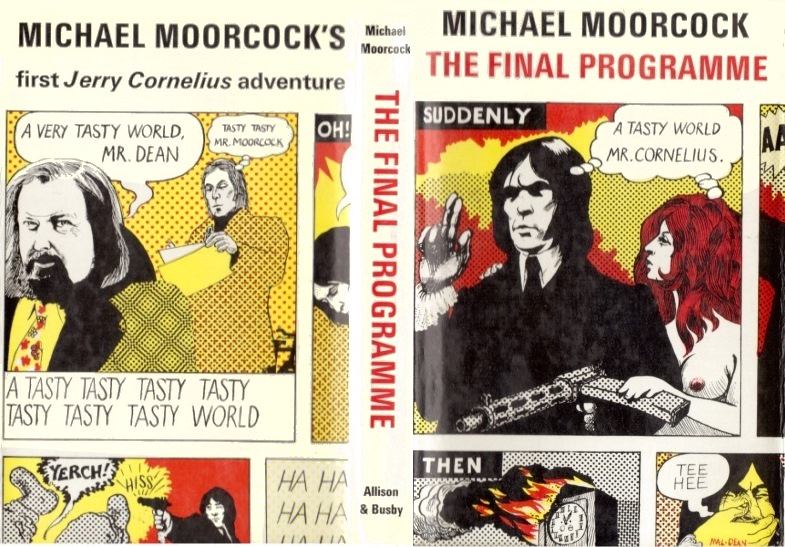
Jerry Cornelius is a fictional character created by English author Michael Moorcock. The character is an urban adventurer and an incarnation of the author's Eternal Champion concept. Cornelius is a hipster of ambiguous and occasionally polymorphous gender. Many of the same characters feature in each of several Cornelius books, though the individual books have little connection with one another, having a more metafictional than causal relationship. The first Jerry Cornelius book, The Final Programme, was made into a 1973 film starring Jon Finch and Jenny Runacre. Notting Hill in London features prominently in the stories.
- Stronger, Faster, and More Beautiful
Arwen Elys Daytonstandalone novel2018
similar byidentityscience fictionchallengingour world
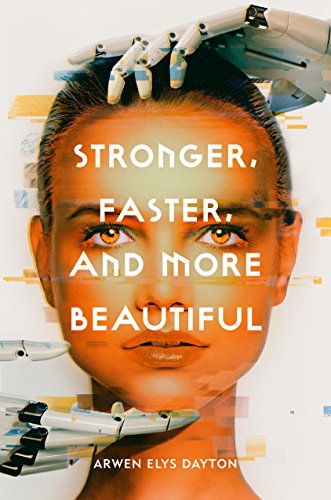
Stronger, Faster and More Beautiful is a 2018 science fiction novel by Arwen Elys Dayton. It explores the ethical question of how far humans will go in their pursuit of physical perfection. It was well received critically, with Tom Shippey of the Wall Street Journal citing it as one of the best science fiction novels of 2018, and has won a number of awards.
- Whileaway
series4 books1972
completed
similar byscience fictionchallenging+2 more
Joanna Russ's The Female Man (1975) is a single feminist science fiction novel, not a multi-book series, built around four women from parallel timelines with very different gender arrangements. One of them, Janet, comes from Whileaway, an all-female utopian Earth ten centuries in the future where men died out in a plague; the other three come from realities closer to Russ's own, and their collisions are used to interrogate what womanhood and equality could mean under different social rules.
- Nova Trilogy
series3 books1961
completed
similar bychallengingscience fictionour worldmid 20th century+1 more
William S. Burroughs's Nova Trilogy -- The Soft Machine, The Ticket That Exploded, and Nova Express -- extends the fragmented cut-up and fold-in techniques he developed with Brion Gysin into a paranoid, hallucinatory sequence about control itself. Across the three books, the shadowy Nova Mob, personified as viral, parasitic forces of language and image, is opposed by an equally strange Nova Police, in an allegory for how societies are manipulated through media and addiction. It continues directly from the world and method of Naked Lunch rather than telling a conventional linear story.
- The Whole Man
John Brunnerstandalone novel1964
similar byidentityscience fictionour worldmid 20th century
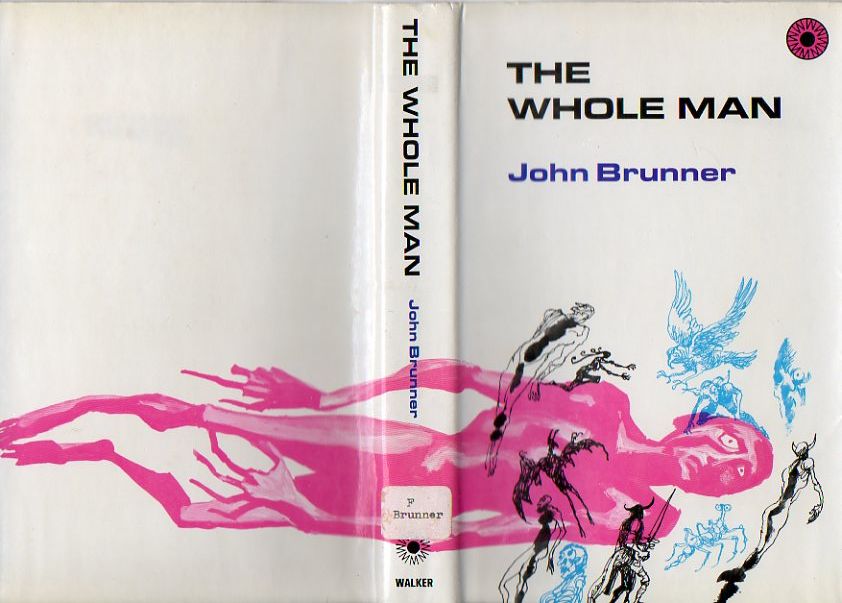
The Whole Man is a 1964 science fiction novel by John Brunner. It was nominated for a Hugo Award for Best Novel in 1965. In the UK, it was published under the title Telepathist.