More like Orbit 2
anchored on:science fictionmid 20th centuryshort story cycleour worldchallenging
but
- Eye in the Sky
Philip K. Dickstandalone novel1957
similar byscience fictionchallengingour worldmid 20th century
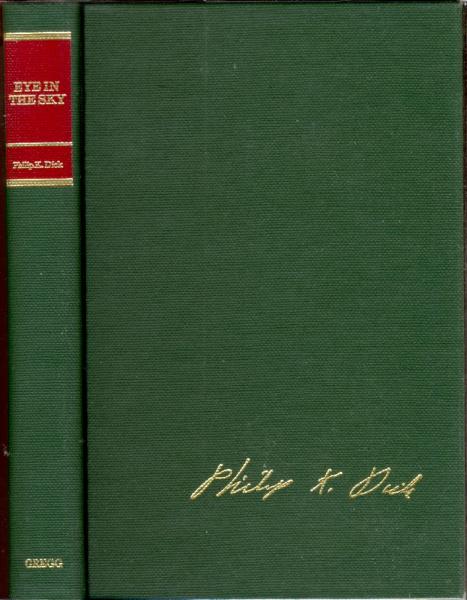
Eight visitors touring a particle-accelerator facility are caught in a catastrophic malfunction, a collapsing platform, a burst of radiation, that leaves them all unconscious. When protagonist Jack Hamilton, an engineer recently fired over Red Scare-era suspicions about his wife's politics, comes to, the world around him is subtly, then not so subtly, wrong: physics bends to fit one fellow victim's religious convictions, then to another's paranoid fears, as the group cycles through what turn out to be shared hallucinations built from each other's private belief systems. Philip K. Dick's early novel about how differently people actually see the same world.
- The Disappearance
Philip Wyliestandalone novel1951
similar byscience fictionchallengingour worldmid 20th century
One ordinary moment, the world splits in two: every man on Earth finds every woman gone without a trace, and at the same instant every woman finds herself in a world emptied of men -- two parallel realities on the same planet, each population convinced the other has vanished. Philip Wylie follows both worlds afterward, one sliding into authoritarian collapse without women to share or restrain power, the other building something more equal and freer, using the split to interrogate mid-century assumptions about sex, marriage and the double standards separating what men and women were each allowed to be. A speculative novel years ahead of the feminist movement it anticipates.
- Camp Concentration
Thomas M. Dischstandalone novel1968
similar byscience fictionchallengingour worldmid 20th century
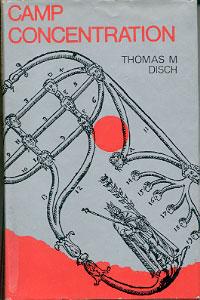
Camp Concentration is a science fiction novel by American writer Thomas M. Disch. It was first serialized in four parts in New Worlds from July to October 1967 and was published in book form in the United Kingdom in 1968, followed by a first U.S. edition in 1969.
- Venus Plus X
Theodore Sturgeonstandalone novel1960
similar byscience fictionchallengingmid 20th century+1 more
Charlie Johns wakes in a featureless silver room with no memory of how he got there and a watch that's inexplicably running backward. He's been brought, how and by whom is never explained to him, to Ledom, an isolated, technologically advanced society whose members are all both male and female and have done away with fixed sex roles entirely. Guides walk him through Ledom's customs and machinery while making clear he's there to judge them before he can go home. Interwoven with Charlie's tour are chapters following an ordinary mid-century American family, setting the utopia against the world it's implicitly critiquing. Theodore Sturgeon's provocative novel about gender and social design.
- Stand on Zanzibar
John Brunnerstandalone novel1968
similar byscience fictionchallengingour world
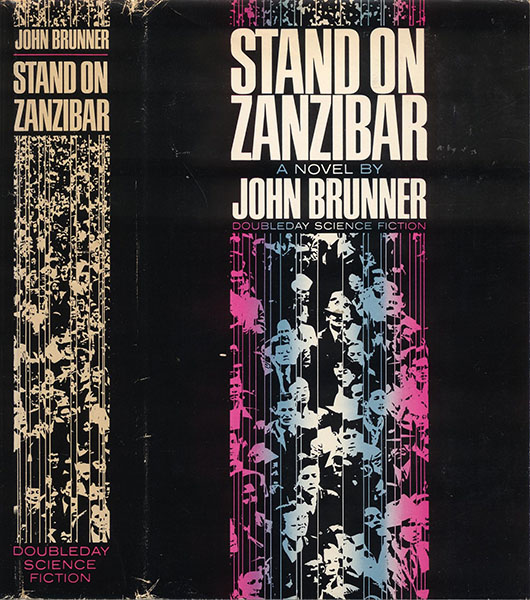
Stand on Zanzibar is a dystopian New Wave science fiction novel written by John Brunner and first in part published in New Worlds magazine in 1967 and in book form in 1968. The book won a Hugo Award for Best Novel at the 27th World Science Fiction Convention in 1969, as well as the 1969 BSFA Award and the 1973 Prix Tour-Apollo Award.
- Ape and Essence
Aldous Huxleystandalone novel1948
similar bychallengingscience fictionour worldmid 20th century
Ape and Essence (1948) is a novel by Aldous Huxley, first published in August 1948 by Harper & Brothers in the US, and then in 1949 by Chatto & Windus in the UK. It is set in a dystopia, as is Brave New World, Huxley's more famous work. It is largely a satire of the rise of large-scale warfare and warmongering in the 20th century, and presents a pessimistic view of the politics of mutually assured destruction. The book makes extensive use of surreal imagery, depicting humans as apes who, as a whole, will inevitably kill themselves.
- A Clockwork Orange
series4 books1962
completed
similar byscience fictionchallengingour world
Anthony Burgess's 1962 novel is narrated by Alex, a teenage gang leader in a near-future Britain gripped by a youth subculture of extreme violence, recounting his crimes in Nadsat, an invented slang blending English with Russian-derived words. After his crimes catch up with him, Alex is made the subject of a controversial state program meant to forcibly reform his behavior, and the novel uses his ordeal to question whether imposed goodness is worth the loss of free will. It is a standalone novel.
- Nova Trilogy
series3 books1961
completed
similar bychallengingscience fictionour worldmid 20th century
William S. Burroughs's Nova Trilogy -- The Soft Machine, The Ticket That Exploded, and Nova Express -- extends the fragmented cut-up and fold-in techniques he developed with Brion Gysin into a paranoid, hallucinatory sequence about control itself. Across the three books, the shadowy Nova Mob, personified as viral, parasitic forces of language and image, is opposed by an equally strange Nova Police, in an allegory for how societies are manipulated through media and addiction. It continues directly from the world and method of Naked Lunch rather than telling a conventional linear story.
- Stranger in a Strange Land
Robert A. Heinleinstandalone novel1961
similar byscience fictionchallengingour world
Stranger in a Strange Land is a 1961 science fiction novel by the American author Robert A. Heinlein. It tells the story of Valentine Michael Smith, a human who comes to Earth in early adulthood after being born on the planet Mars and raised by Martians, and explores his interaction with and eventual transformation of Terran culture.
- The Light of Other Days
Arthur C. Clarke & Stephen Baxterstandalone novel2000
similar byscience fictionchallengingour world
An industrialist devises a technique to use tiny wormholes as light pipes to enable viewing of any event anywhere; and subsequently it becomes possible to use them to view any event in the past as well. The effects on society are enormous.
- Riddley Walker
Russell Hobanstandalone novel1980
similar byscience fictionchallengingour world
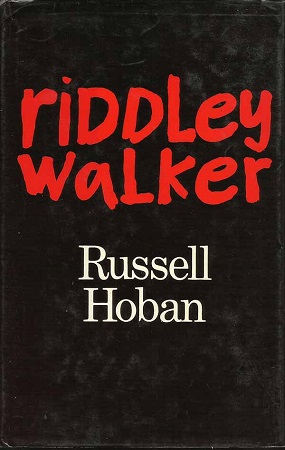
WorldCat: Composed in an English which has never been spoken and laced with a storytelling tradition that predates the written word, RIDDLEY WALKER is the world waiting for us at the bitter end of the nuclear road. It is desolate, dangerous and harrowing, and a modern masterpiece.
- Odd John
Olaf Stapledonstandalone novel1935
similar byscience fictionchallengingour world
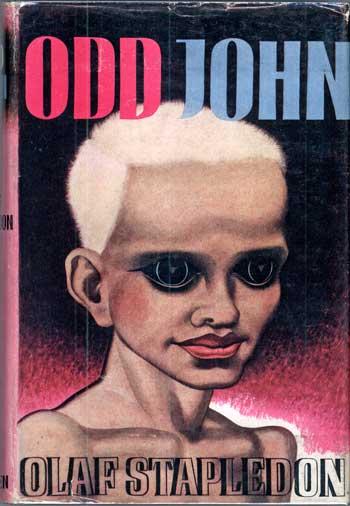
Odd John: A Story Between Jest and Earnest is a 1935 science fiction novel by the British author Olaf Stapledon. The novel explores the theme of the Übermensch (superman) in the character of John Wainwright, whose supernormal human mentality inevitably leads to conflict with normal human society and to the destruction of the utopian colony founded by John and other superhumans.
- The Ministry for the Future
Kim Stanley Robinsonstandalone novel2020
similar byscience fictionchallengingour world
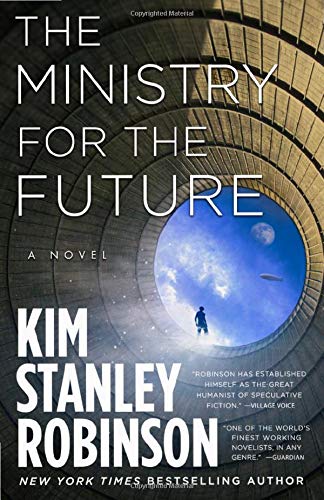
The Ministry for the Future is a climate fiction novel by American science fiction writer Kim Stanley Robinson, published in 2020. Set in the near future, the novel follows a subsidiary body, established under the Paris Agreement, whose mission is to act as an advocate for the world's future generations of citizens as if their rights were as valid as the present generation's. While the ministry pursues various ambitious projects, the effects of climate change are determined to be the most consequential. The plot primarily follows Mary Murphy, the head of the titular Ministry for the Future, and Frank May, an American aid worker traumatized by experiencing a deadly heat wave in India. Many chapters are devoted to other characters' accounts of future events, as well as their ideas about ecology, economics, and other subjects.
- Past Master
R. A. Laffertystandalone novel1968
similar byscience fictionchallengingour world
Past Master is a science fiction novel by American writer R. A. Lafferty, first published in 1968. The novel follows the attempt of a future Utopian society in preventing its decline, by bringing Sir Thomas More to the year 2535.
- The Iron Dream
Norman Spinradstandalone novel1972
similar byscience fictionchallengingmid 20th century
Contains "The Lord of the Swastika", a Science Fiction Novel by Adolf Hitler, plus an afterword by Homer Whipple. In this universe, Adolf Hitler (1889-1953) emigrated to the US in 1919 and became a popular science fiction author, fan and illustrator. "The Lord of the Swastika" won a posthumous Hugo in 1955.
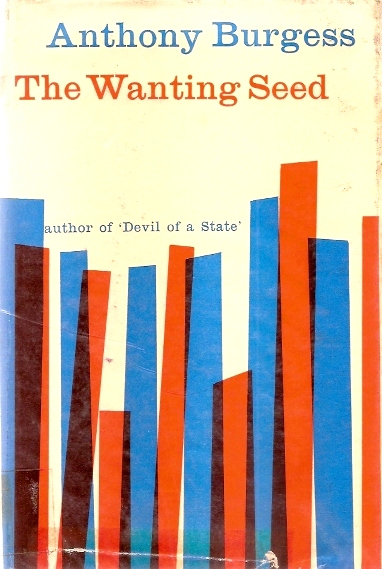
- The Wanting Seed
Anthony Burgessstandalone novel1962
similar byscience fictionchallengingour world
The Wanting Seed is a dystopian novel by the English author Anthony Burgess, written in 1962.
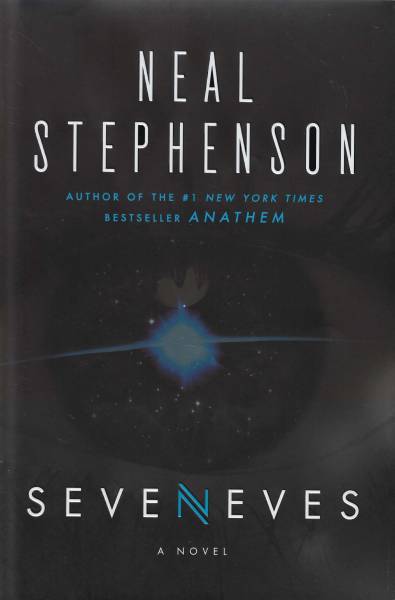
- Seveneves
Neal Stephensonstandalone novel2015
similar byscience fictionchallengingour world
Seveneves is a science fiction novel by Neal Stephenson published in 2015. The story tells of the desperate efforts to preserve Homo sapiens in the wake of apocalyptic events on Earth after the unexplained disintegration of the Moon and the remaking of human society as a space-based civilization after a severe genetic bottleneck.
- VALIS
series4 books1981
completed
similar bychallengingscience fiction+1 more
The VALIS trilogy is a set of science fiction/philosophical novels by author Philip K. Dick which include VALIS (1981), The Divine Invasion (1981), and The Transmigration of Timothy Archer (1982). Dick's first novel about the VALIS concept originally titled "VALISystem A", was published as Radio Free Albemuth after Dick's death in 1985.
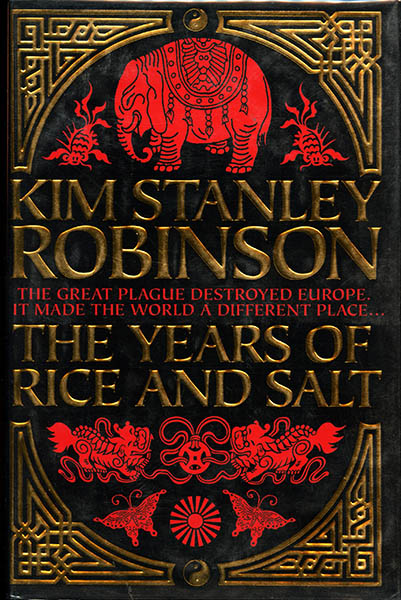
- The Years of Rice and Salt
Kim Stanley Robinsonstandalone novel2002
similar bychallengingscience fictionour world
What if the Black Death had killed nearly everyone in Europe instead of a third of it? Kim Stanley Robinson opens on that premise with a Mongol scout named Bold, who finds a Hungarian city emptied by plague and only narrowly escapes execution meant to contain the contagion; sold into slavery, he ends up serving aboard a Chinese treasure fleet alongside a young African companion. From there the novel follows a recurring cast of souls, reincarnated across centuries and identifiable book to book by the first letter of their names, through an alternate history in which Islamic and Chinese civilizations, not a devastated Europe, shape the world's future.
- The Black Cloud
Fred Hoylestandalone novel1957
similar byscience fictionour worldmid 20th century
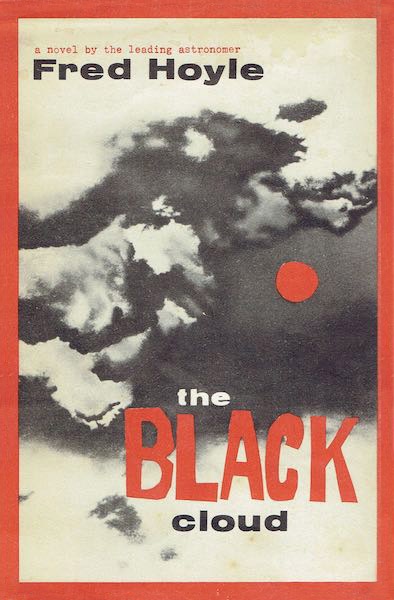
The Black Cloud is a 1957 science fiction novel by British astrophysicist Fred Hoyle. It details the arrival of an enormous cloud of gas that enters the Solar System and appears about to destroy most of the life on Earth by blocking the Sun's radiation.
- The Power
Naomi Aldermanstandalone novel2016
similar byscience fictionchallengingour world
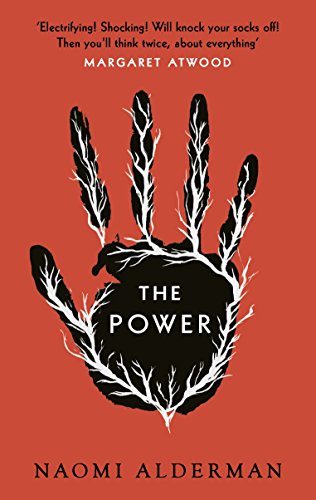
The Power is a 2016 science fiction novel by the British writer Naomi Alderman. Its central premise is of women developing the ability to release electrical jolts from their fingers, which allows them to become the dominant sex. In 2017, it won the Baileys Women's Prize for Fiction.
- The Kraken Wakes
John Wyndhamstandalone novel1953
similar byscience fictionour worldmid 20th century
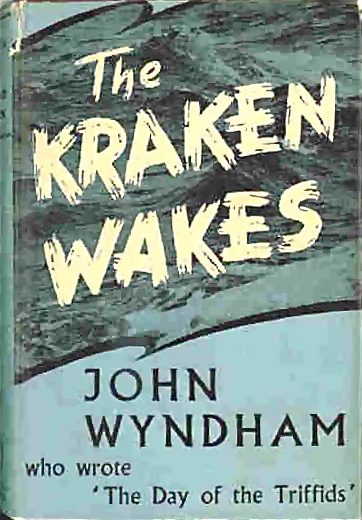
" Behind a spectacular meteor shower actually hides the beginning of an invasion by a mysterious and powerful alien race. Earth's life is disrupted by the attacks of extraterrestrials whose war machines, emerging from the depths of the oceans, seem indestructible. The coalitioned forces of the whole world are worthless, powerless in the face of the indecipherable and deadly plans of a superior intelligence, capable of bringing the entire planet to the brink of catastrophe" Goodreads May 20, 2022
- The Man Who Fell to Earth
Walter Tevisstandalone novel1963
similar byscience fictionour worldmid 20th century
The Man Who Fell to Earth is a 1963 science-fiction novel by American writer Walter Tevis. Published by Gold Medal Books as a paperback original, it was Tevis's second novel, following The Hustler. The novel follows Thomas Jerome Newton, an extraterrestrial from the drought-stricken planet Anthea, who comes to Earth hoping to build a spacecraft that can save the surviving members of his species.
- Whileaway
series4 books1972
completed
similar byscience fictionchallenging+1 more
Joanna Russ's The Female Man (1975) is a single feminist science fiction novel, not a multi-book series, built around four women from parallel timelines with very different gender arrangements. One of them, Janet, comes from Whileaway, an all-female utopian Earth ten centuries in the future where men died out in a plague; the other three come from realities closer to Russ's own, and their collisions are used to interrogate what womanhood and equality could mean under different social rules.