More like Orbit 7
anchored on:science fictioncontemporaryshort story cycleliterary & generalchallenging
but
- Whileaway
series4 books1972
completed
similar bychallengingscience fictioncontemporaryreflective+3 more
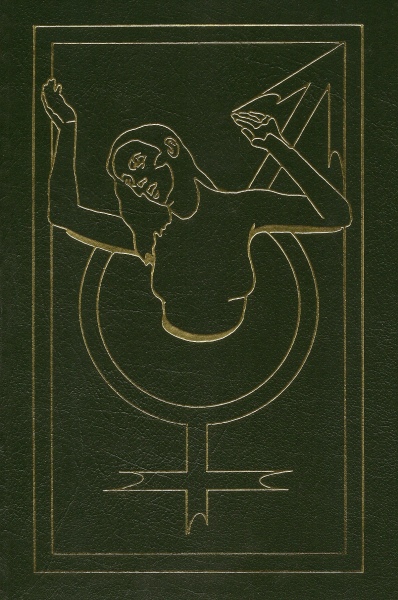
Joanna Russ's The Female Man (1975) is a single feminist science fiction novel, not a multi-book series, built around four women from parallel timelines with very different gender arrangements. One of them, Janet, comes from Whileaway, an all-female utopian Earth ten centuries in the future where men died out in a plague; the other three come from realities closer to Russ's own, and their collisions are used to interrogate what womanhood and equality could mean under different social rules.
- Stranger in a Strange Land
Robert A. Heinleinstandalone novel1961
similar byidentityour worldscience fictionchallengingreflective
Stranger in a Strange Land is a 1961 science fiction novel by the American author Robert A. Heinlein. It tells the story of Valentine Michael Smith, a human who comes to Earth in early adulthood after being born on the planet Mars and raised by Martians, and explores his interaction with and eventual transformation of Terran culture.
- VALIS
series4 books1981
completed
similar byidentitychallengingscience fictionreflective+3 more
The VALIS trilogy is a set of science fiction/philosophical novels by author Philip K. Dick which include VALIS (1981), The Divine Invasion (1981), and The Transmigration of Timothy Archer (1982). Dick's first novel about the VALIS concept originally titled "VALISystem A", was published as Radio Free Albemuth after Dick's death in 1985.
- Concrete Island
J. G. Ballardstandalone novel1974
similar byidentitychallengingour worldcontemporaryliterary & generalreflective
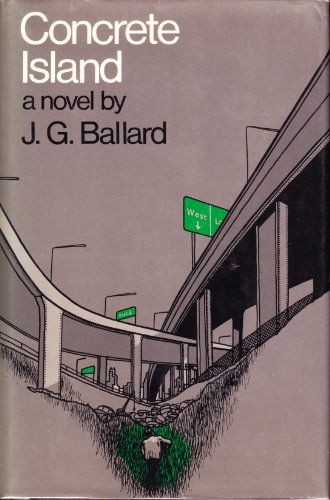
Architect Robert Maitland crashes his car onto a stretch of wasteland trapped between three converging motorways -- visible from thousands of cars, reachable by none of them. Injured and unable to climb back to the road, Maitland adapts to life on what he starts calling the Island, scavenging food thrown from car windows, and discovers he isn't alone: a runaway sex worker hiding in a bunker, and a brain-damaged former circus acrobat, both long past expecting rescue. What begins as a survival story turns into a question of whether Maitland even wants to leave. A J. G. Ballard novel of urban isolation, grouped with Crash and High-Rise.
- Crash
J. G. Ballardstandalone novel1973
similar bychallengingour worldcontemporaryliterary & general+1 more
Crash is a novel by J. G. Ballard, first published in 1973 with a cover designed by Bill Botten. It follows a group of car-crash fetishists who, inspired by the famous crashes of celebrities, become sexually aroused by staging and participating in car accidents.
- Dhalgren
Samuel R. Delanystandalone novel1975
similar byidentitychallengingcontemporaryscience fictionliterary & general
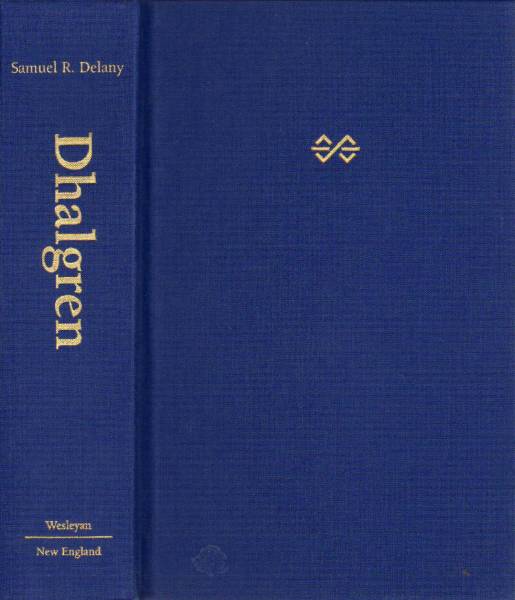
Dhalgren is a 1975 science fiction novel by American writer Samuel R. Delany. It features an extended trip to and through Bellona, a fictional city in the American Midwest cut off from the rest of the world by an unknown catastrophe. It is number 33 on the 20th Century's Greatest Hits: 100 English-Language Books of Fiction list.
- The Satanic Verses
Salman Rushdiestandalone novel1988
similar byidentitychallengingour worldcontemporaryliterary & general+1 more
The Satanic Verses is the fourth novel by British–Indian writer Salman Rushdie. First published in September 1988, the book was inspired by the life of the Islamic prophet Muhammad. As with his previous books, Rushdie used magical realism and relied on contemporary events and people to create his characters. The title refers to the Satanic Verses, a group of Quranic verses about three pagan Meccan goddesses: Allāt, Al-Uzza, and Manāt. The part of the story that deals with the satanic verses was based on accounts from the historians al-Waqidi and al-Tabari.
- HARM
Brian W. Aldissstandalone novel2007
similar byidentitychallengingour worldcontemporaryscience fictionliterary & general
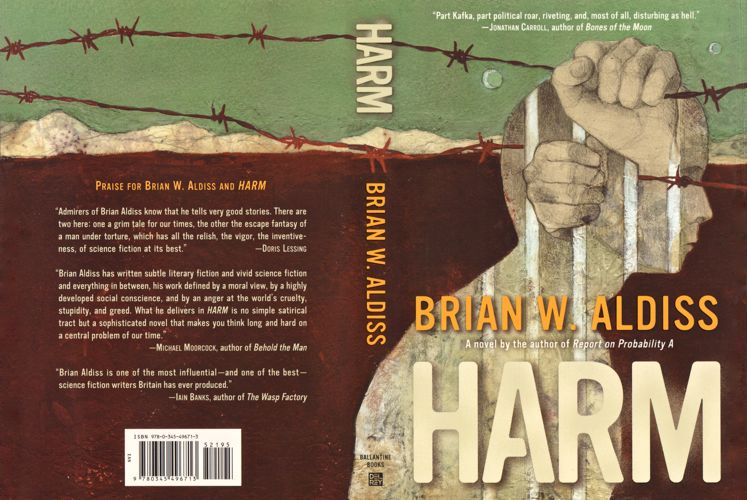
"... a young writer of light fiction with a Muslim heritage has been arrested for no compelling reason. He is held as Prisoner B, in HARM ... and isolated. To evade this misery Prisoner B escapes - through his split personality - to a science fiction-like planet ruled by insects. But gradually the two worlds start to converge ..."
- Venus Plus X
Theodore Sturgeonstandalone novel1960
similar byidentitychallengingscience fictionreflective+1 more
Charlie Johns wakes in a featureless silver room with no memory of how he got there and a watch that's inexplicably running backward. He's been brought, how and by whom is never explained to him, to Ledom, an isolated, technologically advanced society whose members are all both male and female and have done away with fixed sex roles entirely. Guides walk him through Ledom's customs and machinery while making clear he's there to judge them before he can go home. Interwoven with Charlie's tour are chapters following an ordinary mid-century American family, setting the utopia against the world it's implicitly critiquing. Theodore Sturgeon's provocative novel about gender and social design.
- The Dreaming Jewels
Theodore Sturgeonstandalone novel1950
similar byidentityour worldcontemporaryscience fiction+1 more
The Dreaming Jewels (1950), also known as The Synthetic Man, is a science fiction novel by American writer Theodore Sturgeon. It was his first published novel.
- Contact
Carl Saganstandalone novel1985
similar byour worldcontemporaryscience fictionreflective+1 more
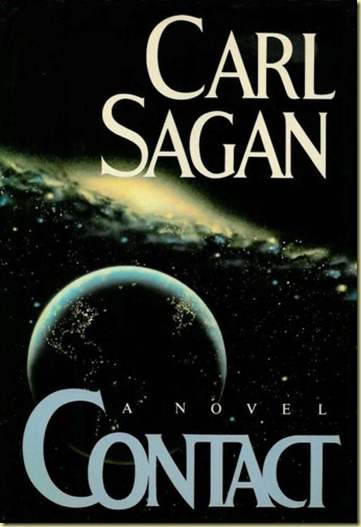
From the front flap of the Simon and Schuster first edition: For centuries humanity has dreamed of life and intelligence beyond the Earth; for decades scientists have searched for it in every corner of the sky; for years Project Argus, a vast, sophisticated complex of radio telescopes, has listened for a signal indicating the existence, somewhere in the universe, of extraterrestrial intelligence. Then, one afternoon, the course of human history is changed, abruptly and forever. The Message, awaited for so long, its very possibility doubted by so many, arrives. Contact has been made. Life, intelligence, someone, something beyond Earth, 26 light-years away, in the vicinity of the star Vega, is calling, beaming across space a wholly unexpected message to say that we are not - have never been - alone. In Contact, Carl Sagan, whose Cosmos enthralled millions of readers and television viewers, has brilliantly employed the freedom of fiction to imagine the greatest adventure of all - humanity's first encounter with other intelligent beings. But the novel is not only about contact between humans and extraterrestrials; it is also about contact, down here on Earth, with each other and ourselves. At its center is a brilliant scientist, Eleanor Arroway, director of Project Argos, who is the first to realize that chapter one of human history is over. It is she who is instrumental in decoding the Message - and in persuading world leaders not to treat it as a threat - she who finds her own life changed by the immense challenge of responding to the Message; she who finally journeys out to experience, in circumstances at once profoundly religious and scientific, the most fateful encounter in human history.
- The Philosopher's Apprentice
James Morrowstandalone novel2008
similar byidentitychallengingcontemporaryscience fictionliterary & general+1 more
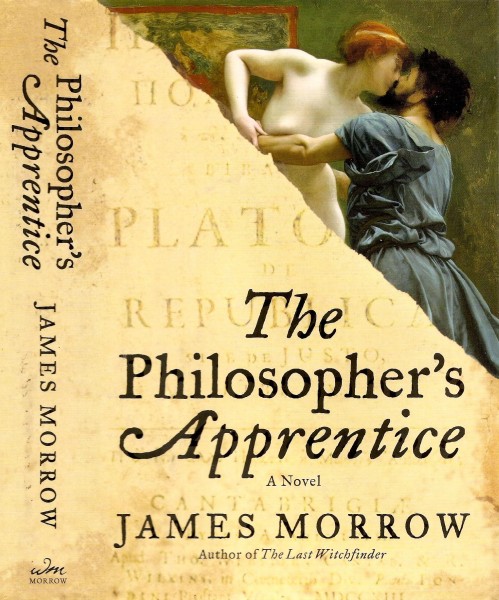
Brilliant philosopher, Mason Ambrose, is approached by a representative of billionaire geneticist Dr. Edwina Sabacthani, who makes him an offer no starving ethicist could refuse. Born and bred on Isla de Sangre, a private island off the Florida coast, Edwina's daughter, Londa, has recently survived a freak accident that destroyed both her memory and her sense of right and wrong. Londa's soul, in short, is an empty vessel - and it will be Mason's job to fill it. Londa proves a vivacious young woman who quickly captivates her new teacher as he attempts to recalibrate her moral compass. But there's trouble in this tropical paradise. Mason soon learns that he isn't the only private tutor on Isla de Sangre, nor is Londa the only child in residence whose conscience is a blank slate. Undaunted, Mason continues to instruct Londa, hoping that she can lead a normal life when she eventually ventures forth into human society. His apprentice, however, has a different agenda. Her head crammed with lofty ideals, Londa undertakes to remake our fallen world in her own image - by any and all means necessary.
- Briefing for a Descent Into Hell
Doris Lessingstandalone novel1971
similar byidentitychallengingour worldcontemporaryliterary & generalreflective
Briefing for a Descent into Hell is a 1971 psychological novel by British novelist Doris Lessing. It was shortlisted for that the 1971 Booker Prize.
- More Than Human
Theodore Sturgeonstandalone novel1953
similar byidentityour worldscience fictionreflectiveshort story cycle
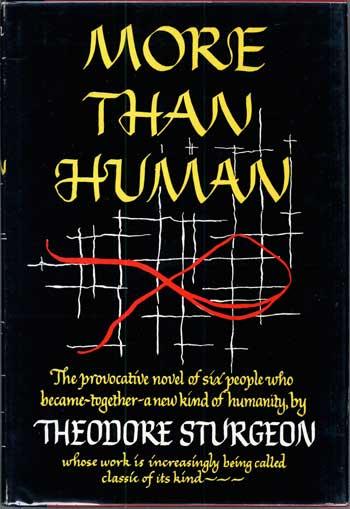
More Than Human is a 1953 science fiction fix-up novel by American writer Theodore Sturgeon. It is a revision and expansion of his 1952 novella Baby Is Three, which is bracketed by two additional parts written for the novel, "The Fabulous Idiot" and "Morality". It won the 1954 International Fantasy Award, which was also given to works in science fiction. It was additionally nominated in 2004 for a "Retro Hugo" award for the year 1954. Science fiction critic and editor David Pringle included it in his book Science Fiction: The 100 Best Novels.
- Bridge of Ashes
Roger Zelaznystandalone novel1976
similar byidentitychallengingour worldcontemporaryscience fiction
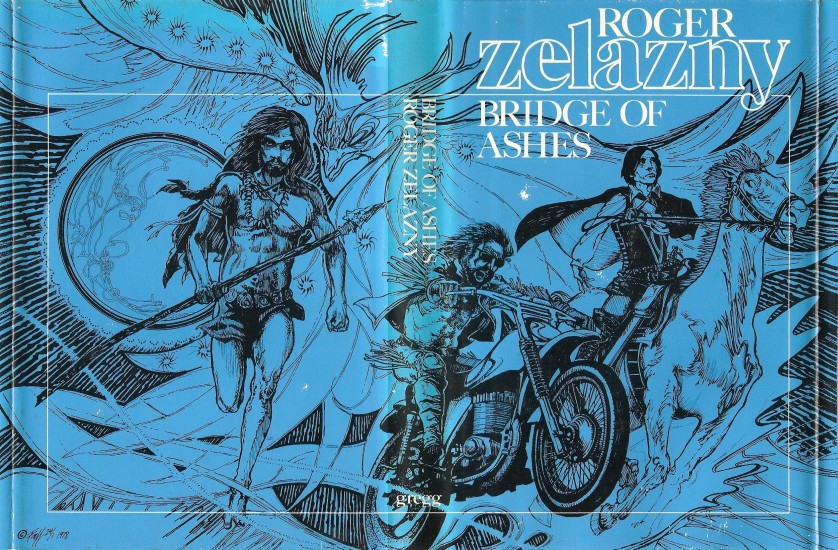
Bridge of Ashes is an experimental science fiction novel by American writer Roger Zelazny. The paperback edition was published in 1976 and the hardcover in 1979. Zelazny describes the book as one of five books from which he learned things "that have borne me through thirty or so others". He states that he "felt that if I could pull it off I could achieve some powerful effects. What I learned from this book is something of the limits of puzzlement in that no man’s land between suspense and the weakening of communication".
- Childhood's End
Arthur C. Clarkestandalone novel1953
similar byidentityour worldscience fictionreflective
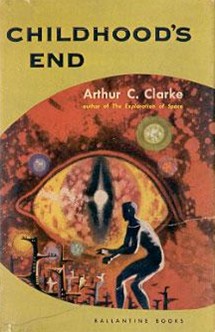
Childhood's End is a 1953 science fiction novel by the British author Arthur C. Clarke. The story follows a peaceful alien invasion of Earth by mysterious Overlords, whose arrival begins decades of apparent utopia under indirect alien rule, at the cost of human identity and culture.
- The Disappearance
Philip Wyliestandalone novel1951
similar bychallengingour worldscience fictionreflective+1 more
One ordinary moment, the world splits in two: every man on Earth finds every woman gone without a trace, and at the same instant every woman finds herself in a world emptied of men -- two parallel realities on the same planet, each population convinced the other has vanished. Philip Wylie follows both worlds afterward, one sliding into authoritarian collapse without women to share or restrain power, the other building something more equal and freer, using the split to interrogate mid-century assumptions about sex, marriage and the double standards separating what men and women were each allowed to be. A speculative novel years ahead of the feminist movement it anticipates.
- The Continent of Lies
James Morrowstandalone novel1984
similar bychallengingour worldcontemporaryscience fiction+1 more
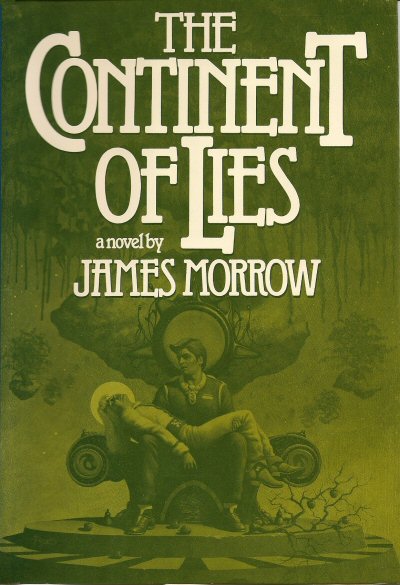
The Continent of Lies is a 1984 novel written by James K. Morrow.
- Cloud Atlas
David Mitchellstandalone novel2004
similar byidentitychallengingour worldscience fictionliterary & general
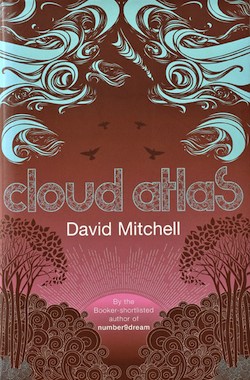
Cloud Atlas, published in 2004, is the third novel by British author David Mitchell. The book combines metafiction, historical fiction, contemporary fiction and science fiction, with interconnected nested stories in different writing styles that take the reader from the remote South Pacific in the 19th century to the island of Hawaii in a distant post-apocalyptic future. Its title references a piece of music by Toshi Ichiyanagi.
- Ghostwritten
David Mitchellstandalone novel1999
similar byour worldcontemporaryscience fictionliterary & generalreflective+1 more
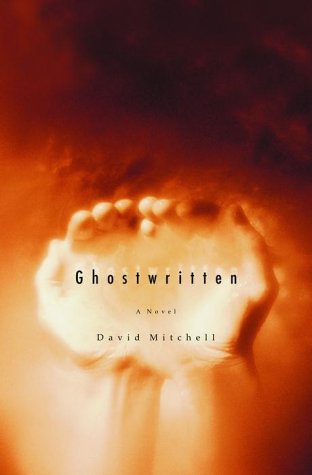
Various individuals around the globe cross paths, while the complexities of modern societies lead to human civilization's inevitable end.
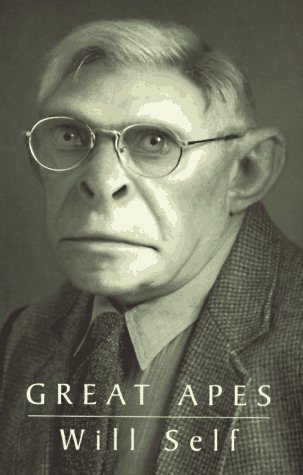
- Great Apes
Will Selfstandalone novel1997
similar byidentitychallengingour worldcontemporaryliterary & general+1 more
Great Apes is a 1997 novel by Will Self.
- Spacetime Donuts
Rudy Ruckerstandalone novel1981
similar byidentitychallengingour worldcontemporaryscience fiction
Spacetime Donuts is a novel by Rudy Rucker published in 1981.
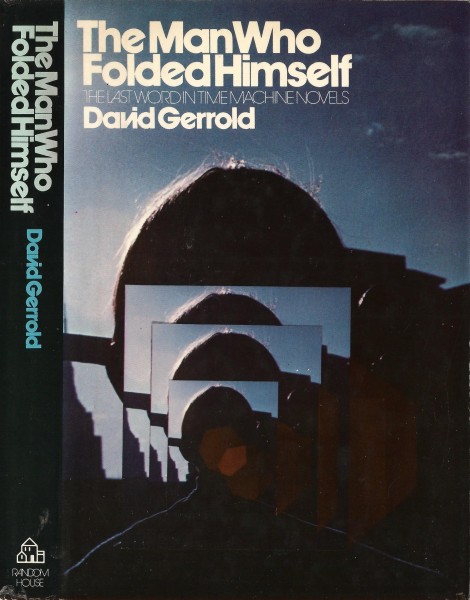
- The Man Who Folded Himself
David Gerroldstandalone novel1973
similar byidentityour worldcontemporaryscience fictionreflective
The Man Who Folded Himself is a 1973 science fiction novel by American writer David Gerrold. It was nominated for the Nebula Award for Best Novel in 1974 and the Hugo Award for Best Novel in 1974. The book explores the psychological, physical, and personal challenges that manifest when time travel is possible for a single individual at the touch of a button.
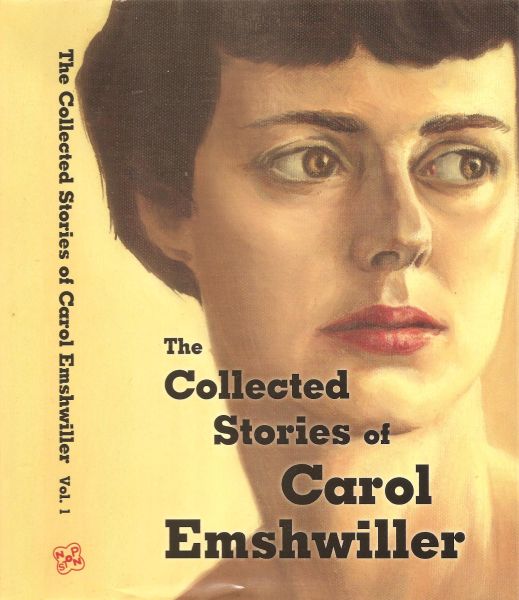
- The Collected Stories of Carol Emshwiller
series2 books2011
completed
similar byidentityour worldcontemporaryscience fictionliterary & generalreflectiveshort story cycle+1 more