More like Orfeo
anchored on:literary & generalmusicnorth americacontemporarythriller & suspensegenetic engineering+2 more
but
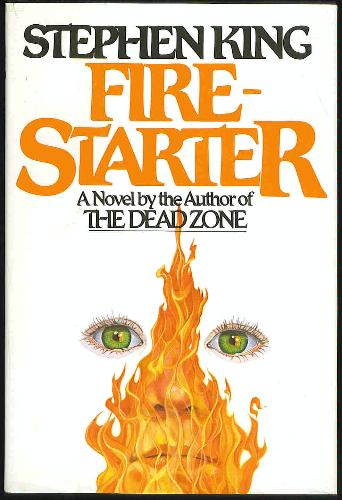
- Firestarter
Stephen Kingstandalone novel1980
similar bynorth americacontemporarytensethriller & suspense+1 more
WorldCat: Innocence and beauty ignite with evil and terror... First, a man and a woman are subjects of a top-secret government experiment designed to produce extraordinary psychic powers. Then, they are married and have a child. A daughter. Early on the daughter shows signs of a wild and horrifying force growing within her. Desperately, her parents try to train her to keep that force in check, to 'act normal'. Now the government wants its brainchild back for its own insane ends.
- Gibbon's Decline and Fall
Sheri S. Tepperstandalone novel1996
similar bynorth americacontemporaryliterary & generaltensethriller & suspense
A wave of fundamentalism is sweeping across the globe as the millennium approaches, and a power-hungry presidential candidate sees his ticket to success in making an example out of a teenage girl who abandoned her infant in a Dumpster. Taking the girl's case is Carolyn Crespin, a former attorney, who left her job for a quiet family life. Now she must call upon five friends from college, who took a vow to always stand together. But their success might depend on the assistance of Sophy, the enigmatic sixth friend, whom they all believed dead.From the Paperback edition.
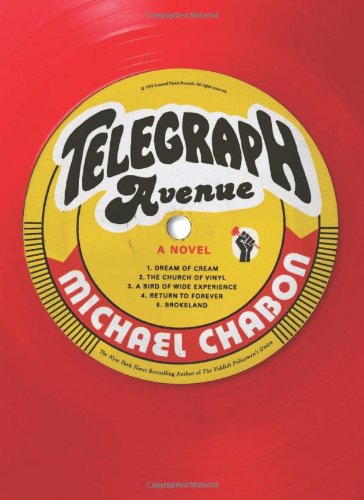
- Telegraph Avenue
Michael Chabonstandalone novel2012
similar bynorth americacontemporaryliterary & generalreflective+1 more
Telegraph Avenue is a novel by Michael Chabon, published on September 11, 2012. An enhanced e-book edition was released online on July 25, 2012. The novel's setting is North Oakland and Berkeley, California. The title refers to Telegraph Avenue, which runs through both cities.
- Leave the World Behind
Rumaan Alamstandalone novel2020
similar bynorth americacontemporaryliterary & generaltensethriller & suspense
Told from the point of view of a family holidaying on Long Island, an unknown apocalyptic event seems to have affected the entire east coast of the USA.
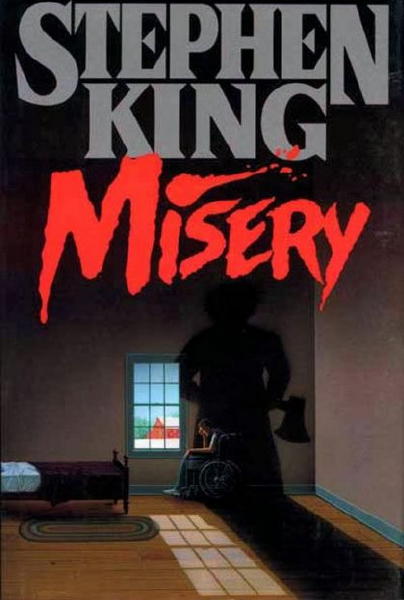
- Misery
Stephen Kingstandalone novel1987
similar bynorth americacontemporarytensethriller & suspense
Novelist Paul Sheldon finishes the manuscript that will finally kill off Misery Chastain, the heroine who made his career, when a snowstorm sends his car off a Colorado road. He wakes with both legs shattered, in the care of Annie Wilkes, a former nurse and 'number one fan' with no intention of taking him to a hospital. Annie manages his pain with drugs he comes to depend on, and her moods swing between doting and violent. When she learns Misery doesn't survive his new manuscript, her reaction makes clear Paul isn't just her patient, he's her hostage. A Stephen King novel about a writer at his most devoted fan's mercy.
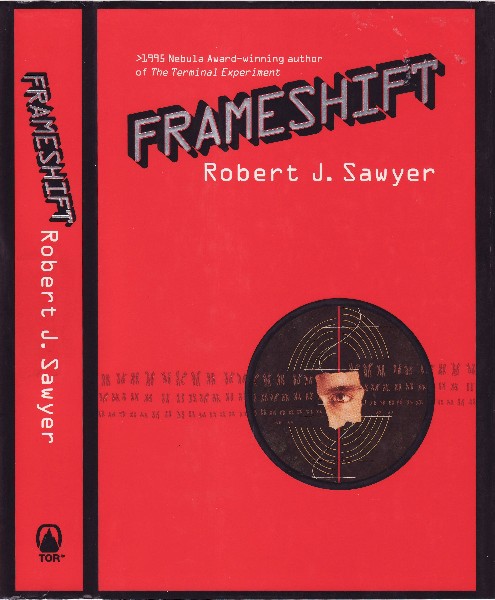
- Frameshift
Robert J. Sawyerstandalone novel1997
similar bynorth americacontemporarytensethriller & suspensegenetic engineering
Winner of Japan's Seiun Award and Hugo Award finalist Pierre Tardivel is a scientist working on the Human Genome Project with the Nobel Prize winner, Dr. Burian Klimus. A driven man, Pierre works with the awareness that he may not have long to live: he has a fifty-fifty chance of dying from Huntington's disease, an incurable hereditary disorder of the central nervous system. While he still has his health, Pierre and his wife decide to have a child, and they search for a sperm donor. When Pierre informs Dr. Klimus of their plan, Klimus makes an odd but generous offer: to be the sperm donor as well as to pay for the expensive in vitro fertilization. Shortly thereafter it transpires that Klimus might be hiding a grim past: he may be Ivan Marchenko, the notorious Treblinka death-camp guard known as Ivan the Terrible. While digging into Klimus's past with the help of Nazi hunter Avi Meyer, Pierre and his wife discover that Pierre's insurance company has been illegally screening clients for genetic defects. The two lines of investigation begin to coverage in a sinister manner, while they worry about the possibility of bearing the child of an evil, sadistic killer.
- Soul Catcher
Frank Herbertstandalone novel1972
similar bynorth americacontemporaryliterary & generalreflective
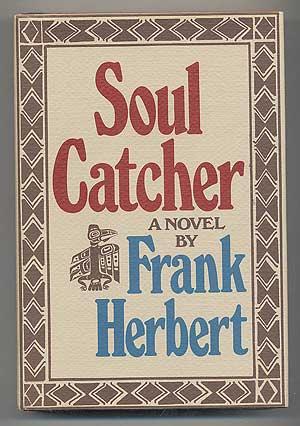
Soul Catcher is a 1972 novel by Frank Herbert about a Native American who kidnaps a young white boy, and their journey together.
- The Grays
Whitley Strieberstandalone novel2006
similar bynorth americacontemporarytensethriller & suspensegenetic engineering+1 more
Millions of people are confronting aliens that authorities say do not exist. Whitley Strieber -- author of the legendary, #1 bestseller Communion, which detailed his own close encounters -- now returns to the riddle of aliens with The Grays. Drawing on a lifetime of research, Strieber offers up a fictional account of the conspiracy behind alien presence on Earth while also giving us a startling look inside the alien mind that will astound, frighten, and enthrall readers. Meet the Three Thieves, a group of Grays assigned to duty in a small Kentucky town. For decades, they have abducted its residents and manipulated bloodlines trying to create an ultra-intelligent human being. Nine year-old Conner Callahan will face the ultimate terror as he struggles to understand who he has been bred to be, and what he must do to save humanity. Meet Colonel Michael Wilkes, the head of a select group of government and military officials who have been monitoring the Grays for years. Wilkes has done everything in his power to keep the secret of the Grays from the public. But when the Grays begin to reveal themselves, Wilkess fear of occupation forces him to set in motion his own sinister plan to ensure the survival of humanity, but at what cost? The fate of the human race lies with one woman, Lauren Glass, whose unique ability to communicate with the last remaining captive Gray, known as A for Adam, may be the only way humans can truly unravel the Grays ultimate plan. The Grays is a mind-bending journey behind the curtain of secrecy that surrounds the subject of aliens, written by the fields great master. This book will make you think deeply, not only about the mystery of who the Grays are, but who exactly we are.
- The Terminal Man
Michael Crichtonstandalone novel1972
similar bynorth americacontemporarytensethriller & suspense
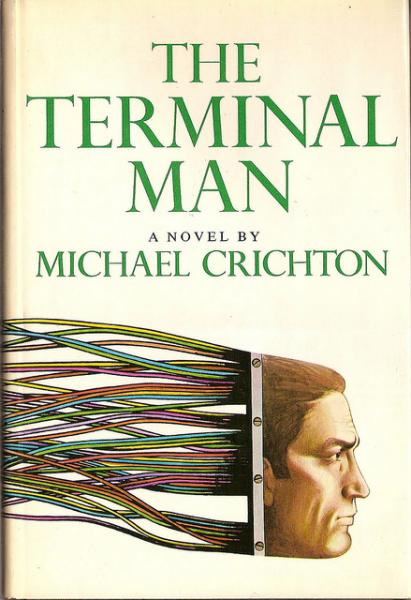
The Terminal Man is a novel by American writer Michael Crichton. It is his second novel under his own name, his 12th overall, and is about the dangers of mind control. It was published in April 1972 and also serialized in Playboy in March, April, and May 1972. In 1974, it was made into a film of the same name.
- The Blue Ant Trilogy
series3 books2003
similar bycontemporarythriller & suspensesurveillance+4 more
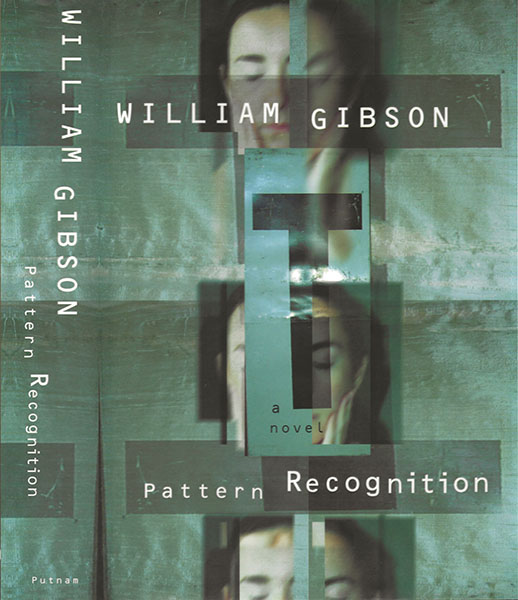
Hubertus Bigend is a fictional character appearing in the third trilogy of novels of science fiction and literary author William Gibson. Bigend is the antihero of Gibson's Pattern Recognition (2003), Spook Country (2007) and Zero History (2010). In an interview Gibson says "I've always had a sense of Bigend as someone who presents himself as though he knows what's going on, but who in fact doesn't. It's just my sense of the subtext of the character: he's bullshitting himself, at the same time as he's bullshitting all of us."
- Vitals
Greg Bearstandalone novel2002
similar bycontemporarytensenorth americathriller & suspensegenetic engineering
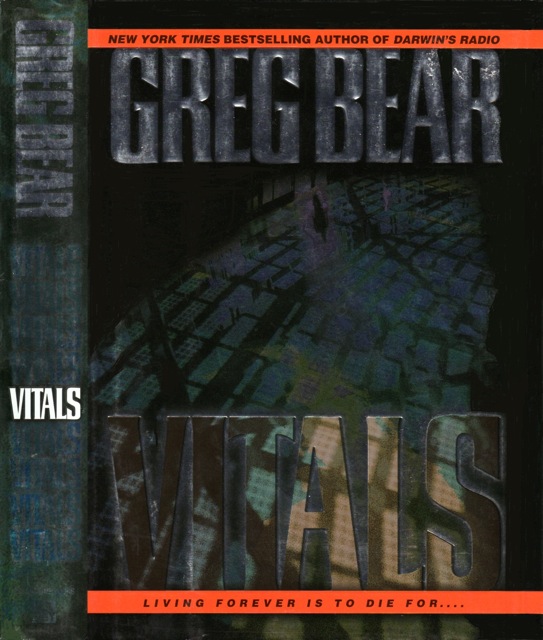
From the flaps of the Del Rey first edition: "Hal Cousins is one of a handful of scientists nearing the most sought after discovery in human history: the key to short-circuiting the aging process. Fueled by a wealth of research, an overdose of self-confidence, and the money of influential patrons to whom he makes outrageous promises, Hal experiments with organisms living in the hot thermal plumes in the ocean depths. But as he journeys beneath the sea, his other world is falling apart. Across the country, scientists are being inexplicably murdered - including Hal's identical twin brother, who is also working to unlock the key to immortality. Hal himself barely eludes a cold-blooded attack at sea, and when he returns home to Seattle, he finds himself walking into an eerie realm where voices speak to him from the dead ... where a once-brilliant historian turned crackpot is leading him on a deadly game of hide-and-seek ... and where the beautiful, rich widow of his twin is more than willing to pick up the pieces of Hal's life-and take him places he's never been before. Suddenly Hal is trapped inside an ever-twisting maze of shocking revelations. For he is not the first person to come close to ending aging forever - and those who came before him will stop at nothing to keep the secret to themselves. Now every person on earth is at risk of being made an unsuspecting player in one man's spectacular and horrifying master plan. From the bottom of Russia's Lake Baikal to a billionaire's bionic house built into the cliffs of the Washington seashore, from the darkest days of World War II and the reign of Josef Stalin to the capitalist free-for-all that is the United States, Vitals tells an astounding tale of the most unimaginable scientific secret of all - exposed by the quest for immortality itself..."
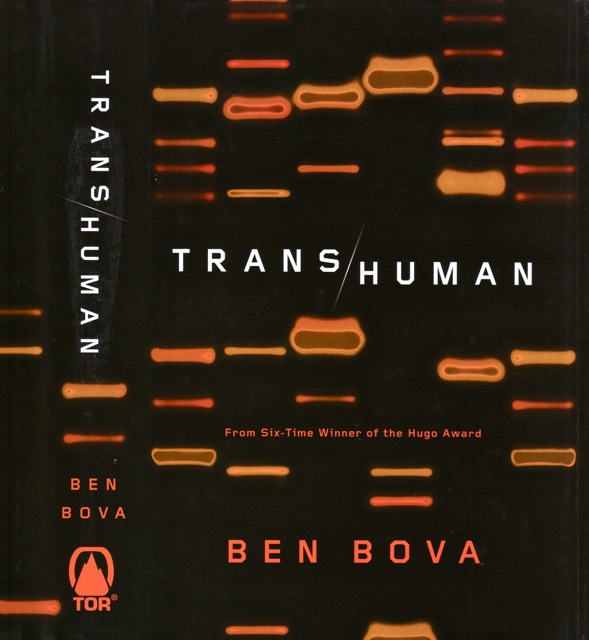
- Transhuman
Ben Bovastandalone novel2014
similar bynorth americacontemporarytensethriller & suspensegenetic engineering
"Luke Abramson, a brilliant cellular biologist who is battling lung cancer, has one joy in life, his ten-year-old granddaughter, Angela. When he learns that Angela has an inoperable brain tumor and is given less than six months to live, Abramson wants to try a new enzyme, Mortality Factor 4 (MORF4), that he believes will kill Angela's tumor. However, the hospital bureaucracy won't let him do it because MORF4 has not yet been approved by the FDA. Knowing that Angela will die before he can get approval of the treatment, Abramson abducts Angela from the hospital with plans to take her to a private research laboratory in Oregon. Luke realizes he's too old and decrepit to flee across the country with his sick granddaughter, chased by the FBI. So he injects himself with a genetic factor that will stimulate his body's production of telomerase, an enzyme that has successfully reversed aging in animal tests. As the chase weaves across the country from one research facility to another, Luke begins to grow physically younger, stronger. He looks and feels the way he did thirty or forty years ago. Yet his lung cancer is not abating; if anything the tumors are growing faster. And Angela is dying"--
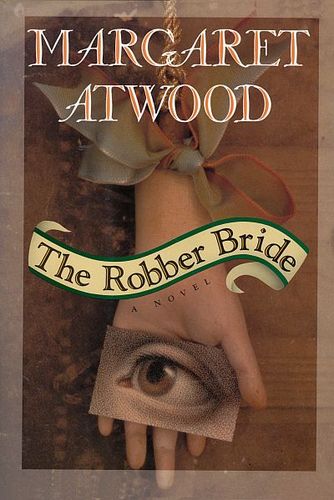
- The Robber Bride
Margaret Atwoodstandalone novel1993
similar bynorth americacontemporaryliterary & generalreflective
The Robber Bride is a novel by Canadian writer Margaret Atwood, first published by McClelland and Stewart in 1993.
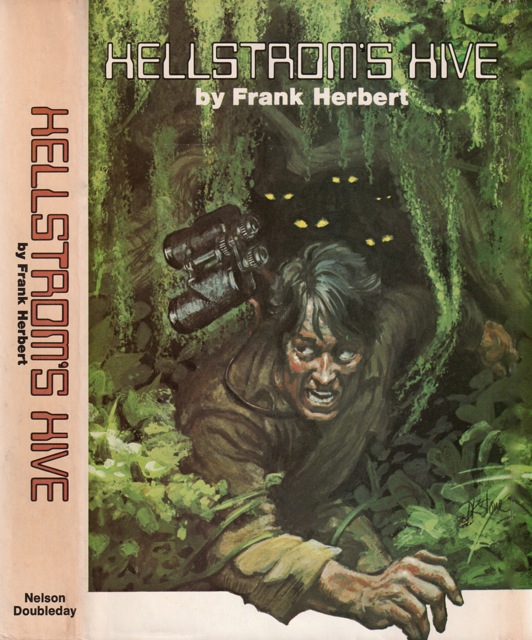
- Hellstrom's Hive
Frank Herbertstandalone novel1973
similar bynorth americacontemporarytensesurveillance+1 more
Hellstrom's Hive is a 1973 science fiction novel by Frank Herbert. It is about a secret group of humans who model their lives upon social insects and the unsettling events that unfold after they are discovered by a deep undercover agency of the U.S. government.
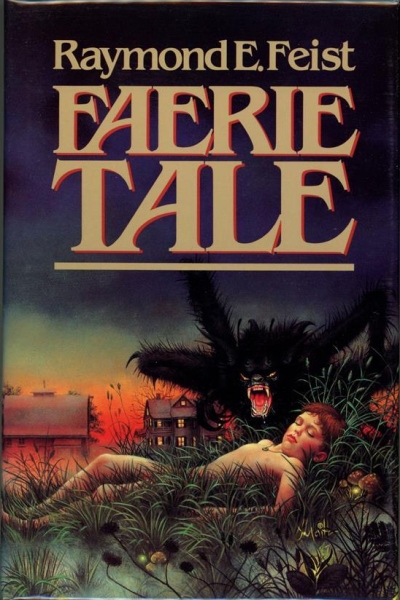
- Faerie Tale
Raymond E. Feiststandalone novel1988
similar bynorth americacontemporarytensethriller & suspense
Faerie Tale is a supernatural thriller, falling within the subgenre of contemporary fantasy, by American writer Raymond E. Feist, first published in 1988.
- Sweet Lamb of Heaven
Lydia Milletstandalone novel2016
similar bynorth americacontemporaryliterary & generaltensethriller & suspense
Lydia Millet's chilling new novel is the first-person account of a young mother, Anna, escaping her cold and unfaithful husband, a businessman who's just launched his first campaign for political office. When Ned chases Anna and their six-year-old daughter from Alaska to Maine, the two go into hiding in a run-down motel on the coast. But the longer they stay, the less the guests in the dingy motel look like typical tourists-- and the less Ned resembles a typical candidate. As his pursuit of Anna and their child moves from threatening to criminal, Ned begins to alter his wife's world in ways she never could have imagined. A double-edged and satisfying story with a strong female protagonist, a thrilling plot, and a creeping sense of the apocalyptic, Sweet Lamb of Heaven builds to a shattering ending with profound implications for its characters-- and for all of us.
- The Gum Thief
Douglas Couplandstandalone novel2007
similar bynorth americacontemporaryliterary & generalreflective
The Gum Thief is Canadian author Douglas Coupland's twelfth novel. It was published on September 25, 2007 , by Random House Canada in Canada and Bloomsbury Publishing in the United States.
- The Third Twin
Ken Follettstandalone novel1996
similar bynorth americacontemporarytensethriller & suspensegenetic engineering
The Third Twin is a 1996 techno-thriller book by Ken Follett. A New York Times bestseller, the book deals with genetic engineering and the nature and nurture debate through the subject of identical twins raised apart.
- Invasion
Robin Cookstandalone novel1997
similar bycontemporarytensenorth americathriller & suspensegenetic engineering
Earth is bombarded from space by small disks which, in addition to having powerful physical armaments, when handled activate latent viral DNA which causes humans to mutate into alien beings; a small group recognize the danger and attempt to develop a biological counterweapon.
- Reservation Blues
Sherman Alexiestandalone novel1995
similar bynorth americacontemporaryliterary & generalmusicreflective
Reservation Blues is a 1995 novel by American writer Sherman Alexie, a citizen of the Spokane Tribe and descendant of the Coeur d'Alene Tribe.
- A Visit from the Goon Squad
series2 books2010
similar bycontemporaryliterary & generalreflective+2 more
Jennifer Egan's A Visit from the Goon Squad follows a loosely connected group of characters orbiting the music industry across several decades, told through interlocking chapters that jump between narrators, timelines, and, in one chapter, a PowerPoint presentation. The Candy House returns to several of the same characters and their descendants a decade later, in a world reshaped by a technology that lets people access and share their memories. Egan links the two books through recurring characters more than a continuous plot.
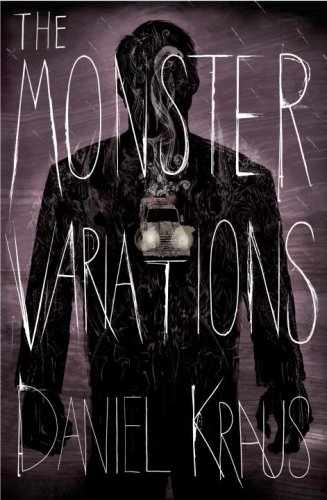
- The Monster Variations
Daniel Krausstandalone novel2009
similar bynorth americacontemporarytensethriller & suspenseliterary & general
This fast-paced read will keep readers on the edge of their seats!Someone is killing boys in a small town. The murder weapon is a truck, and the only protection is a curfew enacted to keep kids off the streets. But it's summer--and that alone is worth the risk of staying out late for James, Willie, and Reggie. Willie, who lost his arm in the first hit-and-run attack, finds it hard to keep up with his two best friends as they leave childhood behind. All of them are changing, hounded by their parents, hunted by the killer, and haunted by the "monster," a dead thing that guards the dangerous gateway between youth and manhood. But that's not all: shadowing the boys everywhere is Mel Herman, the mysterious and brilliant bully whose dark secrets may hold the key to their survival. As the summer burns away, these forces collide, and it will take compassion, brains, and guts for the boys to overcome their demons--and not become monsters themselves. In this chilling and poignant debut novel, Daniel Kraus deftly explores the choices boys grapple with and the revelations that occur as they become men.From the Hardcover edition.
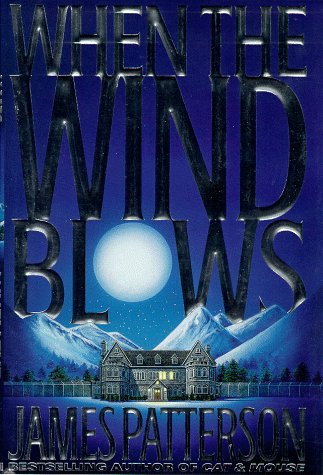
- When the Wind Blows
series2 books1998
similar bycontemporarynorth americatensethriller & suspensegenetic engineering
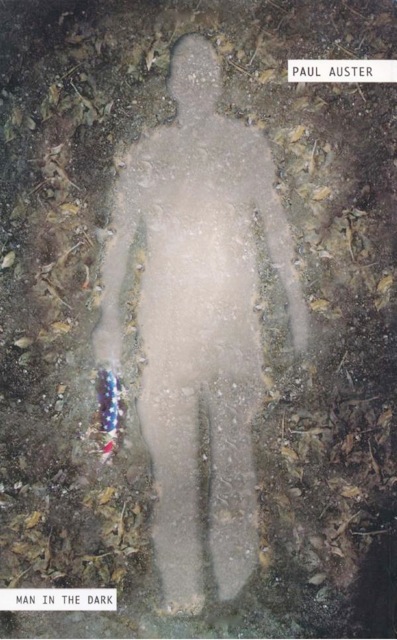
- Man in the Dark
Paul Austerstandalone novel2008
similar bynorth americacontemporaryliterary & generalreflective
An insomniac makes up a story about a man transported to an alternate reality in which a US civil war erupted after the 2000 election.