Loreful
HomeDiscover
Search series, authors…⌘K
Loreful

Reading orders for SF/F series and shared universes — with your place kept in every one.

Explore

UniversesSeriesWorksAuthorsAtlas

Help

FAQAboutSite map

Account & legal

Sign inCreate accountPrivacyTerms

Data

Built on ISFDB, Wikipedia, Wikidata and Open Library. Curated reading orders carry their reasoning on the page; the rest follow publication order. Data sources & licenses

© Loreful · data: ISFDB · CC BY

More like Orientation

but

Mood

The mood the book leaves you in.

  • The reading experience is propelled by journeys, exploration, and physical risk; excitement and forward momentum dominate over dread or introspection.
  • Joy and loss are deliberately mixed; the resolution grants characters something real while taking something else away, leaving warmth and sorrow together.
  • The book demands work from the reader — dense prose, difficult structure, unfamiliar ideas, or morally uncomfortable material — as part of its intended effect.
  • Grim events, cruelty, or despair dominate the atmosphere, and the book does not soften them with comfort or comic relief.
  • The atmosphere is quietly unsettling — wrongness, unease, and the uncanny pervade the book without necessarily escalating into overt horror.
  • The book is built to move the reader; character feeling is foregrounded and major scenes aim at a strong emotional response.
  • Humor is a primary aim and the prose plays for laughs — comic situations, wit, or dialogue produce sustained comedy, not occasional levity.
  • The book insists that things can improve; effort and decency are shown to matter, and the arc bends toward better outcomes even through hardship.
  • The overall register is cheerful and easygoing; stakes are kept gentle and the book avoids dwelling on pain or dread.
  • Withheld information drives the experience; the book sustains enigmas and secrets the reader wants resolved, whatever its genre.
  • The book is contemplative and inward-looking, giving more weight to thought, memory, and meaning than to external events.
  • Grief, loss, or melancholy set the dominant register, and the book lets sorrow stand rather than resolving it into comfort.
  • Sustained suspense is the point; the book keeps the reader braced for what happens next through danger, pressure, or impending revelation.
  • Playful invention and charm define the register — fanciful conceits, light absurdity, and a narration that delights in its own oddity.

About

What the story runs on.

  • Stories about minds with paranormal abilities — telepathy, telekinesis, precognition, empathy — and how societies handle those who have them.
  • Stories about characters who cannot die, or lives radically extended, and the price of endless time.
  • Stories centered on witches and the practice of witchcraft — covens, hedge magic, familiars, and the witch's place in her community.
  • Stories in which gods and deities act as characters — walking the world, meddling in mortal lives, or dying.
  • Stories structured as a quest — a journey undertaken to find, deliver, or destroy something of great import.
  • Stories built on rebirth — characters living again as someone new, with or without memory of past lives.
  • Stories of lovers kept apart by law, family, faith, or station, where the obstacle to love is the plot.
  • Stories of growing up — a young protagonist crossing from childhood into adult knowledge and responsibility.
  • Stories about who a character truly is — self-discovery, doubled lives, and the search for a self.
  • Stories about mourning — living through the death of a loved one and what loss does to the survivors.
  • Stories driven by maneuvering for power — factions, conspiracies, and statecraft conducted in shadow.
  • Stories in which war itself is the subject — combat, occupation, and what warfare does to soldiers and civilians.

Shelf

Where it sits in the library.

    • Fiction built on magic or other supernatural elements that have no scientific explanation.
    • Secondary-world fantasy at large scale, where the fate of nations or the world turns on the protagonists' struggle.
    • Fantasy set in a recognizably modern city or contemporary world where the supernatural intrudes on everyday life.
    • Fantasy that blends in horror's atmosphere and imagery, keeping a fantastical frame around grim or frightening material.
    • Action-driven fantasy following warriors or rogues with personal stakes against sorcerous threats, rather than world-spanning conflicts.
    • Fantasy set in a real historical period or a close analogue of one, with magic woven into the era.
    • Fantasy in which protagonists cross from the ordinary world into another world through a portal or similar passage.
    • Fantasy drawing directly on myths, legends, and folklore, retelling them or building on their figures and logic.
    • Fantasy of ghosts, vampires, shapeshifters, psychics, and similar phenomena, usually set in an otherwise ordinary world.
    • Fiction mixing science-fictional trappings with overtly magical or impossible elements in one setting.
    • Fiction that extrapolates from science and technology — future societies, space travel, or speculative inventions — within at least nominally natural laws.
    • Science fiction of interstellar scope — starships, galactic polities, and adventure across star systems.
    • Science fiction centered on armed forces and warfare, told largely from a military point of view.
    • Fiction depicting an oppressive or catastrophic society, presented as a warning.
    • Fiction set after civilization's collapse, following survivors in the ruins of the old world.
    • Fiction in which characters move between past and future, and the mechanics or consequences of that travel drive the plot.
    • Fiction exploring a world where a historical event went differently and history diverged from ours.
    • Science fiction about humanity's first encounter and communication with an alien intelligence.
    • Science fiction in which extraterrestrial forces attack or occupy Earth and humanity resists.
    • Fiction whose primary aim is to frighten or unsettle the reader through dread, menace, or the monstrous.
    • Horror of vast, indifferent, incomprehensible entities before which humanity is insignificant, in the Lovecraft tradition.
    • Horror of decaying houses, buried family secrets, and oppressive atmosphere in the Gothic literary tradition.
    • Horror centered on hauntings and the returning dead.
    • Horror located in the mind — paranoia, obsession, and unreliable perception rather than external monsters.
    • Speculative fiction of the strange and uncanny that resists both natural explanation and standard genre categories.
    • Fiction organized around solving a crime or puzzle, typically following an investigator toward the identification of a culprit.
      • Fast-paced fiction driven by imminent danger, pursuit, or high-stakes conspiracy, built to sustain tension.
        • Fiction whose central plot is a romantic relationship and its development toward an emotionally satisfying resolution.
        • Romance in which one or both partners are supernatural beings, blending fantasy elements into the love story.
        • A fantasy-romance hybrid in which the romantic arc and the fantasy plot carry equal weight.
        • Romance set in a past era, with courtship shaped by the period's society and manners.
        • Romance set in the present day, without supernatural or historical elements.
        • Fiction set in a real past period, where the historical setting materially shapes characters and events.
          • General and literary fiction emphasizing prose style, character interiority, or formal ambition over genre plot conventions.
          • Fiction in a realistic world where magical events occur and are treated as ordinary, in the tradition of Latin American literature.
          • Fiction that ridicules people, institutions, or society in order to criticize them.
          • Fiction propelled by journeys, exploration, and physical peril, where action and survival carry the plot.
            • Fiction centered on soldiers, campaigns, and the experience of warfare, historical or imagined.
              • Fiction written primarily to amuse, using comedic situations, wit, or parody as its organizing principle.
                • Fiction whose world runs on explicit game mechanics — levels, stats, and skills that characters can see and exploit.

                Practical

                How long a commitment, whether it stands alone, and whether it has finished.

                Tap a chip to ask for it · tap again to rule it out · once more to clear. Numbers show what would be left.

                • Cover of Lord of Light
                  Lord of Light

                  series · 5 books · 1967

                  similar byreincarnation

                  Lord of Light is Roger Zelazny's 1967 science fantasy novel about the surviving crew of a colonizing starship who use salvaged technology and mind-transfer to make themselves effectively immortal, then rule their colony for a thousand years under the guises of Hindu gods. One of their own, called Sam, breaks with the pantheon to return forbidden knowledge to the ordinary people they rule, touching off a war among the self-styled gods. A standalone novel, it won the 1968 Hugo Award for Best Novel.

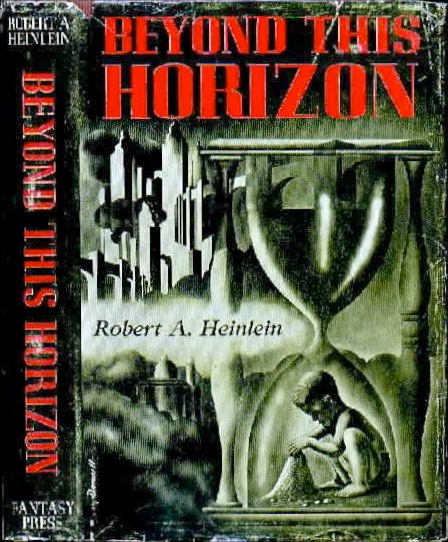
                • Cover of Beyond This Horizon
                  Beyond This Horizon

                  Robert A. Heinlein · standalone novel · 1948

                  similar by+1 more

                  From the front flap of a 2001 Baen reprint: "Utopia has been achieved. For centuries, disease, hunger, poverty, and war have been things found only in the history tapes. And applied genetics has given men and women the bodies of athletes and a lifespan of over a century. They should all have been very happy... But Hamilton Felix is bored. And he is the culmination of a star line, each of his last thirty ancestors chosen for superior genes. Hamilton is, as far as genetics can produce one, the ultimate man. And this ultimate man can see no reason why the human race should survive, and has no intention of continuing the pointless comedy. However, Hamilton's life is about to become less boring. A secret cabal of revolutionaries who find utopia not just boring, but desperately in need of leaders who know just What Needs to be Done, are planning to revolt and put themselves in charge. Knowing of Hamilton's disenchantment with the modern world, they have recruited him to join their Glorious Revolution. Big mistake! The revolutionaries are about to find out that recruiting a superman was definitely not a good idea..."

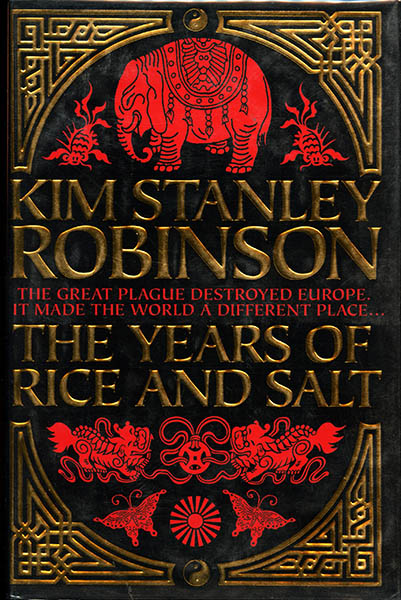
                • Cover of The Years of Rice and Salt
                  The Years of Rice and Salt

                  Kim Stanley Robinson · standalone novel · 2002

                  similar byreincarnation

                  What if the Black Death had killed nearly everyone in Europe instead of a third of it? Kim Stanley Robinson opens on that premise with a Mongol scout named Bold, who finds a Hungarian city emptied by plague and only narrowly escapes execution meant to contain the contagion; sold into slavery, he ends up serving aboard a Chinese treasure fleet alongside a young African companion. From there the novel follows a recurring cast of souls, reincarnated across centuries and identifiable book to book by the first letter of their names, through an alternate history in which Islamic and Chinese civilizations, not a devastated Europe, shape the world's future.

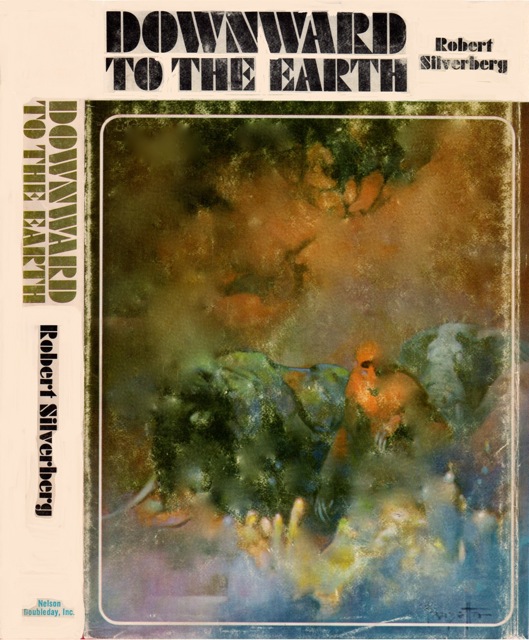
                • Cover of Downward to the Earth
                  Downward to the Earth

                  Robert Silverberg · standalone novel · 1969

                  similar by+1 more

                  Edmund Gunderson was the Terran administrator of the colony world of Belzagor, and he returns to it after it has gained independence, feeling a sense of guilt for the way he has treated its dominant species, the elephant-like nildoror, whose animalistic appearance had kept Gunderson from taking them seriously as sentient beings. On his return, he feels a new sense of kinship with the natives, perhaps more than for the Terran tourists. The nildoror undergo a process of rebirth, and Gunderson's greatest guilt comes from having denied rebirth to seven nildoror to make them help him repair flood damage.(From Wikipedia)

                • Cover of The Collected Science Fiction and Fantasy of Jack London
                  The Collected Science Fiction and Fantasy of Jack London

                  series · 6 books · 1906

                  completed

                  similar by+1 more

                • Cover of Replay
                  Replay

                  Ken Grimwood · standalone novel · 1987

                  similar by+1 more

                  Replay is a fantasy novel by American writer Ken Grimwood, first published by Arbor House in 1987. It won the 1988 World Fantasy Award for Best Novel.

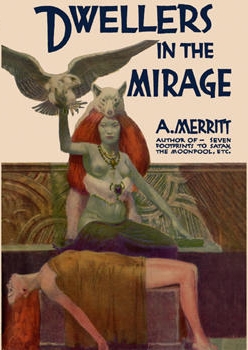
                • Cover of Dwellers in the Mirage
                  Dwellers in the Mirage

                  A. Merritt · standalone novel · 1932

                  similar by+1 more

                  From the back cover of the Avon 1976 printing: Angry warrior, modern man - Leif Langdon was suddenly ripped from the 20th century and plunged into the ancient world of The Mirage. But his entrance into this awesome land awakened the slumbering Dwayanu, who in this strange incarnation was also Lief. This, two-men-in-one battle with the beautiful witch-woman Lur and the ethereal beauty Evalie for the glory of the Mirage.

                • Cover of The Ship of Ishtar
                  The Ship of Ishtar

                  A. Merritt · standalone novel · 1926

                  similar by+1 more

                  From the back cover of the 1991 Collier paperback: The ship in the stone - When John Kenton first gets the shipment from an ancient Babylonian site, he finds a block of stone nothing more. But when he strikes the stone, it answers with a strange sound that challenges him - summons him - to release whatever secret lies buried within. When he finally manages to crack open the rock, a mist escapes. When the air clears the stone is gone except for its hidden contents: a perfectly sculpted Babylonian ship riding atop the turquoise waves of a turbulent sea. Before he knows what happened, Kenton is swept away from the room in which he stands, to the deck of the ancient ship, alive, with the priestesses of Ishtar and the priests of Nergal agape before him. This is but the start of an adventure that will consume John Kenton and seize his life forever. One look at the radiant beauty of the Goddess's favored servant, Sharane, and he knows that he must possess this woman, no matter what terrible trials lie in his way.

                • Cover of Peter Proud
                  Peter Proud

                  series · 2 books · 1974

                  completed

                  similar byreincarnation

                • Cover of Jack of Shadows
                  Jack of Shadows

                  series · 4 books · 1971

                  similar byreincarnation

                  Roger Zelazny's Jack of Shadows (1971) is a single novel set on a tidally locked world split between a permanently lit hemisphere ruled by science and a permanently dark one ruled by magic. Its protagonist, Jack of Shadows, draws his power from shadow itself and is nearly helpless in full light or full darkness but formidable wherever shadows fall; the book follows his quest to recover a lost artifact, the Key called Kolwynia, and the power -- and responsibility -- that comes with finding it.

                • Cover of Cloud Atlas
                  Cloud Atlas

                  David Mitchell · standalone novel · 2004

                  similar byreincarnation

                  Cloud Atlas, published in 2004, is the third novel by British author David Mitchell. The book combines metafiction, historical fiction, contemporary fiction and science fiction, with interconnected nested stories in different writing styles that take the reader from the remote South Pacific in the 19th century to the island of Hawaii in a distant post-apocalyptic future. Its title references a piece of music by Toshi Ichiyanagi.

                • Cover of Dogsbody
                  Dogsbody

                  Diana Wynne Jones · standalone novel · 1975

                  similar byreincarnation

                  Sirius the dog star, is reborn on earth as a puppy with a mission to search for the lost Zoi, the murder weapon of the stars.

                • Cover of The Bone Clocks
                  The Bone Clocks

                  David Mitchell · standalone novel · 2014

                  similar byreincarnation

                  The Bone Clocks is a 2014 novel by British writer David Mitchell. It was long-listed for the Man Booker Prize, and described as one of the best novels of the year by Stephen King. The novel won the 2015 World Fantasy Award.

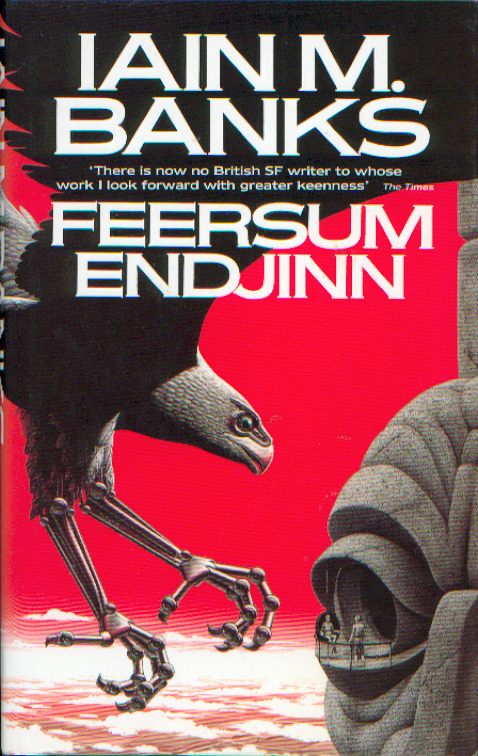
                • Cover of Feersum Endjinn
                  Feersum Endjinn

                  Iain M. Banks · standalone novel · 1994

                  similar byreincarnation

                  From the back cover of the 1996 Bantam Spectra mmpb printing: "Count Alandre Sessine VII has already died seven times. He has only one life left - and one last chance to catch his killer. His only clues point to a conspiracy beyond his own murder. For a catastrophe is fast approaching Earth. And a chosen few will do anything to keep it a secret. Sessine has three days before his funeral to live the way men used to live: restricted to one life where any mistake could be his last. Suddenly he finds himself a fugitive whose only hope of survival is finding others like himself. Others who hold the pieces to the puzzle of a weapon of salvation and chaos..."

                • Cover of Fluke
                  Fluke

                  James Herbert · standalone novel · 1977

                  similar byreincarnation

                  A dog named Fluke is barely more than a puppy when fragments of a life that isn't his own surface in his mind -- memories of a wife, a daughter, a job, an entire human existence he can't reconcile with the body he's now living in. Driven by those memories, Fluke sets out to find the family he half-remembers, aided by Rumbo, another dog going through the same impossible transformation. James Herbert follows the journey from a dog's-eye view of the world, using Fluke's confusion and determination to ask what, if anything, survives of a person after death. A standalone novel by James Herbert, better known for straightforward horror.

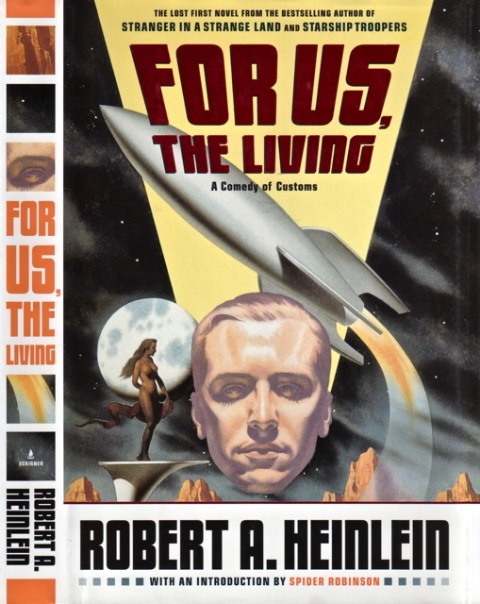
                • Cover of For Us, the Living: A Comedy of Customs
                  For Us, the Living: A Comedy of Customs

                  Robert A. Heinlein · standalone novel · 2004

                  similar by+1 more

                  For Us, the Living: A Comedy of Customs is a science fiction novel by American writer Robert A. Heinlein. It was written in 1938 and published for the first time in 2003. Heinlein admirer and science fiction author Spider Robinson titled his introductory essay "RAH DNA", as he believes this first, unpublished novel formed the DNA of Heinlein's later works.

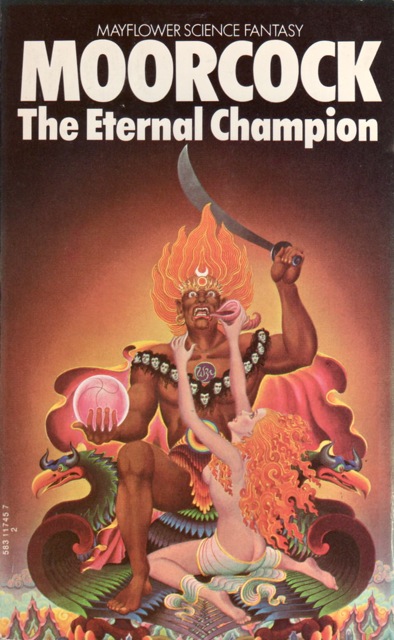
                • Cover of Eternal Champion
                  Eternal Champion

                  series · 6 books · 1962

                  part of Moorcock's Multiverse

                  similar by+1 more

                  The Eternal Champion introduces Erekosë, a modern man drawn out of his own life to become a warrior fated to fight across many worlds and identities — the seed of Michael Moorcock's whole multiverse concept, in which the same doomed hero recurs under different names. First published as a 1962 novella and expanded to a novel in 1970, it heads a trilogy completed by Phoenix in Obsidian and The Dragon in the Sword; within the wider moorcocks-multiverse this is the sequence that names and anchors the Eternal Champion idea itself.

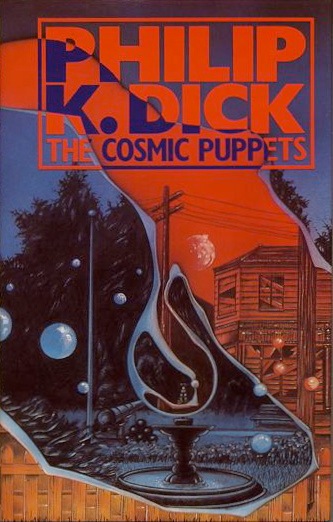
                • Cover of The Cosmic Puppets
                  The Cosmic Puppets

                  Philip K. Dick · standalone novel · 1957

                  similar by+1 more

                  The Cosmic Puppets is a science fiction novel by American author Philip K. Dick, published in 1957. It is a novelization of a short story initially published in the December 1956 issue of Satellite Science Fiction. The Cosmic Puppets was first published as a novel by Ace Books as one half of Ace Double D-249, bound dos-à-dos with Sargasso of Space by Andrew North .The story follows Ted Barton, a man who returns to his childhood hometown of Millgate, Virginia, only to discover that it has been erased from all official records and is now a surreal place where the laws of reality are distorted. Barton learns that the town is a battleground in a cosmic struggle between two ancient beings, a conflict that has twisted the fabric of his home and the memories of its inhabitants.

                • Cover of What Dreams May Come
                  What Dreams May Come

                  Richard Matheson · standalone novel · 1978

                  similar byreincarnation

                  A man who dies and finds himself in the afterlife is concerned about the state of mind of his widow, who doesn't believe in life after death.

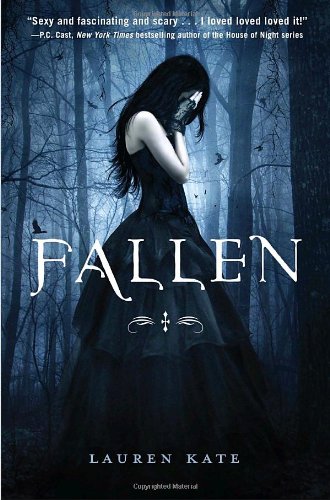
                • Cover of Fallen
                  Fallen

                  series · 7 books · 2009

                  similar byreincarnation

                  Lauren Kate's Fallen opens with Luce Price, sent to a reform school in Savannah after a fire she can't explain, where she meets Daniel, a boy she is certain she has met before. The series follows Luce's growing entanglement with fallen angels and a curse of repeated lifetimes across several sequels running through 2015.

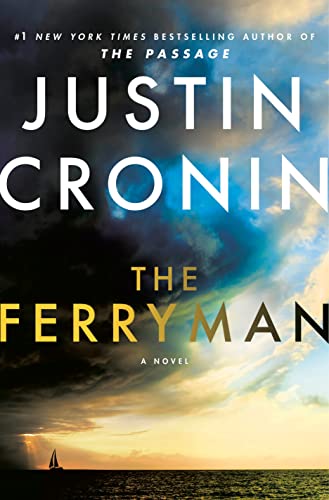
                • Cover of The Ferryman
                  The Ferryman

                  Justin Cronin · standalone novel · 2023

                  similar byreincarnation

                  The Ferryman is a 2023 dystopian fiction novel by Justin Cronin. The protagonist, Proctor Bennett, is a titular "ferryman", responsible for transporting elderly citizens to be reborn. Proctor gradually realizes that his utopian life is not what it seems. The Ferryman is Cronin's first novel since 2016's The City of Mirrors.

                • Cover of An Old Captivity
                  An Old Captivity

                  Nevil Shute · standalone novel · 1940

                  similar by+1 more

                  An Old Captivity is a novel by British author Nevil Shute. It was first published in the UK in 1940 by William Heinemann.

                • Cover of Lady of Hay
                  Lady of Hay

                  Barbara Erskine · standalone novel · 1986

                  similar by+1 more

                • Cover of Midwinterblood
                  Midwinterblood

                  Marcus Sedgwick · standalone novel · 2011

                  similar byreincarnation

                  Midwinterblood is a young adult novel by Marcus Sedgwick, published by Roaring Brook Press in 2013. The book is composed of seven connected storylines told in reverse-chronological order, with time periods ranging from ancient times to the near future. Inspired by Swedish painter Carl Larsson's controversial painting Midvinterblot, the stories feature themes of love and sacrifice.