More like Orphan Maker
anchored on:our worldcontemporary
but
- Cell
Stephen Kingstandalone novel2006
similar bydystopiaour worldcontemporary
In Cell, King taps into readers fears of technological warfare and terrorism. Mobile phones deliver the apocalypse to millions of unsuspecting humans by wiping their brains of any humanity, leaving only aggressive and destructive impulses behind. Those without cell phones, like illustrator Clayton Riddell and his small band of "normies," must fight for survival, and their journey to find Clayton's estranged wife and young son rockets the book toward resolution.
- Kingdom Come
J. G. Ballardstandalone novel2006
similar bydystopiaour worldcontemporary
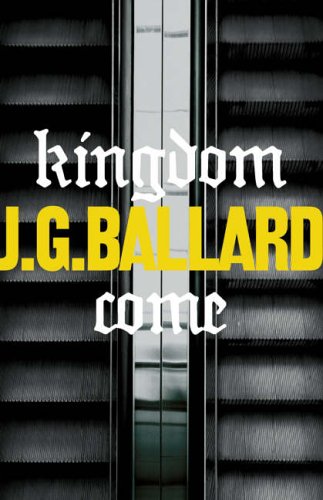
In contemporary Britain, the suburban population falls prey to a combination of boredom, consumerism, xenophobia, sports hooliganism, and resentment of authority leading to the rise of a new fascism centered around a giant enclosed shopping mall.
- Spark
John Twelve Hawksstandalone novel2014
similar byour worldcontemporary+1 more
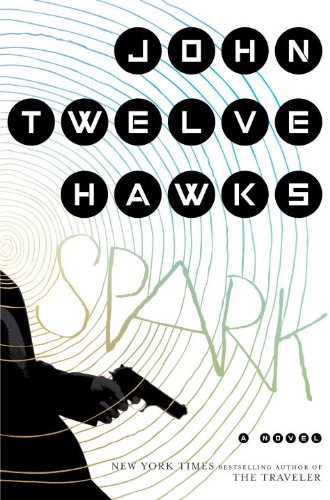
Spark is John Twelve Hawks's fourth novel, published in 2014 in the United States and Great Britain. It is a stand-alone novel that does not use the characters or setting of Hawks's Fourth Realm Trilogy. Film rights for the book were sold to DreamWorks.
- The Fourth Realm
series3 books2005
similar bydystopiaour worldcontemporary
The Fourth Realm Trilogy refers to the trilogy of books written by pseudonymous author John Twelve Hawks and published between 2004 and 2009. The trilogy has been translated into 25 languages and has sold more than 1.5 million books.
- HARM
Brian W. Aldissstandalone novel2007
similar bycontemporaryour world+1 more
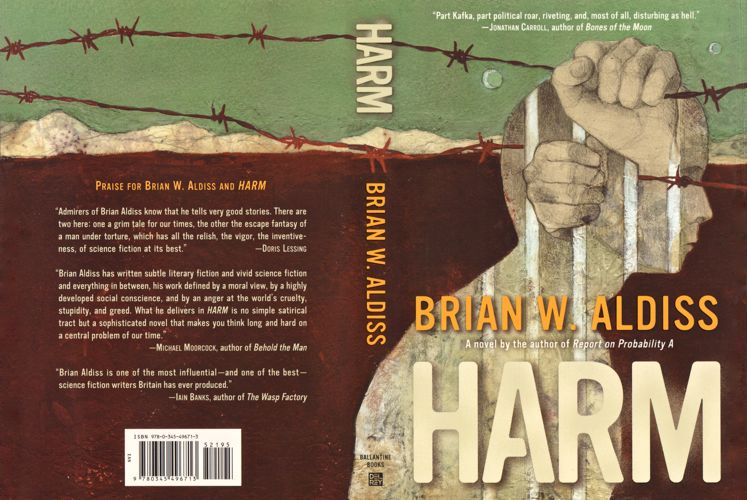
"... a young writer of light fiction with a Muslim heritage has been arrested for no compelling reason. He is held as Prisoner B, in HARM ... and isolated. To evade this misery Prisoner B escapes - through his split personality - to a science fiction-like planet ruled by insects. But gradually the two worlds start to converge ..."
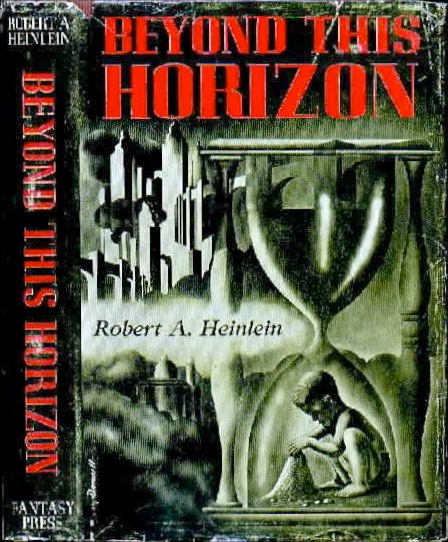
- Beyond This Horizon
Robert A. Heinleinstandalone novel1948
similar bydystopiaour world
From the front flap of a 2001 Baen reprint: "Utopia has been achieved. For centuries, disease, hunger, poverty, and war have been things found only in the history tapes. And applied genetics has given men and women the bodies of athletes and a lifespan of over a century. They should all have been very happy... But Hamilton Felix is bored. And he is the culmination of a star line, each of his last thirty ancestors chosen for superior genes. Hamilton is, as far as genetics can produce one, the ultimate man. And this ultimate man can see no reason why the human race should survive, and has no intention of continuing the pointless comedy. However, Hamilton's life is about to become less boring. A secret cabal of revolutionaries who find utopia not just boring, but desperately in need of leaders who know just What Needs to be Done, are planning to revolt and put themselves in charge. Knowing of Hamilton's disenchantment with the modern world, they have recruited him to join their Glorious Revolution. Big mistake! The revolutionaries are about to find out that recruiting a superman was definitely not a good idea..."
- I Am Legend
Richard Mathesonstandalone novel1954
similar bydystopiaour world
The last human survivor of the vampire epidemic has to maintain his defences against their onslaught, while attempting to research the cause and possibly solution to the plague. Robert Neville is the last living man on Earth... but he is not alone. Every other man, woman and child on the planet has become a vampire, and they are hungry for Neville's blood. By day he is the hunter, stalking the undead through the ruins of civilization. By night, he barricades himself in his home and prays for the dawn. How long can a man survive like this?
- The Testimony
James Smythestandalone novel2012
similar byour worldcontemporary+1 more
From the publisher's website: A global thriller presenting an apocalyptic vision of a world on the brink of despair and destruction.What would you do if the world was brought to a standstill? If you heard deafening static followed by the words, 'My children. Do not be afraid'? Would you turn to God? Subscribe to the conspiracy theories? Or put your faith in science and a rational explanation? The lives of all twenty-six people in this account are affected by the message. Most because they heard it. Some because they didn't. The Testimony – a gripping story of the world brought to its knees and of its people, confused and afraid.
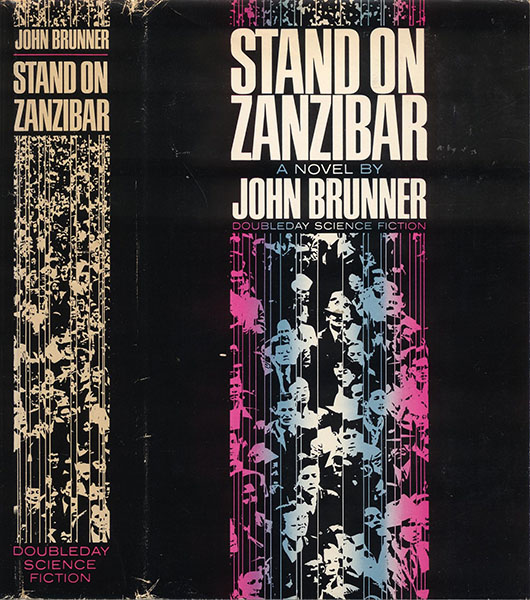
- Stand on Zanzibar
John Brunnerstandalone novel1968
similar bydystopiaour world
Stand on Zanzibar is a dystopian New Wave science fiction novel written by John Brunner and first in part published in New Worlds magazine in 1967 and in book form in 1968. The book won a Hugo Award for Best Novel at the 27th World Science Fiction Convention in 1969, as well as the 1969 BSFA Award and the 1973 Prix Tour-Apollo Award.
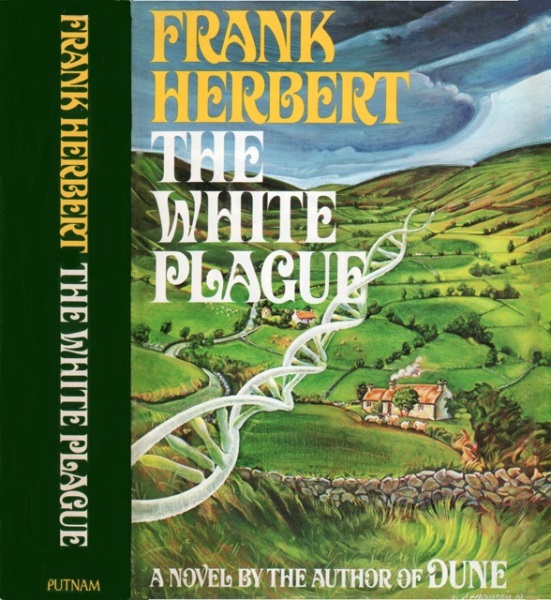
- The White Plague
Frank Herbertstandalone novel1982
similar bydystopiaour world+1 more
The White Plague is a 1982 science fiction novel by American author Frank Herbert about an engineered disease which kills only women. It was nominated for a best science fiction novel Locus Award in 1983.
- A Clockwork Orange
series4 books1962
completed
similar bydystopiaour world
Anthony Burgess's 1962 novel is narrated by Alex, a teenage gang leader in a near-future Britain gripped by a youth subculture of extreme violence, recounting his crimes in Nadsat, an invented slang blending English with Russian-derived words. After his crimes catch up with him, Alex is made the subject of a controversial state program meant to forcibly reform his behavior, and the novel uses his ordeal to question whether imposed goodness is worth the loss of free will. It is a standalone novel.
- The Lathe of Heaven
Ursula K. Le Guinstandalone novel1971
similar bydystopiaour world
The Lathe of Heaven is a 1971 science fiction novel by American writer Ursula K. Le Guin, first serialized in the American science fiction magazine Amazing Stories. It won the 1972 Locus Award for Best Novel and was a finalist for the 1971 Nebula Award for Best Novel and 1972 Hugo Award for Best Novel. Two television film adaptations were released: the PBS production, The Lathe of Heaven (1980), and Lathe of Heaven (2002), a remake produced by the A&E Network.
- Time Out of Joint
Philip K. Dickstandalone novel1959
similar bydystopiaour world
Time Out of Joint is a science fiction novel by American writer Philip K. Dick, first published in novel form in the United States in 1959. An abridged version was also serialised in the British science fiction magazine New Worlds Science Fiction in several installments from December 1959 to February 1960.
- The World Set Free
H. G. Wellsstandalone novel1914
similar bydystopiaour world
The World Set Free is a novel written in 1913 and published in 1914 by H. G. Wells. The book is based on a prediction of a more destructive and uncontrollable sort of weapon than the world has yet seen. It had appeared first in serialised form with a different ending as A Prophetic Trilogy, consisting of three books: A Trap to Catch the Sun, The Last War in the World and The World Set Free.
- When the Sleeper Wakes
H. G. Wellsstandalone novel1899
similar bydystopiaour world
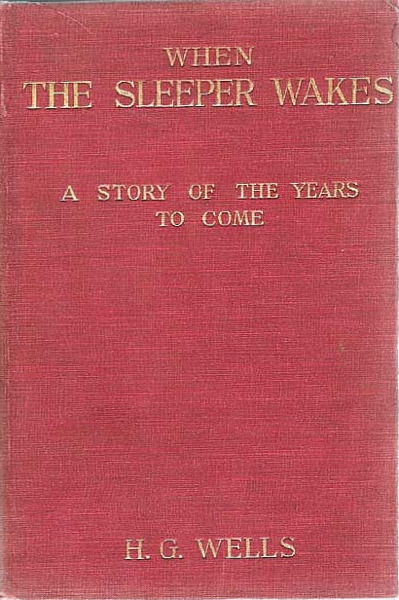
Graham, an insomniac Englishman in 1890s London, takes a course of sleep-inducing drugs and falls into a coma that lasts two centuries. He wakes in the year 2100 to find his investments have compounded, through a ruling body called the White Council, into effective ownership of most of the world's wealth and power, making him, on paper, humanity's master, and in practice, its prisoner, held under guard while the Council governs in his name. A rebel faction led by a man named Ostrog frees him, hoping to use his symbolic authority to spark an uprising against the Council. An early H. G. Wells dystopia about inherited power and manufactured consent.
- Make Room! Make Room!
Harry Harrisonstandalone novel1966
similar bydystopiaour world
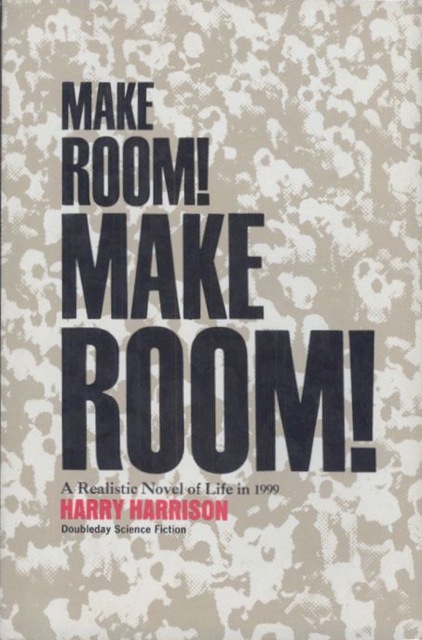
Make Room! Make Room! is a 1966 science fiction novel written by Harry Harrison exploring the consequences of both unchecked population growth on society and the hoarding of resources by a wealthy minority. It was originally serialized in Impulse magazine.
- Oath of Fealty
Larry Niven & Jerry Pournellestandalone novel1981
similar bydystopiaour world
Oath of Fealty is a 1981 novel by American writers Larry Niven and Jerry Pournelle, published originally by Phantasia Press, then by Timescape Books, with numerous reprints. Set in the near future, it involves an arcology, a large inhabited structure, called Todos Santos, which rises above a crime-ridden Los Angeles, California, but has little beyond casual contact with the city. The novel popularized the phrase "think of it as evolution in action", which occurs elsewhere in Niven's books. The novel anticipated the building of the Los Angeles subway. It was included in David Pringle's book Science Fiction: The 100 Best Novels.
- The Store
James Patterson & Richard Dilallostandalone novel2017
similar bydystopiaour worldcontemporary
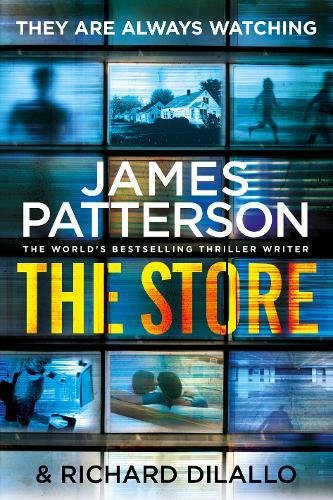
Jacob and Megan Brandeis have gotten jobs with the mega-successful, ultra-secretive Store. Seems perfect. Seems safe. But their lives are about to become anything but perfect, anything but safe. ALWAYS WATCHING. Especially since Jacob and Megan have a dark secret of their own. They're writing a book that will expose the Store--a forbidden book, a dangerous book. ALWAYS. And if the Store finds out, there's only one thing Jacob, Megan and their kids can do--run for their bloody lives.
- Greybeard
Brian W. Aldissstandalone novel1964
similar bydystopiaour world
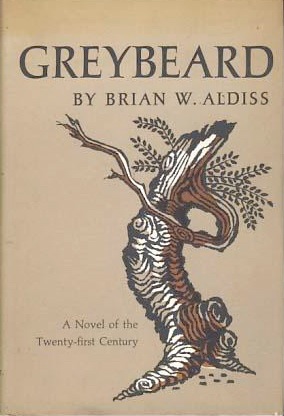
Long after a catastrophe that has sterilized humans and most other mammals, the 54-year-old protagonists—Greybeard and Martha—take a tour of entropic England. In scattered self contained communities only the old survive, while outside these enclaves nature comes back into its own, peopling the land with new animal life.
- Ice
Anna Kavanstandalone novel1967
similar bydystopiaour world
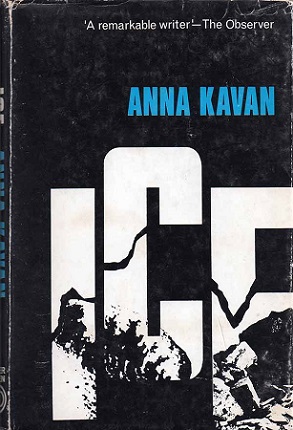
Ice is a novel by British writer Anna Kavan, published in 1967. Ice was Kavan's last work to be published before her death, the first to land her mainstream success, and remains her best-known work. Generally regarded as genre-defying, it has been labelled a work of science fiction, Nouveau roman, and slipstream fiction.
- The City & the City
China Miévillestandalone novel2009
similar bycontemporary+1 more
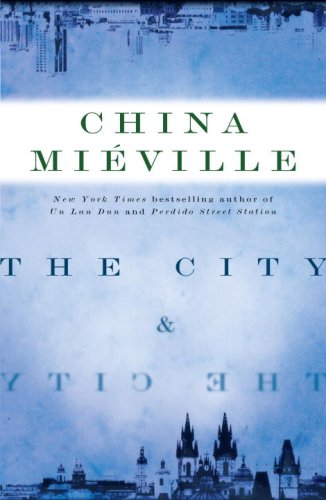
Inspector Tyador Borlú must travel to Ul Qoma to search for answers in the murder of a woman found in the city of Besźel. (Source: OCLC record)
- Woman on the Edge of Time
Marge Piercystandalone novel1976
similar bydystopiacontemporary
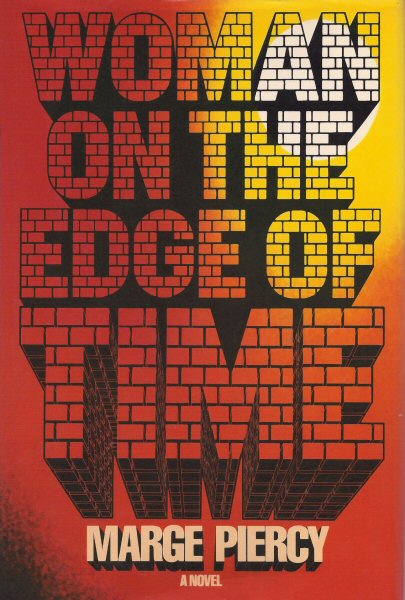
Woman on the Edge of Time is a 1976 feminist science fiction novel by American writer Marge Piercy. The novel was originally published by Alfred A. Knopf. Piercy draws on several inspirations to write this novel such as utopian studies, technoscience, socialization, and female fantasies. One of Piercy's main inspirations for her utopian novels is Plato's Republic. Piercy describes the novel as, "if only…"