More like Outcast
anchored on:fantasy
but
- Gormenghast
series6 books1946
completed
similar bydarkfantasysecondary world
Gormenghast is a fantasy series by British author Mervyn Peake, about the inhabitants of Castle Gormenghast, a sprawling, decaying, Gothic structure. Originally conceived as a single on-going novel, the series was ended by Peake's death and comprises three novels: Titus Groan (1946), Gormenghast (1950) and Titus Alone (1959); and a novella, Boy in Darkness (1956). Peake was writing a fourth novel, Titus Awakes, at the time of his death in 1968. The book was completed by Peake's widow Maeve Gilmore in the 1970s, but was not published until 2011 after it was discovered by their family.
- A Song of Ice and Fire
series14 books1996
part of World of Ice and Fire
similar bydarksecondary worldfantasy+1 more
A Song of Ice and Fire is a series of high fantasy novels by the American author George R. R. Martin. Martin began writing the first volume, A Game of Thrones, in 1991, and published it in 1996. Martin, who originally envisioned the series as a trilogy, has released five out of seven planned volumes. The most recent entry in the series, A Dance with Dragons, was published in 2011. Since then, Martin has been working on the sixth novel, titled The Winds of Winter. A seventh novel, A Dream of Spring, is planned to follow.
- The Old Kingdom / Abhorsen milieu
series11 books1995
similar byfantasysecondary world+2 more
The Old Kingdom, or Abhorsen in North America and the UK, is a fantasy series written by Australian author Garth Nix. It originated in 1995 with the novel Sabriel and has continued in the novels Lirael (2001), Abhorsen (2003), Goldenhand (2016), and Terciel & Elinor (2021), as well as a prequel novel titled Clariel (2014). The Old Kingdom also consists of the novella The Creature in the Case (2005) and various other short fiction.
- Earthsea Cycle
series18 books1964
completed
part of Earthsea
similar byfantasysecondary world
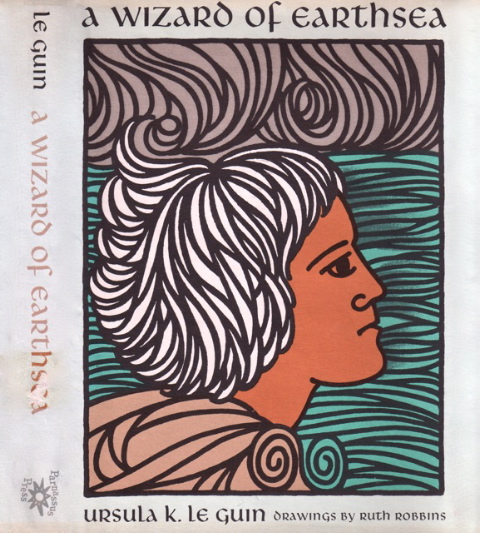
The Earthsea Cycle, also known as Earthsea, is a series of high fantasy books written by American author Ursula K. Le Guin. Beginning with A Wizard of Earthsea (1968), The Tombs of Atuan (1970), and The Farthest Shore (1972), the series was continued in Tehanu (1990), and Tales from Earthsea and The Other Wind. In 2018, all the novels and short stories were published in a single volume, The Books of Earthsea: The Complete Illustrated Edition, with artwork by Charles Vess.
- Narnia
series26 books1950
part of Narnia Universe
similar byfantasysecondary world
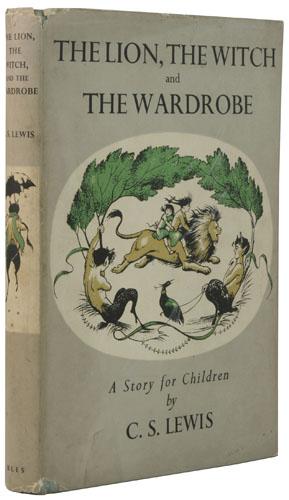
The Chronicles of Narnia is a series of seven portal fantasy novels by British author C. S. Lewis. Illustrated by Pauline Baynes and originally published between 1950 and 1956, the series is set in the fictional realm of Narnia, a fantasy world of magic, mythical beasts, and talking animals. It narrates the adventures of various children who play central roles in the unfolding history of the Narnian world. Except in The Horse and His Boy, the protagonists are all children from the real world who are magically transported to Narnia, where they are sometimes called upon by the lion Aslan to protect Narnia from evil. The books span the entire history of Narnia, from its creation in The Magician's Nephew to its eventual destruction in The Last Battle.
- Thomas Covenant the Unbeliever
series11 books1977
similar bydarksecondary worldfantasy
The Chronicles of Thomas Covenant is a series of ten high fantasy novels written by American author Stephen R. Donaldson. The series began as a trilogy, The Chronicles of Thomas Covenant the Unbeliever. This was followed by another trilogy, The Second Chronicles of Thomas Covenant, and finally a tetralogy, The Last Chronicles of Thomas Covenant.
- Winterlands
series7 books1986
similar byfantasysecondary world+2 more
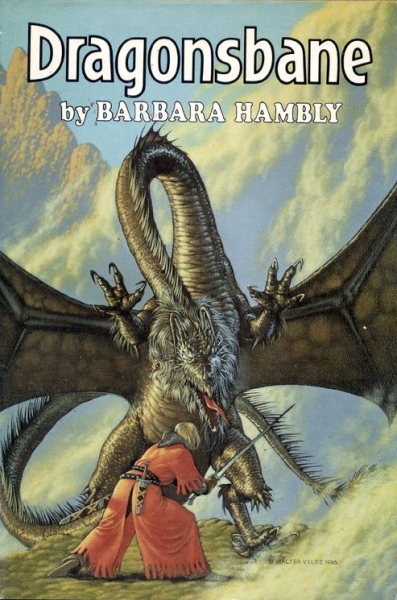
Winterlands follows John Aversin, a practical, unglamorous dragon-slayer, and Jenny Waynest, the self-taught village witch he loves, as their small corner of a forgotten kingdom keeps getting dragged into magic far bigger than either of them wanted. Barbara Hambly's series opens with Dragonsbane (1985), which deliberately undercuts the 'brave knight slays dragon' story it seems to promise, and continues across Dragonshadow, Knight of the Demon Queen, and Dragonstar as Jenny pursues real magical training. It favors domestic detail and moral complexity over conventional high-fantasy grandeur.
- Six of Crows
series3 books2015
part of Grishaverse
similar bydarkfantasysecondary world
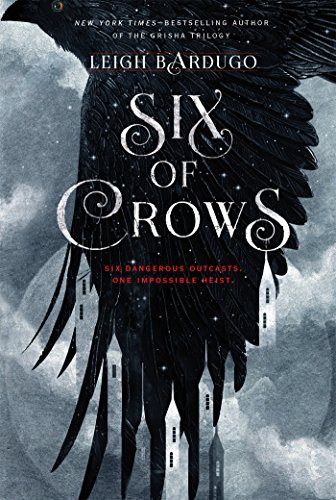
Leigh Bardugo's Six of Crows duology (2015-2016) follows a crew of six criminal teenagers in Ketterdam, a city modeled on the Dutch Republic, as they pull off a near-impossible heist and then deal with its fallout. Told from multiple points of view, the books lean on the found-family bond between the crew members as much as the caper plotting, and sit within Bardugo's wider Grishaverse alongside her Shadow and Bone books.
- Magic Goes Away
series22 books1969
similar byfantasysecondary world
The Magic Goes Away began as a Larry Niven novella imagining a prehistoric Earth where magic is a finite, minable resource — an explicit response, by Niven's own account, to the 1973 oil shock — in which sorcerers who draw too hard on the world's dwindling mana bring on catastrophe. Niven opened the setting to other writers for follow-up anthologies (The Magic May Return, More Magic) and let Fred Saberhagen write a solo novel in it, The Time of the Warlock, making it a shared-world series about the last age of magic rather than one continuous story.
- Birthgrave
series3 books1975
completed
similar bydarkfantasysecondary world
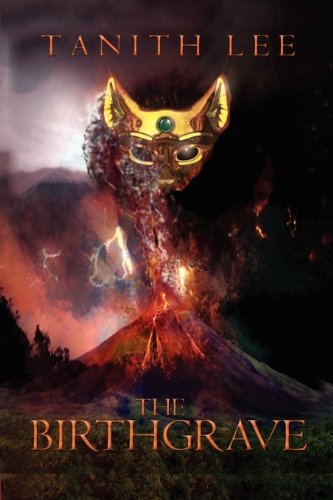
Tanith Lee's Birthgrave trilogy (The Birthgrave, Vazkor Son of Vazkor, Quest for the White Witch, 1975-1978) opens with an amnesiac woman waking inside a volcano with no memory of who she is, and follows her journey through a brutal, quasi-medieval world in search of her identity, wielding strange powers she doesn't understand along the way. She eventually learns she is one of the last of the Old Ones, an ancient, nearly extinct people, and must reckon with the harm her own vanished civilization once did.
- A Court of Thorns and Roses
series6 books2015
similar byfantasysecondary world+1 more
A Court of Thorns and Roses is a fantasy romance series by American author Sarah J. Maas, which follows the journey of 19-year-old Feyre Archeron after she is brought into the faerie lands of Prythian. The first book of the series, A Court of Thorns and Roses, was published in May 2015. The series centers on Feyre's adventures across Prythian and the faerie courts, following the epic love story and fierce struggle that ensues after she enters the fae lands. The series has sold over 13 million copies. There are currently five novels in the series, with the sixth scheduled to release on October 27, 2026, and the seventh on January 12, 2027. An eighth installment is set to conclude the continuous story told across books six, seven and eight.
- Tales of the Flat Earth
series14 books1978
completed
similar bydarkfantasysecondary world+1 more
Tales from the Flat Earth is a fantasy series by British writer Tanith Lee. The novels take inspiration from One Thousand and One Nights and are similarly structured as interconnected stories. The series has been well received, and Death's Master, the second book in the series, won the British Fantasy Award for Best Novel in 1980.
- Fillory
series7 books2009
similar byfantasysecondary world
Lev Grossman's Magicians trilogy (The Magicians, The Magician King, The Magician's Land, 2009-2014) follows Quentin Coldwater from a secretive college of magic in upstate New York into Fillory, a fantasy world he grew up reading about in a series of children's books that turns out to be real. As Quentin, his classmates, and his old friend Julia become entangled in ruling and defending Fillory, the trilogy pushes past the wish-fulfillment of a classic portal fantasy to ask what happens once getting everything you wanted stops being enough.
- Shannara
universe50 books1977
Start hereWord and the Void · The very beginning of the timeline
similar bysecondary worldfantasy
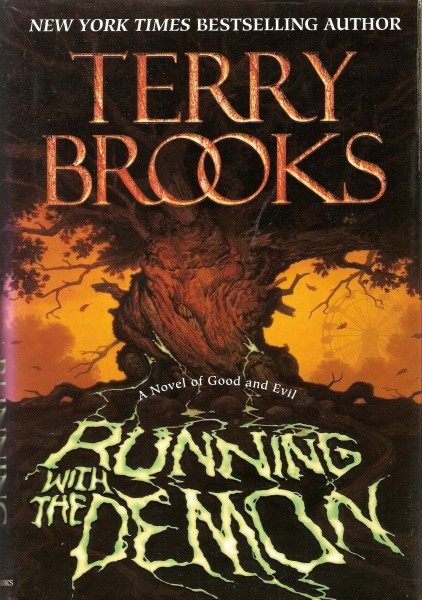
Long after the world we know has burned itself to slag in the Great Wars, the Four Lands rise green over the bones of the old age. Science is a forbidden memory; magic has come back into the world, and with it the old divisions — Men, Elves, Dwarves, Trolls, and Gnomes, each Race a splinter of what humanity became. This is the far-future Earth of Shannara, where the ruins buried beneath the soil are ours, and the only keepers of the vanished knowledge are the Druids of Paranor, who wake once a generation to meet the darkness rising again. Terry Brooks opened the Four Lands in 1977 with The Sword of Shannara and has charted its history for four decades since — a legendarium ordered not by throne but by a single bloodline, the Ohmsfords, each generation inheriting an Elfstone, a blade, or a wishsong when the age demands a hero. The original trilogy gives way to the Heritage of Shannara, the Voyage of the Jerle Shannara, the High Druid, Dark Legacy, Defenders, and the concluding Fall of Shannara; the Genesis of Shannara books reach back to the apocalypse itself, and the Word and the Void trilogy back further still, into a demon-haunted version of our own present that is the root of everything after. In 2025 Brooks passed the histories to Delilah S. Dawson to carry forward. What sets these books apart is their long memory: a world where every triumph is provisional, where the same evil returns wearing a fresh shape each age, and magic always exacts its price. The reading is warm and headlong — questing companies, old talismans, journeys across a mapped and named wilderness — shadowed by the knowledge that all of it stands on the wreckage of a former world. Enter as readers first did: with The Sword of Shannara, then onward in publication order. The chronological path, beginning with Word and the Void, rewards a second journey, once the Four Lands already feel like home.
- Dilvish
series13 books1965
completed
similar byfantasysecondary world+1 more
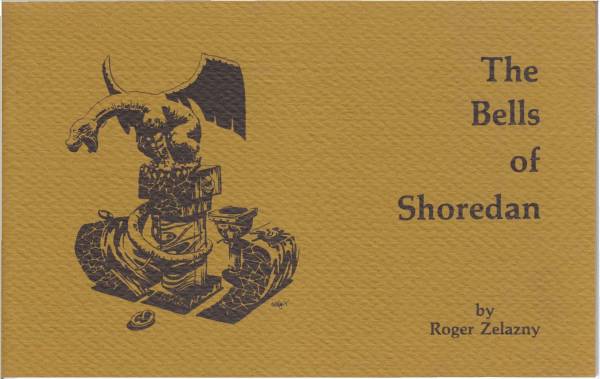
Centuries ago, the half-elf warrior Dilvish tried to stop a dark sorcerer named Jelerak from completing a terrible ritual, and paid for it by being turned to stone and having his soul cast into Hell. Roger Zelazny's Dilvish the Damned stories bring him back when the people he once protected need him again, reuniting him with his strange metal steed Black for a string of sword-and-sorcery adventures built around his long-delayed vengeance against Jelerak. The tales run as short, episodic quests rather than one continuous plot.
- Legends of Saint Camber
series3 books1976
part of Deryni
similar byfantasysecondary world
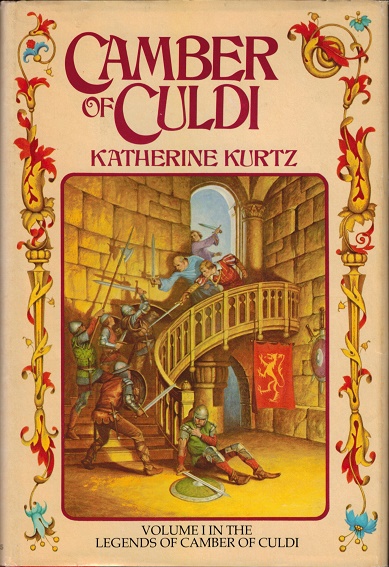
Legends of Saint Camber tells the story of Camber MacRorie, a Deryni lord who helps restore a persecuted human dynasty to the throne of Gwynedd and is venerated as a saint after his death, at a cost the trilogy gradually reveals. Camber of Culdi, Saint Camber, and Camber the Heretic were published as the fourth Deryni novel onward but are set two centuries before Katherine Kurtz's original Chronicles of the Deryni trilogy. They lay the groundwork - persecution of Deryni magic-users - that shapes the political and religious world of everything published earlier in reading order.
- Stephen King multiverse
universe46 books1967
Start hereThe Gunslinger · Start here
similar bydark+3 more
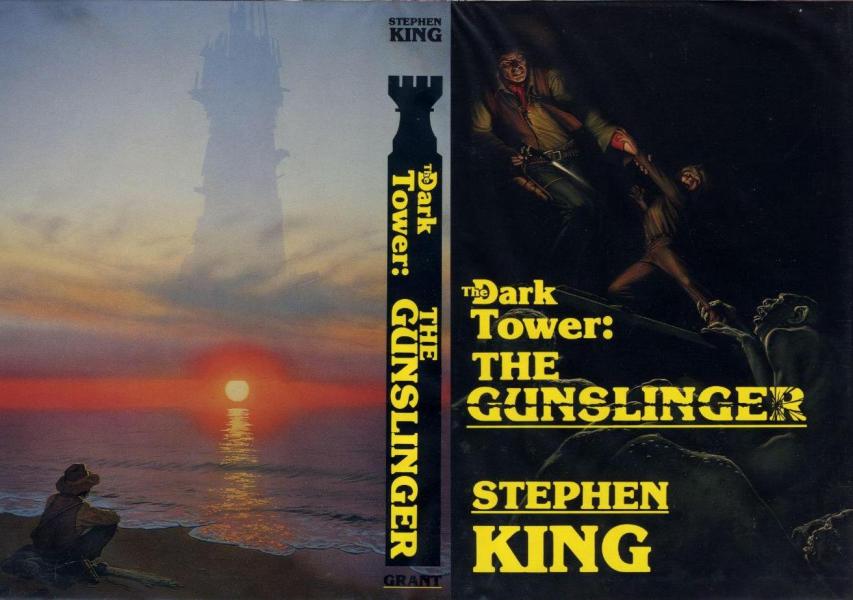
The man in black fled across the desert, and the gunslinger followed. So begins the long walk of Roland Deschain, last of an order of knight-errant pistoleers, across a land that has "moved on" — where the compass points drift, dead machines rot toward sentience, and the weave of what's real wears thin. His quest is the Dark Tower itself: a spire standing at the hub of every world that exists, the linchpin that holds all of them back from ruin. Roland's road runs eight volumes, from The Gunslinger through the closing Dark Tower, with the later, interleaved tale The Wind Through the Keyhole folding a story-within-a-story back into his youth. Along the way he draws a ka-tet — a fellowship bound by fate, not choosing — through doorways between worlds: a heroin-shackled New Yorker, a woman of two minds, a boy who dies twice. The Tower is also the secret axle around which the wider shelf of King's work turns; threads from The Stand, 'Salem's Lot and beyond wind quietly toward it. Expect a mongrel of Western, high fantasy, horror and decayed science fiction, told in a dusty, incantatory dialect all its own — ka, thankee-sai, the world that has moved on. This is King at his most mythic and most personal, a decades-spanning circle that rewards a patient reader. Begin at the beginning: The Gunslinger, then walk forward in publication order. There are other worlds than these — but this door opens first.
- The Riftwar Universe
universe44 books1982
Start hereRiftwar Saga · Start here
similar bysecondary worldfantasy
On the world of Midkemia a tear opens in the air itself, a rift hung between stars, and through it march the armies of an empire from another world entirely. So begins the chronicle Raymond E. Feist has kept for three decades: the tale of Pug, a castle kitchen boy apprenticed to a magician on the very day the invasion lands, and of Tomas, his friend, who inherits the armor and the ancient fury of a dead dragon-lord. Around these two the Riftwar Cycle turns, widening book by book from one besieged frontier keep into the whole history of a world of kingdoms, guilds, thieves' dens and mage-towers. The cycle runs to roughly thirty novels, gathered into arcs a newcomer can enter and finish on their own. The founding Riftwar Saga (Magician, Silverthorn, A Darkness at Sethanon) sets the board; the Serpentwar Saga, Krondor's Sons and the Conclave of Shadows carry the story down the generations; the Darkwar, Demonwar and Chaoswar sagas bring it toward its close. Crossing the rift to the rival world of Kelewan, Feist and Janny Wurts wrote the Empire trilogy, opening with Daughter of the Empire, a court intrigue told wholly from the invaders' side and for many the finest thing here. Shorter Legends of the Riftwar and the game-born Riftwar Legacy fill the corners; later still, Feist opens an altogether new world in the Firemane books. Feist writes fantasy in its most companionable key: apprentices who grow into archmages, tavern boys who become spies and dukes, a world you return to the way you return to an old inn. The mood is adventure before dread, friendship and rank and hard-won craft, wars that cost something, all of it rendered plainly and at a gallop. Begin where it began, with Magician, then follow the arcs in the order they were written, and the rift will carry you the rest of the way.
- New Crobuzon
series4 books2000
similar bydarksecondary worldfantasy+1 more
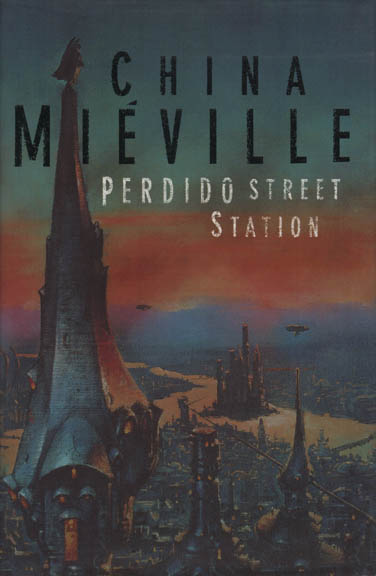
The New Crobuzon books are three standalone novels by China Miéville set in and around New Crobuzon, a vast, corrupt industrial city in his invented world of Bas-Lag where magic, biopunk technology, and several sentient species coexist. Perdido Street Station follows a renegade scientist and his lover after an experiment unleashes something monstrous on the city, while The Scar and Iron Council return to the same setting with different casts and only loose continuity between books.
- An Ember in the Ashes
series4 books2015
similar byfantasysecondary world+1 more
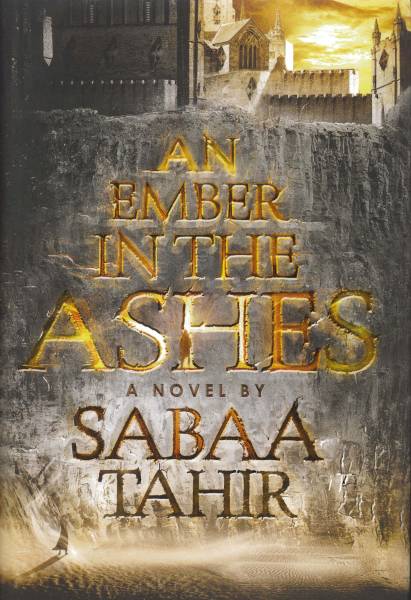
An Ember in the Ashes, set in a fantasy world modeled on ancient Rome, alternates between Laia, who spies on a brutal military academy for rebels in exchange for help freeing her imprisoned brother, and Elias, one of that academy's most skilled soldiers trying to break free of the empire he's been raised to serve. Sabaa Tahir's quartet, continuing through A Torch Against the Night, A Reaper at the Gates, and A Sky Beyond the Storm, follows the two toward a reckoning with the empire that trained one of them to enforce it.
- Tender Morsels
Margo Lanaganstandalone novel2008
similar bydarkfantasysecondary worlddark fantasy
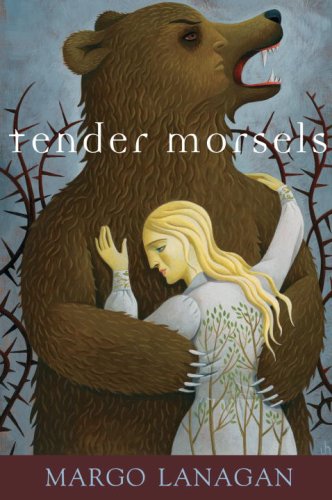
Tender Morsels (2008) is a novel by Australian author Margo Lanagan. It won the Ditmar Award in 2009 for Best Novel and was joint winner of the 2009 World Fantasy Award for Best Novel.
- Darwath
series7 books1982
similar bydarkfantasysecondary world+1 more
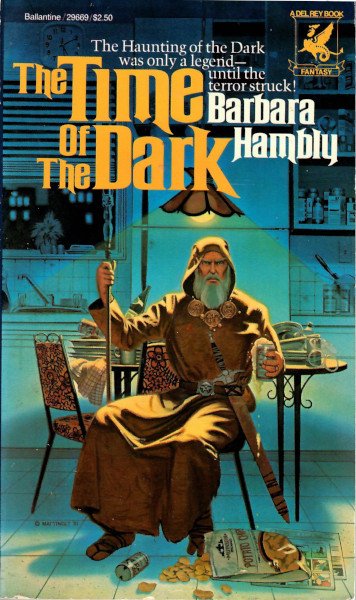
Darwath begins with two modern-day Californians pulled through a portal into a dying medieval world under siege from the Dark, shape-shifting monsters that hunt by night and are driving civilization underground. The Time of the Dark, The Walls of Air, and The Armies of Daylight make up the original trilogy; Barbara Hambly returned to the same characters decades later in Mother of Winter and Icefalcon's Quest. It's portal fantasy built around practical, unglamorous survival rather than chosen-one heroics.
- Malazan Book of the Fallen
series20 books1999
part of Malazan
similar bydarksecondary worldfantasydark fantasy
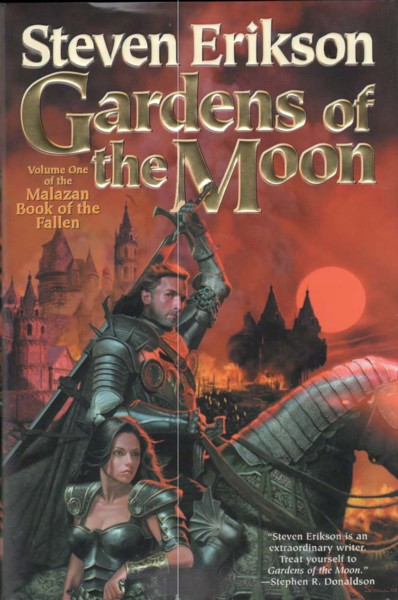
The Malazan Book of the Fallen is a series of epic fantasy novels written by the Canadian author Steven Erikson. The series, published by Bantam Books in the U.K. and Tor Books in the U.S., consists of ten volumes, beginning with Gardens of the Moon (1999) and concluding with The Crippled God (2011). Erikson's series presents the narratives of a large cast of characters spanning thousands of years across multiple continents.