More like Outer Darkness
anchored on:science fictionfar futureadventurouspost-apocalypticadventuresurvival+1 more
but
- Tunnel in the Sky
Robert A. Heinleinstandalone novel1955
similar bysurvivalfar futureadventuroustensescience fiction
As the final test of a survivalist/explorer class, teenagers are dumped on an alien planet to use their skills while awaiting pickup. But something has gone wrong, and they find they are on their own.
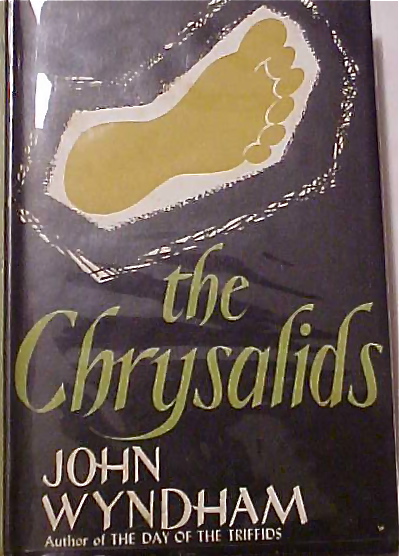
- The Chrysalids
John Wyndhamstandalone novel1955
similar bysurvivalfar futuretensescience fictionpost-apocalyptic
The Chrysalids is a science fiction novel by British writer John Wyndham, first published in 1955 by Michael Joseph. It is the least typical of Wyndham's major novels, but regarded by some as his best. An early manuscript version was entitled Time for a Change.
- Hungry City Chronicles / Mortal Engines
series5 books2001
part of Mortal Engines Universe
similar bysurvivalfar futurescience fictionadventurouspost-apocalyptic+1 more
The Mortal Engines Quartet, also known as the Predator Cities Quartet, is a series of epic young adult science fiction novels by the English novelist and illustrator Philip Reeve. He began the first volume of the series, Mortal Engines, in the 1980s, and it was published in 2001. Reeve then published three further novels, Predator's Gold (2003), Infernal Devices (2005), and A Darkling Plain (2006).
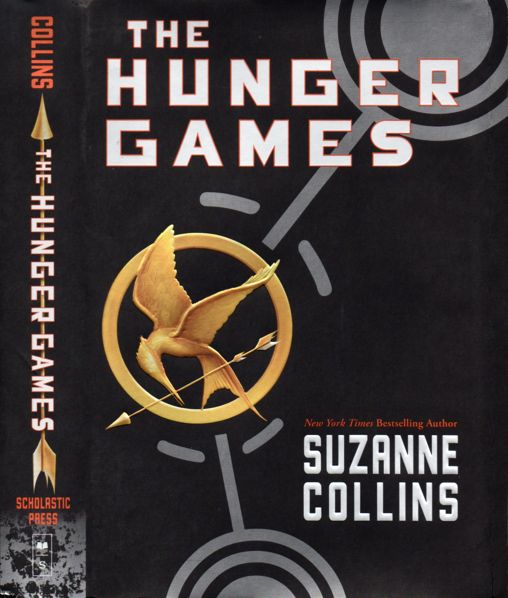
- The Hunger Games
series3 books2008
part of The Hunger Games Universe
similar bysurvivalfar futuretensescience fictionpost-apocalyptic
The Hunger Games is a series of young adult dystopian novels written by American author Suzanne Collins. The series consists of a trilogy that follows teenage protagonist Katniss Everdeen, as well as two prequels. The Hunger Games universe is a dystopia set in Panem, a post-apocalyptic North American country consisting of the wealthy Capitol and 12 districts in varying states of poverty. As punishment for rebellion, the Capitol hosts an annual battle royale competition called The Hunger Games. Each of the 12 districts must send two children between the ages of 12 and 18 to participate, and the last surviving child is dubbed the victor.
- The Hunger Games Universe
universe5 books2008
Start hereThe Hunger Games · Start here
similar bysurvivalfar futuretensescience fiction+1 more
Panem, they call it now — a nation raised on the drowned bones of North America, a glittering Capitol ringed by twelve districts it once starved into obedience. Every year the Capitol collects its debt in children: two tributes from each district, drawn by lottery, dropped into an engineered arena, and made to kill one another on live television while the whole country is required to watch. This is the Hunger Games — entertainment, punishment, and government at once. Suzanne Collins tells it in a compact, unified body of work. The founding trilogy — The Hunger Games, Catching Fire, and Mockingjay — follows Katniss Everdeen, a girl from the coal-mining District 12 who volunteers in her sister's place and becomes something the Capitol never scripted. Two prequels reach back into the same machinery: The Ballad of Songbirds and Snakes traces a young Coriolanus Snow long before he is President, and Sunrise on the Reaping returns to District 12 a generation ahead of Katniss. Begin with the trilogy, in order — it is Katniss's voice, close and present-tense, that makes Panem breathe, and the prequels land hardest once you know how her story ends. Beneath the spectacle sits one steady, uncomfortable question: who profits when we agree to look away.
- Pax / Astra
series2 books1954
completed
similar bysurvivalfar futureadventurousscience fictiontense+1 more
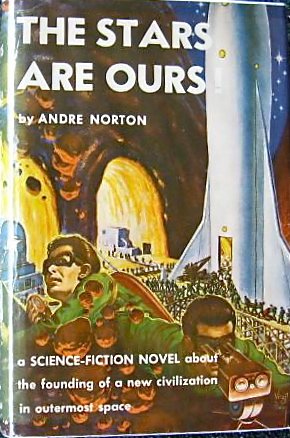
Andre Norton's The Stars Are Ours! (1954) and its sequel Star Born (1957) follow a group of scientists and their families who flee a repressive future Earth to colonize a distant world they name Astra, and then the next generation, who must contend with that world's original inhabitants. Star Flight appears to be a later omnibus or reissue rather than a third original novel.
- City at World's End
Edmond Hamiltonstandalone novel1951
similar bysurvivalfar futuretensescience fictionpost-apocalyptic
An experimental atomic weapons test in small-town America goes catastrophically wrong, hurling the entire town of Middletown, buildings, streets and all, untold ages into Earth's future, to a time when the sun is dying and humanity's last city struggles on beneath a darkening sky. Cut off from everything and everyone they knew, the townspeople have to find a way to survive in a world that has nothing left to spare for latecomers. Edmond Hamilton's novel strands a slice of mid-century America at the literal end of the world.
- Empire of Man
series4 books2001
similar bysurvivalfar futureadventurousscience fictiontense
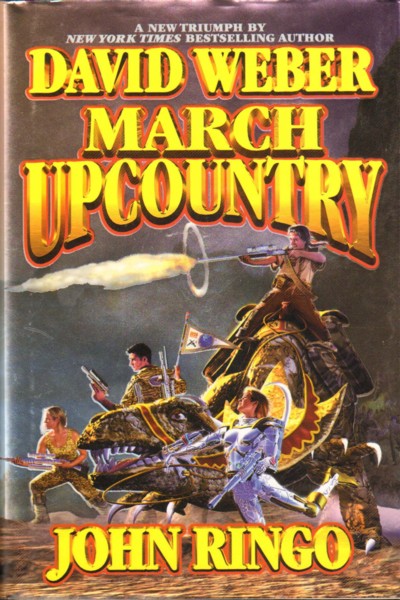
The Empire of Man is a series of science fiction books by David Weber and John Ringo published by Baen Books. It combines elements of space opera and military science fiction.
- Deathworld
series4 books1960
completed
similar bysurvivalfar futureadventurousscience fiction+1 more
Deathworld is the name of a series of science fiction novels by American writer Harry Harrison, including the books Deathworld, Deathworld 2 and Deathworld 3, plus the short story "The Mothballed Spaceship". The central hero is a gambler who becomes involved with colonists of an extremely hostile planet.
- Icerigger Trilogy
series3 books1974
part of Humanx Commonwealth
similar bysurvivalfar futureadventurousscience fiction+1 more
Alan Dean Foster's Icerigger trilogy, set in his Humanx Commonwealth universe, strands a group of characters on the frozen world of Tran-Ky-Ky, where they get pulled into the local population's fight against a destructive nomadic force. Much of the trilogy follows their overland journey by ice-sailing craft toward the planet's one interstellar outpost, a trek of roughly a year across the ice, as they help the natives survive along the way.
- The Stars My Destination
Alfred Besterstandalone novel1956
similar bysurvivalfar futureadventurousscience fiction
When a passing spaceship refuses to rescue the lone survivor from the drifting wreck of another ship, he dedicates his life to discovering who made that decision and exacting his revenge, in the process altering human history and his own character.
- The Transall Saga
Gary Paulsenstandalone novel1998
similar bysurvivalfar futureadventurousscience fictionpost-apocalyptic+1 more
The Transall Saga is a 1998 post-apocalyptic survival novel by American author Gary Paulsen. It is a survival story like most of his other books but also involves the science fiction genre. There are also themes of speculative evolution.
- Space Winners
Gordon R. Dicksonstandalone novel1965
similar bysurvivalfar futureadventuroustensescience fiction
They were humanity's hope - the first young people selected to leave Earth for study in the Galactic Federation. But something went wrong in deep space. Terribly wrong. Suddenly Jim Rawlins, Ellen Bouvier, Curt Harrington, and the squirrel-like Alien philosopher Peep were castaways, stranded on the Quarantined World of Quebahr - with no training, and little hope of rescue. Between them and the Federation's emergency beacon were primitive Mauregs, aggressive Walats, lizard-like Noifs - plus danger, conspiracy, and the mystery of an impending high-tech war on a backward, peaceful planet. Without warning, the future of two worlds - Earth and Quebahr - depended on three young humans' ability to adopt and survive.
- The Book of Ptath
A. E. van Vogtstandalone novel1947
similar bysurvivalfar futureadventurousscience fiction+1 more
Ptath, a very powerful god, is throwing by his deadly rival, the goddess Ineznia, on Earth, around 200,000,000 AD, in the form of a mortal, where he has to face numerous dangers to survive.
- Space Beagle
series5 books1939
completed
similar byfar futurescience fictionadventuroustense+1 more
The Voyage of the Space Beagle is a 1950 fix-up novel by A. E. van Vogt, stitched together from four previously published pulp stories into a single continuous account of the exploration ship Space Beagle's encounters with a series of dangerous alien life forms. Its episodic, crew-versus-monster structure reads as a loose sequence of adventures rather than one continuous plot.
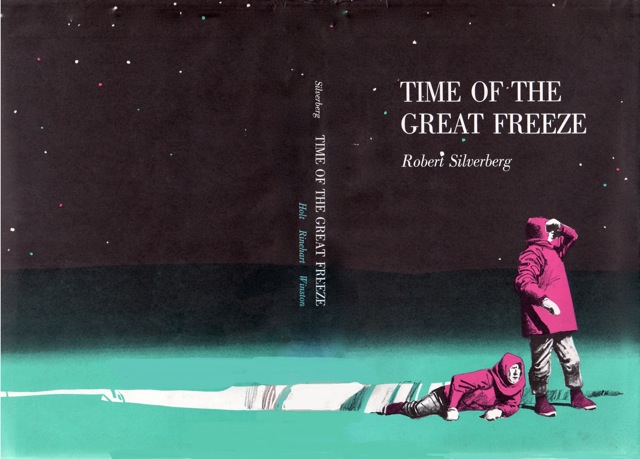
- Time of the Great Freeze
Robert Silverbergstandalone novel1964
similar bysurvivalfar futuretensescience fictionpost-apocalyptic
Publisher's description: "During the receding Fifth Ice Age seven men expelled from underground New York in 2650 and one deserter of that isolated colony attempt to travel to London, where contact has been made with other people."
- Hello America
J. G. Ballardstandalone novel1981
similar bysurvivalfar futureadventurousscience fictionpost-apocalyptic
Hello America is a science fiction novel by British writer J. G. Ballard, published in 1981. First edition cover designed by Bill Botten. The plot follows an expedition to a North America rendered uninhabitable by an ecological disaster following an energy crisis.
- Brion Brandd
series2 books1962
completed
similar bysurvivalfar futurescience fiction+2 more
Harry Harrison's Brion Brandd books are two loosely connected science fiction adventures: Planet of the Damned (1962), a Hugo Award finalist, and its later sequel Planet of No Return. Both follow the same troubleshooting protagonist sent to defuse crises on different alien worlds, but the two stories are self-contained rather than parts of one continuous plot.
- Endless Blue
Wen Spencerstandalone novel2007
similar bysurvivalfar futureadventuroustensescience fiction
The appearance of the warp drive from a long lost spaceship, the Fenrir, triggers an epic quest fort he rest oft the ship, a mission led by Captain Mikhail Volkov. According to the drive’s computers, Fenrir had been lost to a hypothetical “nowhere” of subspace, but since the drive’s housing is covered with coral and sea life, obviously Fenrir has gone somewhere. Faced with genocide at the hands of aliens known as the nefrim, humans need a miracle to survive. On the chance that Fenrir’s mysterious location holds such a miracle, Mikhail jumps into the unknown and crashes into the endless blue of the Sargasso. (from the cover)
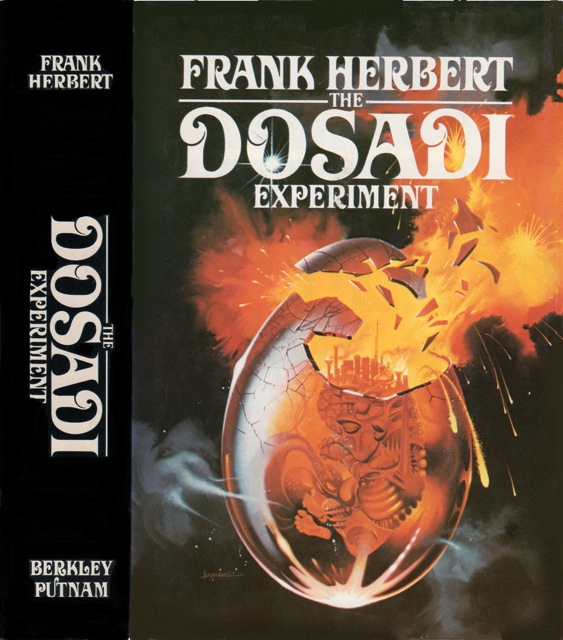
- The Dosadi Experiment
Frank Herbertstandalone novel1977
similar bysurvivalfar futuretensescience fiction
From the flaps of the Berkley Putnam first edition: "In his first new work of science fiction since the best-selling Children of Dune, Frank Herbert returns to his world of Whipping Star, and involves Jorj X. McKie, Saboteur Extraordinary, in a new intrigue. In Whipping Star, McKie discovered that some of the stars in the universe are actually intelligent, super-powerful beings, and was able to befriend one of them, the star Alcyone - affectionately known as Fannie Mae. As The Dosadi Experiment opens, McKie is assigned to investigate the planet Dosadi, which is isolated from the rest of the galaxy by a "god-wall," a barrier set up by one of the intelligent stars. Dosadi is rumored to be an experimental planet, and the experimenters are the froglike Gowachin, whose culture is founded upon a strange legal system in which McKie is the only human ever trained. He learns that humans and Gowachin have been placed on Dosadi, without their consent, for an experiment that could last centuries: an experiment in extreme overcrowding. But this monstrous plot is apparently out of control, and it seems the Gowachin may be prepared to destroy Dosadi rather than expose its secret, thus breaking the peace among the races, and starting the first interstellar war. But this is just the beginning. When McKie finally reaches Dosadi he discovers that the Dosadis have taken control of their own evolution and produced a competitive, highly evolved elite, of both humans and Gowachin, who have been able to extrapolate the existence of a universe beyond the god-wall and hate whoever has imprisoned them like this. They plan to break out and avenge themselves on the galaxy."
- Terminal World
Alastair Reynoldsstandalone novel2010
similar bysurvivalfar futureadventurousscience fictionpost-apocalyptic
Terminal World is a 2010 science fiction novel by Welsh author Alastair Reynolds. It is a standalone novel set in the distant future, which chronicles the journey of Quillon, a pathologist forced into exile. The Gollancz hardcover edition of the book was published in March 2010 in the United Kingdom. The Ace Books hardcover edition was published in June 2010 in the United States.
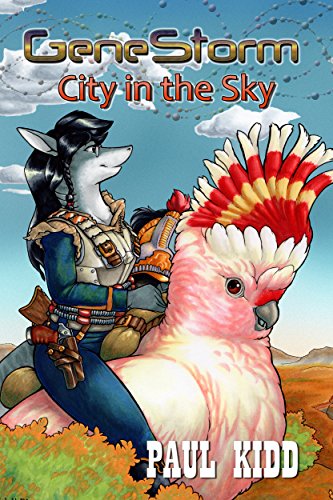
- GeneStorm
series1 book2015
similar bysurvivalfar futureadventuroustensescience fictionpost-apocalypticadventure
- Have Space Suit - Will Travel
Robert A. Heinleinstandalone novel1958
similar bysurvivaladventuroustensescience fiction
From the back cover of the Del Rey 9th printing: "Skyjacked - Everything happened at once. One minute Kip Russell was walking about in his own backyard, testing out an old space suit and dreaming about going to the moon - and the next he was out cold and the captive of an insidious space pirate. The whole thing seemed like a very bad dream until he discovered he wasn't the only prisoner on board. Then the reality of the situation became inescapable. He - along with the daughter of a world-renowned scientist and a beautiful creature from an alien planet - had been skyjacked by a monstrous extraterrestrial and they were on their way to the Moon... a journey toward a fate worse than death!"
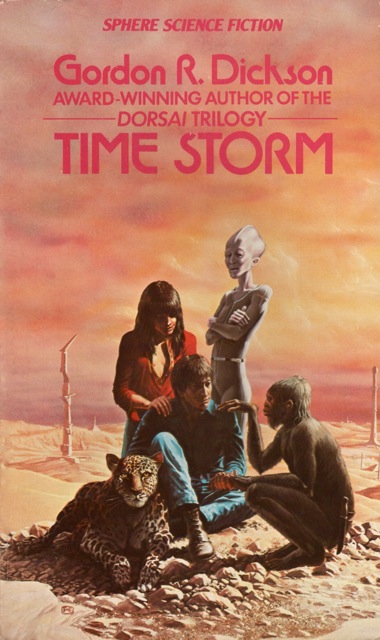
- Time Storm
Gordon R. Dicksonstandalone novel1977
similar bysurvivaladventuroustensescience fictionpost-apocalyptic
A time storm has devastated the Earth, and only a small fraction of humankind remains. From the rubble, three survivors form an unlikely alliance: a young man, a young woman, and a leopard. "A masterful science fiction story told by a masterful science fiction writer". -- Milwaukee Journal. A time storm strikes the Earth. The Earth remains, but different parts of the Earth are in different eras. Travel between the different zones is thought to be impossible. The main character, Marc Despard, resolves to fight the time storm. After some struggles, he assembles a small band of people, including one alien, to help him try to understand what has happened and to stop the time storm. He has 2 extraordinary relationships with a older teenaged girl who is speechless for the first part of the book (she was "struck dumb" by the time storm) and with, believe it or not, a leopard. Dickson's writing makes the extraordinary seem quite normal. Ultimately, after being harried by a Mad Max-like group of survivors, he uses a machine found in a different era of time to bring his small band of followers into the future so that he can find those who are trying to fight the time storm. He convinces those future beings that he is capable of fighting the time storm, and ultimately stops it, and gets the girl in the end.