More like Overkill
but
- H. G. Wells' War of the Worlds
universe65 books1898
Start hereThe War of the Worlds · Start here
similar by+2 more
No one would have believed, in the closing years of the nineteenth century, that human affairs were being watched keenly and closely from the timeless worlds of space. And then the cylinders fell. H. G. Wells' War of the Worlds opens in the quiet of the Surrey commons, where a falling star proves to be the first Martian craft — and from the pit rise the towering tripods, the Heat-Ray, the choking Black Smoke and the creeping red weed, wielded by minds that regard mankind much as we regard the creatures we boil for supper. This is invasion rendered as natural disaster: cold, methodical, and vast beyond argument. Wells' 1898 novel is the seed; everything else grows from that Martian soil. The catalogue gathers direct sequels and continuations alongside a wide field of other hands. In War of the Worlds: Global Dispatches the invasion is retold across the whole planet through the eyes of Twain, Verne, Tolstoy, Lowell and Kipling; in the Manly Wade and Wade Wellman crossover, Sherlock Holmes, Watson and Professor Challenger take the field against the machines; and Scott Washburn's Great Martian War stretches the fighting into a decades-long alternate history of steam, artillery and grinding attrition. It is a loose shared world — no single decreed sequence, many voices answering one calamity. What sets this world apart is its refusal of heroics: the invaders fall not to generals but to the smallest things of Earth, humbling and indifferent. Begin, always, with Wells' original novel — it is short, and it is the ground every later book stands upon. From there follow your appetite: Global Dispatches for the panorama, the Holmes campaign for adventure, Washburn for the long war.
- Company Wars
series7 books1981
part of Alliance-Union Universe
similar bytense+2 more
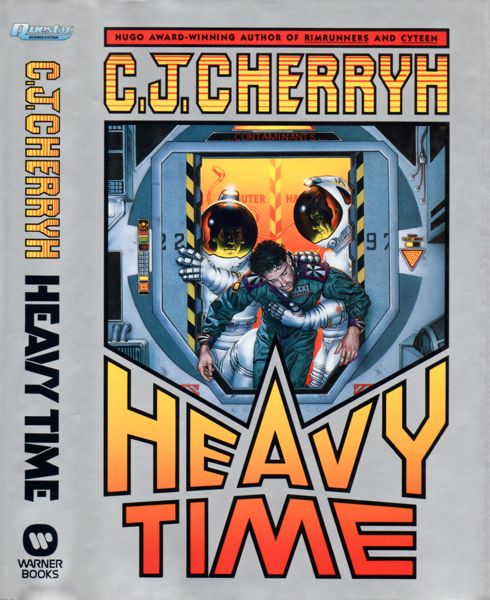
Company Wars gathers the novels C. J. Cherryh set during the breakaway conflict between Earth's colonial Company and the newly independent Union, within her wider Alliance-Union future history. Anchored by the Hugo Award-winning Downbelow Station, the books follow different ships, stations, and crews caught on either side, from merchanter traders to military spacers, rather than a single continuing cast. Read in any order, they build up a picture of the political and economic pressure that reshapes Cherryh's larger Alliance-Union universe.
- Duke de Richleau
series4 books1933
completed
similar bythriller & suspensetense+2 more
The Duke de Richleau novels follow Dennis Wheatley's aristocratic adventurer and occultist across four decades of twentieth-century intrigue, moving from a 1930s rescue thriller in The Forbidden Territory into Satanist set-pieces such as The Devil Rides Out and Strange Conflict, then a later case in Gateway to Hell. Wheatley wrote the books out of order over nearly forty years, but their internal chronology matches the order they were published in.
- Survivalist
series41 books1981
similar bysurvivalwartense+1 more
The Survivalist is the generic title of Jerry Ahern's long-lived series of 29 pulp novels centering around John Rourke, an ex-CIA officer turned weapons and survival expert, in the aftermath of a nuclear war.
- Little Tall Island / In the Path of the Eclipse
series4 books1989
similar bysurvivaldarktense+3 more
Stephen King set three otherwise separate books on or near the fictional Little Tall Island off the coast of Maine: Gerald's Game, about a woman handcuffed to a bed after her husband's fatal heart attack; Dolores Claiborne, a housekeeper's decades-spanning confession narrated in a single unbroken monologue; and Storm of the Century, a novelization of King's own miniseries about a stranger who arrives during a historic blizzard demanding a terrible price from the town. The first two novels share a real total solar eclipse as a pivotal, connecting event despite having otherwise unrelated plots and characters.
- The Science Fiction Hall of Fame
series11 books1895
- Joe Ledger
series63 books2008
part of Night
similar byour worldthriller & suspensetense+2 more
Jonathan Maberry's Joe Ledger series follows a former cop turned special operative for a black-ops unit fighting bioterrorism threats that routinely turn out to be supernatural or genetically monstrous, beginning with Patient Zero and its zombie-outbreak plot. Later books widen the threats to rogue AI, genetic supersoldiers, and other high-concept horrors, with numerous other authors contributing spin-off novellas and short fiction to the same continuity. The series sits within a wider connected universe of Maberry's horror-thriller fiction.
- Ender Wiggin
series14 books1977
part of Ender's Game Universe
similar by+1 more
Orson Scott Card's Ender's Game (1985, expanded from his 1977 novella) follows child prodigy Andrew "Ender" Wiggin as he is recruited into a military training program built to prepare Earth's defenses for an anticipated third war against an insectoid alien species known as the Formics. The saga continues years later through Speaker for the Dead and Xenocide, following an older Ender as he confronts the moral weight of his role in that earlier conflict, and concludes the core arc in Children of the Mind, with Ender in Exile filling in the years between the first two books. Set within the wider Ender's Game universe, the series shifts from military coming-of-age story to slower, more philosophical science fiction as it progresses.
- Stephen King multiverse
universe46 books1967
Start hereThe Gunslinger · Start here
similar bydark+1 more
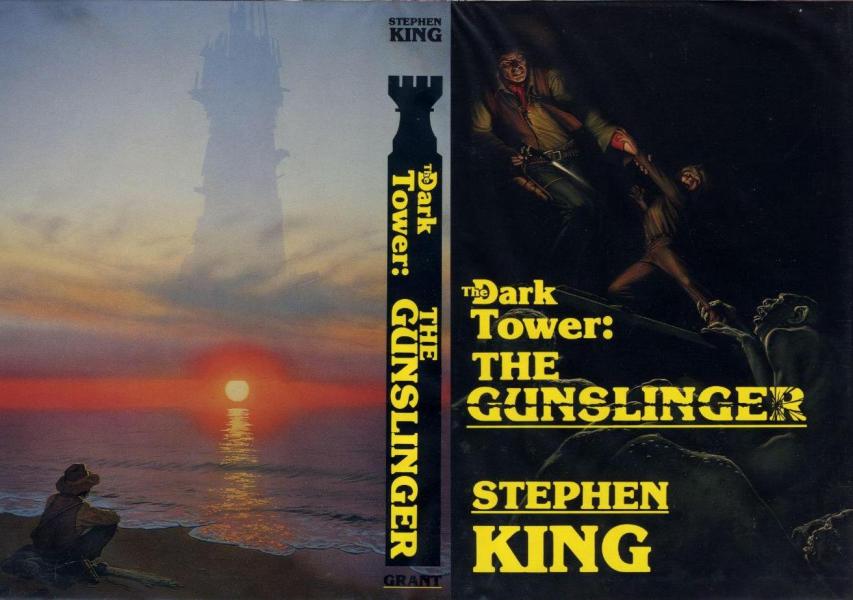
The man in black fled across the desert, and the gunslinger followed. So begins the long walk of Roland Deschain, last of an order of knight-errant pistoleers, across a land that has "moved on" — where the compass points drift, dead machines rot toward sentience, and the weave of what's real wears thin. His quest is the Dark Tower itself: a spire standing at the hub of every world that exists, the linchpin that holds all of them back from ruin. Roland's road runs eight volumes, from The Gunslinger through the closing Dark Tower, with the later, interleaved tale The Wind Through the Keyhole folding a story-within-a-story back into his youth. Along the way he draws a ka-tet — a fellowship bound by fate, not choosing — through doorways between worlds: a heroin-shackled New Yorker, a woman of two minds, a boy who dies twice. The Tower is also the secret axle around which the wider shelf of King's work turns; threads from The Stand, 'Salem's Lot and beyond wind quietly toward it. Expect a mongrel of Western, high fantasy, horror and decayed science fiction, told in a dusty, incantatory dialect all its own — ka, thankee-sai, the world that has moved on. This is King at his most mythic and most personal, a decades-spanning circle that rewards a patient reader. Begin at the beginning: The Gunslinger, then walk forward in publication order. There are other worlds than these — but this door opens first.
- The War in the Air
H. G. Wellsstandalone novel1908
similar bywarour worldmilitary science fictiontense+2 more
The War in the Air: And Particularly How Mr. Bert Smallways Fared While It Lasted is a military science fiction novel written by H. G. Wells and published in 1908.
- Shane Schofield
series5 books1998
similar bysurvivalour worldthriller & suspensetense+2 more
Shane 'Scarecrow' Schofield is a US Marine captain who leads his unit through single-location, high-body-count action thrillers set in an Antarctic ice station, a disputed Pacific island, and a maximum-security prison built into a mountain, among others. Matthew Reilly's series opens with Ice Station (1998) and keeps escalating its set-pieces across Area 7, Scarecrow, Hell Island, and Scarecrow and the Army of Thieves. It's fast, gleefully over-the-top military action rather than realistic technothriller territory.
- Ender's Shadow
series5 books1999
part of Ender's Game Universe
similar bywartense+1 more
Orson Scott Card's Ender's Shadow retells the events of Ender's Game from the perspective of Bean, a physically stunted but ferociously intelligent street child recruited into the same Battle School program as Ender Wiggin. It launches the Shadow series, which follows Bean and other secondary Battle School characters into the political aftermath of the Formic Wars back on Earth, running parallel to and eventually past the timeline of Card's main Ender Quintet.
- Gregory Sallust
series4 books1934
completed
similar bythriller & suspensetense+3 more
Dennis Wheatley's Gregory Sallust novels follow a resourceful, ruthless British secret agent operating against Nazi Germany, beginning with Black August's vision of a Britain collapsing into anarchy and continuing through wartime espionage across occupied Europe. The series, spanning the 1930s to the 1960s, mixes political thriller with Wheatley's taste for scheming villains and narrow escapes.
- Dune Universe
universe78 books1963
Start hereDune · Start here
similar by+2 more
Arrakis. Dune. The desert planet, where empire runs on a single substance: the spice melange, which folds space, prolongs life, and unlocks prescience, and which exists nowhere else in the known universe. Frank Herbert's saga is a meditation dressed as an adventure — feudal houses and a secret sisterhood, engineered messiahs and the patient ecology of a world without water, all turning on the terrible gravity of who commands the spice. It reads like scripture and schemes like a war room, ten thousand years hence, among people who have outlawed the thinking machine and made instruments of themselves instead. At its heart stand Herbert's original six — Dune, Dune Messiah, Children of Dune, God Emperor of Dune, Heretics of Dune, Chapterhouse: Dune — a single deepening arc across millennia, arguing the whole way between prophecy and free will. Around that spine his son Brian Herbert and Kevin J. Anderson have raised a vast prequel architecture: Prelude to Dune, tracing the great houses a generation before Paul; Legends of Dune, reaching back to the crusade that broke the machines; the Schools of Dune cycle on the founding of Bene Gesserit, Mentat, and Navigator; the Caladan Trilogy and Heroes of Dune filling years the originals left in shadow. Many hands, dozens of volumes, one desert. What sets Dune apart is its refusal of the simple: religion is manufactured, heroes are hazards, and the sand itself — worm, water, ecology — acts as a political power. Begin where the universe did, with Frank Herbert's Dune (1965), and read the original six in order; you need nothing else to feel the full weight. The prequels are a country to explore afterward, taken by era. Beginnings are delicate times.
- Lord of the Flies
William Goldingstandalone novel1954
similar bysurvivalour worlddarktense+1 more
Lord of the Flies is the 1954 debut novel of British author William Golding. The plot concerns a group of prepubescent British boys who are stranded on an uninhabited island and their disastrous attempts to govern themselves that lead to a descent into savagery. The novel's themes include morality, leadership, and the tension between civility and chaos.
- The Kraken Wakes
John Wyndhamstandalone novel1953
similar bysurvivalwarour worlddarktense
" Behind a spectacular meteor shower actually hides the beginning of an invasion by a mysterious and powerful alien race. Earth's life is disrupted by the attacks of extraterrestrials whose war machines, emerging from the depths of the oceans, seem indestructible. The coalitioned forces of the whole world are worthless, powerless in the face of the indecipherable and deadly plans of a superior intelligence, capable of bringing the entire planet to the brink of catastrophe" Goodreads May 20, 2022
- Black Tide Rising (John Ringo)
series63 books2013
similar by+5 more
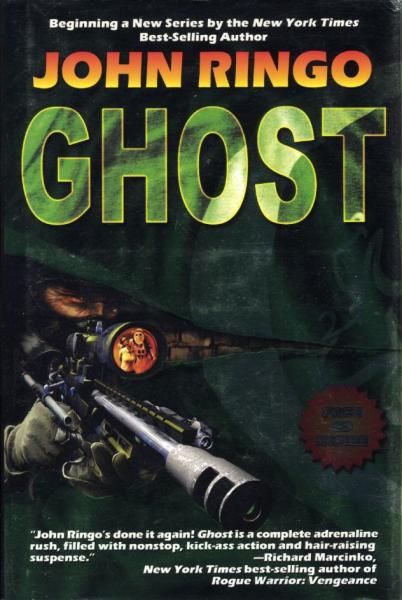
Black Tide Rising opens with a bioengineered plague that turns most of humanity into feral, aggressive threats, following the Smith family as they refit an old sailboat and fight to survive and rebuild some form of civilization from the wreckage. John Ringo's original quartet spawned an extended shared-world series co-written with several collaborators, following other survivor groups through the same collapse. It sits in military-flavored post-apocalyptic SF rather than traditional fantasy.
- War Against the Chtorr
series7 books1983
similar bysurvivalwardarktense+2 more
The War Against the Chtorr is a series of science fiction novels by American writer David Gerrold. The Chtorr series was originally planned as a trilogy, but as the story became more intricate, Gerrold realized that three books would not be enough for him to tell the entire story. For a time, he was uncertain how many books there would be in the end but plans on seven. As of 2022, four books have been completed. As of 2017, a fifth and sixth were in the works, 24 years after the publication of the fourth book.
- Nicholas Seafort
series7 books1994
completed
similar bywarmilitary science fictiontense+1 more
The Seafort Saga is a series of science fiction novels written by American author David Feintuch. The novels are set from the late 22nd century to the mid-23rd century and relate the adventures of Nicholas Seafort, an officer in the (fictional) UNNS| United Nations Naval Service. The series is a collection of personal accounts, usually from the perspective of Nicholas Seafort, describing Seafort's adventures, beginning as a lowly midshipman, to the elected leader of earth, and finally to the captain of the UNNS flagship Olympiad. Although most books in the series are told from a single perspective, usually Seafort's, Voices of Hope is a collection of accounts from several sources: Seafort's son, PT, the son of a friend of Seafort's, and a transient boy named Pook. Additionally, Children of Hope is narrated by Randy Carr, the son of a close friend of Seafort.