More like Paindance
anchored on:dark fantasy
but
- Jerusalem's Lot
series3 books1975
similar bydarkour worldcontemporaryhorror+1 more
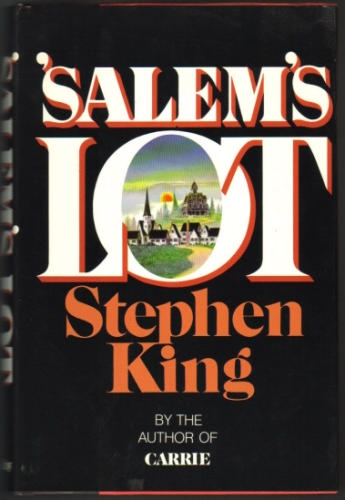
Stephen King's 1975 novel 'Salem's Lot follows writer Ben Mears as he returns to his childhood town of Jerusalem's Lot, Maine, only to discover that its residents are being turned into vampires by a newly arrived stranger. It transplants Gothic vampire horror into a small New England community, tracking that community's collapse under a supernatural siege. It is a single, self-contained novel.
- Necroscope
series26 books1982
completed
similar byundeaddarkcontemporaryhorror+2 more
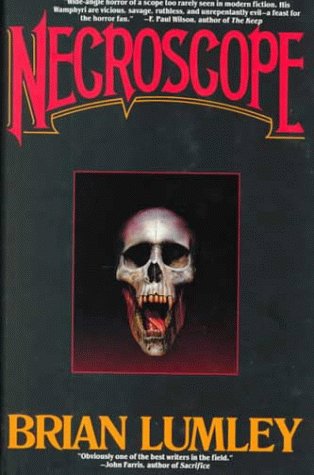
Brian Lumley's Necroscope opens an eighteen-book horror saga (1982-2017) centered on Harry Keogh, a man who can speak with the dead. Harry turns that gift against Thibor Ferenczy, a vampire buried since the Middle Ages, and against Ferenczy's agent Boris Dragosani, a Soviet spy who has learned to tear secrets from corpses in pursuit of world domination. Later volumes follow Harry's descendants and successors through further wars against the vampiric Wamphyri, across sequel trilogies and story collections.
- The Crow
series8 books1996
similar byundeaddarkdark fantasyour worldcontemporary
The Crow is a supernatural superhero comic book series created by James O'Barr revolving around the titular character of the same name. The series focuses on Eric, who is killed along with his fiancée, Shelly, by the group of thugs a year ago, was brought back to life by the supernatural crow, becoming a vengeful undead vigilante to exact revenge against his killers, known as the "Crow". The series, which was originally created by O'Barr as a means of dealing with the death of his fiancée at the hands of a drunk driver, was first published by Caliber Comics in 1989. It became an underground success and was later adapted into a film of the same name in 1994. It was followed by three standalone sequels and a television series. A second adaptation was released in 2024. Numerous books and comic books have also been produced, albeit published by various different companies.
- Anita Blake
series42 books1993
similar bydarkcontemporary+2 more
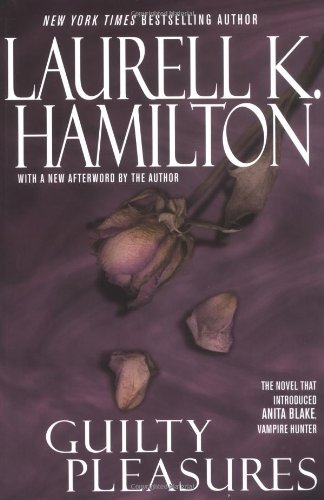
Anita Blake: Vampire Hunter is a series of urban fantasy novels, short stories, and comic books by Laurell K. Hamilton. The books have sold more than six million copies; many have made The New York Times Best Seller list.
- Otherworld (Kelley Armstrong)
series100 books1996
similar byour worldcontemporary
Women of the Otherworld is Kelley Armstrong's long-running urban fantasy series about werewolves, witches, sorcerers, and other supernatural beings trying to pass as ordinary people in the contemporary world, told across thirteen novels plus assorted novellas published between 2001 and 2012. Each book tends to follow a different member of this hidden community while slowly building a shared, continuing world.
- The World of Skulduggery Pleasant
series38 books2007
similar bydark fantasyour worldcontemporary+1 more
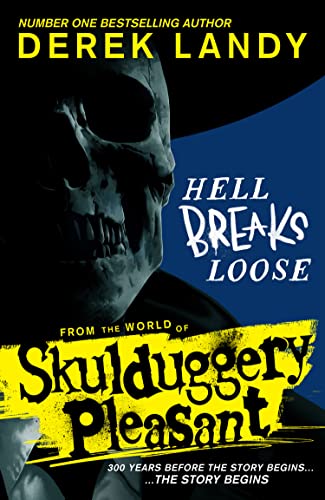
These are standalone companion stories set in Derek Landy's Skulduggery Pleasant world, rather than a numbered sequence of their own. Hell Breaks Loose is a one-off prequel following the skeleton detective Skulduggery on a solo hunt years before the main series begins; The Haunted House on Hollow Hill and A Small Matter of Impending Catastrophe are novellas slotted between the main series' sixteenth and seventeenth books, the former adapted from an audio drama. None require following a separate ongoing plot of their own.
- Dracula
universe144 books1897
Start hereDracula · Start here
similar byhorror
"Come freely. Go safely. And leave something of the happiness you bring" — so the Count greets his guest at the threshold of the Carpathians, and the great door shuts behind. Bram Stoker's Dracula (1897) is the wellspring of the modern vampire: the account of a centuries-old Transylvanian nobleman who quits his crumbling castle for the crowded lodging-houses of London, and the handful of ordinary people — a young solicitor, a doctor of the mad, a professor of stranger learning — who must piece together what he is before he makes the whole city his fold. It is told wholly in fragments: journal entries, letters, telegrams, ships' logs, phonograph cylinders, each hand recording only its own sliver of the dark. Around that single novel a whole crypt of continuations has grown, raised by many writers across a century. Fred Saberhagen's Dracula Sequence hands the Count the microphone, retelling the old events from his own wry, aggrieved lips and following him into later intrigues. Robert Lory's brisk 1970s Dracula Horror Series revives him as a reluctant weapon turned against fouler things; Peter Tremayne's trilogy reaches back along his bloodline; and further sequels, a Quincey Morris spin-off, and Dracula's Children carry the shadow onward. This is a loose shared world built upon a public-domain figure, not one governed continuity — each author remakes him as villain, antihero, or sympathetic narrator. Begin, always, with Stoker's original; the letters and the mounting dread stand entirely on their own. From there follow whichever door tempts you — Saberhagen's The Dracula Tape for the monster's own confession, Lory or Tremayne for tales that never glance back at the Borgo Pass again.
- Dante Valentine
series6 books2006
similar bydarkcontemporary+3 more
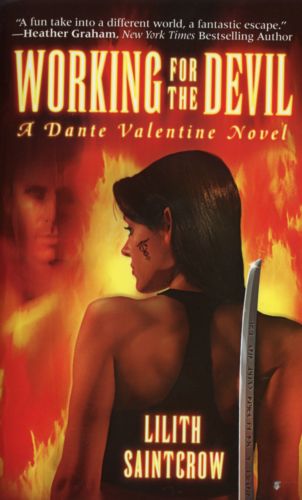
Working for the Devil opens Lilith Saintcrow's Dante Valentine series with Dante, a necromancer-for-hire who reluctantly takes a job from the Devil himself: kill a rogue demon, Vardimal Santino, in exchange for her life. The catch is that Santino isn't something that dies easily, and the job pulls Dante deeper into a world of demons and bargains than she planned for. Saintcrow continues the series through Dead Man Rising, The Devil's Right Hand, Saint City Sinners, and To Hell and Back.
- Felix Castor
series7 books2006
similar bydarkcontemporary+2 more
Mike Carey's Felix Castor novels follow a freelance exorcist working London's supernatural underside, taking paying jobs to banish ghosts and bind demons in a city where the dead don't always stay quiet. The opener, The Devil You Know, sends Castor into a museum haunting that spirals into a hunt by rival ghosts and demons all keen to be the one that finally kills him. Across six books the series mixes hardboiled detective plotting with occult horror.
- Stephen King multiverse
universe46 books1967
Start hereThe Gunslinger · Start here
similar bydark+3 more
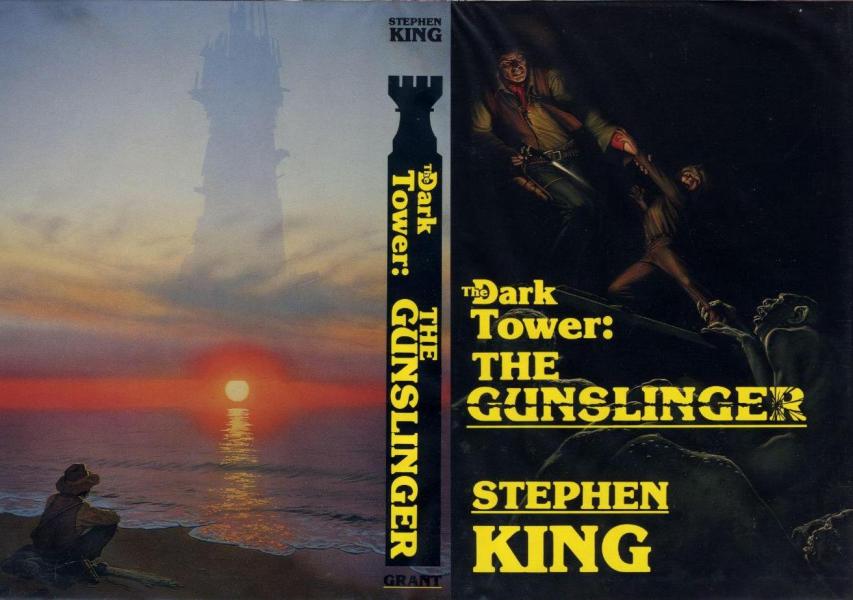
The man in black fled across the desert, and the gunslinger followed. So begins the long walk of Roland Deschain, last of an order of knight-errant pistoleers, across a land that has "moved on" — where the compass points drift, dead machines rot toward sentience, and the weave of what's real wears thin. His quest is the Dark Tower itself: a spire standing at the hub of every world that exists, the linchpin that holds all of them back from ruin. Roland's road runs eight volumes, from The Gunslinger through the closing Dark Tower, with the later, interleaved tale The Wind Through the Keyhole folding a story-within-a-story back into his youth. Along the way he draws a ka-tet — a fellowship bound by fate, not choosing — through doorways between worlds: a heroin-shackled New Yorker, a woman of two minds, a boy who dies twice. The Tower is also the secret axle around which the wider shelf of King's work turns; threads from The Stand, 'Salem's Lot and beyond wind quietly toward it. Expect a mongrel of Western, high fantasy, horror and decayed science fiction, told in a dusty, incantatory dialect all its own — ka, thankee-sai, the world that has moved on. This is King at his most mythic and most personal, a decades-spanning circle that rewards a patient reader. Begin at the beginning: The Gunslinger, then walk forward in publication order. There are other worlds than these — but this door opens first.
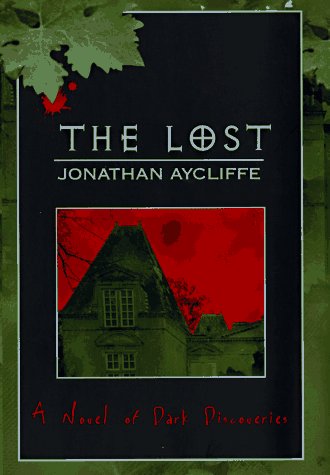
- The Lost
Jonathan Aycliffestandalone novel1996
similar byundeaddarkdark fantasycontemporaryhorror
From the dust jacket flaps of the US HarperPrism first edition: "It all started when the gypsy fortune-teller looked him in the eye - and ran away screaming. Michael was a teacher at a prep school in Cambridge. Barely thirty, he felt immensely old. He was tired of his life, tired of his job, tired of dreary England. An though he didn't know it yet - tired of Sophie and her safe undemanding love. So Michael took a sabbatical and went to Romania, hoping to claim the property his grandparents had abandoned after World War II. He found he was a titled lord, and more - the owner of an ancient stronghold in the Transylvanian Alps, Castel Vlaicu. Thus, Michael Feraru became Count Mihai Vlahuta. It was all a lark; or at most, an adventure. Until the gypsy recognized him - or something about him - in the streets of Bucharest. Until he picked up the doll. And of course, the girl - the unexpected, unexplainable, irresistible dark-eyed girl. At Castel Vlaicu, Michael was to learn of an evil older than time, an evil that reached back to the very origins of his shattered family - and into his own dark future. He was to learn the secret of the strigoï. The undead. Not vampires. Something far, far worse. And far more seductive... The Lost is a novel of dark discoveries, of a man who loses his soul, and more, in the search for his secret destiny. It is a story of passion and horror, and of the doomed love that links the two."
- Michael
Andrea Dean Van Scoyocstandalone novel2006
similar byundeaddarkdark fantasyour worldcontemporaryhorror
"Taylor Carrington has no friends. Very athletic and a member of his college's La Crosse team, no one cares about him. Taylor spends his time in an ancient and abandoned cemetery, called The Lands Down Cemetery. No one buried in the Lands Down Cemetery until Hanson Blakely's interment. Taylor meets a strange young man in the cemetery named Michael Paxton. But what Taylor doesn't know is that Michael is not quite what he...or rather...it...pretended to be the night they met. Michael is not dead, he is not undead...he is more than dead...and he has set his sights on Taylor. Taylor Carrington is in for the battle of his life against a being as old as time itself for his life...his soul...and his body. Can Taylor escape the clutches of the malevolent spirit? How can he defeat an evil that seemingly can't be stopped?" — quoted from this book's ebook product page on Amazon as of 2018-01-30.
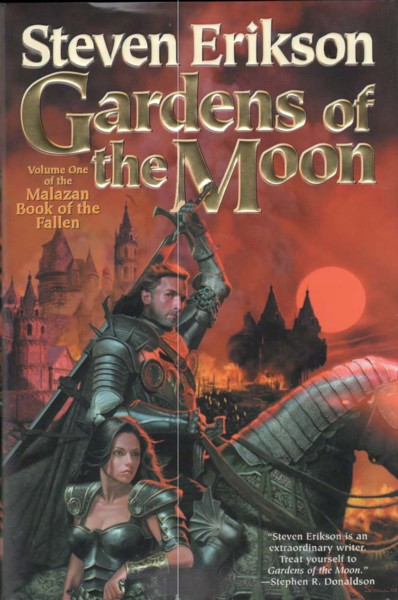
- Malazan Book of the Fallen
series20 books1999
part of Malazan
similar bydarkdark fantasy
The Malazan Book of the Fallen is a series of epic fantasy novels written by the Canadian author Steven Erikson. The series, published by Bantam Books in the U.K. and Tor Books in the U.S., consists of ten volumes, beginning with Gardens of the Moon (1999) and concluding with The Crippled God (2011). Erikson's series presents the narratives of a large cast of characters spanning thousands of years across multiple continents.
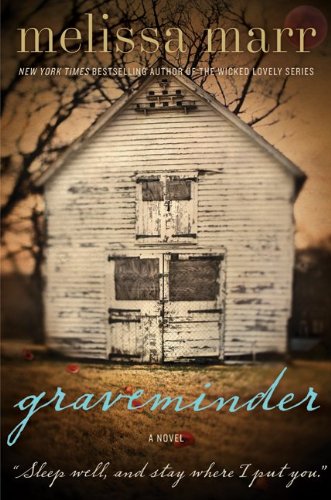
- Graveminder
series6 books2011
similar bycontemporary+3 more
Graveminder is Melissa Marr's 2011 gothic mystery about Rebekkah Barrow, who returns to her hometown of Claysville for her grandmother's funeral and learns she has inherited her grandmother's role as Graveminder, a guardian whose ritual keeps the town's dead properly at rest. When the ritual isn't performed correctly, the dead rise, drawing Rebekkah into a web of secrets alongside Byron Montgomery, the town's Undertaker and her old love interest. It won the 2011 Goodreads Choice Award for horror; Marr later returned to the same small-town premise with Bullets for the Dead and Cursed by Death.
- Weaveworld
Clive Barkerstandalone novel1987
similar bydarkdark fantasyour worldcontemporary
Weaveworld is a 1987 dark fantasy novel by English writer Clive Barker. It is about a magical world, known as the Fugue, which has been hidden inside a carpet to safeguard it from both inquisitive humans and hostile supernatural foes. Two humans become embroiled in the fate of the Fugue, attempting to save it from those who seek to destroy it. The book was nominated in 1988 for the World Fantasy Award for Best Novel.
- Dream Cycle
series26 books1919
similar byhorror+1 more
The Dream Cycle is a series of short stories and novellas by author H. P. Lovecraft (1890–1937). Written between 1918 and 1932, they are about the "Dreamlands", a vast alternate dimension that can only be entered via dreams. The Dreamlands are described as lying deeper than space, matter and time, and are a "limitless vacua beyond all thought and entity".
- Frankenstein
universe128 books1818
Start hereFrankenstein, or, The Modern Prometheus · Start here
similar byhorror
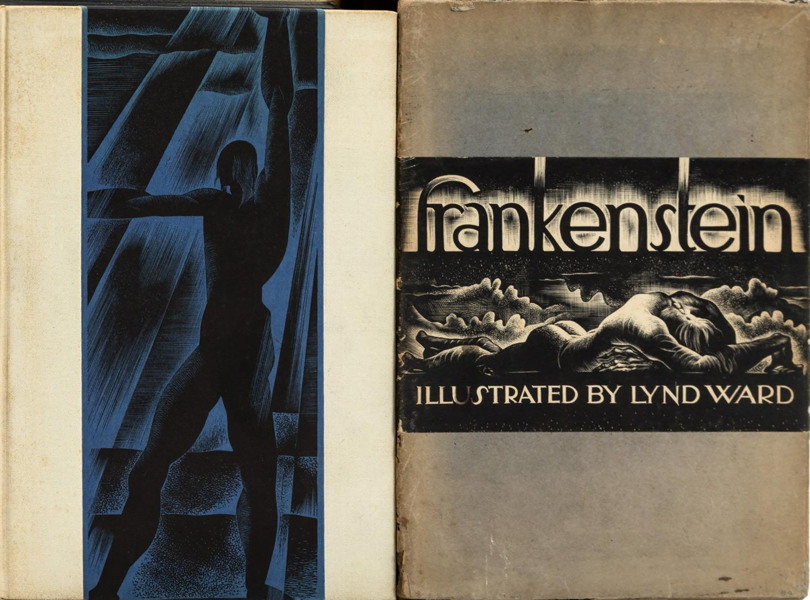
Light a candle against the November dark and consider what a single spark, rightly applied to dead matter, might wake. In a laboratory at Ingolstadt a student named Victor Frankenstein learns the secret of animating lifeless flesh, assembles a being from the harvest of charnel houses and graves, and, at the moment it draws breath, flees the thing he has made. What he abandons does not stay abandoned. This is the world Mary Shelley opened in 1818 with Frankenstein; or, The Modern Prometheus: the story of a maker and his unmothered creation, and the long ruin each works upon the other. Shelley's novel arrives as a nest of confessions, an explorer's letters from the frozen north enclosing Victor's account, which in turn encloses the Creature's own, an articulate and wounded voice that has read Milton and wants only not to be alone. From that single volume two centuries of other hands have built outward, not as one continuity but as a gathering of independent returns to the same fire. Dean Koontz transplants the myth to modern New Orleans across a five-book cycle, Prodigal Son through The Dead Town, where the original Creature, now called Deucalion, hunts a Victor who never died. Donald F. Glut's New Adventures and Frank Schildiner's Quest of Frankenstein run the monster through pulp adventure; the mid-century French novels published as Benoit Becker chase him across a ruined Europe; Scott Sonneborn's Frankenstein Journals and the comic Frankenstein's Aunt turn the legend toward younger and lighter readers. What binds them is the question the book asks and never settles: which is the monster, the forsaken creature who kills, or the man whose ambition and cowardice made and abandoned him? Expect little comfort and few clean villains; the abiding note is grief, sublime and articulate, set against Alpine ice and candlelit hubris. Begin where it began, with Shelley's own novel; the later cycles reward you only once you have heard the Creature speak for himself.
- Horns
Joe Hillstandalone novel2010
similar bydarkdark fantasyour worldcontemporaryhorror
WorldCat: After his childhood sweetheart is brutally killed and suspicion falls on him, Ig Parrish goes on a drinking binge and wakes up with horns on his head, hate in his heart, and an incredible new power which he uses in the name of vengeance.