More like Panacea
anchored on:contemporaryscience fictionthriller & suspense
but
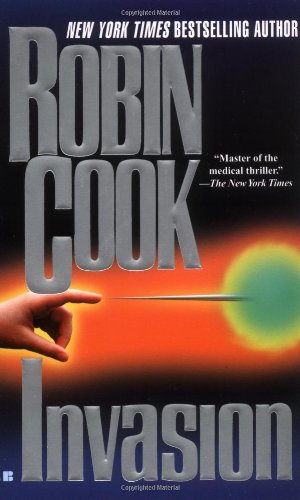
- Invasion
Robin Cookstandalone novel1997
similar bycontemporarygenetic engineeringour worldscience fictionthriller & suspensetense+1 more
Earth is bombarded from space by small disks which, in addition to having powerful physical armaments, when handled activate latent viral DNA which causes humans to mutate into alien beings; a small group recognize the danger and attempt to develop a biological counterweapon.
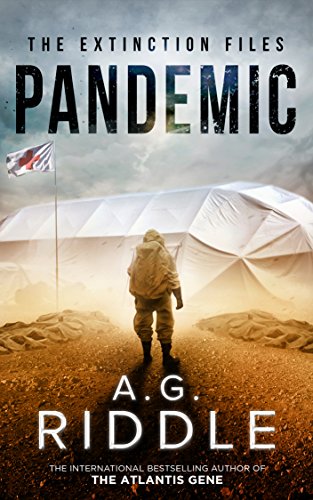
- The Extinction Files
series2 books2017
similar bycontemporarygenetic engineeringplague and pandemicour worldscience fictionthriller & suspensetense
- Kairos
series11 books1962
completed
similar byscience fiction+2 more
The Time Quintet is a science fantasy series of five young adult novels written by American author Madeleine L'Engle and made up of A Wrinkle in Time (1962), A Wind in the Door (1973), A Swiftly Tilting Planet (1978), Many Waters (1986), and An Acceptable Time (1989).
- Robert Langdon
series6 books2000
similar bycontemporarythriller & suspensemysterioustense
The Robert Langdon novel series is named after Robert Langdon, the protagonist of the novels by American author Dan Brown. Langdon is portrayed as a Harvard University professor of religious iconology and symbology, a fictional field related to the study of historic symbols, which is not methodologically connected to the actual discipline of semiotics. Brown's novels that feature the lead character also include historical themes and Christianity as motifs, and as a result have generated controversy. Brown states on his website that his novels are not anti-Christian, and that he is on a "constant spiritual journey" himself.
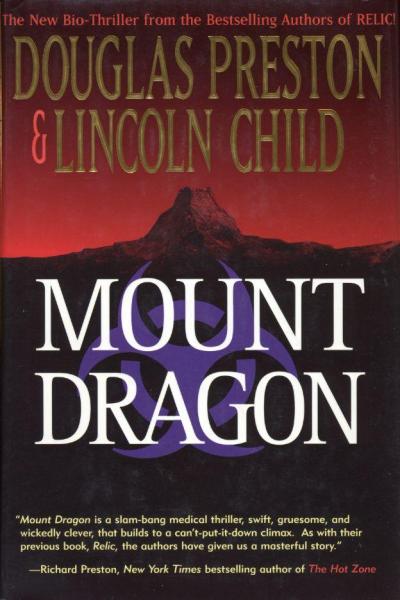
- Mount Dragon
Lincoln Child & Douglas Prestonstandalone novel1996
similar bycontemporarygenetic engineeringplague and pandemicour worldscience fictionthriller & suspensetense
A tech tycoon recruits a scientist to perfect a genetically engineered vaccine against all strains of influenza, but when he discovers a disastrous flaw he becomes the target of multiple attacks.
- Joe Ledger
series63 books2008
part of Night
similar bycontemporaryour worldthriller & suspensetense+1 more
Jonathan Maberry's Joe Ledger series follows a former cop turned special operative for a black-ops unit fighting bioterrorism threats that routinely turn out to be supernatural or genetically monstrous, beginning with Patient Zero and its zombie-outbreak plot. Later books widen the threats to rogue AI, genetic supersoldiers, and other high-concept horrors, with numerous other authors contributing spin-off novellas and short fiction to the same continuity. The series sits within a wider connected universe of Maberry's horror-thriller fiction.
- Ender Wiggin
series14 books1977
part of Ender's Game Universe
similar byscience fiction+1 more
Orson Scott Card's Ender's Game (1985, expanded from his 1977 novella) follows child prodigy Andrew "Ender" Wiggin as he is recruited into a military training program built to prepare Earth's defenses for an anticipated third war against an insectoid alien species known as the Formics. The saga continues years later through Speaker for the Dead and Xenocide, following an older Ender as he confronts the moral weight of his role in that earlier conflict, and concludes the core arc in Children of the Mind, with Ender in Exile filling in the years between the first two books. Set within the wider Ender's Game universe, the series shifts from military coming-of-age story to slower, more philosophical science fiction as it progresses.
- The Andromeda Strain
series2 books1969
similar bycontemporaryplague and pandemicscience fictiontense+1 more
Michael Crichton's 1969 novel The Andromeda Strain follows a team of scientists racing to contain a lethal extraterrestrial microorganism that crash-lands in Arizona, told in the clinical, document-driven style that helped establish the techno-thriller genre. Daniel H. Wilson's authorized 2019 sequel The Andromeda Evolution revisits the same threat five decades later. Together the two books form a two-part outbreak story separated by a fifty-year gap in publication.
- WWW Trilogy
series3 books2009
similar bycontemporaryour worldscience fiction+1 more
The WWW Trilogy is a trilogy of science-fiction novels by Canadian science fiction author Robert J. Sawyer. The first book, Wake, was originally serialized in four parts in Analog Science Fiction and Fact from November 2008 to March 2009, published in book form through Ace on April 7, 2009, and was followed by the second book, Watch, on April 6, 2010. Wonder was published in 2011.
- The Origin Mystery
series3 books2013
similar bygenetic engineeringour worldscience fictiontensecontemporary+2 more
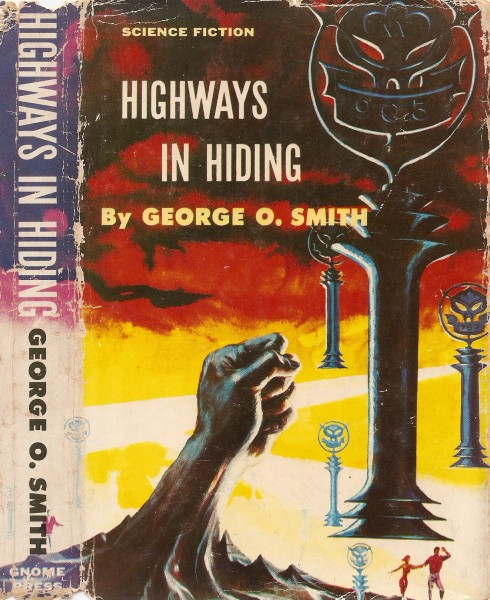
- Highways in Hiding
George O. Smithstandalone novel1956
similar byplague and pandemicour worldscience fictionthriller & suspensemysterioustense
From the back cover of the first Lancer printing: "Quest impossible - Someone had stolen an important part of Steve Cornell's life. It was bad enough when his fiancee vanished. It was infinitely worse when everyone in the world insisted it couldn't have happened the way he knew it had. In a world where ESP and telepathy were normal, it was difficult to keep secrets. But Steve's search for his missing sweetheart brought him to the threshold of one of the greatest secrets of all time. And it was obvious that somebody would stop at nothing to keep him from uncovering it. What were the oddly sinister symbols along the otherwise ordinary roads? What was behind the spreading plague called Mekstrom's Disease? Why were there "blank" spots where telepathy didn't work? Who was the elusive enemy with powers even beyond those ESP had bestowed on mankind? And, most important of all... could Steve find that enemy before they made him vanish too?"
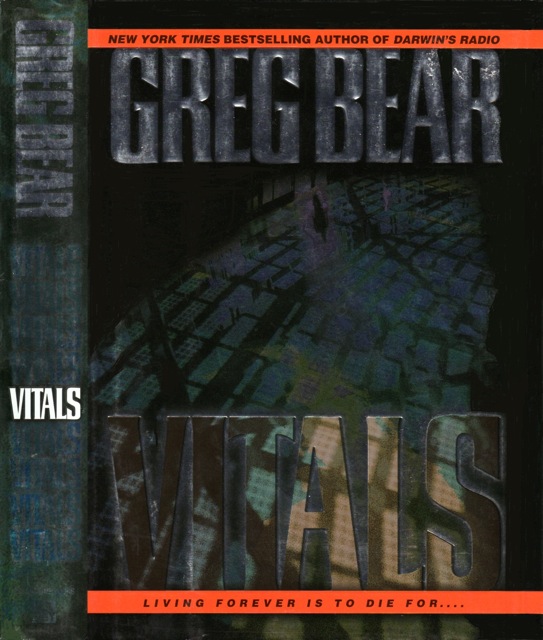
- Vitals
Greg Bearstandalone novel2002
similar bycontemporarygenetic engineeringour worldscience fictionthriller & suspensetense
From the flaps of the Del Rey first edition: "Hal Cousins is one of a handful of scientists nearing the most sought after discovery in human history: the key to short-circuiting the aging process. Fueled by a wealth of research, an overdose of self-confidence, and the money of influential patrons to whom he makes outrageous promises, Hal experiments with organisms living in the hot thermal plumes in the ocean depths. But as he journeys beneath the sea, his other world is falling apart. Across the country, scientists are being inexplicably murdered - including Hal's identical twin brother, who is also working to unlock the key to immortality. Hal himself barely eludes a cold-blooded attack at sea, and when he returns home to Seattle, he finds himself walking into an eerie realm where voices speak to him from the dead ... where a once-brilliant historian turned crackpot is leading him on a deadly game of hide-and-seek ... and where the beautiful, rich widow of his twin is more than willing to pick up the pieces of Hal's life-and take him places he's never been before. Suddenly Hal is trapped inside an ever-twisting maze of shocking revelations. For he is not the first person to come close to ending aging forever - and those who came before him will stop at nothing to keep the secret to themselves. Now every person on earth is at risk of being made an unsuspecting player in one man's spectacular and horrifying master plan. From the bottom of Russia's Lake Baikal to a billionaire's bionic house built into the cliffs of the Washington seashore, from the darkest days of World War II and the reign of Josef Stalin to the capitalist free-for-all that is the United States, Vitals tells an astounding tale of the most unimaginable scientific secret of all - exposed by the quest for immortality itself..."
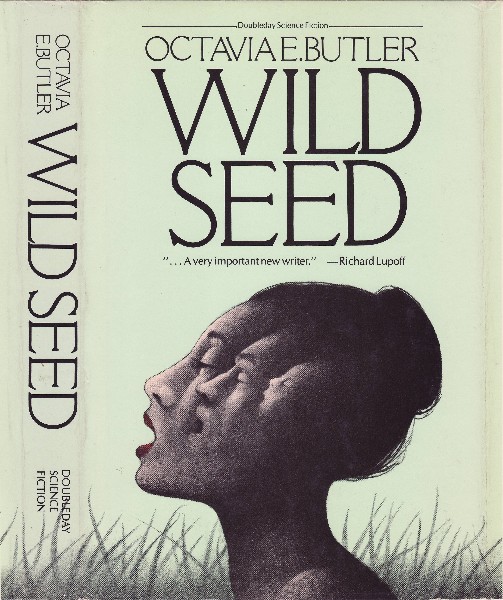
- Patternist
series6 books1976
completed
similar bygenetic engineeringscience fiction+2 more
The Patternist series is a group of science fiction novels by Octavia E. Butler that detail a secret history continuing from the Ancient Egyptian period to the far future that involves telepathic mind control and an extraterrestrial plague. A profile of Butler in Black Women in America notes that the themes of the series include "racial and gender-based animosity, the ethical implications of biological engineering, the question of what it means to be human, ethical and unethical uses of power, and how the assumption of power changes people."
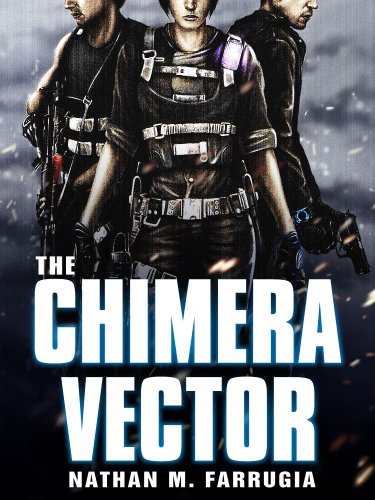
- The Fifth Column (Nathan M. Farrugia)
series4 books2012
similar byscience fictiontensethriller & suspensecontemporary+3 more
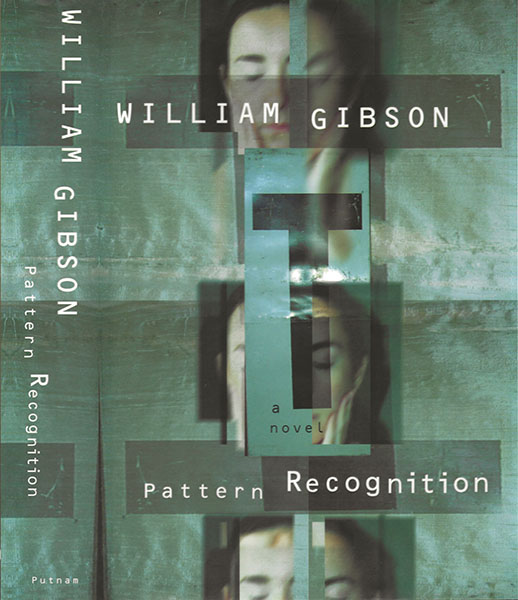
- The Blue Ant Trilogy
series3 books2003
similar bycontemporarymysteriousscience fictionthriller & suspense+2 more
Hubertus Bigend is a fictional character appearing in the third trilogy of novels of science fiction and literary author William Gibson. Bigend is the antihero of Gibson's Pattern Recognition (2003), Spook Country (2007) and Zero History (2010). In an interview Gibson says "I've always had a sense of Bigend as someone who presents himself as though he knows what's going on, but who in fact doesn't. It's just my sense of the subtext of the character: he's bullshitting himself, at the same time as he's bullshitting all of us."
- Deception Point
Dan Brownstandalone novel2001
similar bycontemporaryour worldthriller & suspensemysterioustense+1 more
Deception Point is a 2001 mystery-thriller novel by American author Dan Brown. It is Brown's third novel. It was published by Simon & Schuster.
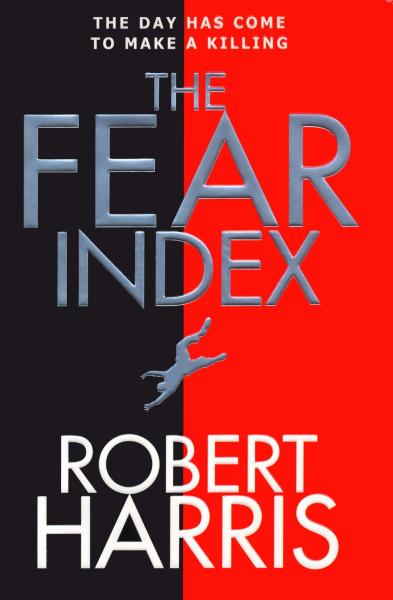
- The Fear Index
Robert Harrisstandalone novel2011
similar bycontemporaryour worldscience fictionthriller & suspensemysterioustense
A computer designed for stock trading becomes sentient.
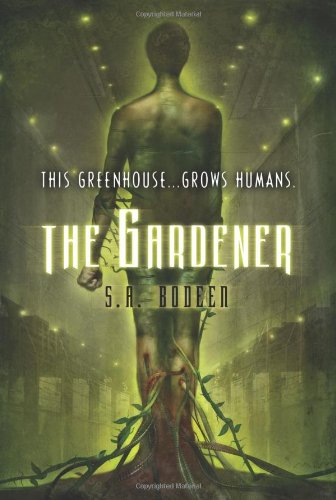
- The Gardener
S. A. Bodeenstandalone novel2010
similar bycontemporarygenetic engineeringour worldscience fictionthriller & suspensemysterioustense
When high school sophomore Mason finds a beautiful but catatonic girl in the nursing home where his mother works, the discovery leads him to revelations about a series of disturbing human experiments that have a connection to his own life.
- The White Plague
Frank Herbertstandalone novel1982
similar bygenetic engineeringplague and pandemicour worldscience fictiontense+1 more
The White Plague is a 1982 science fiction novel by American author Frank Herbert about an engineered disease which kills only women. It was nominated for a best science fiction novel Locus Award in 1983.
- Darwin
series2 books1999
completed
similar bygenetic engineeringplague and pandemicscience fictiontense+1 more
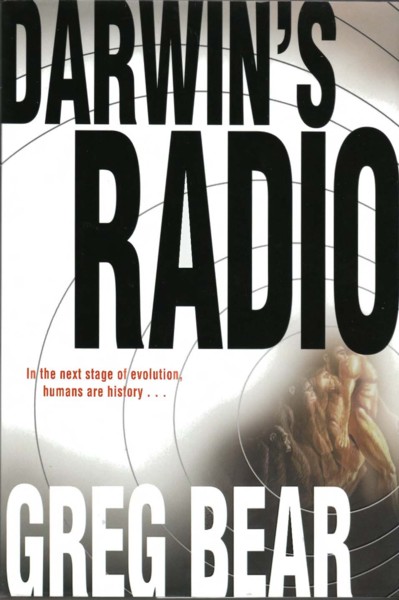
Greg Bear's Darwin's Radio imagines a dormant retrovirus in human DNA activating worldwide, triggering an accelerated leap in human evolution that governments respond to as a plague. The 1999 novel won the Nebula Award; its sequel Darwin's Children follows the first generation of changed children as society decides what to do with them. Together they're speculative near-future science fiction grounded in genetics rather than space opera.
- Firestarter
Stephen Kingstandalone novel1980
similar bycontemporaryscience fictionthriller & suspensetense+1 more
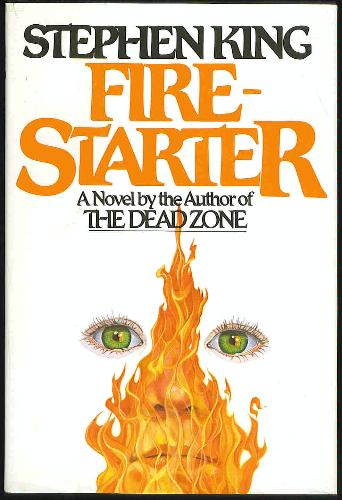
WorldCat: Innocence and beauty ignite with evil and terror... First, a man and a woman are subjects of a top-secret government experiment designed to produce extraordinary psychic powers. Then, they are married and have a child. A daughter. Early on the daughter shows signs of a wild and horrifying force growing within her. Desperately, her parents try to train her to keep that force in check, to 'act normal'. Now the government wants its brainchild back for its own insane ends.