More like Paradise Lost
anchored on:science fiction
but
- Pandora
series4 books1966
similar byscience fictionother star systemsfar futuresurvival+3 more
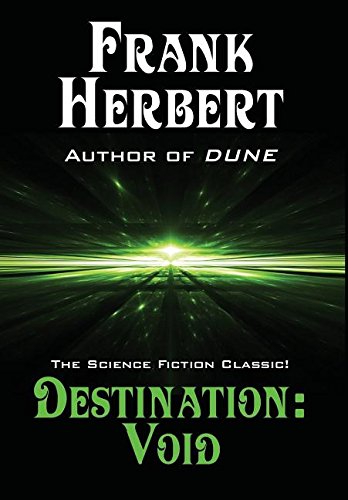
The Pandora Sequence opens with Frank Herbert's solo novel Destination: Void, in which a starship crew must jury-rig a working artificial consciousness after their vessel's control systems fail. Bill Ransom co-writes the three novels that follow, carrying the survivors to the world Pandora, where they must contend with both a manipulative machine intelligence and the planet's own hostile ecology. Across its four books the series moves from a claustrophobic ship-bound crisis to a generations-long struggle over faith, control, and survival on a dangerous new world.
- Company Wars
series7 books1981
part of Alliance-Union Universe
similar byscience fictionfar futuretense+2 more
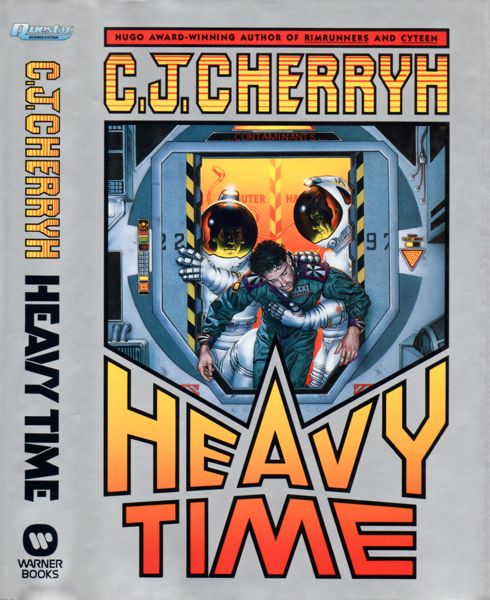
Company Wars gathers the novels C. J. Cherryh set during the breakaway conflict between Earth's colonial Company and the newly independent Union, within her wider Alliance-Union future history. Anchored by the Hugo Award-winning Downbelow Station, the books follow different ships, stations, and crews caught on either side, from merchanter traders to military spacers, rather than a single continuing cast. Read in any order, they build up a picture of the political and economic pressure that reshapes Cherryh's larger Alliance-Union universe.
- West of the Sun
Edgar Pangbornstandalone novel1953
similar byspace colonizationscience fictionother star systemsfar futuresurvival+2 more
From the back cover of the Dell first paperback printing: "After eleven years in space the Argo landed... West of the Sun ... on the dangerous planet Lucifer. The crew faced and untamed world of huge carnivorous birds with wolverine heads and flashing black teeth; furred, ten-foot tall men; red-skinned man-eating pygmies. They fought for mere survival but - their duty was to colonize and populate the planet - four men and only two women."
- Dune
series20 books1963
part of Dune Universe
similar byscience fictionother star systemsfar future+2 more
Frank Herbert's Dune Chronicles opens with 1965's Dune, set on the desert planet Arrakis where House Atreides takes control of the only source of the vital spice melange and young Paul Atreides is pulled into a struggle over its politics and religion. Herbert carried the story forward across five further novels — Dune Messiah, Children of Dune, God Emperor of Dune, Heretics of Dune, and Chapterhouse: Dune — following Paul's line over the following millennia, before Brian Herbert and Kevin J. Anderson later extended the saga. Many other editions of these six novels are omnibus and box-set repackagings rather than separate stories.
- Cities in Flight
series10 books1950
completed
similar byspace colonizationscience fictionfar future+2 more
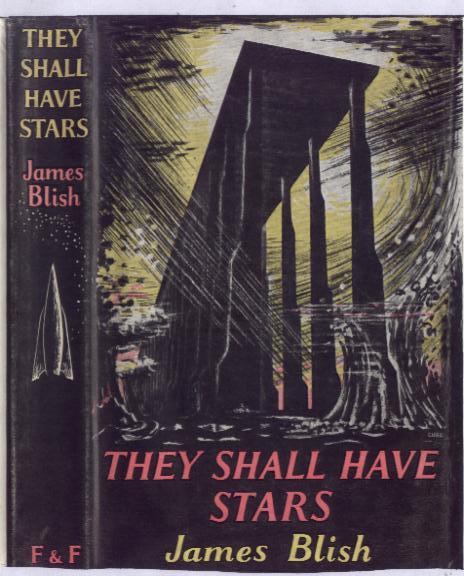
Cities in Flight is a four-volume series of science fiction novels and short stories by American writer James Blish, originally published between 1950 and 1962, which were first known collectively as the "Okie" novels. The series features entire cities that are able to fly through space using an anti-gravity device, the spindizzy. The stories cover roughly two thousand years, from the very near future to the end of the universe. One story, "Earthman, Come Home", won a Retro Hugo Award in 2004 for Best Novelette. Since 1970, the primary edition has been the omnibus volume first published in paperback by Avon Books. Over the years James Blish made many changes to these stories in response to points raised in letters from readers.
- Patternist
series6 books1976
completed
similar byscience fictiondark+3 more
The Patternist series is a group of science fiction novels by Octavia E. Butler that detail a secret history continuing from the Ancient Egyptian period to the far future that involves telepathic mind control and an extraterrestrial plague. A profile of Butler in Black Women in America notes that the themes of the series include "racial and gender-based animosity, the ethical implications of biological engineering, the question of what it means to be human, ethical and unethical uses of power, and how the assumption of power changes people."
- Dark Eden (Chris Beckett)
series4 books1992
similar byscience fictionother star systemsfar future+5 more
Chris Beckett's Dark Eden opens the Eden trilogy, following a small, deeply inbred community of descendants from a stranded spaceship crew as they struggle to survive on a lightless rogue planet. Mother of Eden and Daughter of Eden continue the story as the society Beckett introduces begins to fracture and spread.
- To the Stars (Harrison)
series3 books1980
completed
similar byscience fictionother star systemsfar futuretense+3 more
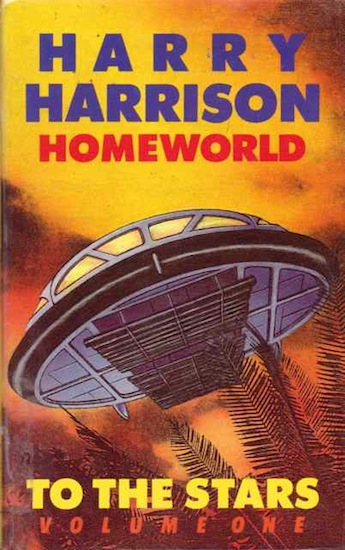
The To the Stars trilogy is a series of science fiction novels by Harry Harrison, first published in 1980 (Homeworld) and 1981. The three books were re-published in an omnibus edition in 1981.
- Heorot
series4 books1987
similar byspace colonizationscience fictionother star systemsfar future+2 more
Larry Niven, Jerry Pournelle and Steven Barnes's The Legacy of Heorot strands human colonists on an idyllic-seeming alien world where they discover apex predators -- grendels -- hidden beneath the surface, forcing them to fight for survival. Beowulf's Children continues the colony a generation later as the children born on the planet clash with their parents over how to live alongside the grendels, and a fourth book, Starborn and Godsons, returns to the settlement decades further on. It's hard-SF creature-horror crossed with generational colony drama.
- Flood
series6 books2008
similar byscience fictionsurvival+5 more
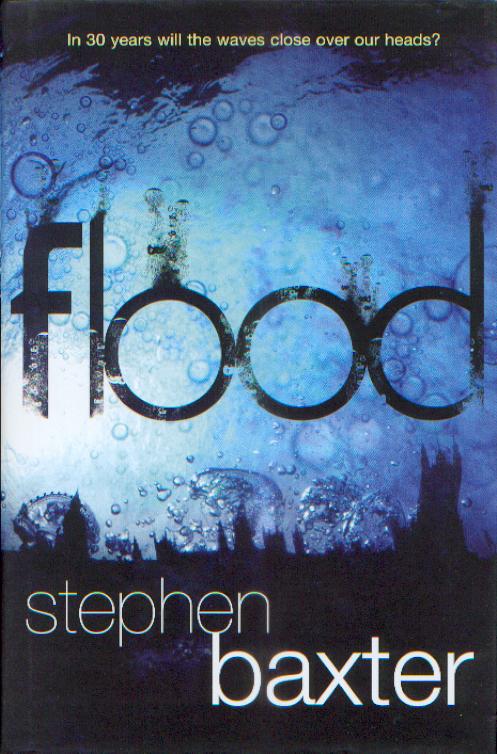
In Stephen Baxter's Flood, sudden seismic upheaval releases immense reservoirs of water trapped deep beneath Earth's crust, and sea levels begin climbing far faster than anyone can adapt to, forcing a handful of survivors to watch coastlines and then continents disappear. The 2009 sequel, Ark, follows a parallel thread of people who instead gamble everything on a desperate escape from the drowning planet. Together the two books trace roughly a half-century of civilizational collapse and reinvention as dry land runs out.
- Dune Universe
universe78 books1963
Start hereDune · Start here
similar byscience fictionother star systemsfar future+2 more
Arrakis. Dune. The desert planet, where empire runs on a single substance: the spice melange, which folds space, prolongs life, and unlocks prescience, and which exists nowhere else in the known universe. Frank Herbert's saga is a meditation dressed as an adventure — feudal houses and a secret sisterhood, engineered messiahs and the patient ecology of a world without water, all turning on the terrible gravity of who commands the spice. It reads like scripture and schemes like a war room, ten thousand years hence, among people who have outlawed the thinking machine and made instruments of themselves instead. At its heart stand Herbert's original six — Dune, Dune Messiah, Children of Dune, God Emperor of Dune, Heretics of Dune, Chapterhouse: Dune — a single deepening arc across millennia, arguing the whole way between prophecy and free will. Around that spine his son Brian Herbert and Kevin J. Anderson have raised a vast prequel architecture: Prelude to Dune, tracing the great houses a generation before Paul; Legends of Dune, reaching back to the crusade that broke the machines; the Schools of Dune cycle on the founding of Bene Gesserit, Mentat, and Navigator; the Caladan Trilogy and Heroes of Dune filling years the originals left in shadow. Many hands, dozens of volumes, one desert. What sets Dune apart is its refusal of the simple: religion is manufactured, heroes are hazards, and the sand itself — worm, water, ecology — acts as a political power. Begin where the universe did, with Frank Herbert's Dune (1965), and read the original six in order; you need nothing else to feel the full weight. The prequels are a country to explore afterward, taken by era. Beginnings are delicate times.
- Pax / Astra
series2 books1954
completed
similar byscience fictionfar futuresurvivaltense+3 more
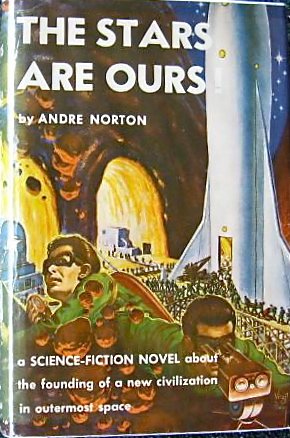
Andre Norton's The Stars Are Ours! (1954) and its sequel Star Born (1957) follow a group of scientists and their families who flee a repressive future Earth to colonize a distant world they name Astra, and then the next generation, who must contend with that world's original inhabitants. Star Flight appears to be a later omnibus or reissue rather than a third original novel.
- Embedded
Dan Abnettstandalone novel2011
similar byspace colonizationscience fictionother star systemsfar futuretense+1 more
The colony planet of Eighty-Six looks as dull as all its fellow new worlds to veteran journalist Lex Falk. But when a local squabble turns violent, and the media get the runaround from the military high command, his interest is seriously piqued. Forbidden from approaching the battlezone, Falk gets himself chipped inside the head of a combat veteran - and uncovers the story of a lifetime.
- Bronson Beta
series5 books1933
similar byscience fictionother star systems+5 more
When Worlds Collide (1933) and its sequel After Worlds Collide (1934), written together by Edwin Balmer and Philip Wylie, follow a small group of survivors who escape a doomed Earth as the rogue planet Bronson Alpha destroys it, landing on its companion world Bronson Beta to begin again. The two novels form a self-contained disaster-and-survival duology.
- Forever War
series10 books1972
similar byscience fictionfar future+3 more
Joe Haldeman's The Forever War (1974) follows a soldier conscripted into a centuries-long interstellar war against the alien Taurans, using relativistic space travel so that months spent in transit correspond to years or decades passing back on Earth. Haldeman later returned to the same conflict in Forever Peace (1997), a thematically connected but separate story, and Forever Free (1999), a direct sequel set years after the original war's end. The first novel won the Hugo, Nebula, and Locus awards and is considered a foundational work of military science fiction.
- Cloud's Rider
C. J. Cherryhstandalone novel1996
similar byspace colonizationscience fictionother star systemsfar futuresurvivaltense+1 more
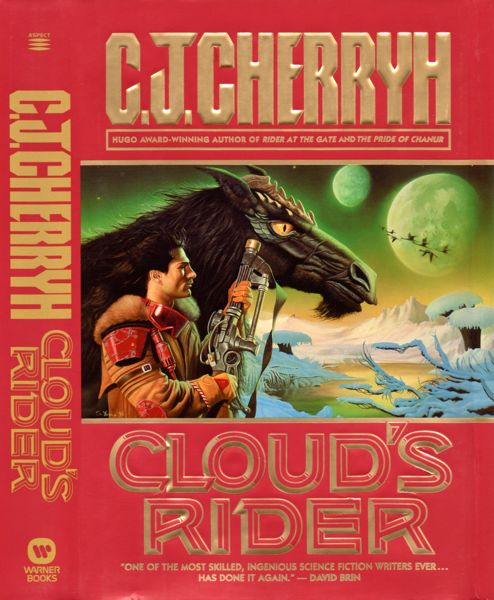
Cloud's Rider is a science fiction novel written by American writer C. J. Cherryh, first published by Warner Books in September 1996. It is the second of a series of two novels written by Cherryh and is set in the author's Finisterre universe. The first book in the series, Rider at the Gate was published in August 1995. The series is about the descendants of lost colonists stranded many generations ago on the hostile planet of Finisterre.
- The Songs of Distant Earth
Arthur C. Clarkestandalone novel1986
similar byspace colonizationscience fictionother star systemsfar futuresurvival+1 more
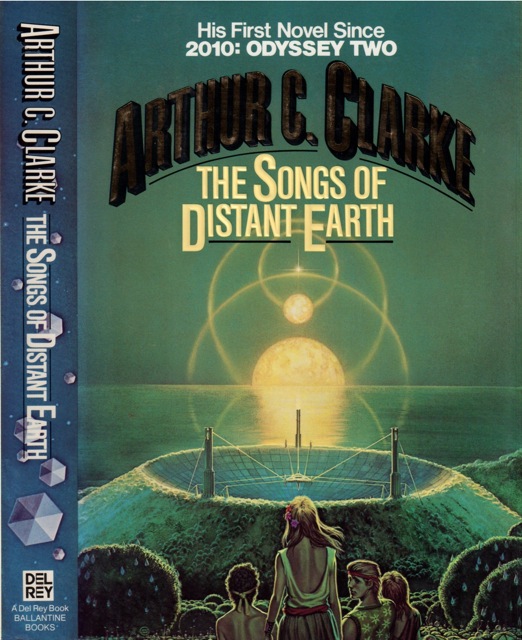
The Songs of Distant Earth is a 1986 science fiction novel by British writer Arthur C. Clarke, based upon his 1958 short story of the same title. Of all of his novels, Clarke stated that this was his favourite. Prior to the publishing of the novel, Clarke also wrote a short step outline with the same title, published in Omni magazine and anthologised in The Sentinel in 1983.
- Urban Monad
series7 books1970
similar byscience fictionfar future+3 more
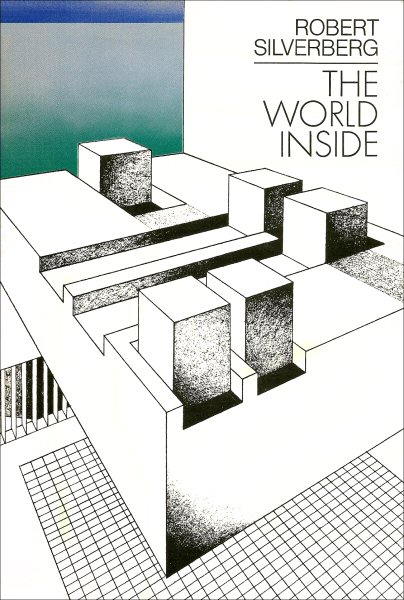
Robert Silverberg's Urban Monad sequence, gathered into the fix-up novel The World Inside (serialized in Galaxy in 1970-71 and a Hugo finalist Silverberg declined), is set inside towering high-rise arcologies -- urban monads -- built to house a wildly overpopulated future Earth. Moving between residents of one tower, the linked stories examine a tightly regulated, sexually permissive society engineered to cope with constant population growth, and the discontent that surfaces underneath it.
- Catteni Sequence
series5 books1970
completed
similar byscience fictionother star systemsfar future+3 more
The Catteni series is a tetralogy of science fiction novels by American writer Anne McCaffrey. In this universe, humans are slaves of aliens, the humanoid Catteni. Woven through all four of the books are details of the relationship between Kristin Bjornsen, a former slave, and Zainal, a renegade Catteni.
- The Seed of Earth
Robert Silverbergstandalone novel1962
similar byspace colonizationscience fictionother star systemsfar futuresurvivaltense+1 more
Back of book: The leaders of Earth intend to spread Mankind throughout the universe, until every habitable planet boasts a human civilization. 60 colony ships leave Earth every day on a one-way trip to the stars. Each ship carries 100 draftees. 6000 a day. 48,000 a week. Two and one half million every year. If your number comes up, one of them is YOU. The Draftees for the planet Osiris are a typical colony group: fifty men and fifty women with little in common, except their courage and determination to make the best of a situation they cannot change. But sacrifice and brave resolve are not enough to save them in their struggle to survive on a hostile new planet. The tiny band of colonists is torn apart by violence, and threatened by an alien menace. They face disaster, unless someone can discover the secret of survival on a world so different from the one they left behind.