More like Paratime Trouble
anchored on:science fictionparallel universemid 20th centurytime travelalternate historypolitical intrigue+1 more
but
- The Merchant Princes
series14 books2004
similar bypolitical intriguetenseparallel universescience fictionalternate historyour world
The Merchant Princes is a science fantasy and alternate history series of nine novels by British writer Charles Stross. In the series, there exist a number of parallel worlds, all of which are on the same geographical Earth but with different societies at different points of development. Members of a certain bloodline can travel between these worlds along with their immediate possessions. The series largely follows Miriam Beckstein, a technology journalist raised in a familiar "normal" Earth, who discovers she was born in a parallel world and is a member of this bloodline. She quickly becomes entangled in political maneuvering and assassination plots with her estranged family. Miriam uses modern technology and investigative journalism to attempt to stay a step ahead.
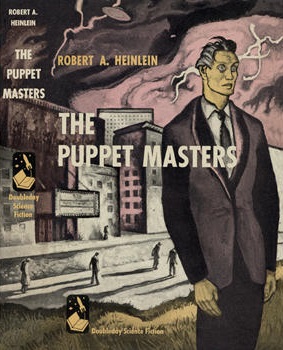
- The Puppet Masters
Robert A. Heinleinstandalone novel1951
similar bytensemid 20th centuryscience fiction+2 more
Parasitical aliens attach themselves to human hosts and take over their bodies. Two spies are sent to find out what's happening, but the extent is much farther than they knew. With access to the humans' memories, the aliens quietly invade the government and start taking over.
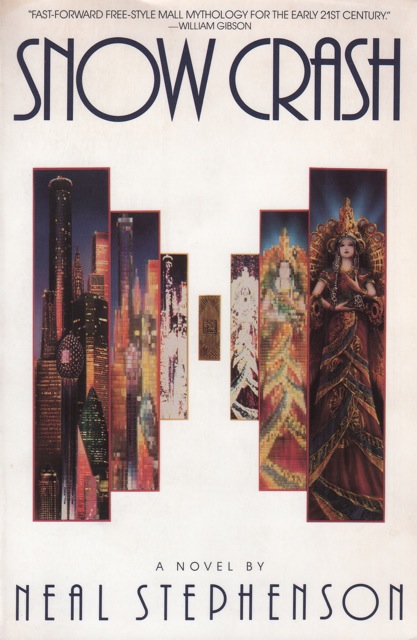
- Snow Crash
Neal Stephensonstandalone novel1992
similar bypolitical intriguetensescience fictionadventurous
Snow Crash is a 1992 science fiction novel by Neal Stephenson. Like many of Stephenson's novels, its themes include history, linguistics, anthropology, archaeology, religion, computer science, politics, cryptography, memetics, and philosophy.
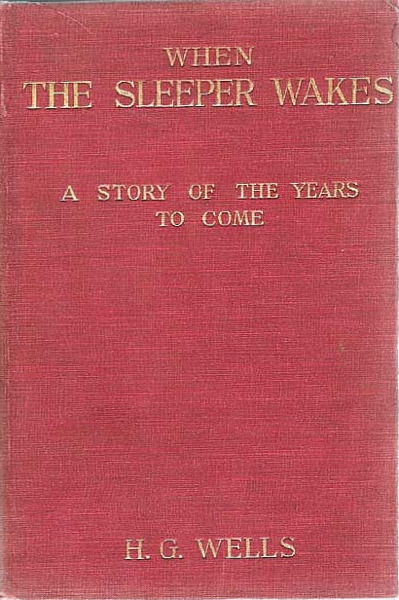
- When the Sleeper Wakes
H. G. Wellsstandalone novel1899
similar bypolitical intriguetensescience fictiontime travelour world
Graham, an insomniac Englishman in 1890s London, takes a course of sleep-inducing drugs and falls into a coma that lasts two centuries. He wakes in the year 2100 to find his investments have compounded, through a ruling body called the White Council, into effective ownership of most of the world's wealth and power, making him, on paper, humanity's master, and in practice, its prisoner, held under guard while the Council governs in his name. A rebel faction led by a man named Ostrog frees him, hoping to use his symbolic authority to spark an uprising against the Council. An early H. G. Wells dystopia about inherited power and manufactured consent.
- Dune
series20 books1963
part of Dune Universe
similar bypolitical intriguescience fiction+1 more
Frank Herbert's Dune Chronicles opens with 1965's Dune, set on the desert planet Arrakis where House Atreides takes control of the only source of the vital spice melange and young Paul Atreides is pulled into a struggle over its politics and religion. Herbert carried the story forward across five further novels — Dune Messiah, Children of Dune, God Emperor of Dune, Heretics of Dune, and Chapterhouse: Dune — following Paul's line over the following millennia, before Brian Herbert and Kevin J. Anderson later extended the saga. Many other editions of these six novels are omnibus and box-set repackagings rather than separate stories.
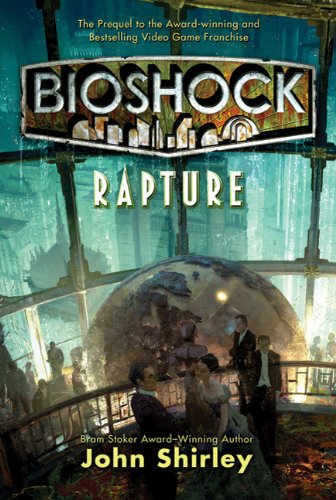
- Bioshock: Rapture
John Shirleystandalone novel2011
similar bypolitical intriguetensemid 20th centuryscience fiction
BioShock: Rapture is a 2011 science fiction novel written by John Shirley, published by Tor Books in the United States and by Titan Books in the United Kingdom. Rapture forms part of the BioShock retrofuturistic media franchise created by Ken Levine and published by 2K Games and developed by several studios, including Irrational Games and 2K Marin. A prequel to the first BioShock game the novel tells the story of how Andrew Ryan founded the underwater city of Rapture. The book follows multiple BioShock characters. The cover art was designed by Craig Mullins, who also produced the cover art for BioShock 2. It was released July 19, 2011.
- Destiny Times Three
Fritz Leiberstandalone novel1945
similar bypolitical intriguetensemid 20th centuryscience fictionalternate history+1 more
Destiny Times Three is an alternate timeline 1945 science fiction novel by American writer Fritz Leiber. It first appeared in Astounding Science Fiction in March and April 1945. In 1952 it featured in Five Science Fiction Novels published by Gnome Press. Its first appearance as a standalone novel came in 1957 when published by Galaxy Science Fiction Novels.
- The Moon Is a Harsh Mistress
Robert A. Heinleinstandalone novel1966
similar bypolitical intriguescience fictionadventurous+1 more
A technician discovers that the massive computer that operates everything on Luna (a prison colony) has become self-aware. He befriends it, but when he accompanied a beautiful girl to a dissident meeting, he encounters people who want to throw off the yoke of their Earth rulers.
- Small Change
series4 books2006
similar bypolitical intriguetensemid 20th centuryalternate historyscience fiction
The Small Change trilogy is a series of alternate history thriller novels by the author Jo Walton that were published from 2006 to 2008. The series are set in a Europe in which the United Kingdom exits World War II in 1941. As the series begins, Britain itself slides toward fascism. The series has three books:Farthing Tor Books August 8, 2006, ISBN 0-7653-1421-5, ISBN 978-0-7653-1421-5 Ha'penny, Tor Books; Reprint edition July 1, 2008, ISBN 0-7653-5808-5, ISBN 978-0-7653-5808-0 Half a Crown, Tor Books; September 30, 2008, ISBN 0-7653-1621-8, ISBN 978-0-7653-1621-9
- Fatherland
Robert Harrisstandalone novel1992
similar bypolitical intriguetensemid 20th centuryalternate history
Twenty years after Nazi Germany won the Second World War, Berlin is preparing to celebrate Adolf Hitler's seventy-fifth birthday when detective Xavier March is called to investigate a body pulled from a lake, ostensibly an accident, but one that leads him to a string of suspiciously staged deaths among senior Nazi officials. Ordered off the case by the Gestapo but quietly told to keep going by his own superior, March teams up with an American journalist, Charlie Maguire, and starts following a trail toward Swiss bank accounts and a secret the regime has spent two decades burying. Robert Harris's alternate-history debut novel.
- Janissaries
series4 books1979
similar bypolitical intriguetensescience fictionadventurous
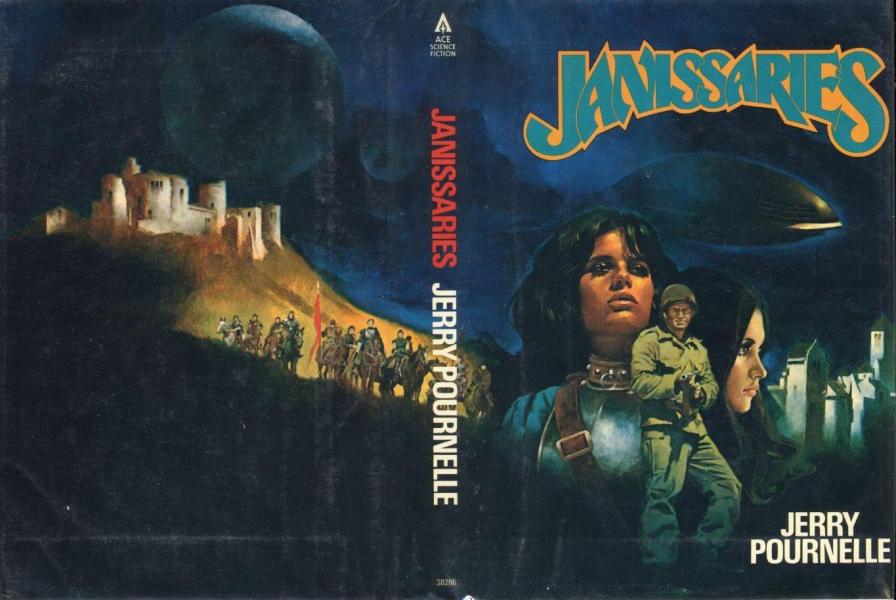
Janissaries are an American series of military and political-based science fiction novels are set in an interstellar confederation of races, in which humans are a slave race entrusted with military affairs and law enforcement. They were written by Jerry Pournelle, with Roland J. Green co-authoring the second two books.
- The Apollo Murders
Chris Hadfieldstandalone novel2021
similar bypolitical intriguetensemid 20th centuryadventurousalternate history
The Apollo Murders is a 2021 alternate history, thriller novel by Canadian retired astronaut and writer Chris Hadfield. It was first published in October 2021 in the United States by Little, Brown and Company, and in the United Kingdom by Quercus. The book is Hadfield's debut novel, and is the first in his Apollo Murders series, followed later by The Defector in 2023 and Final Orbit in 2025. Hadfield had previously published three non-fiction books, his first being his autobiography, An Astronaut's Guide to Life on Earth (2013).
- Dune Universe
universe78 books1963
Start hereDune · Start here
similar bypolitical intriguescience fiction+1 more
Arrakis. Dune. The desert planet, where empire runs on a single substance: the spice melange, which folds space, prolongs life, and unlocks prescience, and which exists nowhere else in the known universe. Frank Herbert's saga is a meditation dressed as an adventure — feudal houses and a secret sisterhood, engineered messiahs and the patient ecology of a world without water, all turning on the terrible gravity of who commands the spice. It reads like scripture and schemes like a war room, ten thousand years hence, among people who have outlawed the thinking machine and made instruments of themselves instead. At its heart stand Herbert's original six — Dune, Dune Messiah, Children of Dune, God Emperor of Dune, Heretics of Dune, Chapterhouse: Dune — a single deepening arc across millennia, arguing the whole way between prophecy and free will. Around that spine his son Brian Herbert and Kevin J. Anderson have raised a vast prequel architecture: Prelude to Dune, tracing the great houses a generation before Paul; Legends of Dune, reaching back to the crusade that broke the machines; the Schools of Dune cycle on the founding of Bene Gesserit, Mentat, and Navigator; the Caladan Trilogy and Heroes of Dune filling years the originals left in shadow. Many hands, dozens of volumes, one desert. What sets Dune apart is its refusal of the simple: religion is manufactured, heroes are hazards, and the sand itself — worm, water, ecology — acts as a political power. Begin where the universe did, with Frank Herbert's Dune (1965), and read the original six in order; you need nothing else to feel the full weight. The prequels are a country to explore afterward, taken by era. Beginnings are delicate times.
- The Coming of the Quantum Cats
Frederik Pohlstandalone novel1986
similar bypolitical intriguetenseparallel universescience fiction+1 more
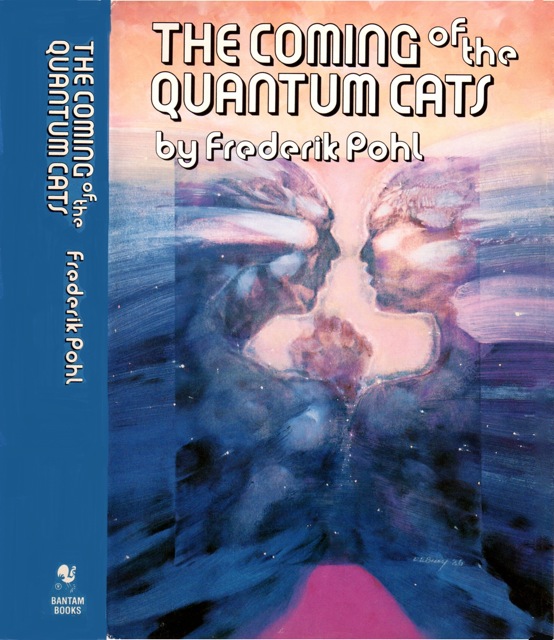
The Coming of the Quantum Cats is a 1986 science fiction novel by American writer Frederik Pohl. It was originally serialized in Analog science-fiction magazine, January–April 1986.
- Double Star
Robert A. Heinleinstandalone novel1956
similar bypolitical intriguescience fictionadventurous+1 more
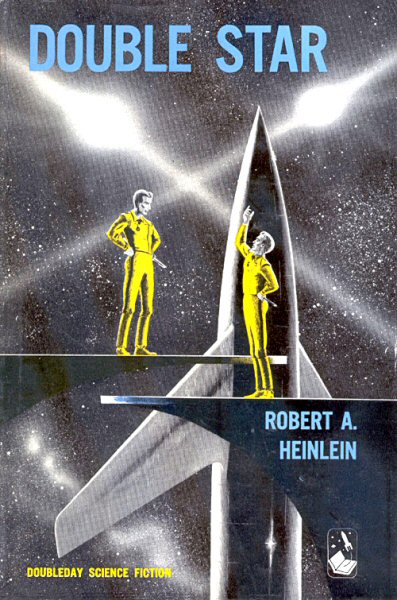
Lorenzo Smythe, the excellent yet unemployed actor, meets Dak Broadbent in a bar. Broadbent hires Lorenzo for an unspecified role, and hustles him onto a rocket ship. Broadbent turns out to be an assistant to the famous interplanetary politician and leader of the Expansionist party: John J. Bonforte. Bonforte, however, has been kidnapped by the political opposition on Mars, and due to Lorenzo's physical similarity to Bonforte, his staff wants Lorenzo to impersonate the politician for an important Martian ceremony.
- Chanur
series7 books1982
part of Alliance-Union Universe
similar bypolitical intriguetensescience fictionadventurous
The Chanur novels are a series of five science fiction novels, forming three separate stories, written by American author C. J. Cherryh and published by DAW Books between 1982 and 1992. The first novel in the series is The Pride of Chanur (1982), which was nominated for both the Hugo and Locus Awards in 1983. The Pride of Chanur, originally a stand-alone story, was followed by the Chanur's Venture trilogy, Chanur's Venture (1984), which was shortlisted for a Locus Award in 1985; The Kif Strike Back (1985) and Chanur's Homecoming (1986). These were followed by a later sequel, Chanur's Legacy (1992). The five novels were also published in two omnibus editions: the first three in The Chanur Saga in 2000 and the next two in Chanur's Endgame in 2007.
- Galactic Milieu
series10 books1981
completed
similar bytensescience fiction+4 more
Galactic Milieu is a series of science fiction novels by Julian May. It is linked to her previously published series, the Saga of Pliocene Exile; and through the fantastical device of time-travel, acts as both a prequel and a sequel to this earlier series. The "Galactic Milieu" of the title is an interplanetary federation, and Earth's membership of it is a central plot concern.
- Honor Harrington
series14 books1993
part of Honorverse
similar bypolitical intriguetensescience fiction+1 more
David Weber's Honor Harrington novels follow the title character's rise through the Manticoran navy in the 'Honorverse,' a space-opera setting built around Age-of-Sail-style naval combat, interstellar politics and a decades-long war between rival star nations. Beginning with On Basilisk Station, the core series runs to fourteen books, alongside spin-off subseries, prequels and shared-world anthologies also set in the Honorverse. It's one of the longest-running modern military science fiction series, published by Baen.
- The Masks of Time
Robert Silverbergstandalone novel1968
similar bypolitical intriguetensescience fictiontime travelour world
From the back cover of the Ballantine first edition: "The year is 1999. The century is about to turn. The civilized world is prosperous but tense with fear about the still existing possibility of a major war. While in the large area that used called "underdeveloped" there is a hysterical conviction that the world will cone to an end with the arrival of the new century Into this explosive situation floats a creature calling himself Vornam-19 - and claiming to be a visitor from 1000 years in the future... The world is ready, indeed ripe, for a sign, an omen, a new cult. But no one realizes exactly what Vornaa-19 is in his own right."
- The Black Cloud
Fred Hoylestandalone novel1957
similar bytensemid 20th centuryscience fictionour world+1 more
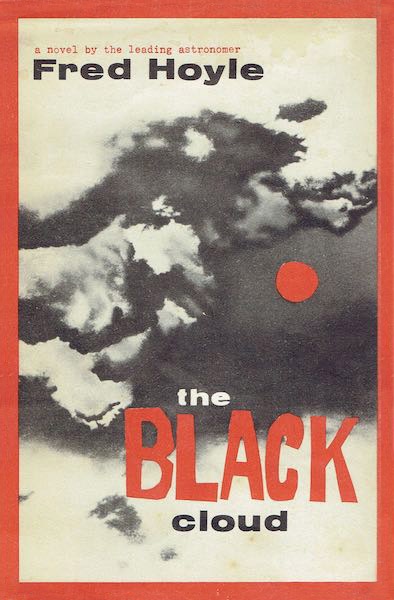
The Black Cloud is a 1957 science fiction novel by British astrophysicist Fred Hoyle. It details the arrival of an enormous cloud of gas that enters the Solar System and appears about to destroy most of the life on Earth by blocking the Sun's radiation.
- Ender's Shadow
series5 books1999
part of Ender's Game Universe
similar bypolitical intriguetensescience fiction
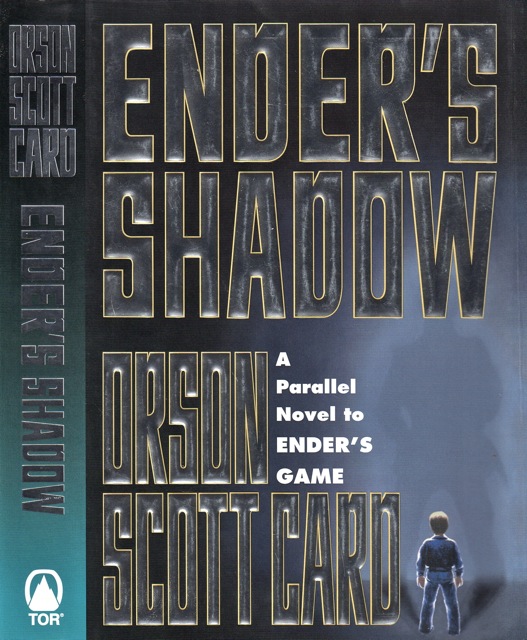
Orson Scott Card's Ender's Shadow retells the events of Ender's Game from the perspective of Bean, a physically stunted but ferociously intelligent street child recruited into the same Battle School program as Ender Wiggin. It launches the Shadow series, which follows Bean and other secondary Battle School characters into the political aftermath of the Formic Wars back on Earth, running parallel to and eventually past the timeline of Card's main Ender Quintet.
- The Tranquillity Alternative
series3 books1988
similar bypolitical intriguetensemid 20th centuryscience fictionalternate history+1 more
- Wolfling
Gordon R. Dicksonstandalone novel1969
similar bypolitical intriguetensescience fictionadventurous
From the flaps of the Baen/SFBC edition: "Is Earth merely the lost colony of a superior race? - She was well over six feet tall, and beautiful in a sculpted, abstract way. She had skin the color of white onyx, and her eyes... her eyes were large and feline - a startling lemon yellow in color. She was the Princess Afuan, one of the High-born, and she had chosen the Earthman Kim Keil to return to the Throne World with her - for she had decided that his performance in the bull-ring might amuse the Emperor. She didn't know that Jim was a bull-fighter only by virtue of six months' intensive training, nor that the bull was programmed - his behavior following and impressively fierce but unswerving pattern. Jim was just another wolfling to Afuan - a lesser being from a backward colony world. Jim, however, was keenly aware that he was playing a role, one which might prove to be extremely dangerous. Up until 10 years earlier, when their first ship had reached Alpha Centauri, the people of Earth hadn't even known that the vast Empire of human-occupied worlds existed. The discovery had been a profound shock. Had we evolved independently? Or were we merely descendants of the Empire's first space pioneers - a lost colony found at last, perhaps with devastating consequences? That's what Jim Keil had to find out. Chosen from among numerous highly qualified candidates - an anthropologist trained, mentally and physically, beyond the limits of his profession - it was his mission to observe the Throne World and the High-born... to determine whether or not they posed a threat to Earth. One thing was apparent from the start. The High-born were superior beings - physically taller and stronger than other humans, endowed with faster reflexes, superior mental capacity... and extraordinary technological resources. Their contempt for the new wolfling in their midst was open, their intrigues complex. An enormous gulf separated the people of the Throne World from Earthlings. But that gulf was not so wide that Jim couldn't recognize an enemy when he met one. Clearly, if he remained merely a passive observer of the High-born, he'd never survive among them."
- Maurai
series6 books1959
completed
similar bypolitical intriguescience fictionour world+3 more
The Maurai series is a series of short stories and a novel by Poul Anderson set in a resource depleted, post-apocalyptic earth several centuries in the future. The series is named after its most frequent protagonists, citizens of the Maurai Federation. The Maurai dominate the Pacific and Indian Oceans. Fearful of the social and ecological implications of a return to large-scale industrial society, they use their considerable might and covert resources to prevent other nations from developing nuclear power.