More like Passages
anchored on:science fictionfar futurespace explorationspace
but
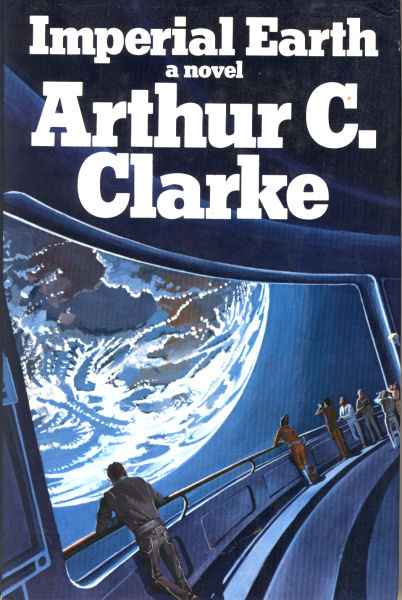
- Imperial Earth
Arthur C. Clarkestandalone novel1975
similar byscience fictionreflectivespace explorationfar futurespace
Imperial Earth is a science fiction novel by British writer Sir Arthur C. Clarke, published in 1975 by Gollancz Books. The plot follows the protagonist, Duncan Makenzie, on a trip to Earth from his home on Titan, in large part as a diplomatic visit to the U.S. for its quincentennial in 2276, but also to have a clone of himself produced. The book was published in time for the U.S. bicentennial in 1976.
- The City and the Stars
Arthur C. Clarkestandalone novel1956
similar byscience fictionreflectivespace explorationfar futureother star systems
The City and the Stars is a science fiction novel by British writer Arthur C. Clarke, published in 1956. This novel is a complete rewrite of Clarke's earlier Against the Fall of Night, his first novel, which had been published in Startling Stories magazine in 1948 after being rejected by the editor of Astounding Science-Fiction, according to the author.
- Hainish
series33 books1964
completed
similar byscience fictionreflectivefar futureother star systems+2 more
The Hainish Cycle consists of a number of science fiction novels and stories by Ursula K. Le Guin. The cycle is set in a future history that features civilizations of human beings on planets orbiting a number of nearby stars, including Terra ("Earth"); these humans are contacting each other for the first time and establishing diplomatic relations, as well as setting up a confederacy under the guidance of the oldest of the human worlds, the peaceful planet Hain. In this history, human beings did not evolve on Earth, but they were instead the result of interstellar colonies planted by Hain in the distant past, after which interstellar travel ceased for an extended period. Some of the human races have new genetic traits, a result of ancient Hainish experiments in genetic engineering; this includes people who can dream while awake, and a world of hermaphroditic people who only enter active sexuality once per month, not knowing which sex will manifest in them. In keeping with Le Guin's narrative approach, she uses varied social and environmental settings to explore the anthropological and sociological outcomes of human evolution in those environments. The author often discounted the characterization of a so-called "Hainish Cycle".
- Starborne
Robert Silverbergstandalone novel1996
similar byscience fictionspace explorationfar futurespaceother star systems+3 more
Starborne is a 1996 science fiction novel by American writer Robert Silverberg, an expansion of his 1973 story "Ship-Sister, Star-Sister."
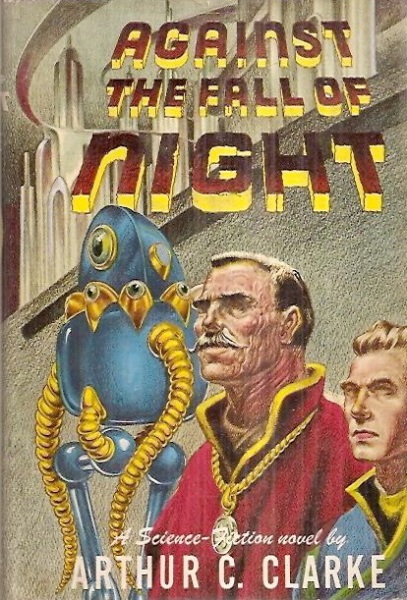
- Against the Fall of Night
series2 books1953
similar byscience fictionreflectivespace explorationfar futureother star systems
Against the Fall of Night is Arthur C. Clarke's 1953 novel of a stagnant, climate-controlled city called Diaspar a billion years in Earth's future, where a young man named Alvin becomes the first in living memory to want to leave it. Clarke later rewrote the book more expansively as The City and the Stars, and in 1990 Gregory Benford wrote Beyond the Fall of Night, an authorized sequel continuing on from this original, shorter version's ending.
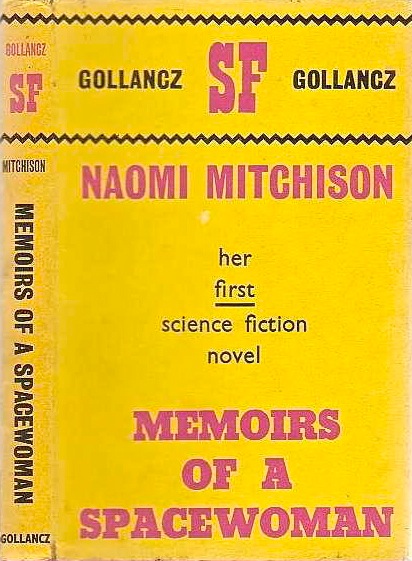
- Memoirs of a Spacewoman
Naomi Mitchisonstandalone novel1962
similar byscience fictionreflectivespace explorationfar futurespacealiensother star systems
Memoirs of a Spacewoman is a science fiction novel by Scottish novelist and poet Naomi Mitchison published in 1962 by Victor Gollancz Ltd.
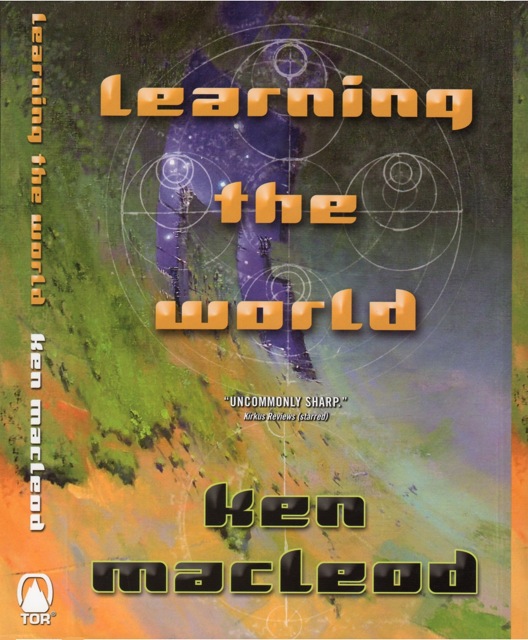
- Learning the World
Ken MacLeodstandalone novel2005
similar byscience fictionreflectivespace explorationfar futurespacealiensother star systems
From the front flap of the Tor first printing: "Humanity has spread to every star within 500 light-years of its half-forgotten origin, coloring the sky with a haze of habitats. Societies rise and fall. Incautious experiments burn fast and fade. On the fringes, less modified humans get on with the job of settling a universe that has, so far, been empty of intelligent life. The ancient starship But the Sky, My Lady! The Sky! is entering orbit around a promising new system after a four hundred year journey. For its long-lived inhabitants, the centuries have been busy. Now a younger generation is eager to settle the system. The ship is a seed-pod ready to burst. Then they detect curious electromagnetic emissions from the system's Earth-like world. As the nature of the signals becomes clear, the choices facing the humans become stark. On Ground, second world from the sun, a young astronomer searches for his system's outermost planet. A moving point of light thrills, then disappoints him. It's only a comet. His physicist colleague Orro takes time off from trying to invent a flying-machine to calculate the comet's trajectory. Something is very odd about that comet's path. They are not the only ones for whom the world has changed. "We are not living in the universe we thought we lived in yesterday. We have to start learning the world all over again.""
- A Meeting with Medusa
series2 books1971
similar byscience fictionreflectivespace explorationfar futurespacealiensother star systems
Arthur C. Clarke's A Meeting with Medusa follows an astronaut, badly injured in an earlier disaster, on a solo balloon expedition into Jupiter's atmosphere, where he encounters vast floating lifeforms unlike anything previously catalogued. Decades later, Stephen Baxter and Alastair Reynolds continued the story in The Medusa Chronicles, following the same protagonist across a much longer span of future history. The original novella won the 1972 Nebula Award.
- Ringworld
series5 books1970
part of Known Space
similar byscience fictionspace explorationfar futurespacealiensother star systems
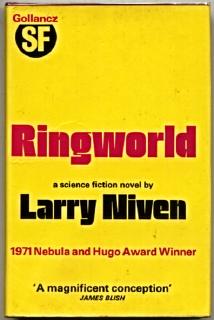
The Ringworld series is a series of science fiction novels written by American author Larry Niven. It is part of his Known Space series of stories. Its backdrop is the Ringworld, a giant artifact 3 million times the surface area of Earth circling a star. The series is composed of four standalone science fiction novels, the original award-winning book and its three sequels:1970: Ringworld 1979: The Ringworld Engineers 1996: The Ringworld Throne 2004: Ringworld's Children
- Variable Star
Robert A. Heinlein & Spider Robinsonstandalone novel2006
similar byscience fictionspace explorationfar futurespace+2 more
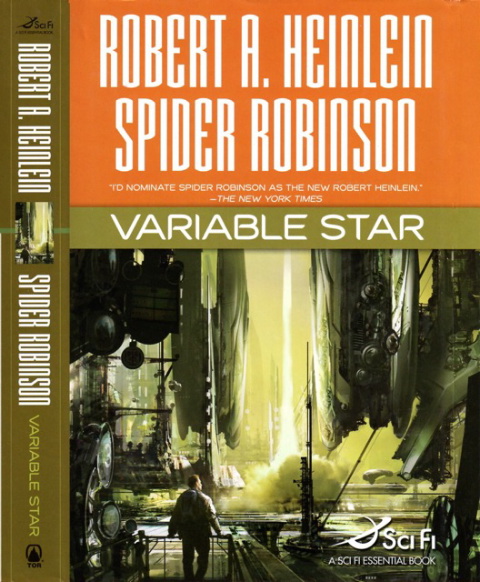
Variable Star is a 2006 science fiction novel by American author Spider Robinson, based on the surviving seven pages of an eight-page 1955 novel outline by Robert A. Heinlein, who died in 1988. The book is set in a divergent offshoot of Heinlein's Future History and contains many references to works by Heinlein and other authors. It describes the coming of age of a young musician who signs on to the crew of a starship as a way of escaping from a failed romance. Robinson posted a note on his website in 2009 noting that his agent had sold a trilogy of sequels based on the novel and its characters.
- The Man in the Maze
Robert Silverbergstandalone novel1969
similar byscience fictionreflectivefar futurepsychic powersother star systems+2 more
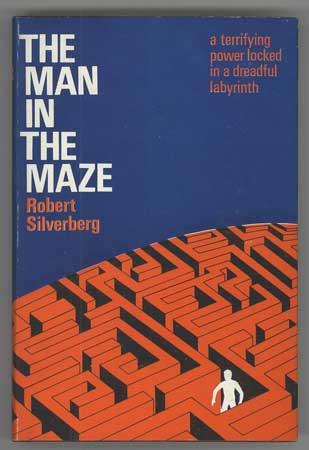
The Man in the Maze is a science fiction novel by American writer Robert Silverberg, originally serialized in the magazine Worlds of If in April and May 1968, and published in bookstores the following year. It tells the tale of a man rendered incapable of interacting normally with other human beings by his uncontrollable psychic abilities. The novel is inspired by Sophocles' play Philoctetes, with the roles of Odysseus, Neoptolemus and Philoctetes played by Boardman, Rawlins, and Muller, respectively.
- Ender Wiggin
series14 books1977
part of Ender's Game Universe
similar byscience fictionfar futurealiensother star systems+2 more
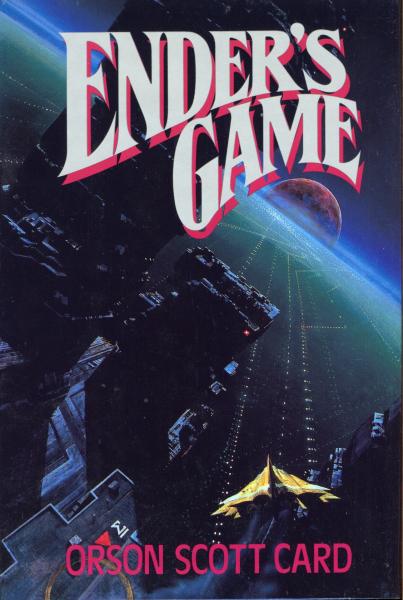
Orson Scott Card's Ender's Game (1985, expanded from his 1977 novella) follows child prodigy Andrew "Ender" Wiggin as he is recruited into a military training program built to prepare Earth's defenses for an anticipated third war against an insectoid alien species known as the Formics. The saga continues years later through Speaker for the Dead and Xenocide, following an older Ender as he confronts the moral weight of his role in that earlier conflict, and concludes the core arc in Children of the Mind, with Ender in Exile filling in the years between the first two books. Set within the wider Ender's Game universe, the series shifts from military coming-of-age story to slower, more philosophical science fiction as it progresses.
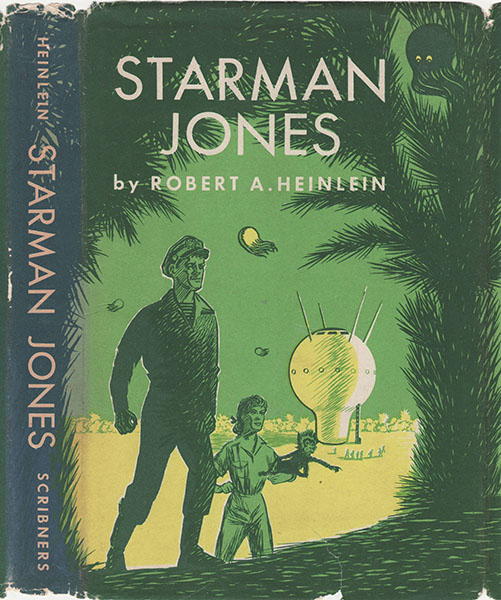
- Starman Jones
Robert A. Heinleinstandalone novel1953
similar byscience fictionspace explorationfar futurespaceother star systems+1 more
Starman Jones, a 1953 science fiction novel by Robert A. Heinlein, features a farm boy who wants to go to the stars. Charles Scribner's Sons published the book as part of the Heinlein juveniles series.
- Dune
series20 books1963
part of Dune Universe
similar byscience fictionfar futureother star systems+2 more
Frank Herbert's Dune Chronicles opens with 1965's Dune, set on the desert planet Arrakis where House Atreides takes control of the only source of the vital spice melange and young Paul Atreides is pulled into a struggle over its politics and religion. Herbert carried the story forward across five further novels — Dune Messiah, Children of Dune, God Emperor of Dune, Heretics of Dune, and Chapterhouse: Dune — following Paul's line over the following millennia, before Brian Herbert and Kevin J. Anderson later extended the saga. Many other editions of these six novels are omnibus and box-set repackagings rather than separate stories.
- David Ryerson
series2 books1958
completed
similar byscience fictionspace explorationfar futurespace+1 more
The Enemy Stars follows the crew of a faster-than-light survey ship stranded far from home after their matter-transmission drive is damaged, forced to keep the vessel and each other going across a voyage that will outlast some of them. Poul Anderson's 1959 novel was originally serialized as We Have Fed Our Sea-, a title drawn from Kipling. It stands alone rather than part of a series; David Ryerson is one of the ship's crew.
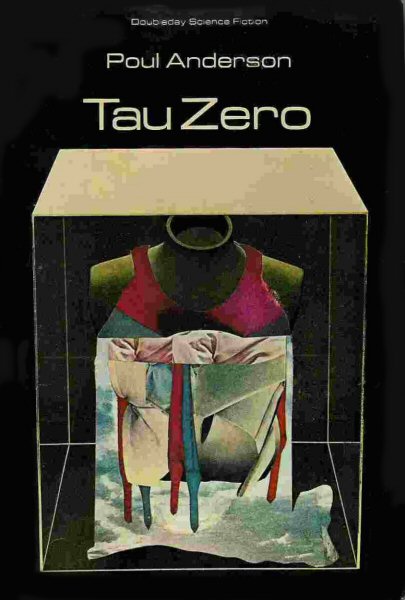
- Tau Zero
Poul Andersonstandalone novel1970
similar byscience fictionreflectivespace explorationfar future
During an epic voyage to a planet 30 light years away, the engines of the starship the 'Leonora Christine' are damaged. Unable to slow down, it attains light speed (the tau zero of the title). The disparity between time for those on board and external time becomes impossibly great. Eons and galaxies hurtle by, as the crew speed helplessly into the great unknown.
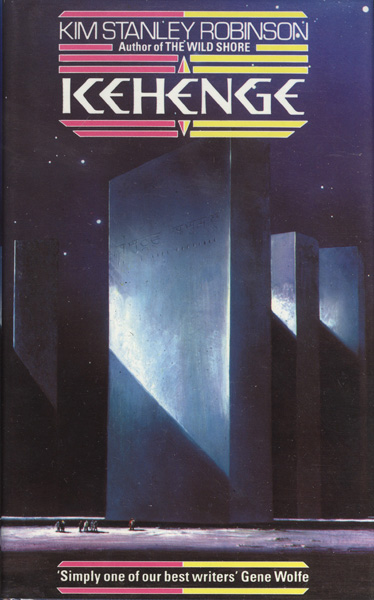
- Icehenge
Kim Stanley Robinsonstandalone novel1984
similar byscience fictionreflectivespace explorationfar future+1 more
Icehenge unfolds in three parts, narrated years or centuries apart by different investigators piecing together the same facts. The first is the diary of Emma Weil, an engineer swept into a Martian revolution in 2248, conscripted onto a rebel starship fitted for a voyage beyond the solar system, and forced to decide how far her sympathy for the uprising extends. Generations later, other narrators pick up the thread of what became of her and the ship, drawn toward a stone monument on a moon of Pluto that should not exist. An early standalone novel by Kim Stanley Robinson, revisiting the Martian-revolution material he later expanded into the Mars trilogy.
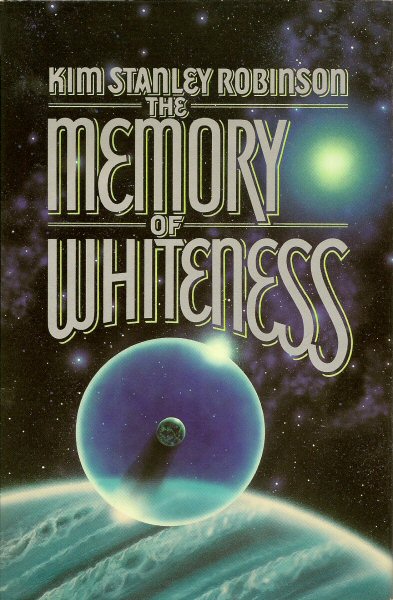
- The Memory of Whiteness
Kim Stanley Robinsonstandalone novel1985
similar byscience fictionreflectivespace explorationfar futurespace+1 more
The Memory of Whiteness is a science fiction novel by Kim Stanley Robinson, published in September 1985.
- Downward to the Earth
Robert Silverbergstandalone novel1969
similar byscience fictionreflectivefar futurealiensother star systems+1 more
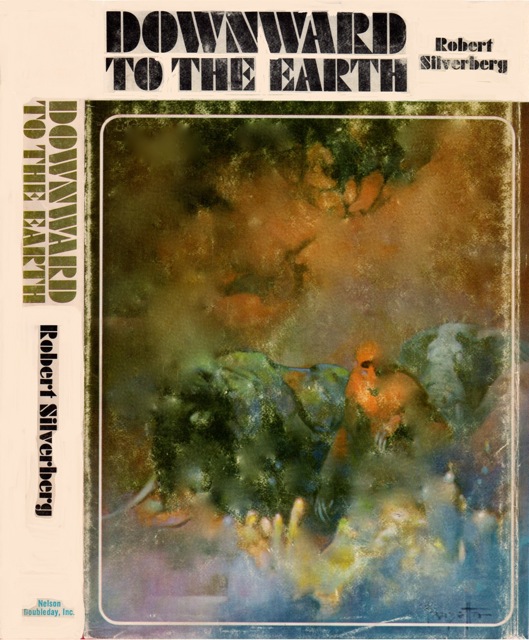
Edmund Gunderson was the Terran administrator of the colony world of Belzagor, and he returns to it after it has gained independence, feeling a sense of guilt for the way he has treated its dominant species, the elephant-like nildoror, whose animalistic appearance had kept Gunderson from taking them seriously as sentient beings. On his return, he feels a new sense of kinship with the natives, perhaps more than for the Terran tourists. The nildoror undergo a process of rebirth, and Gunderson's greatest guilt comes from having denied rebirth to seven nildoror to make them help him repair flood damage.(From Wikipedia)
- Heechee
series19 books1972
completed
similar byscience fictionspace explorationfar futurespacealiensother star systems
The Heechee Saga, also known as the Gateway series, is a series of science fiction novels and short stories by Frederik Pohl. The Heechee are an advanced alien race that visited the Solar System hundreds of millennia ago and then mysteriously disappeared. They left behind bases containing artifacts, including working starships, which are discovered and exploited by humanity.
- Star Maker
series9 books1937
completed
part of Last Men Universe
similar byscience fictionfar future+3 more
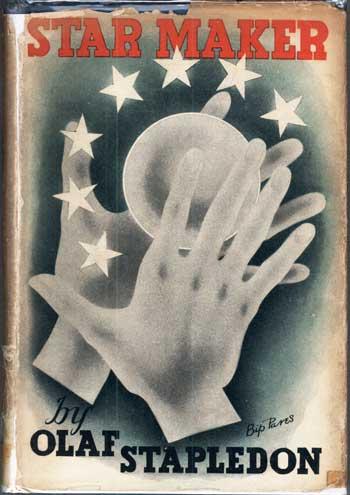
Star Maker (1937) is Olaf Stapledon's cosmic philosophical novel, tracing the rise and fall of civilizations across the universe as it builds toward questions about creation, unity, and the nature of the Star Maker behind it all, expanding the scope of his earlier Last and First Men. It is paired here with Nebula Maker, a related manuscript Stapledon wrote in the 1930s between those two novels but which went unpublished until its rediscovery in 1976, alongside a handful of shorter pieces. Together they sit within Stapledon's last-men-universe of linked visionary future histories.
- Neverness Universe
series6 books1985
similar byscience fictionfar futurespaceother star systems+2 more
- Kith
series4 books1954
completed
similar byscience fictionspace explorationfar futurespacealiensother star systems+1 more
- Nemesis
Isaac Asimovstandalone novel1989
similar byscience fictionfar futurespaceother star systems+2 more
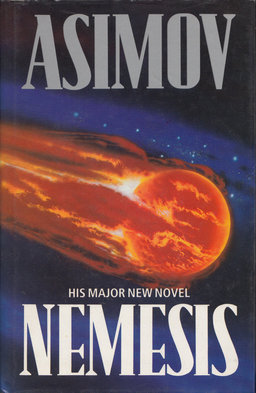
The expanding population and ensuing ecological degradation of Earth leads to the establishment of orbital habitats which continue to compete with each other as well as with Earth, leading one of them to abandon the Solar System entirely, to establish itself around a neighboring star.