More like Paycheck
anchored on:science fictionamnesiaour worldmid 20th centuryidentitymysterious+1 more
but
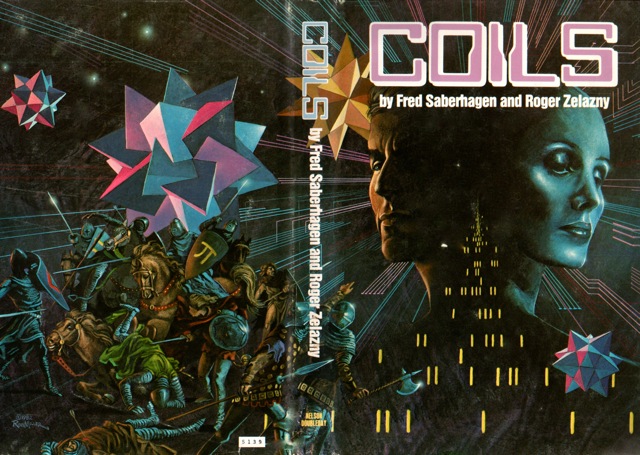
- Coils
Roger Zelazny & Fred Saberhagenstandalone novel1982
similar byscience fictionamnesiaour worldidentitymysterioustense
A man discovers that his memories of childhood are false, and when he begins to investigate his psychiatrist is murdered and his girlfriend is kidnapped. As his actual past begins to return to his memory, he realizes that he has the ability to mentally connect to computer circuitry, an ability he used to use for illegal advantage for the corporation which employed him, along with a small group of others with paranormal powers. He concludes that the corporation is behind all this and sets out to find and rescue his girlfriend while the corporation pursues him.
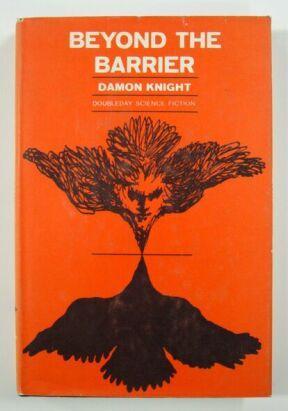
- Beyond the Barrier
Damon Knightstandalone novel1964
similar byscience fictionamnesiaidentitymysterioustensetime travel+1 more
From the front flap of the Doubleday first edition: "Gordon Naismith was a physics professor at a large California university. The year was 1980, and by means of the university's duplicator he could personally teach in nine different classrooms simultaneously. Naismith was an average man in all but two respects: the reflexes were extraordinarily quick, and four years before in a plane crash he had lost all memory of his earlier life. Neither difference seemed important until one day a very unusual student in one of his classes asked a disturbing, extracurricular question: "Professor, what is a zug?" The question triggered a series of violent incidents, and soon Naismith himself, as well as the police, were beginning to wonder if the duplicator had reproduced him a tenth time. The answer lay ten thousand years in the future."
- The Werewolf Principle
Clifford D. Simakstandalone novel1967
similar byscience fictionamnesiaour worldidentitymysterious
From the back cover of the first DAW printing: "Andrew Blake, found in a space capsule on a distant planet, was brought back to an unfamiliar Earth, where antigravity devices had replaced the wheel and houses talk and even fly! Yet nothing was as strange as Blake's own feelings. Tormented by eerie sensations and a loss of memory, he didn't know who he really was nor exactly where he came from. His destiny only began to grow frighteningly clear when he met a weird, tassel-eared creature who darkly hinted at the truth about Blake's origins. Slowly Blake became aware of the long hushed-up "Werewolf Principle," a scientific theory buried in the past, which held the key to Blake's own fate - and the future of the human race..."
- Flashforward
Robert J. Sawyerstandalone novel1999
similar byscience fictionour worldidentitymysterioustensetime travel
Flashforward is a science fiction novel by Canadian author Robert J. Sawyer first published in 1999. The novel is set in 2009. At CERN, the Large Hadron Collider accelerator is performing a run to search for the Higgs boson. The experiment has a unique side effect; the entire human race loses their consciousness for about two minutes. During that time, nearly everyone sees themselves roughly twenty-one years and six months in the future. Each individual experiences the future through the senses of their future self. This "flashforward" results in countless deaths and accidents involving vehicles, aircraft, and any other device needing human control at the time of the experiment. The novel was adapted into the 2009 television series FlashForward.
- Total Recall
Piers Anthonystandalone novel1989
similar byscience fictionour worldamnesiaidentitymysterioustense
Douglas Quail is haunted by nightmares of Mars, covert missions and a life more glamorous than his earthbound 2089 AD reality. So he turns to "Recall", manufacturers of synthetic memories. They implant a memory into him but he soon finds that his nightmares are true memories.
- Who?
Algis Budrysstandalone novel1958
similar byscience fictionmid 20th centuryidentitymysterioustense
Who? is a 1958 science fiction novel by American writer Algis Budrys, set during the Cold War. It was originally a short story, inspired, as its author claimed, by a Kelly Freas painting he had seen in the offices of the magazine Fantastic Universe, and published in that magazine in April 1955.
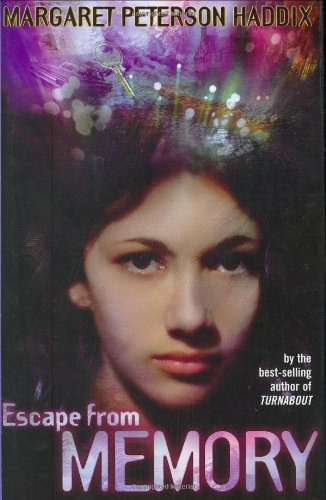
- Escape from Memory
Margaret Peterson Haddixstandalone novel2003
similar byscience fictionour worldamnesiaidentitymysterious+1 more
Escape from Memory is a young adult novel by Margaret Peterson Haddix. It was published in 2003 by Simon & Schuster.
- The Body Electric
Beth Revisstandalone novel2014
similar byscience fictionamnesiaour worldidentitymysterioustense
Ella Shepherd discovers that she has the ability to alter other people's memories, but soon learns that she may have been a victim of memory alteration herself as she seeks to uncover the mystery surrounding the technology.
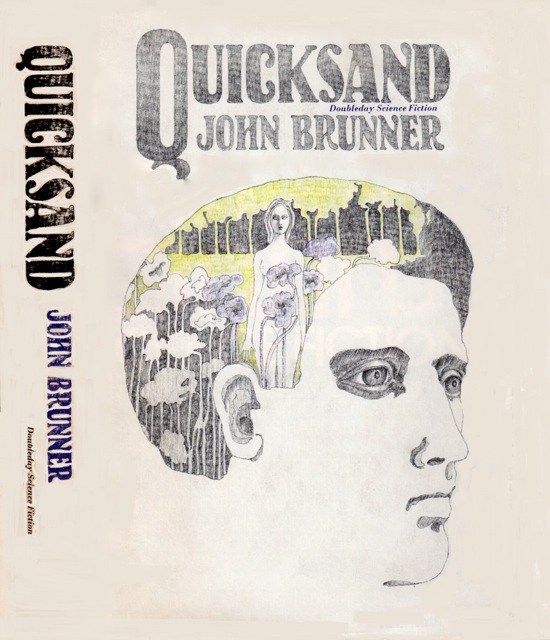
- Quicksand
John Brunnerstandalone novel1967
similar byscience fictionmid 20th centuryidentitytenseour world+1 more
A British psychiatrist in a deadening job and a deadening marriage gets a mysterious patient; a petite young woman who speaks an unrecognizable language and is unfamiliar with the common objects, sights, and behaviors of normal life, yet who is able to quickly and easily cripple or kill a large man with her bare hands when she feels threatened. He feels more than professional concern for the woman, who he believes is not actually mentally ill but is in fact a more unusual case.
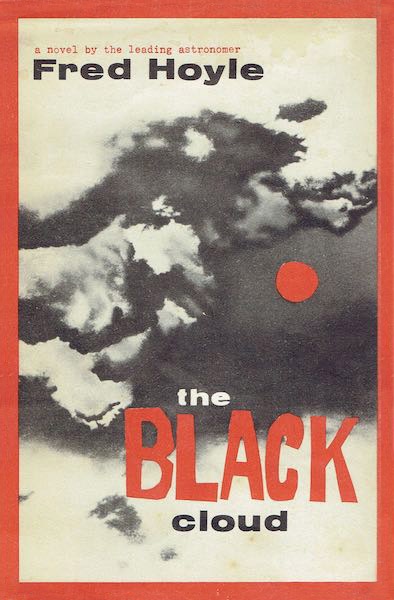
- The Black Cloud
Fred Hoylestandalone novel1957
similar byscience fictionour worldmid 20th centurytense
The Black Cloud is a 1957 science fiction novel by British astrophysicist Fred Hoyle. It details the arrival of an enormous cloud of gas that enters the Solar System and appears about to destroy most of the life on Earth by blocking the Sun's radiation.
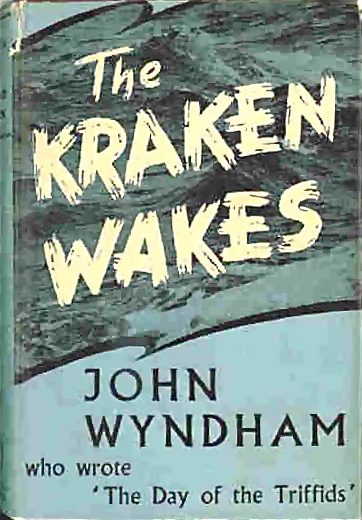
- The Kraken Wakes
John Wyndhamstandalone novel1953
similar byscience fictionour worldmid 20th centurytense
" Behind a spectacular meteor shower actually hides the beginning of an invasion by a mysterious and powerful alien race. Earth's life is disrupted by the attacks of extraterrestrials whose war machines, emerging from the depths of the oceans, seem indestructible. The coalitioned forces of the whole world are worthless, powerless in the face of the indecipherable and deadly plans of a superior intelligence, capable of bringing the entire planet to the brink of catastrophe" Goodreads May 20, 2022
- The House That Stood Still
A. E. van Vogtstandalone novel1950
similar byscience fictionour worldmid 20th centurymysterious+1 more
A California estate lawyer takes a case involving a decaying mansion built atop a pre-Toltec stone structure, and discovers, following a secretive cult in the house, that the ancient foundation confers immortality on those who know how to use it. Drawn in through his attraction to a cult member, the lawyer learns the group possesses technology beyond its disguise, including spacecraft, and is preparing to relocate the house's stones off-world to escape a coming war. He finds himself trying to stop a catastrophe, expose an ancient secret, and win the woman's trust, all at once. A. E. van Vogt's blend of hardboiled mystery and cosmic science fiction.
- Remember
Eileen Cookstandalone novel2015
similar byscience fictionamnesiaour worldidentitymysterioustense
Harper, whose father's company trademarked the "Memtex" procedure for wiping out bad memories, is surprised when her father objects to her having a treatment but afterwards, she begins having strange flashes about her own life and she joins forces with Neil, one of the company's protesters, to find the truth.
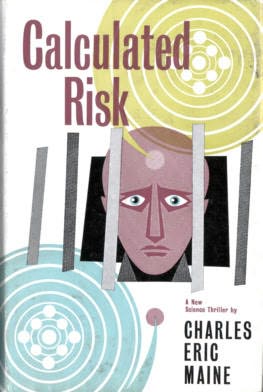
- Calculated Risk
Charles Eric Mainestandalone novel1960
similar byscience fictionour worldmid 20th centuryidentitymysterioustensetime travel
Calculated Risk is a 1960 science fiction novel – specifically, a time travel story – by Charles Eric Maine. It was first published in the U. K. by Hodder & Stoughton; a paperback version by Corgi Books appeared in 1962.
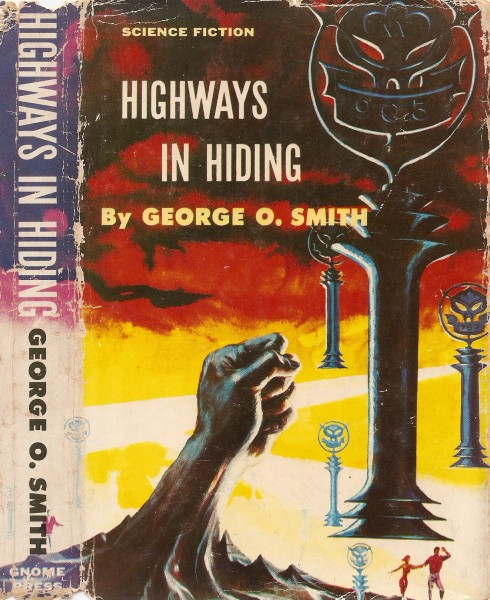
- Highways in Hiding
George O. Smithstandalone novel1956
similar byscience fictionour worldmysterioustense+1 more
From the back cover of the first Lancer printing: "Quest impossible - Someone had stolen an important part of Steve Cornell's life. It was bad enough when his fiancee vanished. It was infinitely worse when everyone in the world insisted it couldn't have happened the way he knew it had. In a world where ESP and telepathy were normal, it was difficult to keep secrets. But Steve's search for his missing sweetheart brought him to the threshold of one of the greatest secrets of all time. And it was obvious that somebody would stop at nothing to keep him from uncovering it. What were the oddly sinister symbols along the otherwise ordinary roads? What was behind the spreading plague called Mekstrom's Disease? Why were there "blank" spots where telepathy didn't work? Who was the elusive enemy with powers even beyond those ESP had bestowed on mankind? And, most important of all... could Steve find that enemy before they made him vanish too?"
- The Proteus Operation
James P. Hoganstandalone novel1985
similar byscience fictionour worldmid 20th centurytensetime travel
The Proteus Operation is a science fiction alternate history novel written by James P. Hogan. The plot focuses on an Anglo-American team of soldiers and civilians sent back in time from the Nazi-dominated world of 1975 to prevent an Axis victory in World War II that was engineered by more advanced time travelers from the 21st century.
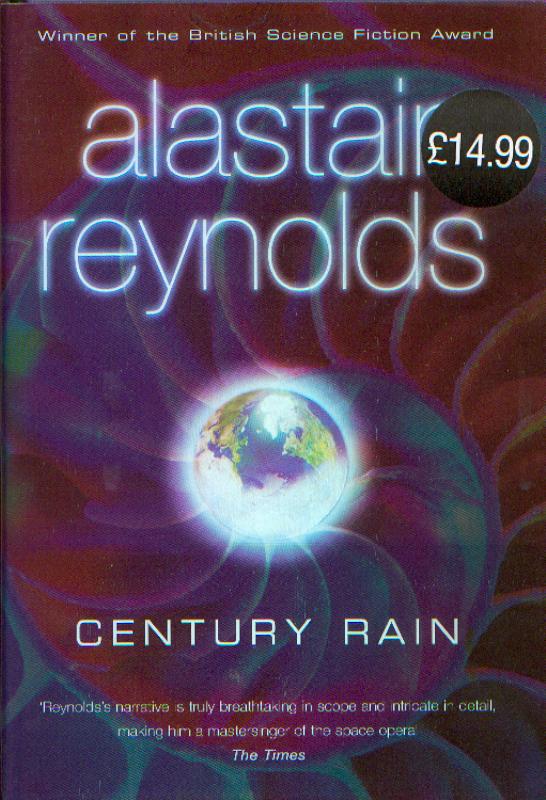
- Century Rain
Alastair Reynoldsstandalone novel2004
similar byscience fictionmid 20th centuryidentitymysterious+1 more
Century Rain is a 2004 noir science fiction alternative history mystery novel by Welsh author Alastair Reynolds (ISBN 0-575-07436-1).
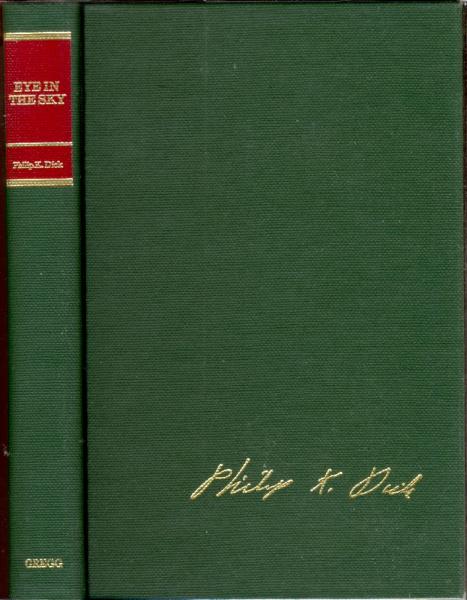
- Eye in the Sky
Philip K. Dickstandalone novel1957
similar byscience fictionour worldmid 20th centuryidentity
Eight visitors touring a particle-accelerator facility are caught in a catastrophic malfunction, a collapsing platform, a burst of radiation, that leaves them all unconscious. When protagonist Jack Hamilton, an engineer recently fired over Red Scare-era suspicions about his wife's politics, comes to, the world around him is subtly, then not so subtly, wrong: physics bends to fit one fellow victim's religious convictions, then to another's paranoid fears, as the group cycles through what turn out to be shared hallucinations built from each other's private belief systems. Philip K. Dick's early novel about how differently people actually see the same world.
- Venus Plus X
Theodore Sturgeonstandalone novel1960
similar byscience fictionmid 20th centuryidentity+2 more
Charlie Johns wakes in a featureless silver room with no memory of how he got there and a watch that's inexplicably running backward. He's been brought, how and by whom is never explained to him, to Ledom, an isolated, technologically advanced society whose members are all both male and female and have done away with fixed sex roles entirely. Guides walk him through Ledom's customs and machinery while making clear he's there to judge them before he can go home. Interwoven with Charlie's tour are chapters following an ordinary mid-century American family, setting the utopia against the world it's implicitly critiquing. Theodore Sturgeon's provocative novel about gender and social design.
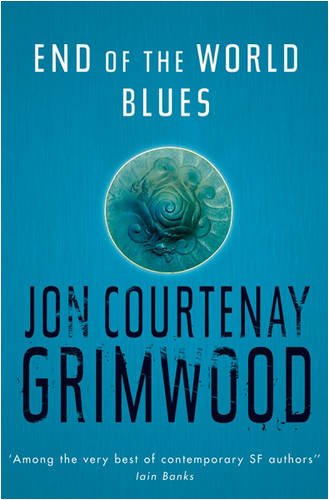
- End of the World Blues
Jon Courtenay Grimwoodstandalone novel2006
similar byscience fictionour worldamnesiaidentitytense
"Kit Nouveau didn't escape himself when he fled to Japan. Now running a biker bar in the Roppongi district of Tokyo, he's also sleeping with the wife of a High Yakusa ganglord. All things considered, being held up at gunpoint isn't a complete shock. The pale girl in the red cloak appearing from nowhere and punching an ivory spike into his attacker's head on the other hand." "Nijie has stolen fifteen million dollars, she's on the run, she's just killed a man and she has a cat who knows more than it should. It's a lot to deal with when you haven't even left school." "But Nijie is also Lady Neku, and in a sentient castle at the end of the world Lady Neku otherwise known as Baroness Nawa-no-ukiyo. Countess High Strange and chatelaine of Schlass Omga realizes that Kit has stolen some of her memories. What happens to a man who finally realises he can't outrun himself? Kit Nouveau is about to find out."--BOOK JACKET. "Kit Nouveau figured he'd already come to the end of the world. An Iraqi war veteran, expatriate, and part owner of Pirate Mary's, the best Irish bar in Tokyo, Kit had settled down to await the inevitable with barely a whimper. It wasn't exactly how Kit thought he'd end up, and he was right." "It's going to end up a lot worse." "A teenage runaway with fifteen million dollars in stolen cash and a taste for cosplay is about to save Kit's life in a lethal swirl of scarlet and bridal lace. Lady Neku, a.k.a. Countess of High Strange, has her own dangerous destiny to fulfill and it's mysteriously connected to Kit's ravaged past. Now Kit's only hope for redemption is to save an ex-girlfriend he tragically failed once before. But everyone says it's already too late. And she's left behind only one ominous clue: her suicide note."--BOOK JACKET.
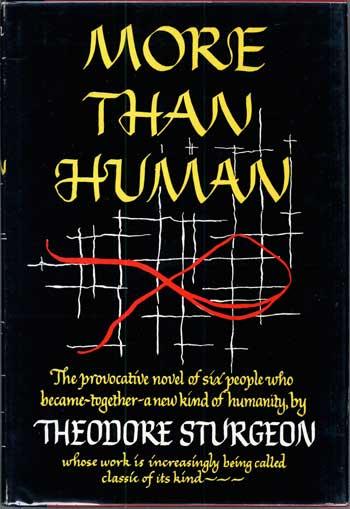
- More Than Human
Theodore Sturgeonstandalone novel1953
similar byscience fictionour worldidentity+1 more
More Than Human is a 1953 science fiction fix-up novel by American writer Theodore Sturgeon. It is a revision and expansion of his 1952 novella Baby Is Three, which is bracketed by two additional parts written for the novel, "The Fabulous Idiot" and "Morality". It won the 1954 International Fantasy Award, which was also given to works in science fiction. It was additionally nominated in 2004 for a "Retro Hugo" award for the year 1954. Science fiction critic and editor David Pringle included it in his book Science Fiction: The 100 Best Novels.
- Time Out of Joint
Philip K. Dickstandalone novel1959
similar byscience fictionour worldidentitymysterious
Time Out of Joint is a science fiction novel by American writer Philip K. Dick, first published in novel form in the United States in 1959. An abridged version was also serialised in the British science fiction magazine New Worlds Science Fiction in several installments from December 1959 to February 1960.
- Legion / Stephen Leeds
series5 books2012
similar byscience fictionour worldidentitymysterious+1 more
Legion, or the Stephen Leeds series, is a series of science fiction novellas created by American author Brandon Sanderson. Sanderson authored the first three stories : Legion, first published on August 31, 2012, Legion: Skin Deep in November 2014, and Legion: Lies of the Beholder in September 2018. Death and Faxes, co-authored by Max Epstein, David Pace, and Michael Harkins, was released in June 2022. The books have received favorable reviews.