More like Perfume
anchored on:historical fantasyeuropedarkliterary & generalmadnessart and artists+3 more
but
- American Psycho
Bret Easton Ellisstandalone novel1991
similar bydarkmadnessliterary & generalmurder investigationbig city+1 more
American Psycho is a horror novel by American writer Bret Easton Ellis, published in 1991. The story is told in the first-person by Patrick Bateman, a wealthy, narcissistic, and vain Manhattan investment banker who lives a double life as a serial killer. Alison Kelly of The Observer notes that while "Some countries [deem it] so potentially controversial that it only to be sold as shrink-wrapped", "critics rave about it" and "academics revel in its transgressive and postmodern qualities".
- Super-Cannes
J. G. Ballardstandalone novel2000
similar bydarkeuropeeerieliterary & generalbig city
Super-Cannes is a novel by the British author J. G. Ballard, published in 2000. It picks up on the same themes as his earlier Cocaine Nights, and has often been called a companion piece to that book. This is the third time that the author has used the concept of a closed society, a privileged community completely shut off from the outside world, as the theme for one of his novels, after High-Rise and Running Wild (novella).
- The Dark Descent of Elizabeth Frankenstein
Kiersten Whitestandalone novel2018
similar bydarkeuropeeeriemadnesshistorical fictionidentity
Elizabeth Lavenza hasn't had a proper meal in weeks. Her thin arms are covered with bruises from her "caregiver," and she is on the verge of being thrown into the streets . . . until she is brought to the home of Victor Frankenstein, an unsmiling, solitary boy who has everything--except a friend. Victor is her escape from misery. Elizabeth does everything she can to make herself indispensable--and it works. She is taken in by the Frankenstein family and rewarded with a warm bed, delicious food, and dresses of the finest silk. Soon she and Victor are inseparable. But her new life comes at a price. As the years pass, Elizabeth's survival depends on managing Victor's dangerous temper and entertaining his every whim, no matter how depraved. Behind her blue eyes and sweet smile lies the calculating heart of a girl determined to stay alive no matter the cost . . . as the world she knows is consumed by darkness.
- Mirror Mirror
Gregory Maguirestandalone novel2003
similar byhistorical fantasyeuropedark+2 more
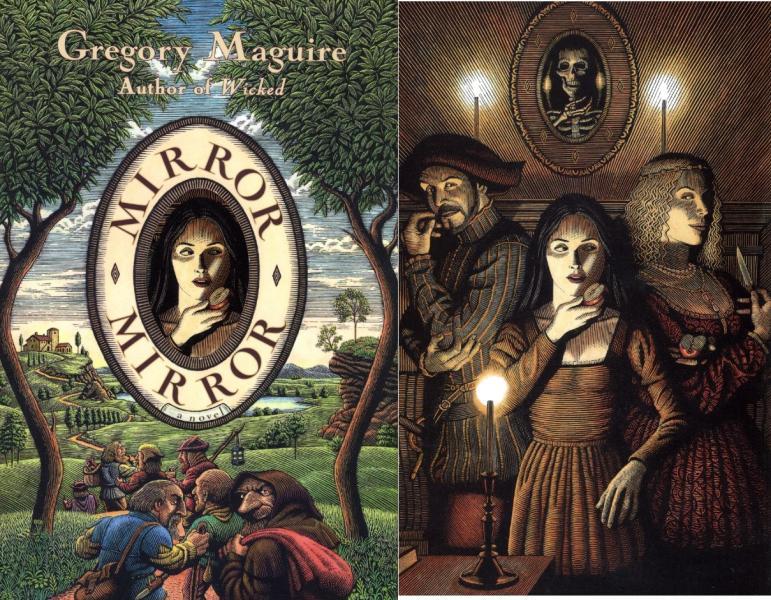
Mirror, Mirror is a fantasy novel by American writer Gregory Maguire, published in 2003. The novel is a revisionist version of the tale of Snow White set in rural Italy and featuring the historical Borgia family, with Lucrezia Borgia in the role of the Evil Queen.
- Crash
J. G. Ballardstandalone novel1973
similar bydarkmadnessliterary & generalbig city+1 more
Crash is a novel by J. G. Ballard, first published in 1973 with a cover designed by Bill Botten. It follows a group of car-crash fetishists who, inspired by the famous crashes of celebrities, become sexually aroused by staging and participating in car accidents.
- Cry to Heaven
Anne Ricestandalone novel1982
similar byage of sail & 18th centuryeuropeart and artistshistorical fictionidentity
Cry to Heaven is a novel by American author Anne Rice published by Alfred A. Knopf in 1982. Taking place in eighteenth-century Italy, it follows the paths of two unlikely collaborators: a Venetian noble and a maestro castrato from Calabria, both trying to succeed in the world of the opera.
- The Portrait of Mrs. Charbuque
Jeffrey Fordstandalone novel2002
similar byeeriemadnessart and artistsmurder investigationhistorical fictionidentitybig city
"The toast of 1893 New York society, the portraitist Piero Piambo has his pick of choice assignments. Acclaimed by his peers and his "betters," he is a fixture in the city's most opulent salons, yet he fears he has sold his soul to arrive there. But then comes a commission unlike any other - one that will test Piambo's talents, his will .. and his sanity.". "The client is a Mrs. Charbuque, and the offer she makes to the artist is as bizarre and intriguing as it is financially rewarding. Piambo must paint the lady's portrait, and for the service he may name any price. However, though he may question her at length on any topic, he must never look upon his subject. And if the painting ends up a true likeness, his payment will be doubled.". "With sketchbook in hand and his "model" hidden behind an elegant screen, the artist begins his haunting descent into her life and mind. Carried by her words through a strange childhood in a world of ice - where she aided an obsessed, perhaps murderous, father in his study of the divine language of snowflakes - and across a history marked by fame and despair, desire and rage, phantasm and myth, Piambo is alternately seduced and repulsed by the story she has to tell. Yet each session leaves him more determined than ever to unwrap the enigma that is Mrs. Charbuque.". "But while he struggles to capture in oils the face of a woman he has never seen, a series of horrific and inexplicable deaths rocks the outside city. On street corners, in the alleys off the bustling shopping areas, and between the crumbling tenements, anonymous women are dying, their lifeblood flowing freely like tears from their eyes. And the deeper Piambo is drawn into Mrs. Charbuque's world, the more he begins to suspect that these terrible events, his impossible task, and his odd "benefactress" are somehow intimately connected."--BOOK JACKET.
- Freddie Montgomery
series1 book1989
similar byeuropemadnessmurder investigationliterary & generalidentity+1 more
- The Mysteries of Udolpho
Ann Radcliffestandalone novel1794
similar byage of sail & 18th centuryeuropedarkhistorical fiction
After the deaths of her loving mother and father, a young 18th century French woman of fine character, intelligence, and sensibility is removed from the company of the young man she has come to love when she becomes the ward of her foolish, vain and materialistic aunt; who brings them both suffering and misery when she marries an Italian count who reveals himself as a treacherous schemer, and brings them to live in the decrepit, desolate, gloomy, remote Castle of Udolpho where he works his unsavory plans.
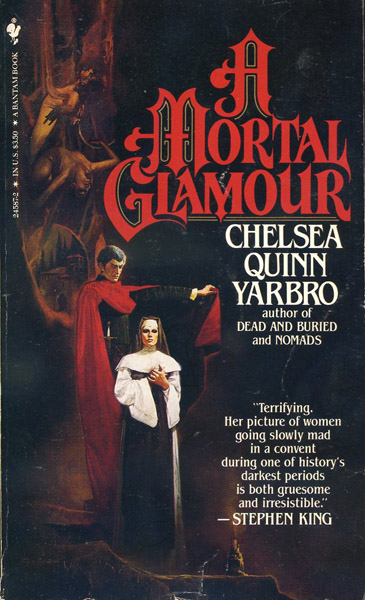
- A Mortal Glamour
Chelsea Quinn Yarbrostandalone novel1985
similar bydarkhistorical fantasyeuropeeerie+1 more
One of the most perverse stories you have ever written, A Mortal Glamour is among the best revelations of the difference between good and evil in fiction,” said Douglas Clegg to Chelsea Quinn Yarbro when the novel first came out. Set in southern France at the end of the three pandemics of Black Plague that ravaged Europe in the second half of the fourteenth century, the convent at Saunt-Vitre-lo-Sur shows in miniature the collapse of medieval society, and the chaos an incubus/succubus demon brings to nuns and courtiers alike.
- Time's Arrow
Martin Amisstandalone novel1991
similar bydarkliterary & generaleuropehistorical fictionidentity+1 more
From Amazon description: In this icy, knife's-edge story of a life that progresses backward through time, unfolding into one of the darkest episodes of the 20th century, Amis ("at his intriguing, heedful, and powerful best" —Time Out), finds a chillingly original approach to the Holocaust in fiction • From the acclaimed author of Zone of Interest "The narrative moves with irresistible momentum.... [Amis is] a daring, exacting writer willing to defy the odds in pursuit of his art." —Newsday Tod. T. Friendly is living his life in reverse. Doctor Friendly has just died, but he moves "out of blackest sleep" to find himself surrounded by doctors and on the deathbed of a man in whose body he is imprisoned. After weeks of improving in the hospital, he is sent home to his affable, melting-pot, primary-colors existence in suburban America. As Friendly breaks up with his lovers in a prelude to seducing them and mangles his patients before he sends them home, his life races backward toward the one appalling moment in modern history when such reversals make sense. From the fresh-cut lawns of his retirement to the hustle of New York, and then back to the boat which reverses his course to the war-torn Europe Friendly came from, Amis brings the steeliest nerve to the job of realizing the novel's inevitable logic. Trapped in his body from grave to cradle, Friendly's consciousness can only watch as he struggles to make sense of the good doctor's most ambitious project yet—the final solution.
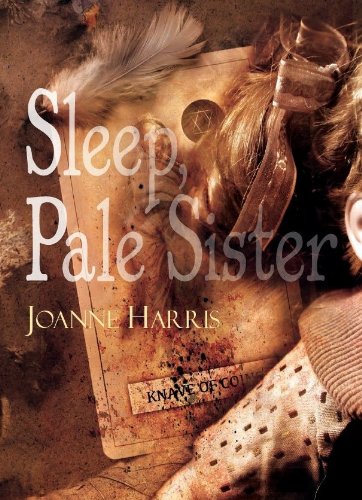
- Sleep, Pale Sister
Joanne Harrisstandalone novel1994
similar bydarkeeriemadnessart and artistshistorical fictionbig city
Before the sweet delight of Chocolat, before the heady concoction that is Blackberry Wine, and before the tart pleasures of Five Quarters of the Orange, bestselling author Joanne Harris wrote Sleep, Pale Sister -- a gothic tourde-force that recalls the powerfully dark sensibility of her novel Holy Fools.Originally published in 1994 -- and never before available in the United States -- Sleep, Pale Sister is a hypnotically atmospheric story set in nineteenth century London. When puritanical artist Henry Chester sees delicate child beauty Effie, he makes her his favorite model and, before long, his bride. But Henry, volatile and repressed, is in love with an ideal. Passive, docile, and asexual, the woman he projects onto Effie is far from the woman she really is. And when Effie begins to discover the murderous depths of Henry's hypocrisy, her latent passion will rise to the surface.Sleep, Pale Sister combines the ethereal beauty of a Pre-Raphaelite painting with a chilling high gothic tale and is a testament to Harris's brimming cornucopia of talents.This P.S. edition features an extra 16 pages of insights into the book, including author interviews, recommended reading, and more.
- Mortal Love
Elizabeth Handstandalone novel2004
similar bydarkeuropeeeriemadnessart and artists
"A tragedy that occurs in a hospital for the insane in Frankfurt, Germany, will have repercussions across decades and eras. Several weeks after the death of a female patient in a terrible fire, the poet Algernon Swinburne follows a mysterious woman through the shadows toward a remarkable event at once enthralling, stimulating, and terrifying beneath the streets of London. Years later, at the start of a new century, a struggling young artist, Radborne Comstock, is introduced to a ravishing beauty who immediately becomes his muse, his desire, and his greatest torment. It is a legacy of pleasure and madness that will be passed down to his grandson, the dilettante actor Valentine Comstock, who is plagued by disturbing and increasingly erotic visions. And in the present day a journalist named Daniel Rowlands is seduced by the bewitching and mercurial Larkin Meade, who holds the key to lost artistic masterpieces, and to secrets too devastating to imagine." "What connects these men - and others whose grand destinies are to imagine and create - is one woman. Eternal, unknowable, the very ideal of beauty and desirability, she exists somewhere beyond the boundaries of time, a sensuous dream of flesh and fantasy to inspire or destroy, an immortal lover...or an angel of death."--BOOK JACKET.
- Pan's Labyrinth: The Labyrinth of the Faun
Cornelia Funke & Guillermo Del Torostandalone novel2019
similar bydarkeuropeeeriehistorical fantasy
Inspired by the film of the same name.
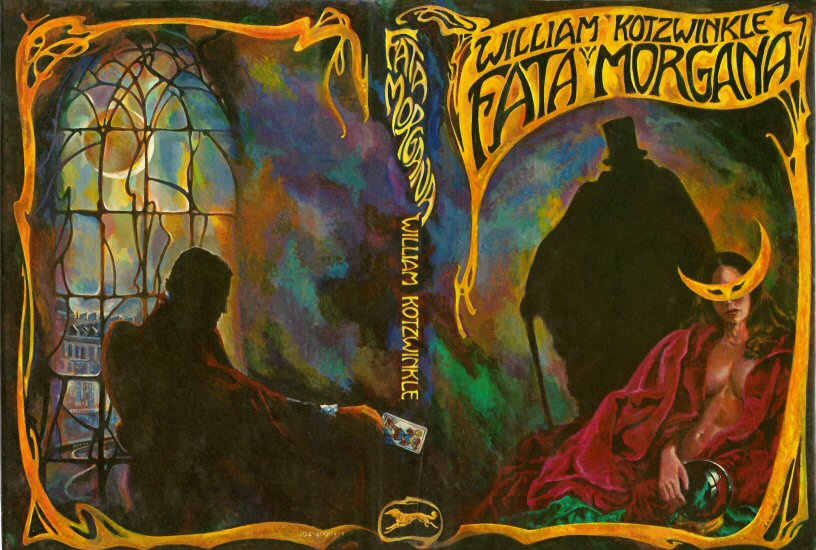
- Fata Morgana
William Kotzwinklestandalone novel1977
similar byhistorical fantasyeuropeeeriemurder investigationbig city
From the flaps of the Knopf first edition: "In Fata Morgana a celebrated novelist turns conjurer to bring us a supremely theatrical magic show - a rich exotic entertainment of crime, treble-trickery, and legerdermain, with Europe as its stage and the golden leaders of the Uppercrust and the Underworld as its players. The time and place are Paris, 1861 - the extravagant capital of Louis Napoleon and his Empress Eugenie, the gaudy, blatant public arena of Great Whores and fabulous charlatans; the treacherous private labyrinth of Police Inspector Paul Picard and the human prey he stalks. Picard is a hunter of the purest instincts, with an appetite for the ladies, a taste for lemon tarts, and a policeman's nose for hard realities. As the book opens he is on his way to the Opera, for music and murder: among the guests is as elegant a killer as ever sliced his way through Parisian high society, and on his arm is the young woman he means to decapitate tonight. A strange encounter with them precipitates Picard into a new and (apparently) trivial assignment - a case that is fated to disrupt and then transform, irrevocably, his life. At first it seems routine: a man - Ric Lazare - has recently arrived in Paris and in a short time has captured the jaded attention and the favors of the entire city. His aura of opulence, his bewitching wife, Rene, and, above all, his unearthly fortune-telling machine have won him entree to the salons (and the bank vaults) of the most dazzling leaders of society, including, it is whispered, the Emperor himself. But, who - and what - is Lazare? Is he a crook? A master of illusions? A real magician? Or - more terrible - a reincarnation from an Older World? To find the answer, Picard must follow the thread of the man's past. His quest takes him from Paris to Vienna, Nuremberg, Budapest, and on to the dark, menacing valleys and steppes of eastern Hungary, uncovering a trail of deceit and violent death: a fabled toy maker driven to destroy himself and a lifetime's priceless creations... a man ruthlessly killed over a dice game... a beautiful woman purchased at auction, then stolen away... the sudden death of a priest. Beset by intimations of his own mortality, by a sense of inexplicable entrapment in a malign world of mechanical and deadly playthings, by a slowly suffocating conviction that he is undertaking a journey he has made before, Picard, caught up in the quickening pace, returns to Paris - and to a terrifying confrontation with his quarry and his own destiny."
- Mary Reilly
Valerie Martinstandalone novel1990
similar bydarkeerieliterary & generalhistorical fictionidentitybig city
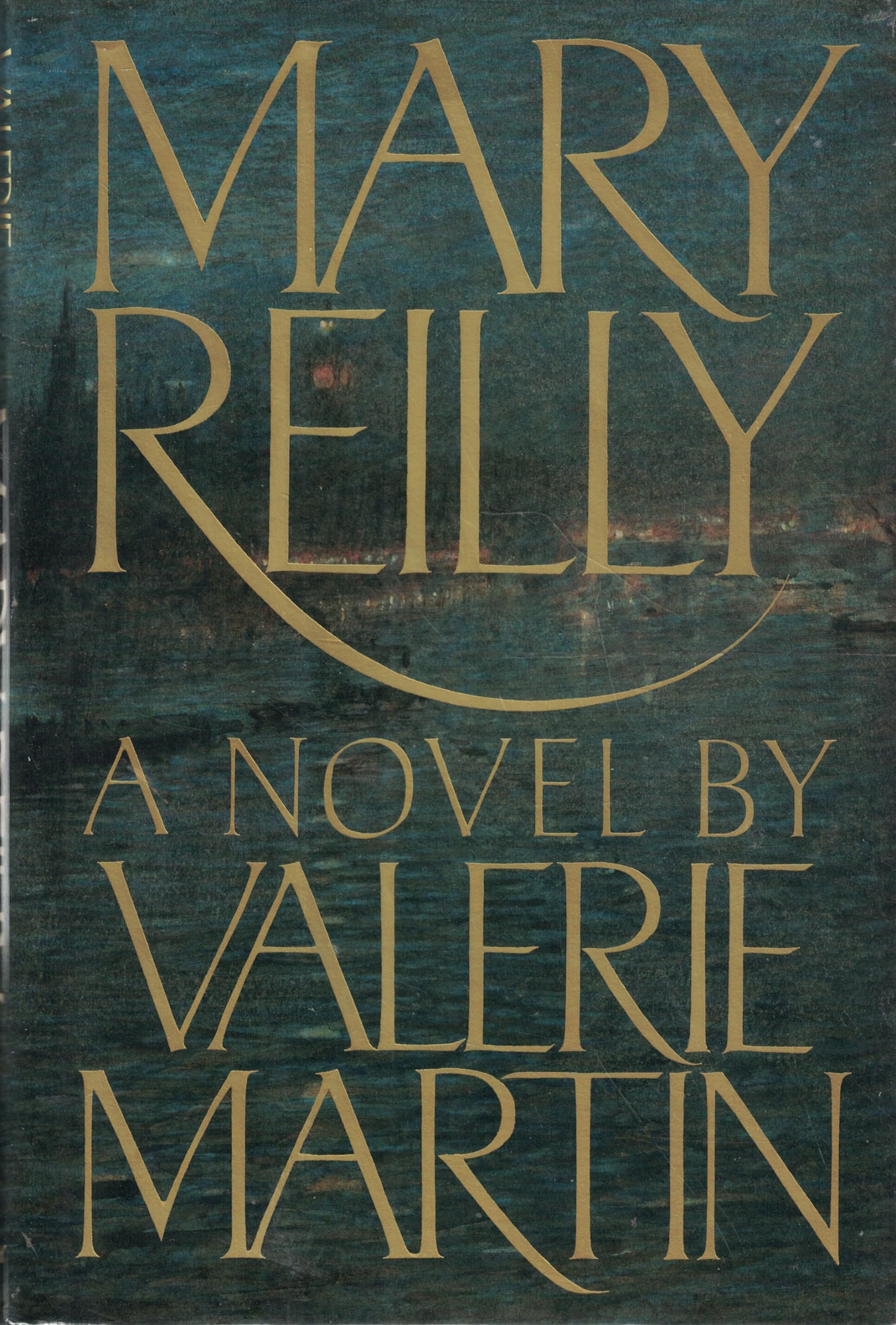
Mary Reilly is a 1990 parallel novel by American writer Valerie Martin. It is inspired by Robert Louis Stevenson's classic 1886 novella Strange Case of Dr. Jekyll and Mr. Hyde. It was nominated for the Nebula Award for Best Novel in 1990 and the World Fantasy Award for Best Novel in 1991. Martin's novel was the basis for the 1996 film of the same name starring Julia Roberts in the title role.
- The Hunger
Alma Katsustandalone novel2018
similar bydarkeeriemadnesshistorical fiction+1 more
Fictionalized supernatural/horror treatment of the Donner Party.
- We Have Always Lived in the Castle
Shirley Jacksonstandalone novel1962
similar byeeriemadnessliterary & general+2 more
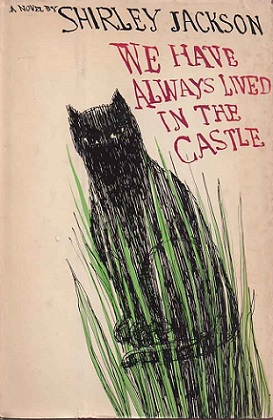
A young woman lives with her older sister and sickly uncle in their old family house, after a mysterious tragedy turns the townsfolk against them.
- Diary
Chuck Palahniukstandalone novel2003
similar bydarkeeriemadnessart and artistsliterary & general
Diary is a 2003 novel by Chuck Palahniuk. The book is written like a diary. Its protagonist is Misty Wilmot, a once-promising young artist who works as a waitress in a hotel. Her husband, a contractor, is in a coma after a suicide attempt. According to the description on the back of Diary, Misty "soon finds herself a pawn in a larger conspiracy that threatens to cost hundreds of lives."
- The Werewolf of Paris
Guy Endorestandalone novel1933
similar bydarkeuropemadness+1 more
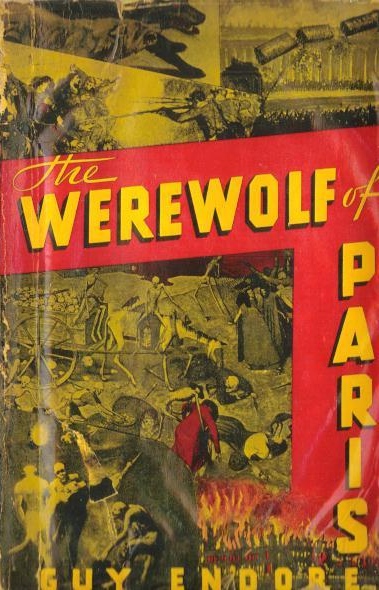
The Werewolf of Paris (1933) is a Gothic horror novel by American writer Guy Endore. The novel follows Bertrand Caillet, the eponymous werewolf, throughout the tumultuous events of the Franco-Prussian War and the Paris Commune of 1870–71. Some literature experts have compared this book with Dracula by Bram Stoker and they have identified it as the Dracula of werewolf fiction.
- Hangsaman
Shirley Jacksonstandalone novel1951
similar bydarkeeriemadnessliterary & generalidentity
Hangsaman is a 1951 gothic novel by American author Shirley Jackson. The second of Jackson's published novels, Hangsaman is a bildungsroman centering on lonely college freshman Natalie Waite, who descends into madness after enrolling in a liberal arts college.
- The Asylum of Dr. Caligari
James Morrowstandalone novel2017
similar byhistorical fantasyeuropedarkmadnessart and artists
"It is the summer of 1914. As the world teeters on the brink of the Great War, a callow American painter, Francis Wyndham, arrives at a renowned European insane asylum, where he begins offering art therapy under the auspices of Alessandro Caligari - sinister psychiatrist, maniacal artist, alleged sorcerer. Determined to turn the impending cataclysm to his financial advantage, Dr. Caligari will -- for a price -- allow governments to parade their troops past his masterpiece: a painting so mesmerizing it can incite entire regiments to rush headlong into battle. As the doctor's outrageous scheme becomes a reality, Francis joins with his brilliant, spider-obsessed student, Ilona Wessels, and a band of lunatic saboteaurs to thwart the mercenary magic. By radically reimagining the most famous of all German Expressionist silent films, satirist James Morrow has wrought a timely tale that is by turns funny and erotic, tender and bayonet-sharp - but ultimately, The Asylum of Dr. Caligari emerges as a love letter to that mysterious, indispensible thing called art." -- back cover.
- Song of Kali
Dan Simmonsstandalone novel1985
similar bydarkeeriemadnessbig city
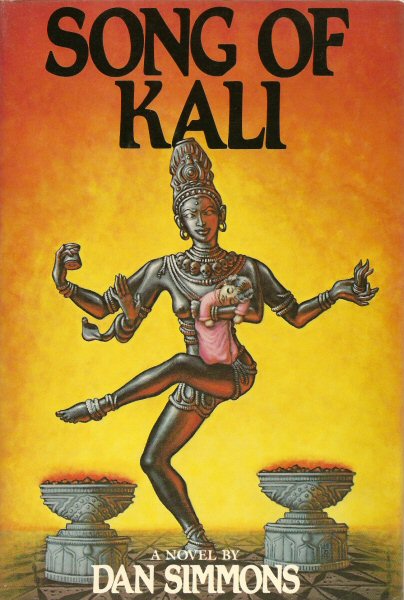
Song of Kali is a horror novel by American writer Dan Simmons, published in 1985. The story deals with an American intellectual who travels to Calcutta, India, where he becomes embroiled in mysterious and horrific events at the centre of which lies a cult of Kapalikas that worships Kali.
- The Stress of Her Regard Universe
series3 books1989
similar byhistorical fantasydark+3 more
Tim Powers's The Stress of Her Regard reimagines the lives of Byron, Shelley, and Keats through a secret history in which they are stalked and inspired by a nephilim, a shape-shifting vampiric being that acts as a deadly muse. Physician Michael Crawford is drawn into their orbit after inadvertently marrying himself to one of the creatures, setting off a pursuit across the Alps to break her hold on him. The 2012 sequel, Hide Me Among the Graves, moves the same secret history forward into Victorian London.