Loreful
HomeDiscover
Search series, authors…⌘K
Loreful

Reading orders for SF/F series and shared universes — with your place kept in every one.

Explore

UniversesSeriesWorksAuthorsAtlas

Help

FAQAboutSite map

Account & legal

Sign inCreate accountPrivacyTerms

Data

Built on ISFDB, Wikipedia, Wikidata and Open Library. Curated reading orders carry their reasoning on the page; the rest follow publication order. Data sources & licenses

© Loreful · data: ISFDB · CC BY

More like Peter Ibbetson

anchored on:literary & general19th centuryforbidden lovebritish islesdreamworldemotional+2 more

but

Mood

The mood the book leaves you in.

  • The reading experience is propelled by journeys, exploration, and physical risk; excitement and forward momentum dominate over dread or introspection.
  • Joy and loss are deliberately mixed; the resolution grants characters something real while taking something else away, leaving warmth and sorrow together.
  • The book demands work from the reader — dense prose, difficult structure, unfamiliar ideas, or morally uncomfortable material — as part of its intended effect.
  • Grim events, cruelty, or despair dominate the atmosphere, and the book does not soften them with comfort or comic relief.
  • The atmosphere is quietly unsettling — wrongness, unease, and the uncanny pervade the book without necessarily escalating into overt horror.
  • The book is built to move the reader; character feeling is foregrounded and major scenes aim at a strong emotional response.
  • Humor is a primary aim and the prose plays for laughs — comic situations, wit, or dialogue produce sustained comedy, not occasional levity.
  • The book insists that things can improve; effort and decency are shown to matter, and the arc bends toward better outcomes even through hardship.
  • The book teaches as it goes — real facts, history, science, or craft are conveyed in enough depth that learning is part of the reading experience.
  • The book is designed to uplift and motivate, presenting perseverance or achievement in a way that invites the reader to aspire or act.
  • The overall register is cheerful and easygoing; stakes are kept gentle and the book avoids dwelling on pain or dread.
  • Withheld information drives the experience; the book sustains enigmas and secrets the reader wants resolved, whatever its genre.
  • The book is contemplative and inward-looking, giving more weight to thought, memory, and meaning than to external events.
  • The book works as comfort reading — low tension, a soothing pace, and an atmosphere the reader can unwind in.
  • Grief, loss, or melancholy set the dominant register, and the book lets sorrow stand rather than resolving it into comfort.
  • Sustained suspense is the point; the book keeps the reader braced for what happens next through danger, pressure, or impending revelation.
  • Playful invention and charm define the register — fanciful conceits, light absurdity, and a narration that delights in its own oddity.

About

What the story runs on.

  • Stories in which extraterrestrial beings are central — as characters, cultures, or the object of the plot.
  • Stories structured as a quest — a journey undertaken to find, deliver, or destroy something of great import.
  • Stories in which staying alive against nature, catastrophe, or scarcity is the central problem.
  • Stories of lovers kept apart by law, family, faith, or station, where the obstacle to love is the plot.
  • Stories in which a friendship — its making, testing, or loss — is the emotional center.
  • Stories of growing up — a young protagonist crossing from childhood into adult knowledge and responsibility.
  • Stories about who a character truly is — self-discovery, doubled lives, and the search for a self.
  • Stories about mourning — living through the death of a loved one and what loss does to the survivors.
  • Stories in which a buried family truth — hidden parentage, crimes, or shames — surfaces and reorders the present.
  • Stories driven by maneuvering for power — factions, conspiracies, and statecraft conducted in shadow.
  • Stories in which war itself is the subject — combat, occupation, and what warfare does to soldiers and civilians.
  • Stories organized around investigating a killing — the case, the clues, and the pursuit of the killer, in any genre's clothing.

Shelf

Where it sits in the library.

    • Fiction built on magic or other supernatural elements that have no scientific explanation.
    • Secondary-world fantasy at large scale, where the fate of nations or the world turns on the protagonists' struggle.
    • Fantasy set in a recognizably modern city or contemporary world where the supernatural intrudes on everyday life.
    • Fantasy that blends in horror's atmosphere and imagery, keeping a fantastical frame around grim or frightening material.
    • Action-driven fantasy following warriors or rogues with personal stakes against sorcerous threats, rather than world-spanning conflicts.
    • Fantasy set in a real historical period or a close analogue of one, with magic woven into the era.
    • Fantasy in which protagonists cross from the ordinary world into another world through a portal or similar passage.
    • Fiction that retells or reworks a traditional fairy tale in a new form or setting.
    • Fantasy drawing directly on myths, legends, and folklore, retelling them or building on their figures and logic.
    • Fantasy of ghosts, vampires, shapeshifters, psychics, and similar phenomena, usually set in an otherwise ordinary world.
    • Fiction mixing science-fictional trappings with overtly magical or impossible elements in one setting.
    • Low-stakes fantasy emphasizing comfort, community, and everyday pleasures over conflict and peril.
    • Speculative fiction of pervasive moral ambiguity, violence, and cynicism that rejects heroic conventions — fantasy and SF alike.
      • Fiction that extrapolates from science and technology — future societies, space travel, or speculative inventions — within at least nominally natural laws.
      • Science fiction of interstellar scope — starships, galactic polities, and adventure across star systems.
      • Science fiction committed to scientific rigor, where technical plausibility constrains the story.
      • Science fiction centered on armed forces and warfare, told largely from a military point of view.
      • Science fiction of networked, corporate-dominated near futures, pairing high technology with social decay.
      • Science fiction styled on nineteenth-century steam-powered technology, often in a Victorian or pseudo-Victorian setting.
      • Fiction depicting an oppressive or catastrophic society, presented as a warning.
      • Fiction set after civilization's collapse, following survivors in the ruins of the old world.
      • Fiction in which characters move between past and future, and the mechanics or consequences of that travel drive the plot.
      • Fiction exploring a world where a historical event went differently and history diverged from ours.
      • Science fiction about humanity's first encounter and communication with an alien intelligence.
      • Science fiction in which extraterrestrial forces attack or occupy Earth and humanity resists.
      • Fiction whose primary aim is to frighten or unsettle the reader through dread, menace, or the monstrous.
      • Horror of vast, indifferent, incomprehensible entities before which humanity is insignificant, in the Lovecraft tradition.
      • Horror of decaying houses, buried family secrets, and oppressive atmosphere in the Gothic literary tradition.
      • Horror centered on hauntings and the returning dead.
      • Horror located in the mind — paranoia, obsession, and unreliable perception rather than external monsters.
      • Horror built around the reanimated dead and survival amid their outbreaks.
      • Horror defined by explicit, transgressive gore that refuses to cut away from violence.
      • Speculative fiction of the strange and uncanny that resists both natural explanation and standard genre categories.
      • Fiction organized around solving a crime or puzzle, typically following an investigator toward the identification of a culprit.
      • A puzzle-first mystery that lays out clues so the culprit's identity can be deduced before the reveal.
      • Crime fiction of moral ambiguity, fatalism, and hard-edged style, set among the corrupt and the doomed.
      • A mystery following the realistic routines of police work — forensics, interviews, and case-building.
      • A gentle mystery with an amateur sleuth, a small community, and violence kept off the page.
      • A mystery set in a past era, where the investigation works within that period's methods and society.
      • Fast-paced fiction driven by imminent danger, pursuit, or high-stakes conspiracy, built to sustain tension.
      • A thriller of espionage — agents, tradecraft, and intelligence services in conflict.
      • A thriller centered on lawyers and the courtroom, where litigation carries the suspense.
      • A thriller driven by detailed contemporary or near-future technology, often military or scientific.
      • A thriller whose tension comes from mental states and manipulation between characters rather than external action.
      • Fiction whose central plot is a romantic relationship and its development toward an emotionally satisfying resolution.
      • Romance in which one or both partners are supernatural beings, blending fantasy elements into the love story.
      • A fantasy-romance hybrid in which the romantic arc and the fantasy plot carry equal weight.
      • Romance set in a past era, with courtship shaped by the period's society and manners.
      • Romance set in the present day, without supernatural or historical elements.
      • Fiction set in a real past period, where the historical setting materially shapes characters and events.
        • General and literary fiction emphasizing prose style, character interiority, or formal ambition over genre plot conventions.
        • Fiction in a realistic world where magical events occur and are treated as ordinary, in the tradition of Latin American literature.
        • Fiction that ridicules people, institutions, or society in order to criticize them.
        • Fiction of dreamlike, irrational imagery and logic that breaks from realistic representation.
        • Fiction that plays with narrative convention through metafiction, fragmentation, and self-reference.
        • Fiction propelled by journeys, exploration, and physical peril, where action and survival carry the plot.
        • Adventure fiction of ships and seafaring — naval engagements, voyages, and life at sea.
        • Fiction of the American frontier West — gunmen, ranchers, and lawmen, typically in the late nineteenth century.
        • Fiction centered on soldiers, campaigns, and the experience of warfare, historical or imagined.
          • Fiction written primarily to amuse, using comedic situations, wit, or parody as its organizing principle.
            • Multi-generational fiction following a family or dynasty across decades, with inheritance and kinship as the through-line.
              • Fiction whose world runs on explicit game mechanics — levels, stats, and skills that characters can see and exploit.
                • Fiction about costumed or superpowered heroes and their conflicts with comparable villains.

                Practical

                How long a commitment, whether it stands alone, and whether it has finished.

                Tap a chip to ask for it · tap again to rule it out · once more to clear. Numbers show what would be left.

                • Cover of Villette
                  Villette

                  Charlotte Brontë · standalone novel · 1853

                  similar byliterary & general19th centuryidentityemotionalreflectivefirst personeurope+1 more

                  Villette is an 1853 novel written by English author Charlotte Brontë. After an unspecified family disaster, the protagonist Lucy Snowe travels from her native England to the fictional Continental city of Villette to teach at a girls' school, where she is drawn into adventure and romance.

                • Cover of Love and Mr. Lewisham
                  Love and Mr. Lewisham

                  H. G. Wells · standalone novel · 1900

                  similar byliterary & generalforbidden love19th centuryreflectivebritish isles+1 more

                  Love and Mr Lewisham is a 1900 novel set in the 1880s by H. G. Wells. It was among his first fictional writings outside the science fiction genre. Wells took considerable pains over the manuscript and said that "the writing was an altogether more serious undertaking than I have ever done before." He later included it in a 1933 anthology, Stories of Men and Women in Love.

                • Cover of Ada or Ardor: A Family Chronicle
                  Ada or Ardor: A Family Chronicle

                  Vladimir Nabokov · standalone novel · 1969

                  similar byliterary & generalforbidden love19th century+2 more

                  An alternate-world novel by the celebrated author of "Lolita" in which North America is a 19th- and early 20th-century province of Russia still ruled by Tsars.

                • Cover of The Martian
                  The Martian

                  George du Maurier · standalone novel · 1897

                  similar byliterary & general19th centuryreflectivefirst personeurope+1 more

                  The Martian, by George du Maurier, is a largely autobiographical novel published in 1898 and the author's third. It describes the life of Barty Josselin as told by his close friend Robert Maurice, starting from their school days in Paris in the 1850s. Written in long descriptive passages with very little dialogue and many digressions, the book had considerably less success in its time than its predecessor, the popular Trilby.

                • Cover of The Catch Trap
                  The Catch Trap

                  series · 2 books · 1961

                  completed

                  similar byliterary & generalforbidden loveemotionalbittersweet+1 more

                • Cover of The Two Destinies
                  The Two Destinies

                  Wilkie Collins · standalone novel · 1876

                  similar byliterary & generalforbidden love19th centuryemotionalbritish isles+1 more

                  George and Mary are childhood sweethearts. Despite a prediction from Mary's grandmother that their two destinies are inextricably linked, George's father disapproves. They are separated and go through many hardships and changes, but are drawn together again and find themselves linked by spiritual closeness, seeing dreams and visions of each other. Although they are again separated, they inevitably marry at last.

                • Cover of More Happy Than Not
                  More Happy Than Not

                  Adam Silvera · standalone novel · 2015

                  similar byliterary & generalforbidden loveidentityemotionalfirst person

                  When it first gets announced, the Leteo Institute's memory-alteration procedure seems too good to be true to Aaron Soto-miracle cure-alls don't tend to pop up in the Bronx projects. Aaron can't forget how he's grown up poor, how his friends all seem to shrug him off, and how his father committed suicide in their one bedroom apartment. He has the support of his patient girlfriend, if not necessarily his distant brother and overworked mother, but it's not enough. Then Thomas shows up. He doesn't mind Aaron's obsession over the Scorpius Hawthorne books and has a sweet movie set-up on his roof. There are nicknames. Aaron's not only able to be himself, but happiness feels easy with Thomas. The love Aaron discovers may cost him what's left of his life, but since Aaron can't suddenly stop being gay Leteo may be the only way out.

                • Cover of Todd Family
                  Todd Family

                  series · 2 books · 2013

                  similar byliterary & generalreflectivebritish islesbittersweet+3 more

                  Kate Atkinson's Life After Life gives Ursula Todd, born on a snowy night in 1910, a strange gift: whenever she dies, she's born again into a slightly altered version of the same life, gradually piecing together enough intuition across her many deaths to try to change the course of the twentieth century's worst events. The companion novel A God in Ruins turns to Ursula's brother Teddy, a bomber pilot, following his one, single life forward from the war through old age. The two books share a family and a set of preoccupations -- memory, war, chance -- without forming a conventional sequential series.

                • Cover of Midnight's Children
                  Midnight's Children

                  Salman Rushdie · standalone novel · 1980

                  similar byliterary & generalidentityemotionalreflectivefirst person

                  WorldCat: The life of a man born at the moment of India's independence becomes inextricably linked to that of his nation and is a whirlwind of disasters and triumphs that mirror modern India's course.

                • Cover of A Little Princess
                  A Little Princess

                  Frances Hodgson Burnett · standalone novel · 1905

                  similar byliterary & general19th centuryemotionalbritish isles

                  A Little Princess is a work by British-American author Frances Hodgson Burnett, presented as a 1888 novella, a 1902 play and a 1905 children's novel. All three versions tell the story of Sara Crewe, a wealthy young girl and the prize student of a private London boarding school who is reduced to poverty and forced to endure the life of a servant under the school's cruel headmistress.

                • Cover of The Chymical Wedding
                  The Chymical Wedding

                  Lindsay Clarke · standalone novel · 1989

                  similar byliterary & general19th centuryidentityreflectivebritish isles+1 more

                  The Chymical Wedding is a 1989 novel by Lindsay Clarke about the intertwined lives of six people in two different eras. Inspired by the life of Mary Anne Atwood, the book includes themes of alchemy, the occult, fate, passion, and obsession. It won the Whitbread Prize for fiction in 1989.

                • Cover of The History of Mr. Polly
                  The History of Mr. Polly

                  H. G. Wells · standalone novel · 1910

                  similar byliterary & general19th centuryidentityreflectivebritish isles

                  The History of Mr. Polly is a 1910 comic novel by H. G. Wells.

                • Cover of Red Shift
                  Red Shift

                  Alan Garner · standalone novel · 1973

                  similar byliterary & generalforbidden loveidentitybritish isles

                  Quoting that 1978 review article by Brian Lee: Red Shift [after The Owl Service] was again about the relationship between two adolescents, but interwoven in their love story were two other strands: one about a group of Roman legionaires 'going tribal' among warring factions of the British (the parallel and the brutal language are obviously those of the Americans among the Viet Cong and the Viet Minh); the other strand is about the massacre of a village on the Welsh border during the Civil War.{{BREAK}} Undoubtedly, Red Shift is a brilliantly written and gripping book. The difficulty about it is that Garner makes no concessions to his readers (and on the book jacket he makes it clear that it is for children). It is told almost entirely in cryptic conversation with minimal clues to the identity of the speakers. He switches from strand to strand of the story without warning. The book cannot be understood and appreciated at one hasty reading. It is worth serious study, but will children persevere? In her introduction to the 1973 edition of Children's Books of the Year, critic and reviewer Elaine Moss says: Spurred on by the publication of Alan Garner's literary crossword puzzle Red Shift ... many of us asked ourselves where children's publishing should end and adult begin? For Children's Books of the Year I have drawn the line below Red Shift and excluded it ... Alan Garner, in deliberately choosing an avant-garde form, is also choosing an advanced, sophisticated audience for his book. Alan Garner himself seems to have come around to this view. This year a television adaptation of Red Shift was screened at peak viewing time with no mention of the fact that it was originally published as a children's novel. [end quotation from the review article; ellipses by Lee]

                • Cover of The Invisible Hour
                  The Invisible Hour

                  Alice Hoffman · standalone novel · 2023

                  similar byliterary & generalforbidden loveemotionalreflective

                  From Amazon product description: "As a girl Mia fell in love with a book. Now as a young woman she falls in love with a brilliant writer as she makes her way back in time. But what if Nathaniel Hawthorne never wrote The Scarlet Letter? And what if Mia Jacob never found it on the day she planned to die?"

                • Cover of Kipps: The Story of a Simple Soul
                  Kipps: The Story of a Simple Soul

                  H. G. Wells · standalone novel · 1905

                  similar byliterary & general19th centuryidentityreflectivebritish isles

                  An orphan's life suddenly changes when he discovers he is the inheritor of a wealthy gentleman. Thrown into high society, he struggles to learn about etiquette and its rules, discovering that to be a "true gentleman" is not just a question of money.

                • Cover of The Professor
                  The Professor

                  Charlotte Brontë · standalone novel · 1857

                  similar byliterary & general19th centuryidentityreflectivefirst personeurope

                  The Professor, A Tale. was the first novel by English author Charlotte Brontë. It was written in 1846 before Jane Eyre, but was rejected by many publishing houses. It was eventually published, posthumously, in 1857, with the approval of Charlotte Brontë's widower, Arthur Bell Nicholls, who took on the task of reviewing and editing the text.

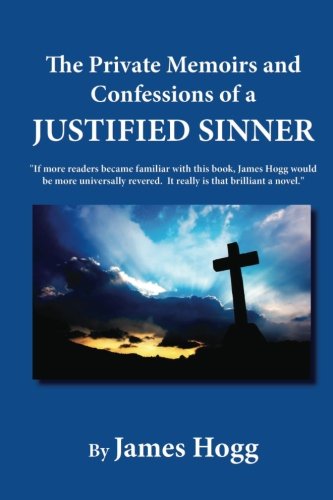
                • Cover of The Private Memoirs and Confessions of a Justified Sinner
                  The Private Memoirs and Confessions of a Justified Sinner

                  James Hogg · standalone novel · 1824

                  similar byliterary & general19th centuryidentitybritish isles

                  The Private Memoirs and Confessions of a Justified Sinner: Written by Himself: With a detail of curious traditionary facts and other evidence by the editor is a novel by the Scottish author James Hogg, published anonymously in 1824.

                • EO
                  Eloisa: Or, a Series of Original Letters

                  Jean-Jacques Rousseau · standalone novel · 1761

                  similar byliterary & generalforbidden loveemotionalreflectivebritish isleseurope

                  The love between Julie d'Étange and her private teacher St Preux, made impossible because of their relative stations, leads to a dead-end. Julie eventually marries old M. de Wolmar, who acquaints them with his Utopian estate, characteristic of the Age of enlightenment.

                • Cover of The Prestige
                  The Prestige

                  Christopher Priest · standalone novel · 1995

                  similar byliterary & general19th centuryidentitybritish isles

                  A magician called Borden (at least in private) writes his own version of his life as a magician. There's a lot of focus on a trick, where he seems to move across any width of stage in an instant, and on a feud with another magician, Angier. The account includes passages, where he can't decide what exactly to write, arguing with himself. 3 generations later a Borden (at least biologically) learns about his ancestor. He's also convinced, he somehow has a twin brother, who's happy about this development.

                • Cover of The Martian Child
                  The Martian Child

                  David Gerrold · standalone novel · 2002

                  similar byliterary & generalidentityemotionalreflectivefirst person

                  A Novel About A Single Father Adopting A Son

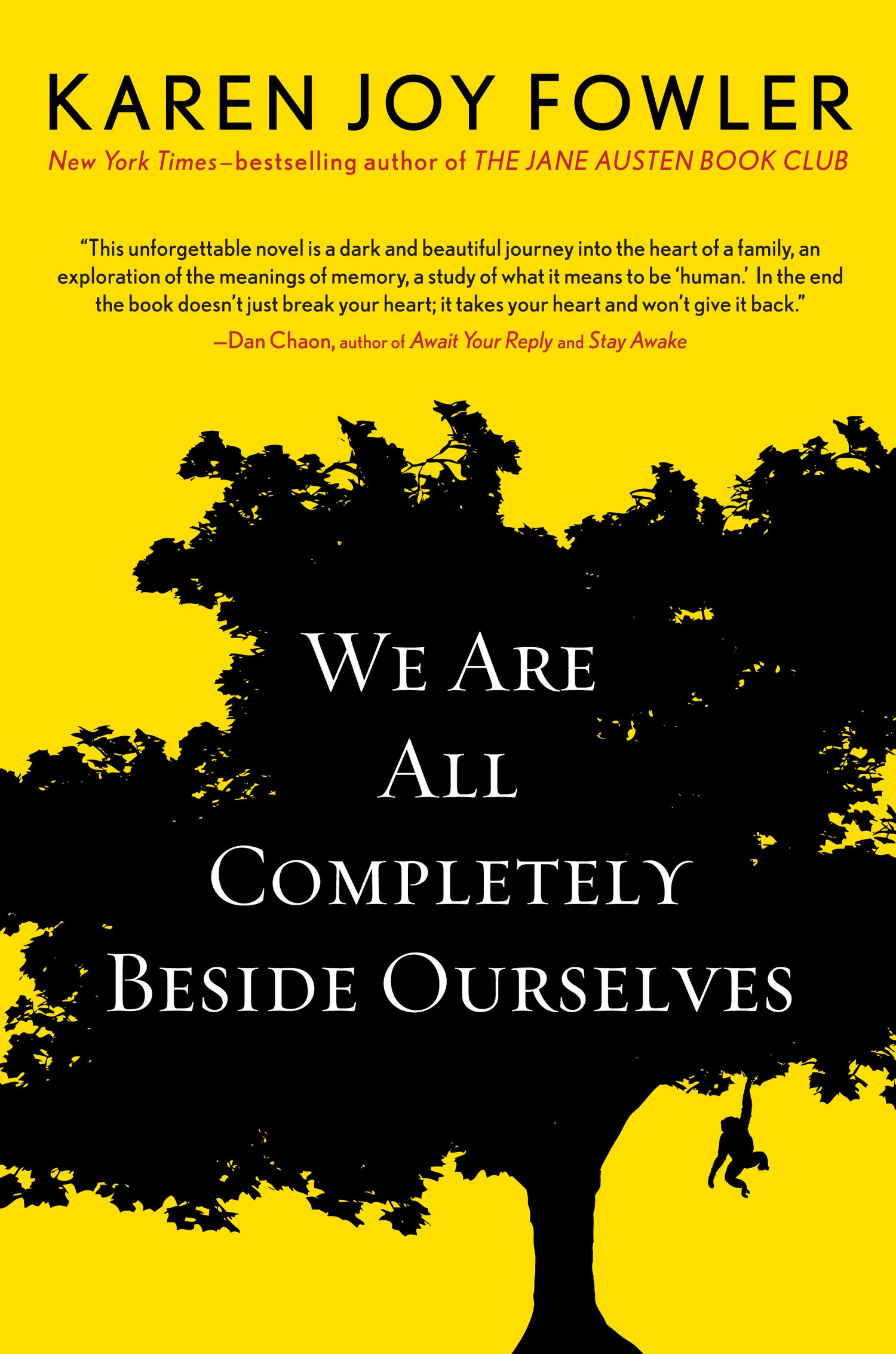
                • Cover of We Are All Completely Beside Ourselves
                  We Are All Completely Beside Ourselves

                  Karen Joy Fowler · standalone novel · 2013

                  similar byliterary & generalidentityemotionalreflectivefirst person

                  We Are All Completely Beside Ourselves is a 2013 novel by the American writer Karen Joy Fowler. The novel won the 2014 PEN/Faulkner Award for Fiction and was also shortlisted for the 2014 Man Booker Prize and the 2014 Nebula Award for Best Novel.

                • Cover of The Sea Lady
                  The Sea Lady

                  H. G. Wells · standalone novel · 1902

                  similar byforbidden love19th centurybritish isles+2 more

                  The Sea Lady is a fantasy novel by British writer H. G. Wells, incorporating elements of a fable. It was serialized from July to December 1901 in Pearson's Magazine before being published as a volume by Methuen. The inspiration for the novel came when Wells caught a glimpse of May Nisbet, the daughter of The Times drama critic, John Ferguson Nisbet, in a bathing suit during her visit to Sandgate. Wells had agreed to pay her school fees after her father's death.

                • Cover of Freddie Montgomery
                  Freddie Montgomery

                  series · 1 book · 1989

                  similar byliterary & generalidentityreflectivefirst personbritish isleseurope

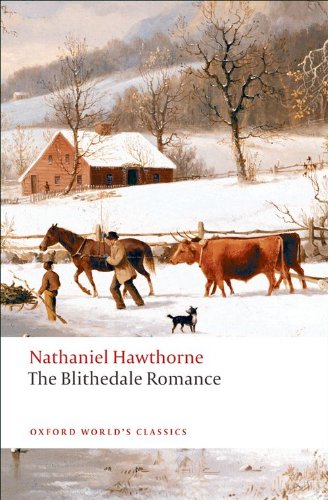
                • Cover of The Blithedale Romance
                  The Blithedale Romance

                  Nathaniel Hawthorne · standalone novel · 1852

                  similar byliterary & general19th centuryidentityreflectivefirst person

                  In the utopian community of Blithedale Farm, in the mid-1800s, Miles Coverdale embarks on a quest for betterment of the world, in a plot of veils, masks, and control by mesmerism.