Loreful
HomeDiscover
Search series, authors…⌘K
Loreful

Reading orders for SF/F series and shared universes — with your place kept in every one.

Explore

UniversesSeriesWorksAuthorsAtlas

Help

FAQAboutSite map

Account & legal

Sign inCreate accountPrivacyTerms

Data

Built on ISFDB, Wikipedia, Wikidata and Open Library. Curated reading orders carry their reasoning on the page; the rest follow publication order. Data sources & licenses

© Loreful · data: ISFDB · CC BY

More like Petty Magic

but

Mood

The mood the book leaves you in.

  • The reading experience is propelled by journeys, exploration, and physical risk; excitement and forward momentum dominate over dread or introspection.
  • Joy and loss are deliberately mixed; the resolution grants characters something real while taking something else away, leaving warmth and sorrow together.
  • The book demands work from the reader — dense prose, difficult structure, unfamiliar ideas, or morally uncomfortable material — as part of its intended effect.
  • Grim events, cruelty, or despair dominate the atmosphere, and the book does not soften them with comfort or comic relief.
  • The atmosphere is quietly unsettling — wrongness, unease, and the uncanny pervade the book without necessarily escalating into overt horror.
  • The book is built to move the reader; character feeling is foregrounded and major scenes aim at a strong emotional response.
  • Humor is a primary aim and the prose plays for laughs — comic situations, wit, or dialogue produce sustained comedy, not occasional levity.
  • The book insists that things can improve; effort and decency are shown to matter, and the arc bends toward better outcomes even through hardship.
  • The book teaches as it goes — real facts, history, science, or craft are conveyed in enough depth that learning is part of the reading experience.
  • The book is designed to uplift and motivate, presenting perseverance or achievement in a way that invites the reader to aspire or act.
  • The overall register is cheerful and easygoing; stakes are kept gentle and the book avoids dwelling on pain or dread.
  • Withheld information drives the experience; the book sustains enigmas and secrets the reader wants resolved, whatever its genre.
  • The book is contemplative and inward-looking, giving more weight to thought, memory, and meaning than to external events.
  • The book works as comfort reading — low tension, a soothing pace, and an atmosphere the reader can unwind in.
  • Grief, loss, or melancholy set the dominant register, and the book lets sorrow stand rather than resolving it into comfort.
  • Sustained suspense is the point; the book keeps the reader braced for what happens next through danger, pressure, or impending revelation.
  • Playful invention and charm define the register — fanciful conceits, light absurdity, and a narration that delights in its own oddity.

About

What the story runs on.

  • Stories structured as a quest — a journey undertaken to find, deliver, or destroy something of great import.
  • Stories in which staying alive against nature, catastrophe, or scarcity is the central problem.
  • Stories in which a friendship — its making, testing, or loss — is the emotional center.
  • Stories of growing up — a young protagonist crossing from childhood into adult knowledge and responsibility.
  • Stories about who a character truly is — self-discovery, doubled lives, and the search for a self.
  • Stories about mental unraveling — descent into madness, delusion, and minds at war with themselves.
  • Stories about mourning — living through the death of a loved one and what loss does to the survivors.
  • Stories in which a buried family truth — hidden parentage, crimes, or shames — surfaces and reorders the present.
  • Stories driven by maneuvering for power — factions, conspiracies, and statecraft conducted in shadow.
  • Stories in which war itself is the subject — combat, occupation, and what warfare does to soldiers and civilians.
  • Stories organized around investigating a killing — the case, the clues, and the pursuit of the killer, in any genre's clothing.
  • Stories following an expedition into the unknown — uncharted lands, lost cities, and the discovery or ruin waiting at the end.

Shelf

Where it sits in the library.

    • Fiction built on magic or other supernatural elements that have no scientific explanation.
    • Secondary-world fantasy at large scale, where the fate of nations or the world turns on the protagonists' struggle.
    • Fantasy set in a recognizably modern city or contemporary world where the supernatural intrudes on everyday life.
    • Fantasy that blends in horror's atmosphere and imagery, keeping a fantastical frame around grim or frightening material.
    • Action-driven fantasy following warriors or rogues with personal stakes against sorcerous threats, rather than world-spanning conflicts.
    • Fantasy set in a real historical period or a close analogue of one, with magic woven into the era.
    • Fantasy in which protagonists cross from the ordinary world into another world through a portal or similar passage.
    • Fiction that retells or reworks a traditional fairy tale in a new form or setting.
    • Fantasy drawing directly on myths, legends, and folklore, retelling them or building on their figures and logic.
    • Fantasy of ghosts, vampires, shapeshifters, psychics, and similar phenomena, usually set in an otherwise ordinary world.
    • Fiction mixing science-fictional trappings with overtly magical or impossible elements in one setting.
    • Low-stakes fantasy emphasizing comfort, community, and everyday pleasures over conflict and peril.
    • Fiction that extrapolates from science and technology — future societies, space travel, or speculative inventions — within at least nominally natural laws.
    • Science fiction of interstellar scope — starships, galactic polities, and adventure across star systems.
    • Science fiction committed to scientific rigor, where technical plausibility constrains the story.
    • Science fiction centered on armed forces and warfare, told largely from a military point of view.
    • Science fiction of networked, corporate-dominated near futures, pairing high technology with social decay.
    • Science fiction styled on nineteenth-century steam-powered technology, often in a Victorian or pseudo-Victorian setting.
    • Fiction depicting an oppressive or catastrophic society, presented as a warning.
    • Fiction set after civilization's collapse, following survivors in the ruins of the old world.
    • Fiction in which characters move between past and future, and the mechanics or consequences of that travel drive the plot.
    • Fiction exploring a world where a historical event went differently and history diverged from ours.
    • Science fiction about humanity's first encounter and communication with an alien intelligence.
    • Science fiction in which extraterrestrial forces attack or occupy Earth and humanity resists.
    • Fiction whose primary aim is to frighten or unsettle the reader through dread, menace, or the monstrous.
    • Horror of vast, indifferent, incomprehensible entities before which humanity is insignificant, in the Lovecraft tradition.
    • Horror of decaying houses, buried family secrets, and oppressive atmosphere in the Gothic literary tradition.
    • Horror centered on hauntings and the returning dead.
    • Horror located in the mind — paranoia, obsession, and unreliable perception rather than external monsters.
    • Horror built around the reanimated dead and survival amid their outbreaks.
    • Speculative fiction of the strange and uncanny that resists both natural explanation and standard genre categories.
    • Fiction organized around solving a crime or puzzle, typically following an investigator toward the identification of a culprit.
    • A puzzle-first mystery that lays out clues so the culprit's identity can be deduced before the reveal.
    • Crime fiction of moral ambiguity, fatalism, and hard-edged style, set among the corrupt and the doomed.
    • A mystery following the realistic routines of police work — forensics, interviews, and case-building.
    • A gentle mystery with an amateur sleuth, a small community, and violence kept off the page.
    • A mystery set in a past era, where the investigation works within that period's methods and society.
    • Fast-paced fiction driven by imminent danger, pursuit, or high-stakes conspiracy, built to sustain tension.
    • A thriller of espionage — agents, tradecraft, and intelligence services in conflict.
    • A thriller centered on lawyers and the courtroom, where litigation carries the suspense.
    • A thriller driven by detailed contemporary or near-future technology, often military or scientific.
    • Fiction whose central plot is a romantic relationship and its development toward an emotionally satisfying resolution.
    • Romance in which one or both partners are supernatural beings, blending fantasy elements into the love story.
    • A fantasy-romance hybrid in which the romantic arc and the fantasy plot carry equal weight.
    • Romance set in a past era, with courtship shaped by the period's society and manners.
    • Fiction set in a real past period, where the historical setting materially shapes characters and events.
      • General and literary fiction emphasizing prose style, character interiority, or formal ambition over genre plot conventions.
      • Fiction in a realistic world where magical events occur and are treated as ordinary, in the tradition of Latin American literature.
      • Fiction that ridicules people, institutions, or society in order to criticize them.
      • Fiction of dreamlike, irrational imagery and logic that breaks from realistic representation.
      • Fiction that plays with narrative convention through metafiction, fragmentation, and self-reference.
      • Fiction propelled by journeys, exploration, and physical peril, where action and survival carry the plot.
      • Adventure fiction of ships and seafaring — naval engagements, voyages, and life at sea.
      • Fiction of the American frontier West — gunmen, ranchers, and lawmen, typically in the late nineteenth century.
      • Fiction centered on soldiers, campaigns, and the experience of warfare, historical or imagined.
        • Fiction written primarily to amuse, using comedic situations, wit, or parody as its organizing principle.
          • Multi-generational fiction following a family or dynasty across decades, with inheritance and kinship as the through-line.
            • Fiction about costumed or superpowered heroes and their conflicts with comparable villains.

            Practical

            How long a commitment, whether it stands alone, and whether it has finished.

            Tap a chip to ask for it · tap again to rule it out · once more to clear. Numbers show what would be left.

            • Cover of Tarzan
              Tarzan

              series · 50 books · 1912

              part of Tarzan Universe

              similar byearly 20th century

              Tarzan is a series of 24 adventure novels written by Edgar Rice Burroughs (1875–1950) and published between 1912 and 1966, followed by several novels either co-written by Burroughs, or officially authorized by his estate. There are also two works written by Burroughs especially for children that are not related to the main series.

            • Cover of Cavor
              Cavor

              series · 2 books · 1901

              similar byearly 20th century

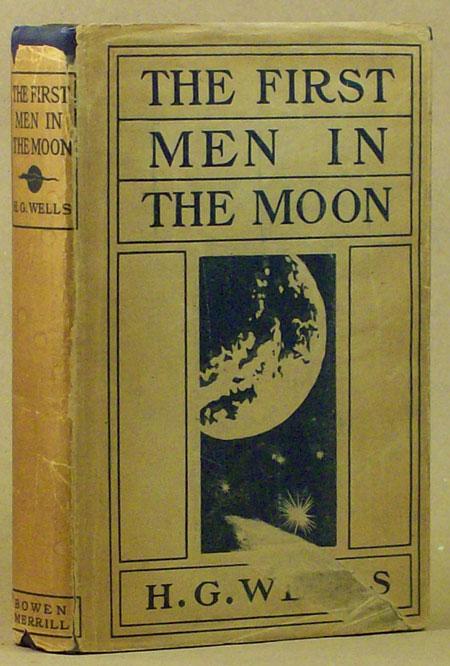
              H. G. Wells's 1901 novel The First Men in the Moon is narrated by the businessman Bedford, who joins the reclusive scientist Cavor after Cavor invents cavorite, a gravity-blocking substance that carries the two men to the Moon. There they discover a vast underground civilization of insect-like Selenites, and the expedition that began as a hunt for lunar minerals turns into an encounter with an alien society. It is a standalone novel; later editions crediting Stephen Baxter add an introduction or afterword rather than a continuing story.

            • Cover of Green Town
              Green Town

              series · 31 books · 1946

              completed

              similar by+1 more

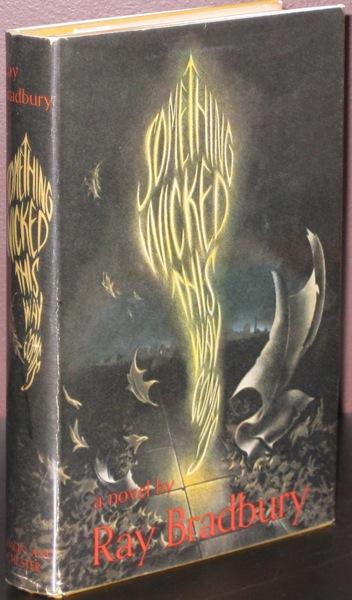
              Green Town gathers two of Ray Bradbury's loosely linked novels set in his fictionalized version of his childhood home of Waukegan, Illinois: the dark fantasy Something Wicked This Way Comes (1962), in which a sinister traveling carnival led by the mysterious Mr. Dark descends on a small town and preys on its residents' desires, and the later Farewell Summer (2006), which follows Douglas Spaulding through an autumn stand-off between the town's boys and its elders. Written more than four decades apart, the two novels share Bradbury's recurring setting and nostalgic, myth-making tone rather than a single continuous plot.

            • Cover of Five Children Universe
              Five Children Universe

              series · 27 books · 1902

              completed

              similar byearly 20th century

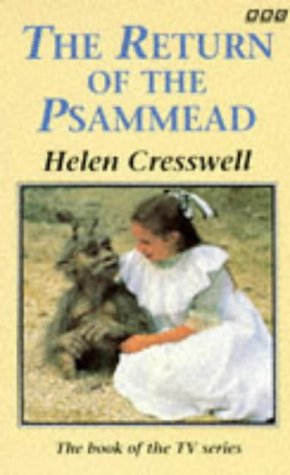
              Two separate modern continuations of E. Nesbit's Psammead stories were written decades apart by different authors: Helen Cresswell's The Return of the Psammead (1992) brings the wish-granting sand fairy back for a new set of children, while Kate Saunders's Five Children on the Western Front (2014) follows the now-grown Lamb and his siblings as the First World War arrives, in a more somber sequel to Nesbit's original trilogy. Neither book is by Nesbit herself, and the two have no direct connection to each other beyond both drawing on her creation. Later writers have kept returning to Nesbit's premise long after her own trilogy ended.

            • Cover of Cosmic Trilogy (C. S. Lewis)
              Cosmic Trilogy (C. S. Lewis)

              series · 4 books · 1938

              completed

              similar by+1 more

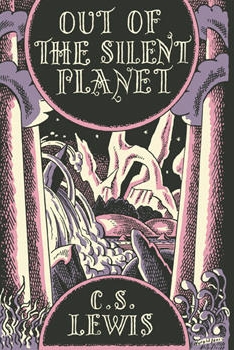
              The Space Trilogy is a series of science fiction novels by British writer C. S. Lewis. The trilogy consists of Out of the Silent Planet (1938), Perelandra (1943), and That Hideous Strength (1945). A philologist named Elwin Ransom is the protagonist of the first two novels and an important character in the third.

            • Cover of The Lair of the White Worm
              The Lair of the White Worm

              Bram Stoker · standalone novel · 1911

              similar byearly 20th century

              A huge snake or dragon from prehistoric times survives in England, with intelligence and the ability to transform into a lady.

            • Cover of Walter Goodwin
              Walter Goodwin

              series · 3 books · 1918

              completed

              similar byearly 20th century

              The Moon Pool (1919) and The Metal Monster (1920) are connected fantasy-adventure novels by A. Merritt, both narrated by the same character, Dr. Walter Goodwin, as he encounters hidden ancient civilizations and forces beyond ordinary science. The Moon Pool began as two related stories serialized in All-Story Weekly before being combined into a novel, and its success led Merritt to send Goodwin into a second, similarly strange discovery in The Metal Monster the following year. The two books follow Goodwin from one uncanny expedition to the next rather than forming a tightly plotted continuing saga.

            • Cover of Lost Horizon
              Lost Horizon

              James Hilton · standalone novel · 1933

              similar byearly 20th century

              Lost Horizon is a 1933 novel by the English writer James Hilton. The book was adapted into a film, also called Lost Horizon, in 1937 by director Frank Capra; and a musical film remake in 1973 by producer Ross Hunter with music by Burt Bacharach. It is the origin of Shangri-La, a fictional utopian lamasery located high in the mountains of Tibet.

            • Cover of Cryptonomicon
              Cryptonomicon

              Neal Stephenson · standalone novel · 1999

              similar byearly 20th century

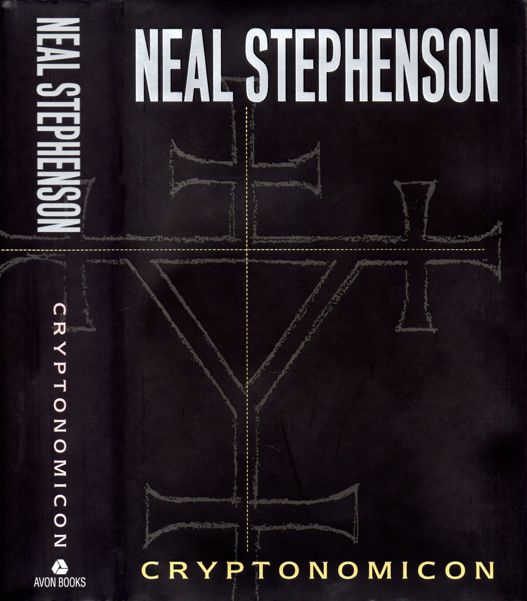
              There are two main timelines in this novel. This first is during World War II, and follows the lives of three cryptologists: Lawrence Pritchard Waterhouse (American), Alan Turing (British), and Rudolf von Hacklheber (German), as well as the strange exploits of Detachment 2702. The second timeline takes place during the present, filled with the offspring of the main characters in the first timeline. They are preoccupied with the construction of a data haven.

            • Cover of The Lady of the Shroud
              The Lady of the Shroud

              Bram Stoker · standalone novel · 1909

              similar byearly 20th century

              Rupert Sent Leger inherits his eccentric uncle's fortune on one condition: he must spend a year living in the family's castle in the Blue Mountains, a small, embattled corner of the Balkan coast under threat from Turkish forces. Determined to earn the trust of his new neighbors, Rupert arms the local mountain people for their own defense, and soon finds his castle visited at night by a beautiful woman in a wet burial shroud, who claims sanctuary from the cold and offers no explanation of who, or what, she might be. Bram Stoker's follow-up to Dracula trades outright horror for Ruritanian romance and adventure, blending gothic atmosphere with political intrigue.

            • Cover of Slaughterhouse-Five or the Children's Crusade: A Duty-Dance with Death
              Slaughterhouse-Five or the Children's Crusade: A Duty-Dance with Death

              Kurt Vonnegut & Jr. · standalone novel · 1969

              similar by+1 more

              Vonnegut opens in his own voice, describing the twenty years it took him to face writing about surviving the firebombing of Dresden as a POW. He then hands the story to Billy Pilgrim, an awkward, fatalistic American chaplain's assistant swept into the Battle of the Bulge and captured by German forces alongside a soldier who dies blaming him for it. Imprisoned in a disused slaughterhouse in Dresden, Billy survives the firebombing that follows, and, we're told upfront, has also come 'unstuck in time,' living his life out of order, including a stretch on the alien world of Tralfamadore. Vonnegut's best-known novel folds war memoir into science fiction and black comedy.

            • Cover of In the Days of the Comet
              In the Days of the Comet

              H. G. Wells · standalone novel · 1906

              similar byearly 20th century

              In the Days of the Comet is a 1906 science fiction novel by H. G. Wells in which humanity is "exalted" when a comet causes "the nitrogen of the air, the old azote," to "change out of itself" and become "a respirable gas, differing indeed from oxygen, but helping and sustaining its action, a bath of strength and healing for nerve and brain." The result: "The great Change has come for evermore, happiness and beauty are our atmosphere, there is peace on earth and good will to all men."

            • Cover of Doctor Dolittle
              Doctor Dolittle

              series · 27 books · 1920

              similar byearly 20th century

              Hugh Lofting's Doctor Dolittle books follow a Victorian-era English physician who gives up treating people to practice medicine among animals, whose languages he learns to speak, traveling the world with an ever-growing menagerie of companions. Lofting wrote twelve novels between 1920 and 1936, beginning with The Story of Doctor Dolittle, with two further story collections published after his 1947 death. Kathryn Knight and Nick Price, credited alongside Lofting in modern editions, are illustrators/editors of reissues rather than co-authors of new installments.

            • Cover of Oxford Time Travel
              Oxford Time Travel

              series · 6 books · 1982

              similar by+1 more

              Connie Willis's Oxford Time Travel novels are set at a near-future Oxford University where historians travel into the past as observers, constrained by a version of history that resists any change large enough to alter real events. Doomsday Book sends a medieval historian to what should be 1320 but turns out to be the Black Death year of 1348, intercut with a present-day epidemic at Oxford; To Say Nothing of the Dog returns to the same time-travel program for a lighter, Victorian-set story with different characters. The two novels share their setting and rules rather than a directly continuing plot.

            • Cover of Duke de Richleau
              Duke de Richleau

              series · 4 books · 1933

              completed

              similar byearly 20th century

              The Duke de Richleau novels follow Dennis Wheatley's aristocratic adventurer and occultist across four decades of twentieth-century intrigue, moving from a 1930s rescue thriller in The Forbidden Territory into Satanist set-pieces such as The Devil Rides Out and Strange Conflict, then a later case in Gateway to Hell. Wheatley wrote the books out of order over nearly forty years, but their internal chronology matches the order they were published in.

            • Cover of Herland
              Herland

              series · 2 books · 1915

              completed

              similar byearly 20th century

            • Cover of Mother Night
              Mother Night

              Kurt Vonnegut & Jr. · standalone novel · 1962

              similar by+1 more

              Howard W. Campbell Jr., an American playwright who grew up in Germany, writes his memoirs from an Israeli prison cell awaiting trial for war crimes. As the Nazis rose to power, Campbell stayed on, married a German actress, and was recruited by an American agent to serve as a double agent, broadcasting Nazi propaganda over the radio while secretly passing coded intelligence to the Allies. The catch, as Campbell tells it, is that he became one of the war's most effective propagandists in the process, whatever his loyalties. Kurt Vonnegut's darkest novel asks what a person becomes when the mask he wears for a cause is indistinguishable from his face.

            • Cover of Time and Again
              Time and Again

              series · 2 books · 1970

              completed

              similar by+1 more

              Time and Again (1970) follows Si Morley, a commercial artist recruited into a secret government project that sends him back to Manhattan in 1882, where he falls for a woman named Julia while weighing whether he can, or should, alter the past; Jack Finney illustrates the story with period photographs and engravings. The sequel, From Time to Time (1995), continues Si's story with a further trip into the past.

            • Cover of The Collected Science Fiction and Fantasy of Jack London
              The Collected Science Fiction and Fantasy of Jack London

              series · 6 books · 1906

              completed

              similar byearly 20th century

            • Cover of The Ghost Pirates
              The Ghost Pirates

              William Hope Hodgson · standalone novel · 1909

              similar byearly 20th century

              Jessop signs on to the sailing ship Mortzestus despite whispers about her reputation, and it isn't long before he understands why: strange shapes and stranger sounds begin plaguing the vessel, growing bolder and more frequent by the day. Some of the crew write it off as superstition or overwork, but Jessop, the story's sole survivor, recounting events after the fact, comes to suspect something worse than ghosts: a kind of presence that shares the ship's physical space from another dimension entirely, and is slowly forcing its way through. William Hope Hodgson's nautical horror novel builds dread less through incident than through mounting, unresolved wrongness.

            • Cover of The Monster Men
              The Monster Men

              Edgar Rice Burroughs · standalone novel · 1929

              similar byearly 20th century

              The Monster Men is a 1913 science fiction novel by American author Edgar Rice Burroughs, written under the working title "Number Thirteen". It first appeared in print under the title of "A Man Without a Soul" in the November, 1913 issue of All-Story Magazine, and was first published in book form in hardcover by A. C. McClurg in March, 1929 under the present title. It has been reissued a number of times since by various publishers. The first paperback edition was issued by Ace Books in February 1963.

            • CU
              Caspak Universe

              series · 4 books · 1918

              similar byearly 20th century

              The Caspak trilogy — The Land That Time Forgot, The People That Time Forgot, and Out of Time's Abyss — is Edgar Rice Burroughs's 1918 adventure sequence set on a hidden Pacific island called Caprona, where a World War I-era U-boat crew discovers an isolated world of dinosaurs and successive stages of human evolution living side by side. The story was later adapted into comics by Mike Wolfer, credited alongside Burroughs.

            • Cover of The World Set Free
              The World Set Free

              H. G. Wells · standalone novel · 1914

              similar by+1 more

              The World Set Free is a novel written in 1913 and published in 1914 by H. G. Wells. The book is based on a prediction of a more destructive and uncontrollable sort of weapon than the world has yet seen. It had appeared first in serialised form with a different ending as A Prophetic Trilogy, consisting of three books: A Trap to Catch the Sun, The Last War in the World and The World Set Free.

            • Cover of Collected Fiction (Arthur Machen)
              Collected Fiction (Arthur Machen)

              series · 5 books · 1907

              completed

              similar by+1 more