Loreful
HomeDiscover
Search series, authors…⌘K
Loreful

Reading orders for SF/F series and shared universes — with your place kept in every one.

Explore

UniversesSeriesWorksAuthorsAtlas

Help

FAQAboutSite map

Account & legal

Sign inCreate accountPrivacyTerms

Data

Built on ISFDB, Wikipedia, Wikidata and Open Library. Curated reading orders carry their reasoning on the page; the rest follow publication order. Data sources & licenses

© Loreful · data: ISFDB · CC BY

More like Pfitz

anchored on:literary & generalage of sail & 18th centurysurrealismart and artistseuropewhimsical+1 more

but

Mood

The mood the book leaves you in.

  • The reading experience is propelled by journeys, exploration, and physical risk; excitement and forward momentum dominate over dread or introspection.
  • Joy and loss are deliberately mixed; the resolution grants characters something real while taking something else away, leaving warmth and sorrow together.
  • The book demands work from the reader — dense prose, difficult structure, unfamiliar ideas, or morally uncomfortable material — as part of its intended effect.
  • Grim events, cruelty, or despair dominate the atmosphere, and the book does not soften them with comfort or comic relief.
  • The atmosphere is quietly unsettling — wrongness, unease, and the uncanny pervade the book without necessarily escalating into overt horror.
  • The book is built to move the reader; character feeling is foregrounded and major scenes aim at a strong emotional response.
  • Humor is a primary aim and the prose plays for laughs — comic situations, wit, or dialogue produce sustained comedy, not occasional levity.
  • The book insists that things can improve; effort and decency are shown to matter, and the arc bends toward better outcomes even through hardship.
  • The book teaches as it goes — real facts, history, science, or craft are conveyed in enough depth that learning is part of the reading experience.
  • The book is designed to uplift and motivate, presenting perseverance or achievement in a way that invites the reader to aspire or act.
  • The overall register is cheerful and easygoing; stakes are kept gentle and the book avoids dwelling on pain or dread.
  • Withheld information drives the experience; the book sustains enigmas and secrets the reader wants resolved, whatever its genre.
  • The book is contemplative and inward-looking, giving more weight to thought, memory, and meaning than to external events.
  • The book works as comfort reading — low tension, a soothing pace, and an atmosphere the reader can unwind in.
  • Grief, loss, or melancholy set the dominant register, and the book lets sorrow stand rather than resolving it into comfort.
  • Sustained suspense is the point; the book keeps the reader braced for what happens next through danger, pressure, or impending revelation.
  • Playful invention and charm define the register — fanciful conceits, light absurdity, and a narration that delights in its own oddity.

About

What the story runs on.

  • Stories in which extraterrestrial beings are central — as characters, cultures, or the object of the plot.
  • Stories structured as a quest — a journey undertaken to find, deliver, or destroy something of great import.
  • Stories in which staying alive against nature, catastrophe, or scarcity is the central problem.
  • Stories of lovers kept apart by law, family, faith, or station, where the obstacle to love is the plot.
  • Stories in which a friendship — its making, testing, or loss — is the emotional center.
  • Stories of growing up — a young protagonist crossing from childhood into adult knowledge and responsibility.
  • Stories about who a character truly is — self-discovery, doubled lives, and the search for a self.
  • Stories about mourning — living through the death of a loved one and what loss does to the survivors.
  • Stories in which a buried family truth — hidden parentage, crimes, or shames — surfaces and reorders the present.
  • Stories driven by maneuvering for power — factions, conspiracies, and statecraft conducted in shadow.
  • Stories in which war itself is the subject — combat, occupation, and what warfare does to soldiers and civilians.
  • Stories organized around investigating a killing — the case, the clues, and the pursuit of the killer, in any genre's clothing.

Shelf

Where it sits in the library.

    • Fiction built on magic or other supernatural elements that have no scientific explanation.
    • Secondary-world fantasy at large scale, where the fate of nations or the world turns on the protagonists' struggle.
    • Fantasy set in a recognizably modern city or contemporary world where the supernatural intrudes on everyday life.
    • Fantasy that blends in horror's atmosphere and imagery, keeping a fantastical frame around grim or frightening material.
    • Action-driven fantasy following warriors or rogues with personal stakes against sorcerous threats, rather than world-spanning conflicts.
    • Fantasy set in a real historical period or a close analogue of one, with magic woven into the era.
    • Fantasy in which protagonists cross from the ordinary world into another world through a portal or similar passage.
    • Fiction that retells or reworks a traditional fairy tale in a new form or setting.
    • Fantasy drawing directly on myths, legends, and folklore, retelling them or building on their figures and logic.
    • Fantasy of ghosts, vampires, shapeshifters, psychics, and similar phenomena, usually set in an otherwise ordinary world.
    • Fiction mixing science-fictional trappings with overtly magical or impossible elements in one setting.
    • Low-stakes fantasy emphasizing comfort, community, and everyday pleasures over conflict and peril.
    • Speculative fiction of pervasive moral ambiguity, violence, and cynicism that rejects heroic conventions — fantasy and SF alike.
      • Fiction that extrapolates from science and technology — future societies, space travel, or speculative inventions — within at least nominally natural laws.
      • Science fiction of interstellar scope — starships, galactic polities, and adventure across star systems.
      • Science fiction committed to scientific rigor, where technical plausibility constrains the story.
      • Science fiction centered on armed forces and warfare, told largely from a military point of view.
      • Science fiction of networked, corporate-dominated near futures, pairing high technology with social decay.
      • Science fiction styled on nineteenth-century steam-powered technology, often in a Victorian or pseudo-Victorian setting.
      • Fiction depicting an oppressive or catastrophic society, presented as a warning.
      • Fiction set after civilization's collapse, following survivors in the ruins of the old world.
      • Fiction in which characters move between past and future, and the mechanics or consequences of that travel drive the plot.
      • Fiction exploring a world where a historical event went differently and history diverged from ours.
      • Science fiction about humanity's first encounter and communication with an alien intelligence.
      • Science fiction in which extraterrestrial forces attack or occupy Earth and humanity resists.
      • Fiction whose primary aim is to frighten or unsettle the reader through dread, menace, or the monstrous.
      • Horror of vast, indifferent, incomprehensible entities before which humanity is insignificant, in the Lovecraft tradition.
      • Horror of decaying houses, buried family secrets, and oppressive atmosphere in the Gothic literary tradition.
      • Horror centered on hauntings and the returning dead.
      • Horror located in the mind — paranoia, obsession, and unreliable perception rather than external monsters.
      • Horror built around the reanimated dead and survival amid their outbreaks.
      • Horror defined by explicit, transgressive gore that refuses to cut away from violence.
      • Speculative fiction of the strange and uncanny that resists both natural explanation and standard genre categories.
      • Fiction organized around solving a crime or puzzle, typically following an investigator toward the identification of a culprit.
      • A puzzle-first mystery that lays out clues so the culprit's identity can be deduced before the reveal.
      • Crime fiction of moral ambiguity, fatalism, and hard-edged style, set among the corrupt and the doomed.
      • A mystery following the realistic routines of police work — forensics, interviews, and case-building.
      • A gentle mystery with an amateur sleuth, a small community, and violence kept off the page.
      • A mystery set in a past era, where the investigation works within that period's methods and society.
      • Fast-paced fiction driven by imminent danger, pursuit, or high-stakes conspiracy, built to sustain tension.
      • A thriller of espionage — agents, tradecraft, and intelligence services in conflict.
      • A thriller centered on lawyers and the courtroom, where litigation carries the suspense.
      • A thriller driven by detailed contemporary or near-future technology, often military or scientific.
      • A thriller whose tension comes from mental states and manipulation between characters rather than external action.
      • Fiction whose central plot is a romantic relationship and its development toward an emotionally satisfying resolution.
      • Romance in which one or both partners are supernatural beings, blending fantasy elements into the love story.
      • A fantasy-romance hybrid in which the romantic arc and the fantasy plot carry equal weight.
      • Romance set in a past era, with courtship shaped by the period's society and manners.
      • Romance set in the present day, without supernatural or historical elements.
      • Fiction set in a real past period, where the historical setting materially shapes characters and events.
        • General and literary fiction emphasizing prose style, character interiority, or formal ambition over genre plot conventions.
        • Fiction in a realistic world where magical events occur and are treated as ordinary, in the tradition of Latin American literature.
        • Fiction that ridicules people, institutions, or society in order to criticize them.
        • Fiction of dreamlike, irrational imagery and logic that breaks from realistic representation.
        • Fiction that plays with narrative convention through metafiction, fragmentation, and self-reference.
        • Fiction propelled by journeys, exploration, and physical peril, where action and survival carry the plot.
        • Adventure fiction of ships and seafaring — naval engagements, voyages, and life at sea.
        • Fiction of the American frontier West — gunmen, ranchers, and lawmen, typically in the late nineteenth century.
        • Fiction centered on soldiers, campaigns, and the experience of warfare, historical or imagined.
          • Fiction written primarily to amuse, using comedic situations, wit, or parody as its organizing principle.
            • Multi-generational fiction following a family or dynasty across decades, with inheritance and kinship as the through-line.
              • Fiction whose world runs on explicit game mechanics — levels, stats, and skills that characters can see and exploit.
                • Fiction about costumed or superpowered heroes and their conflicts with comparable villains.

                Practical

                How long a commitment, whether it stands alone, and whether it has finished.

                Tap a chip to ask for it · tap again to rule it out · once more to clear. Numbers show what would be left.

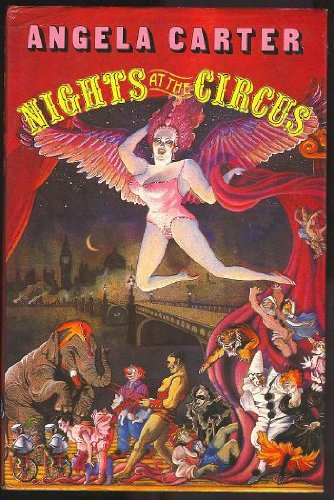
                • Cover of Nights at the Circus
                  Nights at the Circus

                  Angela Carter · standalone novel · 1984

                  similar bywhimsicaleuropeliterary & generalidentity+1 more

                  Nights at the Circus is a novel by British writer Angela Carter, first published in 1984 and the winner of the 1984 James Tait Black Memorial Prize for fiction. The novel focuses on the life and exploits of Sophie Fevvers, a woman who is – or so she would have people believe – a Cockney virgin, hatched from an egg laid by unknown parents and ready to develop fully fledged wings. At the time of the story, she has become a celebrated aerialiste. She captivates the young journalist Jack Walser, who runs away with the circus and falls into a world that his journalistic exploits had not prepared him to encounter.

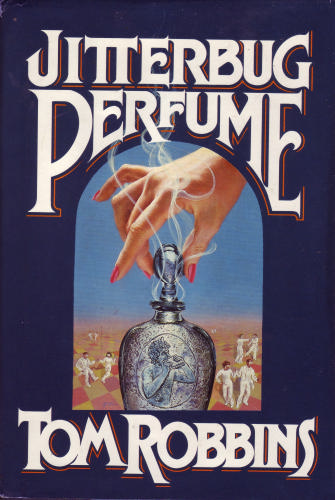
                • Cover of Jitterbug Perfume
                  Jitterbug Perfume

                  Tom Robbins · standalone novel · 1984

                  similar byart and artistswhimsicaleuropeliterary & general

                  Jitterbug Perfume is American writer Tom Robbins' fourth novel and was listed on the New York Times Best Seller list in 1985. The book follows two interweaving storylines, one in Ancient Eurasia and one in the present day. The story connects dueling perfumers in Seattle, Paris and New Orleans to a bottle of incomparable perfume created by two unlikely but defiant lovers of the past who seek immortality. Orchestrated by a mysterious Irish philosopher, the past and the present collide when the characters come together and discover the unexpected path to life-everlasting. The book was first published in 1984 by Bantam Books and later reprinted by Random House.

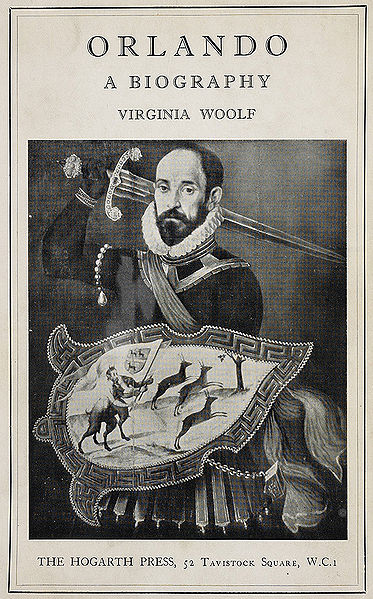
                • Cover of Orlando: A Biography
                  Orlando: A Biography

                  Virginia Woolf · standalone novel · 1928

                  similar byart and artistswhimsicalliterary & generalidentity

                  Orlando: A Biography is a novel by Virginia Woolf, first published on 11 October 1928, inspired by the tumultuous family history of the aristocratic poet and novelist Vita Sackville-West, Woolf's lover and close friend. It is a history of English literature in satiric form. The book describes the adventures of a poet who changes from man to woman and lives for centuries, meeting the key figures of English literary history. Considered a feminist classic, the book has been written about extensively by scholars of women's writing and gender and transgender studies.

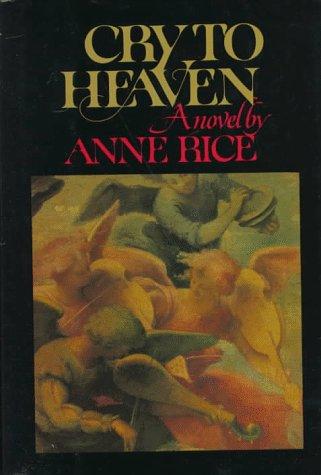
                • Cover of Cry to Heaven
                  Cry to Heaven

                  Anne Rice · standalone novel · 1982

                  similar byart and artistseuropeage of sail & 18th centuryidentity

                  Cry to Heaven is a novel by American author Anne Rice published by Alfred A. Knopf in 1982. Taking place in eighteenth-century Italy, it follows the paths of two unlikely collaborators: a Venetian noble and a maestro castrato from Calabria, both trying to succeed in the world of the opera.

                • Cover of The Unconsoled
                  The Unconsoled

                  Kazuo Ishiguro · standalone novel · 1995

                  similar byeuropeliterary & generalidentitysurrealismchallenging+1 more

                  The Unconsoled is a novel by Kazuo Ishiguro, first published in 1995 by Faber and Faber, and winner of the Cheltenham Prize that year.

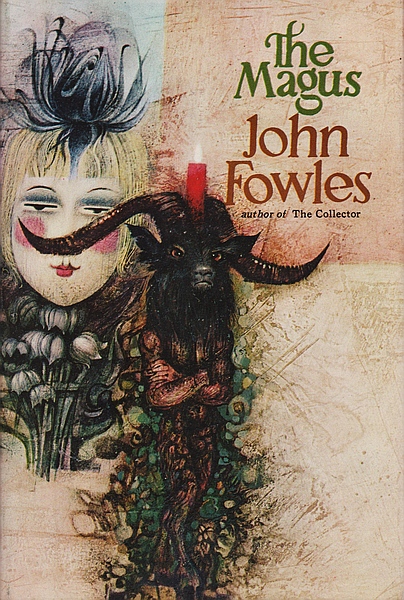
                • Cover of The Magus
                  The Magus

                  John Fowles · standalone novel · 1965

                  similar byeuropeliterary & generalidentitychallengingmetafiction

                  The Magus (1965) is a postmodern novel by British author John Fowles, telling the story of Nicholas Urfe, a young British graduate who is teaching English on a small Greek island. Urfe becomes embroiled in the psychological illusions of a master trickster, which become increasingly dark and serious. Considered an example of metafiction, it was the first novel written by Fowles but his third book to be published. A revised edition was published in 1977.

                • Cover of The Martian
                  The Martian

                  George du Maurier · standalone novel · 1897

                  similar byeuropeliterary & general+3 more

                  The Martian, by George du Maurier, is a largely autobiographical novel published in 1898 and the author's third. It describes the life of Barty Josselin as told by his close friend Robert Maurice, starting from their school days in Paris in the 1850s. Written in long descriptive passages with very little dialogue and many digressions, the book had considerably less success in its time than its predecessor, the popular Trilby.

                • Cover of Interior Chinatown
                  Interior Chinatown

                  Charles Yu · standalone novel · 2020

                  similar byart and artistsliterary & generalidentitymetafiction+1 more

                  Interior Chinatown is a 2020 novel by Charles Yu. It is his second novel and was published by Pantheon Books on January 28, 2020. It won the 2020 National Book Award for Fiction. The novel was also longlisted for the 2021 Andrew Carnegie Medal for Excellence in Fiction and was shortlisted for the Prix Médicis étranger. A television adaptation of the novel, created by Yu and starring Jimmy O. Yang, premiered on Hulu on November 19, 2024.

                • Cover of Wise Children
                  Wise Children

                  Angela Carter · standalone novel · 1991

                  similar byart and artistswhimsicalliterary & general+1 more

                  Wise Children (1991) was the last novel written by Angela Carter. The novel follows the fortunes of twin chorus girls, Dora and Nora Chance, and their bizarre theatrical family. It explores the subversive nature of fatherhood, the denying of which leads Nora and Dora to frivolous "illegitimate" lechery. The novel plays on Carter's admiration of Shakespeare and her love of fairy tales and the surreal, incorporating a large amount of magical realism and elements of the carnivalesque that probes and twists our expectations of reality and society.

                • Cover of The Infernal Desire Machines of Doctor Hoffman
                  The Infernal Desire Machines of Doctor Hoffman

                  Angela Carter · standalone novel · 1972

                  similar byliterary & generalidentitysurrealismchallenging+1 more

                  The Infernal Desire Machines of Doctor Hoffman, published in the United States as The War of Dreams, is a 1972 novel by Angela Carter. This picaresque novel is heavily influenced by surrealism, Romanticism, critical theory, and other branches of Continental philosophy. Its style is an amalgam of magical realism and postmodern pastiche. The novel has been called a theoretical fiction, as it clearly engages in some of the theoretical issues of its time, notably feminism, mass media and the counterculture.

                • Cover of Perfume
                  Perfume

                  Patrick Süskind · standalone novel · 1985

                  similar byart and artistseuropeliterary & generalage of sail & 18th century+1 more

                  Perfume: The Story of a Murderer is a 1985 literary historical fantasy novel by German writer Patrick Süskind. The novel explores the sense of smell and its relationship with the emotional meanings that scents may have.

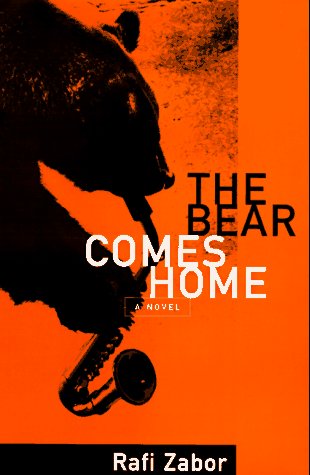
                • Cover of The Bear Comes Home
                  The Bear Comes Home

                  Rafi Zabor · standalone novel · 1997

                  similar byart and artistswhimsicalliterary & generalidentity

                  The Bear Comes Home is a novel written by American writer Rafi Zabor. It won the 1998 PEN/Faulkner Award for fiction, and was selected as an alternate for the Hemingway Foundation/PEN Award.

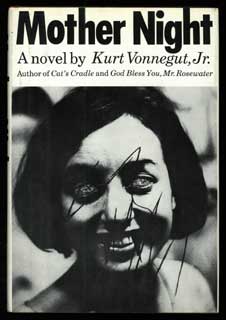
                • Cover of Mother Night
                  Mother Night

                  Kurt Vonnegut & Jr. · standalone novel · 1962

                  similar byeuropeliterary & generalidentitymetafiction

                  Howard W. Campbell Jr., an American playwright who grew up in Germany, writes his memoirs from an Israeli prison cell awaiting trial for war crimes. As the Nazis rose to power, Campbell stayed on, married a German actress, and was recruited by an American agent to serve as a double agent, broadcasting Nazi propaganda over the radio while secretly passing coded intelligence to the Allies. The catch, as Campbell tells it, is that he became one of the war's most effective propagandists in the process, whatever his loyalties. Kurt Vonnegut's darkest novel asks what a person becomes when the mask he wears for a cause is indistinguishable from his face.

                • Cover of Sexing the Cherry
                  Sexing the Cherry

                  Jeanette Winterson · standalone novel · 1989

                  similar bywhimsicaleuropeliterary & generalidentity

                  Sexing the Cherry is a 1989 novel by Jeanette Winterson.

                • Cover of The Castle of Crossed Destinies
                  The Castle of Crossed Destinies

                  Italo Calvino · standalone novel · 1973

                  similar bywhimsicaleuropeliterary & generalidentitychallenging+1 more

                  The Castle of Crossed Destinies is a 1973 novel by Italian writer Italo Calvino.

                • Cover of Point Counter Point
                  Point Counter Point

                  Aldous Huxley · standalone novel · 1928

                  similar byart and artistseuropeliterary & generalidentitychallenging

                  Point Counter Point is a novel by Aldous Huxley, first published in 1928. It is Huxley's longest novel, and was notably more complex and serious than his earlier fiction.

                • Cover of Or What You Will
                  Or What You Will

                  Jo Walton · standalone novel · 2020

                  similar byart and artistsidentityliterary & generalmetafiction+1 more

                  Or What You Will is a 2020 metafictional fantasy novel by Jo Walton, about immortality and creativity. It was first published by Tor Books.

                • Cover of Mr. Vertigo
                  Mr. Vertigo

                  Paul Auster · standalone novel · 1994

                  similar byart and artistswhimsicalliterary & general+1 more

                  In the 1920s, an orphan is rescued from the streets of St. Louis by a mysterious foreigner who teaches him to fly and walk on water. Now an octogenarian, he tells the story of his vaudeville act.

                • Cover of The Cemetery of Untold Stories
                  The Cemetery of Untold Stories

                  Julia Alvarez · standalone novel · 2024

                  similar byart and artistsliterary & generalidentity+1 more

                  The Cemetery of Untold Stories: A Novel (2024) is a work of magical realism and the seventh novel by Dominican-American writer Julia Alvarez. The book follows Alma, a prolific author who, after retiring from her teaching job and writing career, inherits a plot of land in the Dominican Republic where she decides to create a cemetery for her unfinished manuscripts and notes.

                • Cover of Cornish Trilogy
                  Cornish Trilogy

                  series · 3 books · 1981

                  completed

                  similar byart and artistsliterary & general+2 more

                • Cover of Jeff Lint
                  Jeff Lint

                  series · 2 books · 2005

                  similar byart and artistsliterary & generalwhimsicalidentitymetafiction

                • Cover of The Last Voyage of Somebody the Sailor
                  The Last Voyage of Somebody the Sailor

                  John Barth · standalone novel · 1991

                  similar bywhimsicalliterary & generalidentitychallengingmetafiction

                  The Last Voyage of Somebody the Sailor is a novel by American writer John Barth, published in 1991. It is a postmodern metafictional story of a man who jumps overboard from a modern replica of a medieval Arab ship and is rescued by sailors from the world of Sinbad the Sailor. Eventually he makes his way to "Baghdad, the City of Peace", and finds himself in the stories of Sindbad and Scheherazade. The novel makes use of a challenging double-stranded narrative and a rich prose style.

                • Cover of Concrete Island
                  Concrete Island

                  J. G. Ballard · standalone novel · 1974

                  similar byeuropeliterary & generalidentitychallenging

                  Architect Robert Maitland crashes his car onto a stretch of wasteland trapped between three converging motorways -- visible from thousands of cars, reachable by none of them. Injured and unable to climb back to the road, Maitland adapts to life on what he starts calling the Island, scavenging food thrown from car windows, and discovers he isn't alone: a runaway sex worker hiding in a bunker, and a brain-damaged former circus acrobat, both long past expecting rescue. What begins as a survival story turns into a question of whether Maitland even wants to leave. A J. G. Ballard novel of urban isolation, grouped with Crash and High-Rise.

                • Cover of Sacré Bleu: A Comedy d'Art
                  Sacré Bleu: A Comedy d'Art

                  Christopher Moore · standalone novel · 2012

                  similar byart and artistseuropeliterary & general+1 more

                  "From repeat New York Times bestselling author Christopher Moore comes a love story, the portrait of a young artist, the portrait of the young artist's myterious girlfriend, a thriller, and a comedy -- all about the color blue"--