More like Pilot
anchored on:science fictionhard science fictionspacefar futurealiensspace exploration+2 more
but
- Xeelee
series89 books1987
similar byfar futurealiensscience fictionhard science fictionspace+3 more
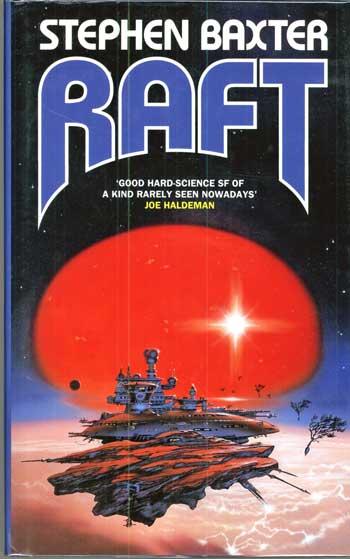
The Xeelee Sequence is a series of hard science fiction novels, novellas, and short stories written by British author Stephen Baxter. The series spans billions of years of fictional history, exploring humanity's future expansion into the universe, its intergalactic war with the Xeelee, a supremely advanced Kardashev Type V alien civilization, and the Xeelee's own conflict with dark matter entities known as Photino Birds. The Xeelee are described as symbiotic entities composed of spacetime defects, Bose–Einstein condensates, and baryonic matter.
- Blindsight / Firefall
series3 books2006
similar byalienschallengingscience fictionhard science fictiondarkfar futurespace+1 more
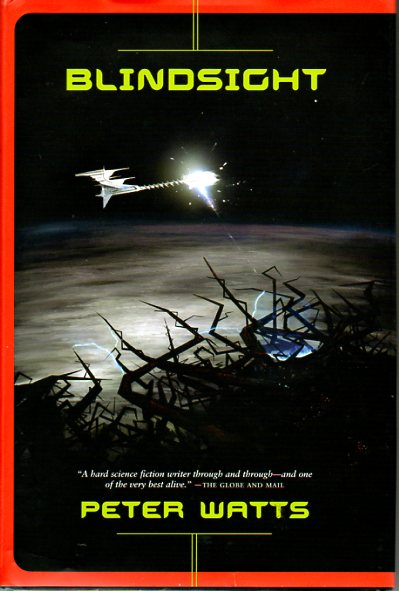
Blindsight sends a crew of radically modified posthumans (including a resurrected, genetically restored vampire) out to the Oort cloud after humanity detects an alien signal, only to make contact with something intelligent, wildly capable, and possibly not conscious at all — a first-contact story built around the question of whether self-awareness is actually useful. Peter Watts's Echopraxia is a same-timeframe "sidequel" rather than a direct sequel, following different characters through the fallout of the same first-contact event.
- The Gods Themselves
Isaac Asimovstandalone novel1972
similar bychallengingfar futurealiensscience fictionhard science fiction+1 more
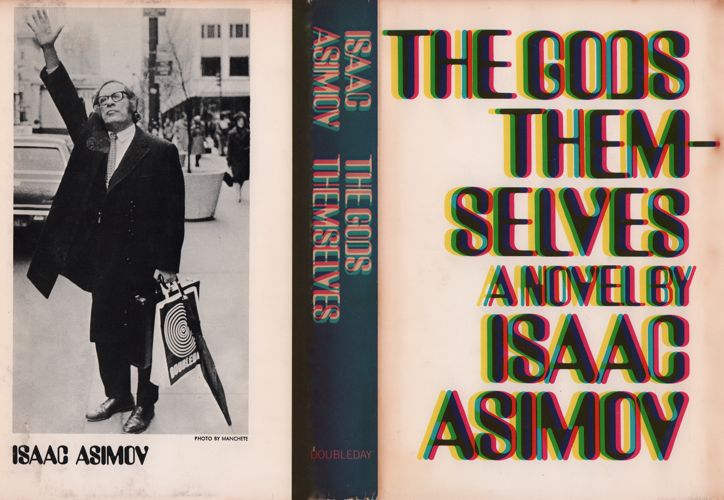
The Gods Themselves is a 1972 science fiction novel written by Isaac Asimov, and his first original novel in fifteen years. It won the Nebula Award for Best Novel in 1972, and the Hugo Award for Best Novel in 1973.
- Thistledown
series5 books1978
completed
similar byfar futurescience fictionspace explorationhard science fictionspace+2 more
- Ringworld
series5 books1970
part of Known Space
similar byspace explorationfar futurealiensscience fictionspace
The Ringworld series is a series of science fiction novels written by American author Larry Niven. It is part of his Known Space series of stories. Its backdrop is the Ringworld, a giant artifact 3 million times the surface area of Earth circling a star. The series is composed of four standalone science fiction novels, the original award-winning book and its three sequels:1970: Ringworld 1979: The Ringworld Engineers 1996: The Ringworld Throne 2004: Ringworld's Children
- A Meeting with Medusa
series2 books1971
similar byaliensspace explorationchallengingscience fictionfar futurehard science fictionspace
Arthur C. Clarke's A Meeting with Medusa follows an astronaut, badly injured in an earlier disaster, on a solo balloon expedition into Jupiter's atmosphere, where he encounters vast floating lifeforms unlike anything previously catalogued. Decades later, Stephen Baxter and Alastair Reynolds continued the story in The Medusa Chronicles, following the same protagonist across a much longer span of future history. The original novella won the 1972 Nebula Award.
- Incandescence
Greg Eganstandalone novel2008
similar bychallengingfar futurealiensspace explorationscience fictionhard science fiction
Incandescence is a 2008 science fiction novel by Australian author Greg Egan. The book is based on the idea that the theory of general relativity could be discovered by a pre-industrial civilisation.
- Dichronauts
Greg Eganstandalone novel2017
similar bychallengingfar futurealiensspace explorationscience fictionhard science fiction
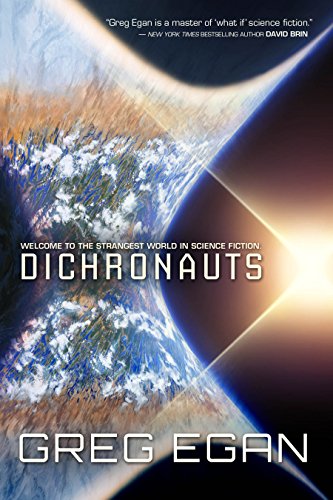
Dichronauts is a hard science-fiction novel by Australian author Greg Egan. The novel was published by Night Shade Books on 11 July 2017. It describes a universe with two time dimensions, one of which corresponds to the time perception of the characters while the other influences their spatial perception, which precludes rotations in the latter chronological direction. Hence a symbiosis of two life forms is necessary, so that they can even see in all directions. Furthermore, many fundamental laws of physics are altered crucially: Objects can roll uphill or not fall over any more when oriented suitably. There is negative kinetic energy and a fourth state of matter. Planets are no longer spherical, but hyperbolic and therefore have three separate surfaces. Egan describes these details on his website.
- Schild's Ladder
Greg Eganstandalone novel2002
similar bychallengingfar futurespace explorationscience fictionhard science fictionspace
Schild's Ladder is a 2002 science fiction novel by Australian author Greg Egan. The book derives its name from Schild's ladder, a construction in differential geometry, devised by the mathematician and physicist Alfred Schild.
- Pushing Ice
Alastair Reynoldsstandalone novel2005
similar byfar futurealiensspace explorationscience fictionhard science fictionspace
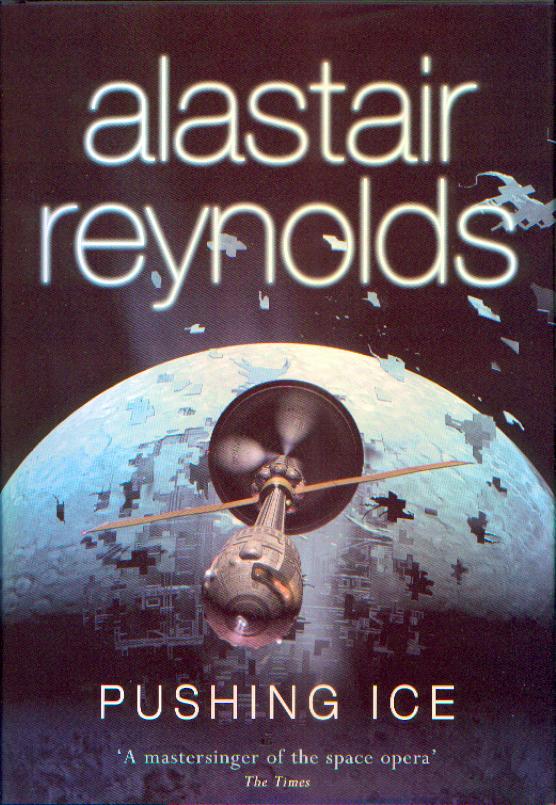
When Saturn's moon Janus suddenly takes off into interstellar space, an ice mining spaceship sent to investigate finds itself swept along into distant space until it ends up trapped in a gigantic alien structure, wherein the crew must prepare to reside for the foreseeable future.
- Heechee
series19 books1972
completed
similar byfar futurealiensspace explorationscience fictionspace
The Heechee Saga, also known as the Gateway series, is a series of science fiction novels and short stories by Frederik Pohl. The Heechee are an advanced alien race that visited the Solar System hundreds of millennia ago and then mysteriously disappeared. They left behind bases containing artifacts, including working starships, which are discovered and exploited by humanity.
- Diaspora
Greg Eganstandalone novel1997
similar bychallengingfar futurespace explorationscience fictionhard science fictionspace
Diaspora is a hard science fiction novel by the Australian writer Greg Egan which first appeared in print in 1997. It originated as the short story "Wang's Carpets" which originally appeared in the Greg Bear-edited anthology New Legends. The story appears as a chapter of the novel.
- Mesklin
series6 books1954
completed
similar byfar futurealiensspace explorationscience fictionhard science fiction
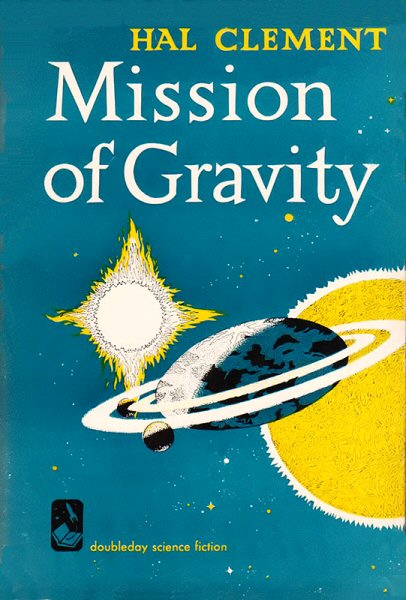
Mesklin is a fictional planet created by Hal Clement and used in a number of his hard science fiction stories, starting with Mission of Gravity (1954). Alongside the novel's original 1953 serialization in Astounding Science Fiction, Clement published an essay titled "Whirligig World" on how he designed the planet to have the properties he wanted. The idea came from an object that was at the time believed to exist in the 61 Cygni system, and which might represent an extrasolar planet.
- Kefahuchi Tract Trilogy
series3 books2002
similar bychallengingfar futurescience fictionspace+3 more
M. John Harrison's Kefahuchi Tract trilogy circles a strange, physics-breaking anomaly in deep space that draws scientists, smugglers, and drifters into its pull across different eras. Light moves between a near-future timeline and a far-future one drawn to the Tract itself; its sequel Nova Swing stays within one future period, where a fragment of the anomaly's altered space bleeds into the run-down port city of Saudade, giving the book a noir, Roadside-Picnic-like atmosphere; Empty Space concludes the sequence. The three novels share a setting and mood more than a continuous plot or cast.
- The Sirens of Titan
Kurt Vonnegut & Jr.standalone novel1959
similar byfar futurealiensscience fictionspace+1 more
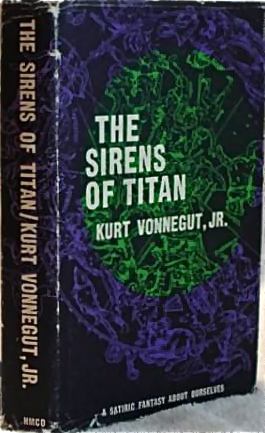
The Sirens of Titan is a comic science fiction novel by Kurt Vonnegut Jr., first published in 1959. His second novel, it involves issues of free will, omniscience, and the overall purpose of human history, with much of the story revolving around a Martian invasion of Earth.
- Stars in My Pocket Like Grains of Sand
Samuel R. Delanystandalone novel1984
similar bychallengingfar futurealiensscience fictiongalactic scale+1 more
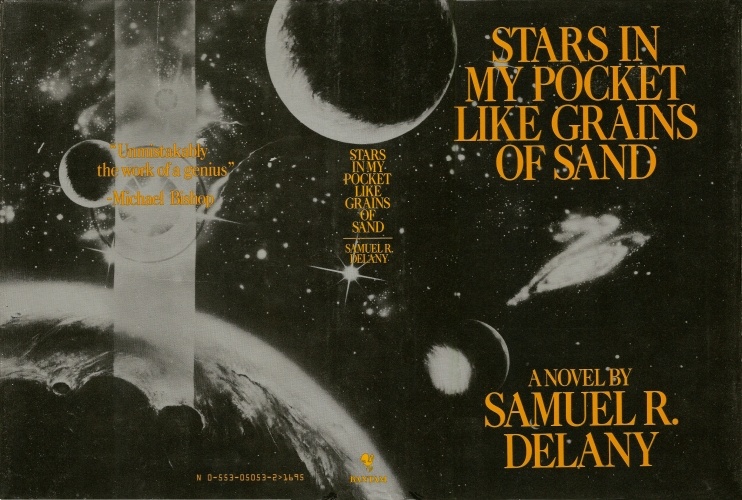
Stars in My Pocket Like Grains of Sand (1984) is a science fiction novel by Samuel R. Delany. It is part of what would have been a "diptych", in Delany's description, of which the second half, The Splendor and Misery of Bodies, of Cities, remains unfinished.
- The Fountains of Paradise
Arthur C. Clarkestandalone novel1979
similar byfar futurespace explorationscience fictionhard science fictionspace
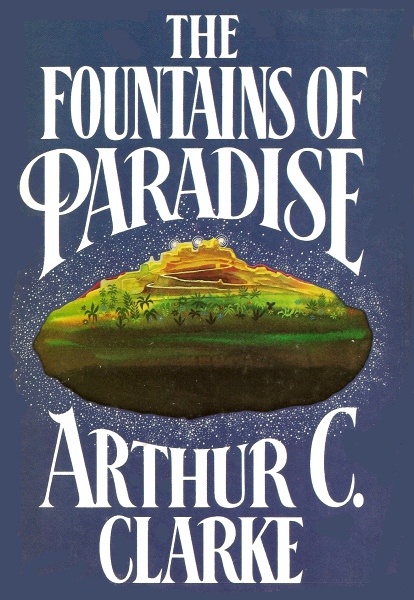
The Fountains of Paradise is a 1979 science fiction novel by British writer Arthur C. Clarke. Set in the 22nd century, it describes the construction of a space elevator. This "orbital tower" is a giant structure rising from the ground and linking with a satellite in geostationary orbit at the height of approximately 36,000 kilometres. Such a structure would be used to raise payloads to orbit without the expense of using rockets. The novel won both the Hugo and Nebula Awards for Best Novel.
- Fleet of Worlds
series5 books2007
part of Known Space
similar byfar futurealiensspace explorationscience fictionspace+1 more
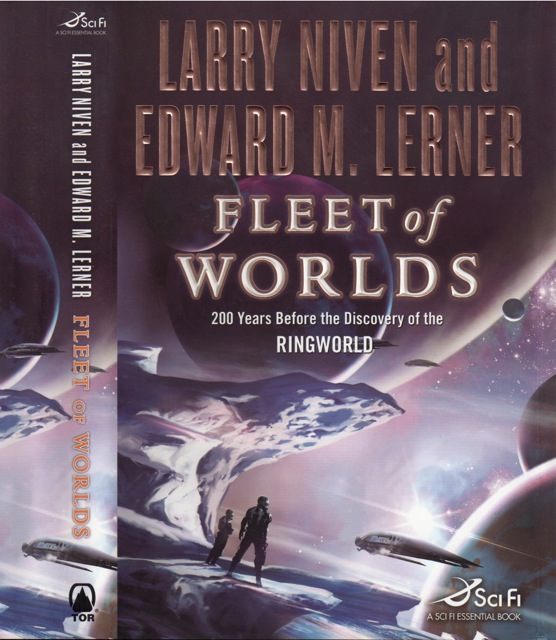
Fleet of Worlds opens a run of Known Space prequels co-written by Larry Niven and Edward M. Lerner, centered on the liberation of the human colony New Terra from the control of the Pierson's Puppeteers — the famously cowardly aliens who steer their fleet of five worlds away from any hint of danger. The series introduces a new Known Space species, the Gw'oth, across its run and eventually catches up to and continues past the original Ringworld novel in its fifth book, Fate of Worlds.
- The Avatar
Poul Andersonstandalone novel1978
similar byfar futurealiensspace explorationscience fictionspace+1 more
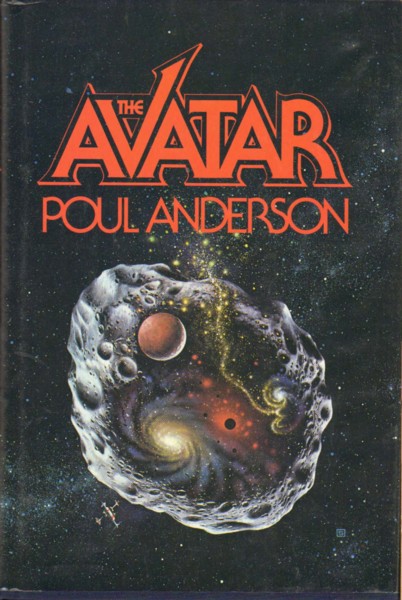
After humanity discovers portals that transport a space vessel through time and space, a crew which has visited the planet of another species returns to Earth, only to find a political faction in power which seeks to conceal this knowledge in the name of social stability. With the aid of the political opposition, they escape and journey through the portal in search of knowledge, and perhaps even to meet those who created the portal system.
- The Colors of Space
Marion Zimmer Bradleystandalone novel1963
similar byfar futurealiensspace explorationscience fictionspace
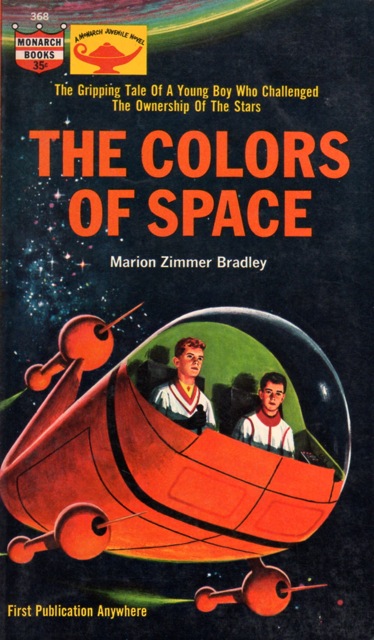
The Lhari seem peaceful and friendly, but they go to some lengths to protect their monopoly on faster-than-light travel. One young man is sent to discover their secrets.
- Learning the World
Ken MacLeodstandalone novel2005
similar byfar futurealiensspace explorationscience fictionhard science fictionspace
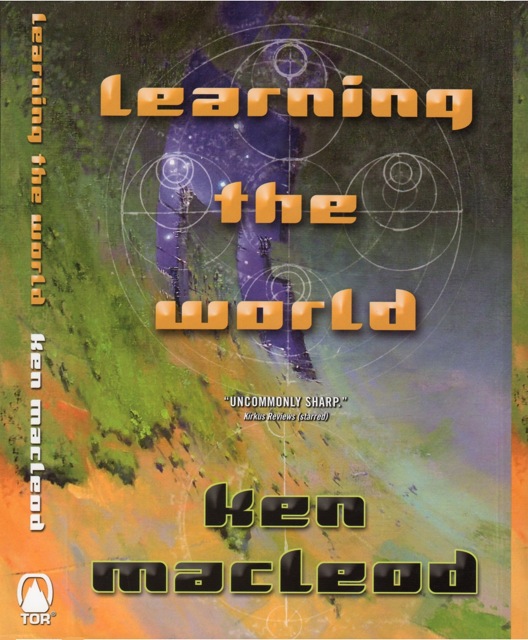
From the front flap of the Tor first printing: "Humanity has spread to every star within 500 light-years of its half-forgotten origin, coloring the sky with a haze of habitats. Societies rise and fall. Incautious experiments burn fast and fade. On the fringes, less modified humans get on with the job of settling a universe that has, so far, been empty of intelligent life. The ancient starship But the Sky, My Lady! The Sky! is entering orbit around a promising new system after a four hundred year journey. For its long-lived inhabitants, the centuries have been busy. Now a younger generation is eager to settle the system. The ship is a seed-pod ready to burst. Then they detect curious electromagnetic emissions from the system's Earth-like world. As the nature of the signals becomes clear, the choices facing the humans become stark. On Ground, second world from the sun, a young astronomer searches for his system's outermost planet. A moving point of light thrills, then disappoints him. It's only a comet. His physicist colleague Orro takes time off from trying to invent a flying-machine to calculate the comet's trajectory. Something is very odd about that comet's path. They are not the only ones for whom the world has changed. "We are not living in the universe we thought we lived in yesterday. We have to start learning the world all over again.""
- Fractalverse
series2 books2020
similar byfar futurealiensspace explorationscience fictionspace+1 more
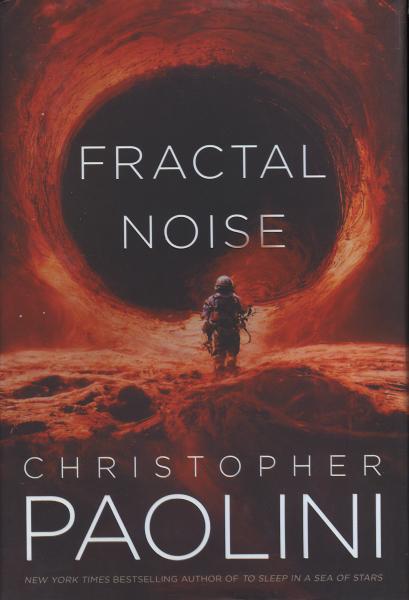
To Sleep in a Sea of Stars opens Christopher Paolini's Fractalverse with Kira Navárez, a xenobiologist whose survey of an unexplored planet triggers first contact with an ancient alien intelligence, dragging her and the wider human Alliance into a wider interstellar conflict for survival. Fractal Noise, a parallel entry, follows a separate crew investigating a mysterious signal-emitting structure on another world within the same universe. Both books were published between 2020 and 2023.
- Academy / Priscilla (Hutch) Hutchins
series16 books1983
similar byspace explorationaliensfar futurescience fictionspace+1 more
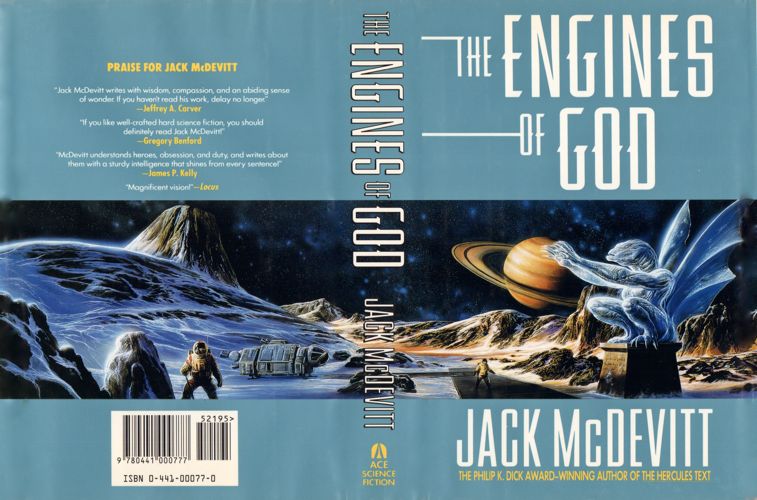
Jack McDevitt's Academy novels follow Priscilla 'Hutch' Hutchins, a starship pilot turned administrator, across a series of archaeological mysteries involving vanished alien civilizations and inexplicable ancient artifacts scattered through human space. Beginning with The Engines of God, the series treats deep time and the near-total absence of intelligent alien life as its central mystery, favoring slow-burn discovery over action. McDevitt returned to Hutch across three decades of publication.
- Star Maker
series9 books1937
completed
part of Last Men Universe
similar byscience fictionfar futuregalactic scale+3 more
Star Maker (1937) is Olaf Stapledon's cosmic philosophical novel, tracing the rise and fall of civilizations across the universe as it builds toward questions about creation, unity, and the nature of the Star Maker behind it all, expanding the scope of his earlier Last and First Men. It is paired here with Nebula Maker, a related manuscript Stapledon wrote in the 1930s between those two novels but which went unpublished until its rediscovery in 1976, alongside a handful of shorter pieces. Together they sit within Stapledon's last-men-universe of linked visionary future histories.