More like Pimpf
anchored on:science fictionbritish islescontemporaryhorrorcosmic horrorspy thriller+1 more
but
- Laundry Files
series22 books2004
similar bybritish islescontemporaryscience fictionspy thriller+5 more
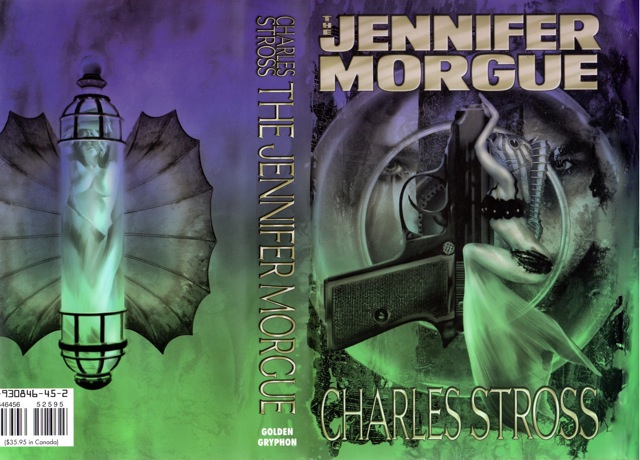
The Laundry Files is a series of novels by British writer Charles Stross. They mix the genres of Lovecraftian horror, spy thriller, science fiction, and workplace humour. Their main character for the first five novels is "Bob Howard", a one-time I.T. consultant turned occult field agent. Howard is recruited to work for the Q-Division of SOE, otherwise known as "the Laundry", the British government agency which deals with occult threats. "Magic" is described as being a branch of applied computation (mathematics), therefore computers and equations are just as useful as, and perhaps more potent than, classical spellbooks, pentagrams, and sigils for the purpose of influencing ancient powers and opening gates to other dimensions. These occult struggles happen largely out of view of the public, as the Laundry seeks to keep the methods for contacting such powers under wraps. There are also elements of dry humour and satirisation of bureaucracy.
- The Terminal Man
Michael Crichtonstandalone novel1972
similar byartificial intelligencetensecontemporaryscience fiction
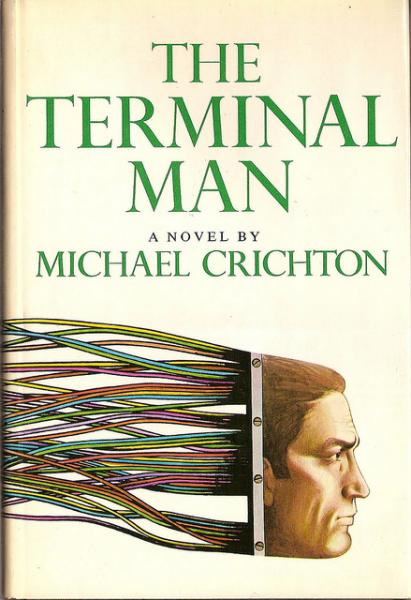
The Terminal Man is a novel by American writer Michael Crichton. It is his second novel under his own name, his 12th overall, and is about the dangers of mind control. It was published in April 1972 and also serialized in Playboy in March, April, and May 1972. In 1974, it was made into a film of the same name.
- The Machine
James Smythestandalone novel2013
similar byartificial intelligencetensecontemporarybritish islesscience fiction
From the publisher's website: Haunting memories defined him. The machine took them away. She vowed to rebuild him. From the author of The Testimony comes a Frankenstein for the twenty-first century. Beth lives alone on a desolate housing estate near the sea. She came here to rebuild her life following her husband's return from the war. His memories haunted him but a machine promised salvation. It could record memories, preserving a life that existed before the nightmares. Now the machines are gone. The government declared them too controversial, the side-effects too harmful. But within Beth's flat is an ever-whirring black box. She knows that memories can be put back, that she can rebuild her husband piece by piece. A Frankenstein tale for the 21st century, The Machine is a story of the indelibility of memory, the human cost of science and the horrors of love.
- Prey
Michael Crichtonstandalone novel2002
similar byartificial intelligencetensecontemporaryscience fiction
Prey is the thirteenth novel by Michael Crichton under his own name and his twenty-third novel overall. It was first published in November 2002, making it his first novel of the twenty-first century. An excerpt was first published in the January–February 2003 issue of Seed magazine. Prey brings together themes from two earlier Crichton best-selling novels, Jurassic Park and The Andromeda Strain, and serves as a cautionary tale about developments in science and technology: in particular, nanotechnology, genetic engineering, and distributed artificial intelligence.
- WWW Trilogy
series3 books2009
similar byartificial intelligencecontemporaryscience fiction+1 more
The WWW Trilogy is a trilogy of science-fiction novels by Canadian science fiction author Robert J. Sawyer. The first book, Wake, was originally serialized in four parts in Analog Science Fiction and Fact from November 2008 to March 2009, published in book form through Ace on April 7, 2009, and was followed by the second book, Watch, on April 6, 2010. Wonder was published in 2011.
- Sprawl Trilogy
series10 books1981
similar byartificial intelligencetensescience fiction
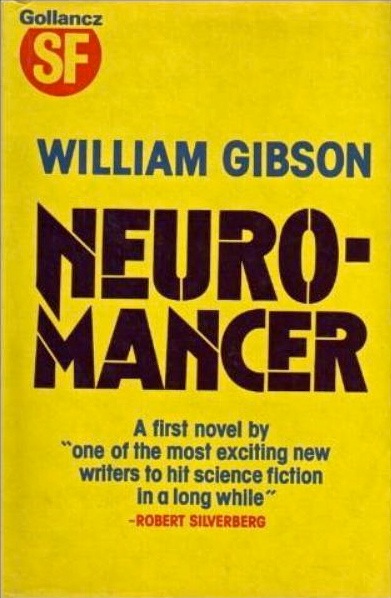
The Sprawl Trilogy is William Gibson's foundational cyberpunk sequence: Neuromancer (1984), in which hacker Case is drawn into a high-stakes heist alongside an artificial intelligence and a damaged ex-soldier, followed by Count Zero (1986) and Mona Lisa Overdrive (1988), which widen the same near-future world of corporate power and networked cyberspace to new characters. Johnny Mnemonic, an early short story set in the same fictional milieu, predates the novels and introduces the courier Molly Millions before her role in the trilogy. Together these works established much of cyberpunk's visual and thematic vocabulary.
- The Fear Index
Robert Harrisstandalone novel2011
similar byartificial intelligencetensecontemporaryscience fiction
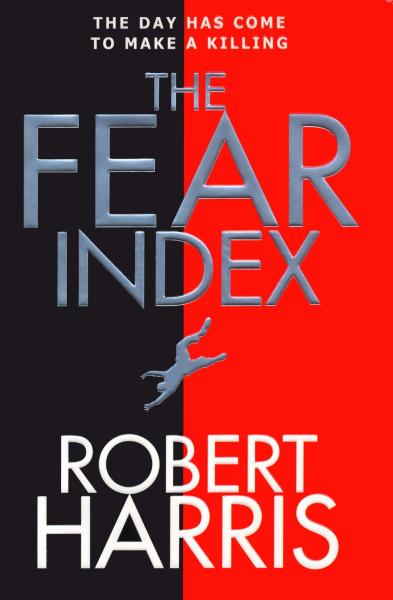
A computer designed for stock trading becomes sentient.
- Coils
Roger Zelazny & Fred Saberhagenstandalone novel1982
similar bytensecontemporaryscience fiction+1 more
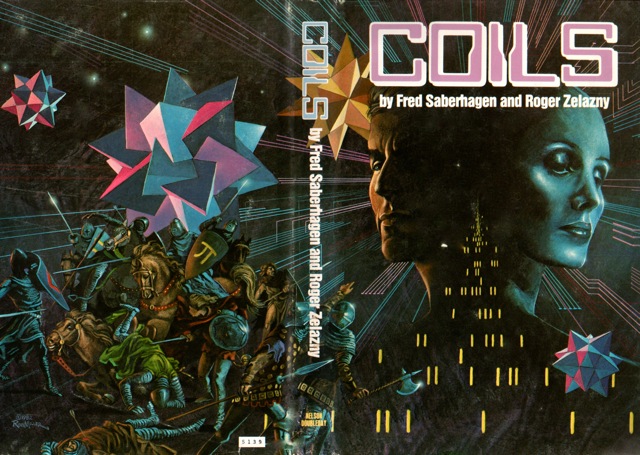
A man discovers that his memories of childhood are false, and when he begins to investigate his psychiatrist is murdered and his girlfriend is kidnapped. As his actual past begins to return to his memory, he realizes that he has the ability to mentally connect to computer circuitry, an ability he used to use for illegal advantage for the corporation which employed him, along with a small group of others with paranormal powers. He concludes that the corporation is behind all this and sets out to find and rescue his girlfriend while the corporation pursues him.
- Demon Headmaster
series9 books1982
similar bytensecontemporarybritish islesscience fiction+1 more
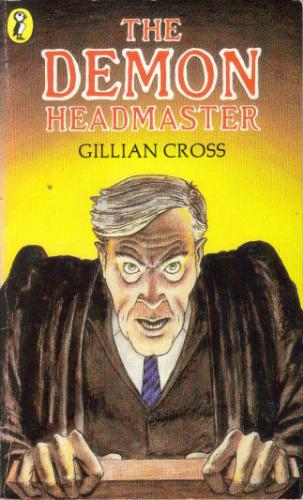
The Demon Headmaster is a series of books by Gillian Cross which were later adapted as a television series starring Terrence Hardiman in the title role and Frances Amey as Dinah.
- The Terminal Experiment
Robert J. Sawyerstandalone novel1995
similar byartificial intelligencecontemporaryscience fiction+1 more
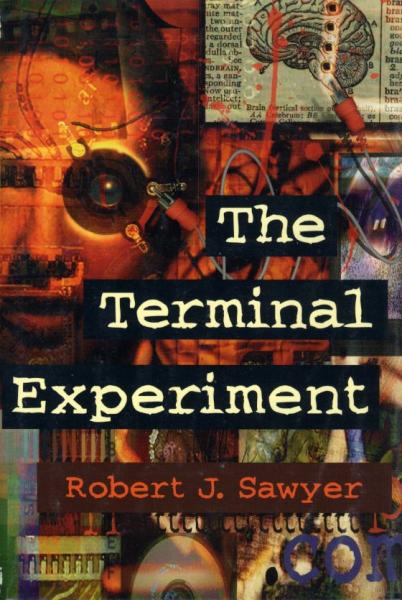
The Terminal Experiment is a science fiction novel by Canadian writer Robert J. Sawyer. The book won the 1995 Nebula Award for Best Novel, and was nominated for the Hugo Award for Best Novel in 1996. Sawyer received a writer's reserve grant from the Ontario Arts Council in 1993 in support of his writing the novel.
- Alif the Unseen
G. Willow Wilsonstandalone novel2012
similar byartificial intelligencetensecontemporaryscience fiction
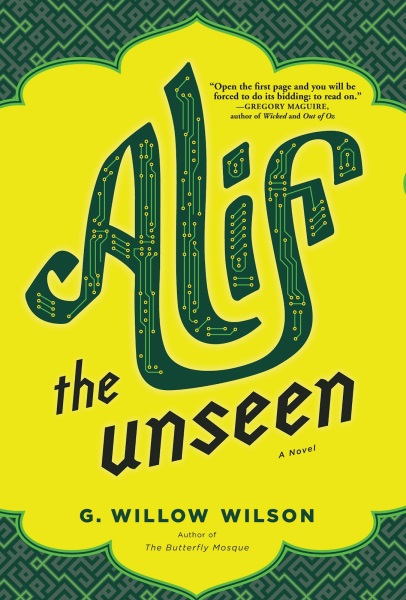
Alif the Unseen is a 2012 cyberpunk fantasy novel by American writer G. Willow Wilson. In the novel, a Middle Eastern hacker named Alif discovers a book of djinn tales which may lead to a new age of quantum computing. The novel won the 2013 World Fantasy Award for Best Novel.
- The Killer Thing
Kate Wilhelmstandalone novel1967
similar byartificial intelligencetensecontemporaryscience fiction
A robot destroys its inventor and programs itself to kill all life. How much must be sacrificed to stop it?
- Wargames
David Bischoffstandalone novel1983
similar byartificial intelligencetensecontemporaryscience fiction
Deep in the control room the nation's chiefs watch with alarm as their computers show an imminent missile attack. Could this be it? Or is the truth funnier, thought almost as alarming? This is the story, based on the successful movie, WarGames, of how one young computer freak sent the nation's defence into turmoil - and nearly caused World War III.
- Tom Broadbent / Wyman Ford
series6 books2003
similar bytensecontemporaryscience fiction+1 more
Douglas Jerome Preston is an American journalist and author. Although he is best known for his thrillers in collaboration with Lincoln Child, he has also written six solo novels, including the Wyman Ford series and a novel titled Jennie, which was made into a movie by Disney called The Jennie Project. Preston has authored a half-dozen nonfiction books on science and exploration and writes occasionally for The New Yorker, Smithsonian, and other magazines.
- Hard Questions
Ian Watsonstandalone novel1996
similar byartificial intelligencetensecontemporaryscience fiction
Meet Qua, the quantum computer with immense power capabilities that tunes into pathways in parallel universes to operate at lightning speed. But with such power comes the threat of catastrophe, and as government agents, cult disciples, and computer criminals learn what this computer is capable of, Cambridge researcher Clare Conway makes every attempt to safeguard herself and society from the realities she discovers about Qua. For all of the power this computer offers, it threatens to spark a civil war in America, a danger unlike any other that history has ever known.
- Halting State
series2 books2007
similar byartificial intelligencetensescience fiction+1 more
Charles Stross's Halting State opens as a near-future police procedural: a bank robbery inside a massively multiplayer online game turns out to mask a much larger cybercrime, investigated through shifting narrators using augmented-reality glasses and always-on networks. Its loose sequel, Rule 34, follows an Edinburgh police officer investigating a string of deaths linked by nothing but an obscure internet meme, in the same near-future Scotland. Both are standalone technothrillers connected by setting and tone rather than a continuing plot.
- Artifact
Jeremy Robinsonstandalone novel2025
similar byartificial intelligencetensecontemporaryscience fictionhorror
In an isolated Alaskan town, the local sheriff uncovers a secret lab where generative A.I. and bioprinting have unleashed grotesque, living anomalies—and now, something monstrous is loose. Sheriff Colton Graves prefers the quiet life in Raven’s Rest, Alaska, a remote town accessible only by tunnel and home to a hardy mix of locals and secrets buried in the ice. But when a camel wanders down Main Street—its head grotesquely sprouting a dozen eyes—Colton knows his quiet days are over. The bizarre incident leads him to NovaGen, a nearby research facility constructed inside a Cold War bunker, buried in the mountains above town. There, a trail of blood and eerie silence hints at something far more sinister than an escaped animal experiment. With his deputies—the sharp-witted Tali and rookie Ethan—Colton recruits a few trusted locals, including the unshakable Marit, Tali’s sister, the intimidating ‘Grizz’ Norval, and Edgar ‘Old Red’ Rydell, an aging man plagued by demons from when he worked at the bunker during its covert cold war days. Together, they investigate the abandoned lab. What begins as a search for missing scientists soon reveals chilling pools of blood without bodies, cryptic warnings left behind, a bloody six-fingered handprint, and the revelation of a new a generative A.I. capable of printing living organisms. As they descend deeper into the lab, it becomes clear that the answers they seek may come at a terrifying cost—and that what was made in the dark may not be content to stay there.
- Death Match
Lincoln Childstandalone novel2004
similar byartificial intelligencetensecontemporary+2 more
Lincoln Child is an American author of techno-thriller and horror novels. Though he is most well known for his collaborations with Douglas Preston, he has also written eight solo novels, including the Jeremy Logan series. Over twenty of the collaborative novels and most of his solo novels have become New York Times bestsellers, some reaching the #1 position. Child and Preston's first novel together, Relic, was adapted into a feature film. Their books are notable for their thorough research and scientific accuracy.
- Richard Forthrast
series2 books2011
similar byscience fiction+3 more
Neal Stephenson's Richard 'Dodge' Forthrast novels open with Reamde, a globe-spanning thriller that starts when ransomware inside an MMORPG economy pulls Richard's extended family into a real-world hostage crisis involving hackers, jihadists and Russian mobsters. The sequel Fall; or, Dodge in Hell shifts registers entirely, following Richard's digitally preserved mind after death into an afterlife simulation built from his scanned brain. The two books share a protagonist and family but differ sharply in genre and scale.
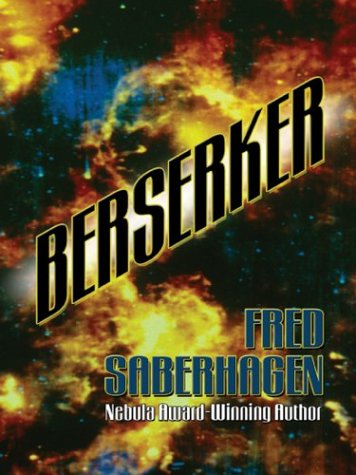
- Berserker (Fred Saberhagen)
series59 books1963
similar byartificial intelligencetensescience fiction
The Berserker series is a series of space opera science fiction short stories and novels by Fred Saberhagen, in which robotic self-replicating machines strive to destroy all life.