Loreful
HomeDiscover
Search series, authors…⌘K
Loreful

Reading orders for SF/F series and shared universes — with your place kept in every one.

Explore

UniversesSeriesWorksAuthorsAtlas

Help

FAQAboutSite map

Account & legal

Sign inCreate accountPrivacyTerms

Data

Built on ISFDB, Wikipedia, Wikidata and Open Library. Curated reading orders carry their reasoning on the page; the rest follow publication order. Data sources & licenses

© Loreful · data: ISFDB · CC BY

More like Pipe Down!

but

Mood

The mood the book leaves you in.

  • The reading experience is propelled by journeys, exploration, and physical risk; excitement and forward momentum dominate over dread or introspection.
  • Joy and loss are deliberately mixed; the resolution grants characters something real while taking something else away, leaving warmth and sorrow together.
  • The book demands work from the reader — dense prose, difficult structure, unfamiliar ideas, or morally uncomfortable material — as part of its intended effect.
  • Grim events, cruelty, or despair dominate the atmosphere, and the book does not soften them with comfort or comic relief.
  • The atmosphere is quietly unsettling — wrongness, unease, and the uncanny pervade the book without necessarily escalating into overt horror.
  • The book is built to move the reader; character feeling is foregrounded and major scenes aim at a strong emotional response.
  • Humor is a primary aim and the prose plays for laughs — comic situations, wit, or dialogue produce sustained comedy, not occasional levity.
  • The book insists that things can improve; effort and decency are shown to matter, and the arc bends toward better outcomes even through hardship.
  • The book teaches as it goes — real facts, history, science, or craft are conveyed in enough depth that learning is part of the reading experience.
  • The book is designed to uplift and motivate, presenting perseverance or achievement in a way that invites the reader to aspire or act.
  • The overall register is cheerful and easygoing; stakes are kept gentle and the book avoids dwelling on pain or dread.
  • Withheld information drives the experience; the book sustains enigmas and secrets the reader wants resolved, whatever its genre.
  • The book is contemplative and inward-looking, giving more weight to thought, memory, and meaning than to external events.
  • The book works as comfort reading — low tension, a soothing pace, and an atmosphere the reader can unwind in.
  • Grief, loss, or melancholy set the dominant register, and the book lets sorrow stand rather than resolving it into comfort.
  • Sustained suspense is the point; the book keeps the reader braced for what happens next through danger, pressure, or impending revelation.
  • Playful invention and charm define the register — fanciful conceits, light absurdity, and a narration that delights in its own oddity.

About

What the story runs on.

  • Stories in which extraterrestrial beings are central — as characters, cultures, or the object of the plot.
  • Stories structured as a quest — a journey undertaken to find, deliver, or destroy something of great import.
  • Stories in which staying alive against nature, catastrophe, or scarcity is the central problem.
  • Stories of lovers kept apart by law, family, faith, or station, where the obstacle to love is the plot.
  • Stories in which a friendship — its making, testing, or loss — is the emotional center.
  • Stories of growing up — a young protagonist crossing from childhood into adult knowledge and responsibility.
  • Stories about who a character truly is — self-discovery, doubled lives, and the search for a self.
  • Stories about mourning — living through the death of a loved one and what loss does to the survivors.
  • Stories in which a buried family truth — hidden parentage, crimes, or shames — surfaces and reorders the present.
  • Stories driven by maneuvering for power — factions, conspiracies, and statecraft conducted in shadow.
  • Stories in which war itself is the subject — combat, occupation, and what warfare does to soldiers and civilians.
  • Stories organized around investigating a killing — the case, the clues, and the pursuit of the killer, in any genre's clothing.

Shelf

Where it sits in the library.

    • Fiction built on magic or other supernatural elements that have no scientific explanation.
    • Secondary-world fantasy at large scale, where the fate of nations or the world turns on the protagonists' struggle.
    • Fantasy set in a recognizably modern city or contemporary world where the supernatural intrudes on everyday life.
    • Fantasy that blends in horror's atmosphere and imagery, keeping a fantastical frame around grim or frightening material.
    • Action-driven fantasy following warriors or rogues with personal stakes against sorcerous threats, rather than world-spanning conflicts.
    • Fantasy set in a real historical period or a close analogue of one, with magic woven into the era.
    • Fantasy in which protagonists cross from the ordinary world into another world through a portal or similar passage.
    • Fiction that retells or reworks a traditional fairy tale in a new form or setting.
    • Fantasy drawing directly on myths, legends, and folklore, retelling them or building on their figures and logic.
    • Fantasy of ghosts, vampires, shapeshifters, psychics, and similar phenomena, usually set in an otherwise ordinary world.
    • Fiction mixing science-fictional trappings with overtly magical or impossible elements in one setting.
    • Low-stakes fantasy emphasizing comfort, community, and everyday pleasures over conflict and peril.
    • Speculative fiction of pervasive moral ambiguity, violence, and cynicism that rejects heroic conventions — fantasy and SF alike.
      • Fiction that extrapolates from science and technology — future societies, space travel, or speculative inventions — within at least nominally natural laws.
      • Science fiction of interstellar scope — starships, galactic polities, and adventure across star systems.
      • Science fiction committed to scientific rigor, where technical plausibility constrains the story.
      • Science fiction centered on armed forces and warfare, told largely from a military point of view.
      • Science fiction of networked, corporate-dominated near futures, pairing high technology with social decay.
      • Science fiction styled on nineteenth-century steam-powered technology, often in a Victorian or pseudo-Victorian setting.
      • Fiction depicting an oppressive or catastrophic society, presented as a warning.
      • Fiction set after civilization's collapse, following survivors in the ruins of the old world.
      • Fiction in which characters move between past and future, and the mechanics or consequences of that travel drive the plot.
      • Fiction exploring a world where a historical event went differently and history diverged from ours.
      • Science fiction about humanity's first encounter and communication with an alien intelligence.
      • Science fiction in which extraterrestrial forces attack or occupy Earth and humanity resists.
      • Fiction whose primary aim is to frighten or unsettle the reader through dread, menace, or the monstrous.
      • Horror of vast, indifferent, incomprehensible entities before which humanity is insignificant, in the Lovecraft tradition.
      • Horror of decaying houses, buried family secrets, and oppressive atmosphere in the Gothic literary tradition.
      • Horror centered on hauntings and the returning dead.
      • Horror located in the mind — paranoia, obsession, and unreliable perception rather than external monsters.
      • Horror built around the reanimated dead and survival amid their outbreaks.
      • Horror defined by explicit, transgressive gore that refuses to cut away from violence.
      • Speculative fiction of the strange and uncanny that resists both natural explanation and standard genre categories.
      • Fiction organized around solving a crime or puzzle, typically following an investigator toward the identification of a culprit.
      • A puzzle-first mystery that lays out clues so the culprit's identity can be deduced before the reveal.
      • Crime fiction of moral ambiguity, fatalism, and hard-edged style, set among the corrupt and the doomed.
      • A mystery following the realistic routines of police work — forensics, interviews, and case-building.
      • A gentle mystery with an amateur sleuth, a small community, and violence kept off the page.
      • A mystery set in a past era, where the investigation works within that period's methods and society.
      • Fast-paced fiction driven by imminent danger, pursuit, or high-stakes conspiracy, built to sustain tension.
      • A thriller of espionage — agents, tradecraft, and intelligence services in conflict.
      • A thriller centered on lawyers and the courtroom, where litigation carries the suspense.
      • A thriller driven by detailed contemporary or near-future technology, often military or scientific.
      • A thriller whose tension comes from mental states and manipulation between characters rather than external action.
      • Fiction whose central plot is a romantic relationship and its development toward an emotionally satisfying resolution.
      • Romance in which one or both partners are supernatural beings, blending fantasy elements into the love story.
      • A fantasy-romance hybrid in which the romantic arc and the fantasy plot carry equal weight.
      • Romance set in a past era, with courtship shaped by the period's society and manners.
      • Romance set in the present day, without supernatural or historical elements.
      • Fiction set in a real past period, where the historical setting materially shapes characters and events.
        • General and literary fiction emphasizing prose style, character interiority, or formal ambition over genre plot conventions.
        • Fiction in a realistic world where magical events occur and are treated as ordinary, in the tradition of Latin American literature.
        • Fiction that ridicules people, institutions, or society in order to criticize them.
        • Fiction of dreamlike, irrational imagery and logic that breaks from realistic representation.
        • Fiction that plays with narrative convention through metafiction, fragmentation, and self-reference.
        • Fiction propelled by journeys, exploration, and physical peril, where action and survival carry the plot.
        • Adventure fiction of ships and seafaring — naval engagements, voyages, and life at sea.
        • Fiction of the American frontier West — gunmen, ranchers, and lawmen, typically in the late nineteenth century.
        • Fiction centered on soldiers, campaigns, and the experience of warfare, historical or imagined.
          • Fiction written primarily to amuse, using comedic situations, wit, or parody as its organizing principle.
            • Multi-generational fiction following a family or dynasty across decades, with inheritance and kinship as the through-line.
              • Fiction whose world runs on explicit game mechanics — levels, stats, and skills that characters can see and exploit.
                • Fiction about costumed or superpowered heroes and their conflicts with comparable villains.

                Practical

                How long a commitment, whether it stands alone, and whether it has finished.

                Tap a chip to ask for it · tap again to rule it out · once more to clear. Numbers show what would be left.

                • Cover of Tales of Magic
                  Tales of Magic

                  series · 7 books · 1954

                  completed

                  similar bycontemporary+3 more

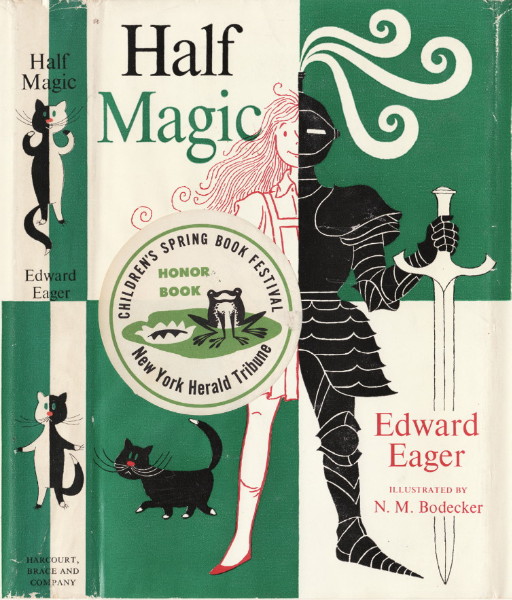
                  Tales of Magic collects Edward Eager's seven loosely connected children's novels about ordinary kids who stumble into magic in everyday American settings, starting with Half Magic, in which four siblings find a coin that grants exactly half of any wish. Each book follows a different, sometimes overlapping set of children and a different magical object or rule, from Knight's Castle to the deliberately ambiguous Magic or Not? and its sequel The Well-Wishers. Eager wrote them as a direct homage to E. Nesbit, sometimes having his own child characters read her books.

                • Cover of Danny Dunn
                  Danny Dunn

                  series · 15 books · 1956

                  completed

                  similar byadventureadventurous+2 more

                  Danny Dunn is the young protagonist of a long-running mid-century American juvenile science fiction series by Raymond Abrashkin and Jay Williams, starting in 1956. Each book sends Danny and his friends into an adventure built around a specific piece of speculative technology — anti-gravity paint, a homework machine, weather control — that goes predictably wrong or is misused by someone else. Aimed squarely at young readers, the fifteen-book run treats gadget-driven science fiction as a springboard for comic mishap and light moralizing rather than hard extrapolation.

                • Cover of Miss Pickerell
                  Miss Pickerell

                  series · 18 books · 1950

                  completed

                  similar byadventurous+2 more

                • Cover of Chitty Chitty Bang Bang
                  Chitty Chitty Bang Bang

                  series · 10 books · 1964

                  similar bycontemporary+3 more

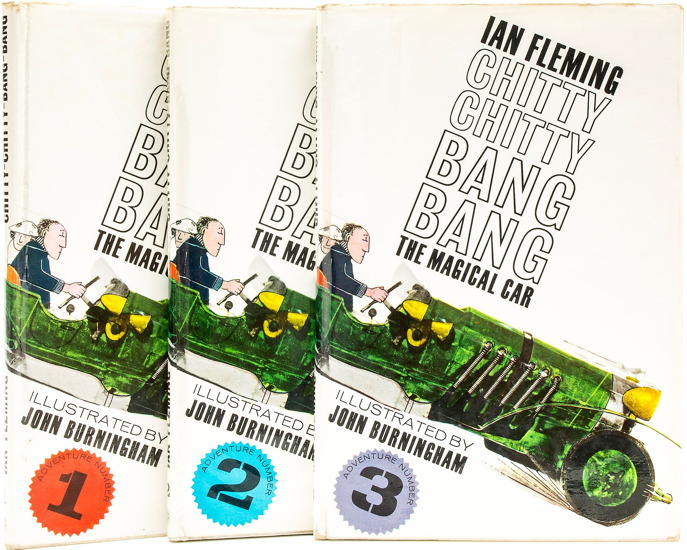
                  Ian Fleming's Chitty-Chitty-Bang-Bang (1964) follows the Pott family and their magical car -- able to fly and turn into a hovercraft -- as it helps them foil criminals across the English Channel; Fleming, best known for James Bond, wrote it while recovering from a heart attack and drew on his own love of vintage racing cars. Decades later, Frank Cottrell-Boyce wrote three further Chitty novels (2011-2013) continuing the car's adventures with a new family.

                • Cover of Watership Down
                  Watership Down

                  series · 21 books · 1972

                  completed

                  similar bycontemporaryadventurous+2 more

                  Watership Down is Richard Adams's 1972 novel following a group of rabbits who flee the destruction of their warren and cross the English countryside of Hampshire in search of a new home, developing over the journey a full rabbit culture of language, proverbs, and mythology. Adams returned to the same world in 1996 with Tales from Watership Down, a collection of nineteen short stories mixing rabbit folklore with further adventures of characters from the novel.

                • Cover of Pokémon
                  Pokémon

                  universe · 51 books · 1999

                  Start hereI Choose You · Start here

                  similar byadventurous+4 more

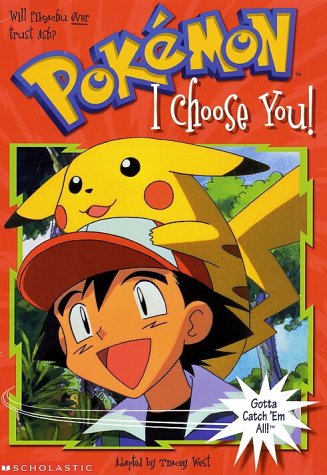
                  Somewhere past the edge of town, the tall grass rustles — and something with bright eyes and stranger powers is waiting to be met. This is the world of Pokémon: a bright, wide land where wondrous creatures share the fields, seas, and skies with the people who befriend them. A young Trainer packs a bag, clips a few Poké Balls to a belt, and sets out to see how many kinds there are, learn their moves, and grow up a little on the road. Catch, befriend, battle, repeat — and never stop wondering what's over the next hill. In print, that journey arrives as junior novels, chapter books, and official fiction that carry the animated series onto the page. Tracey West and a rotating bench of tie-in authors follow Trainer Ash and his loyal Pikachu region by region — from Kanto's first steps out toward the islands of Alola in Sun & Moon — alongside easy-reader adaptations and collector-minded companion volumes. Most entries stand alone, sized for readers just gaining their own confidence. The register is sunny and quick: rivalries settled in the arena, not to the death; friendship treated as the real superpower; every setback a lesson before the next badge. Newcomers should start at the beginning of the road — the earliest chapter books, or the first-region novelizations — then simply travel forward.

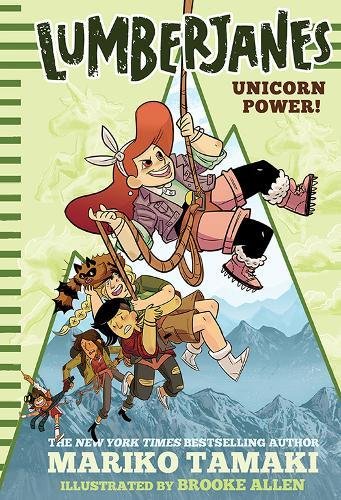
                • Cover of Lumberjanes
                  Lumberjanes

                  series · 4 books · 2017

                  similar bylightheartedcontemporarymiddle grade+1 more

                  Lumberjanes is a comic book series created by Shannon Watters, Grace Ellis, Gus Allen, and ND Stevenson and published via the Boom Box! imprint of Boom! Studios. The story follows a group of girls spending summer at a scout camp, and the strange creatures and supernatural phenomena they encounter there. Originally planned as an eight-part series, the comic was made an ongoing series following strong sales and critical acclaim. The comic series came to a close after 75 issues with a one-shot finale in December 2020, ending its six-year-run.

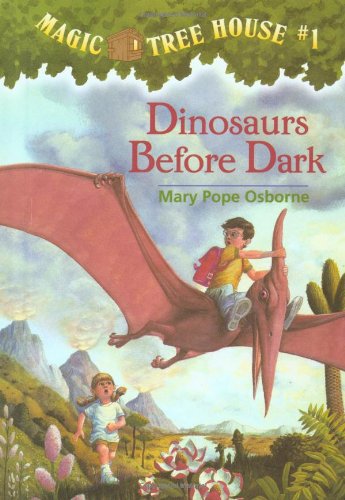
                • Cover of Magic Tree House
                  Magic Tree House

                  series · 81 books · 1992

                  similar byadventurous+2 more

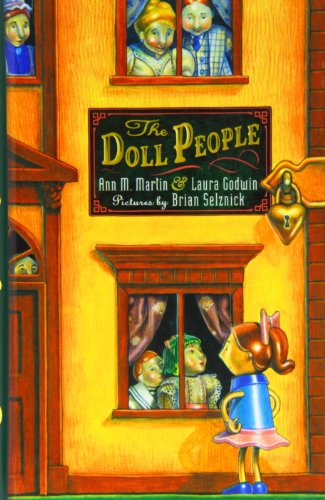
                • Cover of The Doll People
                  The Doll People

                  series · 4 books · 2000

                  similar bylightheartedcontemporaryadventurous+2 more

                • K
                  Kairos

                  series · 11 books · 1962

                  completed

                  similar by+2 more

                  The Time Quintet is a science fantasy series of five young adult novels written by American author Madeleine L'Engle and made up of A Wrinkle in Time (1962), A Wind in the Door (1973), A Swiftly Tilting Planet (1978), Many Waters (1986), and An Acceptable Time (1989).

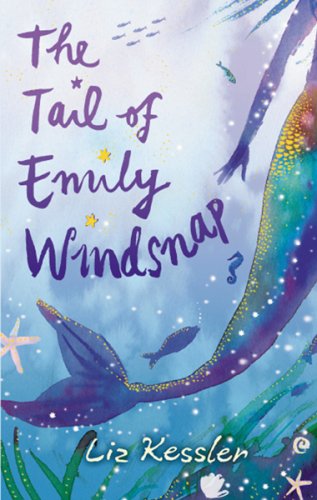
                • Cover of Emily Windsnap
                  Emily Windsnap

                  series · 16 books · 2003

                  similar bycontemporaryadventurous+2 more

                  Emily Windsnap is a series of children's fantasy novels written by British author Liz Kessler, inaugurated by The Tail of Emily Windsnap in 2003 and continuing as of 2025. It is illustrated primarily by Sarah Gibb and published by Orion Children's Books in Britain, and Candlewick Press in America. The series originated as a poem that Kessler was writing about a "little girl who lived on a boat but had a big secret"; an editor recommended that Kessler turn the poem into a book.

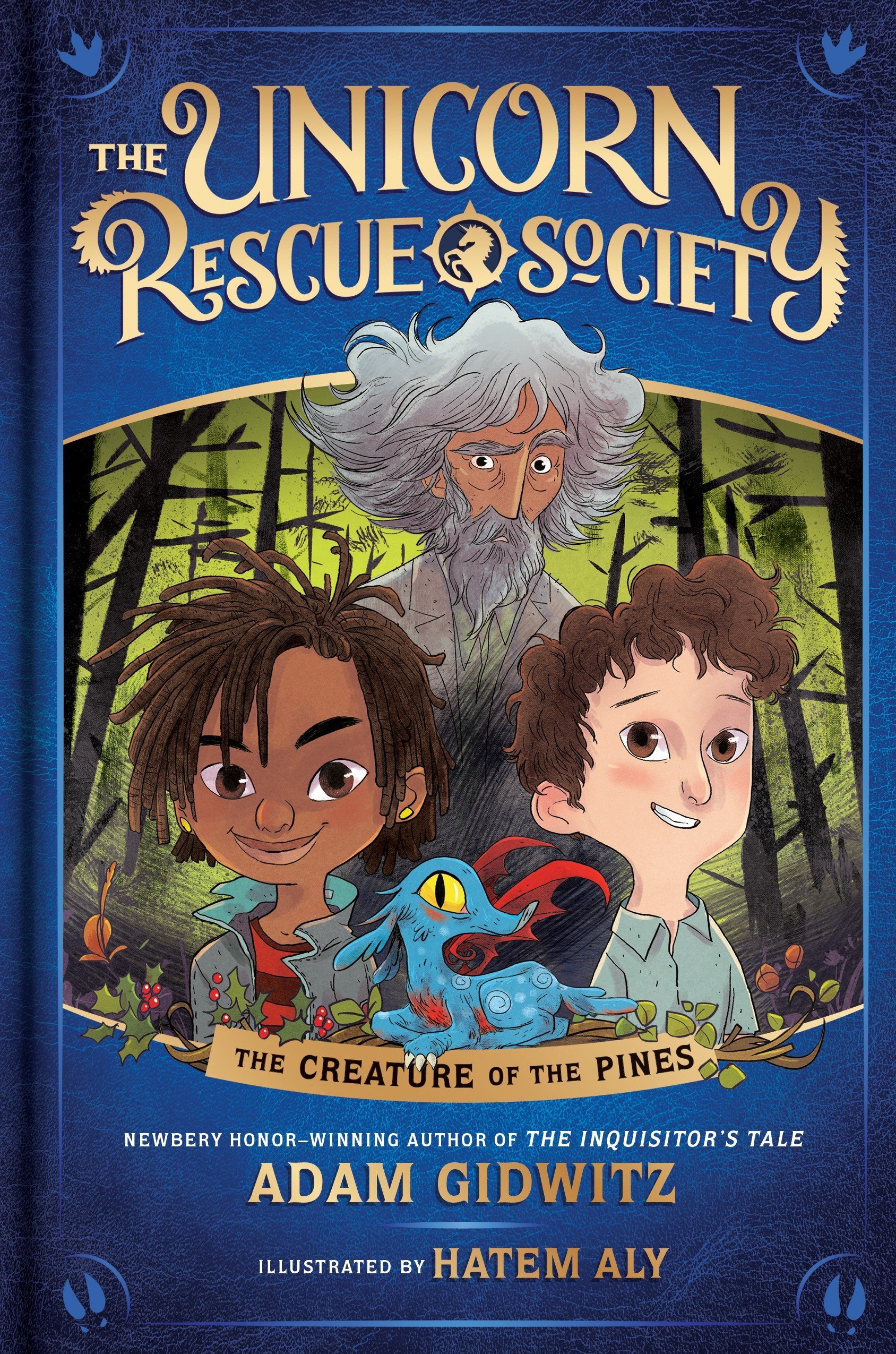
                • Cover of The Unicorn Rescue Society
                  The Unicorn Rescue Society

                  series · 6 books · 2018

                  similar bycontemporarymiddle gradeadventurous+2 more

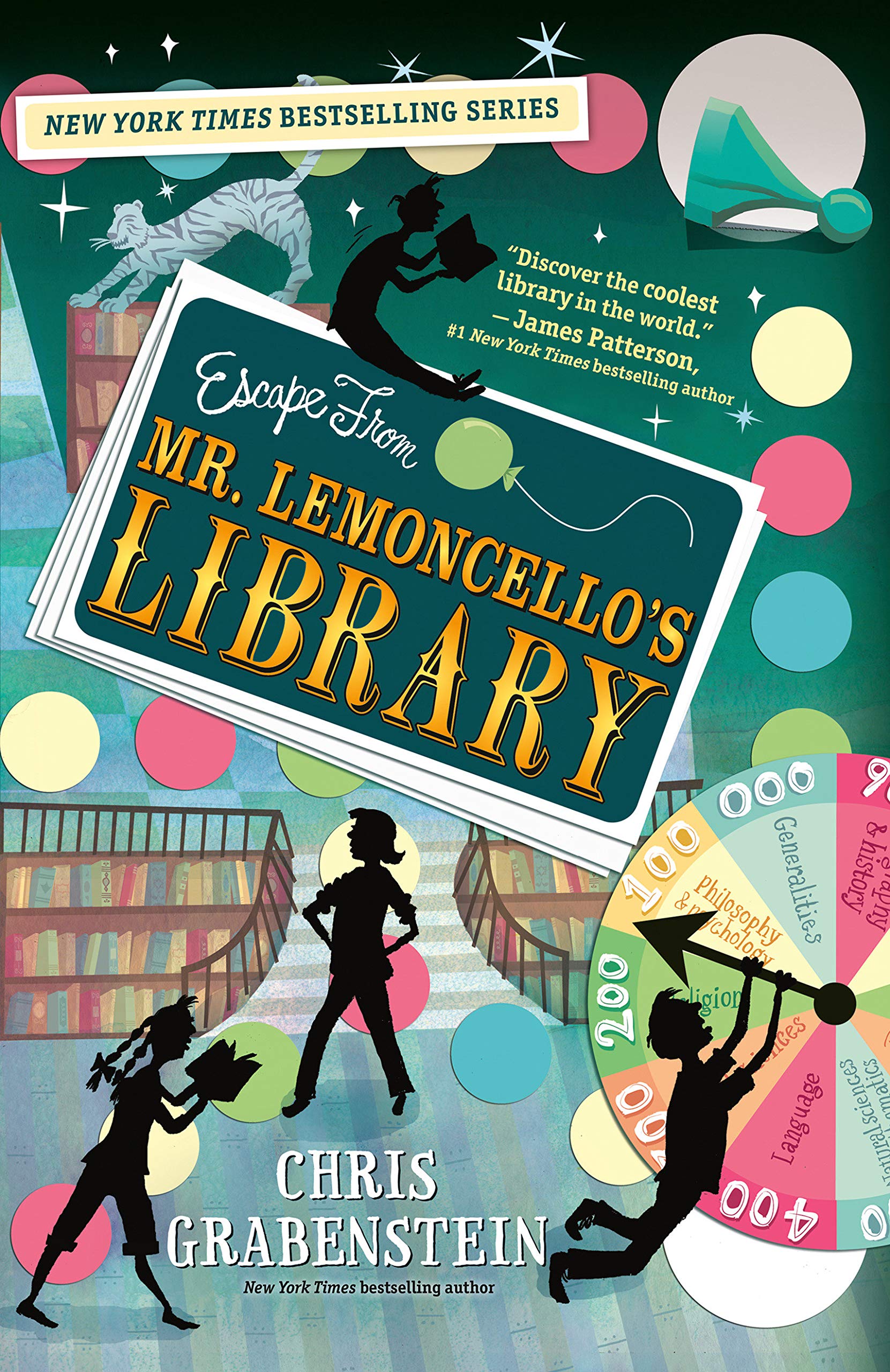
                • Cover of Mr. Lemoncello
                  Mr. Lemoncello

                  series · 3 books · 2013

                  similar byadventurecontemporarymiddle grade+1 more

                • Cover of Cassie Kingston Mysteries
                  Cassie Kingston Mysteries

                  series · 4 books · 2009

                  similar byadventurelightheartedcontemporarymiddle gradeadventurous

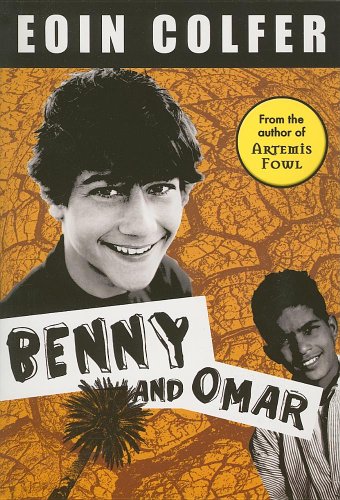
                • Cover of Benny
                  Benny

                  series · 2 books · 1998

                  similar bylightheartedcontemporary

                  Benny Shaw is the protagonist of two children's literature novels by Irish author Eoin Colfer. The first book in the series, Benny and Omar, sees Benny move from Ireland to Tunisia and befriend a local boy. The second book, Benny and Babe, deals with Benny's holiday in Ireland and a friendship with a local girl.

                • Cover of Cairo Jim and/or Jocelyn Osgood
                  Cairo Jim and/or Jocelyn Osgood

                  series · 18 books · 1991

                  similar byadventuremiddle grade+1 more

                  Cairo Jim is an archaeologist-poet who lives in Cairo's fictional Valley of the Hairdressers, adventuring around the world's ancient sites with his English-speaking, Shakespeare-quoting macaw Doris and a widely read camel named Brenda, usually opposed by his treasure-hunting rival Captain Neptune Flannelbottom Bone. Jocelyn Osgood, a pilot and flight attendant, joins him on many of the later expeditions. Geoffrey McSkimming's Australian series runs to about twenty volumes of pun-heavy, globe-trotting adventure for younger readers.

                • Cover of Way-Too-Real Aliens
                  Way-Too-Real Aliens

                  series · 3 books · 2011

                  similar bymiddle gradeadventurous+3 more

                • Cover of Do-It-Yourself Magic
                  Do-It-Yourself Magic

                  Ruth Chew · standalone novel · 1987

                  similar bylightheartedcontemporaryadventurous+1 more

                  Rachel and Scott buy a Build-Anything Kit that " ... builds what they want it to, adds little things they've forgotten, changes things that aren't even in the kit -- it even changes Scott and Rachel! It builds things they hadn't even thought of and, generally, leads them into trouble, fun, adventure, excitement and, once or twice, a real pickle!"--Cover, p. 2.

                • Cover of Robots Rule!
                  Robots Rule!

                  series · 3 books · 2014

                  similar bycontemporarymiddle gradeadventurous+2 more

                • Cover of Dino-Mike
                  Dino-Mike

                  series · 6 books · 2015

                  similar byadventurecontemporaryadventurous+1 more

                • Cover of The Candymakers
                  The Candymakers

                  series · 2 books · 2010

                  similar bylightheartedcontemporarymiddle grade+1 more

                • Cover of Silverwing
                  Silverwing

                  series · 5 books · 1997

                  similar bymiddle gradeadventurous

                  Kenneth Oppel's Silverwing novels follow a colony of bats whose society is divided along old lines of species, faction, and belief, forcing young bats to navigate conflicts that adults have inherited rather than chosen. Across four books, the series treats bat colonies as full societies with their own history and politics, using that lens to explore tolerance and freedom of thought. It's popular enough to have been adapted into an animated television series.

                • Cover of His Dark Materials
                  His Dark Materials

                  series · 8 books · 1995

                  part of His Dark Materials Universe

                  similar byadventurous+1 more

                  His Dark Materials is a trilogy of fantasy novels by Philip Pullman consisting of Northern Lights, The Subtle Knife (1997), and The Amber Spyglass (2000). It follows the coming of age of two children, Lyra Belacqua and Will Parry, as they wander through a series of parallel universes. The novels have won a number of awards, including the Carnegie Medal in 1995 for Northern Lights and the 2001 Whitbread Book of the Year for The Amber Spyglass. In 2003, the trilogy was ranked third on the BBC's The Big Read poll.

                • Cover of The Halloween Tree
                  The Halloween Tree

                  Ray Bradbury · standalone novel · 1972

                  similar byadventurecontemporarymiddle grade

                  Eight boys gather on Halloween night to trick-or-treat with their ninth friend, Pipkin, only Pipkin never shows, having vanished on some errand that may cost him his life. A strange, black-robed guide named Moundshroud appears to lead the boys after him, and the chase turns into a journey through the history of the holiday itself: ancient Egypt, druidic Britain, Rome, medieval Paris, and the Mexican Day of the Dead, each stop peeling back another layer of how humanity has faced death and the dark. Ray Bradbury's Halloween novel doubles as a compressed history of the holiday's origins.