More like Pleasure Model
anchored on:science fictioncyberpunk
but
- Blade Runner Universe
series6 books1968
similar bybig citynear futurescience fictiondarkcyberpunkrobots+2 more
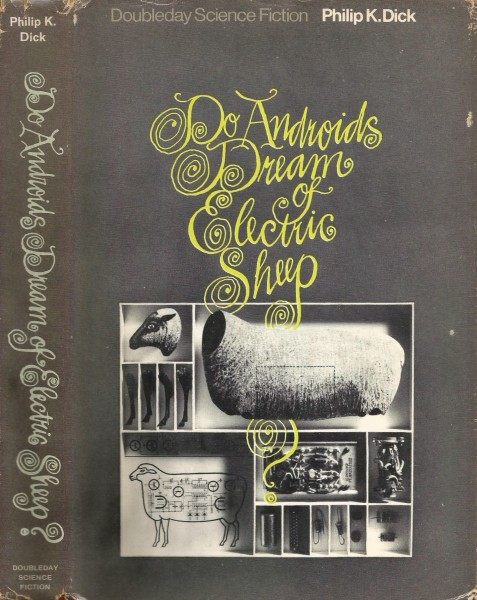
Philip K. Dick's 1968 novel Do Androids Dream of Electric Sheep? follows bounty hunter Rick Deckard as he tracks escaped androids through an irradiated, near-abandoned San Francisco, using the hunt to probe questions of empathy and what separates human from machine. The novel became the basis for Ridley Scott's 1982 film Blade Runner, and Marvel Comics later published an illustrated adaptation of that film. Together the two trace the story's path from prose original to screen and comic-page adaptation.
- Sprawl Trilogy
series10 books1981
similar bybig citynear futurescience fictiondarktensecyberpunkartificial intelligence
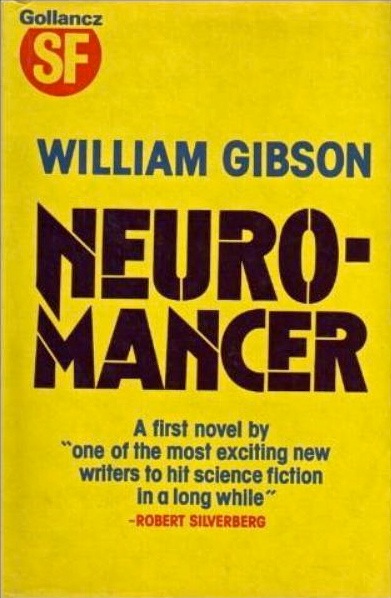
The Sprawl Trilogy is William Gibson's foundational cyberpunk sequence: Neuromancer (1984), in which hacker Case is drawn into a high-stakes heist alongside an artificial intelligence and a damaged ex-soldier, followed by Count Zero (1986) and Mona Lisa Overdrive (1988), which widen the same near-future world of corporate power and networked cyberspace to new characters. Johnny Mnemonic, an early short story set in the same fictional milieu, predates the novels and introduces the courier Molly Millions before her role in the trilogy. Together these works established much of cyberpunk's visual and thematic vocabulary.
- Dogs of War (Adrian Tchaikovsky)
series3 books2017
similar bynear futurescience fictioncyberpunk+6 more
Adrian Tchaikovsky's Dogs of War follows Rex, a genetically engineered "Good Boy" - a hulking bioform supersoldier built for a private military contractor - as he begins to question the nature of his own obedience and personhood after his handler disappears. Dogs of War, Bear Head, and Bee Speaker widen from that first book's battlefield into questions of AI rights, corporate power, and non-human consciousness across a near-future Earth. The trilogy uses its engineered-animal soldiers to interrogate free will and loyalty rather than play them as straightforward action heroes.
- Hardwired
series3 books1986
similar bynear futurescience fictiontensecyberpunk+3 more
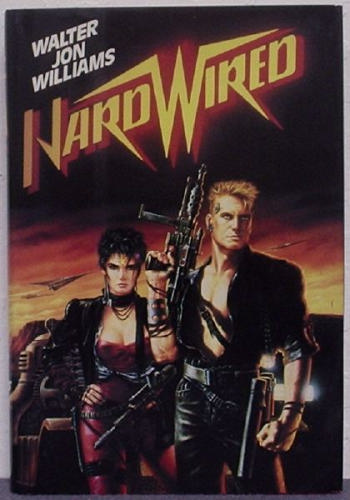
Walter Jon Williams' Hardwired (1986) is an early and influential cyberpunk novel. Voice of the Whirlwind, published three years later, is a loosely connected follow-up set in the same future, sharing its technological and political backdrop with a different cast of characters.
- The Windup Universe
series3 books2005
similar bygenetic engineeringnear futurescience fictiondark+2 more
- Bridge Trilogy
series4 books1990
similar bybig citynear futurescience fictioncyberpunk+3 more
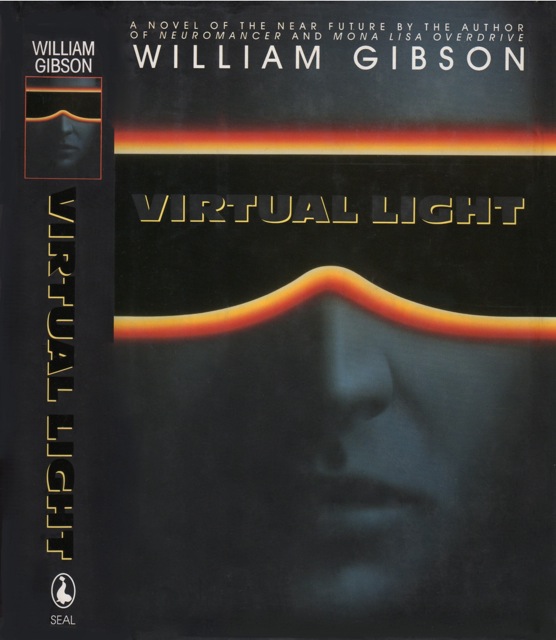
The Bridge trilogy is a series of novels by William Gibson, his second after the successful Sprawl trilogy. The trilogy comprises the novels Virtual Light (1993), Idoru (1996) and All Tomorrow's Parties (1999). A short story, "Skinner's Room", was originally composed for Visionary San Francisco, a 1990 museum exhibition exploring the future of San Francisco.
- Halting State
series2 books2007
similar bynear futurescience fictiontensecyberpunkartificial intelligence+1 more
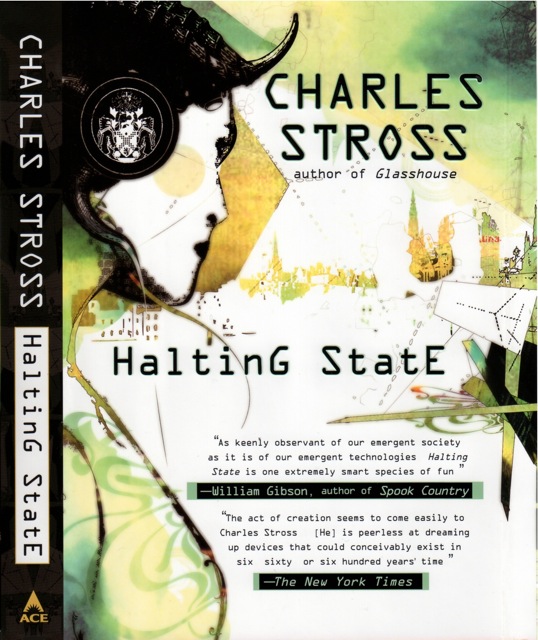
Charles Stross's Halting State opens as a near-future police procedural: a bank robbery inside a massively multiplayer online game turns out to mask a much larger cybercrime, investigated through shifting narrators using augmented-reality glasses and always-on networks. Its loose sequel, Rule 34, follows an Edinburgh police officer investigating a string of deaths linked by nothing but an obscure internet meme, in the same near-future Scotland. Both are standalone technothrillers connected by setting and tone rather than a continuing plot.
- Avery Cates
series22 books2007
similar bynear futurescience fictiondarktensecyberpunk+1 more
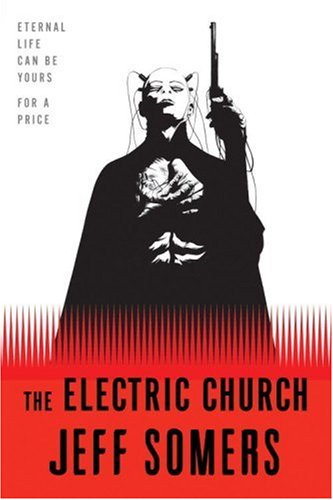
Avery Cates is set in a collapsed future New York ruled by a corrupt, cybernetically augmented security state, following a gun-for-hire navigating the city's violent underworld and its growing rebellion against System Security Force control. Jeff Somers' cyberpunk series, beginning with The Electric Church, follows Cates through escalating jobs and betrayals across six novels.
- Autonomous
Annalee Newitzstandalone novel2017
similar bynear futurescience fictiontensecyberpunkartificial intelligencerobots+2 more
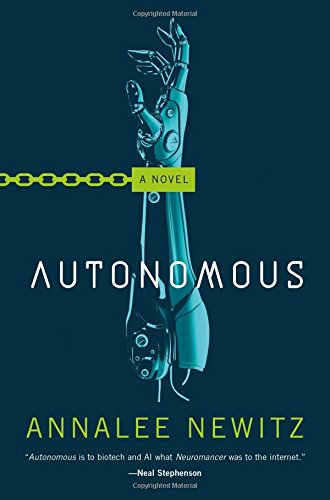
Autonomous is a 2017 science fiction novel by Annalee Newitz. It is Newitz's debut novel and was published by Tor Books on September 19, 2017. Set in a near future Earth, the book describes a world where both humans and intelligent robots can be owned as property. The events of the novel follow Jack, a "drug pirate" who manufactures illegal versions of patented drugs, and Paladin, a combat robot who is owned by the law enforcement agency searching for Jack after one of the drugs she reverse-engineered turns out to have dangerous side effects.
- Ship Breaker
series3 books2010
similar bynear futurescience fictiondarktense+2 more
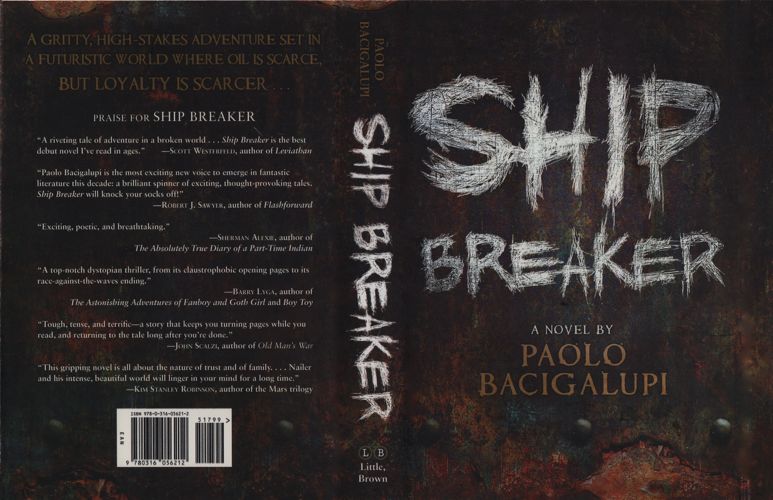
Nailer works a light-crew scavenging copper wire and scrap from beached oil tankers on a Gulf Coast reshaped by rising seas and vanished order, until a wrecked clipper ship washes ashore carrying a half-drowned girl from the wealthy world he'll never belong to. Paolo Bacigalupi's Ship Breaker follows Nailer as helping her pulls him out of his abusive father's orbit and into a much larger, more dangerous game involving her family's fortune. The sequels The Drowned Cities and Tool of War widen the same flooded, resource-scavenging future to new characters and coastlines.
- The Shockwave Rider
John Brunnerstandalone novel1975
similar bybig citynear futurescience fictiondarktensecyberpunk
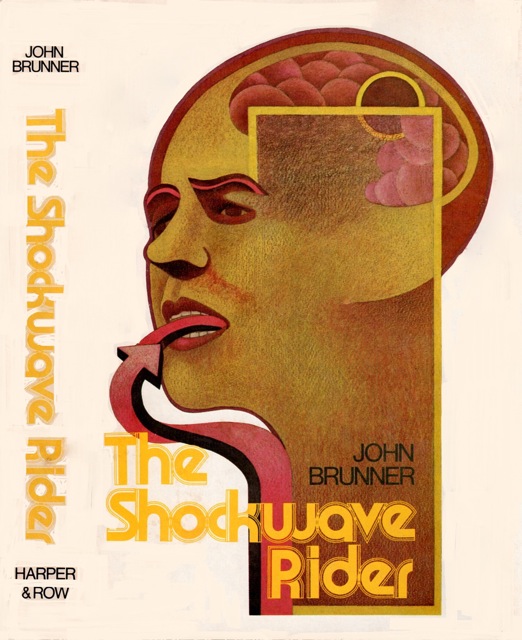
The Shockwave Rider is a science fiction novel by John Brunner, originally published in 1975. It is notable for its hero's use of computer hacking skills to escape pursuit in a dystopian future, and for the coining of the word "worm" to describe a program that propagates itself through a computer network. It also introduces the concept of a Delphi pool, perhaps derived from the RAND Corporation's Delphi method – a prediction market on world events which bears close resemblance to DARPA's controversial and cancelled Policy Analysis Market.
- Budayeen
series13 books1973
completed
similar bybig citynear futurescience fictiondarkcyberpunk+1 more
George Alec Effinger's Budayeen sequence reimagines the French Quarter of New Orleans as a 22nd-century red-light district in a future Middle Eastern city, where body modification has gone electronic: cybernetic 'moddies' and 'daddies' let people plug in new personalities and skills at will. Its hero, hustler-turned-investigator Marid Audran, works the Budayeen's back alleys across the novels When Gravity Fails, A Fire in the Sun, and The Exile Kiss. Budayeen Nights, published after Effinger's death, gathers his shorter fiction set in the same neon-lit quarter.
- Stand on Zanzibar
John Brunnerstandalone novel1968
similar bygenetic engineeringbig citynear futurescience fictiondark
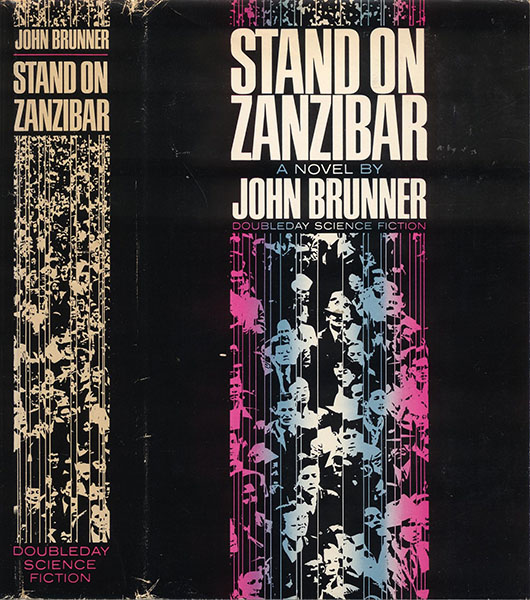
Stand on Zanzibar is a dystopian New Wave science fiction novel written by John Brunner and first in part published in New Worlds magazine in 1967 and in book form in 1968. The book won a Hugo Award for Best Novel at the 27th World Science Fiction Convention in 1969, as well as the 1969 BSFA Award and the 1973 Prix Tour-Apollo Award.
- Confederation Universe Stories
series9 books1991
part of Confederation Universe
similar byscience fiction+1 more
- Blood Music
Greg Bearstandalone novel1985
similar bygenetic engineeringnear futurescience fictiondarkcyberpunk+1 more
Blood Music is a 1985 science fiction novel by American writer Greg Bear. It is an expanded version of a short story of the same title, originally published in the June 1983 issue of Analog and the winner of both the 1983 Nebula and 1984 Hugo awards for Best Novelette. The novel won the 1986 Prix Apollo Award, given to the best science fiction novel published in France during the preceding year, under the title La Musique du sang.
- The Thousandth Floor
series3 books2016
similar bybig citynear futurescience fictiontense+2 more
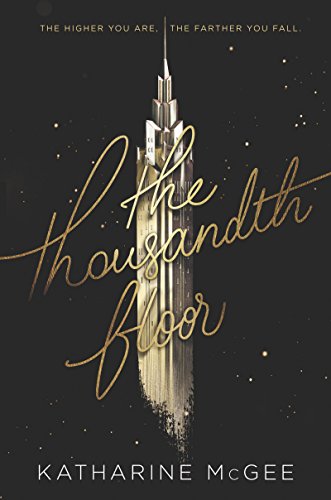
Katharine McGee's trilogy imagines Manhattan in 2118 as a single thousand-story tower housing every stratum of society, following five teenagers whose ambitions collide as they climb toward, or fall from, its highest floors. Across The Thousandth Floor, The Dazzling Heights, and The Towering Sky, addiction, surveillance, genetic privilege, and family betrayal play out as soap-opera drama in a meticulously built near-future setting.
- BZRK
series3 books2012
similar bynear futurescience fictiontensecyberpunk+3 more
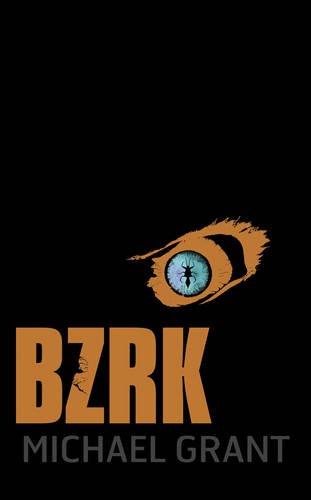
BZRK is a book series written by Michael Grant. The series consists of four books: BZRK, BZRK II: Reloaded, BZRK III: Apocalypse and BZRK: Origins. The series follows the interaction between two warring factions. On one side Charles and Benjamin Armstrong, owners of the Armstrong Fancy Gifts Corporation have a goal to turn the world into their version of utopia. The only people who can stop them are a group of teenagers with the codename BZRK. In 2011, Grant's BZRK had a multimedia online debut with gaming, apps and social media tie-ins beginning six months before the book's publication.
- Fairyland
Paul J. McAuleystandalone novel1995
similar bygenetic engineeringnear futurescience fictiondarktensecyberpunkartificial intelligence
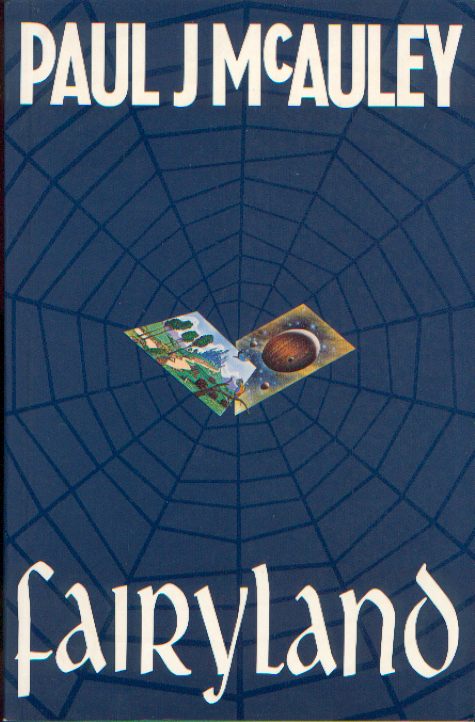
In a near-future Europe, gene-hacker Alex Sharkey has created a new life form: fairies - genetically-altered dolls with human intelligence. As the fairies develop their own societies, it become apparent that one group has sinister intentions, and Sharkey must try and put an end to their plans.
- Halo (Tom Maddox)
series5 books1985
completed
similar bynear futurescience fictioncyberpunk+3 more
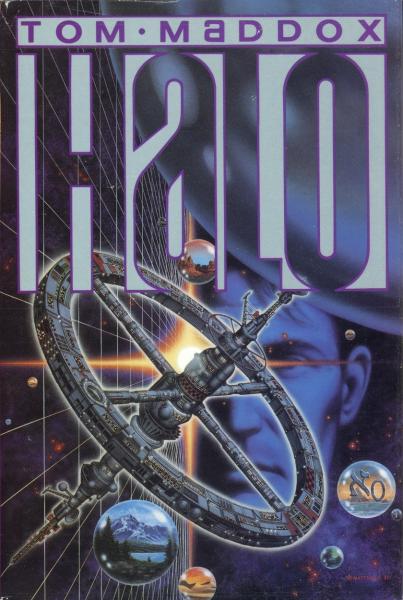
Halo (1991) was Tom Maddox's only novel, a work of early cyberpunk fiction published by Tor Books. Maddox was part of the cyberpunk movement alongside William Gibson (with whom he later collaborated on The X-Files) and coined the term Gibson popularized as 'ICE' in Neuromancer; Halo remains his sole full-length work in the genre.
- Titanium Noir
series2 books2023
similar bybig citynear futurescience fiction+2 more
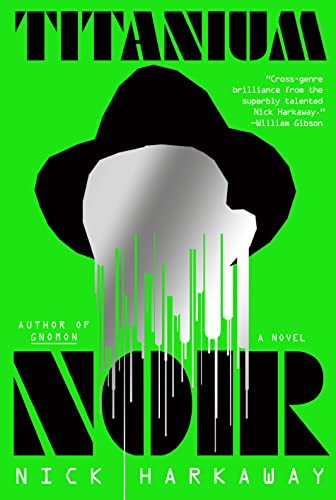
Titanium Noir follows a detective investigating a murder among 'Titans' - a wealthy elite who use a rejuvenation treatment that also makes them larger and more powerful than ordinary people - in a city shaped by the treatment's social and criminal fallout. Nick Harkaway's novel, followed by a second book, Sleeper Beach, blends hardboiled detective fiction with science-fictional body horror.