More like Pollen
anchored on:science fictionplague and pandemicbig citynear futurecyberpunkmystery & detective+5 more
but
- Sprawl Trilogy
series10 books1981
similar bynear futuredarkscience fictioncyberpunkvirtual realitybig city
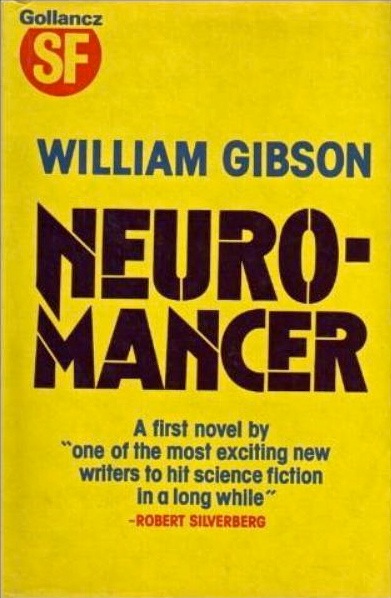
The Sprawl Trilogy is William Gibson's foundational cyberpunk sequence: Neuromancer (1984), in which hacker Case is drawn into a high-stakes heist alongside an artificial intelligence and a damaged ex-soldier, followed by Count Zero (1986) and Mona Lisa Overdrive (1988), which widen the same near-future world of corporate power and networked cyberspace to new characters. Johnny Mnemonic, an early short story set in the same fictional milieu, predates the novels and introduces the courier Molly Millions before her role in the trilogy. Together these works established much of cyberpunk's visual and thematic vocabulary.
- The Night Mayor
Kim Newmanstandalone novel1989
similar bynear futuredarkeeriescience fictioncyberpunkvirtual realitybig city
Welcome to the City made from a dream. But this isn't any dream; it is the dark and haunting nightmare of a killer. It is the near future and old-fashioned movies, or "flatties", have been replaced by Dreams, virtual reality scenarios written by professional Dreamers. When infamous criminal Truro Daine escapes imprisonment, he flees into the City, an artificial world of his own creation, where he rules as the all-powerful Night Mayor.
- Black Moon
Kenneth Calhounstandalone novel2014
similar bynear futureplague and pandemicdarkeeriescience fictionbig city
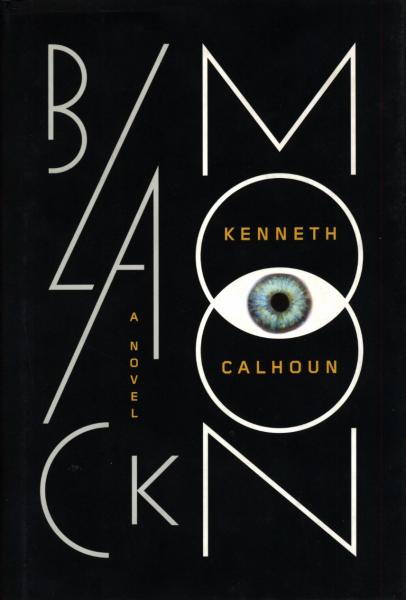
Insomnia has claimed everyone Biggs knows. Even his beloved wife, Carolyn, has succumbed to the telltale red-rimmed eyes, slurred speech and cloudy mind before disappearing into the quickly collapsing world. Yet Biggs can still sleep, and dream, so he sets out to find her.
- Only Forward
Michael Marshall Smithstandalone novel1994
similar bynear futuredarkscience fictioncyberpunkvirtual realitybig city+1 more
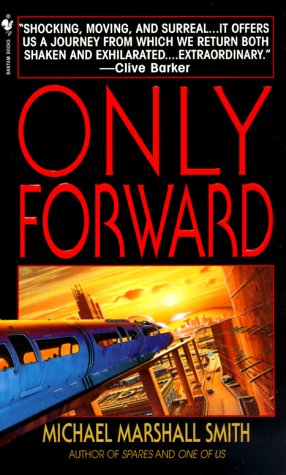
Only Forward is a science fiction novel by English writer Michael Marshall Smith; his debut novel, it was first published in 1994 by HarperCollins. It was the winner of the August Derleth Award (1995) and Philip K. Dick Award (2000).
- Blade Runner Universe
series6 books1968
similar bynear futuredarkscience fictioncyberpunkbig city
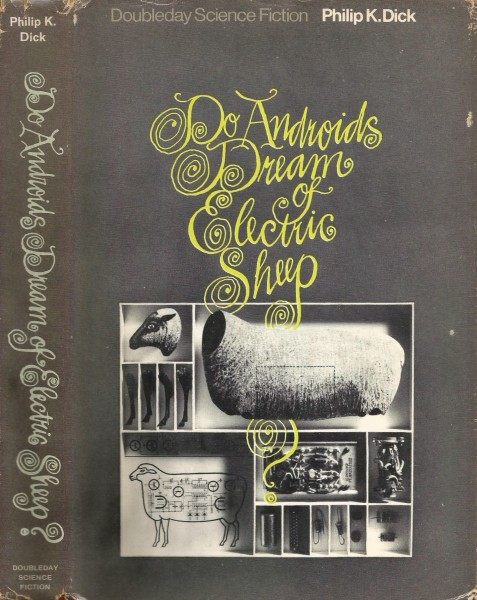
Philip K. Dick's 1968 novel Do Androids Dream of Electric Sheep? follows bounty hunter Rick Deckard as he tracks escaped androids through an irradiated, near-abandoned San Francisco, using the hunt to probe questions of empathy and what separates human from machine. The novel became the basis for Ridley Scott's 1982 film Blade Runner, and Marvel Comics later published an illustrated adaptation of that film. Together the two trace the story's path from prose original to screen and comic-page adaptation.
- The Sheep Look Up
John Brunnerstandalone novel1972
similar bynear futuredarkscience fictionplague and pandemicbig city
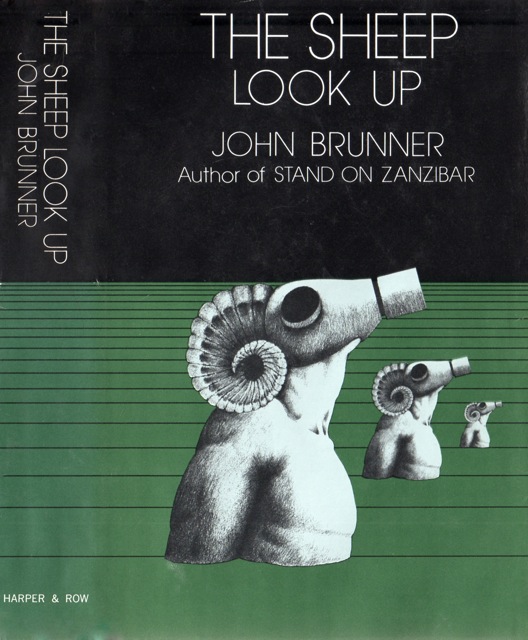
The Sheep Look Up is a 1972 dystopian science fiction novel by British author John Brunner, dealing with the deterioration of the environment in the United States. It was nominated for the 1972 Nebula Award for Best Novel.
- Vurt
series4 books1993
similar byscience fictionbritish isles+7 more
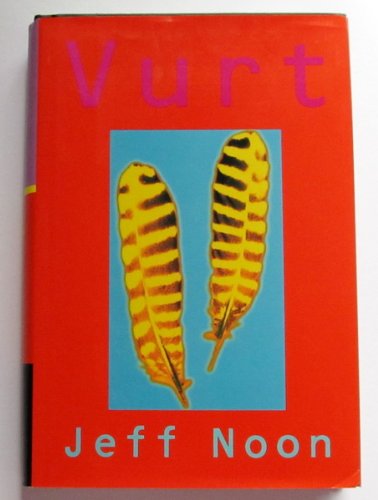
In Jeff Noon's alternate Manchester, an entire subculture has formed around Vurt: a hallucinogenic, colour-coded feather that plunges users into a shared alternate reality as vivid and dangerous as real life. Vurt follows Scribble and his gang, the Stash Riders, on a search for his sister, lost somewhere inside a Vurt trip gone catastrophically wrong. The sequel Pollen continues directly from its fallout, while Noon's other novels of the period, including Automated Alice and Nymphomation, circle the same fevered, drug-soaked version of the city.
- Bridge Trilogy
series4 books1990
similar bynear futurescience fictioncyberpunkbig city+3 more
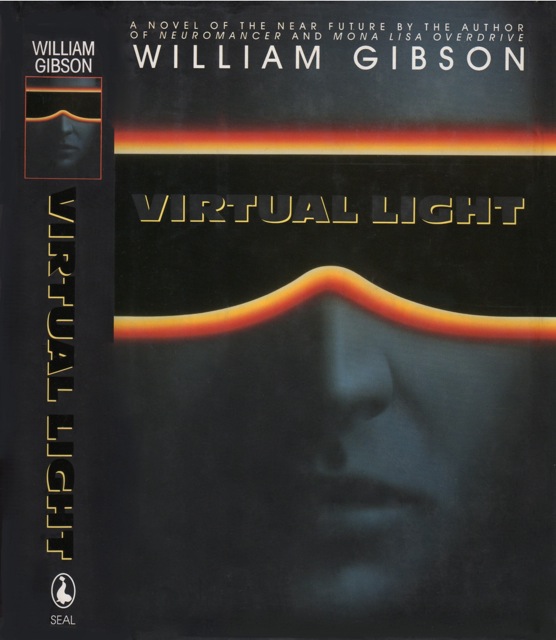
The Bridge trilogy is a series of novels by William Gibson, his second after the successful Sprawl trilogy. The trilogy comprises the novels Virtual Light (1993), Idoru (1996) and All Tomorrow's Parties (1999). A short story, "Skinner's Room", was originally composed for Visionary San Francisco, a 1990 museum exhibition exploring the future of San Francisco.
- Halting State
series2 books2007
similar bynear futurescience fictioncyberpunk+5 more
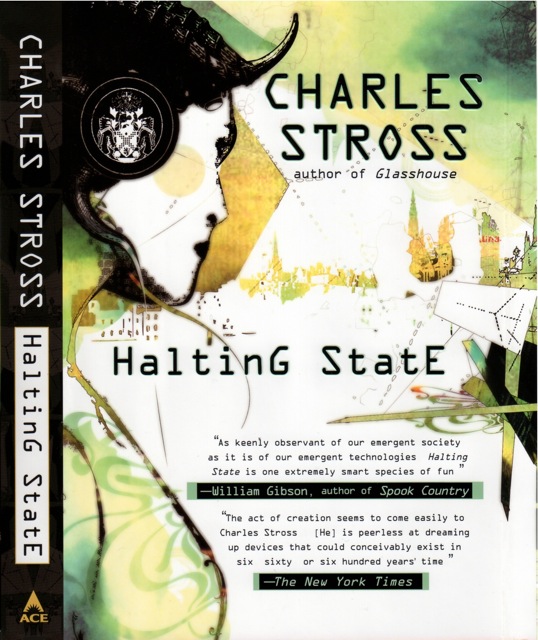
Charles Stross's Halting State opens as a near-future police procedural: a bank robbery inside a massively multiplayer online game turns out to mask a much larger cybercrime, investigated through shifting narrators using augmented-reality glasses and always-on networks. Its loose sequel, Rule 34, follows an Edinburgh police officer investigating a string of deaths linked by nothing but an obscure internet meme, in the same near-future Scotland. Both are standalone technothrillers connected by setting and tone rather than a continuing plot.
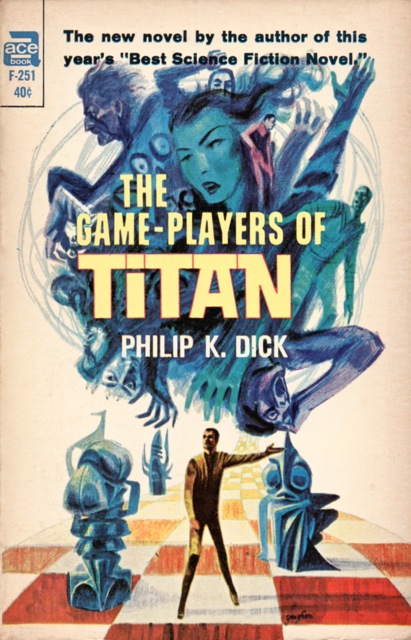
- The Game-Players of Titan
Philip K. Dickstandalone novel1963
similar bynear futuredarkscience fictionmurder investigationmystery & detective
In a depopulated, mostly sterile America, land, marriages and social standing are all wagered on Bluff, a high-stakes game administered by the vugs, gelatinous, gambling-obsessed aliens from Titan who rule Earth without ever quite occupying it. Pete Garden's bipolar disorder threatens his standing among the game's players even as his new wife becomes pregnant, a near-miraculous event in this exhausted world, and his attraction to a telepath complicates things further. When a fellow player turns up dead, Pete finds himself a suspect in a mystery tangled up with induced amnesia and vug politics he barely understands. Philip K. Dick's 1963 novel.
- Slow River
Nicola Griffithstandalone novel1995
similar bynear futuredarkscience fictioncyberpunkbig cityeurope+1 more
Slow River is a science fiction novel by British writer Nicola Griffith, first published in 1995. It won the Nebula Award for Best Novel and the Lambda Literary Award. The novel received critical praise for its writing and setting, while its use of multiple narrative modes was criticised.
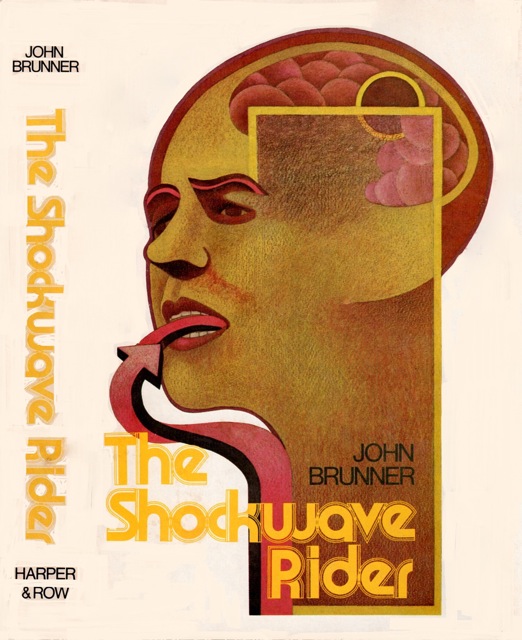
- The Shockwave Rider
John Brunnerstandalone novel1975
similar bynear futuredarkscience fictioncyberpunkbig city
The Shockwave Rider is a science fiction novel by John Brunner, originally published in 1975. It is notable for its hero's use of computer hacking skills to escape pursuit in a dystopian future, and for the coining of the word "worm" to describe a program that propagates itself through a computer network. It also introduces the concept of a Delphi pool, perhaps derived from the RAND Corporation's Delphi method – a prediction market on world events which bears close resemblance to DARPA's controversial and cancelled Policy Analysis Market.
- Blood Music
Greg Bearstandalone novel1985
similar bynear futuredarkscience fictioncyberpunknanotechnology
Blood Music is a 1985 science fiction novel by American writer Greg Bear. It is an expanded version of a short story of the same title, originally published in the June 1983 issue of Analog and the winner of both the 1983 Nebula and 1984 Hugo awards for Best Novelette. The novel won the 1986 Prix Apollo Award, given to the best science fiction novel published in France during the preceding year, under the title La Musique du sang.
- Greg Mandel
series5 books1993
similar bynear futurescience fictionmystery & detectivebritish isles+2 more
Greg Mandel is a former special-forces soldier with a psychic 'gland' implant for reading emotions, working as a private investigator in a near-future Britain recovering from an authoritarian climate-crisis government. Peter F. Hamilton's original trilogy - Mindstar Rising, A Quantum Murder, The Nano Flower - follows his cases as ordinary detective work keeps sliding into conspiracies with much bigger stakes; The Suspect Genome revisits an older Mandel decades later. It was Hamilton's first fiction, blending noir detective plotting with hard SF.
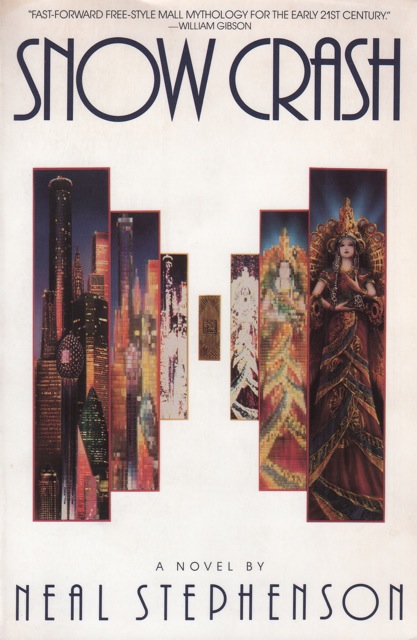
- Snow Crash
Neal Stephensonstandalone novel1992
similar bynear futurescience fictioncyberpunkvirtual realitybig city+1 more
Snow Crash is a 1992 science fiction novel by Neal Stephenson. Like many of Stephenson's novels, its themes include history, linguistics, anthropology, archaeology, religion, computer science, politics, cryptography, memetics, and philosophy.
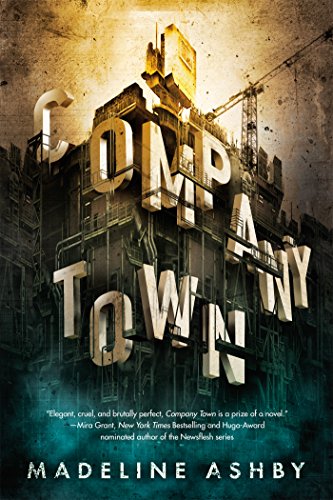
- Company Town
Madeline Ashbystandalone novel2016
similar bynear futuredarkscience fictionmurder investigationcyberpunkmystery & detectivebig city
**2017 Winner of the Sunburst Award Society's Copper Cylinder Adult Award 2017 Canada Reads Finalist 2017 Locus Award Finalist for Science Fiction Novel Category 2017 Sunburst Award Finalist for Adult Fiction 2017 Aurora Awards Finalist for Best Novell** New Arcadia is a city-sized oil rig off the coast of the Canadian Maritimes, now owned by one very wealthy, powerful, byzantine family: Lynch Ltd. Hwa is of the few people in her community (which constitutes the whole rig) to forgo bio-engineered enhancements. As such, she’s the last truly organic person left on the rig–making her doubly an outsider, as well as a neglected daughter and bodyguard extraordinaire. Still, her expertise in the arts of self-defense and her record as a fighter mean that her services are yet in high demand. When the youngest Lynch needs training and protection, the family turns to Hwa. But can even she protect against increasingly intense death threats seemingly coming from another timeline? Meanwhile, a series of interconnected murders threatens the city’s stability and heightens the unease of a rig turning over. All signs point to a nearly invisible serial killer, but all of the murders seem to lead right back to Hwa’s front door. Company Town has never been the safest place to be–but now, the danger is personal. A brilliant, twisted mystery, as one woman must evaluate saving the people of a town that can’t be saved, or saving herself.
- The Fireman
Joe Hillstandalone novel2016
similar bynear futureplague and pandemicdarkscience fiction
The Fireman is a novel set in a post-apocalyptic time by American author Joe Hill. The novel, Hill's fourth, tells the tale of a deadly spore that has infected most of the world's population. Hill first spoke of the novel in 2013 in promotional interviews for his then-new novel NOS4A2. The novel was released on May 17, 2016.
- Synners
Pat Cadiganstandalone novel1991
similar bynear futuredarkscience fictioncyberpunkvirtual realitybig city
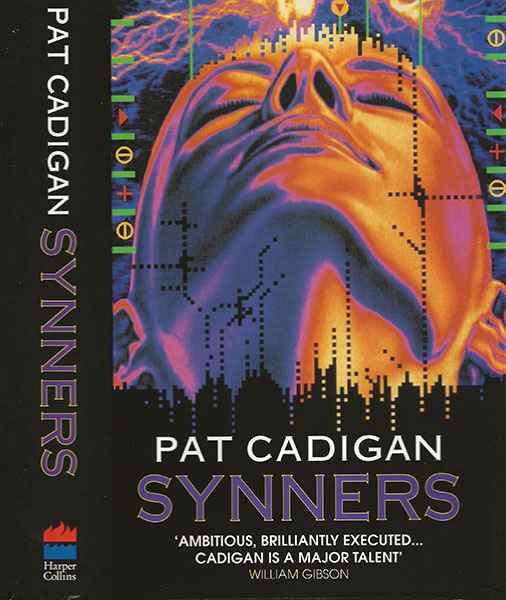
In Synners, the line between technology and humanity is hopelessly slim. A constant stream of new technology spawns crime before it hits the streets; the human mind and the external landscape have fused to the point where any encounter with "reality" is incidental.
- The Lathe of Heaven
Ursula K. Le Guinstandalone novel1971
similar bynear futureeeriescience fictionbig city+1 more
The Lathe of Heaven is a 1971 science fiction novel by American writer Ursula K. Le Guin, first serialized in the American science fiction magazine Amazing Stories. It won the 1972 Locus Award for Best Novel and was a finalist for the 1971 Nebula Award for Best Novel and 1972 Hugo Award for Best Novel. Two television film adaptations were released: the PBS production, The Lathe of Heaven (1980), and Lathe of Heaven (2002), a remake produced by the A&E Network.
- The Drowned World
J. G. Ballardstandalone novel1962
similar bynear futureeeriescience fictionbig citybritish isles
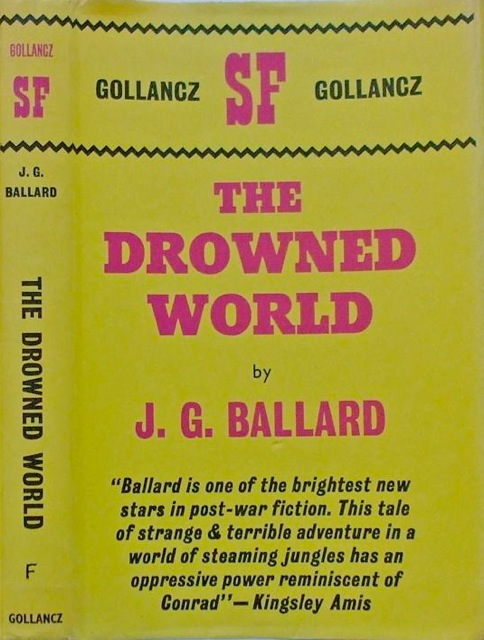
The Drowned World is a 1962 science fiction novel by J. G. Ballard. It first appeared in shortened form in the January 1962 issue of the UK edition of Science Fiction Adventures and was published in book form later that year by Victor Gollancz Ltd in London; an American edition followed from Berkley Medallion. Critics have grouped The Drowned World with Ballard's early science-fiction novels as part of an "ambiguous apocalypse" sequence that also includes The Drought and The Crystal World, from the period in which he was developing the ideas he described as "inner space". Set in a future in which solar radiation has melted the polar ice caps and transformed London into a flooded tropical lagoon, the novel follows biologist Robert Kerans as he becomes increasingly drawn toward the altered environment rather than toward restoring the old social order.
- A Clockwork Orange
series4 books1962
completed
similar bynear futuredarkscience fictionbig citybritish isles
Anthony Burgess's 1962 novel is narrated by Alex, a teenage gang leader in a near-future Britain gripped by a youth subculture of extreme violence, recounting his crimes in Nadsat, an invented slang blending English with Russian-derived words. After his crimes catch up with him, Alex is made the subject of a controversial state program meant to forcibly reform his behavior, and the novel uses his ordeal to question whether imposed goodness is worth the loss of free will. It is a standalone novel.
- Pastworld
Ian Beckstandalone novel2009
similar bynear futurescience fictionmurder investigationmystery & detectivevirtual realitybritish islesbig city
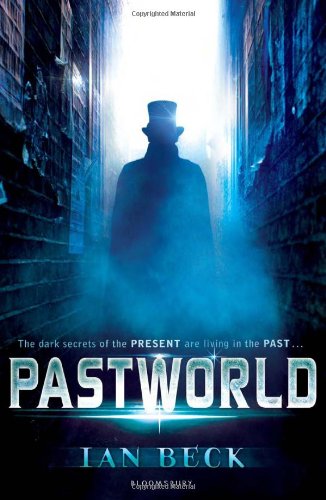
What if all of London were really an amusement park—a whole city returned to Victorian times to entertain visitors from the twenty-first century? That's the wildly original premise of Ian Beck's Pastworld, a high-stakes mystery set in a simulated past. Eve is a lifelong resident of Pastworld who doesn’t know she’s living in a theme park until a mysterious threat forces her to leave home. Caleb is a visiting tourist who finds the lawlessness of the past thrilling—until he suddenly becomes a fugitive from an antiquated justice system. And in the midst of it all, in the thick London fog a dark and deadly figure prowls, claiming victim after victim. He’s the Fantom, a creature both of the past and of the present, in whose dark purpose Caleb and Eve will find their destinies combined. Page-turning, complex, and haunting, Pastworld masterfully exposes the human experience of the past, of violence, of technology, and of entertainment.
- How High We Go in the Dark
Sequoia Nagamatsustandalone novel2022
similar bynear futureplague and pandemicdarkscience fiction
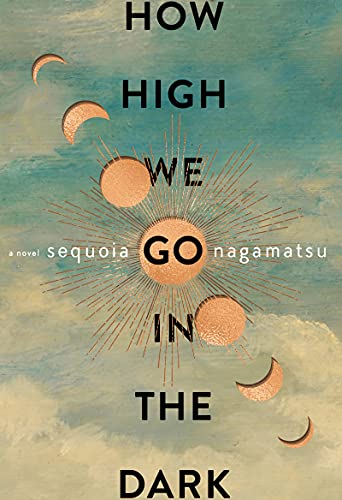
(Robin MacArthur, in Scientific American): "[A] dystopian narrative set in the near future about an ancient virus that is uncovered by a scientist ... while she is researching melting permafrost in the Arctic."
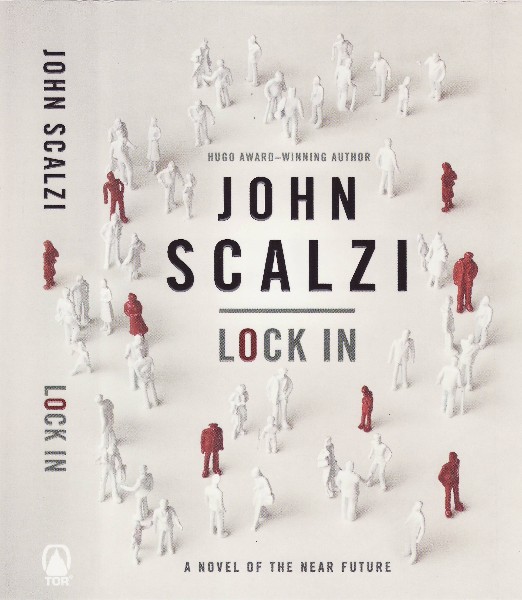
- Lock In
series3 books2014
similar bynear futurescience fictionmurder investigationbig city+3 more
Lock In imagines a near-future pandemic that leaves a fraction of survivors fully conscious but completely paralyzed, able to interact with the world only through robotic surrogates or by borrowing the bodies of rare people whose brains can host another person's consciousness. John Scalzi's series follows a rookie FBI agent investigating crimes that exploit this new class of disability and technology, across the novels Lock In and Head On plus the interstitial oral history Unlocked. It's science-fiction police procedural more than space opera.