More like Poor Things
anchored on:literary & generalidentitybritish isles19th centuryhistorical fictiongender and society+3 more
but
- The Private Memoirs and Confessions of a Justified Sinner
James Hoggstandalone novel1824
similar bychallengingbritish isles19th centuryliterary & generalidentitymadnessframe storyunreliable narrator
The Private Memoirs and Confessions of a Justified Sinner: Written by Himself: With a detail of curious traditionary facts and other evidence by the editor is a novel by the Scottish author James Hogg, published anonymously in 1824.
- Red Shift
Alan Garnerstandalone novel1973
similar bychallengingbritish islesliterary & generalidentityhistorical fiction
Quoting that 1978 review article by Brian Lee: Red Shift [after The Owl Service] was again about the relationship between two adolescents, but interwoven in their love story were two other strands: one about a group of Roman legionaires 'going tribal' among warring factions of the British (the parallel and the brutal language are obviously those of the Americans among the Viet Cong and the Viet Minh); the other strand is about the massacre of a village on the Welsh border during the Civil War.{{BREAK}} Undoubtedly, Red Shift is a brilliantly written and gripping book. The difficulty about it is that Garner makes no concessions to his readers (and on the book jacket he makes it clear that it is for children). It is told almost entirely in cryptic conversation with minimal clues to the identity of the speakers. He switches from strand to strand of the story without warning. The book cannot be understood and appreciated at one hasty reading. It is worth serious study, but will children persevere? In her introduction to the 1973 edition of Children's Books of the Year, critic and reviewer Elaine Moss says: Spurred on by the publication of Alan Garner's literary crossword puzzle Red Shift ... many of us asked ourselves where children's publishing should end and adult begin? For Children's Books of the Year I have drawn the line below Red Shift and excluded it ... Alan Garner, in deliberately choosing an avant-garde form, is also choosing an advanced, sophisticated audience for his book. Alan Garner himself seems to have come around to this view. This year a television adaptation of Red Shift was screened at peak viewing time with no mention of the fact that it was originally published as a children's novel. [end quotation from the review article; ellipses by Lee]
- Cloud Atlas
David Mitchellstandalone novel2004
similar bychallengingliterary & generalidentityhistorical fictionbritish isles
Cloud Atlas, published in 2004, is the third novel by British author David Mitchell. The book combines metafiction, historical fiction, contemporary fiction and science fiction, with interconnected nested stories in different writing styles that take the reader from the remote South Pacific in the 19th century to the island of Hawaii in a distant post-apocalyptic future. Its title references a piece of music by Toshi Ichiyanagi.
- The Prestige
Christopher Prieststandalone novel1995
similar by19th centuryidentityliterary & generalbritish isleshistorical fictionunreliable narrator
A magician called Borden (at least in private) writes his own version of his life as a magician. There's a lot of focus on a trick, where he seems to move across any width of stage in an instant, and on a feud with another magician, Angier. The account includes passages, where he can't decide what exactly to write, arguing with himself. 3 generations later a Borden (at least biologically) learns about his ancestor. He's also convinced, he somehow has a twin brother, who's happy about this development.
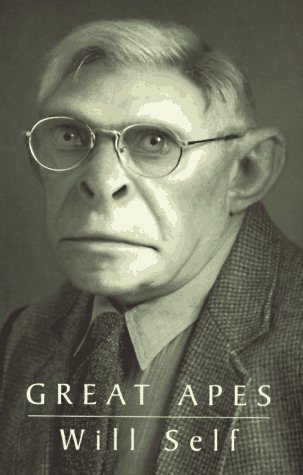
- Great Apes
Will Selfstandalone novel1997
similar bychallengingliterary & generalbritish islesidentitygender and society+1 more
Great Apes is a 1997 novel by Will Self.
- Cards of Identity
Nigel Dennisstandalone novel1955
similar bychallengingbritish islesidentityliterary & generalframe story
Cards Of Identity is a novel by Nigel Dennis, first published in 1955 by Weidenfeld & Nicolson in the UK and Vanguard Press in the US. A satire on psychology, identity theory and class prejudice, the novel is centred on the Identity Club, a group of men who call themselves psychologists and meet once a year to present case histories promoting their chosen theory of identity. The case histories are in fact fictional representations of a character in line with their theoretical biases, rather than analyses of real patients. Surrounding this plot is the story of the local townspeople, who are brainwashed into being servants for the Identity Club. The book culminates with the performance of a pastiche Shakespearian play, The Prince of Antioch.
- Crash
J. G. Ballardstandalone novel1973
similar bychallengingliterary & generalbritish islesmadness+1 more
Crash is a novel by J. G. Ballard, first published in 1973 with a cover designed by Bill Botten. It follows a group of car-crash fetishists who, inspired by the famous crashes of celebrities, become sexually aroused by staging and participating in car accidents.
- Time's Arrow
Martin Amisstandalone novel1991
similar bychallengingliterary & generalidentityhistorical fictionunreliable narrator+1 more
From Amazon description: In this icy, knife's-edge story of a life that progresses backward through time, unfolding into one of the darkest episodes of the 20th century, Amis ("at his intriguing, heedful, and powerful best" —Time Out), finds a chillingly original approach to the Holocaust in fiction • From the acclaimed author of Zone of Interest "The narrative moves with irresistible momentum.... [Amis is] a daring, exacting writer willing to defy the odds in pursuit of his art." —Newsday Tod. T. Friendly is living his life in reverse. Doctor Friendly has just died, but he moves "out of blackest sleep" to find himself surrounded by doctors and on the deathbed of a man in whose body he is imprisoned. After weeks of improving in the hospital, he is sent home to his affable, melting-pot, primary-colors existence in suburban America. As Friendly breaks up with his lovers in a prelude to seducing them and mangles his patients before he sends them home, his life races backward toward the one appalling moment in modern history when such reversals make sense. From the fresh-cut lawns of his retirement to the hustle of New York, and then back to the boat which reverses his course to the war-torn Europe Friendly came from, Amis brings the steeliest nerve to the job of realizing the novel's inevitable logic. Trapped in his body from grave to cradle, Friendly's consciousness can only watch as he struggles to make sense of the good doctor's most ambitious project yet—the final solution.
- The Third Policeman
Flann O'Brienstandalone novel1967
similar bychallengingbritish islesliterary & generalmadnessunreliable narrator+1 more
The Third Policeman is a novel by Irish writer Brian O'Nolan, writing under the pseudonym Flann O'Brien. It was written in 1939 and 1940, but after it initially failed to find a publisher, the author withdrew the manuscript from circulation and claimed he had lost it. The book remained unpublished at the time of his death in 1966. It was published by MacGibbon & Kee in 1967.
- Voice of the Fire
Alan Moorestandalone novel1996
similar bychallengingbritish islesliterary & generalidentityhistorical fiction
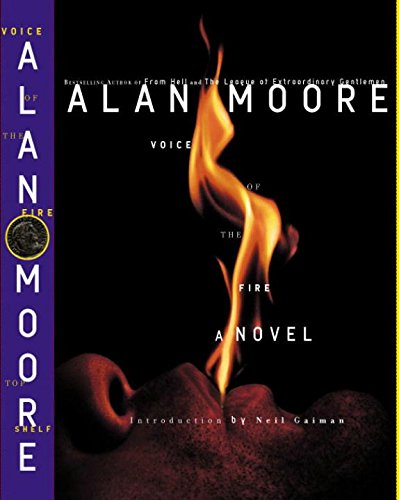
Voice of the Fire is the first novel from Alan Moore, comic book writer. The twelve-chapter book was initially published in the United Kingdom in 1996. The narratives take place around Moore’s hometown of Northampton, England, during the month of November, and span several millennia – from 4000 B.C. to the present day. The 2004 edition from Top Shelf Productions features an introduction from Neil Gaiman and colour plates by artist José Villarrubia. A new paperback edition, retaining all of these features, was published by Top Shelf in July 2009.
- Darkness Visible
William Goldingstandalone novel1979
similar bychallengingbritish islesliterary & generalidentitymadness
Darkness Visible is a 1979 novel by British author William Golding. The book won the James Tait Black Memorial Prize. The title comes from Paradise Lost, from the line, "No light, but rather darkness visible". It marked Golding's re-emergence as a novelist, eight years after the publication of the collection The Scorpion God.
- Ann Veronica
H. G. Wellsstandalone novel1909
similar bychallengingbritish islesliterary & generalgender and societyhistorical fiction
Ann Veronica is a New Woman novel by H. G. Wells published in 1909. It describes the rebellion of Ann Veronica Stanley, a 21-year-old woman, against her middle-class father's stern patriarchal rule. The novel dramatizes the contemporary problem of the New Woman. It is set in Edwardian era-London and environs, except for an Alpine excursion. Ann Veronica offers vignettes of the women's suffrage movement in Great Britain and features a chapter inspired by the Grille Incident, a 1908 attempt of suffragettes to storm Parliament.
- Dhalgren
Samuel R. Delanystandalone novel1975
similar bychallengingidentityliterary & generalmadness+1 more
Dhalgren is a 1975 science fiction novel by American writer Samuel R. Delany. It features an extended trip to and through Bellona, a fictional city in the American Midwest cut off from the rest of the world by an unknown catastrophe. It is number 33 on the 20th Century's Greatest Hits: 100 English-Language Books of Fiction list.
- Alias Grace
Margaret Atwoodstandalone novel1996
similar by19th centuryidentityhistorical fictionliterary & generalunreliable narrator+2 more
Alias Grace is a historical fiction novel by Canadian writer Margaret Atwood. First published in 1996 by McClelland & Stewart, it won the Giller Prize and was shortlisted for the Booker Prize.
- Confessions of the Fox
Jordy Rosenbergstandalone novel2018
similar bychallengingbritish islesidentitygender and societyhistorical fictionliterary & general
Confessions of the Fox is a novel by American writer and academic Jordy Rosenberg, first published in 2018. It re-imagines the lives of Jack Sheppard, eighteenth-century English thief and jail-breaker, and his lover Edgeworth Bess.
- Concrete Island
J. G. Ballardstandalone novel1974
similar bychallengingliterary & generalidentitybritish isles
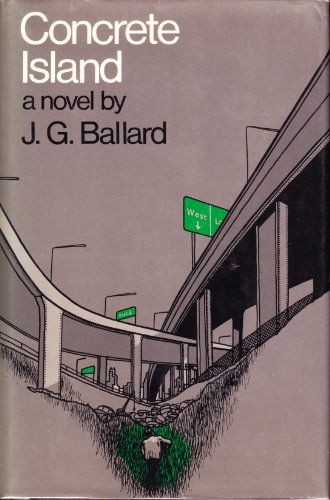
Architect Robert Maitland crashes his car onto a stretch of wasteland trapped between three converging motorways -- visible from thousands of cars, reachable by none of them. Injured and unable to climb back to the road, Maitland adapts to life on what he starts calling the Island, scavenging food thrown from car windows, and discovers he isn't alone: a runaway sex worker hiding in a bunker, and a brain-damaged former circus acrobat, both long past expecting rescue. What begins as a survival story turns into a question of whether Maitland even wants to leave. A J. G. Ballard novel of urban isolation, grouped with Crash and High-Rise.
- Orlando: A Biography
Virginia Woolfstandalone novel1928
similar byidentityliterary & generalbritish islesgender and societyhistorical fiction
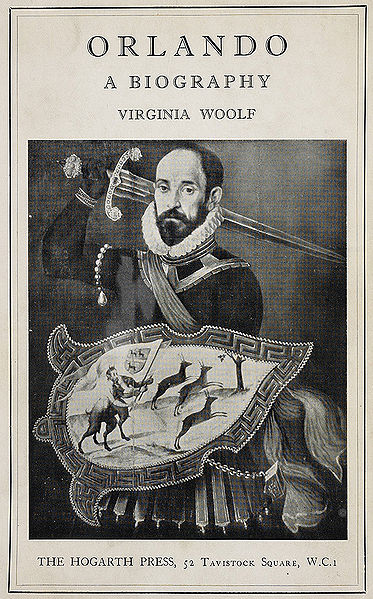
Orlando: A Biography is a novel by Virginia Woolf, first published on 11 October 1928, inspired by the tumultuous family history of the aristocratic poet and novelist Vita Sackville-West, Woolf's lover and close friend. It is a history of English literature in satiric form. The book describes the adventures of a poet who changes from man to woman and lives for centuries, meeting the key figures of English literary history. Considered a feminist classic, the book has been written about extensively by scholars of women's writing and gender and transgender studies.
- The Magus
John Fowlesstandalone novel1965
similar bychallengingidentityliterary & general+1 more
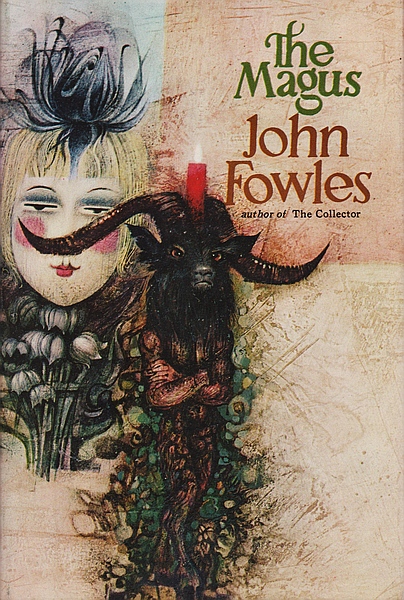
The Magus (1965) is a postmodern novel by British author John Fowles, telling the story of Nicholas Urfe, a young British graduate who is teaching English on a small Greek island. Urfe becomes embroiled in the psychological illusions of a master trickster, which become increasingly dark and serious. Considered an example of metafiction, it was the first novel written by Fowles but his third book to be published. A revised edition was published in 1977.
- Mary Reilly
Valerie Martinstandalone novel1990
similar bybritish isles19th centuryidentityhistorical fictionliterary & general
Mary Reilly is a 1990 parallel novel by American writer Valerie Martin. It is inspired by Robert Louis Stevenson's classic 1886 novella Strange Case of Dr. Jekyll and Mr. Hyde. It was nominated for the Nebula Award for Best Novel in 1990 and the World Fantasy Award for Best Novel in 1991. Martin's novel was the basis for the 1996 film of the same name starring Julia Roberts in the title role.
- England, England
Julian Barnesstandalone novel1998
similar bychallengingbritish islesliterary & generalidentity
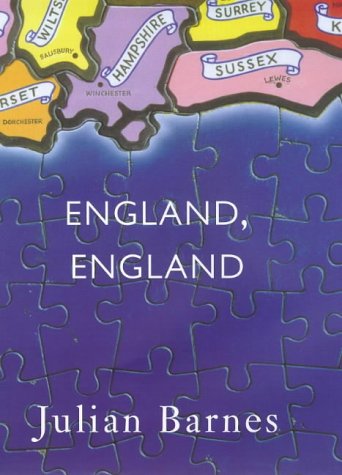
England, England is a satirical postmodern novel by Julian Barnes, published and shortlisted for the Booker Prize in 1998. While researchers have also pointed out the novel's characteristic dystopian and farcical elements, Barnes himself described the novel as a "semi-farce".
- Gravity's Rainbow
Thomas Pynchonstandalone novel1973
similar bychallengingliterary & generalbritish isles+1 more
Gravity's Rainbow is a 1973 postmodern novel by Thomas Pynchon. The narrative is set primarily in Europe at the end of World War II and centers on the design, production and dispatch of V-2 rockets by the German military. In particular, it features the quest undertaken by several characters to uncover the secret of a mysterious device, the Schwarzgerät, which is slated to be installed in a rocket with the serial number "00000".
- The Satanic Verses
Salman Rushdiestandalone novel1988
similar bychallengingliterary & generalbritish islesidentity
The Satanic Verses is the fourth novel by British–Indian writer Salman Rushdie. First published in September 1988, the book was inspired by the life of the Islamic prophet Muhammad. As with his previous books, Rushdie used magical realism and relied on contemporary events and people to create his characters. The title refers to the Satanic Verses, a group of Quranic verses about three pagan Meccan goddesses: Allāt, Al-Uzza, and Manāt. The part of the story that deals with the satanic verses was based on accounts from the historians al-Waqidi and al-Tabari.
- Jerusalem
Alan Moorestandalone novel2016
similar bychallengingbritish islesliterary & generalhistorical fiction
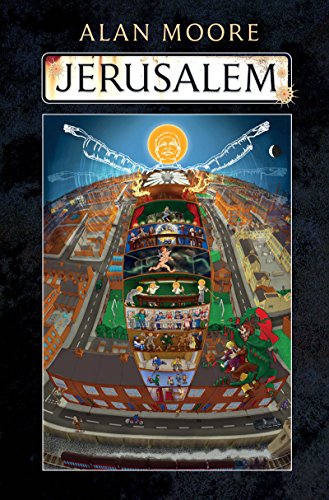
Jerusalem is a novel by English author Alan Moore, almost wholly set in and around the author's home town of Northampton, England. Combining elements of historical and supernatural fiction and drawing on a range of writing styles, the author describes it as a work of "genetic mythology". Published in 2016, Jerusalem took a decade to write. The novel is divided into three books, "The Boroughs", "Mansoul", and "Vernall's Inquest".
- Life's Lottery
Kim Newmanstandalone novel1999
similar bychallengingbritish islesidentityliterary & general
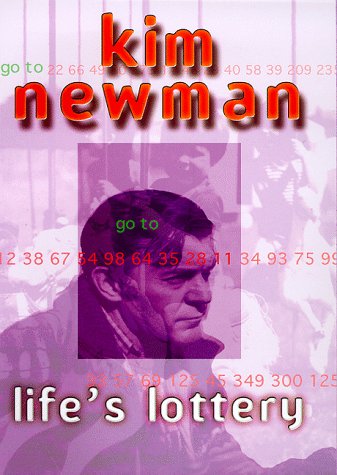
Life's Lottery is a speculative fiction novel by Kim Newman, published in 1999. Loosely connected to Newman's The Quorum, Life's Lottery is written in second-person and invites the reader to assume the role of the protagonist, an Englishman named Keith Marion, and make decisions that determine the character's life and death. Because Life's Lottery can be read not only as a standard novel but also in a traditional gamebook format, it is often classified as a "Choose Your Own Adventure book for adults".