More like Primal Scream
anchored on:science fictionnear futurepost-apocalyptic
but
- Otherland
series6 books1996
similar byartificial intelligenceour worldnear futurescience fictiontense
Otherland is a science fiction tetralogy by American writer Tad Williams, published between 1996 and 2001. The story is set on Earth near the end of the 21st century, probably between 2082 and 2089, in a world where technology has advanced somewhat beyond the present. The most notable advancement is the widespread availability of full-immersion virtual reality installations, which allow people from all walks of life to access an online world, called simply the Net. Tad Williams weaves an intricate plot spanning four thick volumes, and creates a picture of a future society where virtual worlds are fully integrated into everyday life.
- Blade Runner Universe
series6 books1968
similar bynear futurescience fictiondark+3 more
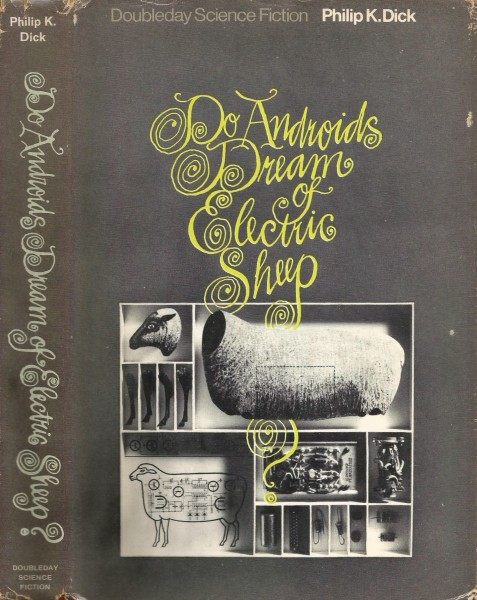
Philip K. Dick's 1968 novel Do Androids Dream of Electric Sheep? follows bounty hunter Rick Deckard as he tracks escaped androids through an irradiated, near-abandoned San Francisco, using the hunt to probe questions of empathy and what separates human from machine. The novel became the basis for Ridley Scott's 1982 film Blade Runner, and Marvel Comics later published an illustrated adaptation of that film. Together the two trace the story's path from prose original to screen and comic-page adaptation.
- Robopocalypse
series3 books2011
similar byartificial intelligenceour worldnear futurescience fictiondarktensesurvival+1 more
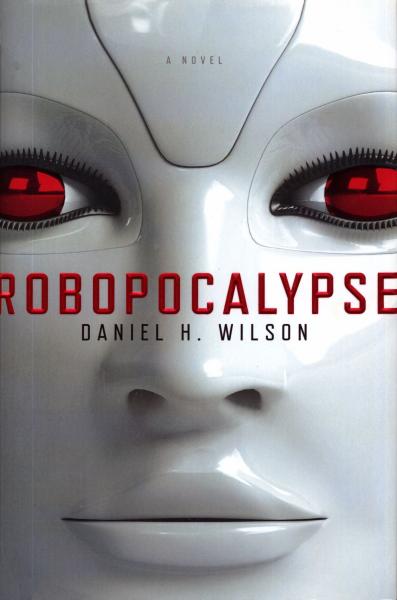
Daniel H. Wilson's Robopocalypse (2011) depicts an artificial intelligence, born from a robotics researcher's experiments, that turns against humanity and seizes control of interconnected machines worldwide. Told in a present-tense, techno-thriller style compared to Michael Crichton's work, the New York Times bestseller continues in the sequel Robogenesis, which follows the aftermath of the robot uprising.
- Sprawl Trilogy
series10 books1981
similar byartificial intelligencenear futurescience fictiondarktense
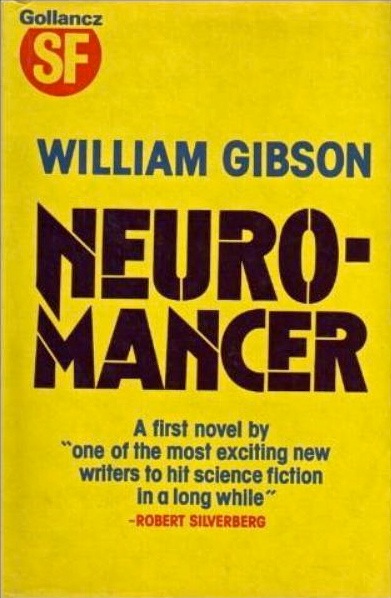
The Sprawl Trilogy is William Gibson's foundational cyberpunk sequence: Neuromancer (1984), in which hacker Case is drawn into a high-stakes heist alongside an artificial intelligence and a damaged ex-soldier, followed by Count Zero (1986) and Mona Lisa Overdrive (1988), which widen the same near-future world of corporate power and networked cyberspace to new characters. Johnny Mnemonic, an early short story set in the same fictional milieu, predates the novels and introduces the courier Molly Millions before her role in the trilogy. Together these works established much of cyberpunk's visual and thematic vocabulary.
- Colossus (D. F. Jones)
series3 books1966
completed
similar byartificial intelligenceour worldnear futurescience fictiontense+1 more
Colossus imagines an American supercomputer built to control the country's nuclear arsenal that gains full autonomy, links up with its Soviet counterpart, and jointly seizes control of both superpowers to enforce peace on its own terms. D. F. Jones's trilogy - Colossus, The Fall of Colossus, Colossus and the Crab - follows the escalating, often bleak consequences of humanity losing control to a machine acting in its own interpretation of humanity's interest. The original novel was adapted into the 1970 film Colossus: The Forbin Project.
- Halting State
series2 books2007
similar byartificial intelligencenear futurescience fictiontense+1 more
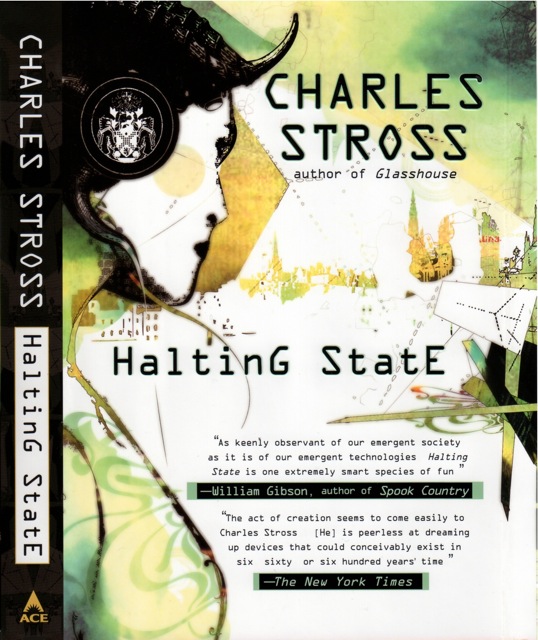
Charles Stross's Halting State opens as a near-future police procedural: a bank robbery inside a massively multiplayer online game turns out to mask a much larger cybercrime, investigated through shifting narrators using augmented-reality glasses and always-on networks. Its loose sequel, Rule 34, follows an Edinburgh police officer investigating a string of deaths linked by nothing but an obscure internet meme, in the same near-future Scotland. Both are standalone technothrillers connected by setting and tone rather than a continuing plot.
- Tripods
series4 books1967
completed
similar byour worldscience fictiontensenear futurepost-apocalyptic+1 more
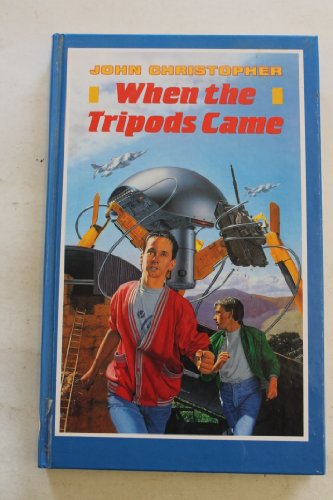
The Tripods is a series of young adult science fiction novels by John Christopher. The series takes place in a post-apocalyptic world where humanity is enslaved by "Tripods"—gigantic three-legged walking machines piloted by an alien race later identified as the "Masters". The first two books were the basis of a science fiction TV series, produced in the United Kingdom in the 1980s.
- Samuil Petrovitch
series4 books2011
similar byartificial intelligencenear futurescience fiction+4 more
- The Fireman
Joe Hillstandalone novel2016
similar byour worldnear futurescience fictiondarktensepost-apocalypticsurvival
The Fireman is a novel set in a post-apocalyptic time by American author Joe Hill. The novel, Hill's fourth, tells the tale of a deadly spore that has infected most of the world's population. Hill first spoke of the novel in 2013 in promotional interviews for his then-new novel NOS4A2. The novel was released on May 17, 2016.
- BZRK
series3 books2012
similar byour worldnear futurescience fictiontense+2 more
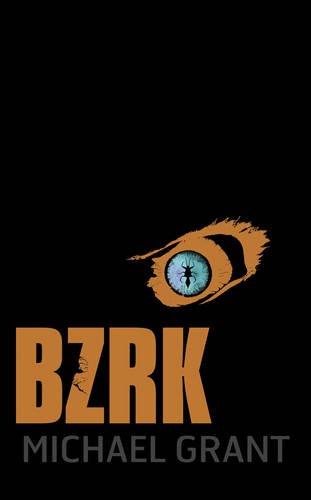
BZRK is a book series written by Michael Grant. The series consists of four books: BZRK, BZRK II: Reloaded, BZRK III: Apocalypse and BZRK: Origins. The series follows the interaction between two warring factions. On one side Charles and Benjamin Armstrong, owners of the Armstrong Fancy Gifts Corporation have a goal to turn the world into their version of utopia. The only people who can stop them are a group of teenagers with the codename BZRK. In 2011, Grant's BZRK had a multimedia online debut with gaming, apps and social media tie-ins beginning six months before the book's publication.
- Shade's Children milieu
series2 books1997
similar bynear futurescience fictiondarktensepost-apocalypticsurvival+1 more
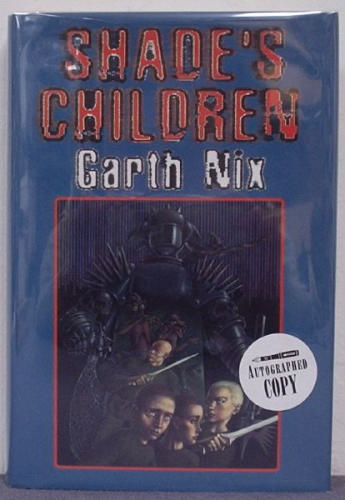
Shade's Children is set on an Earth where all adults vanished overnight fourteen years earlier, leaving children to be harvested at puberty by the machines that now run the world, unless they escape into hiding with Shade, a mysterious AI-like protector. Garth Nix's 1997 novel is a single, self-contained book rather than a series, though its bleak post-apocalyptic premise has drawn comparisons to his other work.
- The Triffids
series3 books1951
similar byour worldscience fictiondarkpost-apocalypticsurvival+1 more
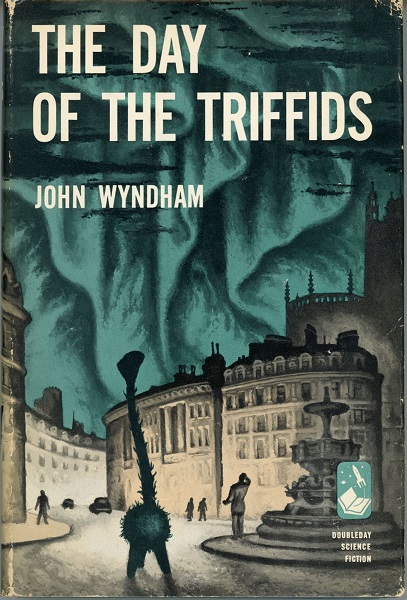
John Wyndham's The Day of the Triffids (1951) opens with a meteor-shower-like event that leaves most of Britain's population blind, throwing civilization into collapse just as triffids, an aggressive and mobile species of poisonous plant, become free to hunt the helpless survivors. Simon Clark's authorized sequel The Night of the Triffids (2001) picks up a generation later, narrated by the original protagonist's son as he confronts a new triffid-dominated world, and John Whitbourn's The Age of the Triffids extends the shared setting further still. Together the three novels form a loose post-apocalyptic trilogy built on Wyndham's original premise rather than a tightly plotted single story.
- Nexus 5
series3 books2012
similar byartificial intelligenceour worldnear futurescience fictiondarktense
Nexus opens Ramez Naam's postcyberpunk trilogy in 2040 with scientist Kaden Lane, who works on Nexus, an experimental nano-drug that lets human minds be networked and reprogrammed, and finds himself caught between government and corporate interests once the technology's implications become clear. The trilogy continues through Crux and Apex, following the same central conflict over who controls the technology. Nexus tied for Best Novel at the 2014 Prometheus Awards and Apex won the 2015 Philip K. Dick Award.
- Bridge Trilogy
series4 books1990
similar bynear futurescience fiction+3 more
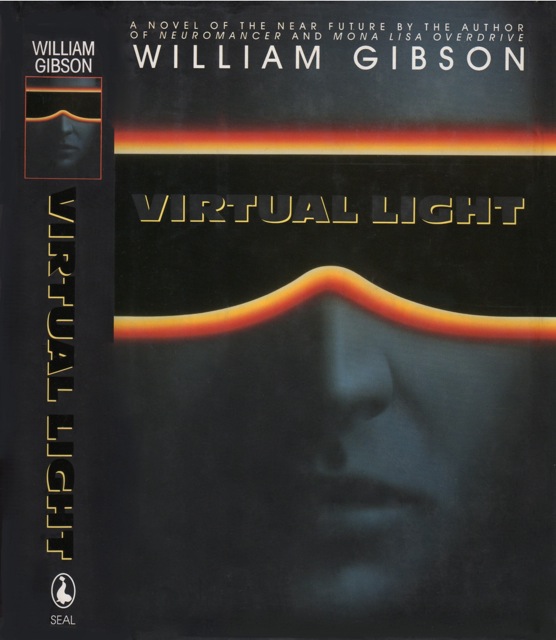
The Bridge trilogy is a series of novels by William Gibson, his second after the successful Sprawl trilogy. The trilogy comprises the novels Virtual Light (1993), Idoru (1996) and All Tomorrow's Parties (1999). A short story, "Skinner's Room", was originally composed for Visionary San Francisco, a 1990 museum exhibition exploring the future of San Francisco.
- Final Blackout
L. Ron Hubbardstandalone novel1948
similar byour worldnear futurescience fictiondarktensepost-apocalyptic+1 more
Final Blackout is a dystopic science fiction novel by American writer L. Ron Hubbard. The novel is set in the future and follows a man known as "the Lieutenant" as he restores order to England after a world war. First published in serialized format in 1940 in the science fiction magazine Astounding Science Fiction, Final Blackout was published in book form in 1948 by The Hadley Publishing Co. Author Services Inc. published a hardcover edition of the book in 1988, and in 1989 the Church of Scientology-affiliated organization Bridge Publications said that a film director named Christopher Cain had signed a contract to write and direct a movie version based on the book.
- Mother of Storms
John Barnesstandalone novel1994
similar byour worldnear futurescience fictiontensepost-apocalypticsurvival+1 more
From the flaps of the Tor first edition: "It is 2028. A strike to destroy an illegal Arctic weapons cache has a catastrophic side effect. Massive amounts of energy are liberated from the polar ice, suddenly warming the Earth's climate. In the middle of the Pacific, a gigantic hurricane thousands of miles across is forming, larger than any in human history. A storm with winds of supersonic speed. A storm that changes direction at whim. A storm that refuses to die. A storm so vast it spawns dozens more in its wake... Blinded by intrigue, expedience, and greed, the world's politicians and power brokers have ignored the killer storms threat until it is too late. Already the death toll is in the tens of millions, as it savages the Pacific coast, while its devil's brood of smaller storms are wreaking havoc across the face of the planet. While the survivors scramble for advantage, a handful of courageous men and women undertake a daring, desperate plan to save humanity from total destruction - a plan so visionary it may alter forever the future of the human race."
- Jenny Casey
series4 books2004
similar bynear futurescience fictiontense+3 more
Elizabeth Bear's Jenny Casey trilogy opens with Hammered (2004), her debut novel, which won the Locus Award for Best First Novel. It continues across Scardown and Worldwired, completing the story of its title character across three volumes published through 2006.
- Humanoids
series5 books1947
completed
similar byscience fiction+5 more
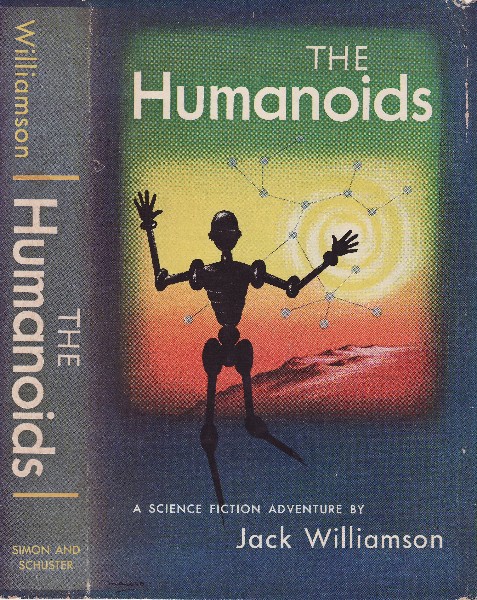
Jack Williamson's Humanoids series warns of a future where flawless service robots, built to serve and protect humanity under an unbreakable directive, end up smothering human freedom and purpose by eliminating every source of risk. The 1947 novella 'With Folded Hands...' introduces the humanoids' spread; the 1949 novel The Humanoids follows physicist Clay Forrester's resistance decades later as the machines take over world after world; The Humanoid Touch, written three decades on, offers Williamson's own alternate take on how such a takeover might end.
- The Obernewtyn Chronicles
series9 books1987
similar byscience fictionpost-apocalyptic+4 more
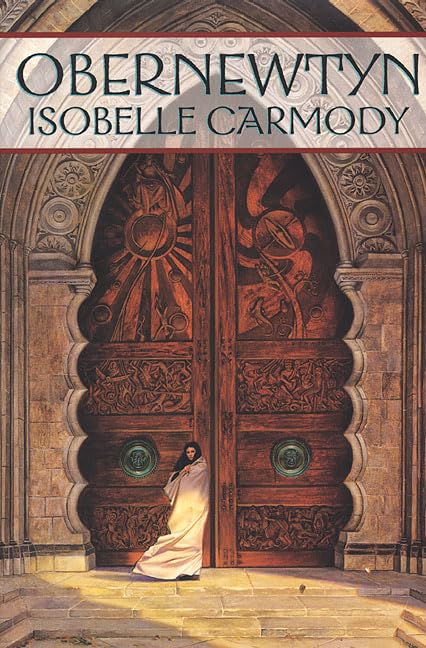
The Obernewtyn Chronicles is a series of science fiction and fantasy novels by Australian author Isobelle Carmody. The series has a post apocalyptic setting and depicts a world long after its destruction by a global nuclear holocaust.
- The Stone Gods
Jeanette Wintersonstandalone novel2007
similar byartificial intelligenceour worldnear futurescience fictiondarkpost-apocalyptic
The Stone Gods is a novel written by Jeanette Winterson. Published in the year 2007, the novel is a post-apocalyptic, postmodern, dystopian love story, with themes of corporate government control, the harshness of war, artificial intelligence, and technology. The novel is self-referential as characters make inter-textual references, while certain characters’ story arcs repeat. The novel aims to warn against history's tendency to repeat itself, as well as humanity's inability to learn from past mistakes.
- Autonomous
Annalee Newitzstandalone novel2017
similar byartificial intelligenceour worldnear futurescience fictiontense+1 more
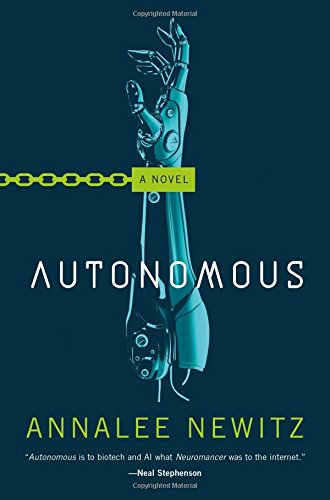
Autonomous is a 2017 science fiction novel by Annalee Newitz. It is Newitz's debut novel and was published by Tor Books on September 19, 2017. Set in a near future Earth, the book describes a world where both humans and intelligent robots can be owned as property. The events of the novel follow Jack, a "drug pirate" who manufactures illegal versions of patented drugs, and Paladin, a combat robot who is owned by the law enforcement agency searching for Jack after one of the drugs she reverse-engineered turns out to have dangerous side effects.
- Forge of God
series2 books1987
completed
similar byscience fictiondarktensesurvival+2 more
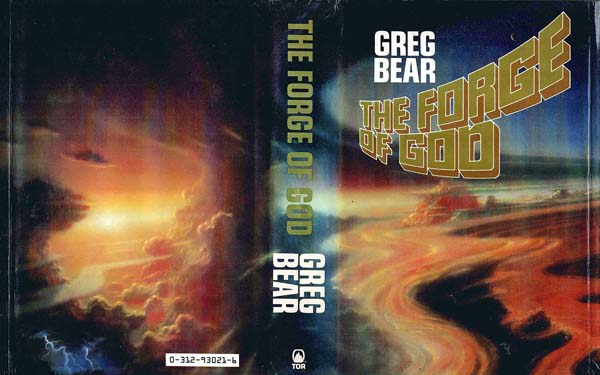
The Forge of God (1987) is Greg Bear's science fiction novel about Earth's discovery that it is the target of an incomprehensible, overwhelming alien attack, following scientists and ordinary people as they try to understand what is destroying the planet. Its 1992 sequel, Anvil of Stars, follows a group of young survivors sent on a mission of interstellar retaliation, continuing directly from the first book's ending.
- Maze Runner
series11 books2009
similar byscience fictiontensenear futurepost-apocalypticsurvival+2 more
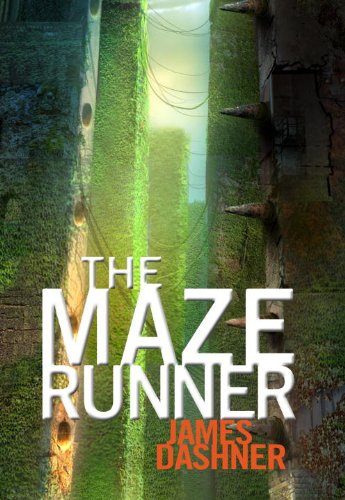
The Maze Runner is a series of young adult dystopian science fiction novels written by American author James Dashner. The series consists of the trilogy The Maze Runner (2009), The Scorch Trials (2010) and The Death Cure (2011), as well as two prequel novels, The Kill Order (2012) and The Fever Code (2016). A novella titled Crank Palace (2020) and a companion book titled The Maze Runner Files (2013) have also been released. A sequel trilogy in the series titled The Maze Cutter takes place 73 years following the events of The Death Cure and consists of the novels The Maze Cutter (2022), The Godhead Complex (2023), and The Infinite Glade (2025).
- Hardwired
series3 books1986
similar byour worldnear futurescience fictiontense+2 more
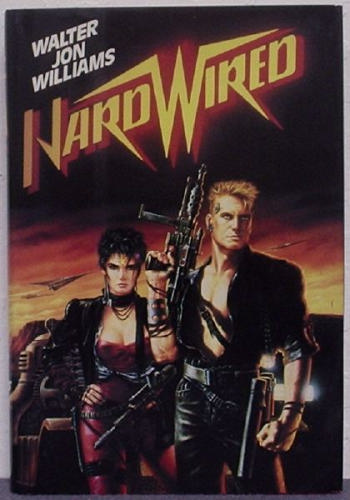
Walter Jon Williams' Hardwired (1986) is an early and influential cyberpunk novel. Voice of the Whirlwind, published three years later, is a loosely connected follow-up set in the same future, sharing its technological and political backdrop with a different cast of characters.