Loreful
HomeDiscover
Search series, authors…⌘K
Loreful

Reading orders for SF/F series and shared universes — with your place kept in every one.

Explore

UniversesSeriesWorksAuthorsAtlas

Help

FAQAboutSite map

Account & legal

Sign inCreate accountPrivacyTerms

Data

Built on ISFDB, Wikipedia, Wikidata and Open Library. Curated reading orders carry their reasoning on the page; the rest follow publication order. Data sources & licenses

© Loreful · data: ISFDB · CC BY

More like Private Rites

anchored on:fantasygrief and lossour worldnear futureeerieliterary & general+2 more

but

Mood

The mood the book leaves you in.

  • The reading experience is propelled by journeys, exploration, and physical risk; excitement and forward momentum dominate over dread or introspection.
  • Joy and loss are deliberately mixed; the resolution grants characters something real while taking something else away, leaving warmth and sorrow together.
  • The book demands work from the reader — dense prose, difficult structure, unfamiliar ideas, or morally uncomfortable material — as part of its intended effect.
  • Grim events, cruelty, or despair dominate the atmosphere, and the book does not soften them with comfort or comic relief.
  • The atmosphere is quietly unsettling — wrongness, unease, and the uncanny pervade the book without necessarily escalating into overt horror.
  • The book is built to move the reader; character feeling is foregrounded and major scenes aim at a strong emotional response.
  • Humor is a primary aim and the prose plays for laughs — comic situations, wit, or dialogue produce sustained comedy, not occasional levity.
  • The book insists that things can improve; effort and decency are shown to matter, and the arc bends toward better outcomes even through hardship.
  • The book teaches as it goes — real facts, history, science, or craft are conveyed in enough depth that learning is part of the reading experience.
  • The book is designed to uplift and motivate, presenting perseverance or achievement in a way that invites the reader to aspire or act.
  • The overall register is cheerful and easygoing; stakes are kept gentle and the book avoids dwelling on pain or dread.
  • Withheld information drives the experience; the book sustains enigmas and secrets the reader wants resolved, whatever its genre.
  • The book is contemplative and inward-looking, giving more weight to thought, memory, and meaning than to external events.
  • The book works as comfort reading — low tension, a soothing pace, and an atmosphere the reader can unwind in.
  • Grief, loss, or melancholy set the dominant register, and the book lets sorrow stand rather than resolving it into comfort.
  • Sustained suspense is the point; the book keeps the reader braced for what happens next through danger, pressure, or impending revelation.
  • Playful invention and charm define the register — fanciful conceits, light absurdity, and a narration that delights in its own oddity.

About

What the story runs on.

  • Stories in which extraterrestrial beings are central — as characters, cultures, or the object of the plot.
  • Stories structured as a quest — a journey undertaken to find, deliver, or destroy something of great import.
  • Stories in which staying alive against nature, catastrophe, or scarcity is the central problem.
  • Stories of lovers kept apart by law, family, faith, or station, where the obstacle to love is the plot.
  • Stories in which a friendship — its making, testing, or loss — is the emotional center.
  • Stories of growing up — a young protagonist crossing from childhood into adult knowledge and responsibility.
  • Stories about who a character truly is — self-discovery, doubled lives, and the search for a self.
  • Stories about mourning — living through the death of a loved one and what loss does to the survivors.
  • Stories in which a buried family truth — hidden parentage, crimes, or shames — surfaces and reorders the present.
  • Stories driven by maneuvering for power — factions, conspiracies, and statecraft conducted in shadow.
  • Stories in which war itself is the subject — combat, occupation, and what warfare does to soldiers and civilians.
  • Stories organized around investigating a killing — the case, the clues, and the pursuit of the killer, in any genre's clothing.

Shelf

Where it sits in the library.

    • Fiction built on magic or other supernatural elements that have no scientific explanation.
    • Secondary-world fantasy at large scale, where the fate of nations or the world turns on the protagonists' struggle.
    • Fantasy set in a recognizably modern city or contemporary world where the supernatural intrudes on everyday life.
    • Fantasy that blends in horror's atmosphere and imagery, keeping a fantastical frame around grim or frightening material.
    • Action-driven fantasy following warriors or rogues with personal stakes against sorcerous threats, rather than world-spanning conflicts.
    • Fantasy set in a real historical period or a close analogue of one, with magic woven into the era.
    • Fantasy in which protagonists cross from the ordinary world into another world through a portal or similar passage.
    • Fiction that retells or reworks a traditional fairy tale in a new form or setting.
    • Fantasy drawing directly on myths, legends, and folklore, retelling them or building on their figures and logic.
    • Fantasy of ghosts, vampires, shapeshifters, psychics, and similar phenomena, usually set in an otherwise ordinary world.
    • Fiction mixing science-fictional trappings with overtly magical or impossible elements in one setting.
    • Low-stakes fantasy emphasizing comfort, community, and everyday pleasures over conflict and peril.
    • Speculative fiction of pervasive moral ambiguity, violence, and cynicism that rejects heroic conventions — fantasy and SF alike.
      • Fiction that extrapolates from science and technology — future societies, space travel, or speculative inventions — within at least nominally natural laws.
      • Science fiction of interstellar scope — starships, galactic polities, and adventure across star systems.
      • Science fiction committed to scientific rigor, where technical plausibility constrains the story.
      • Science fiction centered on armed forces and warfare, told largely from a military point of view.
      • Science fiction of networked, corporate-dominated near futures, pairing high technology with social decay.
      • Science fiction styled on nineteenth-century steam-powered technology, often in a Victorian or pseudo-Victorian setting.
      • Fiction depicting an oppressive or catastrophic society, presented as a warning.
      • Fiction set after civilization's collapse, following survivors in the ruins of the old world.
      • Fiction in which characters move between past and future, and the mechanics or consequences of that travel drive the plot.
      • Fiction exploring a world where a historical event went differently and history diverged from ours.
      • Science fiction about humanity's first encounter and communication with an alien intelligence.
      • Science fiction in which extraterrestrial forces attack or occupy Earth and humanity resists.
      • Fiction whose primary aim is to frighten or unsettle the reader through dread, menace, or the monstrous.
      • Horror of vast, indifferent, incomprehensible entities before which humanity is insignificant, in the Lovecraft tradition.
      • Horror of decaying houses, buried family secrets, and oppressive atmosphere in the Gothic literary tradition.
      • Horror centered on hauntings and the returning dead.
      • Horror located in the mind — paranoia, obsession, and unreliable perception rather than external monsters.
      • Horror built around the reanimated dead and survival amid their outbreaks.
      • Horror defined by explicit, transgressive gore that refuses to cut away from violence.
      • Speculative fiction of the strange and uncanny that resists both natural explanation and standard genre categories.
      • Fiction organized around solving a crime or puzzle, typically following an investigator toward the identification of a culprit.
      • A puzzle-first mystery that lays out clues so the culprit's identity can be deduced before the reveal.
      • Crime fiction of moral ambiguity, fatalism, and hard-edged style, set among the corrupt and the doomed.
      • A mystery following the realistic routines of police work — forensics, interviews, and case-building.
      • A gentle mystery with an amateur sleuth, a small community, and violence kept off the page.
      • A mystery set in a past era, where the investigation works within that period's methods and society.
      • Fast-paced fiction driven by imminent danger, pursuit, or high-stakes conspiracy, built to sustain tension.
      • A thriller of espionage — agents, tradecraft, and intelligence services in conflict.
      • A thriller centered on lawyers and the courtroom, where litigation carries the suspense.
      • A thriller driven by detailed contemporary or near-future technology, often military or scientific.
      • A thriller whose tension comes from mental states and manipulation between characters rather than external action.
      • Fiction whose central plot is a romantic relationship and its development toward an emotionally satisfying resolution.
      • Romance in which one or both partners are supernatural beings, blending fantasy elements into the love story.
      • A fantasy-romance hybrid in which the romantic arc and the fantasy plot carry equal weight.
      • Romance set in a past era, with courtship shaped by the period's society and manners.
      • Romance set in the present day, without supernatural or historical elements.
      • Fiction set in a real past period, where the historical setting materially shapes characters and events.
        • General and literary fiction emphasizing prose style, character interiority, or formal ambition over genre plot conventions.
        • Fiction in a realistic world where magical events occur and are treated as ordinary, in the tradition of Latin American literature.
        • Fiction that ridicules people, institutions, or society in order to criticize them.
        • Fiction of dreamlike, irrational imagery and logic that breaks from realistic representation.
        • Fiction that plays with narrative convention through metafiction, fragmentation, and self-reference.
        • Fiction propelled by journeys, exploration, and physical peril, where action and survival carry the plot.
        • Adventure fiction of ships and seafaring — naval engagements, voyages, and life at sea.
        • Fiction of the American frontier West — gunmen, ranchers, and lawmen, typically in the late nineteenth century.
        • Fiction centered on soldiers, campaigns, and the experience of warfare, historical or imagined.
          • Fiction written primarily to amuse, using comedic situations, wit, or parody as its organizing principle.
            • Multi-generational fiction following a family or dynasty across decades, with inheritance and kinship as the through-line.
              • Fiction whose world runs on explicit game mechanics — levels, stats, and skills that characters can see and exploit.
                • Fiction about costumed or superpowered heroes and their conflicts with comparable villains.

                Practical

                How long a commitment, whether it stands alone, and whether it has finished.

                Tap a chip to ask for it · tap again to rule it out · once more to clear. Numbers show what would be left.

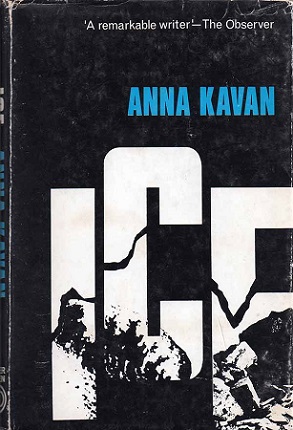
                • Cover of Ice
                  Ice

                  Anna Kavan · standalone novel · 1967

                  similar byeerieour worldliterary & generalecological collapse+1 more

                  Ice is a novel by British writer Anna Kavan, published in 1967. Ice was Kavan's last work to be published before her death, the first to land her mainstream success, and remains her best-known work. Generally regarded as genre-defying, it has been labelled a work of science fiction, Nouveau roman, and slipstream fiction.

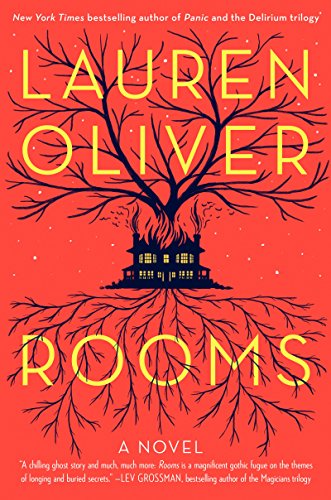
                • Cover of Rooms
                  Rooms

                  Lauren Oliver · standalone novel · 2014

                  similar byeerieour worldgrief and lossfamily secrets+1 more

                  Wealthy Richard Walker has just died, leaving behind his country house full of rooms packed with the detritus of a lifetime. His estranged family-bitter ex-wife Caroline, troubled teenage son Trenton, and unforgiving daughter Minna-have arrived for their inheritance. But the Walkers are not alone. Prim Alice and the cynical Sandra, long dead former residents bound to the house, linger within its claustrophobic walls. Jostling for space, memory, and supremacy, they observe the family, trading barbs and reminiscences about their past lives. Though their voices cannot be heard, Alice and Sandra speak through the house itself-in the hiss of the radiator, a creak in the stairs, the dimming of a light bulb. The living and dead are each haunted by painful truths that will soon surface with explosive force. When a new ghost appears, and Trenton begins to communicate with her, the spirit and human worlds collide-with cataclysmic results.

                • Cover of The Ocean at the End of the Lane
                  The Ocean at the End of the Lane

                  Neil Gaiman · standalone novel · 2013

                  similar byeerieour worldfantasy

                  A seven year old farm boy becomes friends with an eleven year old neighbor girl, who he discovers is ancient and powerful and intervenes when a nonhuman entity attempts to make a home in earthly reality.

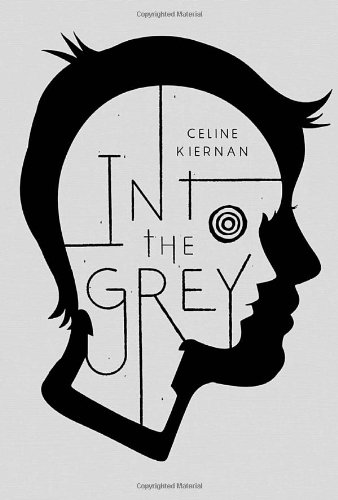
                • Cover of Into the Grey
                  Into the Grey

                  Celine Kiernan · standalone novel · 2013

                  similar byeerieour worldfantasygrief and loss

                  Fifteen-year-old Patrick Finnerty races to save his twin brother, Dom, who is being possessed by a ghost.

                • Cover of The Lathe of Heaven
                  The Lathe of Heaven

                  Ursula K. Le Guin · standalone novel · 1971

                  similar byeerieour worldnear future+1 more

                  The Lathe of Heaven is a 1971 science fiction novel by American writer Ursula K. Le Guin, first serialized in the American science fiction magazine Amazing Stories. It won the 1972 Locus Award for Best Novel and was a finalist for the 1971 Nebula Award for Best Novel and 1972 Hugo Award for Best Novel. Two television film adaptations were released: the PBS production, The Lathe of Heaven (1980), and Lathe of Heaven (2002), a remake produced by the A&E Network.

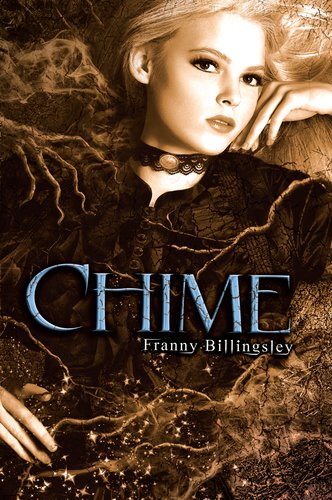
                • Cover of Chime
                  Chime

                  Franny Billingsley · standalone novel · 2011

                  similar byeerieour worldfantasyfamily secrets+1 more

                  In the early twentieth century in Swampsea, seventeen-year-old Briony, who can see the spirits that haunt the marshes around their town, feels responsible for her twin sister's horrible injury until a young man enters their lives and exposes secrets that even Briony does not know about.

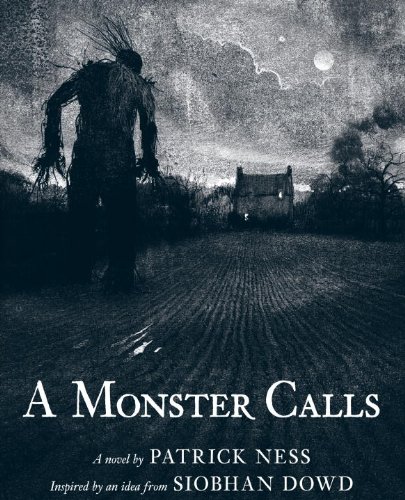
                • Cover of A Monster Calls
                  A Monster Calls

                  series · 2 books · 2011

                  similar byeeriefantasygrief and lossliterary & general

                  A Monster Calls follows a boy struggling with his mother's terminal illness, who is visited each night by a tree-like monster demanding an honest story from him in exchange for the unsettling tales it tells. Patrick Ness wrote the novel from an idea left unfinished by Siobhan Dowd, who died of cancer before she could write it herself, with illustrations by Jim Kay integral to the original edition. It was later adapted for the stage.

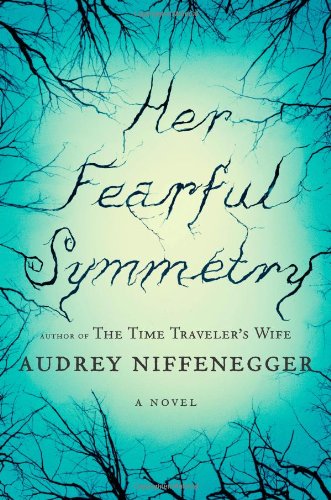
                • Cover of Her Fearful Symmetry
                  Her Fearful Symmetry

                  Audrey Niffenegger · standalone novel · 2009

                  similar byeerieour worldgrief and lossfamily secrets+1 more

                  Her Fearful Symmetry is a horror novel by the American writer Audrey Niffenegger. The book was published on October 1, 2009 and is set in and around London's Highgate Cemetery where, after a year of research for the book, Niffenegger acted as a tour guide.

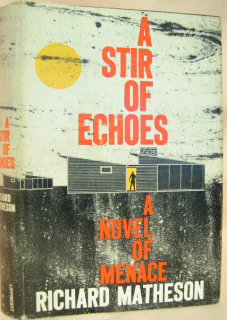
                • Cover of A Stir of Echoes
                  A Stir of Echoes

                  Richard Matheson · standalone novel · 1958

                  similar byeerieour worldfantasy+1 more

                  A Stir of Echoes is a supernatural novel by American writer Richard Matheson, published in 1958. It served as the inspiration for the 1999 film Stir of Echoes.

                • Cover of A Sea of Unspoken Things
                  A Sea of Unspoken Things

                  Adrienne Young · standalone novel · 2025

                  similar byeerieour worldgrief and lossliterary & generalfamily secrets

                  "In this captivating atmospheric novel from the New York Times bestselling author of The Unmaking of June Farrow, a woman investigates her twin brother's mysterious death while confronting the ghosts of her own haunted past"-- Provided by publisher.

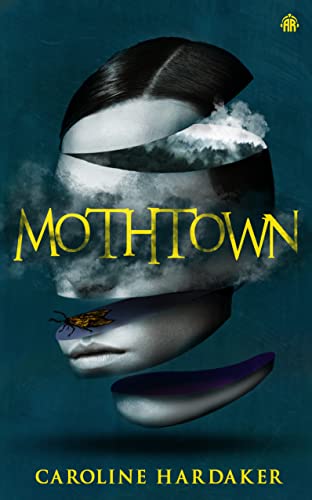
                • Cover of Mothtown
                  Mothtown

                  Caroline Hardaker · standalone novel · 2023

                  similar byeerieour worldfantasygrief and loss+1 more

                  Mothtown is a literary fantasy and horror novel by English poet and novelist Caroline Hardaker. It is her second novel and was first published in the United Kingdom and the United States in November 2023 by Angry Robot. The book was illustrated by English political cartoonist and illustrator Chris Riddell.

                • Cover of The Place of the Lion
                  The Place of the Lion

                  Charles Williams · standalone novel · 1931

                  similar byeerieour worldfantasy

                  The Place of the Lion is a work of supernatural fiction written by Charles Williams. The book was first published in 1931 by Victor Gollancz.

                • Cover of Southern Reach Trilogy
                  Southern Reach Trilogy

                  series · 4 books · 2014

                  similar byeerieour world+2 more

                  The Southern Reach Series is a series of novels by the American author Jeff VanderMeer first published in 2014—Annihilation, Authority, Acceptance, and Absolution. The series takes its name from the secret agency that is central to the plot. In 2013, Paramount Pictures bought the movie rights for the series, and a film adaptation of Annihilation was made with Alex Garland as writer-director. The film was released in 2018. The most recent book in the series, Absolution, was released on 22 October 2024.

                • Cover of The Keep
                  The Keep

                  Jennifer Egan · standalone novel · 2006

                  similar byeerieour worldliterary & generalfamily secrets

                  The Keep is a novel by American writer Jennifer Egan. It became a National Bestseller, a New York Times and San Francisco Chronicle Notable Book, and a Chicago Tribune, Kansas City Star, and Rocky Mountain News Best Book of the Year. The Keep is a story about two cousins involved in a haunting business venture that evokes a horrifying tale from their past.

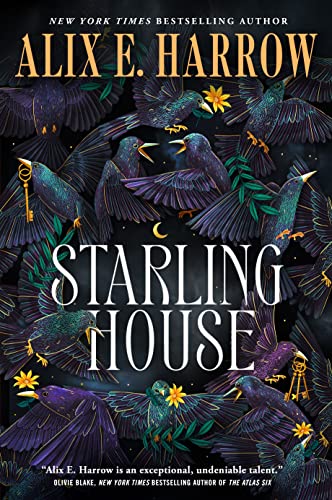
                • Cover of Starling House
                  Starling House

                  Alix E. Harrow · standalone novel · 2023

                  similar byeerieour worldfantasyfamily secrets

                  Starling House is a 2023 gothic fantasy novel by American author Alix E. Harrow published by Tor Books. The novel tells a story of a young woman, Opal, who lives in a destitute region of Kentucky, attempting to find an economic means to uplift her brother from poverty and pay for his education. When she accepts the position as maid at the enigmatic Starling House, a mansion shrouded in mystery, she becomes entangled in a web of strange, supernatural and historical secrets that are linked to the town's dark past. At the same time, she resists the exploitation of the land and its people by powerful, profit-driven forces like the pointedly named Gravely Power, striving to secure her brother's future, safeguard Starling House, and assert control over her own destiny.

                • Cover of The Magic Toyshop
                  The Magic Toyshop

                  Angela Carter · standalone novel · 1967

                  similar byeerieour worldliterary & generalfamily secrets

                  The Magic Toyshop (1967) is the second novel by British author Angela Carter. It follows the development of the heroine, Melanie, as she becomes aware of herself, her environment, and her own sexuality.

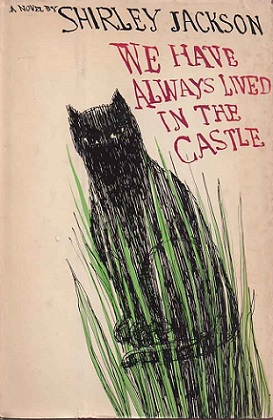
                • Cover of We Have Always Lived in the Castle
                  We Have Always Lived in the Castle

                  Shirley Jackson · standalone novel · 1962

                  similar byeerieliterary & generalfamily secrets+1 more

                  A young woman lives with her older sister and sickly uncle in their old family house, after a mysterious tragedy turns the townsfolk against them.

                • Cover of The Halloween Tree
                  The Halloween Tree

                  Ray Bradbury · standalone novel · 1972

                  similar byour worldfantasygrief and loss+1 more

                  Eight boys gather on Halloween night to trick-or-treat with their ninth friend, Pipkin, only Pipkin never shows, having vanished on some errand that may cost him his life. A strange, black-robed guide named Moundshroud appears to lead the boys after him, and the chase turns into a journey through the history of the holiday itself: ancient Egypt, druidic Britain, Rome, medieval Paris, and the Mexican Day of the Dead, each stop peeling back another layer of how humanity has faced death and the dark. Ray Bradbury's Halloween novel doubles as a compressed history of the holiday's origins.

                • Cover of The Last Tale of the Flower Bride
                  The Last Tale of the Flower Bride

                  Roshani Chokshi · standalone novel · 2023

                  similar byeerieour worldliterary & generalfamily secrets+1 more

                  A sumptuous, gothic-infused story about a marriage that is unraveled by dark secrets, a friendship cursed to end in tragedy, and the danger of believing in fairy tales—the breathtaking adult debut from New York Times bestselling author Roshani Chokshi. Once upon a time, a man who believed in fairy tales married a beautiful, mysterious woman named Indigo Maxwell-Casteñada. He was a scholar of myths. She was heiress to a fortune. They exchanged gifts and stories and believed they would live happily ever after—and in exchange for her love, Indigo extracted a promise: that her bridegroom would never pry into her past. But when Indigo learns that her estranged aunt is dying and the couple is forced to return to her childhood home, the House of Dreams, the bridegroom will soon find himself unable to resist. For within the crumbling manor’s extravagant rooms and musty halls, there lurks the shadow of another girl: Azure, Indigo’s dearest childhood friend who suddenly disappeared. As the house slowly reveals his wife’s secrets, the bridegroom will be forced to choose between reality and fantasy, even if doing so threatens to destroy their marriage . . . or their lives. Combining the lush, haunting atmosphere of Mexican Gothic with the dreamy enchantment of The Invisible Life of Addie LaRue, The Last Tale of the Flower Bride is a spellbinding and darkly romantic page-turner about love and lies, secrets and betrayal, and the stories we tell ourselves to survive.

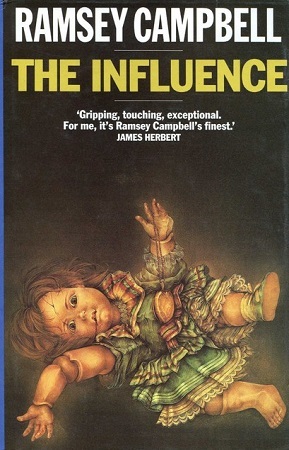
                • Cover of The Influence
                  The Influence

                  Ramsey Campbell · standalone novel · 1988

                  similar byeerieour worldfamily secrets+1 more

                  A young girl begins to take on the characteristics of her departed grandmother, an evil and oppressive woman.

                • Cover of Tigers, Not Daughters
                  Tigers, Not Daughters

                  Samantha Mabry · standalone novel · 2020

                  similar byeeriefantasygrief and lossliterary & generalfamily secrets

                  Tigers, Not Daughters is a 2020 novel by Samantha Mabry. It is about four sisters, one of whom dies by falling out of a window. The dead sister haunts the remaining sisters in the house they live in. Publishers Weekly wrote that the novel "read more like a series of vignettes." NPR reviewed it favorably.

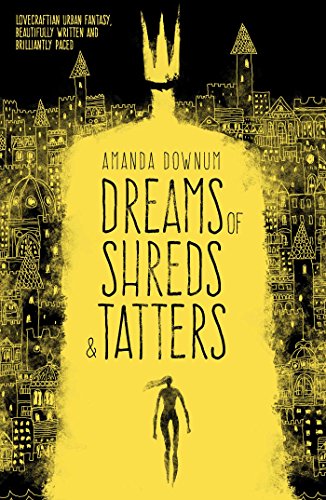
                • Cover of Dreams of Shreds and Tatters
                  Dreams of Shreds and Tatters

                  Amanda Downum · standalone novel · 2015

                  similar byeerieour worldfantasygrief and loss

                  "When Liz Drake's best friend vanishes, nothing can stop her nightmares. Driven by the certainty he needs her help, she crosses a continent to search for him. She finds Blake comatose in a Vancouver hospital, victim of a mysterious accident that claimed his lover's life -- in her dreams he drowns. Blake's new circle of artists and mystics draws her in, but all of them are lying or keeping dangerous secrets. Soon nightmare creatures stalk the waking city, and Liz can't fight a dream from the daylight world: to rescue Blake she must brave the darkest depths of the Dreamlands."--

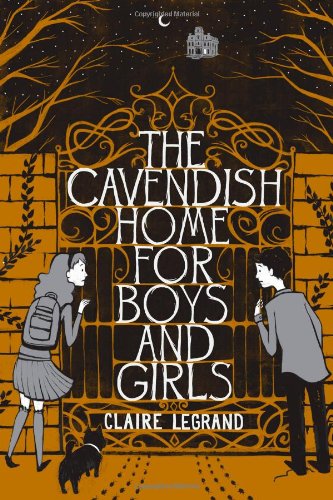
                • Cover of The Cavendish Home for Boys and Girls
                  The Cavendish Home for Boys and Girls

                  Claire Legrand · standalone novel · 2012

                  similar byeerieour worldfantasyfamily secrets

                  Practically-perfect twelve-year-old Victoria Wright must lie, sneak, and break the rules when her investigation of the disappearance of her best--and only--friend, Lawrence, reveals dark secrets about her town and the orphanage run by the reclusive Mrs. Cavendish.

                • Cover of Never Let Me Go
                  Never Let Me Go

                  Kazuo Ishiguro · standalone novel · 2005

                  similar byour worldnear futureliterary & generalgrief and loss

                  Never Let Me Go is a 2005 science fiction novel by the British author Kazuo Ishiguro. It was shortlisted for the 2005 Man Booker Prize, for the 2006 Arthur C. Clarke Award and the 2005 National Book Critics Circle Award. Time magazine named it the best novel of 2005. It included the novel in its '100 Best English-language novels published since 1923—the beginning of TIME'. It also received an ALA Alex Award in 2006. A film adaptation directed by Mark Romanek was released in 2010.