More like Progress
anchored on:science fictionour worldfar futurepost-apocalypticecological collapse
but
- Maurai
series6 books1959
completed
similar byecological collapseour worldfar futurescience fictionpolitical intriguepost-apocalyptic
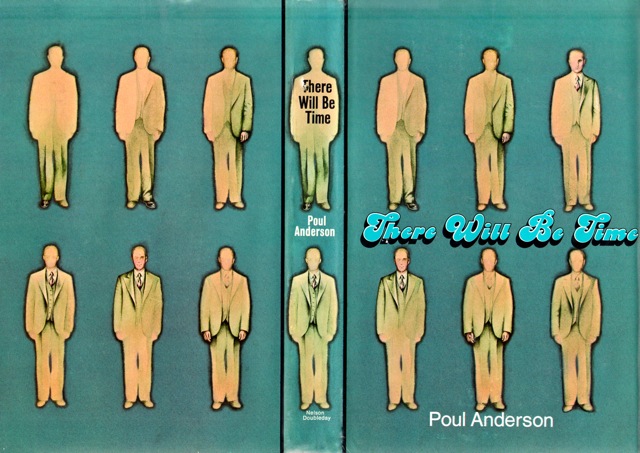
The Maurai series is a series of short stories and a novel by Poul Anderson set in a resource depleted, post-apocalyptic earth several centuries in the future. The series is named after its most frequent protagonists, citizens of the Maurai Federation. The Maurai dominate the Pacific and Indian Oceans. Fearful of the social and ecological implications of a return to large-scale industrial society, they use their considerable might and covert resources to prevent other nations from developing nuclear power.
- Dark Is the Sun
Philip José Farmerstandalone novel1979
similar byecological collapseour worldfar futurescience fictionpost-apocalyptic
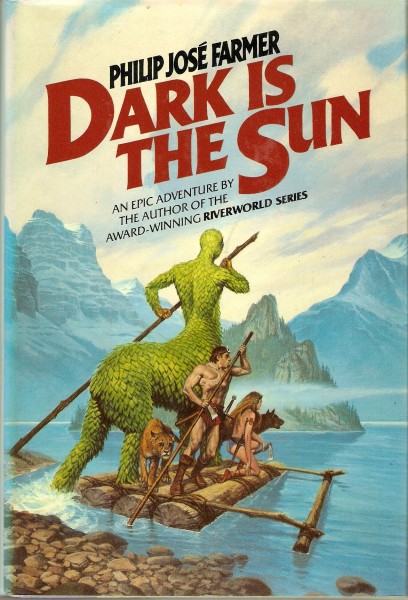
Dark Is The Sun is a science fiction novel by American writer Philip José Farmer, first published in 1979. It tells the story of the people and creatures left on Earth when the Sun is dead and the universe is heading towards the Big Crunch.
- Mother of Storms
John Barnesstandalone novel1994
similar byecological collapseour worldscience fictionpolitical intriguepost-apocalyptic
From the flaps of the Tor first edition: "It is 2028. A strike to destroy an illegal Arctic weapons cache has a catastrophic side effect. Massive amounts of energy are liberated from the polar ice, suddenly warming the Earth's climate. In the middle of the Pacific, a gigantic hurricane thousands of miles across is forming, larger than any in human history. A storm with winds of supersonic speed. A storm that changes direction at whim. A storm that refuses to die. A storm so vast it spawns dozens more in its wake... Blinded by intrigue, expedience, and greed, the world's politicians and power brokers have ignored the killer storms threat until it is too late. Already the death toll is in the tens of millions, as it savages the Pacific coast, while its devil's brood of smaller storms are wreaking havoc across the face of the planet. While the survivors scramble for advantage, a handful of courageous men and women undertake a daring, desperate plan to save humanity from total destruction - a plan so visionary it may alter forever the future of the human race."
- 2312
Kim Stanley Robinsonstandalone novel2012
similar byecological collapsefar futurescience fiction+2 more
In the eponymous year, when Earth's ecology is degraded and humanity has settled throughout the solar system by terraforming and genetic engineering, mysterious disasters strike some human communities and an assortment of human types from throughout the system seek to find and eliminate the cause.
- Riddley Walker
Russell Hobanstandalone novel1980
similar byour worldfar futurescience fictionpost-apocalyptic+1 more
WorldCat: Composed in an English which has never been spoken and laced with a storytelling tradition that predates the written word, RIDDLEY WALKER is the world waiting for us at the bitter end of the nuclear road. It is desolate, dangerous and harrowing, and a modern masterpiece.
- Adiamante
L. E. Modesitt & Jr.standalone novel1996
similar byecological collapseour worldfar futurescience fictionpolitical intrigue
From the flaps of the first edition: In the far future, Earth is just one planet inhabited by humanity, the capital of a long-abandoned interstellar empire. Having renounced the arrogance and pride of empire, the people of Earth have built a new society based on a rigid set of principles that stress environmental conservation and nonaggression. Slowly the planet is recovering from millennia of selfish exploitation and the destruction of wars. Suddenly a former colony's fleet of twelve warships built of nearly indestructible adiamante appears in orbit and tries to intimidate the people of Earth into submission. The people of Earth will not surrender, but their principles also don't allow them to take offensive measures until the fleet actually attacks. Ecktor deJanes is the newly appointed planetary coordinator and has the terrible responsibility of protecting the lives of all the Earth's inhabitants. Somehow he must maintain his society's principles while preventing the fleet from turning the planet into a lifeless call of rock.
- Starship & Haiku
S. P. Somtowstandalone novel1981
similar byecological collapseour worldfar futurescience fictionpost-apocalyptic
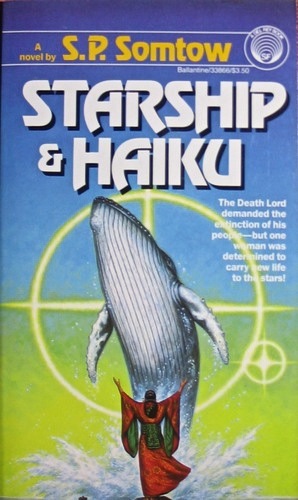
From the back cover of the Pocket Books first edition: The millennial war left a sullen void where civilization once stood... But then the whales began their song - a mysterious song that resounded throughout the polluted seas and told an ancient heartbreaking tale that moved the survivors to revive an honored ritual... And at the vanguard stood Takahashi, self-appointed Death Lord - a man gone mad in the wake of the chaos. He saw himself an artist whose greatest creation was a living haiku, with a last line as exquisite as it was final - the end of all human life. Only one chance remained for Josh Nakamura, for his younger brother Didi, and for Ryoko, the beautiful daughter of a high minister of Japan. They must take the whale's legacy and leave the planet before they too became part of Takahashi's terrible poetic vision..
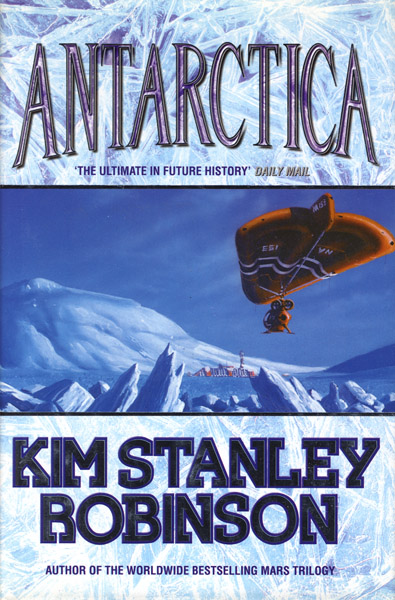
- Antarctica
Kim Stanley Robinsonstandalone novel1997
similar byecological collapseour worldscience fiction+1 more
Antarctica (1997) is a science fiction novel by American writer Kim Stanley Robinson. It deals with a variety of characters living at or visiting an Antarctic research station. The novel incorporates many of Robinson's frequent themes, including scientific process and the importance of environmental protection.
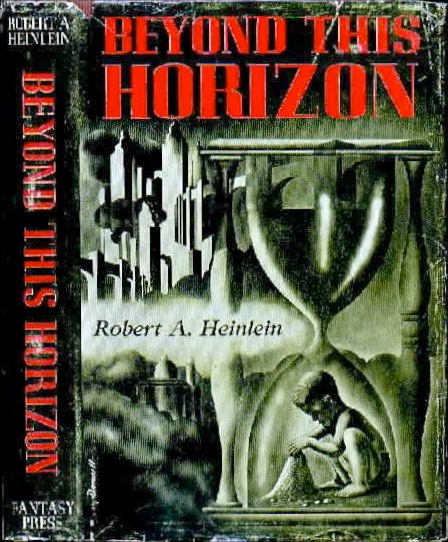
- Beyond This Horizon
Robert A. Heinleinstandalone novel1948
similar byour worldfar futurescience fiction+1 more
From the front flap of a 2001 Baen reprint: "Utopia has been achieved. For centuries, disease, hunger, poverty, and war have been things found only in the history tapes. And applied genetics has given men and women the bodies of athletes and a lifespan of over a century. They should all have been very happy... But Hamilton Felix is bored. And he is the culmination of a star line, each of his last thirty ancestors chosen for superior genes. Hamilton is, as far as genetics can produce one, the ultimate man. And this ultimate man can see no reason why the human race should survive, and has no intention of continuing the pointless comedy. However, Hamilton's life is about to become less boring. A secret cabal of revolutionaries who find utopia not just boring, but desperately in need of leaders who know just What Needs to be Done, are planning to revolt and put themselves in charge. Knowing of Hamilton's disenchantment with the modern world, they have recruited him to join their Glorious Revolution. Big mistake! The revolutionaries are about to find out that recruiting a superman was definitely not a good idea..."
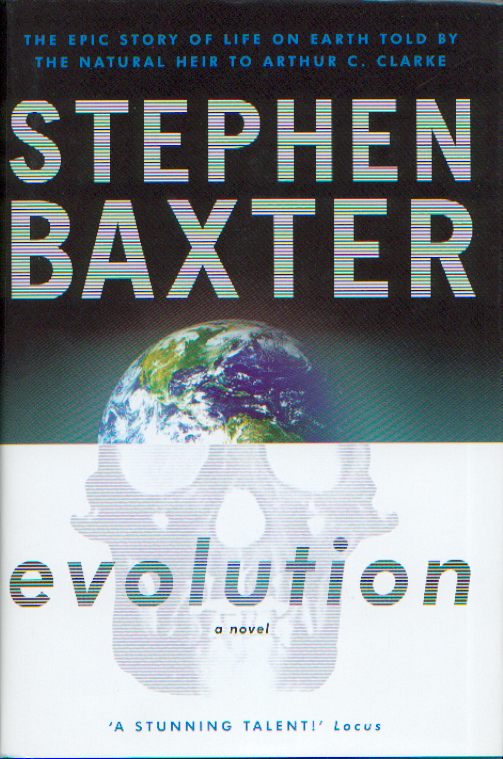
- Evolution
Stephen Baxterstandalone novel2002
similar byecological collapseour worldfar futurescience fiction
Evolution is a collection of short stories that work together to form an episodic science fiction novel by author Stephen Baxter. It follows 565 million years of human evolution, from shrewlike mammals 65 million years in the past to the ultimate fate of humanity and its descendants, both biological and non-biological, 500 million years in the future.
- Mara and Dann
series2 books1999
completed
similar byecological collapsefar futurescience fictionpost-apocalyptic+1 more
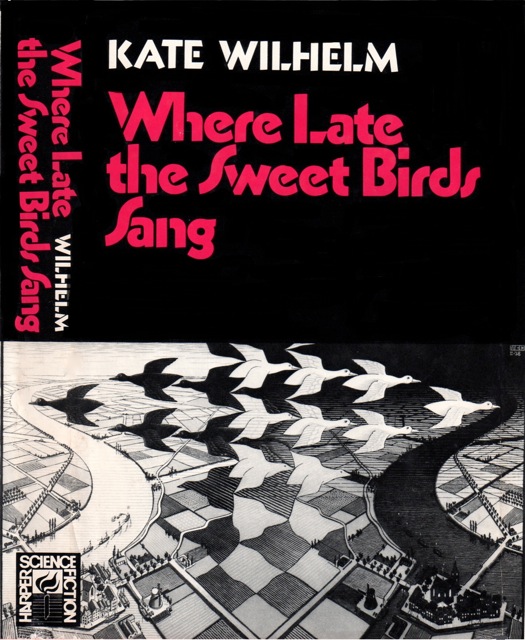
- Where Late the Sweet Birds Sang
Kate Wilhelmstandalone novel1976
similar byecological collapseour worldscience fictionpost-apocalyptic
Where Late the Sweet Birds Sang is a science fiction novel by American writer Kate Wilhelm, published in 1976. The novel is composed of three parts, "Where Late the Sweet Birds Sang," "Shenandoah," and "At the Still Point," and is set in a post-apocalyptic era, a concept popular among authors who took part in the New Wave Science Fiction movement in the 1960s.
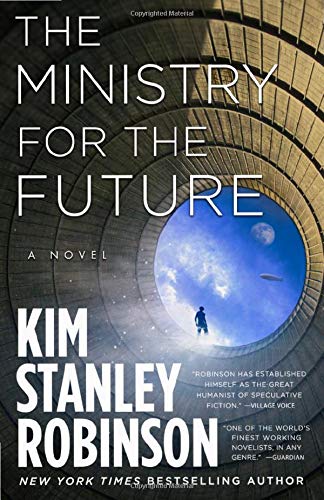
- The Ministry for the Future
Kim Stanley Robinsonstandalone novel2020
similar byecological collapseour worldscience fictionpolitical intrigue
The Ministry for the Future is a climate fiction novel by American science fiction writer Kim Stanley Robinson, published in 2020. Set in the near future, the novel follows a subsidiary body, established under the Paris Agreement, whose mission is to act as an advocate for the world's future generations of citizens as if their rights were as valid as the present generation's. While the ministry pursues various ambitious projects, the effects of climate change are determined to be the most consequential. The plot primarily follows Mary Murphy, the head of the titular Ministry for the Future, and Frank May, an American aid worker traumatized by experiencing a deadly heat wave in India. Many chapters are devoted to other characters' accounts of future events, as well as their ideas about ecology, economics, and other subjects.
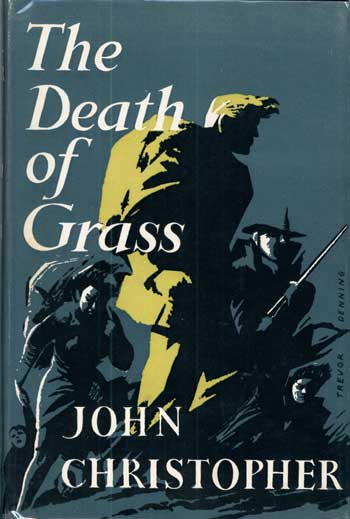
- The Death of Grass
John Christopherstandalone novel1956
similar byecological collapseour worldscience fictionpost-apocalyptic
The Death of Grass is a 1956 post-apocalyptic science fiction novel written by the English author Sam Youd under the pen name John Christopher. The plot concerns a virus that kills off grass species, including rice and wheat. The Death of Grass was the first of several post-apocalyptic novels written by Youd. The novel was written in a matter of weeks and liberated him from his day job.
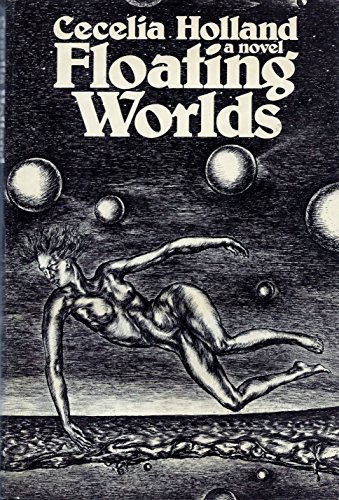
- Floating Worlds
Cecelia Hollandstandalone novel1976
similar byecological collapsefar futurescience fictionpolitical intrigue
2000 years in the future, runaway pollution has made the Earth uninhabitable except in giant biodomes. The society is an anarchy, with disputes mediated through the Machiavellian Committee for the Revolution. Mars, Venus and the Moon support flourishing colonies of various political stripes. On the fringes of the solar system, in the Gas Planets, a strange, new, violent kind of human has evolved.In this unstable system the anarchist Paula Mendoza, an agent of the Committee, works to make peace, and ultimately protect her people, in a catastrophic clash of worlds that destroys the order she knows.
- This Immortal
series2 books1966
similar byour worldfar futurescience fictionpost-apocalyptic
This Immortal is a single science fiction novel by Roger Zelazny, expanded from his 1965 serial ...And Call Me Conrad. In a depopulated future Earth largely toured by an alien race, its long-lived, secretive protagonist Conrad Nomikos is assigned to guide and protect a visiting alien across the ruins of Greece and Egypt, uncovering old grudges and assassination plots along the way. The novel shared the 1966 Hugo Award for Best Novel with Frank Herbert's Dune.
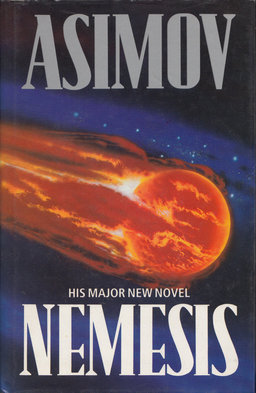
- Nemesis
Isaac Asimovstandalone novel1989
similar byecological collapsefar futurescience fictionour world
The expanding population and ensuing ecological degradation of Earth leads to the establishment of orbital habitats which continue to compete with each other as well as with Earth, leading one of them to abandon the Solar System entirely, to establish itself around a neighboring star.
- The Drought
J. G. Ballardstandalone novel1964
similar byecological collapseour worldscience fictionpost-apocalyptic
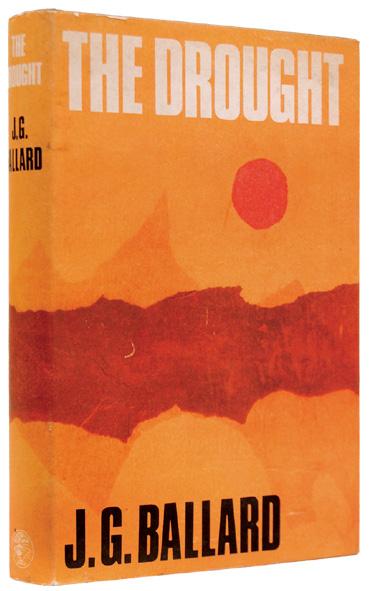
Dr. Charles Ransom watches his world dry up along with his marriage: an industrial film has coated the oceans, evaporation has stalled, and rivers, lakes and reservoirs are shrinking into cracked mud across the globe. As neighbors flee the drying city for the coast, Ransom refuses to leave, staying behind on his houseboat with others unwilling to go -- a woman running an improvised zoo, a boatman, an architect turning his estate into something like a fortress. As the water keeps disappearing and order breaks down, each of them must decide what survival looks like now. J. G. Ballard's second novel, published in the US as The Burning World.
- Termination Shock
Neal Stephensonstandalone novel2021
similar byecological collapseour worldscience fictionpolitical intrigue
Termination Shock is a science fiction novel by American writer Neal Stephenson, published in 2021. The book is set in a near-future when climate change has significantly altered human society and follows the attempts of a solar geoengineering scheme. The novel focuses on the geopolitical and social consequences of the rogue fix for climate change, themes common in the growing climate fiction genre.
- Dune
series20 books1963
part of Dune Universe
similar byfar futurescience fictionpolitical intrigue
Frank Herbert's Dune Chronicles opens with 1965's Dune, set on the desert planet Arrakis where House Atreides takes control of the only source of the vital spice melange and young Paul Atreides is pulled into a struggle over its politics and religion. Herbert carried the story forward across five further novels — Dune Messiah, Children of Dune, God Emperor of Dune, Heretics of Dune, and Chapterhouse: Dune — following Paul's line over the following millennia, before Brian Herbert and Kevin J. Anderson later extended the saga. Many other editions of these six novels are omnibus and box-set repackagings rather than separate stories.
- When the Sleeper Wakes
H. G. Wellsstandalone novel1899
similar byour worldfar futurescience fictionpolitical intrigue
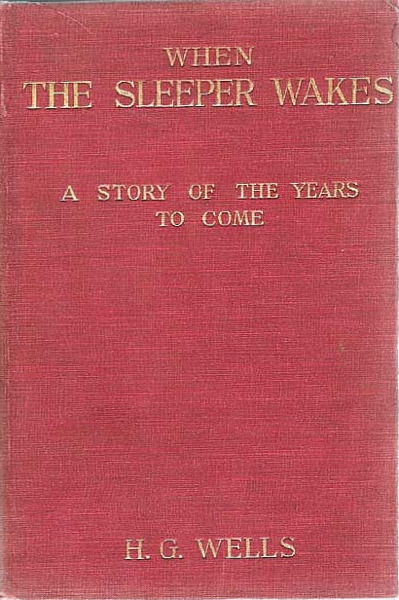
Graham, an insomniac Englishman in 1890s London, takes a course of sleep-inducing drugs and falls into a coma that lasts two centuries. He wakes in the year 2100 to find his investments have compounded, through a ruling body called the White Council, into effective ownership of most of the world's wealth and power, making him, on paper, humanity's master, and in practice, its prisoner, held under guard while the Council governs in his name. A rebel faction led by a man named Ostrog frees him, hoping to use his symbolic authority to spark an uprising against the Council. An early H. G. Wells dystopia about inherited power and manufactured consent.
- Hello America
J. G. Ballardstandalone novel1981
similar byecological collapsefar futurescience fictionpost-apocalyptic
Hello America is a science fiction novel by British writer J. G. Ballard, published in 1981. First edition cover designed by Bill Botten. The plot follows an expedition to a North America rendered uninhabitable by an ecological disaster following an energy crisis.
- La compagnie des glaces
series1 book1980
similar byecological collapsefar futurescience fictionour worldpost-apocalyptic
La Compagnie des glaces is a series of 97 post-apocalyptic science fiction novels by the French writer Georges-Jean Arnaud, published between 1980 and 2005.
- This Is the Way the World Ends
James Morrowstandalone novel1986
similar byecological collapseour worldscience fictionpost-apocalyptic
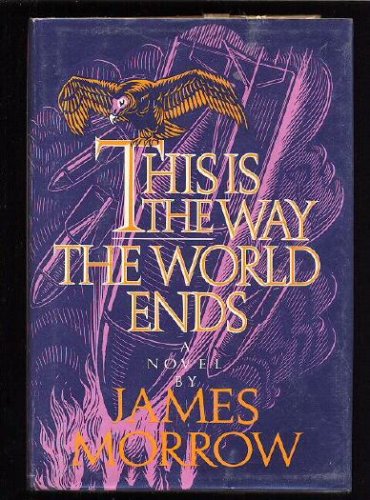
This Is the Way the World Ends is a post-apocalyptic novel by American writer James K. Morrow, published in 1986.