More like Project Nightmare
anchored on:science fictionpsychic powersmid 20th centuryour worldtense
but
- The Demolished Man
Alfred Besterstandalone novel1953
similar byscience fictiontensepsychic powersour world
In the year 2301, guns are only museum pieces and benign telepaths sweep the minds of the populace to detect crimes before they happen. In 2301 murder is virtually impossible, but one man is about to change that..
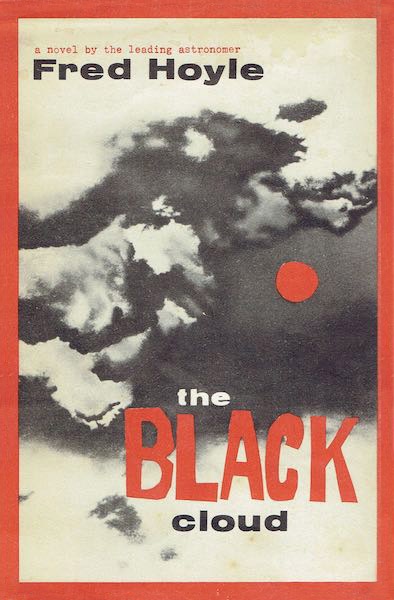
- The Black Cloud
Fred Hoylestandalone novel1957
similar byscience fictiontensemid 20th centuryour worldsurvival
The Black Cloud is a 1957 science fiction novel by British astrophysicist Fred Hoyle. It details the arrival of an enormous cloud of gas that enters the Solar System and appears about to destroy most of the life on Earth by blocking the Sun's radiation.
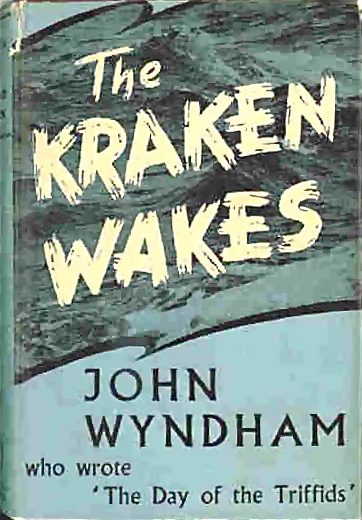
- The Kraken Wakes
John Wyndhamstandalone novel1953
similar byscience fictiontensemid 20th centuryour worldsurvival
" Behind a spectacular meteor shower actually hides the beginning of an invasion by a mysterious and powerful alien race. Earth's life is disrupted by the attacks of extraterrestrials whose war machines, emerging from the depths of the oceans, seem indestructible. The coalitioned forces of the whole world are worthless, powerless in the face of the indecipherable and deadly plans of a superior intelligence, capable of bringing the entire planet to the brink of catastrophe" Goodreads May 20, 2022
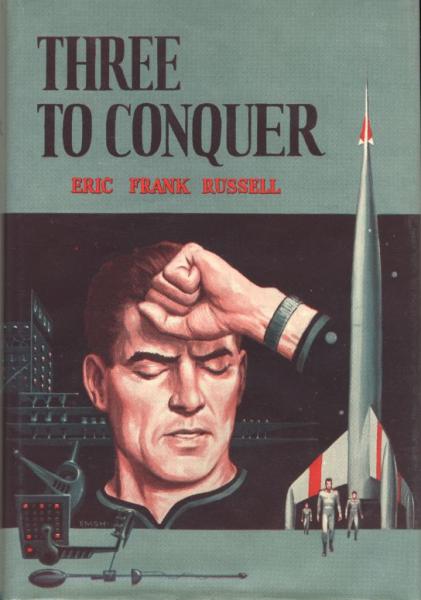
- Three to Conquer
Eric Frank Russellstandalone novel1956
similar byscience fictiontensepsychic powersmid 20th centuryour worldsurvival
Three to Conquer is a novel by Eric Frank Russell published in 1956.
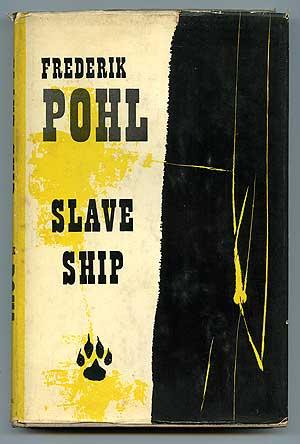
- Slave Ship
Frederik Pohlstandalone novel1957
similar byscience fictiontensepsychic powersmid 20th centuryour world
Slave Ship is a 1956 short science fiction novel by American writer Frederik Pohl, originally serialized in Galaxy. The scene is a world in the throes of a low-intensity global war, which appears to be an amplified representation of the Vietnam War, in which the U.S. was just beginning to be involved. The plot involves telepathy, speaking to animals, and, in the last few pages, an invasion by extraterrestrials.
- I Am Legend
Richard Mathesonstandalone novel1954
similar bytensescience fictionmid 20th centuryour worldsurvival
The last human survivor of the vampire epidemic has to maintain his defences against their onslaught, while attempting to research the cause and possibly solution to the plague. Robert Neville is the last living man on Earth... but he is not alone. Every other man, woman and child on the planet has become a vampire, and they are hungry for Neville's blood. By day he is the hunter, stalking the undead through the ruins of civilization. By night, he barricades himself in his home and prays for the dawn. How long can a man survive like this?
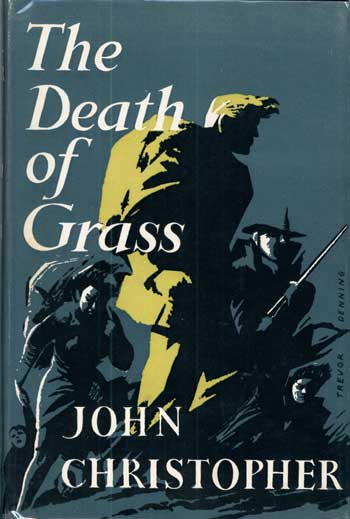
- The Death of Grass
John Christopherstandalone novel1956
similar byscience fictiontensemid 20th centuryour worldsurvival
The Death of Grass is a 1956 post-apocalyptic science fiction novel written by the English author Sam Youd under the pen name John Christopher. The plot concerns a virus that kills off grass species, including rice and wheat. The Death of Grass was the first of several post-apocalyptic novels written by Youd. The novel was written in a matter of weeks and liberated him from his day job.
- The Lathe of Heaven
Ursula K. Le Guinstandalone novel1971
similar byscience fictiontensepsychic powersour world
The Lathe of Heaven is a 1971 science fiction novel by American writer Ursula K. Le Guin, first serialized in the American science fiction magazine Amazing Stories. It won the 1972 Locus Award for Best Novel and was a finalist for the 1971 Nebula Award for Best Novel and 1972 Hugo Award for Best Novel. Two television film adaptations were released: the PBS production, The Lathe of Heaven (1980), and Lathe of Heaven (2002), a remake produced by the A&E Network.
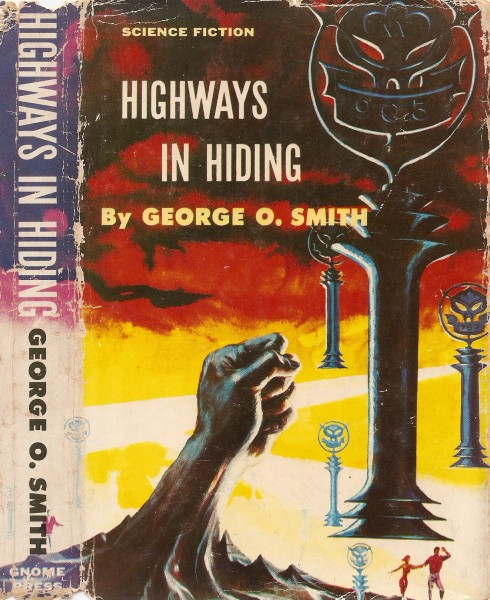
- Highways in Hiding
George O. Smithstandalone novel1956
similar byscience fictiontensepsychic powersour world
From the back cover of the first Lancer printing: "Quest impossible - Someone had stolen an important part of Steve Cornell's life. It was bad enough when his fiancee vanished. It was infinitely worse when everyone in the world insisted it couldn't have happened the way he knew it had. In a world where ESP and telepathy were normal, it was difficult to keep secrets. But Steve's search for his missing sweetheart brought him to the threshold of one of the greatest secrets of all time. And it was obvious that somebody would stop at nothing to keep him from uncovering it. What were the oddly sinister symbols along the otherwise ordinary roads? What was behind the spreading plague called Mekstrom's Disease? Why were there "blank" spots where telepathy didn't work? Who was the elusive enemy with powers even beyond those ESP had bestowed on mankind? And, most important of all... could Steve find that enemy before they made him vanish too?"
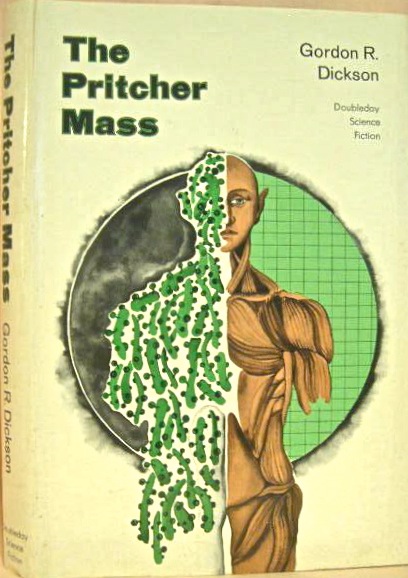
- The Pritcher Mass
Gordon R. Dicksonstandalone novel1972
similar byscience fictiontensepsychic powersour worldsurvival
The only hope for mankind's survival after the contamination of the Earth lay in the Pritcher Mass, a psychic forcefield construction out beyond the orbit of Pluto. Created by the efforts of individuals with extraordinary paranormal powers, the Mass was designed to search the universe for a new habitable planet. Chaz Sant knew he had the kind of special ability to contribute effectively to the building of the Mass, but somehow the qualifying tests were stacked against him. Then he learned that he had become the special target of an insidious organization that fattened on the fears of the last cities of the world. His confrontation with this organization, their real motives and his unexpected reactions, were to touch off the final showdown for mankind's last enterprise. (from the back cover of the DAW Books first printing)
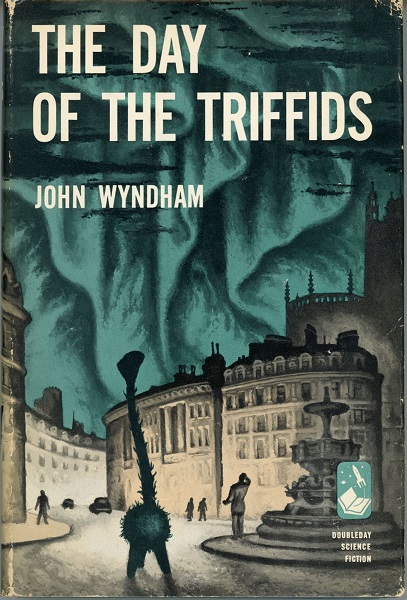
- The Triffids
series3 books1951
similar byscience fictionour worldsurvival+2 more
John Wyndham's The Day of the Triffids (1951) opens with a meteor-shower-like event that leaves most of Britain's population blind, throwing civilization into collapse just as triffids, an aggressive and mobile species of poisonous plant, become free to hunt the helpless survivors. Simon Clark's authorized sequel The Night of the Triffids (2001) picks up a generation later, narrated by the original protagonist's son as he confronts a new triffid-dominated world, and John Whitbourn's The Age of the Triffids extends the shared setting further still. Together the three novels form a loose post-apocalyptic trilogy built on Wyndham's original premise rather than a tightly plotted single story.
- The Master
T. H. Whitestandalone novel1957
similar byscience fictionpsychic powersmid 20th centuryour world+2 more
Set on and inside Rockall, a small island more than 200 miles northwest of Ireland that Britain claimed in September 1955 (and later annexed) --purportedly in response to the world-threatening events featured in this adventure story, which occurred there that summer --on and inside the rock. Twelve-year-old twins and their pet dog discover a plot to dominate the world, led by a 157-year-old genius physicist and telepath (mad scientist).
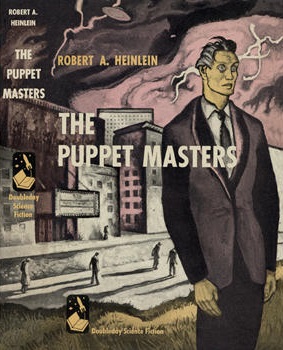
- The Puppet Masters
Robert A. Heinleinstandalone novel1951
similar byscience fictiontensemid 20th centurysurvival
Parasitical aliens attach themselves to human hosts and take over their bodies. Two spies are sent to find out what's happening, but the extent is much farther than they knew. With access to the humans' memories, the aliens quietly invade the government and start taking over.
- Alas, Babylon
Pat Frankstandalone novel1959
similar byscience fictiontensemid 20th centurysurvival
Classic novel of nuclear war and aftermath in rural Florida. From the back cover of a Bantam Pathfinder edition: "The day that the bomb dropped the thousands of years of "progress" that had covered the treacheries and weaknesses of ordinary man with a thin veneer of civilization were dissolved and melted like snow on the desert's dusty face. Then - the law of the jungle reigned but in the wreckage a few courageous survivors, men and women with the guts to have hope, were determined to build a new and better world on the ruins of the old. This is their story."
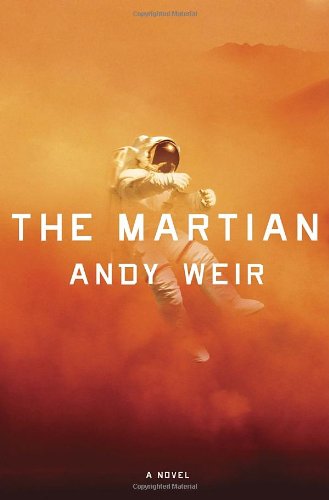
- The Martian
series2 books2012
similar byscience fictiontenseour worldsurvival
Andy Weir's novel The Martian, first self-published in 2011 before a commercial re-release, follows astronaut Mark Watney after he is stranded alone on Mars when his crew presumes him dead and departs. Using scientific improvisation and dark humor, Watney works to keep himself alive long enough for a rescue to reach him. It is a single, self-contained survival story.
- Lord of the Flies
William Goldingstandalone novel1954
similar bytensemid 20th centuryour worldsurvival+1 more
Lord of the Flies is the 1954 debut novel of British author William Golding. The plot concerns a group of prepubescent British boys who are stranded on an uninhabited island and their disastrous attempts to govern themselves that lead to a descent into savagery. The novel's themes include morality, leadership, and the tension between civility and chaos.
- Slipt
Alan Dean Fosterstandalone novel1984
similar byscience fictiontensepsychic powersour worldsurvival
Living next to a toxic chemical dump is Jake Pickett, the magic man. He can turn bullets to dust or collapse skyscrapers with his mind. But all he really wants to do with his "magic" is entertain the local kids. Then one day, the giant chemical company decides to eliminate the people who've been affected by their mess...people like Jake.
- Z for Zachariah
Robert C. O'Brienstandalone novel1975
similar byscience fictiontenseour worldsurvival+1 more
Sixteen-year-old Ann Burden, on an Amish family farm in an isolated valley, believes she is the only survivor of nuclear war and nerve gas. One day a man arrives in a "safe-suit" that he and others have recently developed.
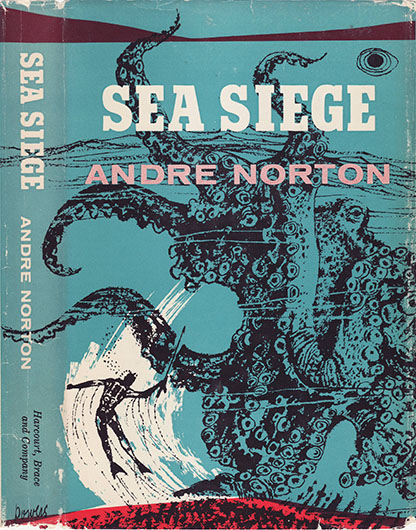
- Sea Siege
Andre Nortonstandalone novel1957
similar byscience fictiontensemid 20th centuryour worldsurvival
On a bleak little island in the West Indies, Griff Gunston faces many questions. Why were so many small island cruisers adrift and abandoned? Why was the sea disease that Griff's scientist father was investigating radioactive. Why were the colonies of octopi growing larger and becoming so strangely organized and daring? Before the answers can be found, civilization blanks out. An atom bomb war has left the little group isolated. A danger from the ocean floor, a new type of intelligence is prepared to seize the world for itself. (adapted from the blurb accompanying the first edition)
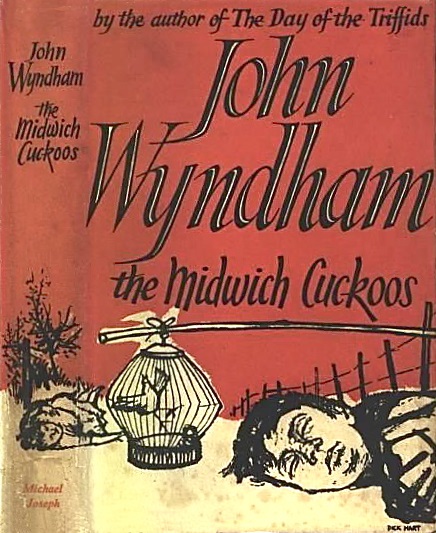
- The Midwich Cuckoos
John Wyndhamstandalone novel1957
similar byscience fictiontensemid 20th century+1 more
The Midwich Cuckoos is a 1957 science fiction novel written by the English author John Wyndham. It tells the tale of an English village in which the women become pregnant by brood parasitic aliens. The book has been praised by many critics, including the dramatist Dan Rebellato, who called it "a searching novel of moral ambiguities", and the novelist Margaret Atwood, who called the book Wyndham's "chef d'œuvre". The book has been adapted for film, radio, and television.
- The Mind Cage
A. E. van Vogtstandalone novel1957
similar byscience fictiontensepsychic powersour world
The Mind Cage is a 1957 science fiction novel by American writer A. E. van Vogt, adapted from the short story "The Great Judge" (1948).
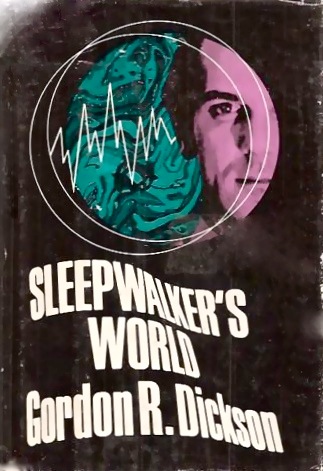
- Sleepwalker's World
Gordon R. Dicksonstandalone novel1971
similar byscience fictiontensepsychic powersour worldsurvival
Shafts driven deep into the Earth's hot core utilized that buried energy to run the world's power station. That broadcast energy alone kept the food factories running. Without those factories and that power, the hungry overpopulated planet could not survive. But the cost was high, for the power broadcasts had a terrifying side-effect. While they were on, the human race was unable to stay awake. Among the rare few with immunity to the sleep compulsion was the astronaut Rafe Arnoul Harald, one of six who had been training on the Moon for the first star voyage. But now, unless humanity could conquer the dark power that was using the sleep phenomenon to paralyze society, that flight might never be made. To defeat the unknown masters of the sleeping world, Rafe had only the help of a crippled girl, a wolf with a very special ability, and the unique talents of his own mind and body. (from the first page of the DAW Books first paperback edition)
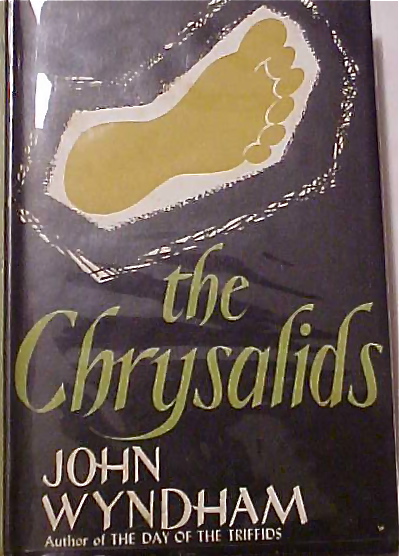
- The Chrysalids
John Wyndhamstandalone novel1955
similar byscience fictiontensepsychic powerssurvival
The Chrysalids is a science fiction novel by British writer John Wyndham, first published in 1955 by Michael Joseph. It is the least typical of Wyndham's major novels, but regarded by some as his best. An early manuscript version was entitled Time for a Change.