More like Proliferation
anchored on:science fiction
but
- H. G. Wells' War of the Worlds
universe65 books1898
Start hereThe War of the Worlds · Start here
similar byscience fiction+2 more
No one would have believed, in the closing years of the nineteenth century, that human affairs were being watched keenly and closely from the timeless worlds of space. And then the cylinders fell. H. G. Wells' War of the Worlds opens in the quiet of the Surrey commons, where a falling star proves to be the first Martian craft — and from the pit rise the towering tripods, the Heat-Ray, the choking Black Smoke and the creeping red weed, wielded by minds that regard mankind much as we regard the creatures we boil for supper. This is invasion rendered as natural disaster: cold, methodical, and vast beyond argument. Wells' 1898 novel is the seed; everything else grows from that Martian soil. The catalogue gathers direct sequels and continuations alongside a wide field of other hands. In War of the Worlds: Global Dispatches the invasion is retold across the whole planet through the eyes of Twain, Verne, Tolstoy, Lowell and Kipling; in the Manly Wade and Wade Wellman crossover, Sherlock Holmes, Watson and Professor Challenger take the field against the machines; and Scott Washburn's Great Martian War stretches the fighting into a decades-long alternate history of steam, artillery and grinding attrition. It is a loose shared world — no single decreed sequence, many voices answering one calamity. What sets this world apart is its refusal of heroics: the invaders fall not to generals but to the smallest things of Earth, humbling and indifferent. Begin, always, with Wells' original novel — it is short, and it is the ground every later book stands upon. From there follow your appetite: Global Dispatches for the panorama, the Holmes campaign for adventure, Washburn for the long war.
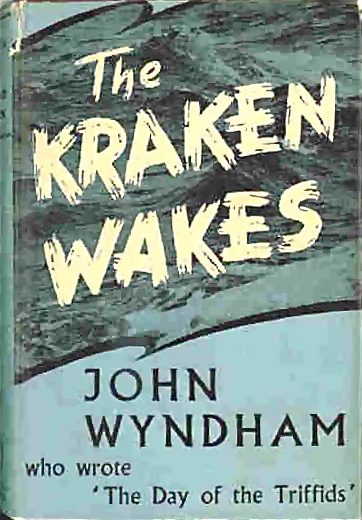
- The Kraken Wakes
John Wyndhamstandalone novel1953
similar bywartensescience fictionour worldpost-apocalyptic
" Behind a spectacular meteor shower actually hides the beginning of an invasion by a mysterious and powerful alien race. Earth's life is disrupted by the attacks of extraterrestrials whose war machines, emerging from the depths of the oceans, seem indestructible. The coalitioned forces of the whole world are worthless, powerless in the face of the indecipherable and deadly plans of a superior intelligence, capable of bringing the entire planet to the brink of catastrophe" Goodreads May 20, 2022
- Dune Universe
universe78 books1963
Start hereDune · Start here
similar byscience fiction+1 more
Arrakis. Dune. The desert planet, where empire runs on a single substance: the spice melange, which folds space, prolongs life, and unlocks prescience, and which exists nowhere else in the known universe. Frank Herbert's saga is a meditation dressed as an adventure — feudal houses and a secret sisterhood, engineered messiahs and the patient ecology of a world without water, all turning on the terrible gravity of who commands the spice. It reads like scripture and schemes like a war room, ten thousand years hence, among people who have outlawed the thinking machine and made instruments of themselves instead. At its heart stand Herbert's original six — Dune, Dune Messiah, Children of Dune, God Emperor of Dune, Heretics of Dune, Chapterhouse: Dune — a single deepening arc across millennia, arguing the whole way between prophecy and free will. Around that spine his son Brian Herbert and Kevin J. Anderson have raised a vast prequel architecture: Prelude to Dune, tracing the great houses a generation before Paul; Legends of Dune, reaching back to the crusade that broke the machines; the Schools of Dune cycle on the founding of Bene Gesserit, Mentat, and Navigator; the Caladan Trilogy and Heroes of Dune filling years the originals left in shadow. Many hands, dozens of volumes, one desert. What sets Dune apart is its refusal of the simple: religion is manufactured, heroes are hazards, and the sand itself — worm, water, ecology — acts as a political power. Begin where the universe did, with Frank Herbert's Dune (1965), and read the original six in order; you need nothing else to feel the full weight. The prequels are a country to explore afterward, taken by era. Beginnings are delicate times.
- Dune
series20 books1963
part of Dune Universe
similar byscience fiction+1 more
Frank Herbert's Dune Chronicles opens with 1965's Dune, set on the desert planet Arrakis where House Atreides takes control of the only source of the vital spice melange and young Paul Atreides is pulled into a struggle over its politics and religion. Herbert carried the story forward across five further novels — Dune Messiah, Children of Dune, God Emperor of Dune, Heretics of Dune, and Chapterhouse: Dune — following Paul's line over the following millennia, before Brian Herbert and Kevin J. Anderson later extended the saga. Many other editions of these six novels are omnibus and box-set repackagings rather than separate stories.
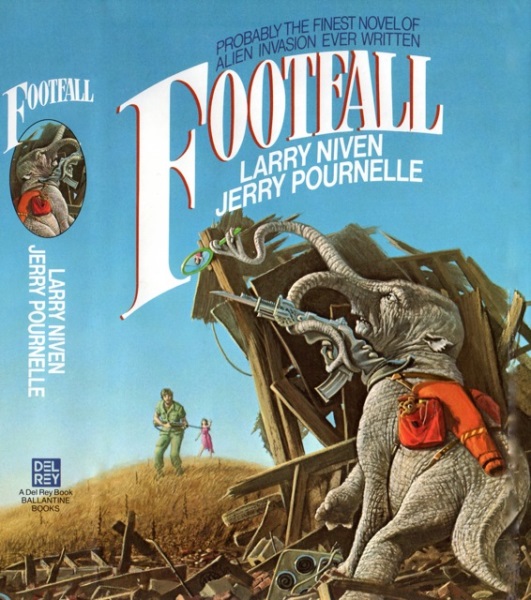
- Footfall
Larry Niven & Jerry Pournellestandalone novel1985
similar bywartensescience fictionour world
When aliens travel to Earth from Alpha Centauri, differences between alien and human psychology result in an unprovoked invasion, and the resulting resistance results in the aliens' use of a devastating weapon.
- Final Blackout
L. Ron Hubbardstandalone novel1948
similar bywartensescience fictionour worldpost-apocalyptic
Final Blackout is a dystopic science fiction novel by American writer L. Ron Hubbard. The novel is set in the future and follows a man known as "the Lieutenant" as he restores order to England after a world war. First published in serialized format in 1940 in the science fiction magazine Astounding Science Fiction, Final Blackout was published in book form in 1948 by The Hadley Publishing Co. Author Services Inc. published a hardcover edition of the book in 1988, and in 1989 the Church of Scientology-affiliated organization Bridge Publications said that a film director named Christopher Cain had signed a contract to write and direct a movie version based on the book.
- Galactic Milieu
series10 books1981
completed
similar bytensescience fiction+1 more
Galactic Milieu is a series of science fiction novels by Julian May. It is linked to her previously published series, the Saga of Pliocene Exile; and through the fantastical device of time-travel, acts as both a prequel and a sequel to this earlier series. The "Galactic Milieu" of the title is an interplanetary federation, and Earth's membership of it is a central plot concern.
- The Light of Other Days
Arthur C. Clarke & Stephen Baxterstandalone novel2000
similar bytensescience fictionour world+1 more
An industrialist devises a technique to use tiny wormholes as light pipes to enable viewing of any event anywhere; and subsequently it becomes possible to use them to view any event in the past as well. The effects on society are enormous.
- Change War
series16 books1958
completed
similar byscience fiction+3 more
The Big Time is Fritz Leiber's Hugo Award-winning novel set in his Change War future history, where two rival powers called the Spiders and the Snakes recruit soldiers out of history to fight by altering past events, with the novel itself confined to a neutral recovery station suspended outside normal time. Leiber followed it with a string of shorter Change War stories, later gathered into collections such as Changewar, exploring other soldiers and other flashpoints in the same endless, mutable conflict.
- Maurai
series6 books1959
completed
similar byscience fictionour worldpost-apocalyptic+1 more
The Maurai series is a series of short stories and a novel by Poul Anderson set in a resource depleted, post-apocalyptic earth several centuries in the future. The series is named after its most frequent protagonists, citizens of the Maurai Federation. The Maurai dominate the Pacific and Indian Oceans. Fearful of the social and ecological implications of a return to large-scale industrial society, they use their considerable might and covert resources to prevent other nations from developing nuclear power.
- The Zap Gun
Philip K. Dickstandalone novel1967
similar bywarscience fictionour world+1 more
The Zap Gun is a 1967 science fiction novel by American writer Philip K. Dick. It was first published as the two-part serial Project Plowshare in Worlds of Tomorrow in 1965 and 1966, before Pyramid Books issued it in paperback under its present title. The novel originated in a title-first commission devised by Pyramid editor Don Bensen and was written in 1964 during a period of rapid production in Dick's career.
- Ship Breaker
series3 books2010
similar bytensescience fictionpost-apocalyptic+2 more
Nailer works a light-crew scavenging copper wire and scrap from beached oil tankers on a Gulf Coast reshaped by rising seas and vanished order, until a wrecked clipper ship washes ashore carrying a half-drowned girl from the wealthy world he'll never belong to. Paolo Bacigalupi's Ship Breaker follows Nailer as helping her pulls him out of his abusive father's orbit and into a much larger, more dangerous game involving her family's fortune. The sequels The Drowned Cities and Tool of War widen the same flooded, resource-scavenging future to new characters and coastlines.
- Ender Wiggin
series14 books1977
part of Ender's Game Universe
similar byscience fiction+1 more
Orson Scott Card's Ender's Game (1985, expanded from his 1977 novella) follows child prodigy Andrew "Ender" Wiggin as he is recruited into a military training program built to prepare Earth's defenses for an anticipated third war against an insectoid alien species known as the Formics. The saga continues years later through Speaker for the Dead and Xenocide, following an older Ender as he confronts the moral weight of his role in that earlier conflict, and concludes the core arc in Children of the Mind, with Ender in Exile filling in the years between the first two books. Set within the wider Ender's Game universe, the series shifts from military coming-of-age story to slower, more philosophical science fiction as it progresses.
- The War in the Air
H. G. Wellsstandalone novel1908
similar bywartensescience fictionour world
The War in the Air: And Particularly How Mr. Bert Smallways Fared While It Lasted is a military science fiction novel written by H. G. Wells and published in 1908.
- Battle Circle
series3 books1968
similar byscience fictionpost-apocalyptic+2 more
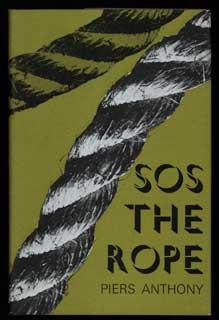
Battle Circle is a trilogy of science fiction novels by Piers Anthony. Originally published separately, the trilogy was later combined into a single volume.
- War Against the Chtorr
series7 books1983
similar bywartensescience fictionpost-apocalyptic+1 more
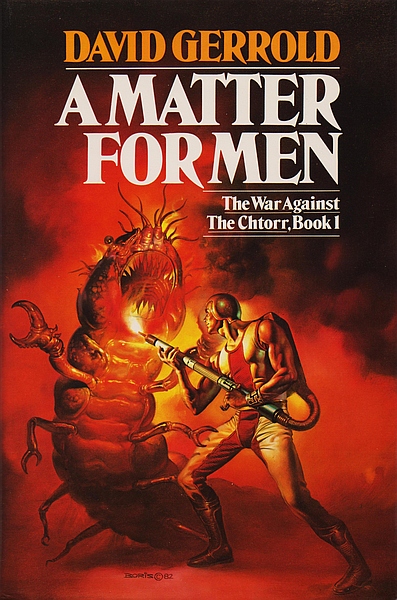
The War Against the Chtorr is a series of science fiction novels by American writer David Gerrold. The Chtorr series was originally planned as a trilogy, but as the story became more intricate, Gerrold realized that three books would not be enough for him to tell the entire story. For a time, he was uncertain how many books there would be in the end but plans on seven. As of 2022, four books have been completed. As of 2017, a fifth and sixth were in the works, 24 years after the publication of the fourth book.
- The Hunger Games
series3 books2008
part of The Hunger Games Universe
similar bytensescience fictionpost-apocalyptic+1 more
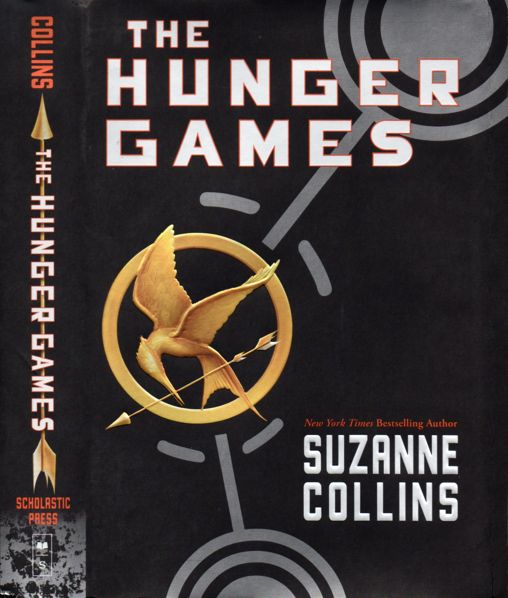
The Hunger Games is a series of young adult dystopian novels written by American author Suzanne Collins. The series consists of a trilogy that follows teenage protagonist Katniss Everdeen, as well as two prequels. The Hunger Games universe is a dystopia set in Panem, a post-apocalyptic North American country consisting of the wealthy Capitol and 12 districts in varying states of poverty. As punishment for rebellion, the Capitol hosts an annual battle royale competition called The Hunger Games. Each of the 12 districts must send two children between the ages of 12 and 18 to participate, and the last surviving child is dubbed the victor.
- Sea Siege
Andre Nortonstandalone novel1957
similar bytensescience fictionour worldpost-apocalyptic+1 more
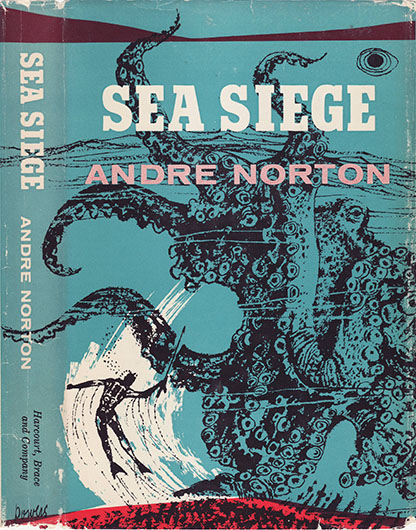
On a bleak little island in the West Indies, Griff Gunston faces many questions. Why were so many small island cruisers adrift and abandoned? Why was the sea disease that Griff's scientist father was investigating radioactive. Why were the colonies of octopi growing larger and becoming so strangely organized and daring? Before the answers can be found, civilization blanks out. An atom bomb war has left the little group isolated. A danger from the ocean floor, a new type of intelligence is prepared to seize the world for itself. (adapted from the blurb accompanying the first edition)
- Down to a Sunless Sea
David Grahamstandalone novel1979
similar bywartensescience fictionour worldpost-apocalyptic
David Graham's Down to a Sunless Sea (1979) is a post-apocalyptic novel about a planeload of people during and after a short nuclear war, set in a near-future world where the USA is critically short of oil. The title of the book is taken from a line of the poem Kubla Khan by Samuel Taylor Coleridge.
- Termination Shock
Neal Stephensonstandalone novel2021
similar bytensescience fictionour world+1 more
Termination Shock is a science fiction novel by American writer Neal Stephenson, published in 2021. The book is set in a near-future when climate change has significantly altered human society and follows the attempts of a solar geoengineering scheme. The novel focuses on the geopolitical and social consequences of the rogue fix for climate change, themes common in the growing climate fiction genre.
- Lord of the Flies
William Goldingstandalone novel1954
similar bytenseour world+2 more
Lord of the Flies is the 1954 debut novel of British author William Golding. The plot concerns a group of prepubescent British boys who are stranded on an uninhabited island and their disastrous attempts to govern themselves that lead to a descent into savagery. The novel's themes include morality, leadership, and the tension between civility and chaos.
- The Hunger Games Universe
universe5 books2008
Start hereThe Hunger Games · Start here
similar bytensescience fiction+2 more
Panem, they call it now — a nation raised on the drowned bones of North America, a glittering Capitol ringed by twelve districts it once starved into obedience. Every year the Capitol collects its debt in children: two tributes from each district, drawn by lottery, dropped into an engineered arena, and made to kill one another on live television while the whole country is required to watch. This is the Hunger Games — entertainment, punishment, and government at once. Suzanne Collins tells it in a compact, unified body of work. The founding trilogy — The Hunger Games, Catching Fire, and Mockingjay — follows Katniss Everdeen, a girl from the coal-mining District 12 who volunteers in her sister's place and becomes something the Capitol never scripted. Two prequels reach back into the same machinery: The Ballad of Songbirds and Snakes traces a young Coriolanus Snow long before he is President, and Sunrise on the Reaping returns to District 12 a generation ahead of Katniss. Begin with the trilogy, in order — it is Katniss's voice, close and present-tense, that makes Panem breathe, and the prequels land hardest once you know how her story ends. Beneath the spectacle sits one steady, uncomfortable question: who profits when we agree to look away.