More like Psionic Elite 5
anchored on:science fictionour world
but
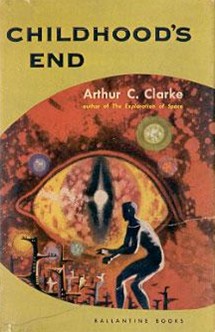
- Childhood's End
Arthur C. Clarkestandalone novel1953
similar byscience fictionour worldnear future+1 more
Childhood's End is a 1953 science fiction novel by the British author Arthur C. Clarke. The story follows a peaceful alien invasion of Earth by mysterious Overlords, whose arrival begins decades of apparent utopia under indirect alien rule, at the cost of human identity and culture.
- Stranger in a Strange Land
Robert A. Heinleinstandalone novel1961
similar bypsychic powersscience fictionnear futureour world
Stranger in a Strange Land is a 1961 science fiction novel by the American author Robert A. Heinlein. It tells the story of Valentine Michael Smith, a human who comes to Earth in early adulthood after being born on the planet Mars and raised by Martians, and explores his interaction with and eventual transformation of Terran culture.
- The Lathe of Heaven
Ursula K. Le Guinstandalone novel1971
similar bypsychic powersscience fictionour worldnear future
The Lathe of Heaven is a 1971 science fiction novel by American writer Ursula K. Le Guin, first serialized in the American science fiction magazine Amazing Stories. It won the 1972 Locus Award for Best Novel and was a finalist for the 1971 Nebula Award for Best Novel and 1972 Hugo Award for Best Novel. Two television film adaptations were released: the PBS production, The Lathe of Heaven (1980), and Lathe of Heaven (2002), a remake produced by the A&E Network.
- Library of America P. K. Dick Collection
series9 books1962
completed
similar byscience fictionnear future+2 more
- The Dream Master
Roger Zelaznystandalone novel1966
similar bypsychic powersscience fictionour worldnear future
The Dream Master (1966) is a science fiction novel by American writer Roger Zelazny, based on the novella He Who Shapes. Zelazny's original title was The Ides of Octember. He Who Shapes won the 1965 Nebula Award for Best Novella.
- The Zap Gun
Philip K. Dickstandalone novel1967
similar byscience fictionour worldnear future+1 more
The Zap Gun is a 1967 science fiction novel by American writer Philip K. Dick. It was first published as the two-part serial Project Plowshare in Worlds of Tomorrow in 1965 and 1966, before Pyramid Books issued it in paperback under its present title. The novel originated in a title-first commission devised by Pyramid editor Don Bensen and was written in 1964 during a period of rapid production in Dick's career.
- The Mind Cage
A. E. van Vogtstandalone novel1957
similar bypsychic powersscience fictionour worldnear future
The Mind Cage is a 1957 science fiction novel by American writer A. E. van Vogt, adapted from the short story "The Great Judge" (1948).
- Patternist
series6 books1976
completed
similar byscience fiction+2 more
The Patternist series is a group of science fiction novels by Octavia E. Butler that detail a secret history continuing from the Ancient Egyptian period to the far future that involves telepathic mind control and an extraterrestrial plague. A profile of Butler in Black Women in America notes that the themes of the series include "racial and gender-based animosity, the ethical implications of biological engineering, the question of what it means to be human, ethical and unethical uses of power, and how the assumption of power changes people."
- Time Is the Simplest Thing
Clifford D. Simakstandalone novel1961
similar bypsychic powersscience fictionour worldnear future
Time Is the Simplest Thing is a science fiction novel by American writer Clifford D. Simak, first published in 1961. The story combines paranormal abilities with themes of space and time travel. The underlying theme is intolerance of ordinary people towards those with unusual abilities.
- Greg Mandel
series5 books1993
similar bypsychic powersscience fictionour worldnear future
Greg Mandel is a former special-forces soldier with a psychic 'gland' implant for reading emotions, working as a private investigator in a near-future Britain recovering from an authoritarian climate-crisis government. Peter F. Hamilton's original trilogy - Mindstar Rising, A Quantum Murder, The Nano Flower - follows his cases as ordinary detective work keeps sliding into conspiracies with much bigger stakes; The Suspect Genome revisits an older Mandel decades later. It was Hamilton's first fiction, blending noir detective plotting with hard SF.
- Flashforward
Robert J. Sawyerstandalone novel1999
similar byscience fictionour worldnear future+1 more
Flashforward is a science fiction novel by Canadian author Robert J. Sawyer first published in 1999. The novel is set in 2009. At CERN, the Large Hadron Collider accelerator is performing a run to search for the Higgs boson. The experiment has a unique side effect; the entire human race loses their consciousness for about two minutes. During that time, nearly everyone sees themselves roughly twenty-one years and six months in the future. Each individual experiences the future through the senses of their future self. This "flashforward" results in countless deaths and accidents involving vehicles, aircraft, and any other device needing human control at the time of the experiment. The novel was adapted into the 2009 television series FlashForward.
- The Simulacra
Philip K. Dickstandalone novel1964
similar byscience fictionour worldnear future+1 more
The Simulacra is a 1964 science fiction novel by American writer Philip K. Dick. The novel portrays a future totalitarian society apparently dominated by a matriarch, Nicole Thibodeaux. It revolves around the themes of reality and illusionary beliefs, as do many of Dick's works. Additionally, it touches on Nazi ideology.
- Galactic Milieu
series10 books1981
completed
similar bypsychic powersscience fiction+1 more
Galactic Milieu is a series of science fiction novels by Julian May. It is linked to her previously published series, the Saga of Pliocene Exile; and through the fantastical device of time-travel, acts as both a prequel and a sequel to this earlier series. The "Galactic Milieu" of the title is an interplanetary federation, and Earth's membership of it is a central plot concern.
- The Collected Stories of Philip K. Dick
series11 books1987
completed
similar byscience fictionour world+1 more
The Collected Stories of Philip K. Dick is a collection of 118 science fiction stories by American writer Philip K. Dick. It was first published by Underwood-Miller in 1987 as a five volume set. See Philip K. Dick bibliography for information about the mass market reprints.
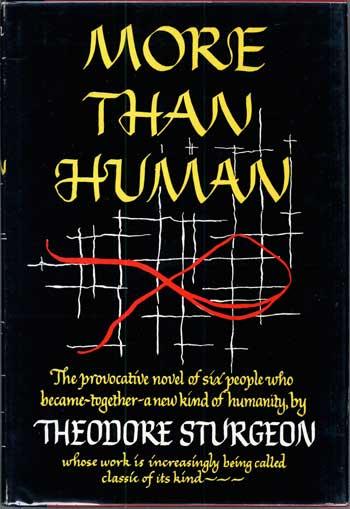
- More Than Human
Theodore Sturgeonstandalone novel1953
similar bypsychic powersscience fictionour world
More Than Human is a 1953 science fiction fix-up novel by American writer Theodore Sturgeon. It is a revision and expansion of his 1952 novella Baby Is Three, which is bracketed by two additional parts written for the novel, "The Fabulous Idiot" and "Morality". It won the 1954 International Fantasy Award, which was also given to works in science fiction. It was additionally nominated in 2004 for a "Retro Hugo" award for the year 1954. Science fiction critic and editor David Pringle included it in his book Science Fiction: The 100 Best Novels.
- Clone
Richard Cowperstandalone novel1972
similar bypsychic powersscience fictionour worldnear future
History's first clones: Alvin, Bruce, Colin, and Desmond - Spawned in a dangerous 21st century experiment, there were brought into a world where educated apes did manual labor and the government encouraged suicide as a method of population control. Their existence as clones was unknown to anyone - even to each other - known only to their creator. But then came the strange, haunting visions, the peculiar psychic sensations that drew them closer and closer together - revealing one and for all the mysterious secret they shared that would change the world! (from the back cover of the Pocket Books edition)
- The Demolished Man
Alfred Besterstandalone novel1953
similar bypsychic powersscience fictionour world
In the year 2301, guns are only museum pieces and benign telepaths sweep the minds of the populace to detect crimes before they happen. In 2301 murder is virtually impossible, but one man is about to change that..
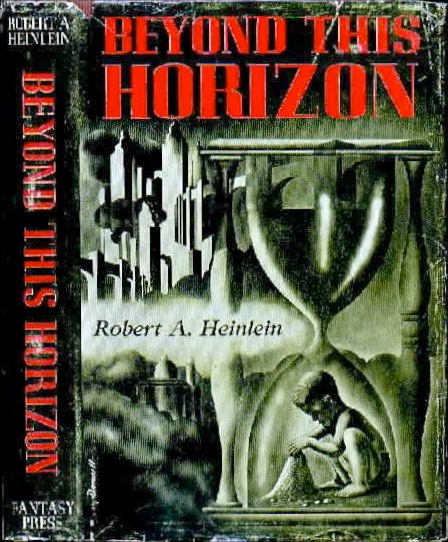
- Beyond This Horizon
Robert A. Heinleinstandalone novel1948
similar byscience fictionour world+1 more
From the front flap of a 2001 Baen reprint: "Utopia has been achieved. For centuries, disease, hunger, poverty, and war have been things found only in the history tapes. And applied genetics has given men and women the bodies of athletes and a lifespan of over a century. They should all have been very happy... But Hamilton Felix is bored. And he is the culmination of a star line, each of his last thirty ancestors chosen for superior genes. Hamilton is, as far as genetics can produce one, the ultimate man. And this ultimate man can see no reason why the human race should survive, and has no intention of continuing the pointless comedy. However, Hamilton's life is about to become less boring. A secret cabal of revolutionaries who find utopia not just boring, but desperately in need of leaders who know just What Needs to be Done, are planning to revolt and put themselves in charge. Knowing of Hamilton's disenchantment with the modern world, they have recruited him to join their Glorious Revolution. Big mistake! The revolutionaries are about to find out that recruiting a superman was definitely not a good idea..."
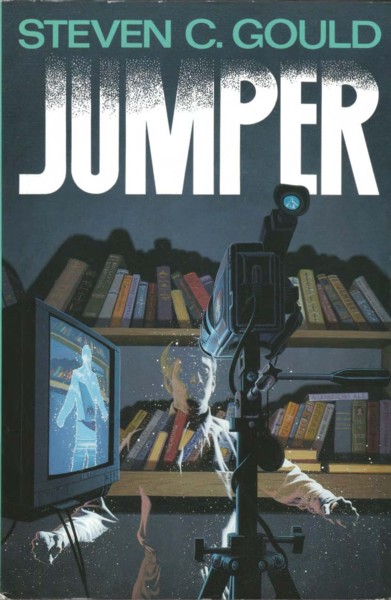
- Jumper
series6 books1992
similar bypsychic powersscience fiction+1 more
Jumper follows David Rice, a teenager who discovers he can teleport anywhere he's been and uses the power to escape an abusive home, only to find that ability alone doesn't solve the harder problems of finding his absent mother, building an honest relationship, or staying off the radar of people who'd exploit him. Steven Gould's series continues across Reflex, Impulse, and Exo, later following his and his wife's daughter as a second-generation jumper. A 2008 film loosely adapted the first novel.
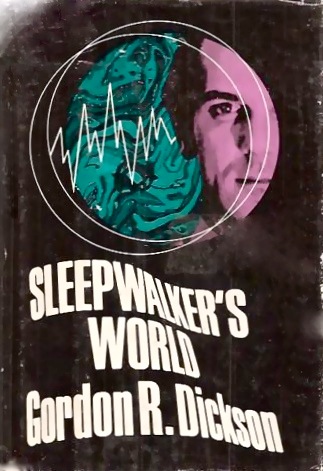
- Sleepwalker's World
Gordon R. Dicksonstandalone novel1971
similar bypsychic powersscience fictionour worldnear future
Shafts driven deep into the Earth's hot core utilized that buried energy to run the world's power station. That broadcast energy alone kept the food factories running. Without those factories and that power, the hungry overpopulated planet could not survive. But the cost was high, for the power broadcasts had a terrifying side-effect. While they were on, the human race was unable to stay awake. Among the rare few with immunity to the sleep compulsion was the astronaut Rafe Arnoul Harald, one of six who had been training on the Moon for the first star voyage. But now, unless humanity could conquer the dark power that was using the sleep phenomenon to paralyze society, that flight might never be made. To defeat the unknown masters of the sleeping world, Rafe had only the help of a crippled girl, a wolf with a very special ability, and the unique talents of his own mind and body. (from the first page of the DAW Books first paperback edition)
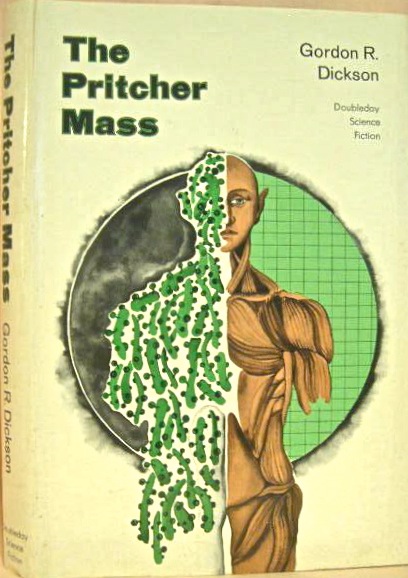
- The Pritcher Mass
Gordon R. Dicksonstandalone novel1972
similar bypsychic powersscience fictionour worldnear future
The only hope for mankind's survival after the contamination of the Earth lay in the Pritcher Mass, a psychic forcefield construction out beyond the orbit of Pluto. Created by the efforts of individuals with extraordinary paranormal powers, the Mass was designed to search the universe for a new habitable planet. Chaz Sant knew he had the kind of special ability to contribute effectively to the building of the Mass, but somehow the qualifying tests were stacked against him. Then he learned that he had become the special target of an insidious organization that fattened on the fears of the last cities of the world. His confrontation with this organization, their real motives and his unexpected reactions, were to touch off the final showdown for mankind's last enterprise. (from the back cover of the DAW Books first printing)
- Slan
series2 books1946
similar byscience fictionour world+1 more
Slan (1946) is A. E. van Vogt's science fiction novel about slans, a persecuted race of telepathic superbeings living hidden among ordinary humans, first serialized in Astounding Science Fiction before its Arkham House hardcover edition. More than sixty years later, Kevin J. Anderson completed Slan Hunter (2007), an authorized sequel built from van Vogt's notes to continue the story left unfinished at the original author's death. The two novels together bracket a single continuing narrative rather than an ongoing series.
- Tomorrow's Children
series5 books1947
similar byscience fictionour world+1 more
Tomorrow's Children began as a 1947 novelette by Poul Anderson and F. N. Waldrop imagining a nuclear-war-shattered United States coping with widespread mutation, later expanded into the novel Twilight World, which follows a mutant child whose unusual abilities become central to humanity's uneasy recovery. It is grim, early atomic-age science fiction from the first wave of postwar SF. It stands as an early example of the mutant-hope narrative that became common in Cold War-era fiction.
- Talents (Anne McCaffrey)
series9 books1969
completed
part of The Talents
similar byscience fiction+2 more
The Talent series opens with To Ride Pegasus (1973), a linked collection of stories introducing people born with parapsychic gifts such as telepathy, telekinesis, and precognition, as society first learns to organize and rely on them. Pegasus in Flight (1990) and Pegasus in Space (2000) complete the trilogy, following the training and growing use of these Talents through near-Earth crises. Anne McCaffrey set the series earlier in the same Talents universe that her later Tower and Hive novels continue.