Loreful
HomeDiscover
Search series, authors…⌘K
Loreful

Reading orders for SF/F series and shared universes — with your place kept in every one.

Explore

UniversesSeriesWorksAuthorsAtlas

Help

FAQAboutSite map

Account & legal

Sign inCreate accountPrivacyTerms

Data

Built on ISFDB, Wikipedia, Wikidata and Open Library. Curated reading orders carry their reasoning on the page; the rest follow publication order. Data sources & licenses

© Loreful · data: ISFDB · CC BY

More like Pym

anchored on:literary & generalsatirerace and racismcontemporaryadventureidentity+3 more

but

Mood

The mood the book leaves you in.

  • The reading experience is propelled by journeys, exploration, and physical risk; excitement and forward momentum dominate over dread or introspection.
  • Joy and loss are deliberately mixed; the resolution grants characters something real while taking something else away, leaving warmth and sorrow together.
  • The book demands work from the reader — dense prose, difficult structure, unfamiliar ideas, or morally uncomfortable material — as part of its intended effect.
  • Grim events, cruelty, or despair dominate the atmosphere, and the book does not soften them with comfort or comic relief.
  • The atmosphere is quietly unsettling — wrongness, unease, and the uncanny pervade the book without necessarily escalating into overt horror.
  • The book is built to move the reader; character feeling is foregrounded and major scenes aim at a strong emotional response.
  • Humor is a primary aim and the prose plays for laughs — comic situations, wit, or dialogue produce sustained comedy, not occasional levity.
  • The book insists that things can improve; effort and decency are shown to matter, and the arc bends toward better outcomes even through hardship.
  • The book teaches as it goes — real facts, history, science, or craft are conveyed in enough depth that learning is part of the reading experience.
  • The book is designed to uplift and motivate, presenting perseverance or achievement in a way that invites the reader to aspire or act.
  • The overall register is cheerful and easygoing; stakes are kept gentle and the book avoids dwelling on pain or dread.
  • Withheld information drives the experience; the book sustains enigmas and secrets the reader wants resolved, whatever its genre.
  • The book is contemplative and inward-looking, giving more weight to thought, memory, and meaning than to external events.
  • The book works as comfort reading — low tension, a soothing pace, and an atmosphere the reader can unwind in.
  • Grief, loss, or melancholy set the dominant register, and the book lets sorrow stand rather than resolving it into comfort.
  • Sustained suspense is the point; the book keeps the reader braced for what happens next through danger, pressure, or impending revelation.
  • Playful invention and charm define the register — fanciful conceits, light absurdity, and a narration that delights in its own oddity.

About

What the story runs on.

  • Stories in which extraterrestrial beings are central — as characters, cultures, or the object of the plot.
  • Stories structured as a quest — a journey undertaken to find, deliver, or destroy something of great import.
  • Stories in which staying alive against nature, catastrophe, or scarcity is the central problem.
  • Stories of lovers kept apart by law, family, faith, or station, where the obstacle to love is the plot.
  • Stories in which a friendship — its making, testing, or loss — is the emotional center.
  • Stories of growing up — a young protagonist crossing from childhood into adult knowledge and responsibility.
  • Stories about who a character truly is — self-discovery, doubled lives, and the search for a self.
  • Stories about mental unraveling — descent into madness, delusion, and minds at war with themselves.
  • Stories about mourning — living through the death of a loved one and what loss does to the survivors.
  • Stories in which a buried family truth — hidden parentage, crimes, or shames — surfaces and reorders the present.
  • Stories driven by maneuvering for power — factions, conspiracies, and statecraft conducted in shadow.
  • Stories organized around investigating a killing — the case, the clues, and the pursuit of the killer, in any genre's clothing.

Shelf

Where it sits in the library.

    • Fiction built on magic or other supernatural elements that have no scientific explanation.
    • Secondary-world fantasy at large scale, where the fate of nations or the world turns on the protagonists' struggle.
    • Fantasy set in a recognizably modern city or contemporary world where the supernatural intrudes on everyday life.
    • Fantasy that blends in horror's atmosphere and imagery, keeping a fantastical frame around grim or frightening material.
    • Action-driven fantasy following warriors or rogues with personal stakes against sorcerous threats, rather than world-spanning conflicts.
    • Fantasy set in a real historical period or a close analogue of one, with magic woven into the era.
    • Fantasy in which protagonists cross from the ordinary world into another world through a portal or similar passage.
    • Fiction that retells or reworks a traditional fairy tale in a new form or setting.
    • Fantasy drawing directly on myths, legends, and folklore, retelling them or building on their figures and logic.
    • Fantasy of ghosts, vampires, shapeshifters, psychics, and similar phenomena, usually set in an otherwise ordinary world.
    • Fiction mixing science-fictional trappings with overtly magical or impossible elements in one setting.
    • Low-stakes fantasy emphasizing comfort, community, and everyday pleasures over conflict and peril.
    • Speculative fiction of pervasive moral ambiguity, violence, and cynicism that rejects heroic conventions — fantasy and SF alike.
      • Fiction that extrapolates from science and technology — future societies, space travel, or speculative inventions — within at least nominally natural laws.
      • Science fiction of interstellar scope — starships, galactic polities, and adventure across star systems.
      • Science fiction committed to scientific rigor, where technical plausibility constrains the story.
      • Science fiction centered on armed forces and warfare, told largely from a military point of view.
      • Science fiction of networked, corporate-dominated near futures, pairing high technology with social decay.
      • Science fiction styled on nineteenth-century steam-powered technology, often in a Victorian or pseudo-Victorian setting.
      • Fiction depicting an oppressive or catastrophic society, presented as a warning.
      • Fiction set after civilization's collapse, following survivors in the ruins of the old world.
      • Fiction in which characters move between past and future, and the mechanics or consequences of that travel drive the plot.
      • Fiction exploring a world where a historical event went differently and history diverged from ours.
      • Science fiction about humanity's first encounter and communication with an alien intelligence.
      • Science fiction in which extraterrestrial forces attack or occupy Earth and humanity resists.
      • Fiction whose primary aim is to frighten or unsettle the reader through dread, menace, or the monstrous.
      • Horror of vast, indifferent, incomprehensible entities before which humanity is insignificant, in the Lovecraft tradition.
      • Horror of decaying houses, buried family secrets, and oppressive atmosphere in the Gothic literary tradition.
      • Horror centered on hauntings and the returning dead.
      • Horror located in the mind — paranoia, obsession, and unreliable perception rather than external monsters.
      • Horror built around the reanimated dead and survival amid their outbreaks.
      • Horror defined by explicit, transgressive gore that refuses to cut away from violence.
      • Speculative fiction of the strange and uncanny that resists both natural explanation and standard genre categories.
      • Fiction organized around solving a crime or puzzle, typically following an investigator toward the identification of a culprit.
      • A puzzle-first mystery that lays out clues so the culprit's identity can be deduced before the reveal.
      • Crime fiction of moral ambiguity, fatalism, and hard-edged style, set among the corrupt and the doomed.
      • A mystery following the realistic routines of police work — forensics, interviews, and case-building.
      • A gentle mystery with an amateur sleuth, a small community, and violence kept off the page.
      • A mystery set in a past era, where the investigation works within that period's methods and society.
      • Fast-paced fiction driven by imminent danger, pursuit, or high-stakes conspiracy, built to sustain tension.
      • A thriller of espionage — agents, tradecraft, and intelligence services in conflict.
      • A thriller centered on lawyers and the courtroom, where litigation carries the suspense.
      • A thriller driven by detailed contemporary or near-future technology, often military or scientific.
      • A thriller whose tension comes from mental states and manipulation between characters rather than external action.
      • Fiction whose central plot is a romantic relationship and its development toward an emotionally satisfying resolution.
      • Romance in which one or both partners are supernatural beings, blending fantasy elements into the love story.
      • A fantasy-romance hybrid in which the romantic arc and the fantasy plot carry equal weight.
      • Romance set in a past era, with courtship shaped by the period's society and manners.
      • Romance set in the present day, without supernatural or historical elements.
      • Fiction set in a real past period, where the historical setting materially shapes characters and events.
        • General and literary fiction emphasizing prose style, character interiority, or formal ambition over genre plot conventions.
        • Fiction in a realistic world where magical events occur and are treated as ordinary, in the tradition of Latin American literature.
        • Fiction that ridicules people, institutions, or society in order to criticize them.
        • Fiction of dreamlike, irrational imagery and logic that breaks from realistic representation.
        • Fiction that plays with narrative convention through metafiction, fragmentation, and self-reference.
        • Fiction propelled by journeys, exploration, and physical peril, where action and survival carry the plot.
        • Adventure fiction of ships and seafaring — naval engagements, voyages, and life at sea.
        • Fiction of the American frontier West — gunmen, ranchers, and lawmen, typically in the late nineteenth century.
        • Fiction centered on soldiers, campaigns, and the experience of warfare, historical or imagined.
          • Fiction written primarily to amuse, using comedic situations, wit, or parody as its organizing principle.
            • Multi-generational fiction following a family or dynasty across decades, with inheritance and kinship as the through-line.
              • Fiction whose world runs on explicit game mechanics — levels, stats, and skills that characters can see and exploit.
                • Fiction about costumed or superpowered heroes and their conflicts with comparable villains.

                Practical

                How long a commitment, whether it stands alone, and whether it has finished.

                Tap a chip to ask for it · tap again to rule it out · once more to clear. Numbers show what would be left.

                • Cover of Breakfast of Champions
                  Breakfast of Champions

                  Kurt Vonnegut & Jr. · standalone novel · 1973

                  similar byfunnycontemporaryidentityliterary & generalsatirechallenging+1 more

                  The author decides to liberate the characters he created, including an author who decides to try to help a mentally ill reader who was driven over the edge by the book's assertion that he was the only creature with free will in a universe of preprogrammed automatons.

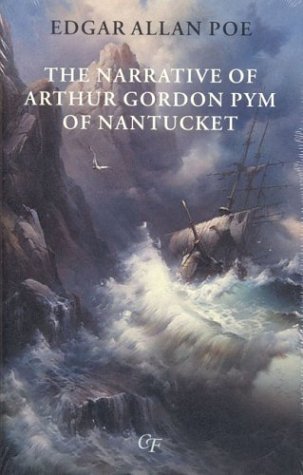
                • Cover of Pym
                  Pym

                  series · 5 books · 1838

                  similar byarctic & antarcticaexpeditionsadventure+6 more

                  Edgar Allan Poe's The Narrative of Arthur Gordon Pym of Nantucket (1838), his only complete novel, sends a young stowaway through shipwreck, mutiny, and cannibalism toward an increasingly strange voyage to the South Pole that breaks off on a mysterious, unexplained image. Jules Verne wrote an unauthorized 1897 sequel, An Antarctic Mystery, resolving Poe's cliffhanger in more rationalist terms, while Mat Johnson's 2011 novel Pym uses Poe's original as the springboard for a satirical modern story about race.

                • Cover of England, England
                  England, England

                  Julian Barnes · standalone novel · 1998

                  similar byfunnycontemporaryidentityliterary & generalsatirechallenging

                  England, England is a satirical postmodern novel by Julian Barnes, published and shortlisted for the Booker Prize in 1998. While researchers have also pointed out the novel's characteristic dystopian and farcical elements, Barnes himself described the novel as a "semi-farce".

                • Cover of God Bless You, Mr. Rosewater or Pearls Before Swine
                  God Bless You, Mr. Rosewater or Pearls Before Swine

                  Kurt Vonnegut & Jr. · standalone novel · 1965

                  similar byfunnycontemporaryliterary & generalsatire

                  The Rosewater Foundation was built to shield the family fortune from taxes, but its current steward, war veteran and committed alcoholic Eliot Rosewater, has other ideas: he moves the foundation's offices to rural Rosewater County, Indiana, and starts handing out 'unlimited amounts of love and limited sums of money' to anyone who asks. His disgusted father, Senator Lister Rosewater, watches the family name become a punchline. Meanwhile a distant, downtrodden cousin, Fred Rosewater, is approached by an ambitious young lawyer with a scheme to have Eliot declared insane and the fortune redirected. A satire of American philanthropy, class and sanity from Kurt Vonnegut.

                • Cover of Interior Chinatown
                  Interior Chinatown

                  Charles Yu · standalone novel · 2020

                  similar bycontemporaryrace and racismidentityliterary & generalsatire+1 more

                  Interior Chinatown is a 2020 novel by Charles Yu. It is his second novel and was published by Pantheon Books on January 28, 2020. It won the 2020 National Book Award for Fiction. The novel was also longlisted for the 2021 Andrew Carnegie Medal for Excellence in Fiction and was shortlisted for the Prix Médicis étranger. A television adaptation of the novel, created by Yu and starring Jimmy O. Yang, premiered on Hulu on November 19, 2024.

                • Cover of Winkie
                  Winkie

                  Clifford Chase · standalone novel · 2006

                  similar byfunnycontemporaryidentityliterary & generalsatire

                  Winkie is a 2006 allegorical novel by Clifford Chase about a sentient teddy bear who is accused of terrorism.

                • Cover of The White Darkness
                  The White Darkness

                  Geraldine McCaughrean · standalone novel · 2005

                  similar bycontemporaryarctic & antarcticaexpeditionsliterary & generalchallenging

                  The White Darkness is a novel by Geraldine McCaughrean, published in 2005 by Oxford University Press. It won the 2008 Michael L. Printz Award from the American Library Association.

                • Cover of Green Grass, Running Water
                  Green Grass, Running Water

                  Thomas King · standalone novel · 1994

                  similar byfunnycontemporaryidentityrace and racismliterary & generalsatire

                  Green Grass, Running Water is a 1993 novel by American-born Canadian author Thomas King. The novel is set in a contemporary First Nations Blackfoot community in Alberta, Canada. It gained attention due to its unique use of structure, narrative, and the fusion of oral and written literary traditions. The novel is rife with humor and satire, particularly regarding Judeo-Christian beliefs as well as Western government and society. Green Grass, Running Water was a finalist for the 1993 Governor General's Award in Fiction.

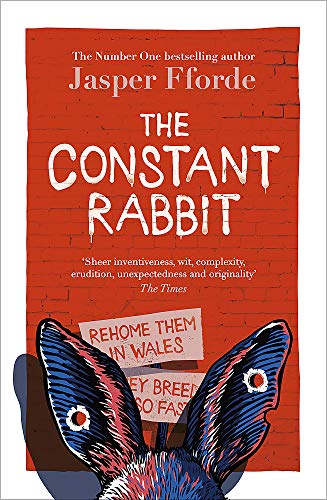
                • Cover of The Constant Rabbit
                  The Constant Rabbit

                  Jasper Fforde · standalone novel · 2020

                  similar byfunnycontemporaryrace and racismsatire

                  The Constant Rabbit is a 2020 science fantasy allegorical novel by Jasper Fforde. It was published by Hodder & Stoughton.

                • Cover of Dead Babies
                  Dead Babies

                  Martin Amis · standalone novel · 1975

                  similar byfunnycontemporaryliterary & generalsatire

                  Dead Babies is Martin Amis's second novel, published in 1975 by Jonathan Cape. Its first UK and US paperback edition was published under the title Dark Secrets. Amis's second novel—a parody of Agatha Christie's country-house mysteries—takes place over a single weekend at a manor called Appleseed Rectory. In 2000, the book was adapted into a film of the same name, starring Paul Bettany and Olivia Williams. In 2001, BBC critic David Wood wrote "Amis's second novel ranks among his most incendiary with its mordant wit, black comedy, and sense of the violently absurd." It has an epigraph attributed to the Cynic Menippus and the novel has been interpreted as a Menippean satire.

                • Cover of Yellowface
                  Yellowface

                  R. F. Kuang · standalone novel · 2023

                  similar bycontemporaryrace and racismidentityliterary & generalsatirechallenging

                  Yellowface is a 2023 satirical novel written by R. F. Kuang. The book was described as a satire of racial diversity in the publishing industry as well as a metafiction about social media, particularly Twitter. Although Yellowface is written as a stand-alone project, Kuang has not ruled out a possible sequel.

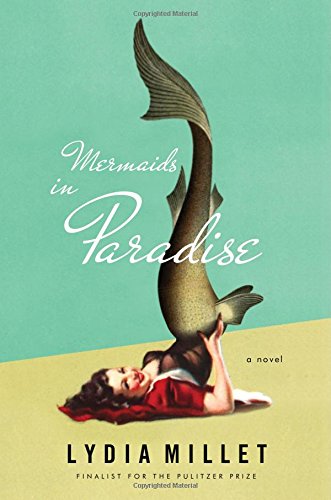
                • Cover of Mermaids in Paradise
                  Mermaids in Paradise

                  Lydia Millet · standalone novel · 2014

                  similar byfunnycontemporarysatireliterary & general+1 more

                  "Mermaids, kidnappers, and mercenaries hijack a tropical vacation in this genre-bending satire of the American honeymoon"--

                • Cover of Black No More
                  Black No More

                  George S. Schuyler · standalone novel · 1931

                  similar byfunnyrace and racismsatirechallenging

                  Black No More: Being an Account of the Strange and Wonderful Workings of Science in the Land of the Free, A.D. 1933-1940 is a 1931 Harlem Renaissance satire on American race relations by George S. Schuyler. In the novel, Schuyler targets both the Ku Klux Klan and NAACP in condemning the ways in which race functions as both an obsession and a commodity in early twentieth-century America. The central premise of the novel is that an African American scientist invents a process that can transform Black people into white people. Those who have internalized white racism, those who are tired of inferior opportunities socially and economically, and those who simply want to expand their sexual horizons, undergo the procedure. As the country "whitens", the economic importance of racial segregation in the South as a means of maintaining elite white economic and social status becomes increasingly apparent, as the South relies on Black labor through sharecropping.

                • Cover of The Intuitionist
                  The Intuitionist

                  Colson Whitehead · standalone novel · 1999

                  similar bycontemporaryrace and racismliterary & generalsatire+2 more

                  Literary fantasy novel of politics and race, with deadpan satirical elements. A black female Elevator Inspector who can Intuit mechanical problems is caught in a conspiracy over plans for the perfect, world-changing elevator. [Locus]

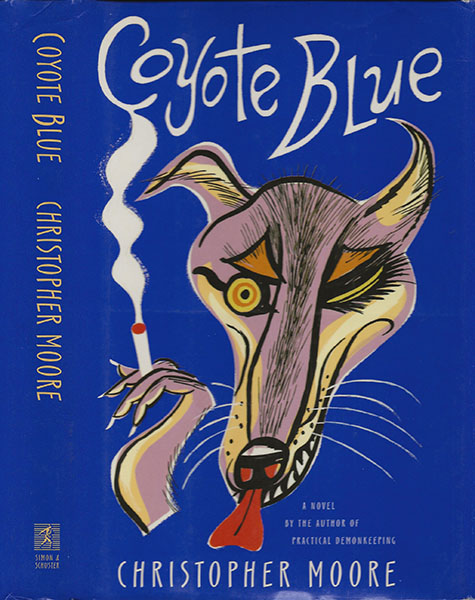
                • Cover of Coyote Blue
                  Coyote Blue

                  Christopher Moore · standalone novel · 1994

                  similar byfunnycontemporaryidentity+2 more

                  Coyote Blue is a novel by American writer Christopher Moore, published in 1994. It has been widely reviewed.

                • Cover of Only Begotten Daughter
                  Only Begotten Daughter

                  James Morrow · standalone novel · 1990

                  similar byfunnycontemporaryidentitysatire

                  Only Begotten Daughter is a 1990 fantasy novel by American writer James K. Morrow, setting the stage for his later Godhead Trilogy. The book shared the 1991 World Fantasy Award with Ellen Kushner's Thomas the Rhymer. It was also nominated for the Nebula Award for Best Novel in 1990, and both the Locus and John W. Campbell Memorial Awards in 1991.

                • Cover of Still Life with Woodpecker
                  Still Life with Woodpecker

                  Tom Robbins · standalone novel · 1980

                  similar byfunnycontemporaryidentityliterary & general

                  WorldCat: Still Life with Woodpecker is a sort of a love story that takes place inside a pack of Camel cigarettes. It reveals the purpose of the moon, explains the difference between criminals and outlaws, examines the conflict between social activism and romantic individualism, and paints a portrait of contemporary society that includes powerful Arabs, exiled royalty, and pregnant cheerleaders. It also deals with the problem of redheads.

                • Cover of Jeff Lint
                  Jeff Lint

                  series · 2 books · 2005

                  similar byfunnycontemporarysatireliterary & generalidentity

                • Cover of Great Apes
                  Great Apes

                  Will Self · standalone novel · 1997

                  similar bycontemporaryidentityliterary & generalchallengingsatire

                  Great Apes is a 1997 novel by Will Self.

                • Cover of Dhalgren
                  Dhalgren

                  Samuel R. Delany · standalone novel · 1975

                  similar bycontemporaryidentitychallengingliterary & general

                  Dhalgren is a 1975 science fiction novel by American writer Samuel R. Delany. It features an extended trip to and through Bellona, a fictional city in the American Midwest cut off from the rest of the world by an unknown catastrophe. It is number 33 on the 20th Century's Greatest Hits: 100 English-Language Books of Fiction list.

                • Cover of Boomsday
                  Boomsday

                  Christopher Buckley · standalone novel · 2007

                  similar byfunnycontemporarysatireliterary & general

                  Boomsday, a 2007 novel by Christopher Buckley, is a political satire about the rivalry between squandering Baby Boomers and younger generations of Americans who do not want to pay high taxes for their elders' retirement.

                • Cover of Concrete Island
                  Concrete Island

                  J. G. Ballard · standalone novel · 1974

                  similar bycontemporaryidentityliterary & generalchallenging

                  Architect Robert Maitland crashes his car onto a stretch of wasteland trapped between three converging motorways -- visible from thousands of cars, reachable by none of them. Injured and unable to climb back to the road, Maitland adapts to life on what he starts calling the Island, scavenging food thrown from car windows, and discovers he isn't alone: a runaway sex worker hiding in a bunker, and a brain-damaged former circus acrobat, both long past expecting rescue. What begins as a survival story turns into a question of whether Maitland even wants to leave. A J. G. Ballard novel of urban isolation, grouped with Crash and High-Rise.

                • Cover of Crash
                  Crash

                  J. G. Ballard · standalone novel · 1973

                  similar bycontemporaryliterary & generalchallenging+1 more

                  Crash is a novel by J. G. Ballard, first published in 1973 with a cover designed by Bill Botten. It follows a group of car-crash fetishists who, inspired by the famous crashes of celebrities, become sexually aroused by staging and participating in car accidents.

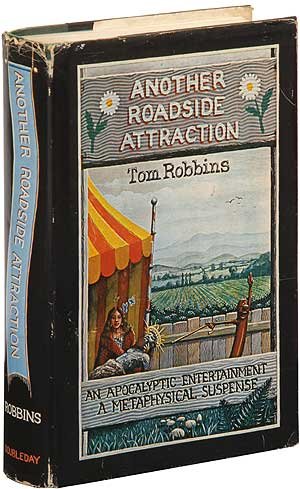
                • Cover of Another Roadside Attraction
                  Another Roadside Attraction

                  Tom Robbins · standalone novel · 1971

                  similar byfunnycontemporaryliterary & generalsatire

                  Speculative elements are primarily centered around Plucky Purcell, when the Vatican is cracked open by an earthquake, finding the corpse of Jesus hidden in the Vatican. He smuggles the body out, and the story follows what happens with that body.