More like Qualityland
anchored on:near futurescience fictionsatire
but
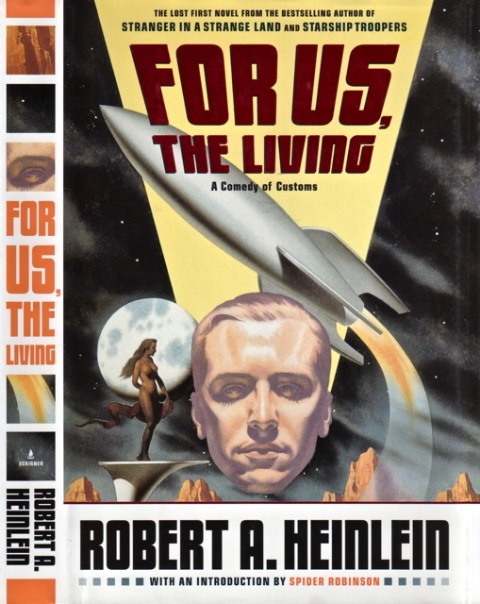
- For Us, the Living: A Comedy of Customs
Robert A. Heinleinstandalone novel2004
similar byfunnypolitical intriguenear futurescience fictionsatire
For Us, the Living: A Comedy of Customs is a science fiction novel by American writer Robert A. Heinlein. It was written in 1938 and published for the first time in 2003. Heinlein admirer and science fiction author Spider Robinson titled his introductory essay "RAH DNA", as he believes this first, unpublished novel formed the DNA of Heinlein's later works.
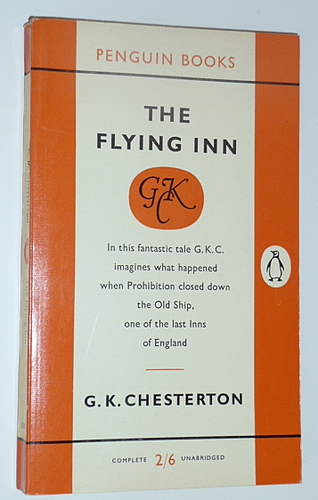
- The Flying Inn
G. K. Chestertonstandalone novel1914
similar byfunnypolitical intriguenear futuresatire+1 more
The Flying Inn is a 1914 novel by English writer G. K. Chesterton. It is set in a future England where the temperance movement has allowed a bizarre form of Progressive Islam to dominate the political and social life of the country. Because of this, alcohol sales to the poor are effectively prohibited, while the rich can get alcoholic drinks "under a medical certificate". The plot centres on the adventures of Humphrey Pump and Captain Patrick Dalroy, who roam the country in their cart with a barrel of rum in an attempt to evade prohibition, exploiting loopholes in the law to temporarily prevent the police taking action against them. Eventually the heroes and their followers foil an attempted coup by an Islamic military force.
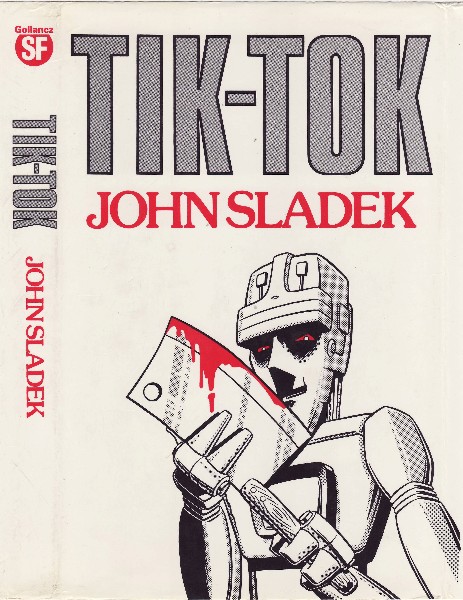
- Tik-Tok
John Sladekstandalone novel1983
similar byfunnynear futurescience fictionsatireartificial intelligence+1 more
From the back cover DAW paperback: ""A robot shall not injure a human being or through inaction allow a human being to come to harm." - Asimov's First Law of Robotics. Tik-Tok was one of the finest domestic robots ever made, but his asimov circuits were defective. He could injure people as much as he pleased - and he pleased to do it often! But the life of a robot (if that isn't a contradiction) is still all service and unpaid labor. Tik Tok served many masters, all of whom came to a bad end. Happily he went on gathering steam with a trail of catastrophes getting bigger and bigger, destined to culminate with his campaign for the vice-presidency of the United States! Science Fiction Review calls John Sladek "one of the true and original lunatics of science fiction... one of the funniest writers in the field." Now read the hilarious autobiography of Sladek's asimovian scofflaw!"
- Blade Runner Universe
series6 books1968
similar bynear futurescience fiction+3 more
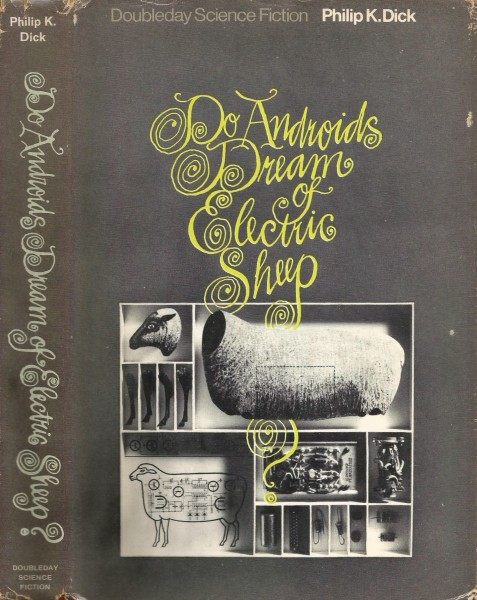
Philip K. Dick's 1968 novel Do Androids Dream of Electric Sheep? follows bounty hunter Rick Deckard as he tracks escaped androids through an irradiated, near-abandoned San Francisco, using the hunt to probe questions of empathy and what separates human from machine. The novel became the basis for Ridley Scott's 1982 film Blade Runner, and Marvel Comics later published an illustrated adaptation of that film. Together the two trace the story's path from prose original to screen and comic-page adaptation.
- The Napoleon of Notting Hill
G. K. Chestertonstandalone novel1904
similar byfunnypolitical intriguenear futuresatire+1 more
The Napoleon of Notting Hill is a novel written by G. K. Chesterton in 1904, set in a nearly unchanged London in 1984.
- Incompetence
Rob Grantstandalone novel2003
similar byfunnypolitical intriguenear futurescience fictionsatireeuropedystopia
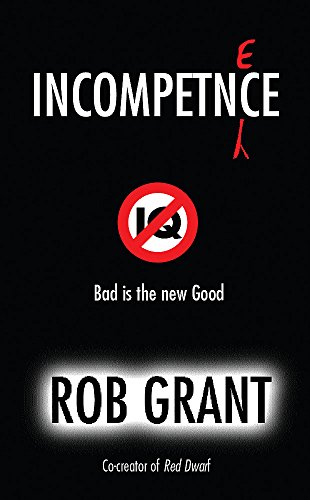
Incompetence is a dystopian comedy novel by Red Dwarf co-creator Rob Grant, first published in 2003 with the tag line "Bad is the new Good." It is a murder mystery and political thriller set in a near-future federal Europe where no-one can be "prejudiced from employment for reason of age, race, creed or incompitence [sic]". Consequently, much of the population demonstrates an extreme lack of competence in their occupations.
- The Mouse That Roared
series6 books1955
completed
similar byfunnysatire+3 more
The Mouse That Roared launches Leonard Wibberley's satirical series about the tiny fictional Duchy of Grand Fenwick, a European microstate whose leaders declare war on the United States purely to lose quickly and collect the postwar reconstruction aid given to defeated nations. The 1955 novel uses Fenwick's mismatched ambitions to poke fun at Cold War politics and the nuclear arms race, and Wibberley kept the joke going across four more novels into the 1970s. Later entries send the duchy into further absurd confrontations with the wider world, including a race to the Moon and a scheme on Wall Street.
- The Android's Dream
series2 books2006
similar byfunnypolitical intriguenear futurescience fictionartificial intelligence
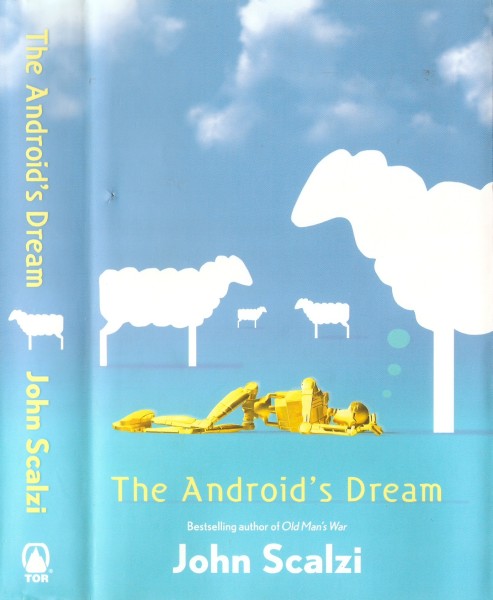
A minor diplomatic insult with a genetically engineered sheep breed spirals into a full interstellar crisis when the last surviving specimen of the 'Android's Dream' breed, needed for a critical ceremony with the alien Nidu, turns out to have been hunted to extinction by a Nidu faction bent on provoking war. John Scalzi's The Android's Dream follows ex-soldier Harry Creek as the hunt for a replacement leads him to Robin Baker, an ordinary woman carrying hidden sheep DNA that makes her the key to avoiding a war. It's a standalone comic space opera rather than an ongoing series.
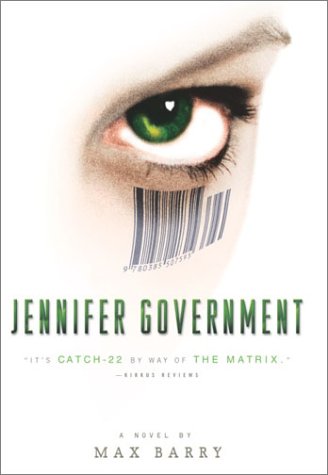
- Jennifer Government
Max Barrystandalone novel2003
similar byfunnypolitical intriguenear futurescience fictionsatiredystopia
In the near future, where most of the English-speaking world is part of the United States, whose government has become vestigial, police departments are for hire, and corporations and their customer loyalty alliances possess almost unlimited power; a sundry cast of characters are caught up in various levels of a power struggle.
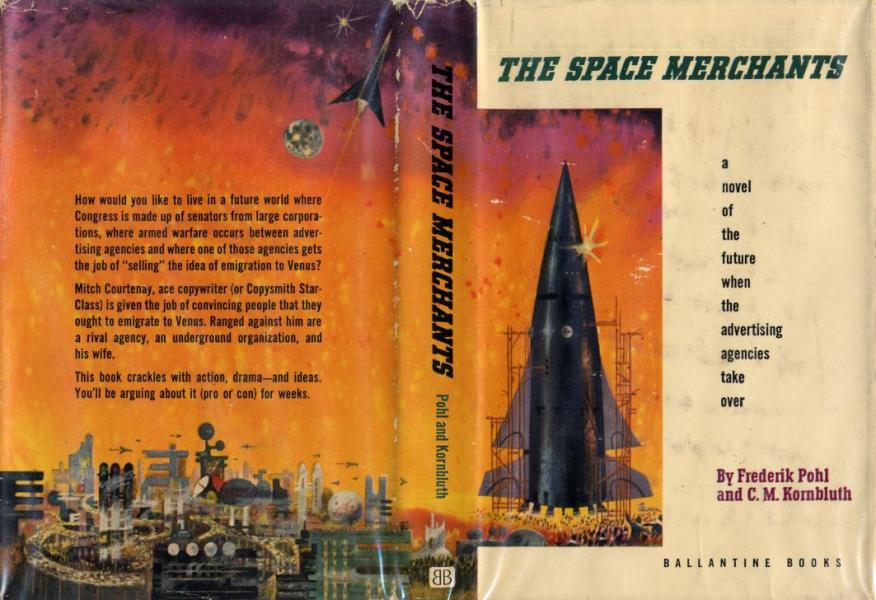
- Space Merchants
series2 books1953
completed
similar bynear futurescience fictiondystopia+2 more
The Space Merchants (1953) is a satirical science fiction novel by Frederik Pohl and C. M. Kornbluth that follows an advertising executive navigating a future where aggressive consumer capitalism has swallowed politics and daily life. The authors reunited three decades later for a direct sequel, The Merchants' War (1984), returning to the same satirical world. Together the two books form a compact bookend pair rather than an ongoing series.
- The Man Who Japed
Philip K. Dickstandalone novel1956
similar bynear futurescience fictionsatireour worlddystopia+2 more
The Man Who Japed is a science fiction novel by American writer Philip K. Dick, first published in 1956. Although one of Dick's lesser-known novels, it features several of the ideas and themes that recur throughout his later works. The "jape[s]" or practical jokes of the novel begin with a statue's unconventional decapitation.
- Laundry Files
series22 books2004
similar byscience fiction+3 more
The Laundry Files is a series of novels by British writer Charles Stross. They mix the genres of Lovecraftian horror, spy thriller, science fiction, and workplace humour. Their main character for the first five novels is "Bob Howard", a one-time I.T. consultant turned occult field agent. Howard is recruited to work for the Q-Division of SOE, otherwise known as "the Laundry", the British government agency which deals with occult threats. "Magic" is described as being a branch of applied computation (mathematics), therefore computers and equations are just as useful as, and perhaps more potent than, classical spellbooks, pentagrams, and sigils for the purpose of influencing ancient powers and opening gates to other dimensions. These occult struggles happen largely out of view of the public, as the Laundry seeks to keep the methods for contacting such powers under wraps. There are also elements of dry humour and satirisation of bureaucracy.
- Service Model
series3 books2024
similar byfunnynear futurescience fictionsatireour worldartificial intelligence
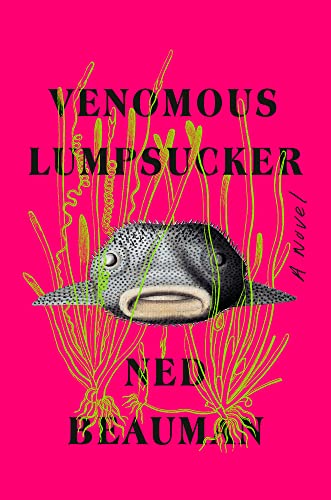
- Venomous Lumpsucker
Ned Beaumanstandalone novel2022
similar byfunnynear futurescience fictionsatireour world+1 more
She is studying the venomous lumpsucker. It might be intelligent. It might also be threatened by extinction. He has invested in extinction credits. It would cost money if an intelligent species went extinct because of him and his company.
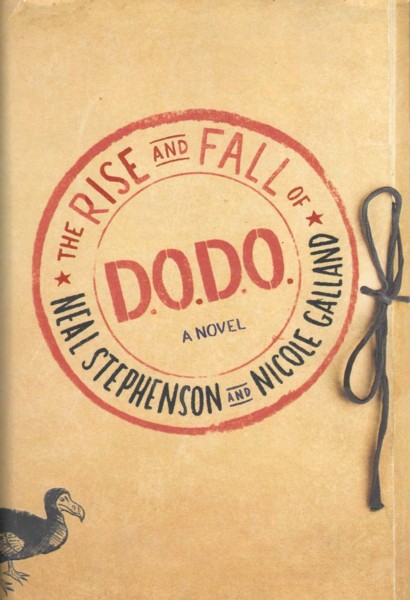
- D. O. D. O. (Department of Diachronic Operations)
series2 books2017
similar bypolitical intriguescience fictionour worldeurope+1 more
Neal Stephenson and Nicole Galland's D.O.D.O. novels center on the Department of Diachronic Operations, a covert U.S. government agency that discovers magic vanished from the world in the nineteenth century and sets out to use time travel to bring it back. The Rise and Fall of D.O.D.O. (2017) is followed by Master of the Revels, continuing the pair's earlier collaboration on The Mongoliad.
- The Zap Gun
Philip K. Dickstandalone novel1967
similar bynear futurescience fictionsatireour world+1 more
The Zap Gun is a 1967 science fiction novel by American writer Philip K. Dick. It was first published as the two-part serial Project Plowshare in Worlds of Tomorrow in 1965 and 1966, before Pyramid Books issued it in paperback under its present title. The novel originated in a title-first commission devised by Pyramid editor Don Bensen and was written in 1964 during a period of rapid production in Dick's career.
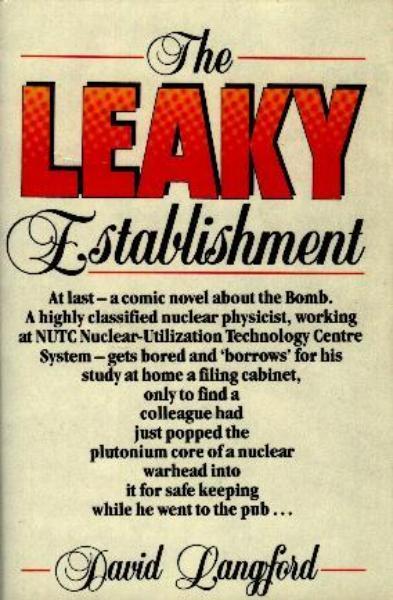
- The Leaky Establishment
David Langfordstandalone novel1984
similar byfunnypolitical intriguescience fictionsatireour world+1 more
The Leaky Establishment is a novel by David Langford, first published in June 1984 by Frederick Muller Ltd. It was re-issued, with an introduction by Terry Pratchett, in 2001 by Big Engine, and then in July 2003 by Cosmos Books. The book draws on some of Langford's own experiences working at the United Kingdom government's Atomic Weapons Research Establishment at Aldermaston, Berkshire.
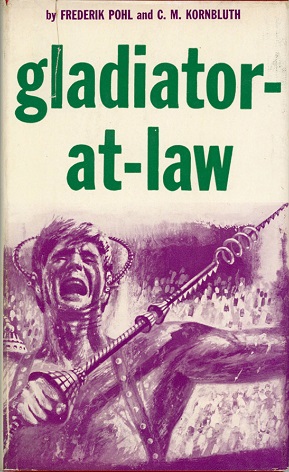
- Gladiator-at-Law
C. M. Kornbluth & Frederik Pohlstandalone novel1955
similar byfunnynear futurescience fictionsatire
Gladiator-At-Law is a satirical science fiction novel by American writers Frederik Pohl and Cyril M. Kornbluth. It was first published in 1955 by Ballantine Books and republished in 1986 by Baen Books.
- Chocolate Lenin
Graham Diamondstandalone novel2012
similar byfunnypolitical intriguenear futurescience fictionsatire
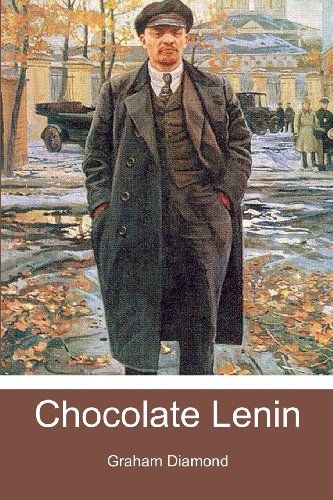
Set in Russia in the near future, a crazed but brilliant scientist in a chocolate factory recreates Vladimir Ilyich Lenin and brings him back to life. An elite but quirky security team is formed to prevent revolution and worldwide pandemonium.