More like Quantico
anchored on:science fictionthriller & suspensetechno-thrillerplague and pandemicnorth americanear future+4 more
but
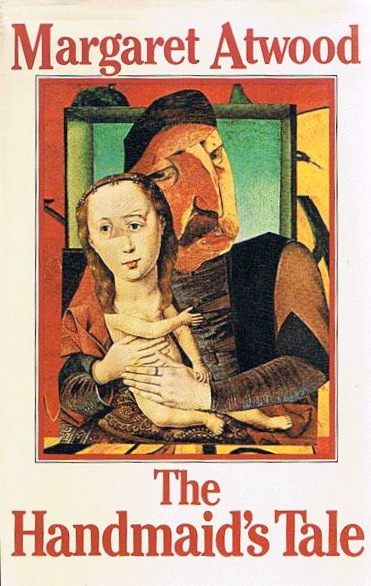
- The Handmaid's Tale
series3 books1985
similar bynear futuredarktensenorth americascience fiction+2 more
The Handmaid's Tale is Margaret Atwood's 1985 novel set in Gilead, a totalitarian theocracy that has overthrown the United States and forces fertile women into reproductive servitude as Handmaids; it is narrated by one such woman, Offred. Atwood returned to the world in her 2019 sequel The Testaments, set fifteen years later and narrated by three women, including the regime's Aunt Lydia. Together the two novels move from Gilead's grip on power toward the first cracks in it.
- The Fireman
Joe Hillstandalone novel2016
similar bynear futureplague and pandemicdarktensenorth americascience fiction
The Fireman is a novel set in a post-apocalyptic time by American author Joe Hill. The novel, Hill's fourth, tells the tale of a deadly spore that has infected most of the world's population. Hill first spoke of the novel in 2013 in promotional interviews for his then-new novel NOS4A2. The novel was released on May 17, 2016.
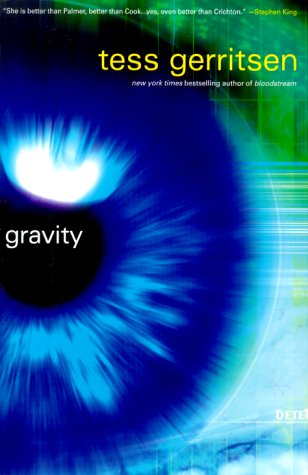
- Gravity
Tess Gerritsenstandalone novel1999
similar bynear futureplague and pandemictensedarkscience fictionthriller & suspense
Medical thriller set aboard the International Space Station where astronauts are dying one by one from a mysterious disease. Dr Emma Watson is a research physician on a mission to study living organisms in space. But the mission aboard the space station turns into a nightmare.
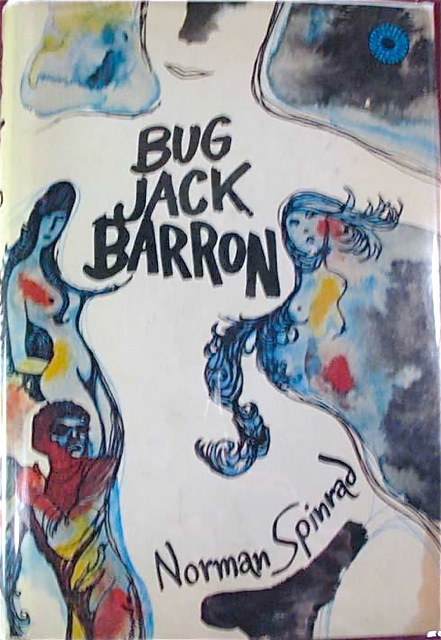
- Bug Jack Barron
Norman Spinradstandalone novel1969
similar bynear futurepolitical intriguetensenorth americascience fictionsurveillance+1 more
Bug Jack Barron is a 1969 science fiction novel by American writer Norman Spinrad, first serialized in the New Worlds magazine under the editorship of Michael Moorcock. It was nominated for the 1970 Hugo Award. The novel is notable for its lyrical style and unique use of cut-up phrases. In this regard, Spinrad has cited the influence of Beat writers William S. Burroughs, Allen Ginsberg, and Jack Kerouac.
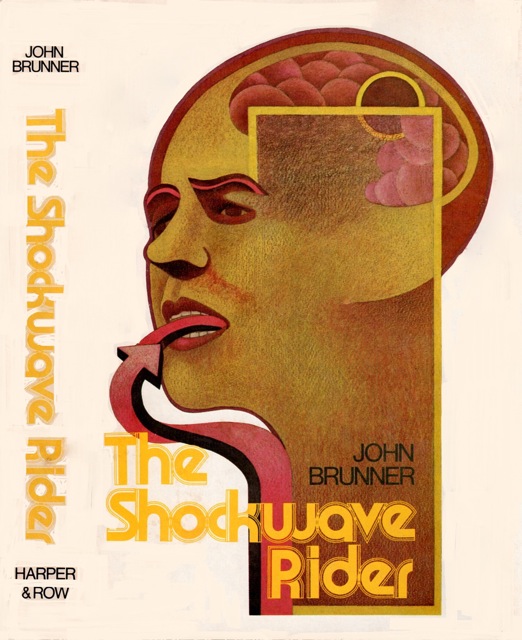
- The Shockwave Rider
John Brunnerstandalone novel1975
similar bynear futuretensedarknorth americascience fictionsurveillance
The Shockwave Rider is a science fiction novel by John Brunner, originally published in 1975. It is notable for its hero's use of computer hacking skills to escape pursuit in a dystopian future, and for the coining of the word "worm" to describe a program that propagates itself through a computer network. It also introduces the concept of a Delphi pool, perhaps derived from the RAND Corporation's Delphi method – a prediction market on world events which bears close resemblance to DARPA's controversial and cancelled Policy Analysis Market.
- Interface
Neal Stephenson & J. Frederick Georgestandalone novel1994
similar bynear futuretensepolitical intriguedarknorth americathriller & suspensescience fictionsurveillance
Interface is a 1994 novel by Neal Stephenson and J. Frederick George and originally published under the joint pseudonym Stephen Bury. Reprints of the novel have credited the work to Stephenson and George. It is a thriller, set in the then-future year of 1996 when a shadowy coalition bent on controlling the world economy attempts to manipulate a candidate for president of the United States through the use of a computer biochip brain implant. It was described by writer Cory Doctorow in 2007 as an "underappreciated masterpiece".
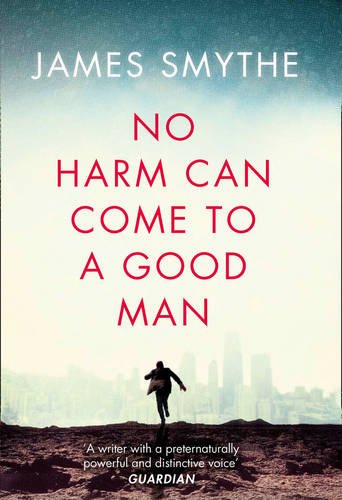
- No Harm Can Come to a Good Man
James Smythestandalone novel2014
similar bynear futuretensedarknorth americascience fictionthriller & suspensetechno-thriller+2 more
How far would you go to save your family from an invisible threat? A terrifyingly original thriller from the author of The Machine. ClearVista is used by everyone and can predict everything. It's a daily lifesaver, predicting weather to traffic to who you should befriend. Laurence Walker wants to be the next President of the United States. ClearVista will predict his chances. It will predict whether he's the right man for the job. It will predict that his son can only survive for 102 seconds underwater. It will predict that Laurence's life is about to collapse in the most unimaginable way.
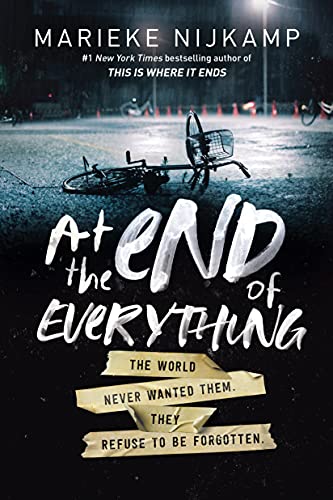
- At the End of Everything
Marieke Nijkampstandalone novel2022
similar bynear futureplague and pandemictensedarkscience fictionnorth americathriller & suspense
The Hope Juvenile Treatment Center is ironically named. No one has hope for the delinquent teenagers who have been exiled there; the world barely acknowledges that they exist. Then the guards at Hope start acting strange. And one day…they don't show up. But when the teens band together to make a break from the facility, they encounter soldiers outside the gates. There's a rapidly spreading infectious disease outside, and no one can leave their houses or travel without a permit. Which means that they're stuck at Hope. And this time, no one is watching out for them at all. As supplies quickly dwindle and a deadly plague tears through their ranks, the group has to decide whom among them they can trust and figure out how they can survive in a world that has never wanted them in the first place.
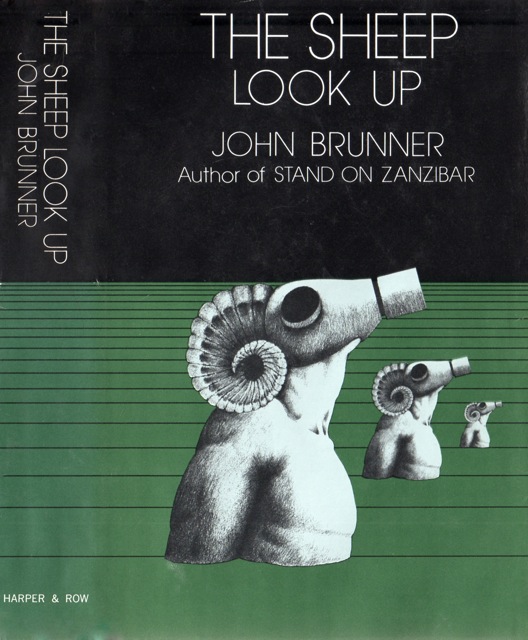
- The Sheep Look Up
John Brunnerstandalone novel1972
similar bynear futureplague and pandemicdarknorth americascience fiction+1 more
The Sheep Look Up is a 1972 dystopian science fiction novel by British author John Brunner, dealing with the deterioration of the environment in the United States. It was nominated for the 1972 Nebula Award for Best Novel.
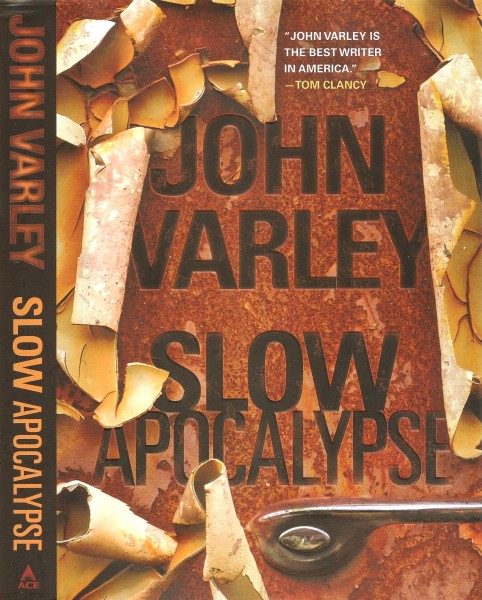
- Slow Apocalypse
John Varleystandalone novel2012
similar bynear futureplague and pandemictensedarknorth americascience fictionthriller & suspense
"Despite wars with Iraq and Afghanistan, as well as 9/11, the United States' dependence on foreign oil has kept the nation tied to the Middle East. A scientist has developed a cure for America's addiction--a slow-acting virus that feeds on petroleum, turning it solid. But he didn't consider that his contagion of an Iraqi oil field would spread to infect the fuel supply of the entire world ... In Los Angeles, screenwriter Dave Marshall heard this scenario from a retired U.S. Marine and government insider who acted as a consultant on Dave's last film. It sounded as implausible as many of his scripts, but the reality is much more frightening than anything he can envision. An ordinary guy armed with extraordinary information, Dave hopes his survivor's instinct will kick in so he can protect his wife and daughter from the coming apocalypse that will alter the future of Earth--and humanity ..."--
- Afterland
Lauren Beukesstandalone novel2020
similar bynear futureplague and pandemictensedarkscience fictionnorth americathriller & suspense
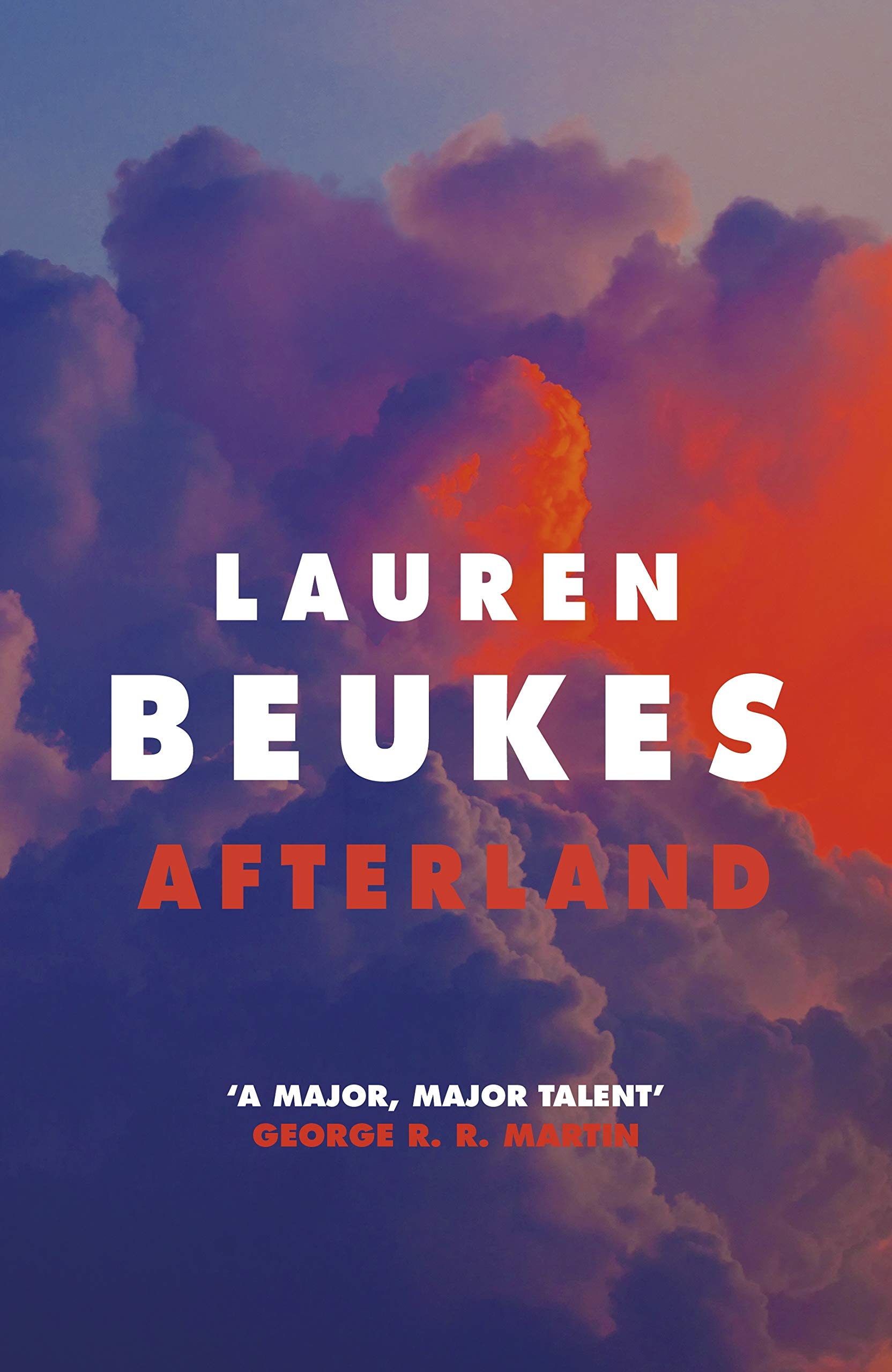
Afterland is a 2020 science fiction novel by South African writer Lauren Beukes. It takes place during "Manfall", a 2020 pandemic which has killed off almost all the world's men. Three years later In the United States, Cole and her twelve-year-old son, Miles are trying to flee to their home in South Africa. Miles is one of the few surviving males, and is sought after by US government researchers and boy traffickers.
- The Last Gasp
Trevor Hoylestandalone novel1983
similar bynear futuretenseplague and pandemicdarkscience fictionthriller & suspense+1 more
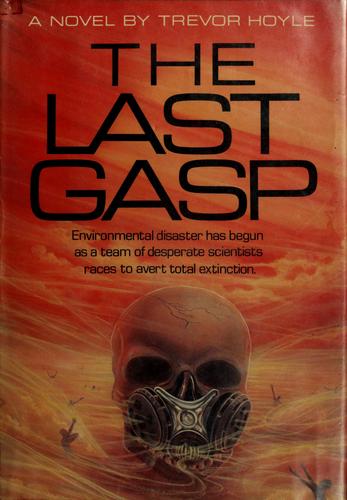
From the flaps of the Crown first edition: "When British marine biologist Gavin Chase stepped out into the windswept wastes at the Halley Bay antarctic research station one morning, the last thing he expected to see was a sled team coming out of nowhere carrying a half-mad, half-frozen Russian scientist babbling an incomprehensible warning. But that warning would threaten the future of the human race and force Chase to make some of the hardest decisions of his life. Months later, at a Geneva environmental conference, Chase meets Cheryl Detrick, the daughter of Theo Detrick, the grand old man of diatom research. Chase, the Detricks, and Soviet scientist Boris Stanovnik theorize that the oxygen-producing microscopic plants of the world's oceans are dying and the level of atmospheric pollutants has finally exceeded the ability of the planet's ecology to recycle them. There is also good reason to believe that the superpowers are planning to wage a new type of environmental warfare. Sooner or later there will be nothing left to breathe. So begins a race against the future. Chase and Cheryl, now lovers, struggle to avert ecological catastrophe as agents of the military-industrial complex hunt them down... and as a growing belt of unbreathable gases spreads outward from the equator, uprooting millions. Their enemies are Lloyd Madden, an insane military mastermind planning to seed the earth with poison and then repopulate it with a race of mutants, and Joseph Earl Gelstrom, a wealthy chemical manufacturer who has Cheryl's father killed to hide his involvement. But Gelstrom himself falls victim to pollution sickness, and he repents. To raise money to finance a research team, Chase must make an unholy alliance with the dying Gelstrom, but this is too much for Cheryl, who leaves him. As more and more of the world becomes uninhabitable, as industries and governments collapse and chaos reigns, as the oceans fill up with dioxin, as the climate changes and mutant life-forms encroach upon the last refuges of humankind, Chase leads a last desperate mission to find and rescue Cheryl and to lead his team of scientists to safety."
- Empire (Orson Scott Card)
series2 books2006
similar bynear futuretensepolitical intriguenorth americascience fictionthriller & suspense+1 more
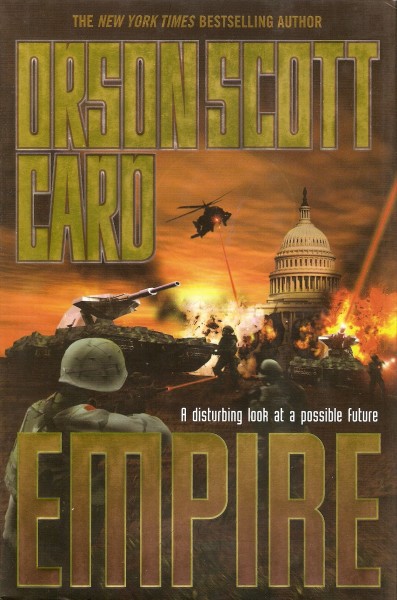
The Empire Duet is a two-book series written by Orson Scott Card under license from Chair Entertainment, beginning with Empire in 2006. The sequel Hidden Empire was released December 22, 2009.
- The Running Man
Stephen Kingstandalone novel1982
similar bynear futuretensedarknorth americascience fictionthriller & suspense
The Running Man is a dystopian thriller novel by American writer Stephen King, first published under the pseudonym Richard Bachman in 1982 as a paperback original. It was collected in 1985 in the omnibus The Bachman Books. The novel is set in a dystopian United States during the year 2025, in which the nation's economy is in ruins and world violence is rising. The story follows protagonist Ben Richards as he participates in the reality show The Running Man, in which contestants win money by evading a team of hitmen sent to kill them.
- A State of Disobedience
Tom Kratmanstandalone novel2003
similar bynear futuretensepolitical intriguedarknorth americascience fictionthriller & suspense
During the war against terrorism, the US government had taken on extraordinary powers. Now that the war was won, elements of the government had no intention of giving those powers up, and the country was on the verge of civil war.
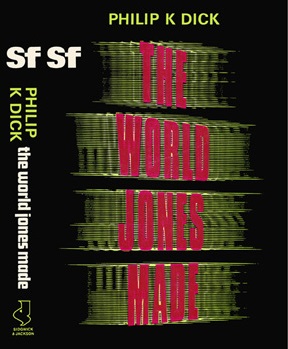
- The World Jones Made
Philip K. Dickstandalone novel1956
similar bynear futurepolitical intriguedarktensescience fictionnorth america
The World Jones Made is a 1956 science fiction novel by American writer Philip K. Dick, examining notions of precognition, humanity, and politics. It was first published by Ace Books as one half of Ace Double D-150, bound dos-à-dos with Agent of the Unknown by Margaret St. Clair.The story takes place after a nuclear war in which society is dominated by relativism, which rejects absolute truths and preaches tolerance as the highest principle. The mutant Floyd Jones, who can see into the future, plans to overthrow the system and colonise space. The story ends with the defeat of Jones, whose plans fail despite his ability to see the future due to the immutability of fate.
- The Passage
series3 books2010
similar bynear futuredarktensenorth americascience fiction+1 more
The Passage is a novel series by Justin Cronin. There are three published books in the series. The film rights were acquired by Fox Entertainment Group in 2007 for adaptation into a film trilogy, but after 12 years of development and planning, it was changed to a television series, which premiered in January 2019 and was canceled after the first season.
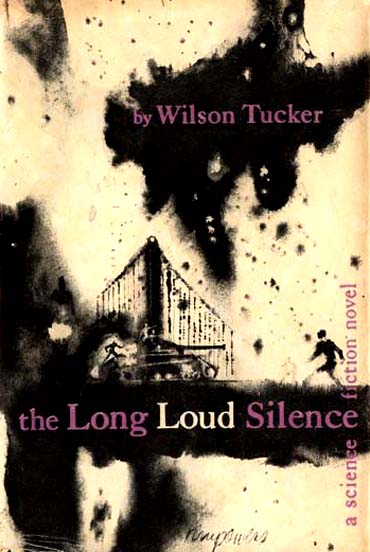
- The Long Loud Silence
Wilson Tuckerstandalone novel1952
similar bynear futureplague and pandemicdarktensenorth americascience fiction
Publisher's description: Tomorrow's war -- the war that could not be. The army of the United States was stationed along the length of the Mississippi River, guns pointed east -- with orders to shoot anyone attempting to cross. For the Final War was not a war of the ultimate bomb, of atomic hell. It was a war of the tiny germ, the filterable virus, the disease that came to conquer a nation -- and stayed to damn a world."
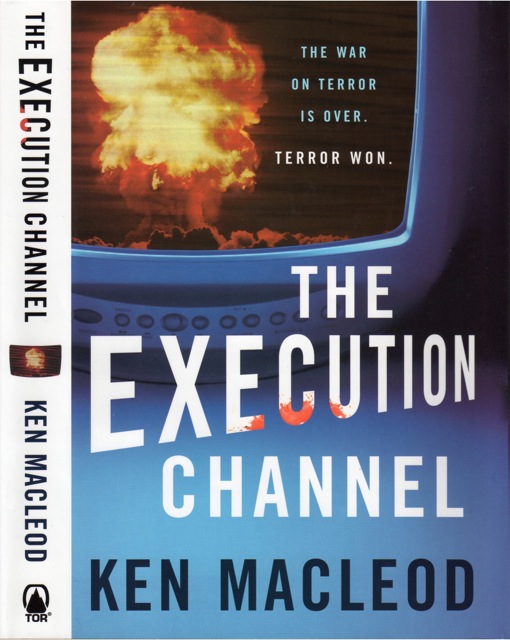
- The Execution Channel
Ken MacLeodstandalone novel2007
similar bynear futurepolitical intriguedarktensescience fictionnorth americasurveillance
Al Gore is elected American president and the War on Terror takes on new dimensions.
- Directive 51 / Daybreak
series3 books2010
similar bynear futuretensedarknorth americapolitical intriguescience fiction
Directive 51 opens John Barnes's near-future thriller trilogy with government analyst Heather O'Grainn as anti-technology extremists unleash a nanotech plague called Daybreak that destroys petroleum-based materials, rubber, and electrical systems worldwide. The resulting collapse triggers mass death, a crisis over presidential succession, and mysterious Moon-launched fusion strikes on Washington and Chicago, while a shadowy neofeudalist movement moves into the vacuum. Daybreak Zero and The Last President carry the same unraveling-civilization story through the rest of the trilogy.
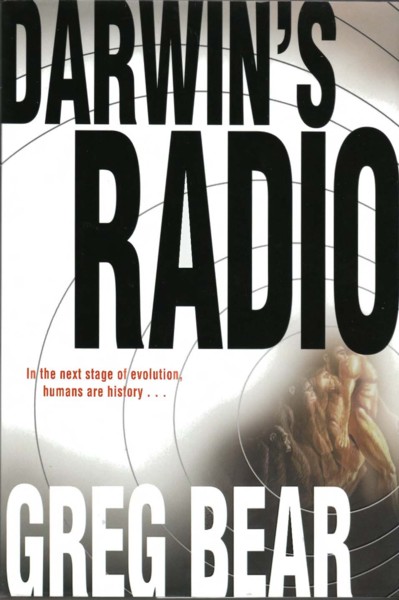
- Darwin
series2 books1999
completed
similar bynear futureplague and pandemictensenorth americascience fiction+1 more
Greg Bear's Darwin's Radio imagines a dormant retrovirus in human DNA activating worldwide, triggering an accelerated leap in human evolution that governments respond to as a plague. The 1999 novel won the Nebula Award; its sequel Darwin's Children follows the first generation of changed children as society decides what to do with them. Together they're speculative near-future science fiction grounded in genetics rather than space opera.
- The Attack
Kurt Schlichterstandalone novel2024
similar bynear futuretensepolitical intriguedarknorth americathriller & suspensetechno-thriller+1 more
“Could October 7 happen in America? Yes. And much worse. Forewarned is forearmed. Read Colonel K’s latest. Now!” Dr. Sebastian Gorka, Radio Host and National Security Strategist “America is one giant soft target. Kurt’s narrators tell tales of the nightmare scenario open borders can bring.” Jim Hanson, Author and Special Forces Veteran From the author of the bestselling Kelly Turnbull People’s Republic series of action novels comes his latest thriller, THE ATTACK. Set in the very near future and ripped from today’s headlines, THE ATTACK is a terrifying novel that describes in frightening detail exactly how America’s enemies could launch a massive terrorist assault here at home. From the White House to the Middle East, from the blood-stained streets of America’s suburbs to the cockpit of a B-2 bomber that will initiate the first blow in America’s merciless vengeance, THE ATTACK blends vivid realism with stirring action. With input from key military and counterterrorism experts, THE ATTACK tells the story of a cunning, implacable, and brutal enemy taking advantage of a confused and weak president to launch an assault that dwarfs Hamas’s strike on Israel. With a wide-open border and American law enforcement focused on churchgoers and parents attending schoolboard meetings, the jihadist enemy can pick the time and place for its deadly attack. The only things standing in its way are the courage of America’s brave first responders and military, as well as regular citizens who are caught up in the bloodshed and are forced to fight back.
- The End of Men
Christina Sweeney-Bairdstandalone novel2021
similar bynear futureplague and pandemicpolitical intriguedarktensescience fiction
The year is 2025, and a mysterious virus has broken out in Scotland--a lethal illness that seems to affect only men. When Dr. Amanda MacLean reports this phenomenon, she is dismissed as hysterical. By the time her warning is heeded, it is too late. The virus becomes a global pandemic--and a political one. The victims are all men. The world becomes alien, a women's world (Source: publisher)
- The Andromeda Strain
series2 books1969
similar byplague and pandemictensescience fiction+3 more
Michael Crichton's 1969 novel The Andromeda Strain follows a team of scientists racing to contain a lethal extraterrestrial microorganism that crash-lands in Arizona, told in the clinical, document-driven style that helped establish the techno-thriller genre. Daniel H. Wilson's authorized 2019 sequel The Andromeda Evolution revisits the same threat five decades later. Together the two books form a two-part outbreak story separated by a fifty-year gap in publication.