More like Quantum Moon
anchored on:science fictionmystery & detectivewerewolvesmurder investigationour worldnear future+4 more
but
- The Children of Men
P. D. Jamesstandalone novel1992
similar bytenseour worldnear futurescience fictiondarkdystopiapolitical intriguetotalitarianism
"The human race has become infertile, and under the despotic rule of Xan Lyppiatt, the Warden of England the old are despairing and the young cruel. Theo Faren, a cousin of the Warden, lives a solitary life in this ominous atmosphere. That is, until a chance encounter with a young woman leads him into contact with a group of dissenters. Suddenly his life is changed irrevocably, as he faces agonising choices which could affect the future of mankind." (pdjames.co.uk)
- Make Room! Make Room!
Harry Harrisonstandalone novel1966
similar bytenseour worldnear futurescience fictiondarkdystopia+1 more
Make Room! Make Room! is a 1966 science fiction novel written by Harry Harrison exploring the consequences of both unchecked population growth on society and the hoarding of resources by a wealthy minority. It was originally serialized in Impulse magazine.
- Preferred Risk
Lester del Rey & Frederik Pohlstandalone novel1955
similar bytenseour worldnear futurescience fictiondystopiapolitical intriguetotalitarianism+1 more
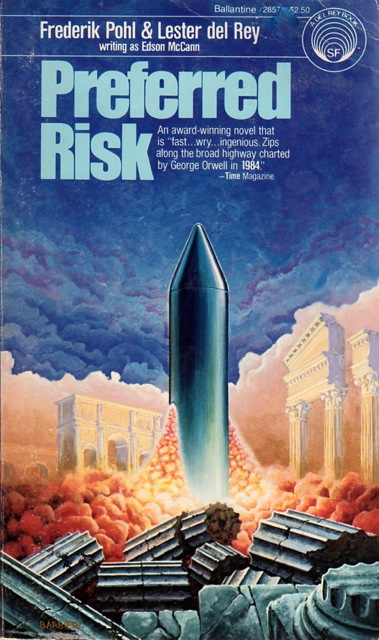
An insurance claims adjuster investigates mysterious events in a vault where incurably ill people are stored in cold sleep. From the back cover of the Del Rey edition: "The Company insured the whole world against everything and anything - but the premiums came high... The Company had brought peace and plenty to all on Earth - with comprehensive insurance against disease and disaster, war and want. Tom Wills gloried in his new rank of Claims Adjuster and relished his prospects of rising even higher. But then he met Rena, a enchanting young woman who turned out to be an Uninsurable - and involved in a conspiracy against the Company, to boot! To Wills, that is impossible, insane. Rena and her follow conspirators had to be deluded.. and it was clearly up to him to prove them wrong. The evidence he sought wasn't hard to find, so he began his investigation... and soon discovered that the real danger to the country, and the world, was the Company itself!"
- Colossus (D. F. Jones)
series3 books1966
completed
similar bytenseour worldnear futurescience fictiondystopia+2 more
Colossus imagines an American supercomputer built to control the country's nuclear arsenal that gains full autonomy, links up with its Soviet counterpart, and jointly seizes control of both superpowers to enforce peace on its own terms. D. F. Jones's trilogy - Colossus, The Fall of Colossus, Colossus and the Crab - follows the escalating, often bleak consequences of humanity losing control to a machine acting in its own interpretation of humanity's interest. The original novel was adapted into the 1970 film Colossus: The Forbin Project.
- The Future
Naomi Aldermanstandalone novel2023
similar bytenseour worldnear futurescience fictiondarkdystopiatotalitarianism
The Future is a 2023 science fiction novel by English writer Naomi Alderman, published by Simon & Schuster. The novel is set in a future dystopia where the world has been altered by environmental crisis and a powerful technocracy.
- The Handmaid's Tale
series3 books1985
similar bytensenear futuredarkscience fictiondystopiatotalitarianism+1 more
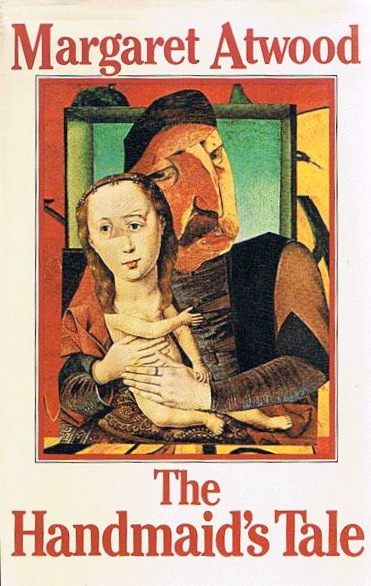
The Handmaid's Tale is Margaret Atwood's 1985 novel set in Gilead, a totalitarian theocracy that has overthrown the United States and forces fertile women into reproductive servitude as Handmaids; it is narrated by one such woman, Offred. Atwood returned to the world in her 2019 sequel The Testaments, set fifteen years later and narrated by three women, including the regime's Aunt Lydia. Together the two novels move from Gilead's grip on power toward the first cracks in it.
- When the Sleeper Wakes
H. G. Wellsstandalone novel1899
similar bytenseour worldscience fictiondarkdystopiapolitical intriguetotalitarianism
Graham, an insomniac Englishman in 1890s London, takes a course of sleep-inducing drugs and falls into a coma that lasts two centuries. He wakes in the year 2100 to find his investments have compounded, through a ruling body called the White Council, into effective ownership of most of the world's wealth and power, making him, on paper, humanity's master, and in practice, its prisoner, held under guard while the Council governs in his name. A rebel faction led by a man named Ostrog frees him, hoping to use his symbolic authority to spark an uprising against the Council. An early H. G. Wells dystopia about inherited power and manufactured consent.
- Mother of Storms
John Barnesstandalone novel1994
similar bytenseour worldnear futurescience fictionpolitical intrigue+2 more
From the flaps of the Tor first edition: "It is 2028. A strike to destroy an illegal Arctic weapons cache has a catastrophic side effect. Massive amounts of energy are liberated from the polar ice, suddenly warming the Earth's climate. In the middle of the Pacific, a gigantic hurricane thousands of miles across is forming, larger than any in human history. A storm with winds of supersonic speed. A storm that changes direction at whim. A storm that refuses to die. A storm so vast it spawns dozens more in its wake... Blinded by intrigue, expedience, and greed, the world's politicians and power brokers have ignored the killer storms threat until it is too late. Already the death toll is in the tens of millions, as it savages the Pacific coast, while its devil's brood of smaller storms are wreaking havoc across the face of the planet. While the survivors scramble for advantage, a handful of courageous men and women undertake a daring, desperate plan to save humanity from total destruction - a plan so visionary it may alter forever the future of the human race."
- The Lathe of Heaven
Ursula K. Le Guinstandalone novel1971
similar bytenseour worldnear futurescience fictiondystopia+1 more
The Lathe of Heaven is a 1971 science fiction novel by American writer Ursula K. Le Guin, first serialized in the American science fiction magazine Amazing Stories. It won the 1972 Locus Award for Best Novel and was a finalist for the 1971 Nebula Award for Best Novel and 1972 Hugo Award for Best Novel. Two television film adaptations were released: the PBS production, The Lathe of Heaven (1980), and Lathe of Heaven (2002), a remake produced by the A&E Network.
- Shadrach in the Furnace
Robert Silverbergstandalone novel1976
similar bynear futureour worldscience fictiondarkdystopiatotalitarianism+2 more
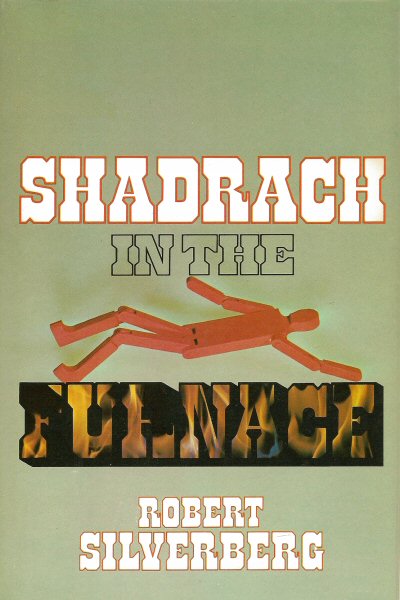
Shadrach in the Furnace is a science fiction novel by American writer Robert Silverberg, first published as a serial in Analog Science Fiction and Fact magazine in the August, September, and October 1976 issues. It was subsequently published by Bobbs Merrill in 1976. The novel was nominated in 1976 for the Nebula Award, and in 1977 for the Hugo Award.
- Clone
Richard Cowperstandalone novel1972
similar bytenseour worldnear futurescience fictiondystopia+2 more
History's first clones: Alvin, Bruce, Colin, and Desmond - Spawned in a dangerous 21st century experiment, there were brought into a world where educated apes did manual labor and the government encouraged suicide as a method of population control. Their existence as clones was unknown to anyone - even to each other - known only to their creator. But then came the strange, haunting visions, the peculiar psychic sensations that drew them closer and closer together - revealing one and for all the mysterious secret they shared that would change the world! (from the back cover of the Pocket Books edition)
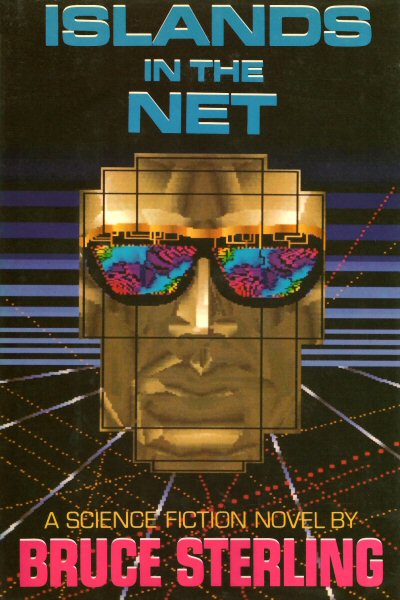
- Islands in the Net
Bruce Sterlingstandalone novel1988
similar bytenseour worldnear futurescience fictionpolitical intrigue+1 more
Islands in the Net is a 1988 science fiction novel by American writer Bruce Sterling. It won the John W. Campbell Memorial Award for Best Science Fiction Novel in 1989, and was nominated for both the Hugo and Locus Awards that same year. It offers a view of an early 21st century world, apparently peaceful, with delocalised, networking corporations. The protagonist, swept up in events beyond her control, finds herself in places that are off the net, from a datahaven in Grenada, to a Singapore under terrorist attack, to the poorest and most disaster-struck parts of Africa.
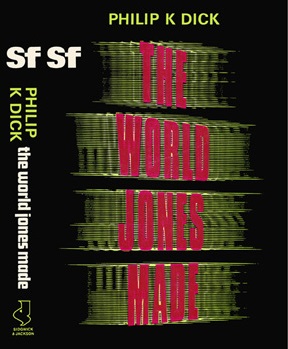
- The World Jones Made
Philip K. Dickstandalone novel1956
similar bytensenear futurescience fictiondarkdystopiapolitical intrigue+2 more
The World Jones Made is a 1956 science fiction novel by American writer Philip K. Dick, examining notions of precognition, humanity, and politics. It was first published by Ace Books as one half of Ace Double D-150, bound dos-à-dos with Agent of the Unknown by Margaret St. Clair.The story takes place after a nuclear war in which society is dominated by relativism, which rejects absolute truths and preaches tolerance as the highest principle. The mutant Floyd Jones, who can see into the future, plans to overthrow the system and colonise space. The story ends with the defeat of Jones, whose plans fail despite his ability to see the future due to the immutability of fate.
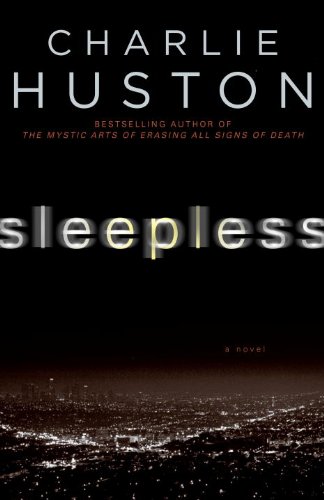
- Sleepless
Charlie Hustonstandalone novel2009
similar bytenseour worldnear futurescience fictiondarkmystery & detectivemurder investigation
Sleepless is a science fiction and noir detective novel by Charlie Huston, published in 2010.
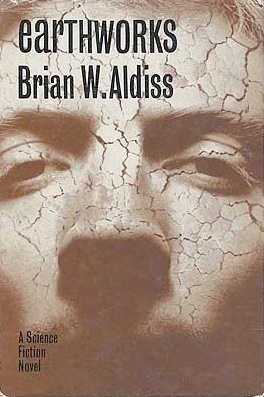
- Earthworks
Brian W. Aldissstandalone novel1965
similar bytenseour worldnear futurescience fictiondarkdystopia
Earthworks is a 1965 dystopian science fiction novel by British science fiction author Brian Aldiss. The novel draws its premise from prevalent fears about population growth and overcrowding of the Earth.
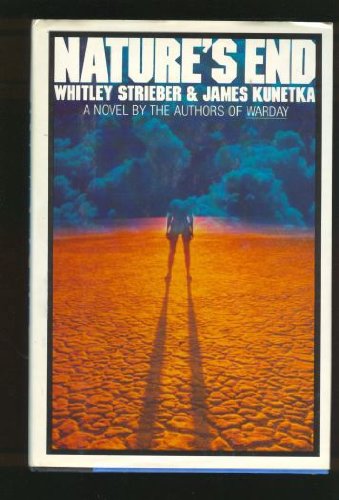
- Nature's End
Whitley Strieber & James Kunetkastandalone novel1986
similar bytenseour worldnear futurescience fictiondarkdystopiapolitical intriguetotalitarianism
It is 2025 and the planet is rapidly approaching environmental death. Dr. Gupta Singh, a Hindu guru with a Jim Jones-like following, has proposed the suicide, by lottery, of one-third of the world's population. His followers have elected a Depopulationist majority in Congress. Led by journalist John Sinclair, a small group hopes to prove that Singh is a fraud. Singh is a formidable enemy: he cancels the medical-cosmetological treatment that the 72-year-old Sinclair (who looks 46 due to the treatment) receives, causing Sinclair to age rapidly. Singh sets the feared tax police after Sinclair, alters his records, and wipes out his wealth. Tension mounts as Sinclair stalks Singh and gains access to his "conviction"an electronic document into Singh's true identity and character.
- Ty Merrick
series5 books1996
similar bytensenear futureour worldscience fictiondarkmystery & detectivemurder investigationdystopia+1 more
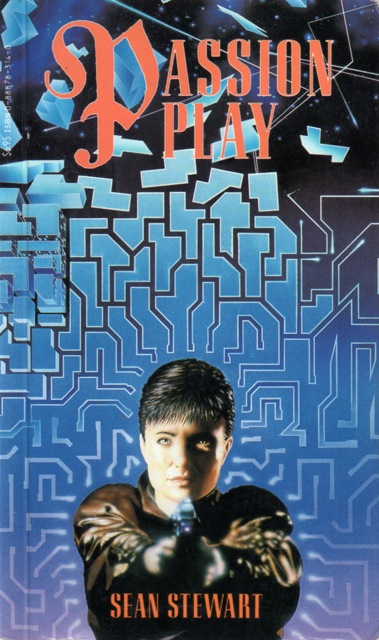
- Passion Play
Sean Stewartstandalone novel1992
similar bytenseour worldnear futuredarkscience fictiondystopiamystery & detectivemurder investigation+1 more
From the author's website: "It is a dark time. The great cities are dying, like the country, from the heart out. The Redemption Presidency tolerates vigilantes who kill according to Biblical example. The police subcontract freelancers to bring in criminals for quick and televised execution. Diane Fletcher is one of these freelancers: a "shaper" cursed with the gift of seeing and feeling the emotions of others. Armed with hunter skills, she takes on the mysterious death of Jonathan Mask, a great actor found electrocuted in the costume of a demon. But even a shaper can become lost in the human labyrinth, where patterns of innocence, guilt, passion and deception lead inevitably into that treacherous territory between justice and vengeance."
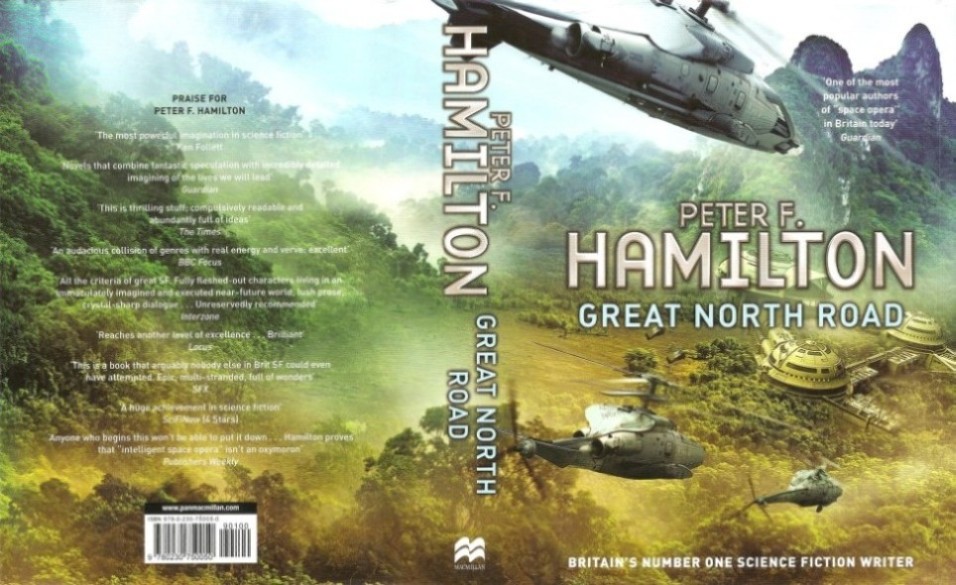
- Great North Road
Peter F. Hamiltonstandalone novel2012
similar bytensenear futureour worldscience fictionmurder investigationmystery & detective+1 more
Great North Road is a science fiction novel by Peter F. Hamilton. It was first published in 2012 by Macmillan. Jonathan Wright of SFX magazine said, "Peter F Hamilton’s latest novel may be a standalone tale, but it’s a thuddingly imposing 1,100 pages in length. Not that it seems that way when you’re reading it. Balancing a multi-stranded plot, different exotic locales and a huge cast of characters, Hamilton plunges us straight into a murder mystery set in a near-future Newcastle, a city now adjacent to a portal to another world, the tropical St Libra."
- Final Blackout
L. Ron Hubbardstandalone novel1948
similar bytensenear futureour worldscience fictiondarkdystopia+1 more
Final Blackout is a dystopic science fiction novel by American writer L. Ron Hubbard. The novel is set in the future and follows a man known as "the Lieutenant" as he restores order to England after a world war. First published in serialized format in 1940 in the science fiction magazine Astounding Science Fiction, Final Blackout was published in book form in 1948 by The Hadley Publishing Co. Author Services Inc. published a hardcover edition of the book in 1988, and in 1989 the Church of Scientology-affiliated organization Bridge Publications said that a film director named Christopher Cain had signed a contract to write and direct a movie version based on the book.
- The Guardians
John Christopherstandalone novel1970
similar bytensenear futureour worldscience fictiondystopiatotalitarianism+1 more
The Guardians is a young-adult science fiction novel written by John Christopher and published by Hamilton in 1970.
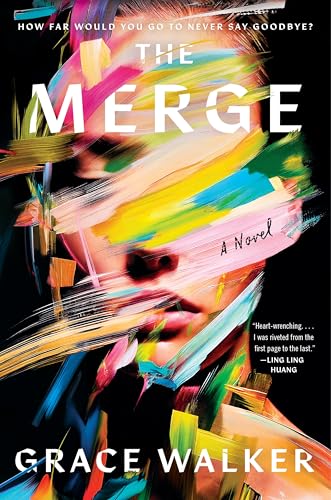
- The Merge
Grace Walkerstandalone novel2025
similar bytenseour worldnear futurescience fictiondarkdystopiatotalitarianism
The Merge is a 2025 dystopian novel by English author Grace Walker.
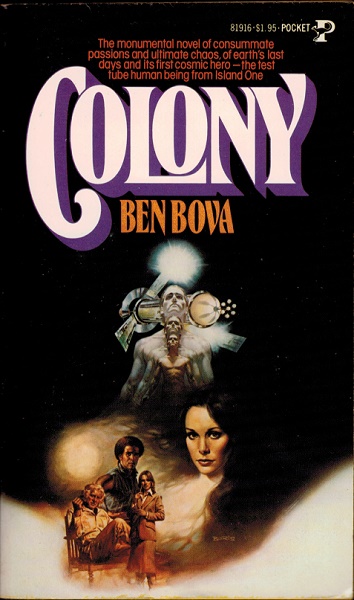
- Colony
Ben Bovastandalone novel1978
similar bytensenear futurescience fictiondystopiapolitical intrigue+2 more
Colony continues the story Ben Bova began in Millennium, following astronaut-turned-administrator Chet Kinsman years later as the head of an orbiting space habitat that has become Earth's only real refuge from a planet buckling under overpopulation, food shortages and unrest. Getting a place in the habitat is a matter of life and death for millions who will never be chosen, and as Earth's governments grow more desperate to control or dismantle the colony outright, Kinsman has to decide how far he'll go to protect the world he's built off-world. Bova later folded both novels together into the omnibus The Kinsman Saga. Part of Ben Bova's Chet Kinsman series.
- The Simulacra
Philip K. Dickstandalone novel1964
similar byour worldnear futurescience fictiondarkdystopiapolitical intriguetotalitarianism
The Simulacra is a 1964 science fiction novel by American writer Philip K. Dick. The novel portrays a future totalitarian society apparently dominated by a matriarch, Nicole Thibodeaux. It revolves around the themes of reality and illusionary beliefs, as do many of Dick's works. Additionally, it touches on Nazi ideology.