Loreful
HomeDiscover
Search series, authors…⌘K
Loreful

Reading orders for SF/F series and shared universes — with your place kept in every one.

Explore

UniversesSeriesWorksAuthorsAtlas

Help

FAQAboutSite map

Account & legal

Sign inCreate accountPrivacyTerms

Data

Built on ISFDB, Wikipedia, Wikidata and Open Library. Curated reading orders carry their reasoning on the page; the rest follow publication order. Data sources & licenses

© Loreful · data: ISFDB · CC BY

More like Quartette

anchored on:19th centuryhorrorliterary & generalsouth asiaeerieshort story cycle

but

Mood

The mood the book leaves you in.

  • The reading experience is propelled by journeys, exploration, and physical risk; excitement and forward momentum dominate over dread or introspection.
  • Joy and loss are deliberately mixed; the resolution grants characters something real while taking something else away, leaving warmth and sorrow together.
  • The book demands work from the reader — dense prose, difficult structure, unfamiliar ideas, or morally uncomfortable material — as part of its intended effect.
  • Grim events, cruelty, or despair dominate the atmosphere, and the book does not soften them with comfort or comic relief.
  • The atmosphere is quietly unsettling — wrongness, unease, and the uncanny pervade the book without necessarily escalating into overt horror.
  • The book is built to move the reader; character feeling is foregrounded and major scenes aim at a strong emotional response.
  • Humor is a primary aim and the prose plays for laughs — comic situations, wit, or dialogue produce sustained comedy, not occasional levity.
  • The book insists that things can improve; effort and decency are shown to matter, and the arc bends toward better outcomes even through hardship.
  • The book teaches as it goes — real facts, history, science, or craft are conveyed in enough depth that learning is part of the reading experience.
  • The book is designed to uplift and motivate, presenting perseverance or achievement in a way that invites the reader to aspire or act.
  • The overall register is cheerful and easygoing; stakes are kept gentle and the book avoids dwelling on pain or dread.
  • Withheld information drives the experience; the book sustains enigmas and secrets the reader wants resolved, whatever its genre.
  • The book is contemplative and inward-looking, giving more weight to thought, memory, and meaning than to external events.
  • The book works as comfort reading — low tension, a soothing pace, and an atmosphere the reader can unwind in.
  • Grief, loss, or melancholy set the dominant register, and the book lets sorrow stand rather than resolving it into comfort.
  • Sustained suspense is the point; the book keeps the reader braced for what happens next through danger, pressure, or impending revelation.
  • Playful invention and charm define the register — fanciful conceits, light absurdity, and a narration that delights in its own oddity.

About

What the story runs on.

  • Stories in which extraterrestrial beings are central — as characters, cultures, or the object of the plot.
  • Stories structured as a quest — a journey undertaken to find, deliver, or destroy something of great import.
  • Stories in which staying alive against nature, catastrophe, or scarcity is the central problem.
  • Stories in which a friendship — its making, testing, or loss — is the emotional center.
  • Stories of growing up — a young protagonist crossing from childhood into adult knowledge and responsibility.
  • Stories about who a character truly is — self-discovery, doubled lives, and the search for a self.
  • Stories about mental unraveling — descent into madness, delusion, and minds at war with themselves.
  • Stories about mourning — living through the death of a loved one and what loss does to the survivors.
  • Stories in which a buried family truth — hidden parentage, crimes, or shames — surfaces and reorders the present.
  • Stories driven by maneuvering for power — factions, conspiracies, and statecraft conducted in shadow.
  • Stories in which war itself is the subject — combat, occupation, and what warfare does to soldiers and civilians.
  • Stories organized around investigating a killing — the case, the clues, and the pursuit of the killer, in any genre's clothing.

Shelf

Where it sits in the library.

    • Fiction built on magic or other supernatural elements that have no scientific explanation.
    • Secondary-world fantasy at large scale, where the fate of nations or the world turns on the protagonists' struggle.
    • Fantasy set in a recognizably modern city or contemporary world where the supernatural intrudes on everyday life.
    • Fantasy that blends in horror's atmosphere and imagery, keeping a fantastical frame around grim or frightening material.
    • Action-driven fantasy following warriors or rogues with personal stakes against sorcerous threats, rather than world-spanning conflicts.
    • Fantasy set in a real historical period or a close analogue of one, with magic woven into the era.
    • Fantasy in which protagonists cross from the ordinary world into another world through a portal or similar passage.
    • Fiction that retells or reworks a traditional fairy tale in a new form or setting.
    • Fantasy drawing directly on myths, legends, and folklore, retelling them or building on their figures and logic.
    • Fantasy of ghosts, vampires, shapeshifters, psychics, and similar phenomena, usually set in an otherwise ordinary world.
    • Fiction mixing science-fictional trappings with overtly magical or impossible elements in one setting.
    • Low-stakes fantasy emphasizing comfort, community, and everyday pleasures over conflict and peril.
    • Speculative fiction of pervasive moral ambiguity, violence, and cynicism that rejects heroic conventions — fantasy and SF alike.
      • Fiction that extrapolates from science and technology — future societies, space travel, or speculative inventions — within at least nominally natural laws.
      • Science fiction of interstellar scope — starships, galactic polities, and adventure across star systems.
      • Science fiction committed to scientific rigor, where technical plausibility constrains the story.
      • Science fiction centered on armed forces and warfare, told largely from a military point of view.
      • Science fiction of networked, corporate-dominated near futures, pairing high technology with social decay.
      • Science fiction styled on nineteenth-century steam-powered technology, often in a Victorian or pseudo-Victorian setting.
      • Fiction depicting an oppressive or catastrophic society, presented as a warning.
      • Fiction set after civilization's collapse, following survivors in the ruins of the old world.
      • Fiction in which characters move between past and future, and the mechanics or consequences of that travel drive the plot.
      • Fiction exploring a world where a historical event went differently and history diverged from ours.
      • Science fiction about humanity's first encounter and communication with an alien intelligence.
      • Science fiction in which extraterrestrial forces attack or occupy Earth and humanity resists.
      • Fiction whose primary aim is to frighten or unsettle the reader through dread, menace, or the monstrous.
      • Horror of vast, indifferent, incomprehensible entities before which humanity is insignificant, in the Lovecraft tradition.
      • Horror of decaying houses, buried family secrets, and oppressive atmosphere in the Gothic literary tradition.
      • Horror centered on hauntings and the returning dead.
      • Horror located in the mind — paranoia, obsession, and unreliable perception rather than external monsters.
      • Horror built around the reanimated dead and survival amid their outbreaks.
      • Horror defined by explicit, transgressive gore that refuses to cut away from violence.
      • Speculative fiction of the strange and uncanny that resists both natural explanation and standard genre categories.
      • Fiction organized around solving a crime or puzzle, typically following an investigator toward the identification of a culprit.
      • A puzzle-first mystery that lays out clues so the culprit's identity can be deduced before the reveal.
      • Crime fiction of moral ambiguity, fatalism, and hard-edged style, set among the corrupt and the doomed.
      • A mystery following the realistic routines of police work — forensics, interviews, and case-building.
      • A gentle mystery with an amateur sleuth, a small community, and violence kept off the page.
      • A mystery set in a past era, where the investigation works within that period's methods and society.
      • Fast-paced fiction driven by imminent danger, pursuit, or high-stakes conspiracy, built to sustain tension.
      • A thriller of espionage — agents, tradecraft, and intelligence services in conflict.
      • A thriller centered on lawyers and the courtroom, where litigation carries the suspense.
      • A thriller driven by detailed contemporary or near-future technology, often military or scientific.
      • A thriller whose tension comes from mental states and manipulation between characters rather than external action.
      • Fiction whose central plot is a romantic relationship and its development toward an emotionally satisfying resolution.
      • Romance in which one or both partners are supernatural beings, blending fantasy elements into the love story.
      • A fantasy-romance hybrid in which the romantic arc and the fantasy plot carry equal weight.
      • Romance set in a past era, with courtship shaped by the period's society and manners.
      • Romance set in the present day, without supernatural or historical elements.
      • Fiction set in a real past period, where the historical setting materially shapes characters and events.
        • General and literary fiction emphasizing prose style, character interiority, or formal ambition over genre plot conventions.
        • Fiction in a realistic world where magical events occur and are treated as ordinary, in the tradition of Latin American literature.
        • Fiction that ridicules people, institutions, or society in order to criticize them.
        • Fiction of dreamlike, irrational imagery and logic that breaks from realistic representation.
        • Fiction that plays with narrative convention through metafiction, fragmentation, and self-reference.
        • Fiction propelled by journeys, exploration, and physical peril, where action and survival carry the plot.
        • Adventure fiction of ships and seafaring — naval engagements, voyages, and life at sea.
        • Fiction of the American frontier West — gunmen, ranchers, and lawmen, typically in the late nineteenth century.
        • Fiction centered on soldiers, campaigns, and the experience of warfare, historical or imagined.
          • Fiction written primarily to amuse, using comedic situations, wit, or parody as its organizing principle.
            • Multi-generational fiction following a family or dynasty across decades, with inheritance and kinship as the through-line.
              • Fiction whose world runs on explicit game mechanics — levels, stats, and skills that characters can see and exploit.
                • Fiction about costumed or superpowered heroes and their conflicts with comparable villains.

                Practical

                How long a commitment, whether it stands alone, and whether it has finished.

                Tap a chip to ask for it · tap again to rule it out · once more to clear. Numbers show what would be left.

                • Cover of Song of Kali
                  Song of Kali

                  Dan Simmons · standalone novel · 1985

                  similar byeeriesouth asiahorror

                  Song of Kali is a horror novel by American writer Dan Simmons, published in 1985. The story deals with an American intellectual who travels to Calcutta, India, where he becomes embroiled in mysterious and horrific events at the centre of which lies a cult of Kapalikas that worships Kali.

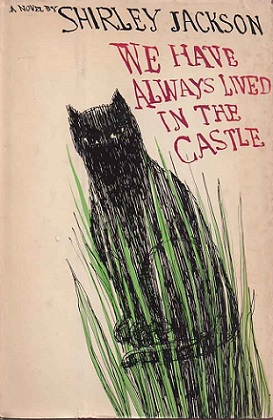
                • Cover of We Have Always Lived in the Castle
                  We Have Always Lived in the Castle

                  Shirley Jackson · standalone novel · 1962

                  similar byeerieliterary & generalhorror

                  A young woman lives with her older sister and sickly uncle in their old family house, after a mysterious tragedy turns the townsfolk against them.

                • Cover of The Green Man
                  The Green Man

                  Kingsley Amis · standalone novel · 1969

                  similar byeeriehorrorliterary & general

                  The Green Man is a 1969 novel by British author Kingsley Amis. A Times Literary Supplement reviewer described The Green Man as "three genres of novel in one": ghost story, moral fable, and comic novel. The novel reflects Amis's willingness to experiment with genre novels while displaying many of the characteristics of his conventional novels, both in superficial aspects such as fogeyishness and problems with alcohol, and in more substantive aspects such as a self-reflective observation of human cruelty and selfishness in everyday relations.

                • Cover of Mary Reilly
                  Mary Reilly

                  Valerie Martin · standalone novel · 1990

                  similar byeerie19th centuryliterary & general

                  Mary Reilly is a 1990 parallel novel by American writer Valerie Martin. It is inspired by Robert Louis Stevenson's classic 1886 novella Strange Case of Dr. Jekyll and Mr. Hyde. It was nominated for the Nebula Award for Best Novel in 1990 and the World Fantasy Award for Best Novel in 1991. Martin's novel was the basis for the 1996 film of the same name starring Julia Roberts in the title role.

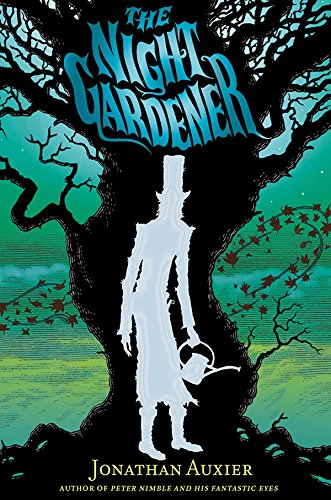
                • Cover of The Night Gardener
                  The Night Gardener

                  Jonathan Auxier · standalone novel · 2014

                  similar byeerie19th centuryhorror

                  From copyright page: Irish orphans Molly, fourteen, and Kip, ten, travel to England to work as servants in a crumbling manor house where nothing is quite what it seems to be, and soon the siblings are confronted by a mysterious stranger and secrets of the cursed house.

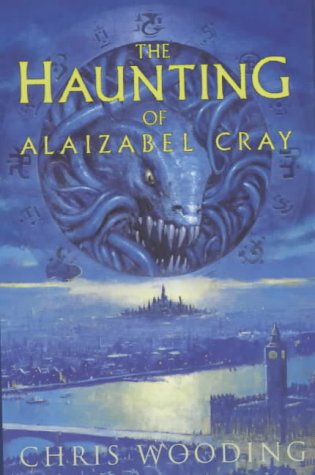
                • Cover of The Haunting of Alaizabel Cray
                  The Haunting of Alaizabel Cray

                  Chris Wooding · standalone novel · 2001

                  similar byeerie19th centuryhorror

                  The Haunting Of Alaizabel Cray (2004) is a Gothic steampunk horror/alternate history novel by Chris Wooding about a young man and an amnesiac girl fighting a cult in an alternate Victorian era London.

                • Cover of The Hunger
                  The Hunger

                  Alma Katsu · standalone novel · 2018

                  similar byeerie19th centuryhorror

                  Fictionalized supernatural/horror treatment of the Donner Party.

                • Cover of The Lost Stradivarius
                  The Lost Stradivarius

                  J. Meade Falkner · standalone novel · 1895

                  similar byeerie19th centuryhorror

                  The Lost Stradivarius (1895), by J. Meade Falkner, is a short horror novel about ghosts and the evil that can be invested in an object, in this case an extremely fine Stradivarius violin. It has been described as "one of Falkner's three celebrated novels" and as a "psychic romance".

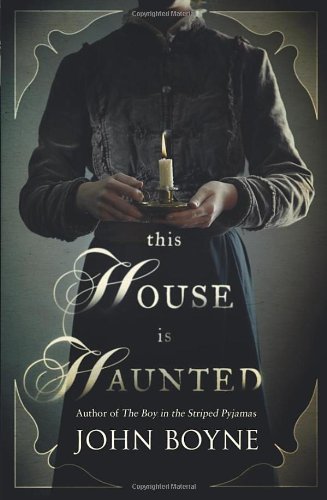
                • Cover of This House Is Haunted
                  This House Is Haunted

                  John Boyne · standalone novel · 2013

                  similar byeerie19th centuryhorror

                  This House Is Haunted is a novel written by Irish novelist John Boyne. It was first published in 2013 by Doubleday.

                • Cover of Where the Dead Wait
                  Where the Dead Wait

                  Ally Wilkes · standalone novel · 2023

                  similar byeerie19th centuryhorror

                  Where the Dead Wait is a 2023 historical, horror and supernatural novel by English writer Ally Wilkes. It is her second novel and was first published in the United Kingdom in December 2023 by Atria Books, a division of Simon & Schuster. The book's working title was What Passes Through.

                • Cover of The Ghost Club
                  The Ghost Club

                  series · 2 books · 2017

                  similar byeerie19th centuryhorrorshort story cycle

                • Cover of The Seance
                  The Seance

                  John Harwood · standalone novel · 2008

                  similar byeerie19th centuryhorror

                  The Seance is a 2008 horror novel by John Harwood. Set in late 19th century London, it follows the story of Constance Langton who in an attempt to make her mother healthy again takes her to a séance only to result in tragic consequences. The Seance won the 2008 Aurealis Award for best horror novel.

                • Cover of My Brother's Keeper
                  My Brother's Keeper

                  Tim Powers · standalone novel · 2023

                  similar byeerie19th centuryhorror

                  This is a ghost story. It is a story about werewolves, and things that go bump in the night. It is a story of an ill-fated land, the pathless moors of Northern England so well chronicled in Wuthering Heights. And it is the story of a real family whose destiny it is to deal with this darkly glamorous and dangerous world. When young Emily Brontë helps a wounded man she finds at the foot of an ancient pagan shrine in the remote Yorkshire moors, her life becomes contentiously entwined with his. He is Alcuin Curzon, embittered member of a sect working to eradicate the resurgent plague of lycanthropy in Europe and northern England. But Emily’s father, curate of the Haworth village church, is responsible for having unwittingly brought a demonic werewolf god to Yorkshire forty years ago—and it is taking possession of Emily’s beloved but foolish and dissolute brother. Curzon must regard Emily’s family as a dire threat. In spite of being at deadly odds, Emily and Curzon find themselves thrown together in fighting werewolves, confronting pagan gods, even saving each other from the lures of moorland demons. And in a final battle that sweeps from the haunted village of Haworth to a monstrous shrine far out on the moors, the two of them must be reluctant allies against an ancient power that seems likely to take their souls as well as their lives.

                • Cover of Weird Women
                  Weird Women

                  series · 2 books · 2020

                  similar byeerie19th centuryhorror+1 more

                • Cover of The Mist in the Mirror
                  The Mist in the Mirror

                  Susan Hill · standalone novel · 1992

                  similar byeerie19th centuryhorror

                  The Mist in the Mirror: A Ghost Story is a novel by Susan Hill. The novel is about a traveller called Sir James Monmouth and his pursuit of an explorer called Conrad Vane.

                • Cover of Rappaccini
                  Rappaccini

                  series · 2 books · 1844

                  completed

                  similar byeerie19th centuryhorror

                • Cover of The Collected Fiction of William Hope Hodgson
                  The Collected Fiction of William Hope Hodgson

                  series · 6 books · 1907

                  completed

                  similar byeeriehorror+2 more

                • Cover of Twilight Zone Collections
                  Twilight Zone Collections

                  series · 8 books · 1960

                  part of Twilight Zone

                  similar byeerieshort story cycle+1 more

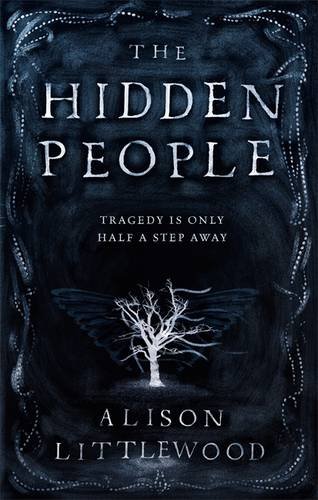
                • Cover of The Hidden People
                  The Hidden People

                  Alison Littlewood · standalone novel · 2016

                  similar byeerie19th centuryhorror

                  The Hidden People is a historical fantasy and horror novel by English writer Alison Littlewood, first published in October 2016 in the United Kingdom by Jo Fletcher Books. It is based on the 1895 incident in County Tipperary, Ireland, where Bridget Cleary was burnt alive by her husband, who believed she was a fairy changeling.

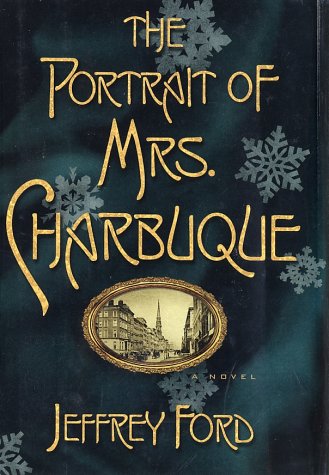
                • Cover of The Portrait of Mrs. Charbuque
                  The Portrait of Mrs. Charbuque

                  Jeffrey Ford · standalone novel · 2002

                  similar byeerie19th centuryhorror

                  "The toast of 1893 New York society, the portraitist Piero Piambo has his pick of choice assignments. Acclaimed by his peers and his "betters," he is a fixture in the city's most opulent salons, yet he fears he has sold his soul to arrive there. But then comes a commission unlike any other - one that will test Piambo's talents, his will .. and his sanity.". "The client is a Mrs. Charbuque, and the offer she makes to the artist is as bizarre and intriguing as it is financially rewarding. Piambo must paint the lady's portrait, and for the service he may name any price. However, though he may question her at length on any topic, he must never look upon his subject. And if the painting ends up a true likeness, his payment will be doubled.". "With sketchbook in hand and his "model" hidden behind an elegant screen, the artist begins his haunting descent into her life and mind. Carried by her words through a strange childhood in a world of ice - where she aided an obsessed, perhaps murderous, father in his study of the divine language of snowflakes - and across a history marked by fame and despair, desire and rage, phantasm and myth, Piambo is alternately seduced and repulsed by the story she has to tell. Yet each session leaves him more determined than ever to unwrap the enigma that is Mrs. Charbuque.". "But while he struggles to capture in oils the face of a woman he has never seen, a series of horrific and inexplicable deaths rocks the outside city. On street corners, in the alleys off the bustling shopping areas, and between the crumbling tenements, anonymous women are dying, their lifeblood flowing freely like tears from their eyes. And the deeper Piambo is drawn into Mrs. Charbuque's world, the more he begins to suspect that these terrible events, his impossible task, and his odd "benefactress" are somehow intimately connected."--BOOK JACKET.

                • Cover of The Wolf in the Garden
                  The Wolf in the Garden

                  Alfred H. Bill · standalone novel · 1931

                  similar byeerie19th centuryhorror

                  From the publisher of the 1972 reprint edition: "A series of bizarre and horrifying events besiege the village of New Dortrecht with the advent of the French Comte de Saint Loup and his hound DeRetz. A giant wolf, possessed with evil intelligence and savage fury, sates its desire for blood in a series of horrifying and supernatural killings."

                • Cover of Melmoth
                  Melmoth

                  series · 9 books · 1820

                  completed

                  similar byeeriehorror19th century

                • Cover of The House on the Borderland
                  The House on the Borderland

                  William Hope Hodgson · standalone novel · 1908

                  similar byeeriehorror

                  The House on the Borderland (1908) is a supernatural horror novel by British fantasist William Hope Hodgson. The novel is a hallucinatory account of a recluse's stay at a remote house, and his experiences of supernatural creatures and otherworldly dimensions.

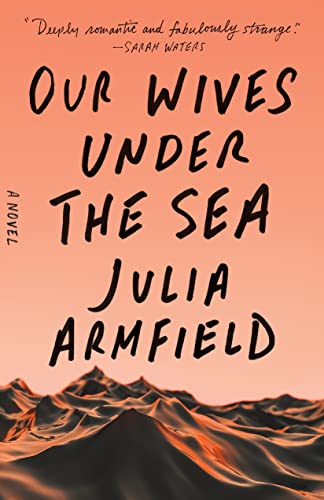
                • Cover of Our Wives Under the Sea
                  Our Wives Under the Sea

                  Julia Armfield · standalone novel · 2022

                  similar byeeriehorrorliterary & general

                  Our Wives Under the Sea is a 2022 British horror novel by Julia Armfield. It was Armfield's debut novel. The novel's story follows a married lesbian couple who become distant after one of them returns from a disastrous deep-sea dive. It received positive reviews from critics.