More like Quest System
anchored on:litrpgour worldscience fiction
but
- Kairos
series11 books1962
completed
similar byscience fiction+3 more
The Time Quintet is a science fantasy series of five young adult novels written by American author Madeleine L'Engle and made up of A Wrinkle in Time (1962), A Wind in the Door (1973), A Swiftly Tilting Planet (1978), Many Waters (1986), and An Acceptable Time (1989).
- Watership Down
series21 books1972
completed
similar byadventurousquestssurvivalcontemporaryour world
Watership Down is Richard Adams's 1972 novel following a group of rabbits who flee the destruction of their warren and cross the English countryside of Hampshire in search of a new home, developing over the journey a full rabbit culture of language, proverbs, and mythology. Adams returned to the same world in 1996 with Tales from Watership Down, a collection of nineteen short stories mixing rabbit folklore with further adventures of characters from the novel.
- Stephen King multiverse
universe46 books1967
Start hereThe Gunslinger · Start here
similar by+2 more
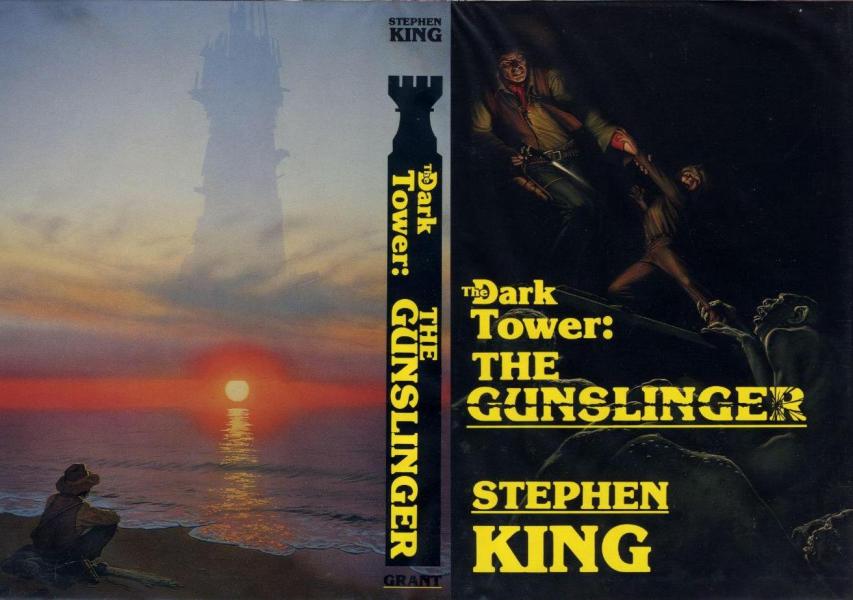
The man in black fled across the desert, and the gunslinger followed. So begins the long walk of Roland Deschain, last of an order of knight-errant pistoleers, across a land that has "moved on" — where the compass points drift, dead machines rot toward sentience, and the weave of what's real wears thin. His quest is the Dark Tower itself: a spire standing at the hub of every world that exists, the linchpin that holds all of them back from ruin. Roland's road runs eight volumes, from The Gunslinger through the closing Dark Tower, with the later, interleaved tale The Wind Through the Keyhole folding a story-within-a-story back into his youth. Along the way he draws a ka-tet — a fellowship bound by fate, not choosing — through doorways between worlds: a heroin-shackled New Yorker, a woman of two minds, a boy who dies twice. The Tower is also the secret axle around which the wider shelf of King's work turns; threads from The Stand, 'Salem's Lot and beyond wind quietly toward it. Expect a mongrel of Western, high fantasy, horror and decayed science fiction, told in a dusty, incantatory dialect all its own — ka, thankee-sai, the world that has moved on. This is King at his most mythic and most personal, a decades-spanning circle that rewards a patient reader. Begin at the beginning: The Gunslinger, then walk forward in publication order. There are other worlds than these — but this door opens first.
- Footfall
Larry Niven & Jerry Pournellestandalone novel1985
similar byour worldsurvivalcontemporaryscience fiction+1 more
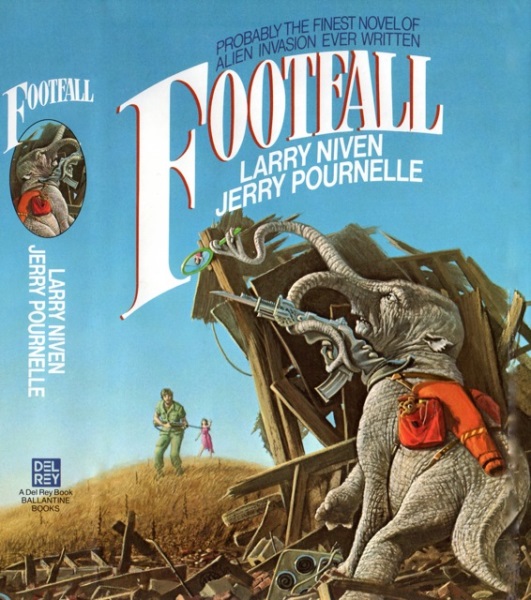
When aliens travel to Earth from Alpha Centauri, differences between alien and human psychology result in an unprovoked invasion, and the resulting resistance results in the aliens' use of a devastating weapon.
- TimeRiders
series9 books2010
similar byadventuroussurvivalour worldscience fiction+1 more
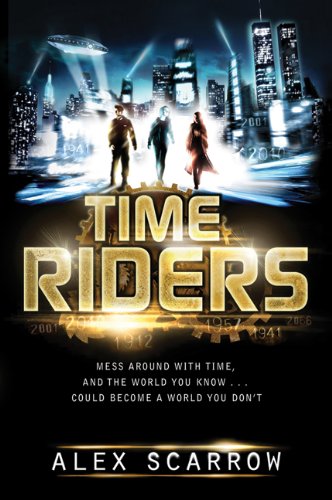
TimeRiders is a series of teen science fiction novels written by Alex Scarrow. The series consists of nine books and is published by Puffin Books.
- Richard Forthrast
series2 books2011
similar byour worldscience fiction+2 more
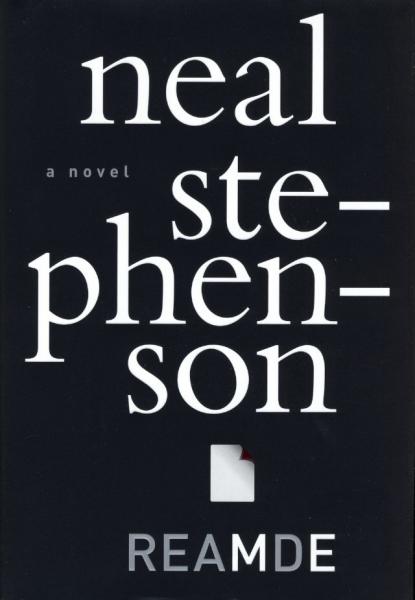
Neal Stephenson's Richard 'Dodge' Forthrast novels open with Reamde, a globe-spanning thriller that starts when ransomware inside an MMORPG economy pulls Richard's extended family into a real-world hostage crisis involving hackers, jihadists and Russian mobsters. The sequel Fall; or, Dodge in Hell shifts registers entirely, following Richard's digitally preserved mind after death into an afterlife simulation built from his scanned brain. The two books share a protagonist and family but differ sharply in genre and scale.
- Jack West, Jr.
series7 books2005
similar byour worldcontemporary+2 more
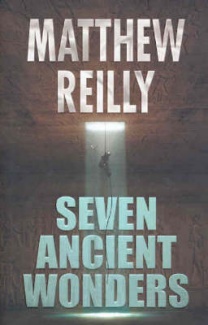
Matthew Reilly's Jack West Jr. series opens with Seven Ancient Wonders (2005), an action-adventure thriller sending Jack West Jr. on a globe-spanning hunt tied to the ancient wonders of the world. The series continues its countdown structure through The Six Sacred Stones and five further novels, ending with The One Impossible Labyrinth (2021).
- His Dark Materials Universe
universe13 books1995
Start hereHis Dark Materials · Start here
similar byadventurous+2 more
In a world like ours and unlike it, every human soul walks outside the body in the shape of an animal — a daemon, who speaks, who cannot be lied to, and who settles into one fixed form only when childhood ends. This is the country of His Dark Materials: a company of parallel worlds across which an invisible dust of consciousness drifts down upon the waking mind; where a Church that calls itself the Magisterium would sooner sever a child's soul than let that Dust be understood; and where a golden instrument, the alethiometer, answers true questions for anyone with the patience to read it. Philip Pullman's design stands in two trilogies and a scatter of shorter tales. His Dark Materials — Northern Lights (published in America as The Golden Compass), The Subtle Knife, and The Amber Spyglass — carries Lyra Belacqua from the rooftops of a shadow Oxford across the borders between worlds. The Book of Dust returns to that same territory: La Belle Sauvage looks back to Lyra as an infant carried through a great flood, while The Secret Commonwealth follows her grown and less certain into adulthood, with a concluding volume closing the arc. Around them sit slim companion books — Lyra's Oxford, Once Upon a Time in the North, Serpentine — and Nicholas Wright's stage adaptation, made with Pullman's blessing. The register is grave and luminous at once, its title lifted from Milton and its quarrel drawn from Blake: a story that takes the side of curiosity, love, and the physical world against any authority that would forbid them. It reads as adventure — armoured bears, aeronauts, knife-cut windows between skies — yet reasons like philosophy. Begin with Northern Lights / The Golden Compass and read the first trilogy through before turning to The Book of Dust, which deepens everything the first has already made you feel.
- Micro
Michael Crichton & Richard Prestonstandalone novel2011
similar byour worldsurvivalcontemporaryscience fiction+1 more
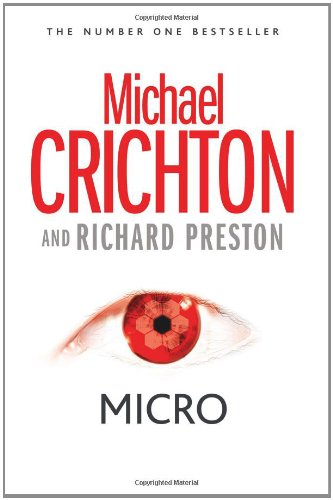
Micro is a techno-thriller novel by Michael Crichton, the seventeenth under his own name and second to be published after his death, published in 2011. Upon his death in 2008, an untitled, unfinished manuscript was found on his computer, which would become Micro. Publisher HarperCollins chose science writer Richard Preston to complete the novel from Crichton's remaining notes and research, and it was finally published in 2011. Micro followed the historical thriller Pirate Latitudes, which was also found on his computer and published posthumously in 2009.
- Maximum Ride
series12 books2005
similar byadventuroussurvivalour worldscience fiction+1 more
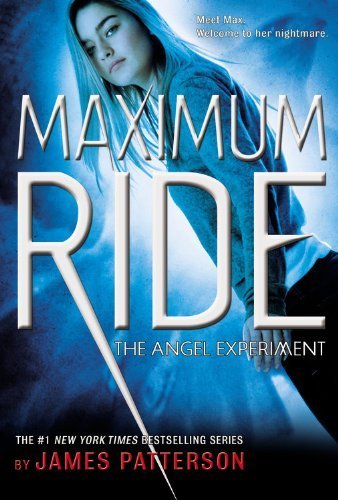
Maximum Ride is a series of young adult science fantasy novels by American author James Patterson. The series centers on the adventures of Maximum "Max" Ride and her family, called the Flock, who are winged human-avian hybrids created at a lab called The School. The series was inspired by Patterson's earlier novels When the Wind Blows and The Lake House, which were intended for older readers.
- Bromeliad
series3 books1989
completed
similar byadventurousour worldsurvivalcontemporary+1 more
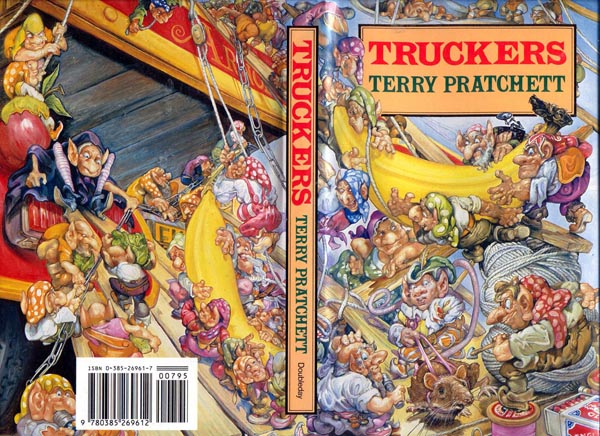
The Nome Trilogy, also known as The Bromeliad, is a trilogy of children's books by British writer Terry Pratchett, consisting of the books Truckers (1989), Diggers (1990) and Wings (1990). The trilogy tells the story of the Nomes, a race of tiny people from another world who now live hidden among humans. Through the books they struggle to survive in the human world and, once they learn of their history from an artefact known as "The Thing", make plans to return home.
- Artemis Fowl
series15 books2001
similar byadventurouscontemporaryour world
Artemis Fowl is a series of eleven fantasy novels by Irish author Eoin Colfer, revolving around various members of the Fowl family. The first cycle, the Artemis Fowl series, consists of eight books, and the second cycle, The Fowl Twins series, is a trilogy. Both releases have received commercial success and positive critical reception in the children's literature genre, and also originated graphic novel adaptations. As of 2013, the novels have sold more than 21 million copies in 44 languages, and are one of the best-selling series of all time. In 2010, Artemis Fowl was voted by readers as their favorite Puffin Books title of all time.
- Infinity Ring
series8 books2012
similar byadventurousour worldscience fiction+2 more
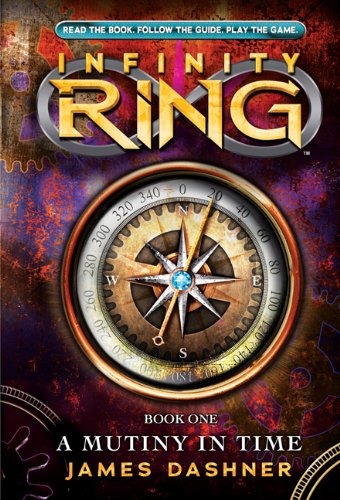
Infinity Ring is a series of young adult science fiction adventure novels written by multiple authors, including James Dashner, Lisa McMann, Matt de la Peña, Matthew J. Kirby, and Jennifer A. Nielsen, in a similar fashion to The 39 Clues. It is focused on the adventures of Dak Smyth, Sera Froste, and Riq Jones as they try to fix changes in time through time travel.
- Rats of NIMH
series3 books1971
similar byadventurousour worldsurvivalcontemporary+1 more
Robert C. O'Brien's Mrs. Frisby and the Rats of NIMH follows a widowed mouse seeking help to save her sick son and her home from a farmer's plow, turning to a colony of rats who escaped laboratory experiments at the National Institute of Mental Health with enhanced intelligence and a literate, technological society of their own. After O'Brien's death, his daughter Jane Leslie Conly continued the story in Racso and the Rats of NIMH, in which a city rat joins the colony ahead of a flood, and R-T, Margaret, and the Rats of NIMH, in which the rats rescue and are helped by lost human children. All three carry forward the original's interest in community, responsibility, and the costs of intelligence.
- The Change / The Event
series41 books1998
similar byadventurousscience fictionpost-apocalyptic+2 more
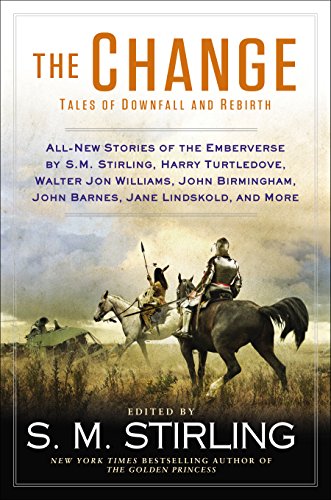
The Change: Tales of Downfall and Rebirth is a shared-world anthology of stories set in the years right after a mysterious global event instantly disables gunpowder, electricity, and combustion engines, the founding premise of S. M. Stirling's Emberverse. Sixteen different authors, coordinated by Stirling, each contribute stories set in various corners of the suddenly de-industrialized world as survivors scramble to rebuild. It's a companion volume to the Change/Emberverse novels rather than a novel itself.
- Minecraft
universe207 books2014
Start hereThe Island · Start here
similar by+1 more
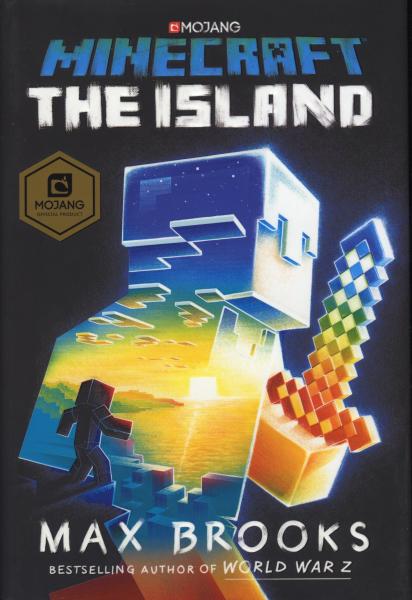
The sun is going down, and you have no walls. Somewhere in the dark a green thing is walking toward you on four stubby legs, and it does not stop and it does not speak, and when it reaches you it will hiss. So you dig. You punch wood from a tree, shape it into planks, stack the planks into a box just big enough to outlast the night — and in the morning the world is yours again, cubic and endless and waiting to be reshaped one block at a time. This is the Overworld: squared-off oceans, blocky hills, deep glittering mines, and beyond them the burning Nether and the floating void of the End, where everything can be broken down and built back into something else. The books that grow from it come in two very different sizes. On one shelf sits Mojang's own line — standalone novels like Max Brooks' tale of a castaway learning the island's rules the hard way, the monster-hunting Mob Squad, the illustrated Woodsword Chronicles, and rack on rack of official handbooks. Against it surges a whole cottage industry of unofficial "Minecrafter" fiction for young readers: the diary-comic misadventures of Diary of a Minecraft Zombie and The Creeper Diaries, Winter Morgan's brisk quest tales, and Mark Cheverton's Gameknight999 saga of a boy trapped inside the game. No single timeline binds them; each series keeps its own. What holds it together is not a plot but a place, and a feeling — the small triumph of surviving one more night, the itch to see past the next ridge, the freedom to build the thing you pictured. Newcomers wanting a story with a spine should start with Max Brooks' The Island, self-contained and quietly clever; younger readers chasing laughs can drop into Diary of a Minecraft Zombie or Woodsword Chronicles at book one. Beyond that, pick a mine and start digging.
- Needle
series2 books1950
completed
similar byadventuroussurvivalour worldscience fiction+1 more
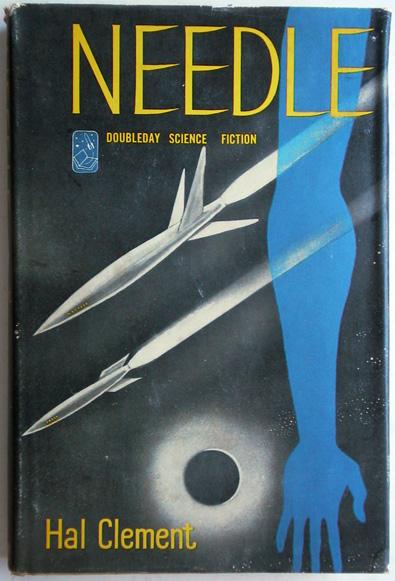
Hal Clement's Needle follows an alien detective nicknamed the Hunter, a shapeless symbiotic being that can live inside a host body, as it crash-lands on Earth pursuing a fugitive of its own kind and takes refuge inside an American teenager, Robert Kinnaird. Together the mismatched pair must learn to communicate and cooperate, first to survive and later to track down the second alien, which has hidden inside another human in the same Pacific island community. The sequel, Through the Eye of a Needle, published nearly three decades later, continues the Hunter's story.
- Dust to Dust
Heather Grahamstandalone novel2009
similar byadventurousour worldquestscontemporarypost-apocalyptic+1 more
(Prophecy #1) Not long ago, Scott Bryant would have described himself as an ordinary guy. But one act of heroism has changed his life forever--or at least until the apocalypse occurs. Because the end of the world is on its way.Suddenly and inexplicably possessed of superhuman strength, Scott finds himself allied with the enigmatic and alluring Melanie Regan in a quest to find the mysterious Oracle in hopes of averting the absolute destruction that threatens. Melanie herself has been falling into trances, sketching terrifying visions of future events--and she wants answers. She knows better than Scott where to look for help, but even she cannot fathom the powers that have thrust them together in an epic battle of good against evil. The earth itself will soon turn against its inhabitants, and now mortal and immortal must join forces if any are to survive.
- Five Children Universe
series27 books1902
completed
similar by+3 more
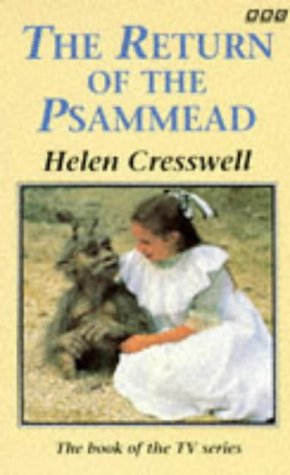
Two separate modern continuations of E. Nesbit's Psammead stories were written decades apart by different authors: Helen Cresswell's The Return of the Psammead (1992) brings the wish-granting sand fairy back for a new set of children, while Kate Saunders's Five Children on the Western Front (2014) follows the now-grown Lamb and his siblings as the First World War arrives, in a more somber sequel to Nesbit's original trilogy. Neither book is by Nesbit herself, and the two have no direct connection to each other beyond both drawing on her creation. Later writers have kept returning to Nesbit's premise long after her own trilogy ended.
- H. G. Wells' War of the Worlds
universe65 books1898
Start hereThe War of the Worlds · Start here
similar byscience fiction+1 more
No one would have believed, in the closing years of the nineteenth century, that human affairs were being watched keenly and closely from the timeless worlds of space. And then the cylinders fell. H. G. Wells' War of the Worlds opens in the quiet of the Surrey commons, where a falling star proves to be the first Martian craft — and from the pit rise the towering tripods, the Heat-Ray, the choking Black Smoke and the creeping red weed, wielded by minds that regard mankind much as we regard the creatures we boil for supper. This is invasion rendered as natural disaster: cold, methodical, and vast beyond argument. Wells' 1898 novel is the seed; everything else grows from that Martian soil. The catalogue gathers direct sequels and continuations alongside a wide field of other hands. In War of the Worlds: Global Dispatches the invasion is retold across the whole planet through the eyes of Twain, Verne, Tolstoy, Lowell and Kipling; in the Manly Wade and Wade Wellman crossover, Sherlock Holmes, Watson and Professor Challenger take the field against the machines; and Scott Washburn's Great Martian War stretches the fighting into a decades-long alternate history of steam, artillery and grinding attrition. It is a loose shared world — no single decreed sequence, many voices answering one calamity. What sets this world apart is its refusal of heroics: the invaders fall not to generals but to the smallest things of Earth, humbling and indifferent. Begin, always, with Wells' original novel — it is short, and it is the ground every later book stands upon. From there follow your appetite: Global Dispatches for the panorama, the Holmes campaign for adventure, Washburn for the long war.