Loreful
HomeDiscover
Search series, authors…⌘K
Loreful

Reading orders for SF/F series and shared universes — with your place kept in every one.

Explore

UniversesSeriesWorksAuthorsAtlas

Help

FAQAboutSite map

Account & legal

Sign inCreate accountPrivacyTerms

Data

Built on ISFDB, Wikipedia, Wikidata and Open Library. Curated reading orders carry their reasoning on the page; the rest follow publication order. Data sources & licenses

© Loreful · data: ISFDB · CC BY

More like Quicksilver

anchored on:historical fictioneuroperenaissance and early modernliterary & generalpolitical intriguebritish isles+3 more

but

Mood

The mood the book leaves you in.

  • The reading experience is propelled by journeys, exploration, and physical risk; excitement and forward momentum dominate over dread or introspection.
  • Joy and loss are deliberately mixed; the resolution grants characters something real while taking something else away, leaving warmth and sorrow together.
  • The book demands work from the reader — dense prose, difficult structure, unfamiliar ideas, or morally uncomfortable material — as part of its intended effect.
  • Grim events, cruelty, or despair dominate the atmosphere, and the book does not soften them with comfort or comic relief.
  • The atmosphere is quietly unsettling — wrongness, unease, and the uncanny pervade the book without necessarily escalating into overt horror.
  • The book is built to move the reader; character feeling is foregrounded and major scenes aim at a strong emotional response.
  • Humor is a primary aim and the prose plays for laughs — comic situations, wit, or dialogue produce sustained comedy, not occasional levity.
  • The book insists that things can improve; effort and decency are shown to matter, and the arc bends toward better outcomes even through hardship.
  • The book teaches as it goes — real facts, history, science, or craft are conveyed in enough depth that learning is part of the reading experience.
  • The book is designed to uplift and motivate, presenting perseverance or achievement in a way that invites the reader to aspire or act.
  • The overall register is cheerful and easygoing; stakes are kept gentle and the book avoids dwelling on pain or dread.
  • Withheld information drives the experience; the book sustains enigmas and secrets the reader wants resolved, whatever its genre.
  • The book is contemplative and inward-looking, giving more weight to thought, memory, and meaning than to external events.
  • The book works as comfort reading — low tension, a soothing pace, and an atmosphere the reader can unwind in.
  • Grief, loss, or melancholy set the dominant register, and the book lets sorrow stand rather than resolving it into comfort.
  • Sustained suspense is the point; the book keeps the reader braced for what happens next through danger, pressure, or impending revelation.
  • Playful invention and charm define the register — fanciful conceits, light absurdity, and a narration that delights in its own oddity.

About

What the story runs on.

  • Stories in which extraterrestrial beings are central — as characters, cultures, or the object of the plot.
  • Stories about venturing into space to explore — survey missions, astronauts, and the frontier of the unknown beyond Earth.
  • Stories structured as a quest — a journey undertaken to find, deliver, or destroy something of great import.
  • Stories in which staying alive against nature, catastrophe, or scarcity is the central problem.
  • Stories of growing up — a young protagonist crossing from childhood into adult knowledge and responsibility.
  • Stories about who a character truly is — self-discovery, doubled lives, and the search for a self.
  • Stories about mourning — living through the death of a loved one and what loss does to the survivors.
  • Stories in which a buried family truth — hidden parentage, crimes, or shames — surfaces and reorders the present.
  • Stories driven by maneuvering for power — factions, conspiracies, and statecraft conducted in shadow.
  • Stories about rising against rulers — uprisings, resistance movements, and revolutions and their aftermaths.
  • Stories in which war itself is the subject — combat, occupation, and what warfare does to soldiers and civilians.
  • Stories organized around investigating a killing — the case, the clues, and the pursuit of the killer, in any genre's clothing.

Shelf

Where it sits in the library.

    • Fiction built on magic or other supernatural elements that have no scientific explanation.
    • Secondary-world fantasy at large scale, where the fate of nations or the world turns on the protagonists' struggle.
    • Fantasy set in a recognizably modern city or contemporary world where the supernatural intrudes on everyday life.
    • Fantasy that blends in horror's atmosphere and imagery, keeping a fantastical frame around grim or frightening material.
    • Action-driven fantasy following warriors or rogues with personal stakes against sorcerous threats, rather than world-spanning conflicts.
    • Fantasy set in a real historical period or a close analogue of one, with magic woven into the era.
    • Fantasy in which protagonists cross from the ordinary world into another world through a portal or similar passage.
    • Fiction that retells or reworks a traditional fairy tale in a new form or setting.
    • Fantasy drawing directly on myths, legends, and folklore, retelling them or building on their figures and logic.
    • Fantasy of ghosts, vampires, shapeshifters, psychics, and similar phenomena, usually set in an otherwise ordinary world.
    • Fiction mixing science-fictional trappings with overtly magical or impossible elements in one setting.
    • Low-stakes fantasy emphasizing comfort, community, and everyday pleasures over conflict and peril.
    • Speculative fiction of pervasive moral ambiguity, violence, and cynicism that rejects heroic conventions — fantasy and SF alike.
      • Fiction that extrapolates from science and technology — future societies, space travel, or speculative inventions — within at least nominally natural laws.
      • Science fiction of interstellar scope — starships, galactic polities, and adventure across star systems.
      • Science fiction committed to scientific rigor, where technical plausibility constrains the story.
      • Science fiction centered on armed forces and warfare, told largely from a military point of view.
      • Science fiction of networked, corporate-dominated near futures, pairing high technology with social decay.
      • Science fiction styled on nineteenth-century steam-powered technology, often in a Victorian or pseudo-Victorian setting.
      • Fiction depicting an oppressive or catastrophic society, presented as a warning.
      • Fiction set after civilization's collapse, following survivors in the ruins of the old world.
      • Fiction in which characters move between past and future, and the mechanics or consequences of that travel drive the plot.
      • Fiction exploring a world where a historical event went differently and history diverged from ours.
      • Science fiction about humanity's first encounter and communication with an alien intelligence.
      • Science fiction in which extraterrestrial forces attack or occupy Earth and humanity resists.
      • Fiction whose primary aim is to frighten or unsettle the reader through dread, menace, or the monstrous.
      • Horror of vast, indifferent, incomprehensible entities before which humanity is insignificant, in the Lovecraft tradition.
      • Horror of decaying houses, buried family secrets, and oppressive atmosphere in the Gothic literary tradition.
      • Horror centered on hauntings and the returning dead.
      • Horror located in the mind — paranoia, obsession, and unreliable perception rather than external monsters.
      • Horror built around the reanimated dead and survival amid their outbreaks.
      • Horror defined by explicit, transgressive gore that refuses to cut away from violence.
      • Speculative fiction of the strange and uncanny that resists both natural explanation and standard genre categories.
      • Fiction organized around solving a crime or puzzle, typically following an investigator toward the identification of a culprit.
      • A puzzle-first mystery that lays out clues so the culprit's identity can be deduced before the reveal.
      • Crime fiction of moral ambiguity, fatalism, and hard-edged style, set among the corrupt and the doomed.
      • A mystery following the realistic routines of police work — forensics, interviews, and case-building.
      • A gentle mystery with an amateur sleuth, a small community, and violence kept off the page.
      • A mystery set in a past era, where the investigation works within that period's methods and society.
      • Fast-paced fiction driven by imminent danger, pursuit, or high-stakes conspiracy, built to sustain tension.
      • A thriller of espionage — agents, tradecraft, and intelligence services in conflict.
      • A thriller centered on lawyers and the courtroom, where litigation carries the suspense.
      • A thriller driven by detailed contemporary or near-future technology, often military or scientific.
      • A thriller whose tension comes from mental states and manipulation between characters rather than external action.
      • Fiction whose central plot is a romantic relationship and its development toward an emotionally satisfying resolution.
      • Romance in which one or both partners are supernatural beings, blending fantasy elements into the love story.
      • A fantasy-romance hybrid in which the romantic arc and the fantasy plot carry equal weight.
      • Romance set in a past era, with courtship shaped by the period's society and manners.
      • Romance set in the present day, without supernatural or historical elements.
      • Fiction set in a real past period, where the historical setting materially shapes characters and events.
        • General and literary fiction emphasizing prose style, character interiority, or formal ambition over genre plot conventions.
        • Fiction in a realistic world where magical events occur and are treated as ordinary, in the tradition of Latin American literature.
        • Fiction that ridicules people, institutions, or society in order to criticize them.
        • Fiction of dreamlike, irrational imagery and logic that breaks from realistic representation.
        • Fiction that plays with narrative convention through metafiction, fragmentation, and self-reference.
        • Fiction propelled by journeys, exploration, and physical peril, where action and survival carry the plot.
        • Adventure fiction of ships and seafaring — naval engagements, voyages, and life at sea.
        • Fiction of the American frontier West — gunmen, ranchers, and lawmen, typically in the late nineteenth century.
        • Fiction centered on soldiers, campaigns, and the experience of warfare, historical or imagined.
          • Fiction written primarily to amuse, using comedic situations, wit, or parody as its organizing principle.
            • Multi-generational fiction following a family or dynasty across decades, with inheritance and kinship as the through-line.
              • Fiction whose world runs on explicit game mechanics — levels, stats, and skills that characters can see and exploit.
                • Fiction about costumed or superpowered heroes and their conflicts with comparable villains.

                Practical

                How long a commitment, whether it stands alone, and whether it has finished.

                Tap a chip to ask for it · tap again to rule it out · once more to clear. Numbers show what would be left.

                • Cover of Gravity's Rainbow
                  Gravity's Rainbow

                  Thomas Pynchon · standalone novel · 1973

                  similar bypolitical intriguechallengingeuropemultiple povliterary & generalbritish isles+2 more

                  Gravity's Rainbow is a 1973 postmodern novel by Thomas Pynchon. The narrative is set primarily in Europe at the end of World War II and centers on the design, production and dispatch of V-2 rockets by the German military. In particular, it features the quest undertaken by several characters to uncover the secret of a mysterious device, the Schwarzgerät, which is slated to be installed in a rocket with the serial number "00000".

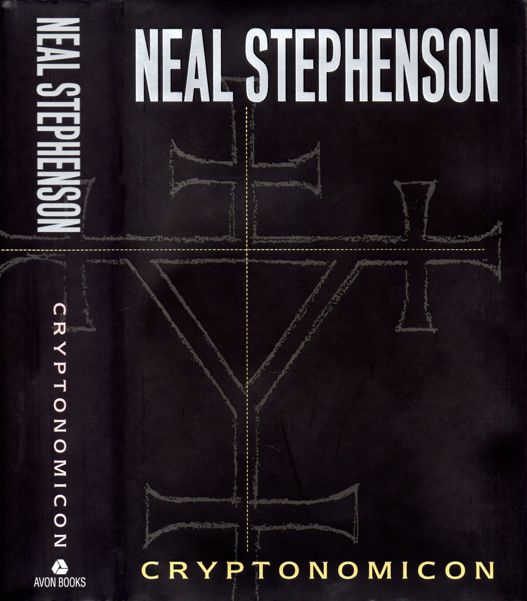
                • Cover of Cryptonomicon
                  Cryptonomicon

                  Neal Stephenson · standalone novel · 1999

                  similar bychallenginginformativemultiple povhistorical fictioneurope+1 more

                  There are two main timelines in this novel. This first is during World War II, and follows the lives of three cryptologists: Lawrence Pritchard Waterhouse (American), Alan Turing (British), and Rudolf von Hacklheber (German), as well as the strange exploits of Detachment 2702. The second timeline takes place during the present, filled with the offspring of the main characters in the first timeline. They are preoccupied with the construction of a data haven.

                • TB
                  The Baroque Cycle

                  series · 11 books · 2003

                  similar byrenaissance and early modernhistorical fictioneurope+4 more

                  The Baroque Cycle is a series of novels by American writer Neal Stephenson. It was published in three volumes containing eight books in 2003 and 2004. The story follows the adventures of a sizable cast of characters living amidst some of the central events of the late 17th and early 18th centuries in Europe, Africa, Asia, and Central America. Despite featuring a literary treatment consistent with historical fiction, Stephenson has characterized the work as science fiction, because of the presence of some anomalous occurrences and the work's particular emphasis on themes relating to science and technology. The sciences of cryptology and numismatics feature heavily in the series, as they do in some of Stephenson's other works.

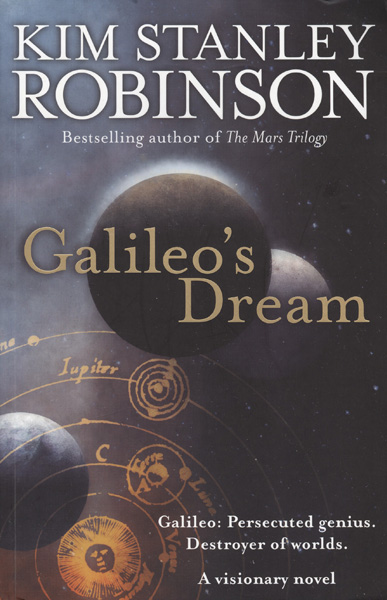
                • Cover of Galileo's Dream
                  Galileo's Dream

                  Kim Stanley Robinson · standalone novel · 2009

                  similar byrenaissance and early modernchallenginghistorical fictioneuropescience fiction+1 more

                  Galileo's Dream (2009) is a science fiction novel with elements of historical fiction, written by Kim Stanley Robinson. In the book, 17th-century scientist Galileo Galilei is visited by far-future time travelers living on the Galilean moons of Jupiter. Italicized portions of text within the novel are "mostly from Galileo's writing or that of his contemporaries."

                • Cover of Against the Day
                  Against the Day

                  Thomas Pynchon · standalone novel · 2006

                  similar bypolitical intriguechallenginghistorical fictionmultiple povliterary & generaleurope+1 more

                  Against the Day is an epic historical novel by Thomas Pynchon, published on November 21, 2006. The narrative takes place between the 1893 Chicago World's Fair and the time immediately following World War I and features more than 280 characters spread across the United States, Europe, Mexico, Central Asia, Africa and, according to the book jacket blurb written by Pynchon, "one or two places not strictly speaking on the map at all." Like its predecessors, Against the Day is an example of historiographic metafiction or metahistorical romance. At 1,085 pages, it is the longest of Pynchon's novels to date.

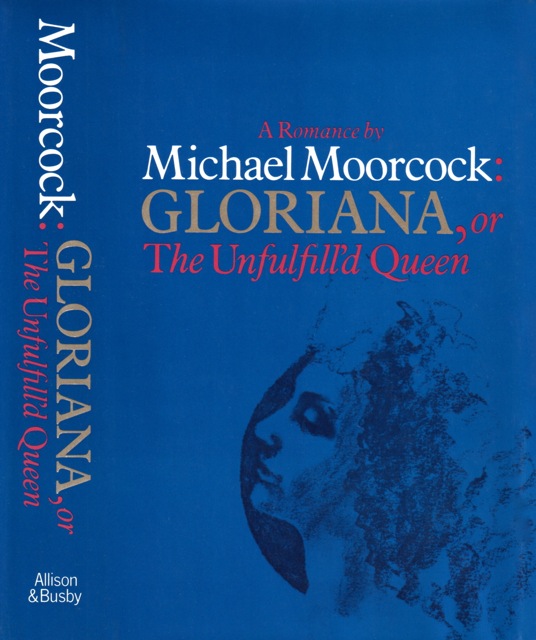
                • Cover of Gloriana, or, the Unfulfill'd Queen
                  Gloriana, or, the Unfulfill'd Queen

                  Michael Moorcock · standalone novel · 1978

                  similar byrenaissance and early modernpolitical intrigueliterary & generalbritish isleshistorical fantasy+1 more

                  Gloriana, or The Unfulfill'd Queen is a work of literary fantasy by British novelist Michael Moorcock. It was first published in 1978 and has remained in print ever since.

                • Cover of The Alteration
                  The Alteration

                  Kingsley Amis · standalone novel · 1976

                  similar byrenaissance and early modernpolitical intrigueeuropescience fiction+2 more

                  The Reformation does not take place, Martin Luther becomes pope, Italy never unites…

                • Cover of Ruled Britannia
                  Ruled Britannia

                  Harry Turtledove · standalone novel · 2002

                  similar byrenaissance and early modernpolitical intrigueart and artistshistorical fictionbritish islesscience fiction

                  Ruled Britannia is an alternate history novel by Harry Turtledove, first published in hardcover by New American Library in 2002.

                • EO
                  Eloisa: Or, a Series of Original Letters

                  Jean-Jacques Rousseau · standalone novel · 1761

                  similar byrenaissance and early modernpolitical intrigueeuropeclass conflictliterary & generalbritish isles

                  The love between Julie d'Étange and her private teacher St Preux, made impossible because of their relative stations, leads to a dead-end. Julie eventually marries old M. de Wolmar, who acquaints them with his Utopian estate, characteristic of the Age of enlightenment.

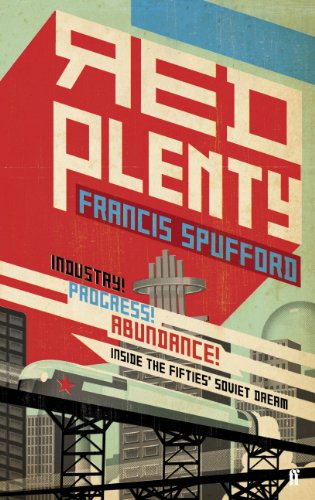
                • Cover of Red Plenty
                  Red Plenty

                  Francis Spufford · standalone novel · 2010

                  similar bypolitical intriguehistorical fictionclass conflictmultiple povliterary & general+1 more

                  Red Plenty is a 2010 book by Francis Spufford on the Soviet economy of the 1950s and 1960s. A mix of history and fiction, the book approaches this topic through the viewpoints of more than a dozen characters, interspersed with essays. Most of the characters are involved in efforts to make the Soviet economy function better.

                • Cover of Lent
                  Lent

                  Jo Walton · standalone novel · 2019

                  similar byrenaissance and early modernpolitical intrigueeuropeliterary & generalhistorical fantasy

                  "Young Girolamo's life is a series of miracles. It's a miracle that he can see demons, plain as day, and that he can cast them out with the force of his will. It's a miracle that he's friends with Pico della Mirandola, the Count of Concordia. It's a miracle that when Girolamo visits the deathbed of Lorenzo "the Magnificent," the dying Medici is wreathed in celestial light, a surprise to everyone, Lorenzo included. It's a miracle that when Charles VIII of France invades northern Italy, Girolamo meets him in the field, and convinces him to not only spare Florence but also protect it. It's a miracle than whenever Girolamo preaches, crowds swoon. It's a miracle that, despite the Pope's determination to bring young Girolamo to heel, he's still on the loose...and, now, running Florence in all but name. That's only the beginning. Because Girolamo Savanarola is not who--or what--he thinks he is. He will discover the truth about himself at the most startling possible time. And this will be only the beginning of his many lives." - publisher

                • Cover of Cloud Atlas
                  Cloud Atlas

                  David Mitchell · standalone novel · 2004

                  similar bychallengingmultiple povhistorical fictionliterary & generalbritish islesscience fiction

                  Cloud Atlas, published in 2004, is the third novel by British author David Mitchell. The book combines metafiction, historical fiction, contemporary fiction and science fiction, with interconnected nested stories in different writing styles that take the reader from the remote South Pacific in the 19th century to the island of Hawaii in a distant post-apocalyptic future. Its title references a piece of music by Toshi Ichiyanagi.

                • Cover of The Malacia Tapestry
                  The Malacia Tapestry

                  Brian W. Aldiss · standalone novel · 1976

                  similar byrenaissance and early modernpolitical intrigueclass conflicthistorical fantasy+1 more

                  The Malacia Tapestry is a fantasy-historical novel by British writer Brian Aldiss, published in 1976. The story takes place in a fictional port city called Malacia, which is an alternate history version of a Renaissance city-state. It tells the story of a poor young actor named Perian de Chirolo who hopes to change his station in life so he can marry a wealthy merchant's daughter. While Malacia is considered a near-utopia, the happiness in the city belies the authoritarian rule of the powerful Supreme Council, which uses fear to prevent progress.

                • Cover of Imperium in Imperio: A Study of the Negro Race Problem
                  Imperium in Imperio: A Study of the Negro Race Problem

                  Sutton E. Griggs · standalone novel · 1899

                  similar bypolitical intriguechallenginghistorical fictionclass conflictliterary & general

                  "Self-published in 1899 and sold door-to-door by the author, this classic African-American novel -- a gripping exploration of oppression, miscegenation, exploitation, and black empowerment -- was a major bestseller in its day. The dramatic story of a conciliatory black man and a mulatto nationalist who grow up in a racist America and are driven to join a radical movement dedicated to the creation of an all-black nation in Texas, Imperium in Imperio had a profound influence on the development of black nationalism." description.

                • Cover of Jerusalem
                  Jerusalem

                  Alan Moore · standalone novel · 2016

                  similar bychallengingmultiple povhistorical fictionliterary & generalbritish isles+1 more

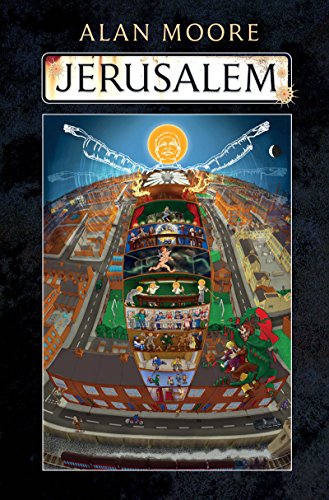
                  Jerusalem is a novel by English author Alan Moore, almost wholly set in and around the author's home town of Northampton, England. Combining elements of historical and supernatural fiction and drawing on a range of writing styles, the author describes it as a work of "genetic mythology". Published in 2016, Jerusalem took a decade to write. The novel is divided into three books, "The Boroughs", "Mansoul", and "Vernall's Inquest".

                • Cover of Ariosto
                  Ariosto

                  Chelsea Quinn Yarbro · standalone novel · 1980

                  similar byrenaissance and early modernpolitical intrigueeuropeart and artistshistorical fantasy

                  Amazon: In an alternate-world Italian Renaissance where the Italian states have formed a federation, the great epic poet Ludovico Ariosto is writing a fantasy adventure set in the New World that reflects the difficulties besetting his patron, Damiano de' Medici. While the Cerrochi in Ariosto's fantasy battle the evil wizard Anatrecacciatore with the help of a heroic version of Ariosto himself, politics and skullduggery plague the Florence-based court of Italia Federata, in which Ariosto becomes enmeshed when he chooses to support the Medicis against those seeking to fracture the Italian union.

                • Cover of The Casual Vacancy
                  The Casual Vacancy

                  J. K. Rowling · standalone novel · 2012

                  similar bypolitical intrigueclass conflictmultiple povliterary & generalbritish isles

                  Publisher: "When Barry Fairbrother dies unexpectedly in his early forties, the little town of Pagford is left in shock. Pagford is, seemingly, an English idyll, with a cobbled market square and an ancient abbey, but what lies behind the pretty façade is a town at war. Rich at war with poor, teenagers at war with their parents, wives at war with their husbands, teachers at war with their pupils…. Pagford is not what it first seems. And the empty seat left by Barry on the town's council soon becomes the catalyst for the biggest war the town has yet seen. Who will triumph in an election fraught with passion, duplicity and unexpected revelations?"

                • Cover of Napoleon Symphony
                  Napoleon Symphony

                  Anthony Burgess · standalone novel · 1974

                  similar bypolitical intriguechallenginghistorical fictioneuropeliterary & general

                  Napoleon Symphony: A Novel in Four Movements (ISBN 0-224-01009-3) is Anthony Burgess's fictional recreation of the life and world of Napoleon Bonaparte, first published in 1974. Its four "movements" follow the structure of Beethoven's Symphony No. 3, known as the Eroica. Burgess said he found the novel "elephantine fun" to write.

                • Cover of New York 2140
                  New York 2140

                  Kim Stanley Robinson · standalone novel · 2017

                  similar bypolitical intrigueclass conflictmultiple povscience fiction+1 more

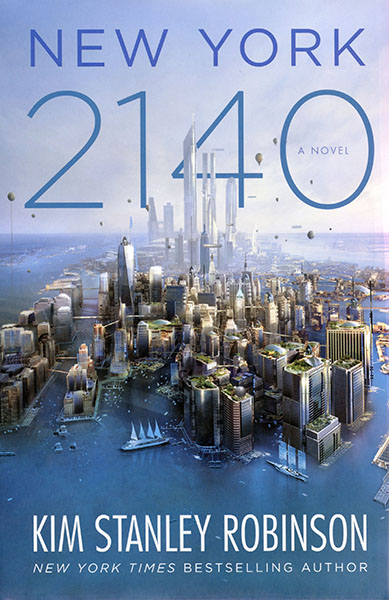
                  New York 2140 is a 2017 climate fiction novel by American science fiction author Kim Stanley Robinson. The novel is set in a New York City that has been flooded and altered by rising water.

                • Cover of The Conqueror's Trilogy
                  The Conqueror's Trilogy

                  series · 3 books · 2016

                  similar byrenaissance and early modernpolitical intriguehistorical fictioneurope

                • Cover of Atlas Shrugged
                  Atlas Shrugged

                  Ayn Rand · standalone novel · 1957

                  similar bypolitical intriguechallengingclass conflictscience fiction

                  Atlas Shrugged is a 1957 novel by Ayn Rand. It is her longest novel, the fourth and final one published during her lifetime, and the one she considered her magnum opus in the realm of fiction writing. She described the theme of Atlas Shrugged as "the role of man's mind in existence" and it includes elements of science fiction, mystery, and romance. The book explores a number of philosophical themes from which Rand would subsequently develop Objectivism, including reason, property rights, individualism, rational egoism, and laissez-faire capitalism and depicts what Rand saw as the evil of altruism and governmental coercion. Of Rand's works of fiction, it contains her most extensive statement of her philosophical system.

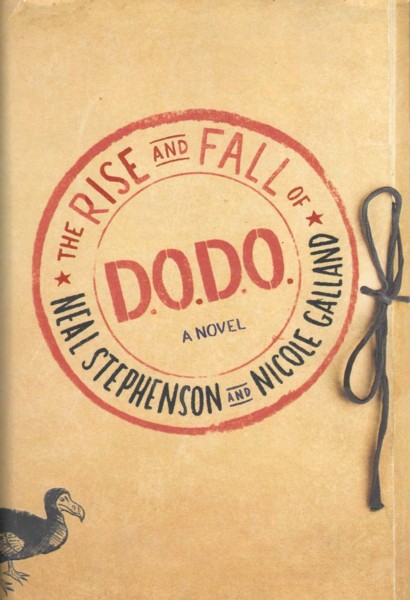
                • Cover of D. O. D. O. (Department of Diachronic Operations)
                  D. O. D. O. (Department of Diachronic Operations)

                  series · 2 books · 2017

                  similar bypolitical intrigueeuropehistorical fantasyscience fiction+2 more

                  Neal Stephenson and Nicole Galland's D.O.D.O. novels center on the Department of Diachronic Operations, a covert U.S. government agency that discovers magic vanished from the world in the nineteenth century and sets out to use time travel to bring it back. The Rise and Fall of D.O.D.O. (2017) is followed by Master of the Revels, continuing the pair's earlier collaboration on The Mongoliad.

                • I
                  Illuminatus

                  series · 8 books · 1975

                  completed

                  similar bypolitical intriguechallenging+5 more

                • Cover of A Modern Utopia
                  A Modern Utopia

                  H. G. Wells · standalone novel · 1905

                  similar bypolitical intrigueliterary & generalscience fiction+2 more

                  Two travelers, an unnamed narrator and his skeptical companion, find themselves transported to a parallel world: a planet identical to Earth in geography and even population, down to duplicates of everyone they know, but shaped by a different history. There they examine a global order run by a voluntary elite called the Samurai, who try to hold together progress and stability without the coercion Wells thought inevitable in the utopias that came before his. Framed less as a story than as a philosophical travelogue, it is Wells's own argument with the utopian tradition, tested through the world he invents to make it.