More like Radix
anchored on:science fictionother star systemsfar futurecoming of ageidentityspace+1 more
but
- The Gods Themselves
Isaac Asimovstandalone novel1972
similar byscience fictionchallengingfar futureother star systemsaliens+2 more
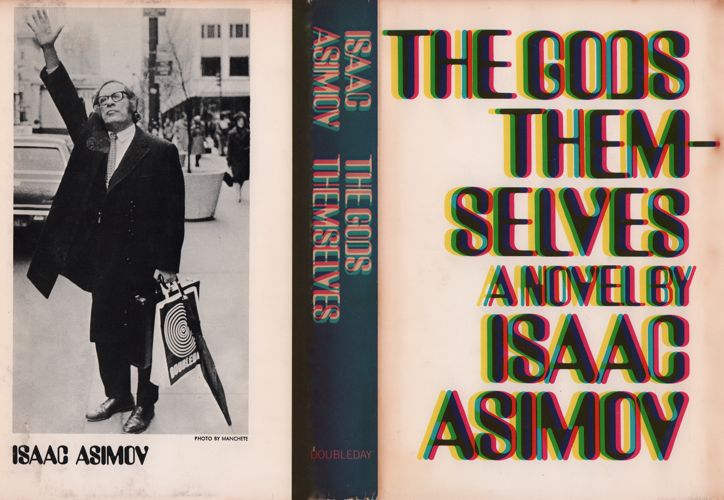
The Gods Themselves is a 1972 science fiction novel written by Isaac Asimov, and his first original novel in fifteen years. It won the Nebula Award for Best Novel in 1972, and the Hugo Award for Best Novel in 1973.
- Dune
series20 books1963
part of Dune Universe
similar byscience fictionfar futureother star systems+2 more
Frank Herbert's Dune Chronicles opens with 1965's Dune, set on the desert planet Arrakis where House Atreides takes control of the only source of the vital spice melange and young Paul Atreides is pulled into a struggle over its politics and religion. Herbert carried the story forward across five further novels — Dune Messiah, Children of Dune, God Emperor of Dune, Heretics of Dune, and Chapterhouse: Dune — following Paul's line over the following millennia, before Brian Herbert and Kevin J. Anderson later extended the saga. Many other editions of these six novels are omnibus and box-set repackagings rather than separate stories.
- Embassytown
China Miévillestandalone novel2011
similar byscience fictionchallengingfar futureother star systemsidentityspacealiens
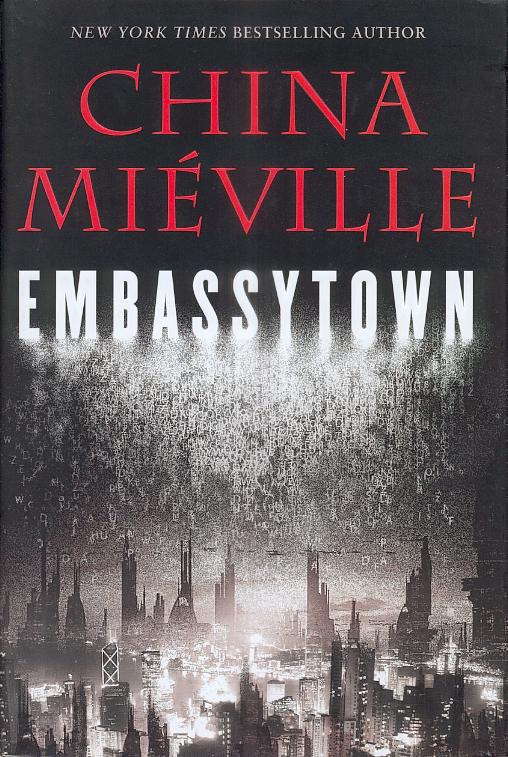
In the far future, humans have colonized a distant planet, home to the enigmatic Ariekei, sentient beings famed for a language unique in the universe, one that only a few altered human ambassadors can speak. Avice Benner Cho, a human colonist, has returned to Embassytown after years of deep-space adventure. She cannot speak the Ariekei tongue, but she is an indelible part of it, having long ago been made a figure of speech, a living simile in their language. When distant political machinations deliver a new ambassador to Arieka, the fragile equilibrium between humans and aliens is violently upset. Catastrophe looms, and Avice is torn between competing loyalties—to a husband she no longer loves, to a system she no longer trusts, and to her place in a language she cannot speak yet speaks through her.
- Stranger in a Strange Land
Robert A. Heinleinstandalone novel1961
similar byscience fictionchallengingidentitycoming of agealienspsychic powers
Stranger in a Strange Land is a 1961 science fiction novel by the American author Robert A. Heinlein. It tells the story of Valentine Michael Smith, a human who comes to Earth in early adulthood after being born on the planet Mars and raised by Martians, and explores his interaction with and eventual transformation of Terran culture.
- Starship Troopers
Robert A. Heinleinstandalone novel1959
similar byscience fictionfar futurecoming of ageother star systemsspacealiens+1 more
Starship Troopers is a military science fiction novel by American writer Robert A. Heinlein. Written in a few weeks in reaction to the US suspending nuclear tests, the story was first published as a two-part serial in The Magazine of Fantasy & Science Fiction as Starship Soldier, and published as a book by G. P. Putnam's Sons on November 5, 1959.
- The Einstein Intersection
Samuel R. Delanystandalone novel1967
similar byscience fictionchallengingfar futureidentity+2 more
The Einstein Intersection is a 1967 science fiction novel by Samuel R. Delany. The title is a reference to Einstein's Theory of Relativity connecting to Kurt Gödel's Constructible universe, which is an analogy to science meeting philosophy. The original publisher, Ace Books, changed Delany's originally intended title from A Fabulous, Formless Darkness for commercial reasons.
- Kefahuchi Tract Trilogy
series3 books2002
similar byscience fictionchallengingfar futureother star systemsspace+2 more
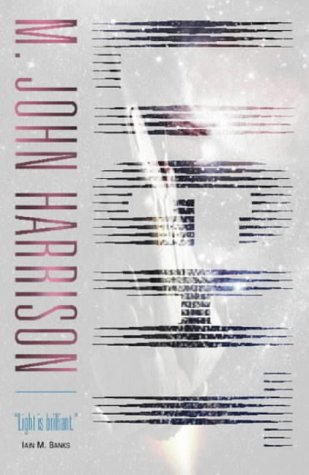
M. John Harrison's Kefahuchi Tract trilogy circles a strange, physics-breaking anomaly in deep space that draws scientists, smugglers, and drifters into its pull across different eras. Light moves between a near-future timeline and a far-future one drawn to the Tract itself; its sequel Nova Swing stays within one future period, where a fragment of the anomaly's altered space bleeds into the run-down port city of Saudade, giving the book a noir, Roadside-Picnic-like atmosphere; Empty Space concludes the sequence. The three novels share a setting and mood more than a continuous plot or cast.
- Radix Tetrad
series4 books1981
similar byscience fictionchallengingfar future+4 more
The Radix Tetrad is a group of four science fiction books by A. A. Attanasio. The first novel, the Nebula Award-nominated Radix, was published in 1981, and the last novel, The Last Legends of Earth, was published in 1989.
- Triton
Samuel R. Delanystandalone novel1976
similar byscience fictionchallengingfar futureother star systemsidentity
Trouble on Triton: An Ambiguous Heterotopia (1976) is a science fiction novel by American writer Samuel R. Delany. It was nominated for the 1976 Nebula Award for Best Novel, and was shortlisted for a retrospective James Tiptree, Jr. Award in 1995. It was originally published under the shorter title Triton.
- Citizen of the Galaxy
Robert A. Heinleinstandalone novel1957
similar byscience fictionfar futureother star systemscoming of ageidentityspace
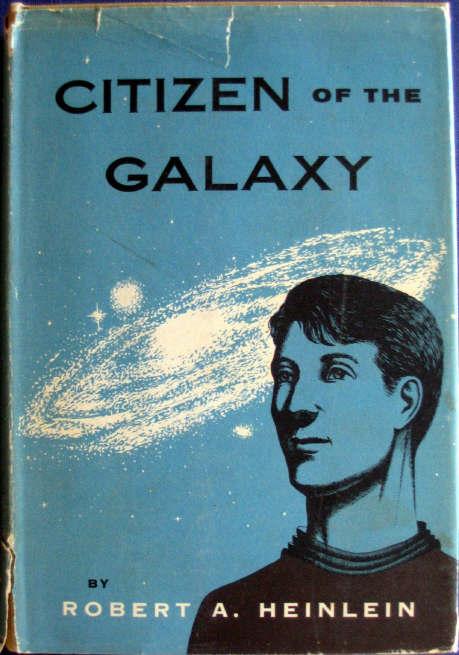
On a planet far distant from Earth, a lame beggar buys a young boy slave who has forgotten his origins. The beggar is more than he seems, and gives the boy an extensive education while employing him as an observer of activity in their city. Years later, the beggar is captured by the government, and the youth must escape the planet.
- A Time of Changes
Robert Silverbergstandalone novel1971
similar byscience fictionfar futureother star systemsidentity+3 more
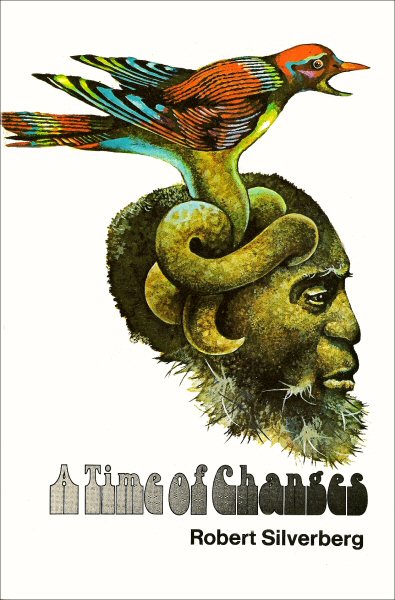
A Time of Changes is a 1971 science fiction novel by American writer Robert Silverberg. It won the Nebula Award for that year, and was also nominated for the 1972 Hugo and Locus Awards.
- Babel-17
Samuel R. Delanystandalone novel1966
similar byscience fictionfar futureidentityspacealiens+2 more
Babel-17 is a 1966 science fiction novel by American writer Samuel R. Delany. Published by Ace Books in May 1966, it follows Rydra Wong, a poet and linguist recruited during an interstellar war to decipher a language connected to enemy sabotage. Her investigation reveals a language that shapes thought and can make its speakers unwitting saboteurs. Through Rydra's effort to understand and revise it, the novel explores communication, perception, identity, and translation.
- Vacuum Flowers
Michael Swanwickstandalone novel1987
similar byscience fictionchallengingfar futureidentityspaceother star systems+1 more
Vacuum Flowers is a science fiction novel by American writer Michael Swanwick, published in 1987. It is an early example of the cyberpunk genre, and features one of the earliest uses of the concept of wetware.
- Jean le Flambeur
series3 books2010
similar byscience fictionchallengingfar futureother star systemsspace
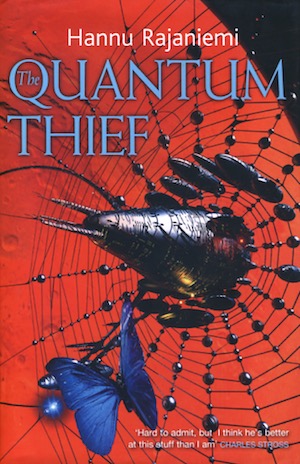
Jean le Flambeur is a master thief broken out of a virtual prison to pull off one more impossible heist, in a solar system reshaped by uploaded minds, post-human factions, and economies built on memory and privacy themselves. Hannu Rajaniemi's trilogy - The Quantum Thief, The Fractal Prince, The Causal Angel - is dense, idea-heavy hard SF that trusts readers to piece its future together from context rather than exposition.
- Glory Season
David Brinstandalone novel1993
similar byscience fictionchallengingfar futureother star systemsgenetic engineering
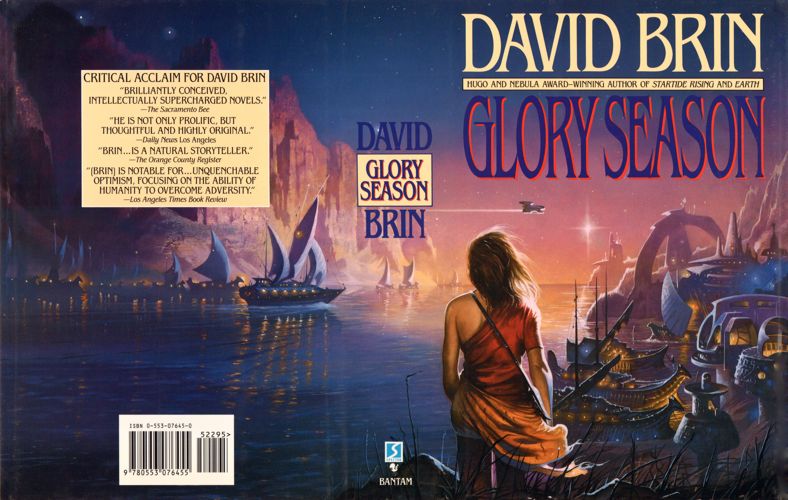
Glory Season is a 1993 science fiction novel by David Brin. It was nominated for both the Hugo and Locus Awards in 1994. An announcement in the back of one edition of Earth is for a novel titled Stratos, to be released in the spring of 1992. It seems likely that this was delayed, and renamed Glory Season.
- Singularity Sky
series2 books2003
similar byscience fictionchallengingfar futurespaceother star systems
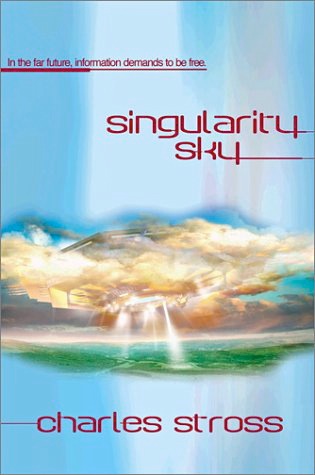
Singularity Sky and its sequel Iron Sunrise are collectively known as the Eschaton novels, after the godlike posthuman intelligence that seeded human colonies across space on the condition they never attempt time travel or threaten causality - rules tested when a low-tech colony world is destabilized by a group calling itself the Festival. Charles Stross uses the setup for a mix of space opera, economics, and diplomatic intrigue.
- Implied Spaces
Walter Jon Williamsstandalone novel2008
similar byscience fictionchallengingfar futurespaceother star systems+2 more
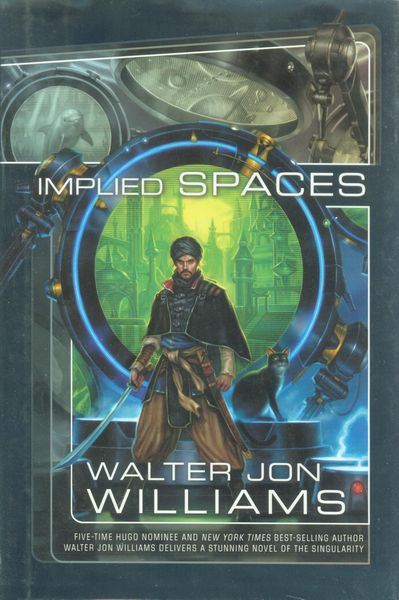
Implied Spaces is a 2008 space opera novel by American author Walter Jon Williams. It explores themes of transhumanism, artificial intelligence and ontology.
- Son of Man
Robert Silverbergstandalone novel1971
similar byscience fictionchallengingfar futureidentitypsychic powers
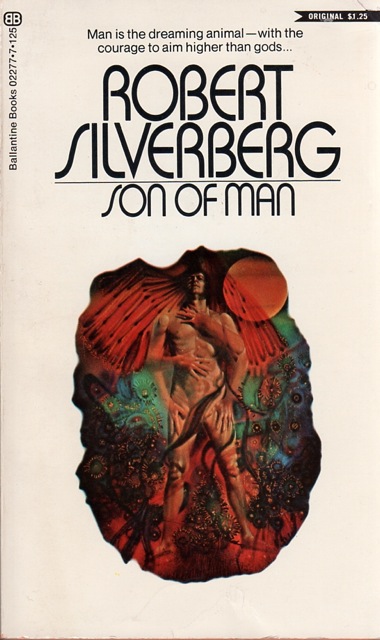
Son of Man is a science fiction novel by American writer Robert Silverberg, published in 1971. The book is about Clay, a 20th-century man, who travels billions of years into the future and meets humanity in its future forms. Some of the issues discussed in the book are sexuality, telepathic communication between people, physical prowess or frailty, division of humans by caste or ability, and the preservation of ancient wisdom, among other things.
- Helliconia
series4 books1982
completed
similar byscience fictionchallengingfar futureother star systems+1 more
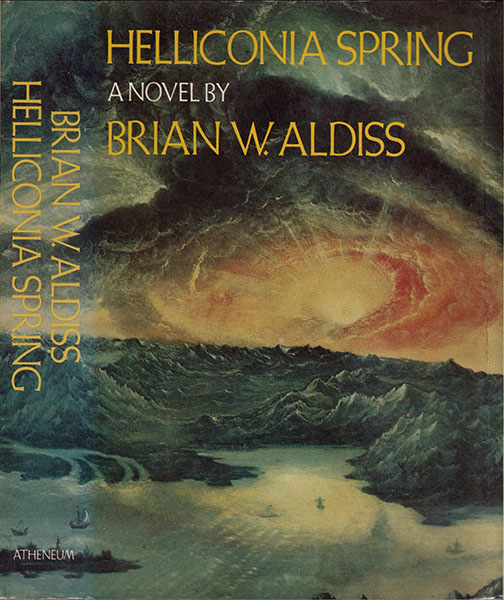
The Helliconia trilogy is a series of science fiction books by British writer Brian W. Aldiss, set on the Earth-like planet Helliconia. It is an epic chronicling the rise and fall of a civilisation over thousands of years as the planet progresses through its incredibly long seasons, which last for centuries.
- Shaper/Mechanist
series6 books1982
similar byscience fictionchallengingfar futurespaceother star systemsgenetic engineering
Shaper/Mechanist is Bruce Sterling's future-history of a fractured solar system, split between the genetically engineered Shapers and the cybernetically augmented Mechanists as humanity spreads beyond Earth. Schismatrix, the only full-length novel in the setting, follows a diplomat-schemer across decades of shifting factions and post-human politics. Schismatrix Plus collects that novel together with five earlier short stories set in the same future.
- Ilium
series2 books2003
completed
similar byscience fictionchallengingfar future+3 more
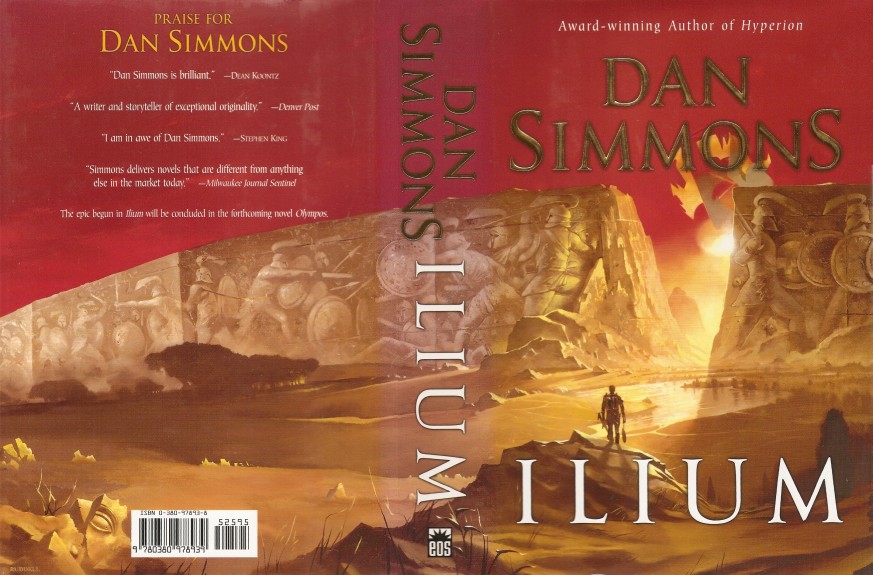
Ilium/Olympos is a series of two science fiction novels by Dan Simmons. The events are set in motion by beings who appear to be ancient Greek gods. Like Simmons' earlier series, the Hyperion Cantos, it is a form of "literary science fiction"; it relies heavily on intertextuality, in this case with Homer and Shakespeare as well as references to Marcel Proust's À la recherche du temps perdu and Vladimir Nabokov's novel Ada or Ardor: A Family Chronicle.
- Stars in My Pocket Like Grains of Sand
Samuel R. Delanystandalone novel1984
similar byscience fictionchallengingfar futureidentityaliens
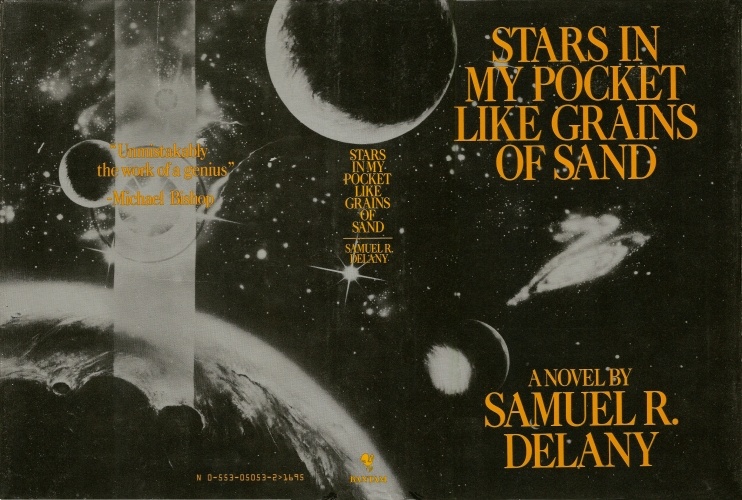
Stars in My Pocket Like Grains of Sand (1984) is a science fiction novel by Samuel R. Delany. It is part of what would have been a "diptych", in Delany's description, of which the second half, The Splendor and Misery of Bodies, of Cities, remains unfinished.
- Diaspora
Greg Eganstandalone novel1997
similar byscience fictionchallengingfar futurespaceother star systems
Diaspora is a hard science fiction novel by the Australian writer Greg Egan which first appeared in print in 1997. It originated as the short story "Wang's Carpets" which originally appeared in the Greg Bear-edited anthology New Legends. The story appears as a chapter of the novel.