Loreful
HomeDiscover
Search series, authors…⌘K
Loreful

Reading orders for SF/F series and shared universes — with your place kept in every one.

Explore

UniversesSeriesWorksAuthorsAtlas

Help

FAQAboutSite map

Account & legal

Sign inCreate accountPrivacyTerms

Data

Built on ISFDB, Wikipedia, Wikidata and Open Library. Curated reading orders carry their reasoning on the page; the rest follow publication order. Data sources & licenses

© Loreful · data: ISFDB · CC BY

More like Ragtime

anchored on:historical fictionliterary & generalnorth americaearly 20th centuryclass conflictrace and racism+3 more

but

Mood

The mood the book leaves you in.

  • The reading experience is propelled by journeys, exploration, and physical risk; excitement and forward momentum dominate over dread or introspection.
  • Joy and loss are deliberately mixed; the resolution grants characters something real while taking something else away, leaving warmth and sorrow together.
  • The book demands work from the reader — dense prose, difficult structure, unfamiliar ideas, or morally uncomfortable material — as part of its intended effect.
  • Grim events, cruelty, or despair dominate the atmosphere, and the book does not soften them with comfort or comic relief.
  • The atmosphere is quietly unsettling — wrongness, unease, and the uncanny pervade the book without necessarily escalating into overt horror.
  • The book is built to move the reader; character feeling is foregrounded and major scenes aim at a strong emotional response.
  • Humor is a primary aim and the prose plays for laughs — comic situations, wit, or dialogue produce sustained comedy, not occasional levity.
  • The book insists that things can improve; effort and decency are shown to matter, and the arc bends toward better outcomes even through hardship.
  • The book teaches as it goes — real facts, history, science, or craft are conveyed in enough depth that learning is part of the reading experience.
  • The book is designed to uplift and motivate, presenting perseverance or achievement in a way that invites the reader to aspire or act.
  • The overall register is cheerful and easygoing; stakes are kept gentle and the book avoids dwelling on pain or dread.
  • Withheld information drives the experience; the book sustains enigmas and secrets the reader wants resolved, whatever its genre.
  • The book is contemplative and inward-looking, giving more weight to thought, memory, and meaning than to external events.
  • The book works as comfort reading — low tension, a soothing pace, and an atmosphere the reader can unwind in.
  • Grief, loss, or melancholy set the dominant register, and the book lets sorrow stand rather than resolving it into comfort.
  • Sustained suspense is the point; the book keeps the reader braced for what happens next through danger, pressure, or impending revelation.
  • Playful invention and charm define the register — fanciful conceits, light absurdity, and a narration that delights in its own oddity.

About

What the story runs on.

  • Stories structured as a quest — a journey undertaken to find, deliver, or destroy something of great import.
  • Stories in which staying alive against nature, catastrophe, or scarcity is the central problem.
  • Stories of lovers kept apart by law, family, faith, or station, where the obstacle to love is the plot.
  • Stories in which a friendship — its making, testing, or loss — is the emotional center.
  • Stories of growing up — a young protagonist crossing from childhood into adult knowledge and responsibility.
  • Stories about who a character truly is — self-discovery, doubled lives, and the search for a self.
  • Stories about mental unraveling — descent into madness, delusion, and minds at war with themselves.
  • Stories about mourning — living through the death of a loved one and what loss does to the survivors.
  • Stories in which a buried family truth — hidden parentage, crimes, or shames — surfaces and reorders the present.
  • Stories driven by maneuvering for power — factions, conspiracies, and statecraft conducted in shadow.
  • Stories in which war itself is the subject — combat, occupation, and what warfare does to soldiers and civilians.
  • Stories organized around investigating a killing — the case, the clues, and the pursuit of the killer, in any genre's clothing.

Shelf

Where it sits in the library.

    • Fiction built on magic or other supernatural elements that have no scientific explanation.
    • Secondary-world fantasy at large scale, where the fate of nations or the world turns on the protagonists' struggle.
    • Fantasy set in a recognizably modern city or contemporary world where the supernatural intrudes on everyday life.
    • Fantasy that blends in horror's atmosphere and imagery, keeping a fantastical frame around grim or frightening material.
    • Action-driven fantasy following warriors or rogues with personal stakes against sorcerous threats, rather than world-spanning conflicts.
    • Fantasy set in a real historical period or a close analogue of one, with magic woven into the era.
    • Fantasy in which protagonists cross from the ordinary world into another world through a portal or similar passage.
    • Fiction that retells or reworks a traditional fairy tale in a new form or setting.
    • Fantasy drawing directly on myths, legends, and folklore, retelling them or building on their figures and logic.
    • Fantasy of ghosts, vampires, shapeshifters, psychics, and similar phenomena, usually set in an otherwise ordinary world.
    • Fiction mixing science-fictional trappings with overtly magical or impossible elements in one setting.
    • Low-stakes fantasy emphasizing comfort, community, and everyday pleasures over conflict and peril.
    • Speculative fiction of pervasive moral ambiguity, violence, and cynicism that rejects heroic conventions — fantasy and SF alike.
      • Fiction that extrapolates from science and technology — future societies, space travel, or speculative inventions — within at least nominally natural laws.
      • Science fiction of interstellar scope — starships, galactic polities, and adventure across star systems.
      • Science fiction committed to scientific rigor, where technical plausibility constrains the story.
      • Science fiction centered on armed forces and warfare, told largely from a military point of view.
      • Science fiction of networked, corporate-dominated near futures, pairing high technology with social decay.
      • Science fiction styled on nineteenth-century steam-powered technology, often in a Victorian or pseudo-Victorian setting.
      • Fiction depicting an oppressive or catastrophic society, presented as a warning.
      • Fiction set after civilization's collapse, following survivors in the ruins of the old world.
      • Fiction in which characters move between past and future, and the mechanics or consequences of that travel drive the plot.
      • Fiction exploring a world where a historical event went differently and history diverged from ours.
      • Science fiction about humanity's first encounter and communication with an alien intelligence.
      • Science fiction in which extraterrestrial forces attack or occupy Earth and humanity resists.
      • Fiction whose primary aim is to frighten or unsettle the reader through dread, menace, or the monstrous.
      • Horror of vast, indifferent, incomprehensible entities before which humanity is insignificant, in the Lovecraft tradition.
      • Horror of decaying houses, buried family secrets, and oppressive atmosphere in the Gothic literary tradition.
      • Horror centered on hauntings and the returning dead.
      • Horror located in the mind — paranoia, obsession, and unreliable perception rather than external monsters.
      • Horror built around the reanimated dead and survival amid their outbreaks.
      • Horror defined by explicit, transgressive gore that refuses to cut away from violence.
      • Speculative fiction of the strange and uncanny that resists both natural explanation and standard genre categories.
      • Fiction organized around solving a crime or puzzle, typically following an investigator toward the identification of a culprit.
      • A puzzle-first mystery that lays out clues so the culprit's identity can be deduced before the reveal.
      • Crime fiction of moral ambiguity, fatalism, and hard-edged style, set among the corrupt and the doomed.
      • A mystery following the realistic routines of police work — forensics, interviews, and case-building.
      • A gentle mystery with an amateur sleuth, a small community, and violence kept off the page.
      • A mystery set in a past era, where the investigation works within that period's methods and society.
      • Fast-paced fiction driven by imminent danger, pursuit, or high-stakes conspiracy, built to sustain tension.
      • A thriller of espionage — agents, tradecraft, and intelligence services in conflict.
      • A thriller centered on lawyers and the courtroom, where litigation carries the suspense.
      • A thriller driven by detailed contemporary or near-future technology, often military or scientific.
      • A thriller whose tension comes from mental states and manipulation between characters rather than external action.
      • Fiction whose central plot is a romantic relationship and its development toward an emotionally satisfying resolution.
      • Romance in which one or both partners are supernatural beings, blending fantasy elements into the love story.
      • A fantasy-romance hybrid in which the romantic arc and the fantasy plot carry equal weight.
      • Romance set in a past era, with courtship shaped by the period's society and manners.
      • Romance set in the present day, without supernatural or historical elements.
      • Fiction set in a real past period, where the historical setting materially shapes characters and events.
        • General and literary fiction emphasizing prose style, character interiority, or formal ambition over genre plot conventions.
        • Fiction in a realistic world where magical events occur and are treated as ordinary, in the tradition of Latin American literature.
        • Fiction that ridicules people, institutions, or society in order to criticize them.
        • Fiction of dreamlike, irrational imagery and logic that breaks from realistic representation.
        • Fiction that plays with narrative convention through metafiction, fragmentation, and self-reference.
        • Fiction propelled by journeys, exploration, and physical peril, where action and survival carry the plot.
        • Adventure fiction of ships and seafaring — naval engagements, voyages, and life at sea.
        • Fiction of the American frontier West — gunmen, ranchers, and lawmen, typically in the late nineteenth century.
        • Fiction centered on soldiers, campaigns, and the experience of warfare, historical or imagined.
          • Fiction written primarily to amuse, using comedic situations, wit, or parody as its organizing principle.
            • Multi-generational fiction following a family or dynasty across decades, with inheritance and kinship as the through-line.
              • Fiction whose world runs on explicit game mechanics — levels, stats, and skills that characters can see and exploit.
                • Fiction about costumed or superpowered heroes and their conflicts with comparable villains.

                Practical

                How long a commitment, whether it stands alone, and whether it has finished.

                Tap a chip to ask for it · tap again to rule it out · once more to clear. Numbers show what would be left.

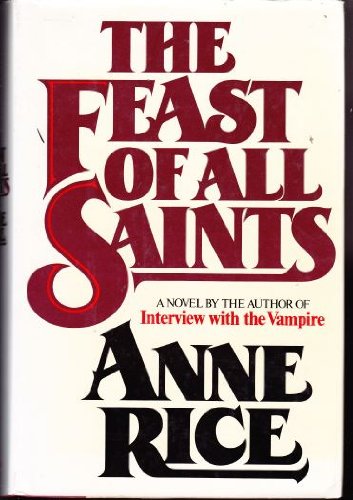
                • Cover of The Feast of All Saints
                  The Feast of All Saints

                  Anne Rice · standalone novel · 1980

                  similar byreflectivehistorical fictionclass conflictrace and racismnorth americabig city+1 more

                  WorldCat: Rice explores a unique but little-known society, the "gens de couleur libre," free people of color, who flourished in New Orleans in the years prior to the Civil War.

                • Cover of Herland
                  Herland

                  series · 2 books · 1915

                  completed

                  similar byreflectiveearly 20th centuryliterary & general+2 more

                • Cover of Interior Chinatown
                  Interior Chinatown

                  Charles Yu · standalone novel · 2020

                  similar byreflectiveliterary & generalrace and racismnorth americametafictionbig city+1 more

                  Interior Chinatown is a 2020 novel by Charles Yu. It is his second novel and was published by Pantheon Books on January 28, 2020. It won the 2020 National Book Award for Fiction. The novel was also longlisted for the 2021 Andrew Carnegie Medal for Excellence in Fiction and was shortlisted for the Prix Médicis étranger. A television adaptation of the novel, created by Yu and starring Jimmy O. Yang, premiered on Hulu on November 19, 2024.

                • Cover of Ann Veronica
                  Ann Veronica

                  H. G. Wells · standalone novel · 1909

                  similar byreflectiveearly 20th centuryliterary & generalhistorical fictionchallenging+2 more

                  Ann Veronica is a New Woman novel by H. G. Wells published in 1909. It describes the rebellion of Ann Veronica Stanley, a 21-year-old woman, against her middle-class father's stern patriarchal rule. The novel dramatizes the contemporary problem of the New Woman. It is set in Edwardian era-London and environs, except for an Alpine excursion. Ann Veronica offers vignettes of the women's suffrage movement in Great Britain and features a chapter inspired by the Grille Incident, a 1908 attempt of suffragettes to storm Parliament.

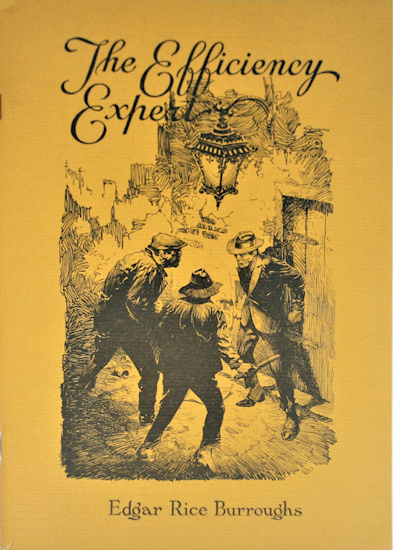
                • Cover of The Efficiency Expert
                  The Efficiency Expert

                  Edgar Rice Burroughs · standalone novel · 1921

                  similar byreflectiveearly 20th centuryliterary & generalclass conflictnorth americabig city

                  The Efficiency Expert is a 1921 novella by American writer Edgar Rice Burroughs. One of a small number of Burroughs' novels set in contemporary America as opposed to a fantasy universe, The Efficiency Expert follows the adventures of Jimmy Torrance as he attempts to make a career for himself in 1921 Chicago. The book is remarkable for the criminal livelihoods of the hero's friends. It was also admitted to be a fictionalization of Burroughs' own difficulties in finding a job prior to becoming a best-selling writer. Though written in 1919, it was first published in the October 1921 edition of the All-Story Weekly magazine. The first book publication was by House of Greystoke in 1966.

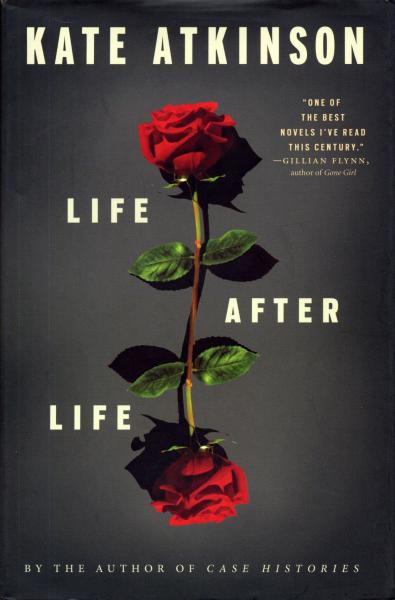
                • Cover of Todd Family
                  Todd Family

                  series · 2 books · 2013

                  similar byreflectiveearly 20th centuryliterary & generalhistorical fictionfamily secrets

                  Kate Atkinson's Life After Life gives Ursula Todd, born on a snowy night in 1910, a strange gift: whenever she dies, she's born again into a slightly altered version of the same life, gradually piecing together enough intuition across her many deaths to try to change the course of the twentieth century's worst events. The companion novel A God in Ruins turns to Ursula's brother Teddy, a bomber pilot, following his one, single life forward from the war through old age. The two books share a family and a set of preoccupations -- memory, war, chance -- without forming a conventional sequential series.

                • Cover of Against the Day
                  Against the Day

                  Thomas Pynchon · standalone novel · 2006

                  similar byearly 20th centuryhistorical fictionliterary & generalchallengingmetafictionnorth america+1 more

                  Against the Day is an epic historical novel by Thomas Pynchon, published on November 21, 2006. The narrative takes place between the 1893 Chicago World's Fair and the time immediately following World War I and features more than a hundred characters spread across the United States, Europe, Mexico, Central Asia, Africa and "one or two places not strictly speaking on the map at all," according to the book jacket blurb written by Pynchon. Like its predecessors, Against the Day is an example of historiographic metafiction or metahistorical romance. At 1,085 pages, it is the longest of Pynchon's novels to date.

                • Cover of Tono-Bungay
                  Tono-Bungay

                  H. G. Wells · standalone novel · 1909

                  similar byreflectiveearly 20th centuryliterary & generalclass conflict

                  Tono-Bungay is a realist semiautobiographical novel written by H. G. Wells and first published in book form in 1909. It has been called "arguably his most artistic book". It had been serialised before book publication, both in the United States, in The Popular Magazine, beginning in the issue of September 1908, and in Britain, in The English Review, beginning in the magazine's first issue in December 1908.

                • Cover of The Ladies of Missalonghi
                  The Ladies of Missalonghi

                  Colleen McCullough · standalone novel · 1987

                  similar byreflectiveearly 20th centuryliterary & generalclass conflicthistorical fictionfamily secrets

                  The Ladies of Missalonghi is a short novel by Australian writer Colleen McCullough commissioned for the Hutchinson Novellas series and published in the United States in the Harper Short Novel series in 1987. Set in the small town of Byron in the Blue Mountains of Australia in the years just before World War I, the novel is the story of Missy Wright and the Hurlingford family.

                • Cover of Black No More
                  Black No More

                  George S. Schuyler · standalone novel · 1931

                  similar byearly 20th centuryclass conflictrace and racismnorth americachallenging

                  Black No More: Being an Account of the Strange and Wonderful Workings of Science in the Land of the Free, A.D. 1933-1940 is a 1931 Harlem Renaissance satire on American race relations by George S. Schuyler. In the novel, Schuyler targets both the Ku Klux Klan and NAACP in condemning the ways in which race functions as both an obsession and a commodity in early twentieth-century America. The central premise of the novel is that an African American scientist invents a process that can transform Black people into white people. Those who have internalized white racism, those who are tired of inferior opportunities socially and economically, and those who simply want to expand their sexual horizons, undergo the procedure. As the country "whitens", the economic importance of racial segregation in the South as a means of maintaining elite white economic and social status becomes increasingly apparent, as the South relies on Black labor through sharecropping.

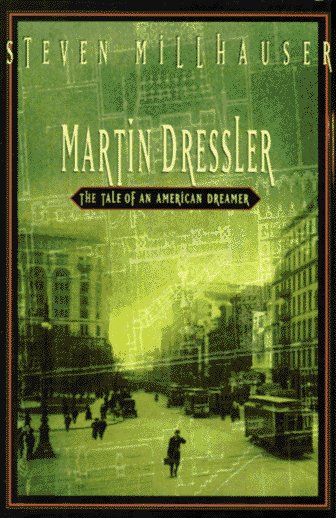
                • Cover of Martin Dressler: The Tale of an American Dreamer
                  Martin Dressler: The Tale of an American Dreamer

                  Steven Millhauser · standalone novel · 1996

                  similar byreflectivehistorical fictionliterary & generalnorth americabig city+1 more

                  Martin Dressler: The Tale of an American Dreamer is a 1996 novel by Steven Millhauser. It won the 1997 Pulitzer Prize for Fiction and was a finalist for the 1996 National Book Award. It follows the exploits of Martin Dressler, a young, optimistic entrepreneur, in late nineteenth-century New York City. It vividly evokes its time and place through elaborate description.

                • Cover of The Amazing Adventures of Kavalier & Clay
                  The Amazing Adventures of Kavalier & Clay

                  Michael Chabon · standalone novel · 2000

                  similar byreflectiveearly 20th centuryhistorical fictionnorth americaliterary & general

                  The Amazing Adventures of Kavalier & Clay is a 2000 novel by American author Michael Chabon. A historical fiction novel, it follows the lives of two Jewish cousins, Josef "Joe" Kavalier, a Czech artist and magician who escapes Nazi-occupied Prague, and Sammy Clay, a Brooklyn-born writer. Together, they create The Escapist, a fictional superhero inspired by Joe’s desire to fight fascism and his struggle to rescue his family from Europe. In the story, Kavalier and Clay become major figures in the comics industry during its Golden Age.

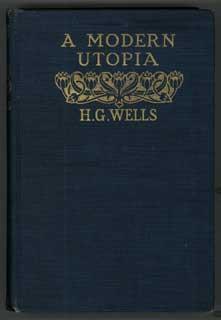
                • Cover of A Modern Utopia
                  A Modern Utopia

                  H. G. Wells · standalone novel · 1905

                  similar byreflectiveearly 20th centuryliterary & general+2 more

                  Two travelers, an unnamed narrator and his skeptical companion, find themselves transported to a parallel world: a planet identical to Earth in geography and even population, down to duplicates of everyone they know, but shaped by a different history. There they examine a global order run by a voluntary elite called the Samurai, who try to hold together progress and stability without the coercion Wells thought inevitable in the utopias that came before his. Framed less as a story than as a philosophical travelogue, it is Wells's own argument with the utopian tradition, tested through the world he invents to make it.

                • Cover of Imperium in Imperio: A Study of the Negro Race Problem
                  Imperium in Imperio: A Study of the Negro Race Problem

                  Sutton E. Griggs · standalone novel · 1899

                  similar byhistorical fictionclass conflictrace and racismnorth americaliterary & generalchallenging

                  "Self-published in 1899 and sold door-to-door by the author, this classic African-American novel -- a gripping exploration of oppression, miscegenation, exploitation, and black empowerment -- was a major bestseller in its day. The dramatic story of a conciliatory black man and a mulatto nationalist who grow up in a racist America and are driven to join a radical movement dedicated to the creation of an all-black nation in Texas, Imperium in Imperio had a profound influence on the development of black nationalism." description.

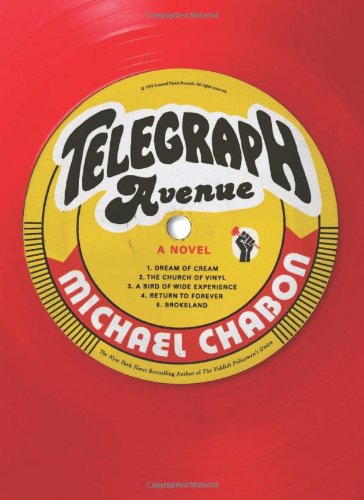
                • Cover of Telegraph Avenue
                  Telegraph Avenue

                  Michael Chabon · standalone novel · 2012

                  similar byreflectiveliterary & generalnorth americabig city+2 more

                  Telegraph Avenue is a novel by Michael Chabon, published on September 11, 2012. An enhanced e-book edition was released online on July 25, 2012. The novel's setting is North Oakland and Berkeley, California. The title refers to Telegraph Avenue, which runs through both cities.

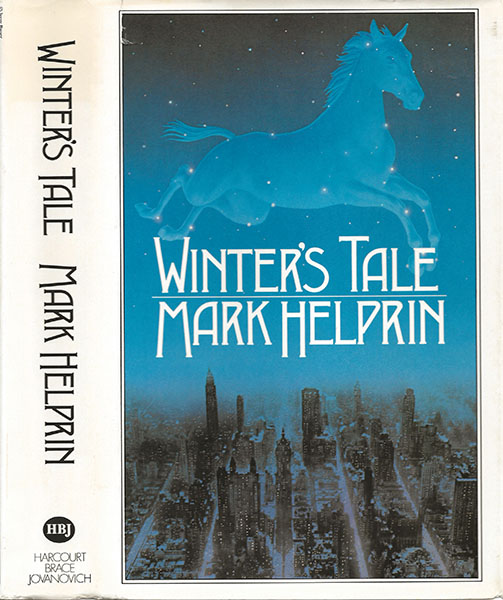
                • Cover of Winter's Tale
                  Winter's Tale

                  Mark Helprin · standalone novel · 1983

                  similar byreflectiveearly 20th centurynorth americaliterary & generalbig city

                  Winter's Tale is a 1983 magic realism novel by Mark Helprin. It takes place in a mythic New York City, markedly different from reality, and in an industrial Edwardian era near the turn of the 20th century. Akiva Goldsman wrote a screenplay based on the novel and directed a feature film from the script, which was released in 2014.

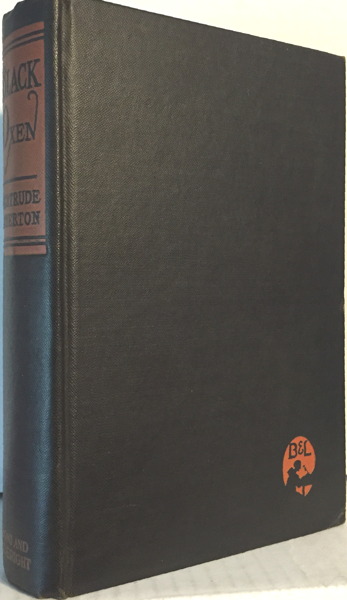
                • Cover of Black Oxen
                  Black Oxen

                  Gertrude Atherton · standalone novel · 1923

                  similar byreflectiveearly 20th centuryliterary & generalnorth america

                  "... Black Oxen was written in a burst of mental energy after Gertrude Atherton herself received an experimental anti-aging treatment; the introduction and appendices to this edition explore parallels between Atherton's medical treatment and that of her rejuvenated protagonist, as well as provide selections from other contemporary writings on aging, science, and the role of women in the 1920s. ..." --description of the 2012 Broadview ed. at Amazon 2019-09-05 (read in full, {{ASIN|1554810256}}

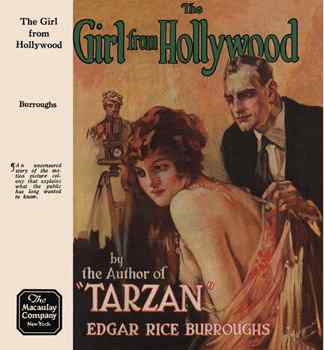
                • Cover of The Girl from Hollywood
                  The Girl from Hollywood

                  Edgar Rice Burroughs · standalone novel · 1923

                  similar byreflectiveearly 20th centuryliterary & generalnorth america

                  The Girl from Hollywood is an Edgar Rice Burroughs contemporary fiction novel. The Girl from Hollywood was published as a serial by Munsey's Magazine from June to November, 1922. The book version was first published by Macaulay Co. on 10 August 1923.

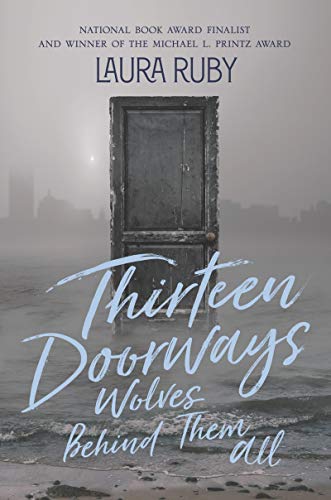
                • Cover of Thirteen Doorways, Wolves Behind Them All
                  Thirteen Doorways, Wolves Behind Them All

                  Laura Ruby · standalone novel · 2019

                  similar byearly 20th centuryliterary & generalnorth americahistorical fictionbig city+1 more

                  Thirteen Doorways, Wolves Behind Them All is a young adult novel by Laura Ruby, published October 1, 2019, by Balzer + Bray.

                • Cover of The Reformatory
                  The Reformatory

                  Tananarive Due · standalone novel · 2023

                  similar byearly 20th centuryhistorical fictionrace and racismnorth americaliterary & general

                  The Reformatory is a 2023 novel by Tananarive Due which combines elements of horror, historical fiction, and literary fiction. It is loosely based on the Dozier School for Boys and the atrocities committed there. The novel received critical acclaim, including a win for the 2024 Bram Stoker Award for Best Novel and 2024 World Fantasy Award for Best Novel.

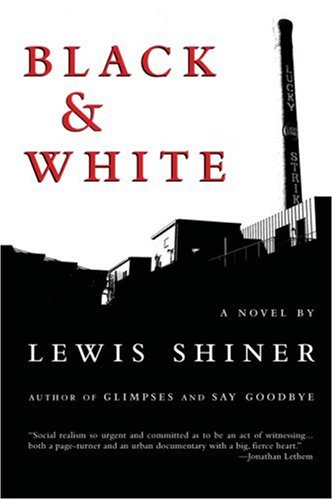
                • Cover of Black & White
                  Black & White

                  Lewis Shiner · standalone novel · 2008

                  similar byreflectiveliterary & generalrace and racismnorth americahistorical fictionfamily secrets

                  When Michael follows his dying father to North Carolina, a lifetime of lies begins to unravel. His pursuit of his father's past--haunted by voodoo, adultery and murder--takes him to a place called Hayti, once the most prosperous black community in the South. Now the mysteries of Michael's own heritage become a matter of life and death, as racial conflicts barely restrained since the 1960s erupt again.

                • Cover of Alias Grace
                  Alias Grace

                  Margaret Atwood · standalone novel · 1996

                  similar byreflectivehistorical fictionnorth americaliterary & general+1 more

                  Alias Grace is a historical fiction novel by Canadian writer Margaret Atwood. First published in 1996 by McClelland & Stewart, it won the Giller Prize and was shortlisted for the Booker Prize.

                • Cover of The Poorhouse Fair
                  The Poorhouse Fair

                  John Updike · standalone novel · 1959

                  similar byreflectiveliterary & generalclass conflictnorth america+1 more

                  The Poorhouse Fair (1959) is the first novel by the American author John Updike. A second edition included an introduction by the author and was slightly revised.

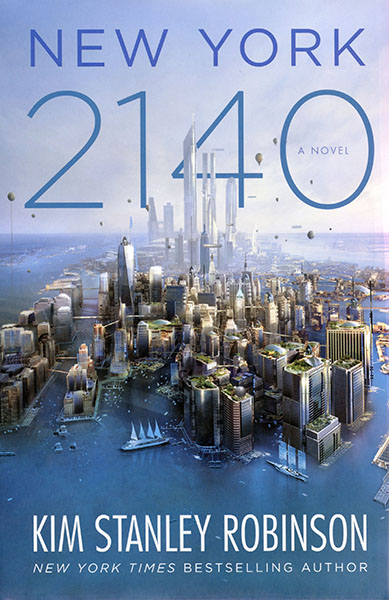
                • Cover of New York 2140
                  New York 2140

                  Kim Stanley Robinson · standalone novel · 2017

                  similar byreflectiveclass conflictnorth americabig city+1 more

                  New York 2140 is a 2017 climate fiction novel by American science fiction author Kim Stanley Robinson. The novel is set in a New York City that has been flooded and altered by rising water.